

Business
Oil Price Today (May 19): Crude oil retreats from $110 as Trump delays planned strike on Iran. Where are prices headed?


Trump said on Monday that he had put on hold a “scheduled attack of Iran tomorrow” after appeals from the leaders of Qatar, Saudi Arabia and the United Arab Emirates. Earlier in the day, Trump told the New York Post that Iran knows “what’s going to be happening soon,” though he did not provide further details.
Crude oil price on May 19
International benchmark Brent crude futures for July delivery dropped more than 2% to $109.15 a barrel, while West Texas Intermediate futures fell 1.27% to $107.28 a barrel. Axios had earlier reported that Trump was considering renewed military action after Tehran’s latest proposal in negotiations aimed at ending the conflict failed to meet expectations.

Prior to his remarks on Truth Social, there had been little public indication that Washington was preparing imminent military action against Iran, a move that would likely have ended the fragile ceasefire reached on April 8.
Speaking later at a White House event, Trump said, “we were getting ready to do a very major attack tomorrow.” “I put it off for a little while, hopefully maybe forever, but possibly for a little while,” he said, adding that “we’ve had very big discussions with Iran, and we’ll see what they amount to.”
Tensions between Washington and Tehran have flared up once again and, while the ceasefire technically remains intact, expectations of a quick reopening of Hormuz have weakened considerably.
What are experts saying?
Analysts at Morgan Stanley said the oil market is in “a race against time,” warning that the factors keeping crude prices from rising further may fade if the Strait of Hormuz remains shut into June.
Despite disruptions impacting nearly 1 billion barrels of oil supply, crude prices remain below the highs seen in 2022 after Russia’s invasion of Ukraine. Analysts led by Martijn Rats said the market entered the current crisis with stronger supply buffers, while investors continue to expect that the strait will eventually reopen.
Morgan Stanley also said higher U.S. crude exports and softer Chinese imports have helped cushion the market from a deeper supply shock so far. However, the brokerage warned that a prolonged closure of Hormuz could once again tighten global supplies if disruptions continue beyond what China or the United States can absorb comfortably.
Haitong Futures said markets remain cautious and warned that the ceasefire may not hold for long. The brokerage added that stalled negotiations between Washington and Tehran could trigger another round of escalation and push oil prices even higher.
Saudi Aramco CEO Amin Nasser said earlier this month that disruptions to shipments through Hormuz could delay stability returning to oil markets until 2027, with around 100 million barrels of oil supply per week potentially affected.
(Disclaimer: Recommendations, suggestions, views and opinions given by the experts are their own. These do not represent the views of The Economic Times)



Three sons of Iran’s slain leader Khamenei appear at funeral, not his successor
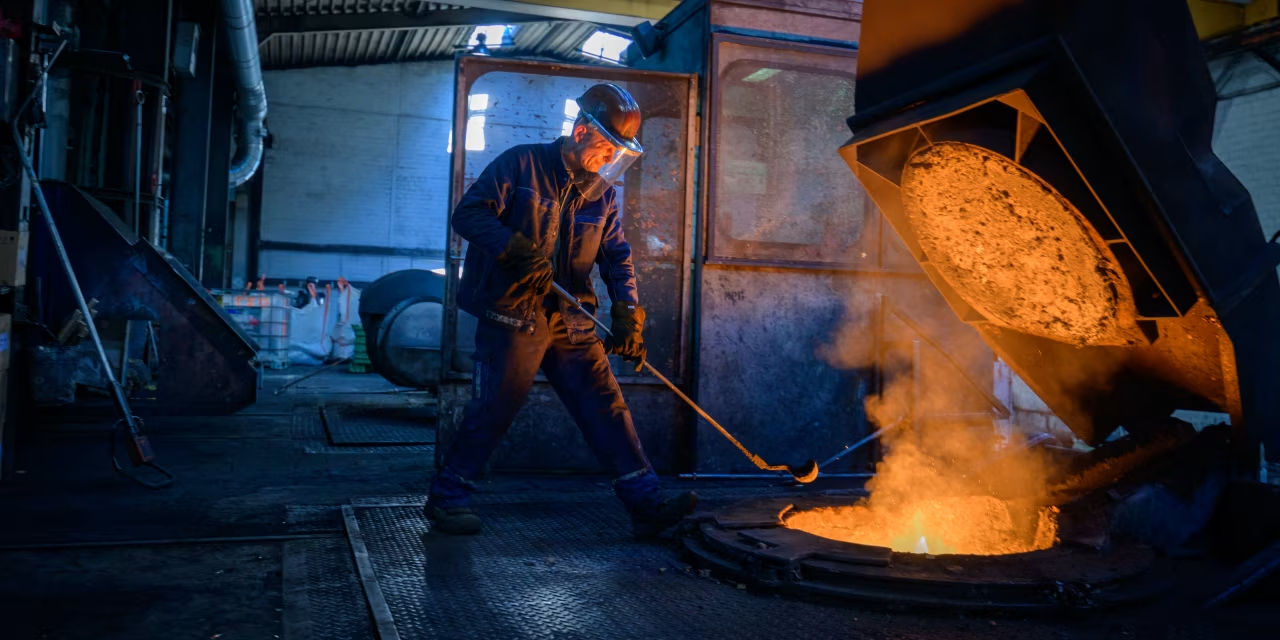
FRANKFURT—For decades, thousands of niche, world-class manufacturers that form the backbone of the German economy relied on an unassailable moat: unmatched quality. Now that moat is drying up.
The Mittelstand—a broad tier of midsize manufacturers, mainly specialized in capital and intermediate goods and reliant on exports—once thrived by making machines for factories everywhere. But China is now closing the quality gap and offering prices as low as half those of their European rivals.
Copyright ©2026 Dow Jones & Company, Inc. All Rights Reserved. 87990cbe856818d5eddac44c7b1cdeb8

Bread Financial: A High-Quality Lender Trading At A Discount

EV battery durability exceeds expectations as replacement fears persist

Artisan Partners Asset Management: Limited Downside
Business
Equity mutual funds delivered up to 8% return last week; international funds led. Check top 10 performers

Equity mutual funds delivered up to 8% return last week; international funds led. Check top 10 performers
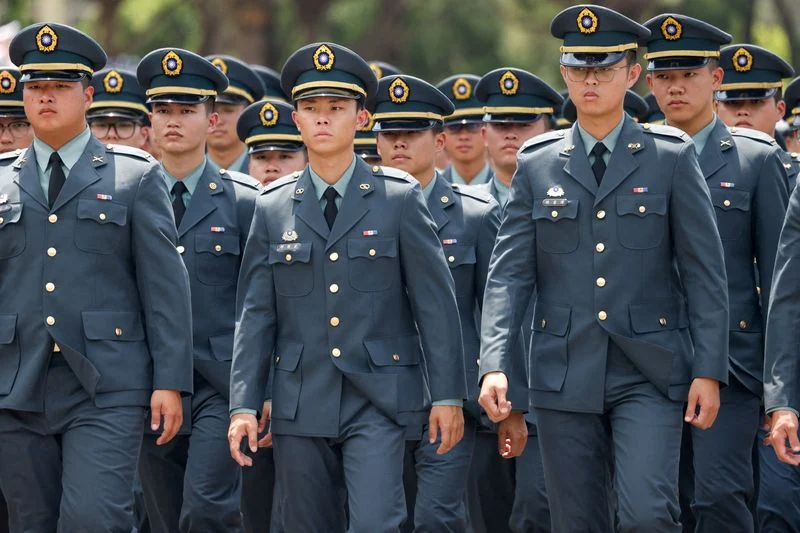

Taiwan military resumes ’anti-communist’ classes for graduates, citing Chinese threat

China seeks closer business ties with Europe as Wang meets Wallenberg

With the artificial intelligence frenzy roiling benchmark gauges from Asia to the US, the NSE Nifty 50 Index is becoming a safe haven of sorts for global investors. In the first half of the year, it moved 1% or more on just about one-third of the days — less than the MSCI Emerging Markets Index and barely more than the S&P 500 Index.
India’s lack of AI plays has been a hurdle most of the year as investors turned to markets like South Korea and Taiwan that delivered stellar returns. But with concerns mounting over the sustainability of that trade, interest in India is slowly coming back. In June, the Nifty 50 outperformed the MSCI Emerging Markets Index by the most since November, while foreign outflows were the smallest in four months.
“India’s calm comes down to one thing: It sits outside the AI trade,” said Maxence Visseau, chief investment officer of Arkevium Capital in Dubai. His firm is neutral on the market and uses it as a diversifier, he said. “India works as an AI hedge inside the EM complex.”
 ETMarkets.com
Indian equities remain some of the world’s worst performers this year, but the tide is starting to turn as the rupee stabilizes after hitting a record low and oil gains that tanked shares of refiners and airlines recede on easing tensions in the Middle East. That’s reduced inflation concerns and brightened prospects for India’s economic growth, according to a government report at the end of June.
At the same time, market players are getting more upbeat about the upcoming earnings season, which Tata Consultancy Services Ltd. kicks off on Thursday.
“The fall in commodity prices has altered the macro outlook for India almost overnight,” said Sandip Sabharwal, founder of research house Asksandipsabharwal.com in Mumbai. “Lower commodity prices, improving capital flows and stable interest rates create an environment where earnings upgrades are likely to exceed downgrades over the coming quarters.”In a note to clients, Morgan Stanley analysts including Ridham Desai wrote last month that India has become a “much larger macro asset class.” The less volatile inflation data in recent years support equity valuations and turn the market into one of defensive growth that can withstand global shocks better than it used to, they said. Over the past decade, the Nifty 50 almost tripled, delivering annual gains of more than 10% on six separate years.
The benchmark index logged 38 sessions with moves of 1% or more in either direction in the first six months of 2026, compared with 59 for MSCI’s emerging-market and Asian gauges and 32 for the S&P 500. South Korea’s Kospi index was off the charts, with 79 days of fluctuations of at least 1% — or two-thirds of the days in 2026.
ETMarkets.comMeanwhile, the India NSE Volatility Index dropped for a third straight month in June, falling below its one-year average and reaching its lowest level since February on Friday. That’s a far cry from April, when the gauge of option prices was at a one-year high relative to the Cboe Volatility Index, shortly after the Nifty 50 tanked to a low.
Kruti Shah, a quantitative analyst at Equirus Securities, sees a “bullish undertone” in the Nifty 50 and favors call spreads to bet on more gains, adding that the upcoming earnings season may offer some positive surprises.
“India was held back earlier this year by higher energy prices, elevated valuations and limited exposure to the AI trade,” said Ben Powell, chief investment strategist for the Middle East and Asia Pacific at BlackRock Investment Institute. “As those pressures have eased, investors may look beyond AI-heavy markets. That could put India back on investors’ radar as a differentiated opportunity within emerging markets.”


Uber pauses Europe food delivery expansion as it pursues Delivery Hero deal, FT reports

Dogecoin Active Addresses Surge, Bulls Pushing for a Comeback

How To Make Roman Gnocchi, The ‘Virtually Unknown’ Pasta

Transfer decision saw Mexico’s top scorer and Man United legend break down in tears


-

 Fashion2 days ago
Weekend Open Thread: High Hopes
-

 Politics2 days ago
The House | “Reframing the debate from a binary discussion of winners and losers”: Yuan Yang reviews ‘We Are Not Machines’
-

 Crypto World5 days ago
Strategy authorizes up to $1.25B in Bitcoin sales under new capital plan
-

 News Videos7 days ago
MAJOR BITCOIN & MARKET UPDATE!!!! (MUST WATCH ASAP!!!)
-

 Tech5 days ago
Anonymous researcher drops 0-day ‘exploitarium’ repo
-

 Business5 days ago
Australia treasurer says alleged access of prime minister’s bank data ’incredibly concerning’
-
 NewsBeat4 hours ago
Taylor Swift and Travis Kelce wedding staffer hilariously struggles to keep her cool while checking in megastars
-
 Business6 days ago
The AI boom won’t burst all at once. It will pop in ‘rolling bubbles’: Macquarie
-

 Sports4 days ago
Broncos roster: OL Ben Powers (No. 74) entering final year of contract
-

 NewsBeat4 days ago
Presenter Caroline Flack’s brother Paul Flack dies aged 55
-

 Crypto World3 days ago
Binance stock trading tops $1B in first month after launch
-

 News Videos5 days ago
How to Build INSANE Live Financial Dashboards With Claude
-

 Crypto World3 days ago
Alibaba-affiliate Ant Group enters the humanoid robot market with 12 deals
-
 NewsBeat3 days ago
New exhibition reflects five decades of movement between island of Ireland and GB
-

 Business2 days ago
What a 10 Percent Drop Means for Buyers, Sellers and Renters
-

 Business3 days ago
Meta Platforms Stock Jumps 7% Today as Bloomberg Reports Company Plans to Enter the Cloud Business
-

 Crypto World2 days ago
Binance Re-Enters Philippines As EU MiCA Rules Restrict Access
-
 Crypto World4 days ago
Airdrop Registration Becomes Key Focus For Remittix As RTX Launch Updates Approach
-

 Tech6 days ago
The attack that hijacked Claude Code came through Sentry. Datadog, PagerDuty, and Jira have the same exposure.
-
 Business5 days ago
PRISM’s IPO filing mentions Zostel case, CCI investigation
You must be logged in to post a comment Login