
Business
Oil Price Today (September 14): Crude oil jumps 3% to near $108/barrel as Middle East tensions escalate. What are analysts warning?


Saudi Arabia and Iranian attacks on ships in the Gulf intensified supply concerns following the closure of a key Saudi oil pipeline. Saudi Arabian state media on Sunday released video footage of damage to homes and a mosque from what it claimed to be a Houthi attack on the country’s southern Jazan province. The Houthis said they had also struck a Saudi military base in a neighbouring province.
An Iranian cargo vessel was struck on Sunday in the Strait of Hormuz, Iranian state media said. Iran then postponed a plan to brief its neighbouring countries on its efforts to manage shipping in the strait. There was no immediate response from the US military, which has struck Iranian-flagged vessels during its blockade of Iranian ports and faces a new threat from Iranian ballistic missiles launched at its warships.
Also read |Crude pool drying up as Middle East conflict drags on, refiners wary
Iran’s government meanwhile continues to remain defiant. “Our people can’t be bullied into submission. Iran won’t surrender,” President Masoud Pezeshkian said in a social media post. US President Donald Trump disagreed, saying that Iran “wants to make a deal so bad” that “they are calling constantly.”

Crude oil price on September 14
Brent crude futures gained around 3% to trade near $108 per barrel. WTI Crude futures meanwhile also rose around 3% to trade near $103 per barrel. The sharp rise in oil prices today came on expected lines. Along with the escalating tensions, concerns about risks to supply from Saudi Arabia, the world’s largest oil exporter, whose East-West oil pipeline was shut on Friday by a drone strike that originated in Iraq, further spooked investors.
The loss of the pipeline, which helped Saudi Arabia re-route its exports avoiding the Strait of Hormuz, threatens up to 4% of global oil supply. Oil surged 8% last week due to the disruptions, rising above $100 for the first time since July.Also read | Saudi pipeline outage threatens loss of 4% of global oil supply
What lies ahead for oil prices?
Looking ahead, unless talks in Oman produce something operational, or the East-West pipeline is brought back online quickly, the risk is that crude oil continues to extend its gains toward the near $120 per barrel high of early March, Reuters quoted IG market analyst Tony Sycamore as saying.
Goldman Sachs has outlined a scenario in which oil prices could rise to as much as $120 a barrel if attacks on Middle Eastern vessels intensify. If exports return to normal, however, the bank expects oil prices to move back towards $80 a barrel. Struyven told Bloomberg that risks to shipping had become an important driver for oil prices. Daan Struyven, co-head of global commodities research at Goldman Sachs, said the attacks in recent days suggested that shipping disruptions could spread and become more severe.
JPMorgan estimates that every additional month of disruption could add around $7 to $8 a barrel to Brent prices. If the disruption lasts three months, the bank expects average monthly Brent prices to reach around $114 a barrel.
Citi has raised its average Brent crude price forecast for the third quarter to $86 a barrel from $80, citing a longer-than-expected timeline for the reopening of the Strait of Hormuz.
(With inputs from agencies)
(Disclaimer: Recommendations, suggestions, views and opinions given by the experts are their own. These do not represent the views of The Economic Times)


As 49 Metals continues to make inroads at its Gold Mountain project in the US, chief executive Phil Carter has added managing director responsibilities to his portfolio.

TANMAY SHAH, RESEARCH HEAD, SIHL
Trading Strategy: Given the current oversold condition and the possibility of Nifty holding above the 22,950 support zone, traders can consider a Bull Put Spread for the September 29, 2026 expiry, by selling the 23,200 Put and buying the 22,950 Put. The strategy offers a favourable risk-reward profile while allowing traders to benefit from time decay if Nifty remains sideways or sustains above 23,200. The structure is suited to a cautiously bullish-to-neutral view for the month.
 ET Bureau
TOP STOCKS THIS WEEK
Kotak Mahindra Bank:
Buy | CMP: Rs 419 | Target: Rs 432–439 | Stop loss: Rs 408
The stock broke out above Rs 410, then retraced to retest the breakout zone. Support near the 20-day moving average indicates buying interest at lower levels.
LIC Housing Finance:
Buy | CMP: Rs 562.90 | Target: Rs 598–615 | Stop loss: Rs 539Strong delivery-based buying over the past two weeks has lifted the stock sharply from the Rs 480–490 support zone, reinforcing a positive price structure and sustained accumulation.
Read more: Nifty may rebound to 23,800; Rupak De picks Apollo, Laurus Labs and Eternal for the week
SUDEEP SHAH, HEAD – TECHNICAL AND DERIVATIVES RESEARCH, SBI SECURITIES
Nifty Strategy: Nifty has slipped below key moving averages, with weak momentum, keeping bias tilted to the bears, though oversold conditions are emerging. A break below 23,000 could drag the index to 22,800– 22,500. On the upside, 23,600–23,650 is the key hurdle, with recovery signals only above 23,650. Nifty longs are advised only above 23,650, with a stop-loss at 23,450 and targets of 23,950– 24,100, anticipating short-covering.
TOP STOCKS THIS WEEK
BHEL:
Buy | CMP: Rs 431 | Target: Rs 447–455 | Stop loss: Rs 420
The stock maintains a strong price structure, trading above key moving averages across timeframes. Buying support on dips and relative strength against the broader market keep the setup positive.
PNB Housing Finance:
Buy | CMP: Rs 1,178 | Target: Rs 1,240–1,276 | Stop loss: Rs 1,130
The stock broke out above Rs 1,130 in early August. Subsequent dips towards Rs 1,130 attracted strong buying with rising volumes.
Read more: Inside NSE IPO journey: Why India’s largest exchange took 10 long years to reach Dalal Street
DHARMESH SHAH, HEAD TECHNICAL, ICICI DIRECT
Trading Strategy: As long as Nifty holds Friday’s panic low near 23,200, a mean-reversion move towards 24,000 remains possible. Nifty has failed to beat the prior day’s high for 13 straight sessions. Historically, this setup occurred 34 times, with 25 instances leading to double-digit average gains over the next 3–6 months. The index is also below its 200-day EMA, while the weekly Stochastic at around 17 is deep in oversold territory, signalling downside exhaustion.
Any decline towards 23,100–23,200 in Nifty Spot should be used as a buying opportunity for a target of 23,500. Immediate support is placed at 22,850.
TOP STOCKS THIS WEEK
Adani Ports:
Buy | CMP: Rs 1,765 | Target: Rs 1,876 | Stop loss: Rs 1,679
Buying demand has returned after the stock retested the 12-month rising channel breakout at the 200-day EMA, with the weekly RSI showing a bullish crossover that confirms the positive bias; recommended in the Rs 1,710–1,765 range
BHEL:
Buy | CMP: Rs 430.60 | Target: Rs 470 | Stop loss: Rs 402
After a 14-week consolidation above the 50-day EMA, the stock is shaping into a bullish pennant, with a breakout likely to accelerate momentum; recommended for buying in the Rs 420–430 range.
Business
Sunrise Energy Metals Shares Sink 12.59% to $19.335 as Scandium Miner’s Blistering 2026 Rally Hits a Wall

MELBOURNE — Shares of Sunrise Energy Metals Ltd. tumbled 12.59% in a heavy session on the Australian Securities Exchange, closing at $19.335 as investors booked profits after one of the most dramatic runs seen on the local resources board this year.
The stock shed $2.785 a share, wiping hundreds of millions of dollars off the company’s market value in a single day of trading. The retreat came without any fresh company-specific announcement to explain it, extending a pattern of sharp swings that has defined Sunrise Energy Metals’ trading in recent weeks as the scandium developer’s valuation has climbed far ahead of its earnings.
The selloff pulled shares well off the company’s 52-week high of $20.50, touched in August, though the stock remains dramatically higher than the roughly $1.30 level it traded at just a year ago. That run — driven by a string of government-backed financing announcements and surging interest in critical minerals — has made Sunrise Energy Metals one of the standout performers on the ASX materials board, and also one of its most volatile.
Melbourne-based Sunrise Energy Metals is developing the Syerston Scandium Project near Fifield in central-west New South Wales, alongside the adjacent Sunrise Nickel-Cobalt Project, one of the largest cobalt-rich nickel laterite deposits in the world. The company, formerly known as Clean TeQ Holdings, has positioned itself as a potential source of primary scandium supply outside China, a metal used in aluminum-scandium alloys, solid oxide fuel cells and, increasingly, next-generation semiconductor materials.
That positioning has drawn Washington’s attention. Sunrise Energy Metals has disclosed a $400 million investment tied to the U.S. Department of Defense to help finance the Syerston project, part of a broader push by the U.S. and its allies to build critical minerals supply chains independent of China. The company has also received a letter of interest from the U.S. Export-Import Bank for up to $67 million in debt financing, and last month it secured a conditional $400 million loan tied to the project, while separately exploring a possible U.S. stock market listing.
Those catalysts fueled an extraordinary run for the shares over the past year, at one point pushing the stock up more than 1,200% from its 52-week low. Sunrise Energy Metals has also been evaluating an expansion case that could lift potential scandium oxide production capacity from 60 tonnes to 180 tonnes per annum, and in September the company issued a corporate presentation reaffirming that the mineral resource, ore reserve and production-target assumptions underpinning its feasibility study remained unchanged.
Even so, the company remains pre-revenue in any meaningful sense, with the Syerston project yet to reach a final investment decision, which management has targeted for the September 2026 quarter. Financial filings show the company posted a net loss for the period and continues to report negative operating cash flow, underscoring that its market valuation rests heavily on future project economics rather than current earnings. Analyst coverage of the stock remains thin, with brokers who do cover the name offering a consensus price target near $20, according to market data compiled ahead of the session.
Friday’s decline was not confined to Sunrise Energy Metals. ASX-listed critical minerals and rare earth names have shown a pattern of sudden, sector-wide pullbacks in recent weeks even as underlying project news for individual companies stayed positive, a dynamic traders have attributed to swings in investor sentiment around spodumene and rare earth pricing rather than to deteriorating fundamentals at any single company. Materials-sector benchmarks on the ASX have likewise shown bouts of weakness during the same stretch.
For a stock that has become a favorite among momentum traders chasing exposure to the critical minerals theme, the size of Friday’s drop is a reminder of how thinly some of these names trade relative to their market capitalization, and how quickly gains can unwind once buying momentum stalls. Average daily volume for Sunrise Energy Metals has run in the range of 600,000 to 800,000 shares, a level that can amplify price swings when large blocks change hands in either direction.
Company documents show Sunrise Energy Metals has continued to issue new shares tied to option conversions and employee incentive plans in recent months, modestly expanding its share count even as the stock price surged. The company’s most recent annual general meeting was held in November, and its next scheduled earnings update is expected in the coming weeks as part of its regular quarterly reporting cycle.
For now, the company’s underlying construction and financing timeline appears unchanged. Procurement of long-lead equipment items for Syerston, including boilers and heater vessels, has already gone to tender ahead of the targeted final investment decision, and the company has separately made a small strategic equity investment in a U.S. semiconductor materials developer working with aluminum-scandium nitride technology, a move aimed at extending Sunrise’s exposure into downstream applications for the metal.
Whether Friday’s pullback marks a pause in the stock’s rally or the start of a deeper correction will likely depend on newsflow around the Syerston financing package and the timing of the final investment decision, both of which remain the key catalysts investors are watching heading into the back half of the year.
Business
Hyundai Joins Bill Gates-Backed Fusion Startup Commonwealth Fusion Systems in $1 Billion Funding Round

DEVENS, Mass. — South Korea’s Hyundai Motor Group has become an investor in Commonwealth Fusion Systems, the Massachusetts-based nuclear fusion company backed by Bill Gates, marking the automaker’s first move into the fusion energy sector as it looks to help build the company’s planned commercial power plants.
Commonwealth Fusion Systems, known as CFS, announced the investment on September 10, saying Hyundai joined as part of the company’s recently completed $1 billion capital raise. The size of Hyundai’s contribution was not disclosed, but the company said the investment marks the first step in a partnership between the two firms as they explore engineering and industrial collaboration on future commercial fusion plants known as ARC.
“Fusion energy has the potential to play an important role in addressing growing global energy demand while supporting a more sustainable future,” said Hokeun Chung, executive vice president of Hyundai Motor Group. Chung added that Hyundai intends to contribute more than just capital to the relationship. “CFS has demonstrated strong technical progress toward commercial fusion energy, and we look forward to exploring opportunities to contribute our industrial, engineering and infrastructure expertise as the industry advances,” he said.
Bob Mumgaard, chief executive and co-founder of CFS, framed the partnership as part of a broader strategy to line up industrial partners ahead of the company’s planned entry into commercial power generation. “As we prepare to put fusion energy on the grid in the early 2030s, we see partnerships with leading industrial and energy companies like Hyundai as an important component to helping us scale our ARC power plant business,” Mumgaard said.
The $1 billion raise that brought Hyundai on board was completed in late July and pushed CFS’s total capital raised since its founding to $4 billion, the company said, cementing its position as the best-funded private fusion company in the world. The round drew a mix of pension funds, sovereign wealth funds, and infrastructure and industrial investors, and stands as the largest single funding round in the fusion industry globally since CFS’s own $1.8 billion Series B round in 2021. It follows an $863 million raise the company completed in 2025.
CFS was spun out of the Massachusetts Institute of Technology in 2018 and has built its approach around high-temperature superconducting, or HTS, magnets, a technology the company says is central to making fusion power commercially viable. The magnets are used to confine superheated plasma inside a donut-shaped chamber known as a tokamak, generating far stronger magnetic fields than earlier designs while keeping the overall reactor more compact.
That magnet architecture was first developed for SPARC, a demonstration tokamak that CFS is currently assembling at its headquarters in Devens, Massachusetts. SPARC is designed to demonstrate net energy gain, meaning it would produce more energy from the fusion reaction than is required to sustain it, on a commercially relevant basis. The company has said it is targeting that milestone for 2027.
The core physics assumptions underpinning CFS’s next-generation commercial plant, known as ARC, received a further boost in June 2026, when a peer-reviewed research study formally validated the plasma physics models behind the design. According to those validated models, the ARC plant is expected to generate approximately 1.1 gigawatts of fusion power, translating into roughly 400 megawatts of net electricity delivered to the grid.
CFS is developing its first ARC commercial plant, called the Fall Line Fusion Power Station, in Chesterfield County, Virginia, with a startup targeted for the early 2030s. Regional utility Dominion Energy is collaborating with CFS on site development for the project. Technology giant Google and Italian energy supplier Eni, both of which are also investors in CFS, have separately signed long-term power purchase agreements to buy more than half of the plant’s total electrical output once it comes online.
As part of preparations to begin delivering power commercially, CFS has submitted an interconnection application to PJM Interconnection, which operates the largest wholesale electricity market in the United States. The filing marks the first time any fusion developer has formally applied to connect a plant directly to a regional high-voltage grid, according to the company.
Hyundai’s investment adds the automaker to a growing list of industrial and energy companies backing CFS as the fusion sector attracts increasing interest from strategic corporate investors rather than purely financial backers. The companies said they also plan to explore ways to support fusion energy development in South Korea, an area of interest as the country has prioritized fusion research under its national “7 SEED” initiative aimed at advancing next-generation energy technologies.
CFS’s total funding puts it well ahead of rival fusion developers. The company’s $4 billion in cumulative capital compares with roughly $1.5 billion each raised by U.S.-based competitors TAE Technologies and Helion Energy, and $752 million raised by Proxima Fusion, currently the best-funded fusion company in Europe. Altogether, CFS’s funding represents close to 30% of the estimated $14.2 billion invested in fusion energy companies worldwide to date, excluding Chinese firms, for which detailed funding figures are not publicly available.
For Hyundai, the move into fusion follows the company’s earlier bets on hydrogen fuel-cell technology as it looks to diversify its exposure across next-generation energy sources. Executives at the automaker have framed the investment as a long-term strategic play tied to rising global electricity demand, including demand driven by energy-intensive industries such as advanced manufacturing and data centers, rather than an immediate commercial venture.
Neither company has disclosed a specific timeline for when engineering collaboration under the new partnership might begin, and CFS said further details on the scope of the relationship, including any potential Korean fusion power projects, would be worked out as the companies continue discussions in the months ahead.

FUNDAMENTALS
Spot gold was down 0.5% at $4,327.80 an ounce by 0119 GMT after posting a third consecutive weekly decline on Friday. U.S. gold futures for December delivery fell nearly 1% to $4,368.60.
Traders are pricing in about an 86% chance of a U.S. rate hike at the central bank’s policy meeting on September 15-16, up from about 67% prior to inflation data last week, according to the CME FedWatch Tool.
U.S. consumer prices accelerated in August, while a key measure of underlying inflation posted its largest increase in four months, data on Friday showed, reinforcing expectations that the Fed will raise interest rates this week.
Although gold is typically seen as an inflation hedge, higher interest rates tend to diminish non-yielding bullion’s appeal to investors.
Oil prices jumped more than 2% on Monday after fresh Houthi strikes on Saudi Arabia and Iranian attacks on ships in the Gulf compounded supply concerns following the closure of a key Saudi oil pipeline.
Middle East diplomacy appeared to falter after a meeting between Iran and other Gulf states was postponed.Goldman Sachs saidon Friday it still sees upside risk to its forecast for gold to reach $4,900 an ounce by the end of 2026, although it expects price volatility to remain elevated.
Elsewhere, two European Central Bank policymakers left the door open to further rate hikes if conflict-driven increases in energy prices feed through to broader inflation in the euro zone.
Among other metals, spot silver slipped 1.1% to $63.75 per ounce on Monday, platinum dropped 0.8% to $1,782.50, and palladium slid 0.7% to $1,290.36.
Business
Prince William, Kate Face Eton’s Old-World Traditions as Prince George Settles Into Royal Alma Mater
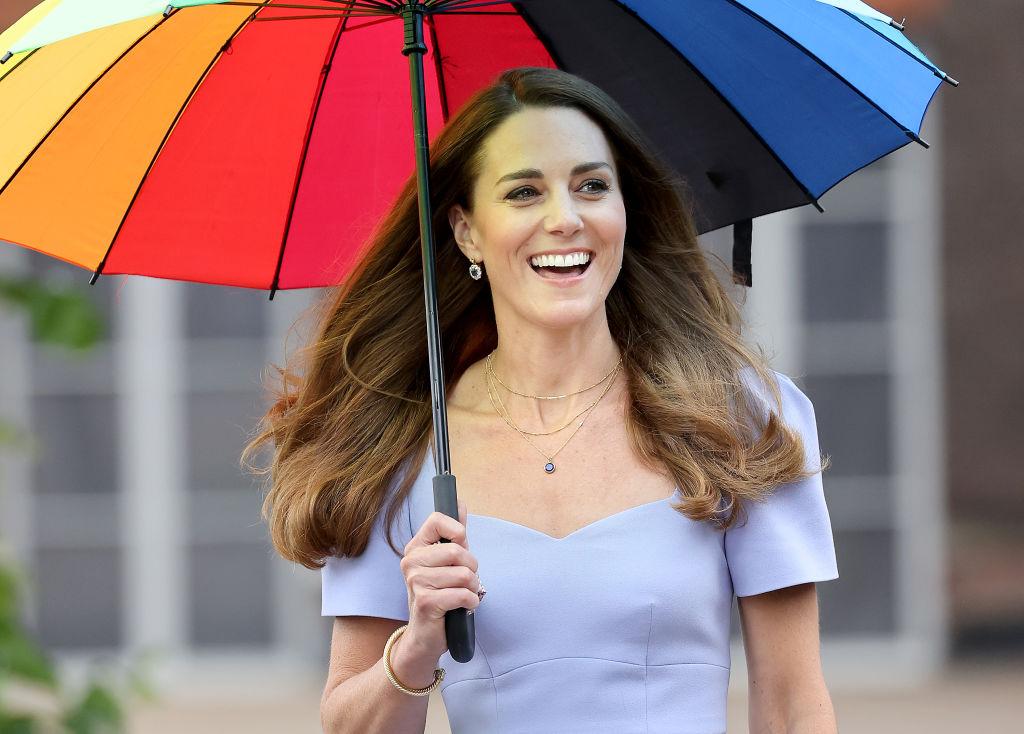
LONDON — Prince George has begun the next chapter of his education at Eton College, following his father into one of Britain’s most storied schools, even as royal watchers note that adjusting to the institution’s centuries-old customs and internal vocabulary can be its own learning curve for new pupils and their families.
The 13-year-old, who is second in line to the British throne, arrived at Eton on September 8 for his first day, accompanied by his parents, Prince William and Catherine, the Princess of Wales. The family was greeted by the school’s head master, Simon Henderson, in scenes that echoed William’s own arrival at Eton three decades earlier. George, who wore a jacket, shirt and tie for his arrival, later changed into the school’s traditional uniform of a black tailcoat, waistcoat and pinstriped trousers with a stiff white collar.
The move to Eton marks a significant milestone for the future king, who previously attended Lambrook School, a private preparatory school in Berkshire also attended by his younger siblings, Princess Charlotte, 11, and eight-year-old Prince Louis. Lambrook, which only educates pupils through Year 8, has long served as a regular feeder school into Eton, sending a steady stream of boys on to the College over the years.
Melanie Sanderson, managing editor of The Good Schools Guide, said the transition to Eton brings with it a distinctive institutional culture that can take some adjustment, even for a family with deep ties to the school. “Eton has its own language—they call year groups different things,” Sanderson told PEOPLE. “It’s from a bygone era, but of course, when your dad has been through that system, it’s probably been part of his vernacular for most of his life. As parents, you do talk about your school days, and your kids can relate to that. I’m confident that he will be very well prepared.”
Sanderson noted that George’s previous school should have eased the path considerably. “Lambrook is really used to sending boys off to Eton,” she said. “It’s a regular feeder for Eton College and lots of boys would have trodden that path before, so it’s nothing new. It’s a prep school, so its absolute purpose is to prepare its boys and girls for their next school.”
George’s enrollment continues a family tradition stretching back generations, though not an unbroken one. William attended Eton from 1995 to 2000, becoming the first heir in the direct line to the throne to be educated there. His father, King Charles, was instead sent to Gordonstoun, the rugged Scottish boarding school also attended by Charles’s own father, Prince Philip, who reportedly found his time there difficult. William, by contrast, has spoken warmly of his years at Eton, recalling in the past how he would walk over to nearby Windsor Castle on weekends for tea with his grandmother, the late Queen Elizabeth II. George’s uncle, Prince Harry, also attended Eton before William and Kate’s own three children were born.
Founded in 1440 by King Henry VI, Eton College sits just outside Windsor, within easy reach of Adelaide Cottage, where William, Kate and their three children currently live. The proximity to the family home has been cited as one of the practical factors behind the decision to send George there rather than to Marlborough College, the Wiltshire school where Kate herself was educated and which had been seen as a rival contender for years before the announcement. Unlike Marlborough, which is co-educational, Eton remains an all-boys school, meaning Charlotte will not be able to join her brother there when her own time comes to move on from Lambrook.
Fees at Eton run to roughly $88,000 a year, placing it among the most expensive schools in the country. The College’s roll call of alumni includes 20 former British prime ministers, among them Boris Johnson and David Cameron, along with actors Tom Hiddleston, Hugh Laurie, Eddie Redmayne and Damian Lewis, writers George Orwell and Ian Fleming, and adventurer Bear Grylls. Admission is known to be rigorous, with prospective pupils generally required to register years in advance and to sit entrance examinations and interviews before being offered a place.
Reports in the lead-up to George’s enrollment had suggested Eton officials were taking additional precautions ahead of his arrival, with specific accommodations at the school reportedly reviewed and upgraded to meet the security requirements associated with housing a future monarch on campus. Neither Kensington Palace nor Eton College has detailed those arrangements publicly, in keeping with the family’s general approach of allowing limited media access around the children’s schooling while preserving their day-to-day privacy once term is underway.
For William and Kate, George’s arrival at Eton also represents a milestone in balancing the demands of royal life with a desire to give their children as conventional an upbringing as possible within the constraints of their position. The couple has previously spoken about wanting their children to experience ordinary school life, even as media and public interest in George, as second in line to the throne, remains intense. School officials and royal commentators alike have suggested that whatever adjustment period lies ahead for George at Eton, from the institution’s particular jargon to its long list of traditions, is one his father is uniquely positioned to help him navigate, given his own formative years spent within the same walls three decades before.
As George settles into his new routine, attention will likely turn to how the family manages the balance between his education and his public role in the years ahead, with Eton’s five-year program setting the stage for the next phase of his life before any expected move to university.

The Asia-Pacific region illustrates a shift toward “minilateral” cooperation amid global fragmentation, as highlighted in the World Economic Forum and McKinsey’s 2026 Global Cooperation Barometer. Despite economic headwinds, the region maintains resilience through pragmatic partnerships in trade, technology, and energy security via frameworks like APEC, RCEP, ASEAN’s DEFA, and APAEC.
Intraregional trade accounted for over half of the region’s merchandise exports and imports last year, with APEC’s 21 economies representing roughly half of world trade. This regional integration demonstrates how smaller, interest-based groupings can complement multilateralism, offering agile solutions while connecting to broader global networks.
In a fragmented world, the Asia-Pacific region exemplifies how “minilateral” cooperation fosters resilience. Despite global economic headwinds, its pragmatic, interest-based partnerships within frameworks like APEC and RCEP maintain vital exchanges. This regional integration, seen in trade, technology (ASEAN’s DEFA), and energy security (APAEC), demonstrates how smaller groups can navigate geopolitical complexities. While not replacing multilateralism, this approach prioritizes agile, adaptable solutions that can connect to wider global networks, building collective resilience against shocks and fostering innovation for practical benefits.
- The Asia-Pacific region demonstrates how ‘minilateral’ cooperation can build resilience in a fragmenting world.
- Such regional collaboration can provide more agile, pragmatic frameworks for cross-border exchanges that can also plug into wider global networks.
- The recent Annual Meeting of the New Champions highlighted three main thrusts of Asia-Pacific cooperation.
“Fragmentation” has become a geopolitical watchword in recent years, with global institutions such as the International Monetary Fund warning of the increasing danger and costs (over $7 trillion) of a more segmented and fractious global landscape.
While the forces of fragmentation have intensified in recent years, especially regarding technology, finance and trade, cooperation has not ended. This is one of the central issues explored in the World Economic Forum and McKinsey’s 2026 Global Cooperation Barometer. The barometer assesses cooperation across five key pillars: trade and capital; innovation and technology; climate and natural capital; health and wellness; peace and security. Its findings indicate how cooperation is evolving from multilateral toward minilateral arrangements, highlighting how “cooperation among smaller groups of countries has persisted as economies continue to find value in working with each other through pragmatic, agile, interest-based partnerships”.
The Asia-Pacific region is one of the clearest examples of this shift, where regional cooperation is increasingly taking a practical form. Despite the headwinds to global economies, the region is expected to grow by 4.4% this year. This resilience is in part driven by strong intra- and inter-regional cooperation. Last year, intraregional trade accounted for 53% of the region’s merchandise exports and 56% of its imports, with Asia-Pacific Economic Cooperation’s 21 member economies accounting for around half of world trade. Integration in Asia-Pacific makes the region a crucial test case of how cooperation is being reconfigured towards more regional and flexible forms of collaboration.
Business
ASX 200 Edges Higher to 8,759 After Worst Week in Six Months as Oil Slide and Fed Rate Bets Steady Nerves
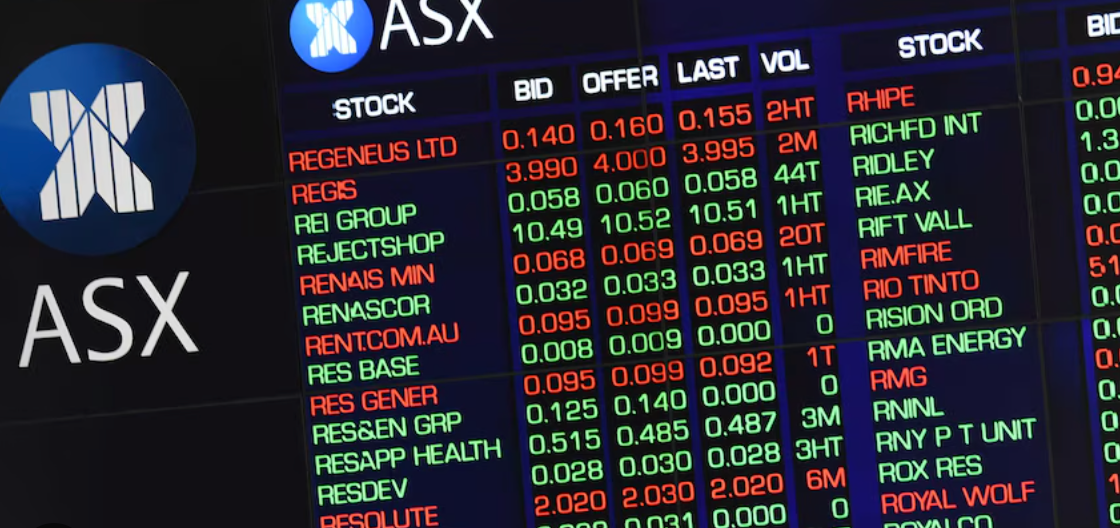
SYDNEY — Australia’s benchmark share index inched higher on Monday, clawing back a fraction of last week’s steep losses as falling oil prices and a rebound on Wall Street gave investors reason to step back into the market, even as trading remained thin and cautious.
The S&P/ASX 200 was up 18.2 points, or 0.21%, to 8,759.4 by late morning Sydney time, building on a modest gain at the open after futures had pointed to a 0.2% higher start to the session. The move offered only partial relief after a bruising week in which the index shed roughly 3%, its worst weekly performance in six months, as surging crude prices and rising bond yields hammered sentiment.
Friday’s session had set the tone for the pullback, with the ASX 200 falling 0.9% to close at 8,741.2 points, its lowest level in seven weeks and a fourth consecutive daily decline. The retreat was driven largely by concern that a spike in oil prices would complicate Australia’s inflation outlook just as the Reserve Bank weighs further interest rate increases.
Those worries eased somewhat heading into Monday’s session. Brent crude fell 2.8% to $104.61 a barrel and West Texas Intermediate dropped 2.4% to $100.05 a barrel in Friday night trading, according to data cited by market commentators, giving energy-sensitive sectors of the market some breathing room even as the pullback left crude prices still elevated by recent standards.
Wall Street’s own rebound on Friday also helped set a firmer tone locally. The Dow Jones Industrial Average rose roughly 1%, the S&P 500 gained about 0.85% and the Nasdaq Composite added close to 0.95%, snapping a run of losses in a holiday-shortened week. The U.S. gains came despite a hotter-than-expected inflation report, which showed consumer prices accelerating last month as gasoline costs rebounded after two straight monthly declines. That data reinforced bets that the Federal Reserve will raise interest rates at its policy meeting this week, with futures markets pricing in close to a 90% probability of a hike, according to the CME FedWatch tool.
The rate picture at home remains just as pressing for Australian investors. The country’s 10-year bond yield has climbed above 5.3%, its highest level since May 2011, as traders position for the Reserve Bank of Australia to tighten policy further. Deputy Governor Andrew Hauser has said policymakers will weigh additional tightening at this month’s meeting, while Assistant Governor and chief economist Sarah Hunter has cautioned that officials have limited tolerance for renewed price pressures. All four of the country’s major banks are now forecasting another RBA rate increase before year-end, with National Australia Bank tipping a move as soon as this month.
Commonwealth Bank strategists said the central bank faces a delicate communications task in the lead-up to that decision. “Given current market pricing of a hike in September is at (around) 80% the Governor will have to talk a fine line between endorsing the high chance of a rate hike,” CBA said, underscoring how closely markets are parsing every signal from Reserve Bank officials in the days ahead.
Beneath the benchmark’s modest gain, market breadth told a more cautious story. The ASX Small Ordinaries index slipped 0.15% and the Emerging Companies index fell 0.14%, indicating that Monday’s advance was concentrated in a narrower band of larger stocks rather than reflecting broad-based buying.
Materials stocks bore the brunt of the weakness. The S&P/ASX 200 Materials Index dropped 0.55% to its lowest level since August 5, with uranium, lithium and rare earth names opening broadly lower across the board. The sector’s slide extended a period of volatility for critical minerals stocks that has seen sharp single-day swings become increasingly common even when individual companies have avoided negative company-specific news.
Not every stock moved in step with the weaker materials complex. Catalyst Metals topped the leaderboard after reporting a resource upgrade at its Trident deposit, while Cleanaway Waste Management ticked higher as its takeover approach from EQT remained in play. A handful of recently beaten-down names, including Lovisa, Xero and REA Group, also caught a bid as bargain hunters returned to some of the market’s more heavily sold sectors from last week.
Elsewhere in resources, Franco-Nevada Australia said it had committed a further $200 million to Minerals 260 to help fund the Bullabulling gold project, lifting its total investment in the venture to $420 million. The arrangement includes $170 million to increase Franco-Nevada’s royalty over the project area by 1.45 percentage points, structured as non-dilutive funding, alongside a further $30 million to be subscribed in a future equity raising.
Investors are bracing for a relatively quiet run of local economic data this week, with attention instead centered on Wednesday’s Federal Reserve decision and continuing commentary from Reserve Bank officials. Sarah Hunter is scheduled to give another public address Monday, though analysts have cautioned that little new information is likely to emerge given the absence of fresh economic data since her last public comments.
For now, traders appear content to nurse the market back from last week’s losses in cautious, incremental steps rather than chase a full recovery, with global rate decisions and the trajectory of oil prices likely to remain the dominant forces shaping sentiment in the sessions ahead.
Listed contractor NRW Holdings has secured multiple key contracts with Mark Zeptner-led Ramelius Resources and Main Roads Western Australia.

TUCSON, Ariz. — A social media user describing himself as an independent investigator has claimed that Tommaso Cioni, the son-in-law of missing 84-year-old Nancy Guthrie, has left Arizona, a claim that has not been confirmed by law enforcement but has nonetheless fueled a fresh wave of online speculation into the seven-month-old case.
The claim was posted on the social media platform X by an account identifying itself as JLR Investigates, run by a self-described investigator who said his own sources told him Cioni had “left town” and was no longer in Arizona. Neither Tucson-area law enforcement nor the Guthrie family has publicly confirmed or addressed the claim, and no official update on the investigation has been issued in connection with it.
Nancy Guthrie, the mother of NBC “Today” show co-anchor Savannah Guthrie, was reported missing after disappearing from her home in the Catalina Foothills area of Tucson on February 1. Cioni, who is married to Nancy’s daughter Annie Guthrie, has drawn public attention because he and Annie live near Nancy’s home and are reported to be among the last people to see her before she vanished. Investigators have said Cioni dropped her off at her house before she disappeared.
Law enforcement officials have repeatedly stated that no members of the Guthrie family are considered suspects in the case. Authorities have not announced any breakthrough or identified a suspect in the seven months since Nancy Guthrie was reported missing, and they have continued to appeal to the public for information.
Despite the absence of any official confirmation, the claim about Cioni’s whereabouts spread quickly after the same social media account turned its attention to Cioni’s past involvement in a music group called Early Black. The account shared excerpts of songs from the project and questioned the tone of some lyrics, which it described as “dark.” One clip shared by the account included the lyrics, “Tell me why, you want to die.” The account went on to reiterate its central claim, writing, “Tommaso is the last person with Nancy Guthrie before she vanished.”
A livestream from the account, titled “TOMMASO’S HIDING! FLED SCENE!!,” drew a large audience and a flood of comments and theories from viewers. One user commented on the broadcast, “This band makes some weird music! IMO.” Another user posted an elaborate and unverified theory about the day of the disappearance, writing, “I speculate that maybe Nancy was missing before the 31st. Tomasso may have dropped some one off at Nancy’s on the 31st. This person dressed up like Nancy, called an Uber. Walked with walker got in the uber and went to Tomassos house.”
None of the claims made in the posts or the livestream have been substantiated by investigators, and officials have cautioned the public and media against drawing conclusions from unverified online speculation while the case remains open. The proliferation of amateur theorizing reflects a broader pattern that has surrounded the case since Guthrie’s disappearance, with online commentators scrutinizing the family’s movements, statements and personal histories even as formal investigative details have remained limited.
Savannah Guthrie has spoken publicly about her mother’s disappearance and the toll the uncertainty has taken on the family, without commenting directly on the specific claims circulating about her sister’s husband. NBC has also taken steps in recent months tied to the ongoing scrutiny surrounding the case, though the network has not issued detailed public statements addressing individual social media claims.
The case has drawn sustained national attention in large part because of Savannah Guthrie’s public profile as a longtime network news anchor, with outlets and social media users tracking developments closely even in the absence of confirmed updates from investigators. That dynamic has periodically produced cycles of viral claims, including previous unverified assertions about Cioni’s background, that circulate widely online before fading without official corroboration.
Authorities investigating Nancy Guthrie’s disappearance have not released a timeline beyond confirming she was last known to be at her home on February 1, and they have not disclosed whether any physical evidence, surveillance footage or forensic leads have advanced the case since it began. The Pima County area, which includes Tucson, has seen periodic public appeals from investigators seeking tips from residents who may have seen Guthrie or noticed unusual activity around the time of her disappearance.
For now, the claim that Cioni has left Arizona remains unverified and originates from a single social media account rather than from any law enforcement source, court filing or statement from the Guthrie family. Investigators have not indicated any change in Cioni’s status in the case, and he has not been named a person of interest or suspect by authorities at any point since Nancy Guthrie went missing.
As speculation continues to circulate online, family members and law enforcement alike have urged caution about drawing conclusions from social media claims that have not been independently verified. The case remains open, with no arrests made and no suspect named more than seven months after Nancy Guthrie disappeared from her Tucson home.

Instant changes, United message – how Enzo Maresca turned Man City around after Phil Foden red card

Which Is Better For Charging Your MacBook?

BAJAMOS DEL ESCENARIO A DANIELA DARCOURT | CHAPA TU MONEY


-
 Tech6 days ago
Memory prices are slowing because buyers ran out of money
-

 Tech15 hours ago
The Latest Weird Thing to Play Doom Is the Mapped-Out Brain of a Fruit Fly
-

 Business4 days ago
Micron Stock Climbs Above $1,031 as AI Memory Crunch and a $50 Billion Outlook Fuel the Rally
-

 Business4 days ago
AMD Stock Climbs After Management Lifts 2027 Data Center Outlook Toward $70 Billion in AI Sales
-

 Crypto World5 days ago
Bitcoin price risks $76K drop as $78K support weakens
-

 Fashion2 days ago
Weekend Open Thread – Corporette.com
-

 Crypto World5 days ago
Robinhood Stock: How To Take Advantage With Reduced Risk
-

 Crypto World3 days ago
XAG/USD: Silver’s Short-Term Rally Meets Its Moment of Truth
-

 Crypto World5 days ago
Ethereum price stalls below $2,500 as ADX drops to 11
-

 Crypto World4 days ago
2 Chip Stocks Broke Out This Week. Neither Was Nvidia
-

 NewsBeat6 days ago
England up in reading, maths and science rankings as Scotland and Wales dip
-

 Crypto World3 days ago
OKX launches 10x OpenAI, Anthropic X-Perps in Europe
-

 Business3 days ago
10 Most-Streamed Songs On Spotify In 2026 So Far, Led By Ella Langley’s Dominant Run On The Charts This Year
-

 Tech3 days ago
Battery life is the only iPhone 18 Pro and iPhone Duo upgrade I care about. Apple didn’t disappoint
-

 Crypto World3 days ago
Diesel Tops $6 a Gallon for the First Time as 28 States Set Records
-

 Crypto World5 days ago
Intel Stock Jumps 9% on Chip Price Hike Report, US Stake Gains $36 Billion
-

 Tech4 days ago
Apple Watch Ultra 4 vs Watch Ultra 3: Should you really spend another $799?
-

 Crypto World4 days ago
Bitcoin price risks $70K if $78K neckline breaks
-

 NewsBeat5 days ago
What went right this week: an ‘historic’ fall in violent crime, plus more
-

 Crypto World4 days ago
Pi Network ships Protocol 27 on a network with 14 million users and zero DeFi
You must be logged in to post a comment Login