

Business
Ola Electric shares can crash up to 35%, warns Emkay after seeing Q4 results


The Bhavish Aggarwal-led company on Wednesday reported a consolidated net loss of Rs 500 crore for the January-March quarter of the financial year 2026, down 42.5% from the Rs 870 crore net loss reported in the corresponding quarter of the previous financial year. However, Emkay highlighted that the company reported a weak set of earnings, with the sharp plunge in revenue and a 61% YoY drop in volume.
While Ola Electric has seen some sequential volume improvement (March-April retails at 10,000-12,000/month vs around 8,000/month on average from November 2025 to January 2026) and market share (8-9% in April 2026/May 2026; 5% in Q4 FY26), Emkay attributes the volume growth to the currently better placed production capacity, share gains in the more price-sensitive northern markets, and electric two wheeler incumbents along with Ather operating at peak utilization amid strong demand.
“Ola is adopting several measures to improve execution, cut costs/conserve cash, and improve brand perception (service-related issues have started resolving). We believe this could be a difficult, long-drawn-out process, especially due to greater focus by incumbents + scale-up at Ather. Additionally, new capacities coming onstream for incumbents/Ather in H2 FY26 would reintroduce competition in the industry structure,” the brokerage said.
Given the current dynamics, Emkay believes that Ola’s recovery in volume and market share remains monitorable. “We increase FY27E volume by around 10%, given the strong momentum in the underlying E-2W industry,” it added.

Emkay retained its ‘Sell’ call for the shares of Ola Electric Mobility, but raised its target price to Rs 25 from Rs 20. The latest target price however, implies a downside potential of more than 35% from the stock’s previous closing price of Rs 36.96 apiece. The brokerage highlighted that it prefers Aether Energy and TVS Motor Company as part of the electric two-wheeler theme.
Ola Electric share price
Ola Electric shares crashed around 6% to trade at Rs 34.83 apiece today in the morning. After hitting a 52-week low of Rs 22.05 apiece in March, Ola Electric Mobility shares sharply rallied more than 90% in just a month to hit a multi-month high of Rs 42 apiece.
Also read: Ola Electric Q4 Results: Net loss contracts 42% YoY to Rs 500 crore, revenue tanks 57%
The stock has, however, fallen 6% in one month, 6% in 2026 so far and 31% in one year. The company currently has a market capitalisation of more than Rs 15,579 crore.
(Disclaimer: Recommendations, suggestions, views and opinions given by the experts are their own. These do not represent the views of The Economic Times)

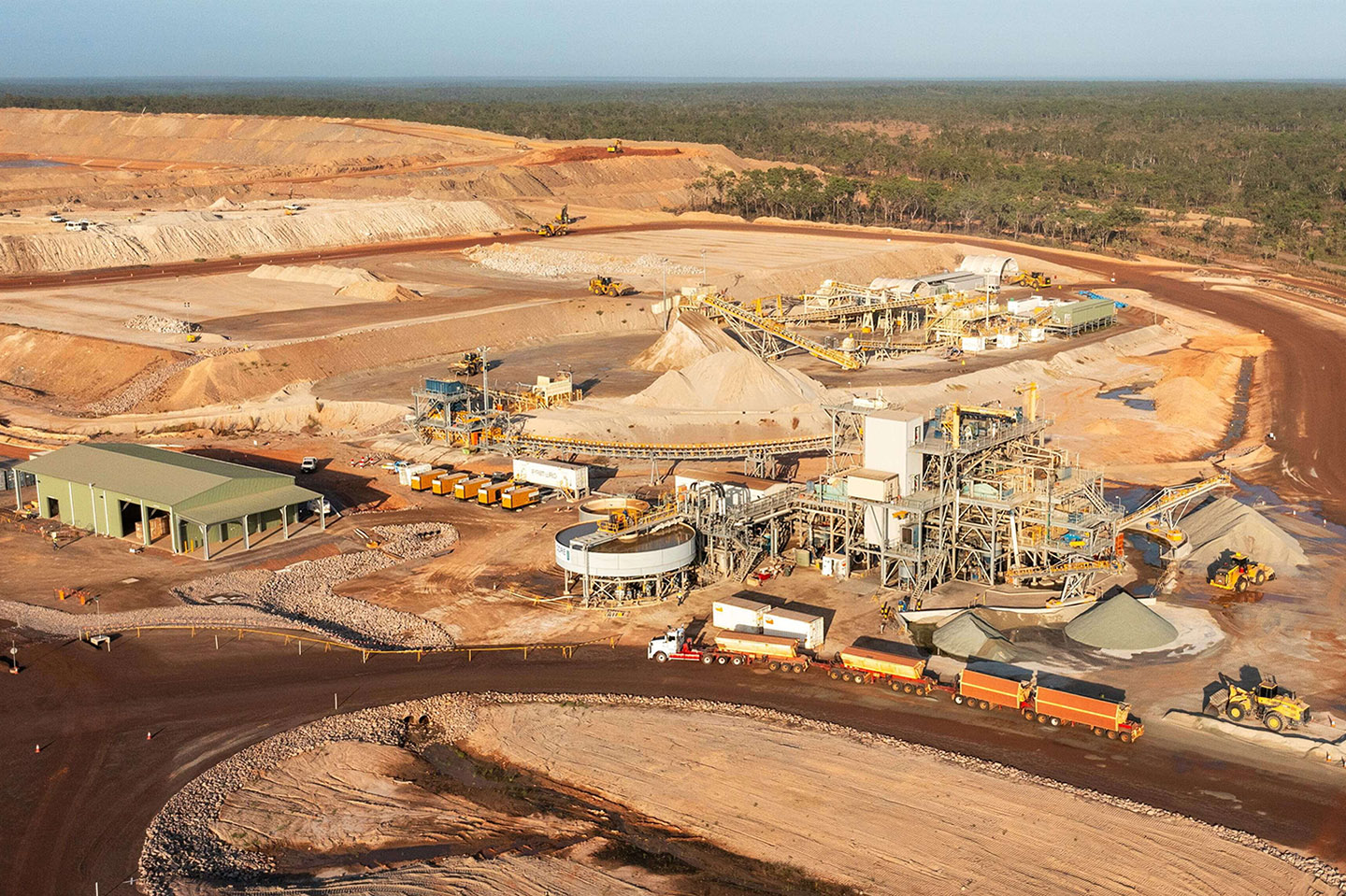
Core Lithium has announced plans to spin-out a series of its exploration assets to form a new junior entity, along with a change at board level.

UiPath: Profits Rising Amidst Cautionary Signals
Business
Dwarikesh Sugar, Dhampur Sugar and other sugar stocks gain up to 4% after excise duty cut on ethanol-blended petrol

Shares of Dwarikesh Sugar, Dhampur Sugar, Mawana Sugars, Balrampur Chini, and Dalmia Bharat Sugar rose 3–4%, as investors cheered the policy move that is expected to support ethanol demand and improve earnings visibility for sugar manufacturers.
According to a Times of India report, India has waived excise duty on multiple ethanol-blended petrol variants, including E22, E25, E27 and E30, as part of its broader strategy to accelerate the adoption of cleaner fuels.
The exempted blends include E22 (78% petrol and 22% ethanol), E25 (75% petrol and 25% ethanol), E27 (73% petrol and 27% ethanol), and E30 (70% petrol and 30% ethanol), reflecting the government’s push towards higher ethanol blending in transport fuels.
The move aligns with the government’s ambitious ethanol roadmap, which includes launching 50–100 ethanol fuel stations across Delhi-NCR, Mumbai, Pune and Nagpur before expanding the network to 500 outlets by the end of 2026.
The announcement comes at a time when global energy markets remain under pressure due to the ongoing Middle East conflict. Crude oil prices have climbed from around $70 per barrel to above $100, leading to a cumulative increase of over Rs 7.5 per litre in domestic petrol and diesel prices.
The Finance Ministry had earlier indicated that state-run oil marketing companies are preparing to offer E85 fuel at a discount of Rs 20 per litre compared with E20 petrol. The discount aims to offset ethanol’s lower energy content and encourage consumer adoption.While E85 contains 85% ethanol and 15% petrol, E20 petrol—already compatible with most vehicles on Indian roads—will continue to be available nationwide.
Also read: Exclusive | Why BSE wants options traders to think beyond the next expiry
For sugar companies, the excise relief is being viewed as a significant positive. A faster shift towards ethanol blending could create a sustained demand avenue beyond traditional sugar sales, giving the sector another reason to celebrate.
(Disclaimer: Recommendations, suggestions, views and opinions given by the experts are their own. These do not represent the views of Economic Times)

Social media firms face thousands of lawsuits, the BBC looks at four which could be significant.
Mark Pownall and Justin Fris discuss international consultancy Gerard Daniels and the Perth-based firm’s 40 years of operation.
Fiera Capital offers thoughtful investment solutions for high net worth individuals and institutions across a spectrum of traditional, non-traditional, and bespoke investment strategies. Our mission is to provide our clients with the highest quality of customized service and performance through a culture of integrity, teamwork, excellence, and innovation. We believe our structure promotes excellence within our specialized investment teams by combining the flexible and efficient environment of a multi-style investment manager with the scale of resources offered by a leading investment firm. Investment teams operate independently while benefiting from advantages in risk management, research, and shared expertise.

You Love Quantum. You Just Don’t Want to Buy Quantum.
Business
Adani Power or NTPC? Macquarie initiates coverage on 3 power stocks, hikes target prices for 3 others
Macquarie initiated coverage on JSW Energy with an ‘Outperform’ rating and a target price of Rs 720 per share, implying an upside potential of more than 28% from the stock’s previous close.
The brokerage also initiated coverage on Adani Power and Adani Energy Solutions with ‘Neutral’ ratings. It assigned a target price of Rs 230 per share to Adani Power, implying an upside of about 4%, and Rs 1,450 per share to Adani Energy Solutions, implying a downside of around 6%.
NTPC emerged as Macquarie’s top pick in the sector, followed by JSW Energy, Power Grid, Adani Green, Adani Power and Adani Energy Solutions. The brokerage raised its target price on NTPC to Rs 480 per share, indicating an upside potential of 36.5% from the previous closing price.
Macquarie also sees strong upside in Power Grid, raising its target price to Rs 400 per share, implying upside potential of about 39%. It also increased its target price for Adani Green to Rs 1,700 per share, indicating an upside of nearly 15%.
India’s power sector is undergoing dual-track evolutions
According to Macquarie, India’s power sector is evolving along two parallel tracks — coal continues to anchor baseload stability, while renewables drive incremental capacity growth.
This transition is expected to support an expansion in installed capacity from 538 GW currently to 900 GW by FY32. However, achieving this scale will require rapid deployment of 74 GW of energy storage to manage intermittency and meet peak evening demand.
“Peak power demand touched a record 271 GW in May 2026, leaving minimal supply headroom and highlighting grid stress despite adequate base capacity,” Macquarie noted.The Central Electricity Authority (CEA) expects power demand to grow at a 6% CAGR through 2030, supported by strong industrial activity, which accounts for roughly half of demand, structurally rising cooling requirements contributing more than 20% of incremental growth, and emerging high-load segments such as data centres and electrified transport.
Macquarie believes this will intensify pressure across both generation and transmission infrastructure.
The brokerage expects India to enter a transmission-led capex cycle, with an estimated US$51 billion investment requirement through FY36 to bridge the geographic mismatch between renewable-rich states and major consumption centres.
It also highlighted a structural execution gap: generation assets can typically be built in 12–18 months, while transmission infrastructure often takes 36–48 months, necessitating proactive corridor development.
Grid curtailment remains a key risk. Macquarie pointed to the loss of 2,300 GWh in late 2025, when midday solar generation exceeded the grid’s absorption capacity.
Indian discoms on the path to recovery
Macquarie also noted that India’s distribution companies (discoms) are showing signs of recovery, supported by RDSS-led investments and smart metering initiatives.
Improved billing efficiency, lower leakages and a reduction in overdue payments under the Late Payment Surcharge (LPS) mechanism indicate materially stronger financial health than in previous years, it said.
The brokerage added that regulatory tailwinds remain supportive.
“The Draft National Electricity Policy 2026 signals a fundamental shift toward market-based systems, repositioning coal as a flexible balancing resource rather than a rigid baseload source. Legislative reforms such as the Electricity (Amendment) Bill 2026 and the Digital India Energy Stack aim to improve discom finances and enable peer-to-peer electricity trading,” Macquarie said.
(Disclaimer: Recommendations, suggestions, views and opinions given by the experts are their own. These do not represent the views of The Economic Times)
According to a Bloomberg report, Crusoe Energy Systems LLC, which develops data centres for companies such as OpenAI and Microsoft, has paused work on a planned 1.8-gigawatt data centre campus in Cheyenne, Wyoming. The project was expected to be powered by 900 MW of Bloom Energy fuel cells along with grid electricity.
Notably, MTAR Tech is a critical manufacturing partner for Bloom Energy. It manufactures and fabricates critical assemblies for the US-based company. MTAR Tech’s website says that Bloom Energy’s servers are among the most efficient energy generators globally, significantly reducing electricity costs and lowering greenhouse gas emissions.
For over nine years, MTAR has supplied power units, specifically hot boxes, to Bloom Energy in the US, and a major portion of its revenue comes from the US-based client. Currently, MTAR is also developing and manufacturing hydrogen boxes and electrolysers for the company.
MTAR Tech share price
MTAR Tech shares have fallen more than 13% in two days since Bloomberg’s report to trade at Rs 6,470 apiece on Thursday morning. Despite the recent downtrend, the stock has rallied 174% in 2026 so far and more than 280% in one year.
Shares of the company jumped 241% in three years and 539% in five years. MTAR Tech currently has a market capitalisation of Rs 8,450 crore.
MTAR Tech Q4 Results
MTAR Technologies earlier in May reported a sharp rise in profit for the March quarter, driven by strong growth in revenue from operations and improved operating leverage across businesses. The Hyderabad-based precision engineering company posted a consolidated net profit of Rs 44.28 crore for Q4, compared with Rs 13.72 crore in the corresponding quarter last year, marking a jump of around 223%.
Also read: MTAR Technologies Q4 Results
Revenue from operations rose sharply to Rs 306 crore in the quarter ended March 2026 from Rs 183 crore in the year-ago period, registering growth of nearly 67%. The rise was largely led by higher product sales, which came in at Rs 303 crore compared with Rs 179 crore in the same quarter last year.
(Disclaimer: Recommendations, suggestions, views and opinions given by the experts are their own. These do not represent the views of The Economic Times)
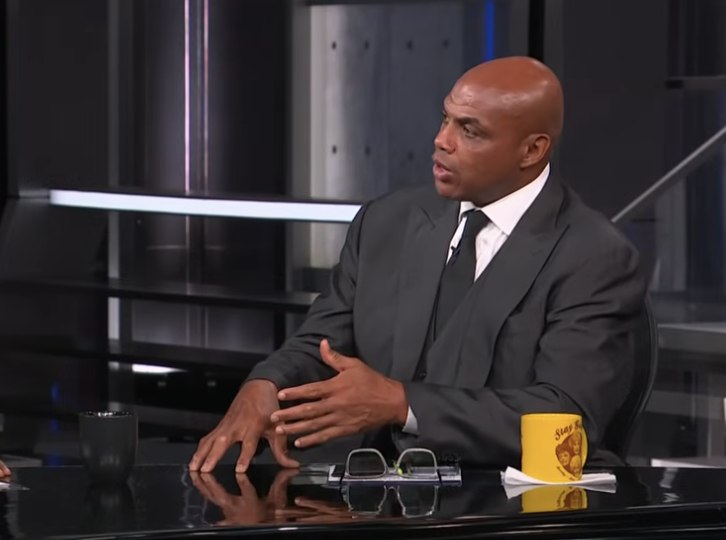
NEW YORK — Charles Barkley unleashed sharp criticism of the San Antonio Spurs after they squandered a 29-point lead in Game 4 of the 2026 NBA Finals, calling their second-half collapse some of the “dumbest basketball” he had ever seen as the New York Knicks completed a historic comeback victory.
The Knicks erased the massive deficit to win 107-106 on OG Anunoby’s tip-in with 1.2 seconds left, taking a 3-1 series lead. On “Inside the NBA,” Barkley did not hold back in his assessment of San Antonio’s late-game execution.
“We saw the dumbest basketball team in the history of civilization,” Barkley said. “They had a 25-point lead, took eight straight threes. Like they thought that was some of the most mismanaged stupid basketball.”
The Spurs built a commanding 81-52 lead in the third quarter but went cold, shooting just 3 for 17 from three-point range in the second half. Barkley highlighted the lack of clock management and poor shot selection as the Spurs failed to protect their advantage.
Historic Comeback Caps Dramatic Night
The Knicks’ rally is the largest comeback in NBA Finals history, surpassing the previous mark of 24 points. It was the second-largest playoff comeback ever, behind only the LA Clippers’ 31-point rally in 2019.
Jalen Brunson led New York with 36 points, while Anunoby finished with 33 and delivered the game-winner. Victor Wembanyama had 24 points and 13 rebounds for the Spurs but shot 9-for-25 from the field. De’Aaron Fox, Dylan Harper and Devin Vassell also scored in double figures, but the team’s second-half collapse proved costly.
Spurs coach Mitch Johnson expressed disappointment. “We got on our heels — we missed some shots. It’s disappointing, to say the least.”
Wembanyama acknowledged the team’s lack of hunger in the second half. “I can’t really explain it right now. We clearly weren’t the most hungry in the second half.”
Inside the NBA Reaction
Barkley’s blunt critique resonated with viewers, with many agreeing the Spurs’ decision-making in the third quarter was puzzling. The Hall of Famer noted the Spurs’ repeated three-point attempts without regard for the clock, even while holding a large lead.
Ernie Johnson, Kenny Smith and the rest of the panel joined in the discussion, with the broadcast capturing the shock of fans and analysts alike at Madison Square Garden. The Knicks’ resilience turned a potential blowout into one of the most memorable games in Finals history.
Series Outlook Shifts Dramatically
The Knicks now hold a 3-1 lead and can clinch the championship in Game 5 on Saturday in San Antonio. A victory there would end New York’s title drought since 1973. The Spurs must win the next three games to claim the title, a daunting task against a motivated Knicks squad playing with home-court momentum in the series.
The physical nature of the series continued, with several flagrant fouls called on both sides. Wembanyama faced heightened defensive attention, while Brunson’s leadership and clutch play proved decisive once again.
Fan and Cultural Reaction
Madison Square Garden erupted as the final seconds ticked away, with fans singing “Don’t Stop Believin’” long after the game ended. Celebrities including Taylor Swift were in attendance, adding to the electric atmosphere of a night that will be remembered for years.
Social media exploded with reactions to both the comeback and Barkley’s fiery commentary. The moment has already become one of the most discussed in recent NBA history, highlighting the drama and unpredictability of playoff basketball.
Broader Context of the Finals
The 2026 NBA Finals have delivered compelling storylines, pitting the resilient Knicks against a young, talented Spurs team led by the generational talent Wembanyama. The series has featured strong individual performances and tactical battles, with Game 4 standing out as one of the most memorable.
For the Knicks, the comeback reinforces their identity as a never-quit group that has overcome significant obstacles throughout the postseason. For the Spurs, the loss represents a painful learning experience in their first Finals appearance in years.
As the series shifts back to San Antonio, the Spurs will look to regroup and extend the series, while the Knicks aim to close it out on the road. Game 5 promises another intense chapter in what has become a hard-fought and entertaining NBA Finals.
Charles Barkley’s passionate breakdown captured the frustration many felt watching the Spurs’ collapse. His comments, while blunt, reflect the high standards expected at this level of competition. The NBA world will be watching to see how both teams respond as the championship race reaches its critical stage.
The Knicks’ historic Game 4 victory has shifted momentum dramatically. With a 3-1 lead, New York is one win away from ending a long championship drought, while San Antonio faces an uphill battle to keep their title hopes alive. The coming games will test the resilience and character of both franchises in what has already become a memorable Finals series.
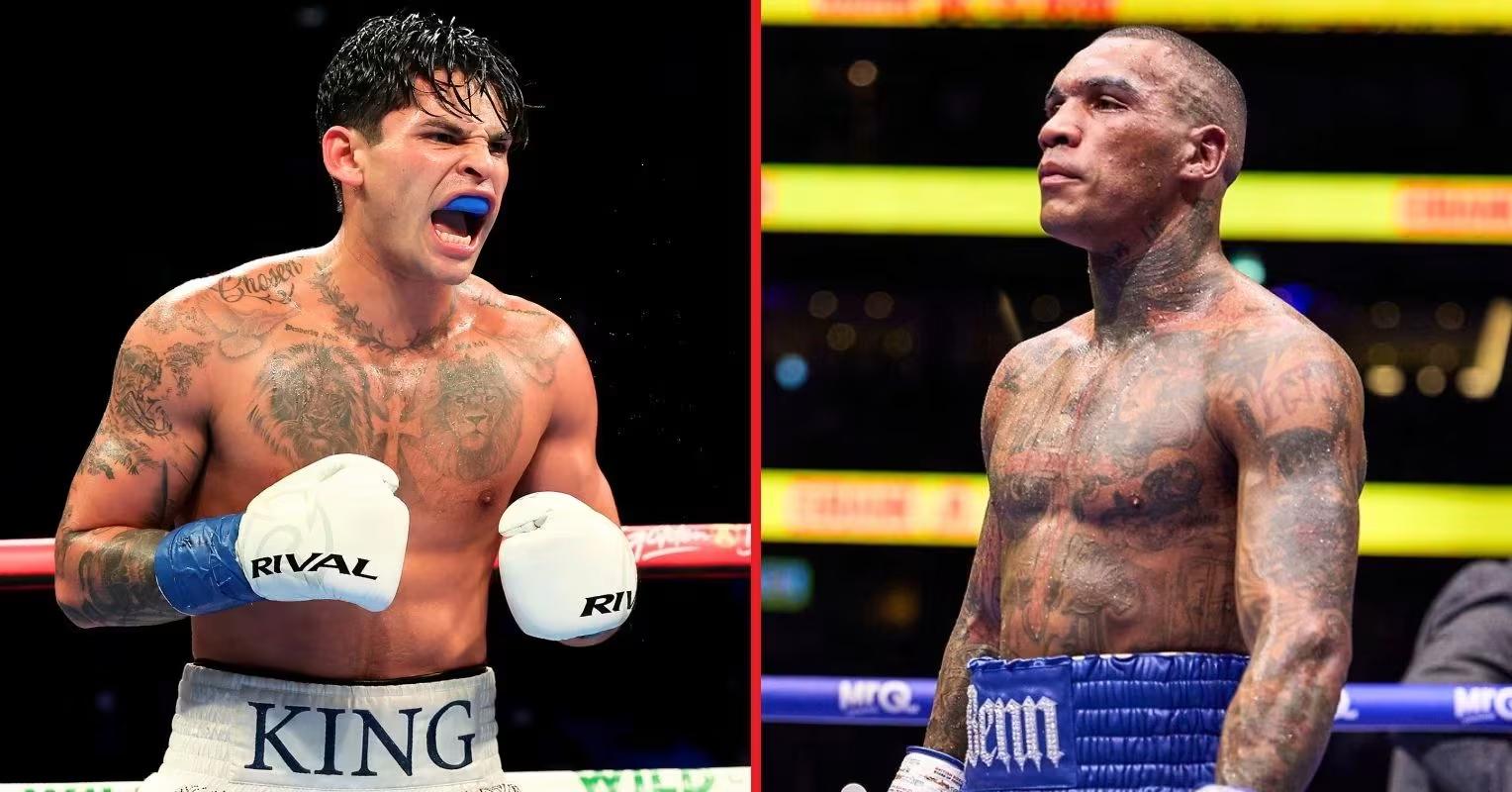
Paulie Malignaggi sees only one winner in Ryan Garcia vs Conor Benn: “He gets knocked out”

Why the Social Media Addiction Case Isn’t Over Yet

BUSINESSiQ, Chamber, Esh to connect hundreds of pupils



-

 Fashion6 days ago
Weekend Open Thread: Evereve – Corporette.com
-
 Crypto World6 days ago
Jensen Huang Approves Samsung, SK Hynix, and Micron for NVIDIA (NVDA) HBM4 Memory Supply
-
 Entertainment4 days ago
The Best Mystery Series of All Time Is Surging on Streaming 30 Years After It Ended
-

 Crypto World3 days ago
Anatomy of the June crypto crash: Fed, Iran, Saylor
-

 NewsBeat3 days ago
Alexander Zverev wins the French Open to finally earn a 1st Grand Slam title
-

 Tech5 days ago
Suspicious Polyfill login prompts pop up on Toshiba, Muji websites
-
 Crypto World5 days ago
Senator Cynthia Lummis Calls CLARITY Act the Most Consequential Financial Legislation of This Generation
-

 Tech4 days ago
Microsoft unveils seven homegrown AI models in new bid for ‘long term self-sufficiency’
-

 Tech6 days ago
Microsoft launches MXC, an OS-level sandbox for AI agents, with OpenAI and Nvidia already on board
-

 Business6 days ago
(VIDEO) Justin Bieber Delivers Surprise Happy Birthday Serenade to Diners at Los Angeles Mexican Restaurant
-
 Business4 days ago
The Pain Points Taking a Fragile Tech Rally Down a Notch
-
 Crypto World3 days ago
Eli Lilly (LLY) Stock Surges 4% Following Breakthrough Sleep Apnea Trial Results
-

 Business3 days ago
High Stakes for Wembanyama as New York Pushes for 3-0 Lead
-

 Tech5 days ago
Von der Leyen’s AI envoy pick draws conflict-of-interest fire
-
Crypto World6 days ago
LBank Surpasses 25 Million Users Worldwide as AFA Partnership Continues to Drive Global Growth
-

 Tech5 days ago
Hackers now exploit SolarWinds Serv-U flaw to crash servers
-

 Tech6 days ago
Meta steals a tactic from Tesla and builds data centers in tents
-

 Crypto World4 days ago
Trump’s AI Ownership Plan Could Benefit Anthropic at OpenAI’s Expense
-
 Sports2 days ago
Bangladesh beat Australia after 20 years in ODIs, register only their second win over six-time world champions | Cricket News
-

 Tech3 days ago
Notion restores access to Anthropic after service disruption
You must be logged in to post a comment Login