Connect with us
DAPA Banner
DAPA Coin
DAPA
COIN PAYMENT ASSET
PRIVACY · BLOCKDAG · HOMOMORPHIC ENCRYPTION · RUST
ElGamal Encrypted MINE DAPA
🚫 GENESIS SOLD OUT
DAPAPAY COMING

Business

Old Somerset cattle market could be turned into 100 new homes

Published

on

Business Live

The former Yeovil cattle market site has been assessed for potential housing development

The former cattle market site, seen from Court Ash in Yeovil. CREDIT: Daniel Mumby. Free to use for all BBC wire partners.

The former cattle market site, seen from Court Ash in Yeovil(Image: Local Democracy Reporting Service / Daniel Mumby)

A former cattle market in Yeovil town centre could be converted into as many as 100 new homes if the site progresses under the new Somerset Local Plan.

Advertisement

Somerset Council has recently begun the first phase of public consultation on its new Somerset Local Plan, which will determine where new housing and employment sites are designated until 2045.

As part of the Local Plan procedure, the council has published the results of its housing and employment land availability assessment (HELAA), which identifies every site submitted during the ‘call for sites’ in early 2025 (which invited developers, promoters and landowners to put forward sites for future development).

Among the sites included within the HELAA is the former cattle market south of the A30 Reckleford and Market Street – with local councillors suggesting it could accommodate up to 100 new properties.

Councillors Mike Hewitson and Oliver Patrick, who represent the Coker division near Yeovil, highlighted the issue in their latest monthly newsletter to their constituents.

Advertisement

They said: “Councils are required to have up to date Local Plans in order to. demonstrate how they are delivering central government housing targets for their area.

“The HELAA process sits as a first stage in the wider Local Plan site selection process. It does not allocate sites or grant them planning permission or planning status of any kind.”

The cattle market was designated as one of the principal regeneration locations within the Yeovil Refresh regeneration scheme, launched by South Somerset District Council and supported by £9.75m from the then-Conservative government’s future high streets fund.

After the current Labour government took office in July 2024, the programme was restructured to enable the remaining funds to be concentrated on the Glovers Walk site and several smaller projects in the town centre.

Advertisement

The cattle market component of the Yeovil Refresh programme was formally scrapped in August 2024, alongside any proposed improvements to the Poundland outlet at 72-74 Middle Street.

Hewitson and Patrick added: “The owners of the cattle market have submitted their land for consideration in the Local Plan. They have indicated it could accommodate approximately 100 homes.

“Could we finally see this major brownfield site finally come forward for redevelopment?”

In their formal evaluation of the location, the council’s own planning officers said the cattle market was “potentially suitable” for inclusion within the Local Plan as a “regeneration site” (i.e. one where central government funding could be targeted to unlock new homes).

Advertisement

The officers added: “The site has been promoted for housing development and therefore is not considered available for economic development.

“The site is adjacent to multiple highways, so it is assumed that access could be taken from multiple points.

“The promoter has identified a few common constraints but anticipates that they can be overcome.”

A summary of the consultation responses is due to be published in early November, with the second round of consultation, incorporating further details of proposed development sites, expected to commence in September 2027.

Advertisement

The third and final round of public consultation is currently scheduled for March 2028, after which the Local Plan will be submitted to the Planning Inspectorate, which may hold additional public hearings should it be deemed necessary.

If everything proceeds, the new Local Plan will be formally adopted on March 16, 2029.

Continue Reading
Click to comment

You must be logged in to post a comment Login

Leave a Reply

Business

Fatty liver new treatment found: Study discovers a medicine that reverses severe fatty liver by just repairing the gut

Published

on

Fatty liver new treatment found: Study discovers a medicine that reverses severe fatty liver by just repairing the gut
A new experimental drug has shown it can heal severe fatty liver disease in animals, not by attacking the liver directly, but by fixing a damaged gut first. Scientists say the discovery could open a fresh treatment path for a disease that has no approved cure and is silently spreading among urban population.

For years, doctors have struggled to find an effective medicine for one of the most stubborn liver conditions around, metabolic dysfunction-associated steatohepatitis, or MASH. It’s the advanced, dangerous cousin of the “fatty liver” diagnosis that shows up on countless ultrasound reports across Indian cities today. Left untreated, it can quietly progress to cirrhosis, liver cancer, and complete liver failure.

Also Read: Why people sleep with phones next to bed? Psychology and sociology studies say it’s not because of any addiction or love for gadgets

Now, researchers at Michigan Medicine, part of the University of Michigan, believe they may have found a way to stop, and even reverse, the disease. Their weapon isn’t aimed at the liver at all. It’s aimed at the gut.

The Gut-Liver Connection Nobody Talked About

The study, published in The Journal of Clinical Investigation, centres on an experimental compound called DT-109, a small molecule built from three amino acids (scientifically termed a tripeptide). Earlier research from the same lab had already hinted that DT-109 could ease fatty liver disease in animals. This new study finally explains why it works, and the answer surprised even the scientists.

Advertisement


The team discovered that MASH doesn’t start and end in the liver. It often begins with an overgrowth of a gut bacterium called Clostridium perfringens, which floods the intestines with ammonia. That ammonia slowly eats away at the lining of the gut, weakening its natural barrier. Once that barrier breaks down, toxins and bacterial byproducts leak into the bloodstream, travel straight to the liver, and trigger an inflammatory attack, including an overactive immune response involving cells known as CD8+ T cells.

In short: a damaged gut can quietly poison the liver.

DT-109 appears to interrupt this chain reaction. In tests on both mice and, more importantly, non-human primates, whose gut and liver biology closely mirrors that of humans, the drug cut down harmful bacterial overgrowth, lowered ammonia levels, and helped the intestinal wall repair itself. With the gut barrier restored, far fewer toxins reached the liver, and inflammation eased significantly. In the primate trials, this translated into a marked improvement in the severity of MASH itself.According to the study’s senior author, the compound gives the gut lining real protection, cutting down the flow of harmful bacterial substances long believed to fuel the onset and worsening of MASH. Researchers also noted that although DT-109 mainly works inside the digestive tract, its protective effect appears to travel far beyond it.

Why This Matters

Fatty liver disease is no longer a rare finding in hospitals, it has quietly become one of the country’s biggest emerging health concerns. Multiple Indian studies over the past decade have estimated that roughly one in three adults in the country may have some degree of fatty liver disease, with numbers climbing even higher among people who are overweight, diabetic, or lead sedentary, desk-bound lives, a pattern increasingly common in India’s IT and urban office workforce. Rising obesity, sugar-heavy diets, and inactivity have all been blamed for the surge.

Also Read: 101-year-old working woman, who lives alone in New York, shares 3 tips to live longer, healthier, and happier, and none is about fitness

A meaningful share of these cases can silently progress to the more dangerous MASH stage without any obvious symptoms, often being detected only when the liver is already significantly damaged. Because there is currently no widely approved drug that reliably reverses this condition, most doctors are limited to advising weight loss, dietary changes, and exercise, advice that is hard for many patients to sustain long-term.

Advertisement

This is exactly why researchers are calling the DT-109 findings significant. A leading hepatologist involved with the research pointed out that the study offers real insight into how MASH develops, and gives fresh hope for a therapy that is both effective and safe, something patients with this condition have been waiting for.

Beyond the Liver: A Possible Two-in-One Treatment

Interestingly, DT-109 may not stop at liver disease. Earlier animal studies had already shown that the compound could shrink artery-clogging plaques and prevent calcium buildup in blood vessels, pointing to a possible role in preventing heart disease as well, a major bonus, since fatty liver disease and cardiovascular disease frequently occur together in the same patients. Scientists also believe the drug’s gut-repairing properties could eventually be tested for other conditions linked to a weakened intestinal lining, such as inflammatory bowel disease.

The Reality Check: Still Early Days

Before anyone gets ahead of themselves, it’s worth underlining that these results come from laboratory and animal studies, not from human patients. The compound, developed with support from Diapin Therapeutics, will now need to go through the rigorous phases of human clinical trials to confirm that it is both safe and effective in people. That process typically takes several years.

Still, for a disease that affects hundreds of millions of people worldwide and has no dedicated cure, a treatment strategy that targets the gut instead of the liver marks a genuinely new direction, and one doctors and patients alike will be watching closely in the years ahead.

(Disclaimer: This article is based on findings from an animal-model study published in a peer-reviewed journal. The treatment discussed is experimental and has not yet been approved for human use. Readers with concerns about liver health should consult a qualified doctor for diagnosis and treatment.)

Advertisement
Continue Reading

Business

Several flights diverted after plane blocks Gatwick runway

Published

on

Artwork depicting an armour-suited character patrolling through a post-apocalyptic desert scene, with a German shepherd trotting alongside them. A dramatic sunset fills the landscape behind them, which is dotted with the ruins of buildings.

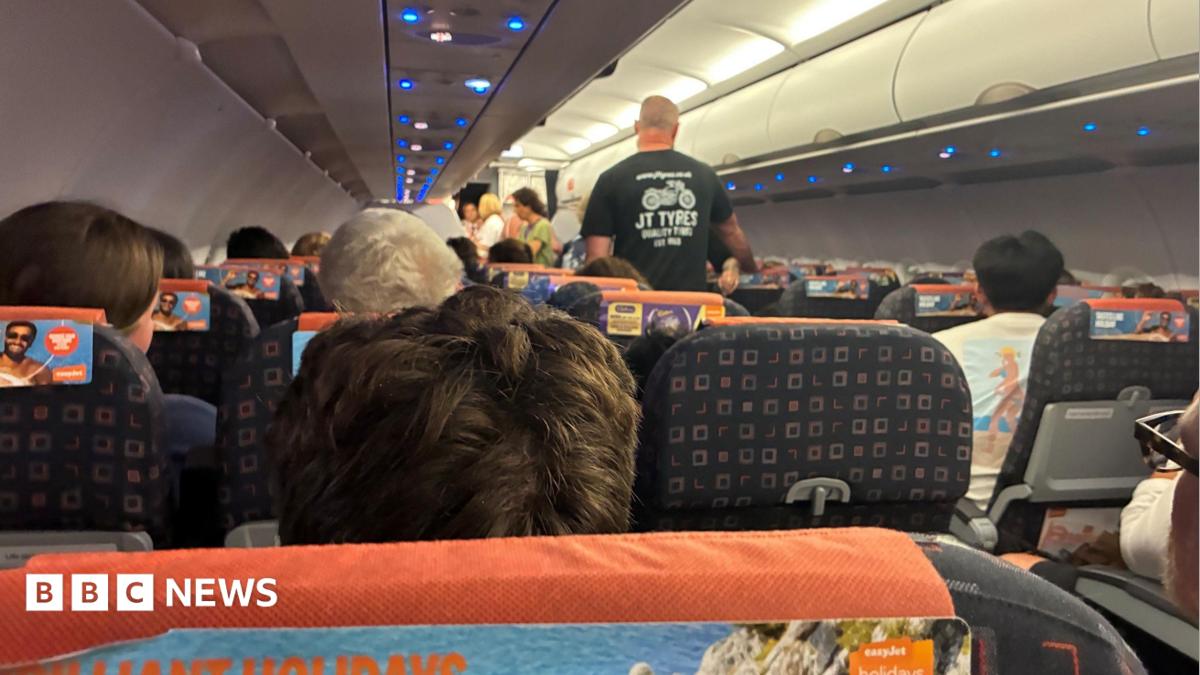
A number of flights were diverted from Gatwick airport after a plane temporarily blocked one of its runways.

Emergency services met the British Airways plane as a precaution upon landing, following reports of a “technical fault” with the aircraft.

One of the diverted planes, an already-delayed EasyJet flight from Rome to Gatwick, had to land at Stanstead airport instead – and subsequently became stuck there because it was unable to find fuel.

Passengers were left on that plane for over two hours in the middle of the night before disembarking.

Advertisement

The BA plane which temporarily blocked the runway at Gatwick Airport reportedly experienced a landing gear issue. BA said the plane landed safely and passengers disembarked normally.

A London Gatwick spokesperson said: “Earlier this morning, the runway was closed for a short period due to a technical issue with an aircraft.

“As a result, a small number of flights were diverted, with the majority later returning to London Gatwick. As always, safety and security is our number one priority.”

There were a number of delays to arrivals and departures from Gatwick Airport on Wednesday, although it was not clear if these were connected to the earlier runway closure.

Advertisement
Continue Reading

Business

Needham raises SpaceX stock price target to $250 on AI, Starship

Published

on


Needham raises SpaceX stock price target to $250 on AI, Starship

Continue Reading

Business

Why people sleep with phones next to bed? Psychology and sociology studies say it’s not because of any addiction or love for gadgets

Published

on

Why people sleep with phones next to bed? Psychology and sociology studies say it's not because of any addiction or love for gadgets
Picture the average American bedroom at night: a phone charging on the nightstand, glowing softly within arm’s reach of the pillow. According to a 2023 survey from the American Academy of Sleep Medicine, 87% of adults regularly sleep with their phone in the bedroom. YouGov polling shows that for many Americans, the smartphone is the last thing they see before sleep and the first thing they reach for upon waking. And a 2026 survey from mattress company Amerisleep found that Americans now spend an average of 38 minutes scrolling in bed before sleep, adding up to roughly 231 lost hours of sleep a year, nearly ten full days.

Also Read: 101-year-old working woman, who lives alone in New York, shares 3 tips to live longer, healthier, and happier, and none is about fitness

The instinctive explanation is that people are “addicted” to their phones, or simply can’t bear to be apart from a device they love. But when psychologists and sociologists have actually sat down with people and asked why they do it, the answers turn out to be far more layered, and far less about gadget infatuation than most of us assume.

The phone as a night-time companion, not a compulsion

One of the most detailed studies on this subject comes from sociologist Dana Zarhin, who interviewed dozens of adults and analyzed their sleep diaries in depth. She found that people weave their phones into the bedtime routine for reasons that are practical and social rather than compulsive. Many use it as an alarm clock. Others keep it close so they remain reachable for family members, aging parents, or work emergencies through the night. Some check messages one last time to feel that their social obligations for the day are complete before they allow themselves to switch off.

Advertisement

Zarhin coined a term for this pattern: “sleepful sociality”, a way of describing how the phone lets people stay socially connected even as they drift toward sleep, without necessarily disrupting the sleep itself. In many of the accounts she gathered, the phone wasn’t a distraction pulling people away from rest; it was a tool people used to manage the handover between their waking responsibilities and the act of sleeping.

A digital security blanket

There’s also a psychological explanation that has nothing to do with entertainment or scrolling. Researchers studying attachment theory, the same framework used to explain why toddlers cling to a favorite blanket or soft toy, have found that adults form comparable bonds with their smartphones. A widely cited study out of the Wharton School even labeled this the “Adult Pacifier Hypothesis,” showing that people experience genuine comfort and faster recovery from stress simply by having their phone nearby, in much the same way a child is soothed by a familiar object.
Also Read: Fatty liver new treatment found: Study discovers a medicine that reverses severe fatty liver by just repairing the gut
Later research building on this idea has shown that people who see their smartphone as a kind of “safe base”, something that makes them feel secure rather than merely entertained, are more likely to keep it close during vulnerable moments, and few moments are more vulnerable than the transition into sleep, when the mind is unguarded and thoughts tend to wander. Seen this way, keeping the phone on the pillow isn’t fundamentally different from earlier generations keeping a transistor radio, a landline, or a family photograph within reach at night.

The quiet pull of staying updated

A third strand of research points to something closer to social vigilance than addiction. A study of nearly 500 college students, published in the journal OBM Neurobiology, examined how bedtime smartphone habits related to Fear of Missing Out (FOMO) and general anxiety levels. It found that people with higher trait anxiety and stronger FOMO tended to use their phones more in the sleep environment, not because they were fixated on the device itself, but because the phone offered a way to manage the discomfort of not knowing what they might be missing, whether that was a message, breaking news, or simply what friends were doing. AASM’s own 2025-2026 polling backs this up on a national scale: over a third of U.S. adults say reading the news on their phone before bed, or “doomscrolling,” actively makes their sleep worse, with adults under 35 the most affected. For many, scrolling before sleep functions as a way to quiet racing thoughts, even if it sometimes backfires by keeping the mind more alert than intended.

Where the addiction story does hold some truth

None of this means concern about excessive phone use is misplaced. A large body of research on “nomophobia“, literally, the fear of being without a mobile phone, tells a more cautionary story, particularly among college students. As of 2024, roughly 91% of U.S. adults own a smartphone, a figure that climbs to 98% among those aged 18 to 29, and researchers have found nomophobia to be especially common in this age group, where it’s been linked to anxiety, physical health symptoms, and difficulty tolerating uncertainty.

Advertisement

Separately, a JAMA Network Open study published in March 2025 that tracked screen use among adults across the U.S. found that people who used screens before bed had a 33% higher rate of poor sleep quality and slept roughly 50 minutes less per week than those who avoided screens at night.

So the honest picture sits somewhere in between. For a large number of people, keeping the phone by the bed is a rational, low-stakes habit rooted in convenience, connection, and comfort, not so different from wanting a glass of water within reach. For a smaller but significant group, especially younger users, the pattern shades into something closer to genuine dependency, where the phone’s presence is driven more by anxiety than by choice.

What the research firmly does not support is the blanket assumption that reaching for your phone at bedtime says something troubling about your character, willpower, or mental health. It says more about the roles the phone has come to play, as alarm clock, lifeline to family, stress reliever, and social anchor, all rolled into one small rectangle of glass.

What this means for your own sleep

Understanding the “why” doesn’t erase the “what happens next”, screen light and late-night scrolling are still linked to delayed sleep onset and poorer sleep quality across nearly every study on the subject. But experts suggest the fix isn’t guilt or willpower alone. The AASM’s own recommendations focus on substitution rather than deprivation: leave the phone in another room and rely on a standard alarm clock, start a low-tech wind-down routine like reading or journaling, and turn off notifications so the device stops pulling at your attention even when you’re not reaching for it.

Advertisement

It helps to notice which specific need the phone is meeting for you, the alarm function, the fear of missing an emergency call, or simply the comfort of having something familiar nearby, and to find a substitute for that specific need, rather than trying to quit the habit cold turkey. Small, targeted changes tend to work far better than blanket bans, precisely because the habit was never really about the gadget in the first place.

Continue Reading

Business

Elevance Beats Earnings Estimates and There’s Even More Lifting the Stock

Published

on

Elevance Beats Earnings Estimates and There’s Even More Lifting the Stock

Elevance Beats Earnings Estimates and There’s Even More Lifting the Stock

Continue Reading

Business

(VIDEO) Samsung Reveals Flex Titanium Display Tech to Reduce Galaxy Z Fold 8 Crease Ahead of July 22 Unveiling

Published

on

Samsung Reveals Flex Titanium Display Tech to Reduce Galaxy Z

Samsung has confirmed that its upcoming Galaxy Z Fold 8 lineup will feature a redesigned foldable display architecture aimed at significantly reducing the visibility of the crease that forms down the center of foldable phone screens, the company announced this week.

The new display structure, which Samsung is calling “Flex Titanium,” will be used across the company’s next generation of Galaxy foldable devices, referring specifically to the Galaxy Z Fold 8 and Galaxy Z Fold 8 Ultra. The announcement comes just over a week before Samsung’s Galaxy Unpacked event on July 22, where the devices are expected to be formally introduced.

A New Approach to Display Durability

Advertisement

According to Samsung, Flex Titanium is designed to deliver an improved viewing experience for foldable phone owners, combining enhanced durability with what the company describes as reduced crease visibility. The technology incorporates a titanium-alloy film positioned beneath the device’s OLED display panel, replacing the plastic components used in earlier foldable generations.

Samsung said the titanium-alloy film offers 20 times greater mechanical stiffness compared with the plastic films used in previous models, while measuring less than 30% the thickness of a human hair. That combination allows the film to provide added structural rigidity without adding meaningful thickness to the overall display panel, according to the company.

The titanium film is paired with a separate titanium plate that supports the display module from underneath. According to Samsung, this plate helps eliminate air gaps between the display module and the adhesive layer beneath it, resulting in more stable support when the device is unfolded, while still preserving the flexibility required for repeated folding over the phone’s lifespan.

Advertisement

Leaked Footage Suggests a Major Visual Improvement

Ahead of Samsung’s official announcement, leaked video footage purporting to show the Galaxy Z Fold 8 Ultra in action circulated online, revealing what appeared to be a nearly invisible display crease even after the device had been folded and unfolded multiple times during the demonstration. If accurate, the footage suggests Flex Titanium could represent one of the more meaningful visual improvements to Samsung’s foldable lineup since the company began addressing the crease issue in earlier device generations.

No New Fold-Cycle Rating Announced

Despite the structural changes, Samsung’s announcement did not include any updated claims regarding the device’s overall fold-cycle durability rating. The Galaxy Z Fold 7, Samsung’s previous flagship foldable, carried a rated lifespan of 500,000 folds, a figure achieved using some plastic components rather than the titanium parts now being introduced in the Fold 8 series.

Advertisement

Given the shift to titanium-based components, industry observers will likely be watching closely to see whether Samsung’s testing eventually reveals an improved fold-cycle rating for the new devices, even though the company has not made any specific claims on that front as part of this week’s announcement.

Other Specs Detailed Through Leaks

Beyond the new display architecture, the Galaxy Z Fold 8 and Fold 8 Ultra have already been extensively detailed through a series of leaks ahead of Samsung’s official reveal. Those leaks have pointed to a larger battery capacity compared with previous models, along with upgraded charging capabilities, including 45-watt wired charging and 20-watt wireless charging, both improvements over the charging speeds offered by earlier Fold generations.

Leaks have also suggested the new devices could carry a higher price tag than their predecessors, reflecting the added manufacturing costs associated with the new titanium-based display components, though official pricing has not yet been confirmed by Samsung.

Advertisement

Samsung Launches Pre-Reservation Campaign

Ahead of the official July 22 announcement, Samsung has already begun a reservation campaign for the upcoming devices. The promotion includes a $30 credit for customers who reserve early, along with the potential for savings of up to $1,230 through trade-in and promotional offers. Samsung is also distributing a number of $500 gift cards as part of the pre-launch campaign, a marketing strategy the company has used in past product cycles to build early interest and reduce the risk of production shortages at launch.

Part of a Broader Samsung Strategy

The introduction of Flex Titanium reflects Samsung’s continued effort to refine its foldable phone lineup as the product category matures. Since introducing foldable phones to the mainstream market several years ago, Samsung has steadily worked to address the two most persistent criticisms of the format: durability concerns and the visible crease that forms on foldable displays over repeated use.

Advertisement

While Samsung’s most recent foldable generations had already made progress reducing the crease issue compared with earlier models, the introduction of a titanium-based support structure suggests the company is aiming to push that improvement further rather than treating the problem as fully resolved.

With Galaxy Unpacked now just over a week away, Samsung is expected to formally unveil full specifications, pricing and availability details for the Galaxy Z Fold 8 and Galaxy Z Fold 8 Ultra on July 22. Until then, the company’s Flex Titanium announcement offers the clearest official confirmation yet of what consumers can expect from the display technology powering its next generation of foldable devices, even as many additional details continue to circulate through pre-launch leaks and reports.

Continue Reading

Business

Solstad Offshore ASA (SLOFF) Q2 2026 Earnings Call Transcript

Published

on

OneWater Marine Inc. (ONEW) Q1 2026 Earnings Call Transcript

Lars Solstad
CEO & MD

Good morning, and welcome to the Solstad Offshore Second Quarter Presentation. It has been a strong and active quarter for the company with improved operational performance, important contract wins, increased backlog visibility and a continued capital distribution to our shareholders. We have also taken important strategic steps through the new joint venture we have established with SBM Offshore and the ordering of a specialized mooring and installation vessel further strengthen our long-term position in an attractive offshore market.

This presentation will be held by CFO, Kjetil Ramstad; and myself, CEO, Lars Peder Solstad, and there will be a Q&A session after the presentation. So please send in your questions in the chat. We take a quick look at the disclaimer before we move over to the business update for the quarter.

It has been a solid quarter with increased utilization and earnings from the vessels as well as good performance from the JVs and the associated companies. We entered into a long-term contract with SBM Offshore for a newbuild specialized mooring and installation vessel, and this vessel will be jointly owned with SBM and start operation in 2029.

Advertisement

We have also signed an MOA for the sale of the vessel, Normand Tonjer. We own 56% of the vessel, and we expect a cash effect for Solstad Offshore of around USD 19 million when the vessel is delivered to new owners sometime during the next 6 months.

During this quarter, we have also won an arbitration case, which will give the company a positive liquidity effect of around $14.5 million when received. And a P&L effect of USD 7 million has been

Advertisement
Continue Reading

Business

What are my rights if my flight is cancelled or delayed?

Published

on

Artwork depicting an armour-suited character patrolling through a post-apocalyptic desert scene, with a German shepherd trotting alongside them. A dramatic sunset fills the landscape behind them, which is dotted with the ruins of buildings.

When flights are delayed or cancelled, UK and EU airlines, and other carriers when you are departing a UK or EU airport, have a duty to look after you.

That includes providing meals and accommodation, if necessary, and getting you to your destination. The airline should organise putting you on an alternative flight, at no extra cost.

Additional losses, such as unused accommodation, might require a claim to a credit card provider, if that was the payment option used.

After that, a claim may need to go to your travel insurance provider. But there is no standard definition of what is covered.

Advertisement

It may require a close look at the details of the policy to see what is covered, in which circumstances.

Passengers are also being urged to heed travel advice from the UK government, external, as this can also affect travel insurance rights.

Continue Reading

Business

Bristol more expensive than Paris or Sydney to build in

Published

on

Business Live

The South West city has been ranked among the priciest in the world for construction

Scenic view of colourful houses on a hillside in Bristol

Scenic view of colourful houses on a hillside in Bristol(Image: © Boys in Bristol Photography)

Bristol is among the top 10 most expensive places in the world to build in, according to a new report. The South West city ranked ninth on the International Construction Cost Index, above Los Angeles, Paris and Sydney.

The findings, which were compiled by design consultancy Arcadis, compared construction costs across 100 major cities around the globe.

Geneva, in Switzerland, took the top spot followed by London, Zurich, Munich and Copenhagen.

The index found the world’s highest-cost construction markets remain concentrated in mature cities with deep demand and constrained delivery capacity.

Advertisement

While Arcadis said the top of the ranking remained “broadly consistent”, the wider market context is understood to have shifted. Global construction markets are moving from inflation-led uncertainty into a more selective phase of investment, where capital is being deployed more carefully rather than demand simply slowing.

Edel Christie, global president of places at Arcadis, said: “The need to build has not gone away. Cities still need homes, infrastructure, resilient energy systems, modern workplaces and digital infrastructure to support the next generation of economic growth.

“The opportunity is clear, but investment will flow to places and programmes where delivery is credible, viable and achievable — not just cheap to build.”

The report found that many developers are increasingly favouring complex, high-performing assets that support long-term growth such as modern workplaces, healthcare facilities, laboratories, data centres and advanced manufacturing plants.

Advertisement

Ms Christie said one area where demand was “abundant” and where the construction sector was “rising to the delivery challenge” was in data centres.

“The spectacular growth of the wider data centre ecosystem has created a critical scaling challenge for the construction sector: the ability to deploy huge project teams quickly while maintaining detailed control over scope, quality, schedule and risk,” she said.

The Arcadis report also highlighted the breadth of cost variation across global construction markets. While high-cost locations are concentrated in Europe, the UK and North America, some of the lowest-cost locations were found across Asia, Africa and Latin America.

Bengaluru ranked as the least expensive city in the index, followed by Buenos Aires, Delhi, Mumbai and Ho Chi Minh City.

Advertisement

10 most expensive cities in world for construction

1. Geneva

2. London

3. Switzerland

4. Munich

Advertisement

5. Copenhagen

6. New York

7. San Francisco

8. Dublin

Advertisement

9. Bristol

10. Philadelphia

Continue Reading

Business

Axfood drops 13% after Q2 miss as Willys disappoints for second quarter

Published

on


Axfood drops 13% after Q2 miss as Willys disappoints for second quarter

Continue Reading

Trending

Copyright © 2025