Connect with us
DAPA Banner

Business

OnKure Therapeutics CEO Saccomano sells $357 in stock

Published

on

Continue Reading
Click to comment

You must be logged in to post a comment Login

Leave a Reply

Business

Is Kuwait International Airport Open Today? Airport Closed After Drone Attack From Iran

Published

on

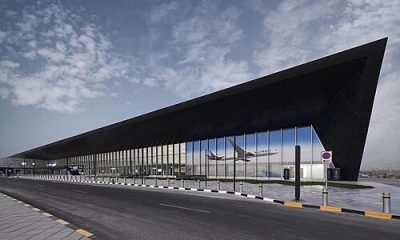
Kuwait International Airport

KUWAIT CITY (Kuwait International Airport (KWI) is not open for regular commercial passenger operations today, with all flights suspended indefinitely due to repeated Iranian drone strikes that have damaged critical infrastructure including fuel depots, radar systems, terminals and runways, authorities confirmed Wednesday.

Kuwait International Airport

The Directorate General of Civil Aviation (DGCA) and the Public Authority for Civil Aviation (PACA) have maintained the full closure of Kuwait’s airspace to civilian traffic since late February, when the broader U.S.-Israel-Iran conflict escalated and strikes began targeting Gulf infrastructure. No reopening date has been announced, and officials say operations will resume only after comprehensive repairs, safety inspections and clearance of airspace threats.

As of midday Wednesday, March 25, 2026, the official airport website showed no departures or arrivals listed for the day, with status pages displaying messages indicating no scheduled flights. Kuwait Airways, the national carrier, and low-cost operator Jazeera Airways have suspended all services, while major international airlines including Emirates, Qatar Airways, Etihad and others have canceled routes to and from Kuwait.

The closure stems from a series of drone attacks dating back to late February. Early strikes damaged terminal areas and caused minor injuries to workers. On March 7-8, Iranian drones targeted fuel storage tanks operated by Kuwait Aviation Fuelling Company, igniting fires that emergency crews contained but left lasting infrastructure issues. Subsequent attacks on March 12 and March 14 hit radar systems and other facilities, prompting authorities to declare the airport fully shut until further notice.

Kuwait’s armed forces reported intercepting multiple waves of hostile drones, but several penetrated defenses and caused material damage. No significant casualties have been reported in the most recent incidents, though the cumulative effect has rendered normal passenger operations impossible. Repair timelines for runways, fuel systems and radar could stretch into several weeks, according to aviation sources familiar with the assessments.

Advertisement

The airport, which normally handles millions of passengers annually as a key Gulf hub, has become a flashpoint in the widening regional war. Iranian state media has described strikes as responses to perceived support for U.S. and Israeli actions, while Kuwaiti officials have condemned the attacks as aggression against civilian infrastructure. The fuel depot strikes in particular raised concerns about jet fuel supply disruptions, though emergency measures prevented major explosions.

Travelers with bookings are facing significant uncertainty. Kuwait Airways has outlined plans to repatriate citizens stranded abroad, including airlifts to neighboring Saudi Arabia followed by overland transport, but commercial flights remain halted. The DGCA has urged passengers to check with their airlines and avoid traveling to the airport unless for essential repatriation arrangements.

Alternatives for those needing to reach or leave Kuwait include overland routes through Saudi Arabia or limited charter and cargo operations under strict military oversight. Some regional carriers have diverted flights to nearby hubs such as Dammam or Bahrain, though those airports have faced their own disruptions from the conflict. U.S. and international travel advisories warn against non-essential travel to Kuwait, citing risks to civil aviation in the Persian Gulf region.

The situation has broader implications for global energy markets and aviation networks. Kuwait, a major oil producer, relies on the airport for business travel and logistics tied to its energy sector. Repeated strikes on fuel facilities have contributed to volatility in oil prices, while airlines have rerouted operations, increasing costs and delays across the Middle East.

Advertisement

Aviation experts note that modern airports like Kuwait International have robust safety protocols, but the scale of drone swarms poses unique challenges for air defense and rapid repairs. The DGCA has coordinated with international partners, including the U.S. Federal Aviation Administration, which issued notices highlighting risks in the Gulf airspace.

For those monitoring the situation, the airport’s official site and mobile app currently provide no live flight data. Third-party trackers and airline apps reflect widespread cancellations. Officials emphasize that any resumption will prioritize safety, with thorough inspections required before even limited operations can restart.

The closure has stranded thousands of passengers and disrupted supply chains. Expatriate communities in Kuwait, many reliant on air travel for family visits or work rotations, have expressed frustration amid the uncertainty. Community groups and embassies have stepped in to assist with alternative arrangements.

Kuwaiti authorities continue to bolster defenses around the airport and other critical sites. The National Guard and armed forces maintain heightened alert levels, with public safety announcements advising residents near the airport area to follow civil defense guidelines.

Advertisement

As the regional conflict enters its fourth week, fears persist of further strikes on Gulf infrastructure. Similar closures or restrictions have affected airports in Bahrain and other neighbors, though some have managed partial reopenings under heavy security.

Diplomats from the Gulf Cooperation Council and beyond have called for de-escalation to restore civilian aviation and protect economic stability. Kuwait has reiterated its commitment to peace while reserving the right to defend its territory.

For now, Kuwait International Airport stands silent for commercial traffic. Officials stress that the decision prioritizes passenger safety over speed of reopening. Travelers are advised to monitor official channels — including the DGCA website, Kuwait Airways updates and embassy alerts — for any developments.

The human impact is significant. Families separated by the shutdown share stories of missed reunions, delayed medical treatments and business interruptions. Airlines have offered rebooking options where possible, but with no firm timeline, many plans remain in limbo.

Advertisement

Aviation industry analysts project that full recovery could take months once the security situation stabilizes, involving not only physical repairs but also rebuilding confidence in Gulf air travel routes.

As of Wednesday, the message from Kuwaiti civil aviation authorities remains clear: the airport is closed to regular operations. Safety assessments and infrastructure work continue around the clock, but commercial flights are not expected in the immediate future.

Passengers with upcoming travel involving Kuwait should contact their airlines directly and explore alternative routes or postponements. In this volatile environment, flexibility and real-time information are essential.

The closure of Kuwait International Airport serves as a stark reminder of how geopolitical tensions can abruptly halt civilian life and global connectivity. While emergency and military flights may operate under restricted conditions, the bustling hub that once connected continents remains offline for the traveling public.

Advertisement
Continue Reading

Business

OpenAI ends Disney partnership as it closes Sora video-making tool

Published

on

OpenAI ends Disney partnership as it closes Sora video-making tool

The move comes less two years after the launch of the AI video app sent shockwaves through the media industry.

Continue Reading

Business

ETMarkets Smart Talk | History shows markets rebound after crises; avoid panic selling: Avinash Satwalekar of Franklin Templeton

Published

on

ETMarkets Smart Talk | History shows markets rebound after crises; avoid panic selling: Avinash Satwalekar of Franklin Templeton
Periods of geopolitical uncertainty and sharp market corrections often test investor confidence, but history suggests that such phases are typically short-lived.

Avinash Satwalekar, President at Franklin Templeton – India, emphasizes that markets have consistently rebounded strongly after major crises, rewarding those who stay invested rather than react impulsively.

While recent tensions and rising crude oil prices have triggered volatility and valuation corrections, Satwalekar believes India’s underlying economic fundamentals remain robust.

He advises investors to avoid panic selling, maintain a disciplined asset allocation strategy, and use periods of market weakness as opportunities to rebalance and build long-term positions. Edited Excerpts –

Advertisement


Q) Geopolitical tensions seem to be escalating across regions. How should global investors interpret these developments from a macro and market perspective?

A) Since the beginning of the conflict on Feb 28, 2026, domestic indices have witnessed a broad based decline. Nifty 50 Index declined 7%, Nifty Midcap 150 declined 8% while the Nifty Smallcap 250 declined 7%. Valuations across market caps have declined from peak.
Crude oil prices have exceeded USD 100 per barrel, briefly touching USD 108 which is generally inflationary. While India imports 88% of its oil requirements, its dependence on oil for GDP growth has been declining. Petroleum products which accounted for ~37% of total imports in 2014 have reduced to ~26% in 2025.

We assign a moderate probability for the conflict to prolong. We expect markets to recover post temporary impact of geo-political tensions. India’s economic fundamentals remain robust despite external shocks. Fiscal and monetary policy measures have helped India’s economic resilience and GDP growth is expected to exceed 7% in FY26. We expect corporate earnings recovery in FY27, which should attract FPI buying, a reversal of recent trends.


Q) Historically, markets tend to react sharply to geopolitical shocks but recover quickly. Is it time to diversify globally and which markets are looking attractive?

A) India’s equity market has witnessed several phases of geo-political crisis but has consistently recovered. For example, during the Iraq war in 2003, the Nifty 500 index declined 11% till the end of June 2003.


Thereafter, the index delivered positive 44% over the next 1 year. The global financial crisis of 2008 led to the Nifty 500 index decline about 58% till the end of 2008. Over the next 1 year, the index delivered 91% returns. Thus, history tells us that periods of crisis are temporary and investors should not panic during volatile times.
Investors usually have a home country bias when investing. However, diversifying globally allows investors to participate in opportunities which may not be available in domestic markets. Developed markets like US provide opportunities in areas of innovation and emerging technologies like artificial intelligence.Emerging markets overall outperformed developed markets in 2025, and we still see a strong case for investing in them.

Emerging markets remain undervalued, underappreciated, and under-owned by many investors. Investors should diversify across geographies to participate in global growth opportunities while reducing downside risks.

Advertisement

Q) How could rising crude oil prices and commodity volatility reshape the global investment landscape?
A) Brent crude which was trading at around USD 67 per barrel in mid-February 2026 has risen about 50% to USD 100 per barrel, briefly touching USD 108 per barrel. According to RBI, a 10% jump in global crude oil prices could push India’s retail inflation up by 20 basis points and reduce GDP growth by 20 to 25 basis points.

India’s dependence on oil for growth has been declining. Oil required to generate a unit of GDP has declined by 27% over a decade. So, India is in a better place compared to many of the previous price spikes owing to which the impact from a moderate rise in energy prices can be absorbed.

The challenge this time, has been less on the price of oil and more on the actual availability of oil due to supply disruptions.

This has caused cuts to industrial production and operation of restaurants. Recent developments like US allowing India to purchase Russian crude oil for the next 30 days and Iran allowing Indian ships to transit through the Strait of Hormuz would help mitigate energy supply disruptions.

Advertisement

The disruption to physical supplies should also push India to pursue ways to sustainably reduce dependence on imported crude oil and gas as well as diversify supply sources. The current situation is likely to accelerate such efforts and provide possible opportunities.

Further, sectors like healthcare, financial services and technology present opportunities for global investors amid the present volatility. More importantly, having a well-diversified portfolio both geographically and based on asset classes is the better approach during volatile periods.

Q) What role does rebalancing play during volatile periods when asset prices move sharply due to geopolitical shocks?
A) Rebalancing plays a critical role especially during volatile times. It is during bull and bear phases of the market that asset allocations get skewed. During market corrections like we are now witnessing, the share of equity in an investor’s portfolio declines while the share of other asset classes like debt rises.

Rebalancing the portfolio during such phases helps restore the prescribed asset allocation. In the long run, this helps the investor maintain the asset allocation of the portfolio aligned to her risk appetite and potentially earn optimal risk adjusted returns.

Advertisement

Q) How can investors achieve better asset allocation across equities, debt, gold, and international markets?
A) Diversification is a fundamental tenet in investing. Diversifying one’s investment across various asset classes helps reduce downside risks and allows investors to benefit from low correlation between multiple asset classes across market cycles. Predicting market cycles is a dangerous proposition.

Investing in different asset classes separately could be expensive and inefficient from a tax perspective for most investors. Mutual funds provide avenues which invest across equity, debt and commodities in a single portfolio in the most tax efficient manner.

These are hybrid funds, such as Balanced Advantage Funds or Multi Asset Allocation Funds, which are managed by professional fund managers where the asset allocations are dynamically managed based on changing market conditions.

Another important layer of diversification is geographic diversification. Mutual funds investing in global markets provide an avenue to diversify globally. This allows investors to take global exposures with low investment amounts.

Advertisement

Q) Which global themes—such as technology, semiconductors, or global indices—do you believe investors should track in the current environment?
A) Technology and semiconductors are long term global themes broadly associated with artificial intelligence and energy transition. Healthcare and financial services are relatively less impacted by current geopolitical events and provide long term global opportunities for investors as well.

Q) Ideally what percentage of capital should be diversified globally for someone who is 30-40 years? And if someone wants to deploy fresh capital what would you advise?
A) Global investments are not just diversifiers but also help investors meet their future foreign currency goals like child’s education or travel. An investor may allocate 10 to 20% of her portfolio to global funds depending on the type of goal. Taking a SIP or STP route to investing would help stagger her investments.

(Disclaimer: Recommendations, suggestions, views, and opinions given by experts are their own. These do not represent the views of the Economic Times)

Advertisement
Continue Reading

Business

From Port Worker to Financial Leader

Published

on

From Port Worker to Financial Leader

A Career Built on Curiosity and Hard Work

Some careers follow a straight path. Claude “Bobby” Sanks’ journey took a few turns along the way.

Today, he serves as Financial Controller for LuAnn Capital, LLC, a company that owns multiple international freight forwarding businesses. In the past six years, he has helped guide the company through major growth. Revenue increased from just over $3 million to more than $100 million during that time.

But Sanks did not begin his career in accounting.

His story starts with a childhood shaped by movement, sports, music, and curiosity about how things work.

Advertisement

“I’ve always been the type of person who wanted to learn by doing,” Sanks says. “That mindset followed me through every stage of my career.”

Growing Up in Alabama and Georgia

Claude “Bobby” Sanks

was born in Atmore, Alabama, and spent his early childhood in nearby Bay Minette. He grew up in a large family with three sisters and a brother.

His father worked in aviation electronics for the U.S. Air Force in civil service, and the job required the family to relocate a few times.

Advertisement

“We moved when I was ten,” Sanks recalls. “First to Atlanta for a short time, then to Savannah, Georgia. Savannah became home for the next fifty years of my life.”

As a kid, Sanks stayed busy.

He played baseball, football, and soccer from the age of six through high school. He also spent years in the school band, playing trumpet, baritone, and sousaphone.

Sports played a big role in shaping his discipline.

Advertisement

“Team sports teach you a lot about effort and accountability,” he says. “Those lessons carry over into business.”

During his senior year at Bible Baptist High School, he was named Most Valuable Player on the soccer team and received a college football scholarship to Pillsbury Bible College.

But he chose a different direction.

A Career That Didn’t Start in Accounting

After high school, Sanks attended Armstrong Atlantic State University in Savannah. His original plan was to become a doctor.

Advertisement

“I started as a chemistry major in the pre-med program,” he says. “After a few years I realized my path might be different.”

Before moving into accounting, he worked at Strachan Shipping Company in Savannah from 1979 to 1985. His roles included Gear Shop Superintendent and, later, Stevedore, where he managed equipment and worked directly with port operations.

It was an experience that exposed him to logistics and global shipping long before it became central to his career.

“Working at the port gave me a real appreciation for how global trade actually moves,” Sanks says. “You see the physical side of it.”

Advertisement

Building Expertise in Accounting

In the mid-1980s, Sanks joined his family’s accounting business. Over time, he moved into leadership and eventually managed the operation.

He became an Enrolled Agent with the IRS in 1993, and later pursued his CPA credentials.

To qualify for the exam, he completed an Accounting Equivalency program through the University of Alabama, earning the academic credentials needed to sit for the CPA exam.

He passed the exam in 1999.

Advertisement

“That was a milestone,” Sanks says. “It represented years of work and learning.”

The CPA designation opened new opportunities and expanded his role in financial leadership.

The Amazon Anglers Adventure

One of the most unusual chapters of Sanks’ career came in the 1990s.

For twelve years, he owned and operated Amazon Anglers, an adventure travel business that took small groups into the jungles of Venezuela to fish for Peacock Bass.

Advertisement

The experience was far more than a fishing trip.

Guests lived for eight to ten days in a village of Piaroa Indians, deep in the Amazon rainforest.

“It was really an early form of ecotourism,” Sanks explains. “People experienced the jungle, the culture, and the fishing all together.”

The business ended when political conditions in Venezuela changed during the presidency of Hugo Chávez.

Advertisement

“It was an incredible experience while it lasted,” he says. “We built relationships and memories that stayed with people.”

Leading Financial Growth at LuAnn Capital

In 2019, Sanks accepted a new challenge as Financial Controller for LuAnn Capital in Asheville, North Carolina.

The company owns several international freight forwarding businesses.

His role focuses on financial oversight, systems, and scaling operations as the company grows.

Advertisement

The results have been dramatic.

“In six years we’ve gone from about three million dollars in revenue to over one hundred million,” Sanks says.

Growth at that level requires strong systems and clear financial visibility.

“You have to understand the numbers and what they’re telling you,” he says. “Good financial leadership helps companies see where they are and where they’re going.”

Advertisement

Music, Ministry, and Life Beyond Business

Sanks’ life has also included creative pursuits.

In 1982, he helped start a Contemporary Christian rock band called Zero Hour. The group toured across the southeastern United States and opened concerts for well-known artists such as Petra, Steven Curtis Chapman, and DeGarmo and Key.

Sanks played bass guitar and handled the band’s bookings.

“It started as a youth ministry,” he says. “Music gave us a way to connect with people.”

Advertisement

Even today, he keeps an active lifestyle.

He learned to water ski at age four and still enjoys outdoor activities. He also plays competitive senior league softball in Hendersonville, North Carolina.

“At seventy, I’m still playing,” he says with a laugh. “Staying active keeps you sharp.”

Family and Legacy

Family remains an important part of Sanks’ life. He is the father of three children and the grandfather of ten grandchildren.

Advertisement

Looking back, his career reflects a simple philosophy.

“Work hard, stay curious, and be open to opportunities,” Sanks says. “You never know where the next chapter might lead.”

For Sanks, those chapters have included shipping docks, jungle rivers, rock stages, and boardroom spreadsheets.

And the journey is still going.

Advertisement

Continue Reading

Business

HDFC Bank hires three law firms to review chairman’s abrupt exit

Published

on

Mumbai: HDFC Bank has appointed domestic law firms Wadia Ghandy and Trilegal, along with a marquee US-based firm, to review the circumstances around former chairman Atanu Chakraborty’s abrupt resignation, two people familiar with the development said.

The scope of the review includes a detailed examination of board meeting video recordings, minutes and agendas over the past two years, to ascertain whether any concerns relating to unethical practices or governance issues were raised by the former chairman during his tenure, they said.

It will also cover all whistle-blower letters received and escalated to the board during this period, to assess whether they raised substantive concerns and whether adequate action was taken in response, the people said.Also Read |HDFC Bank a “screaming buy” amid market uncertainty: Sameer Dalal

The law firms may interview current board members and senior management to determine whether anyone has information pertaining to unethical practices or governance issues at the bank, the people said.
HDFC Bank, Wadia Ghandy and Trilegal did not respond to ET’s emails seeking comment.
The bank in a stock exchange filing on Tuesday said it appointed domestic and international law firms to review Chakraborty’s resignation. Without naming the law firms, the bank said it has asked them to submit their reports within a reasonable timeframe.
HDFC Bank in a separate statement also said the appointment was a proactive measure to ensure an objective and fact-based assessment of the aspects raised in the resignation letter.

“This step is in keeping with the bank’s commitment to constantly benchmark with the highest governance standards it has practised over decades,” the lender said.

Advertisement

Also Read | HDFC Bank crisis, war fears, and market chaos: What should investors do right now? Gurmeet Chadha answers

The review was prompted by the March 18 resignation of Chakraborty, a retired IAS officer and former secretary of the Department of Economic Affairs. In his letter, he cited practices not in line with his personal values and ethics as the reason for stepping down – a statement that sent shockwaves through India’s banking establishment.

In an interview with ET published on Monday, HDFC Bank managing director and chief executive Sashidhar Jagdishan said the bank would hold multiple board meetings over the coming months to review decisions made in recent years.

“We are not infallible. If there are areas where we need to improve, we will improve. We will address all issues,” he said.

Advertisement

Jagdishan acknowledged that the bank had yet to fully understand what prompted the exit after Chakraborty’s five-and-a-half years on the board. “This is like fighting a ghost. We had never anticipated this,” he told ET. When asked whether the bank would pursue legal remedies for reputational damage, Jagdishan said: “We are engaged with a legal firm to examine all possibilities.”

Recounting the events that preceded the resignation, Jagdishan said the bank had urged Chakraborty to raise his concerns through the bank’s established internal processes.

“When we saw those two contentious lines, we said we have a well-established process that you have personally helped institute. If you have concerns, put them there and we will address them collectively. He said: ‘I don’t have any to share.’ We then said, ‘If you don’t have any to share, please remove the lines.’ He was steadfast and refused to budge. That’s where it stands, so we went to the regulator,” Jagdishan said.

Advertisement
Continue Reading

Business

Strategic plan significance for Netball WA

Published

on

Strategic plan significance for Netball WA

Netball WA Group chief executive Simone Hansen is confident the code is on course to meet a series of important key performance indicators as it continues an upward trajectory.

Continue Reading

Business

Sebi’s new proposal enables mutual fund gifting through PPIs

Published

on

Sebi’s new proposal enables mutual fund gifting through PPIs
Mumbai: Investors may soon be able to gift mutual fund investments, with Sebi proposing to allow the use of prepaid payment instruments (PPIs), or gift cards, for subscribing to mutual fund units.

Under the proposed framework, an individual can purchase a gift PPI – either digitally or in physical form – through banking channels and transfer it to a recipient. The recipient, after claiming ownership, can redeem the instrument to invest in mutual fund schemes via an asset management company (AMC) platform.

The move is aimed at attracting first-time investors and improving access to financial products.

The issuance and operation of PPIs will continue to be governed by Reserve Bank of India (RBI) rules, while mutual fund transactions will fall under Sebi regulations. Gift PPIs will be capped at ₹10,000, will be non-reloadable, and valid for one year, Sebi said in a consultation paper on Tuesday.

The regulator has proposed a series of safeguards, including mandatory third-party validation checks to confirm ownership, compliance with ‘no third-party payment’ norms, and an investment cap of ₹50,000 per investor per mutual fund per financial year across PPIs, e-wallets, and cash.

Advertisement


To prevent idle balances, the entire value of the gift PPI must be invested. If the instrument remains unclaimed after one year, the amount will be refunded to the purchaser’s bank account, Sebi said.
While the purchaser may suggest a mutual fund scheme, the recipient will retain full discretion over the final investment choice. Investors can also choose to invest directly or through distributors. Sebi has sought public comments on the proposal by April 14.

Add ET Logo as a Reliable and Trusted News Source

Continue Reading

Business

Precious metals may rebound if Gulf tensions cool, dollar weakens

Published

on

Precious metals may rebound if Gulf tensions cool, dollar weakens
Mumbai: Precious metals – last year’s investor darlings – are losing their sheen with the sell-off since the start of the West Asia conflict, eroding most of the gains in gold and pushing silver into losses in 2026. A turn in the strengthening dollar could, however, open a window for investors betting on a rebound.

Gold has dropped 16%, and silver declined 26% since February 27, when the West Asia conflict began. After this fall, gold is up around 1%, and silver is down around 5% for 2026.

“Bullion prices are under pressure due to panic selling and fresh short positions. Investors are exiting in response to falling prices,” said Navneet Damani, head of research – commodities and currencies at Motilal Oswal Financial Services.

From its record high of $5595 an ounce, gold has fallen 21% to $4,400 on Tuesday. Silver has fallen 43% to $69.3, its lifetime high of $121.7. Both metals hit their peaks in January after the record rally in 2025 that saw gold jump 64% and silver soar almost 150%.

Advertisement

“The 100-150% surge in energy prices due to the West Asia conflict has lifted dollar demand, triggering a sell-off in bullion,” said Anindya Banerjee, head of commodity and currency research at Kotak Securities.


A stronger dollar typically weighs on gold as it raises the appeal of yield-bearing assets such as the US Treasury. “Both retail and institutional investors are booking profits, as a further rise in the dollar could keep pressure on bullion prices,” said Naveen Mathur, director -commodities and currencies at Anand Rathi Shares & Stock Brokers.

Precious Metals can Shine when Peace Bridges Gulf, $ EasesAgencies

Gold price could move towards $5,600 and silver may cross $100 in 1–2 years: Analysts

To buy or not to buy?
Banerjee expects the end of the conflict to ease the demand for dollars and spark a rebound in gold and silver. “We see gold moving towards $5,600 and silver crossing $100 within 1-2 years, making current dips an attractive entry point,” he said.
Damani said investors may consider accumulating gold in the $4,100-4,200 range and silver near $60, with potential upside to $5,500 and $90-95, respectively, once geopolitical tensions ease.

Continue Reading

Business

The Impact of Global Energy Price Volatility on Singapore’s Economy

Published

on

The Impact of Global Energy Price Volatility on Singapore’s Economy

Singapore, a leading energy and trading hub, faces direct impacts from global energy price movements due to its significant refining, storage, and bunkering operations. Price volatility drives trading margins, storage use, and affects domestic costs.

Singapore: A Leading Energy and Trading Hub

Singapore stands as one of Asia’s pivotal energy and trading centers, boasting a refining capacity exceeding 1.3 million barrels daily and possessing extensive storage facilities. It also hosts the globe’s largest bunkering operations, handling over 50 million tonnes annually. Such prominence influences both domestic pricing and global trading volumes, especially during supply disruptions affecting export routes. These fluctuations in energy prices impact shipping and financial activities related to commodities, solidifying Singapore’s role in the intricate web of global energy dynamics.

Volatility and Its Impact on Trading and Storage

Energy price volatility in Singapore widens regional price differentials, creating opportunities in physical and derivatives markets. During dislocation periods, refining margins in Asia can surge, while inventories in Singapore grow as traders capitalize on forward pricing benefits. This scenario favors trading firms, storage operators, and commodity financiers, who leverage these conditions as a revenue opportunity rather than a limitation, provided they have access to adequate infrastructure and financing.

Dependence on Energy Imports and Cost Implications

Singapore imports over 95% of its energy, making it sensitive to global price changes. In the first half of 2025, natural gas made up 93.1% of the electricity fuel mix, underscoring the reliance on LNG and pipeline gas. Wholesale electricity prices, fluctuating between SGD 100 and SGD 200 per MWh in 2025, are expected to rise in 2026. For energy-intensive industries, these price hikes can increase operating costs significantly, directly impacting margins and strategic decisions, especially when global prices remain elevated for extended periods.

Advertisement

How Fluctuations in Global Energy Prices Could Impact Singapore’s Economy

Global energy price volatility poses significant challenges for Singapore’s economy, heavily reliant on energy imports. Sudden spikes in prices can lead to increased production costs across various industries, notably manufacturing and logistics. This inflationary pressure can result in higher consumer prices, potentially dampening domestic consumption. Moreover, as energy expenses form a sizable portion of household expenditures, volatile prices can strain family budgets, affecting overall economic well-being.

Additionally, fluctuating energy prices impact Singapore’s trade balance. As a major hub, increased operational costs may reduce its competitive edge globally. To mitigate these effects, Singapore is investing in sustainable energy solutions and diversifying its energy sources to enhance resilience against such volatility.


Read the original article : How Global Energy Price Volatility Could Affect Singapore’s Economy

Advertisement

Continue Reading

Business

Inflation edged down before start of Iran war

Published

on

Inflation edged down before start of Iran war

While inflation data for February has been overtaken by the Iran war, it gives the Reserve Bank an important insight into domestic conditions before the shock.

Continue Reading

Trending

Copyright © 2025