
Business
Oracle names new CFO as thousands of layoffs reported at tech giant

J.P. Morgan Private Bank U.S. equity strategist Abby Yoder discusses stock market performance on The Claman Countdown.
Oracle on Monday announced it hired a new chief financial officer after the software giant moved forward with layoffs last week.
The company announced that Hilary Maxson will serve as the new CFO, joining Oracle from French industrial conglomerate Schneider Electric where she served in the same role. Oracle said her appointment to the rule is effective immediately.
Maxson, 48, will receive an annual base salary of $950,000 and will be eligible for a performance-based bonus with a target of $2.5 million, Oracle said in a regulatory filing.
The move comes on the heels of Oracle reportedly moving forward with a round of layoffs last week, with CNBC reporting the layoffs will affected thousands of workers at the tech company, according to two people familiar with the matter.
ORACLE LAYING OFF THOUSANDS OF WORKERS TO CUT COSTS AMID AI PUSH: REPORT
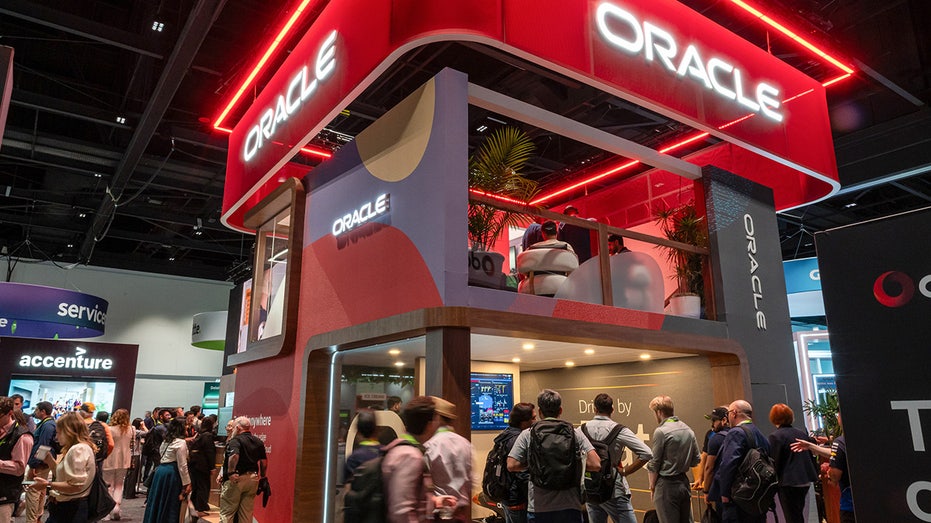
Oracle has hired a new CFO as the company grapples with a costly AI buildout and restructures its workforce amid reported layoffs. (David Paul Morris/Bloomberg via Getty Images)
Oracle’s most recent 10-K filing noted the company had about 162,000 full-time employees in May 2025.
The company said in a March filing that it expects the total costs associated with its restructuring plan in fiscal year 2026 to be as high as $2.1 billion, most of which would go to employee severance and related expenses.
Oracle has recently ramped up capital spending to build artificial intelligence (AI) data centers as the company looks to incorporate those tools into its business software services. The company has projected $50 billion in capital expenditures for its fiscal year that ends in May, more than double its spending in the previous fiscal year.
HSBC WEIGHS DEEP JOB CUTS AS AI OVERHAUL UNFOLDS: REPORT
| Ticker | Security | Last | Change | Change % |
|---|---|---|---|---|
| ORCL | ORACLE CORP. | 145.54 | -0.86 | -0.59% |
The cloud computing company said in February it planned to raise as much as $50 billion this year through a combination of debt and equity sales.
The company’s stock has been volatile over the last year amid the AI buildout, with shares up about 14% in the last year despite declines of 50% in the last six months and 25% year to date amid concerns that AI presents a competitive threat to software providers.
ORACLE EXPECTED TO SLASH THOUSANDS OF JOBS AS MASSIVE AI SPENDING CREATES FINANCIAL CASH CRISIS
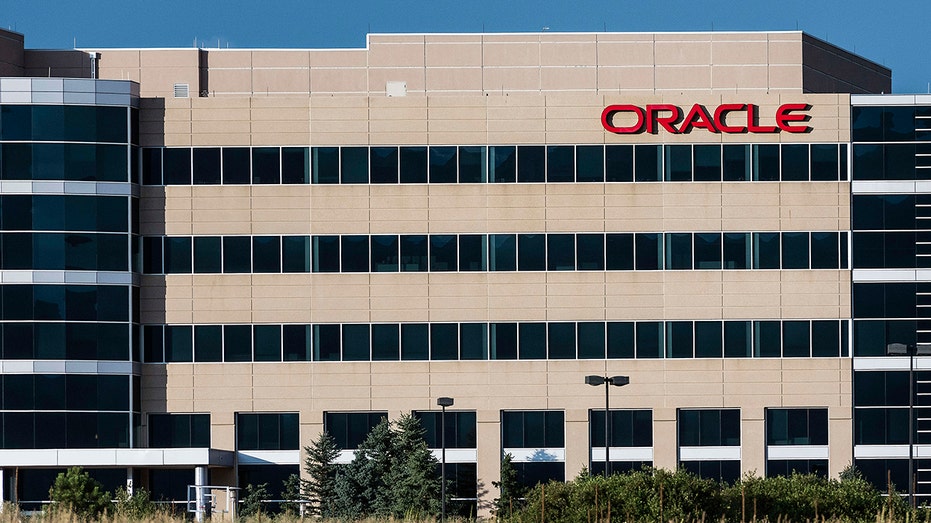
Oracle’s stock has been volatile amid its AI buildout. (Getty Images)
Oracle’s move to hire Maxson as CFO will reinstate a position that was eliminated after Safra Catz became the company’s co-CEO and principal financial officer in 2014.
Maxson will report to Oracle co-CEO Clay Magouyrk in her new role and said in a press release announcing her hiring that she is “excited to join at this pivotal moment.”
GET FOX BUSINESS ON THE GO BY CLICKING HERE
She added that she looks forward to partnering with the company’s leaders to “continue to invest with discipline and to translate this momentum into durable, long-term value for customers and shareholders.”
Reuters contributed to this report.


Bitcoin targets $80,000 amid regulatory progress and S&P 500 record
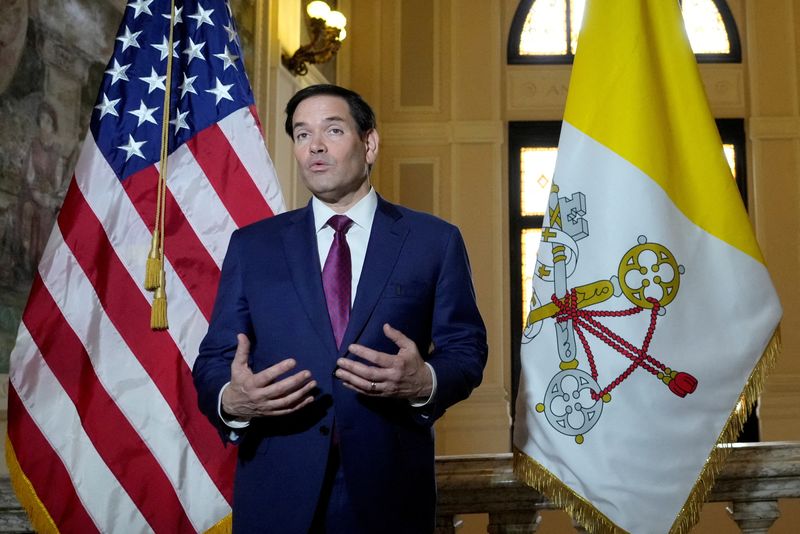

US Secretary of State to travel to Vatican and Italy, newspapers report


OPEC+ set to agree third oil output quota hike since Hormuz closure, sources say

In the last six months, 10 penny stocks delivered impressive gains ranging from 25% to 490%, including two multibaggers. We identified these outperformers using specific filters: a market capitalisation below Rs 1,000 crore, a share price under Rs 20, and a latest minimum trading volume of 5 lakh shares. This approach helped spotlight low-priced, actively traded micro-cap stocks showing strong upward momentum.
Penny stocks continue to draw interest due to their low price points and high return potential. However, they come with substantial risks, including low liquidity, sharp volatility, and limited transparency. For investors, success in this space requires more than luck, it demands discipline, thorough research, and a firm grip on risk management. (Data Source: ACE Equity)

S&P Earnings Record May Be A Warning


China, Philippines trade accusations over South China Sea
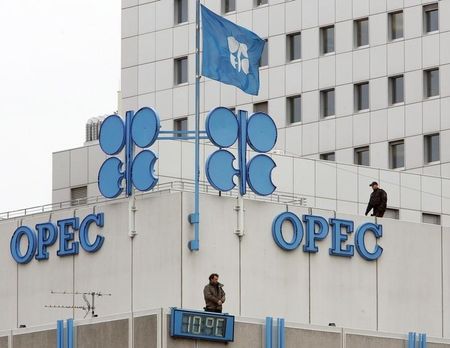
OPEC+ targets 188,000 bpd hike to signal stability post-UAE exit
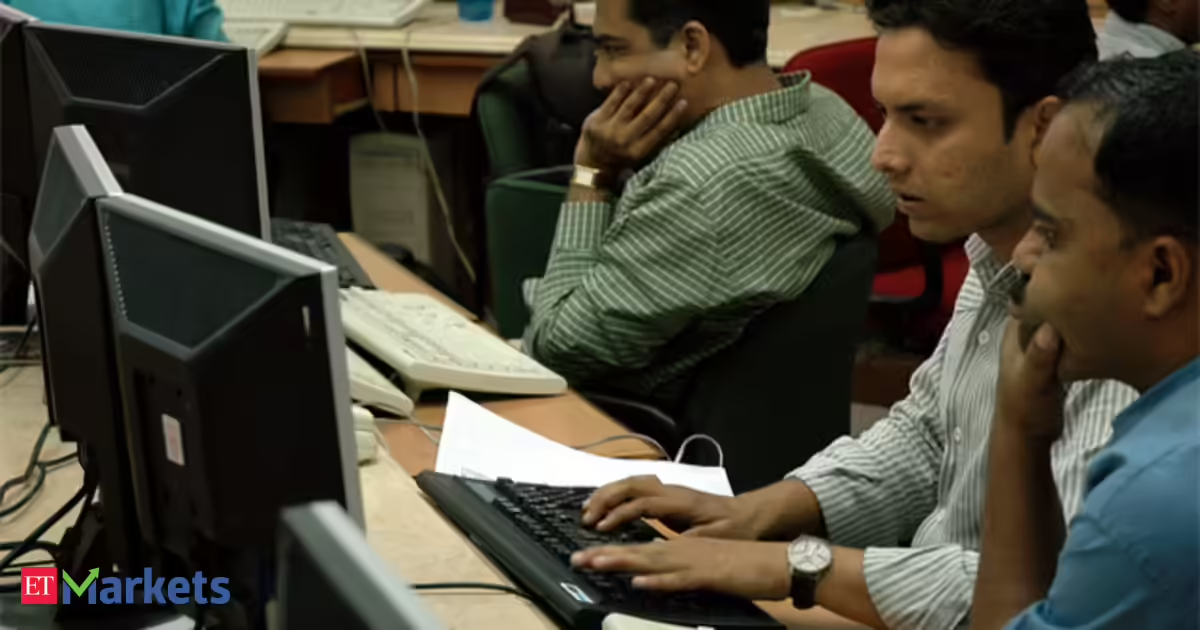
In such a dynamic environment, becoming a successful trader requires more than just luck—it demands discipline, adaptability, and a deep understanding of market behavior. Drawing insights from market experts and aligning them with current conditions, here are the key principles every trader should follow.
1. Respect Market Volatility, Don’t Fight It
The current market phase is marked by sharp swings. For instance, indices like the Sensex and Nifty have shown rapid fluctuations—rising one day and falling sharply the next due to global cues and geopolitical developments.
Successful traders understand that volatility is not a threat but an opportunity. Instead of predicting every move, they focus on reacting correctly. Accepting uncertainty is the first step toward consistent trading performance.

2. Focus on Risk Management Above All
One of the most important lessons from seasoned traders is simple: protect your capital first.In today’s market, where even large-cap stocks have seen significant valuation erosion and sudden corrections, risk management becomes critical.
This means:
Using stop-loss orders
Avoiding over-leveraging
Limiting exposure to a single trade
A trader who survives market downturns is better positioned to benefit from future opportunities.
3. Follow the Trend, Not Emotions
Markets are currently influenced by macro factors like oil price shocks, inflation concerns, and global conflicts.
In such conditions, emotional trading can be dangerous. Many beginners try to “catch the bottom” or “sell at the top,” but professionals focus on trend-following strategies.
If the market is showing weakness (like sustained corrections or lower highs), it’s wiser to stay cautious rather than aggressively bullish.
4. Stay Updated with Macro and Global Developments
Unlike earlier times, today’s markets are deeply interconnected with global events.
For example:
Rising crude oil prices impact inflation and corporate earnings
Geopolitical tensions affect foreign investor sentiment
Currency fluctuations influence export-oriented sectors
These factors have already led to cautious outlooks from global institutions and significant foreign capital outflows.
A successful trader keeps an eye not just on charts, but also on global news and economic indicators.
5. Avoid Overtrading in Uncertain Markets
When markets become unpredictable, the temptation to trade frequently increases. However, overtrading often leads to losses.
Experts emphasize patience—waiting for high-probability setups rather than chasing every market move.
In fact, periods of consolidation and volatility often reward disciplined traders more than aggressive ones.
6. Build a Strong Trading Psychology
Trading is as much psychological as it is analytical. Fear and greed are amplified in volatile markets like the current one.
A successful trader:
Accepts losses as part of the process
Avoids revenge trading
Stays consistent with strategy
Mental discipline is what separates long-term winners from short-term speculators.
7. Think Long-Term While Trading Short-Term
Even though short-term volatility dominates headlines, India’s long-term growth story remains intact due to strong domestic demand and economic resilience.
This dual perspective is crucial:
Trade short-term movements with discipline
Invest long-term with conviction
Balancing both helps traders stay grounded during market turbulence.
Key Takeaways
The stock market in 2026 is a classic example of opportunity wrapped in uncertainty. While volatility driven by global factors may persist in the near term, it also creates fertile ground for skilled traders.
Success in trading today is not about predicting the future—it is about managing risk, controlling emotions, and adapting to ever-changing market conditions. Those who master these principles will not only survive volatile markets but thrive in them.
Business
Mcap of four of top-10 most valued firms surges by Rs 2.20 lakh cr; Reliance biggest winner

Last week, the BSE benchmark Sensex climbed 249.29 points or 0.32 per cent.
“Markets ended the week with marginal gains, reflecting a volatile and range-bound trading environment amid mixed global and domestic cues,” Ajit Mishra – SVP, Research, Religare Broking Ltd, said.
The week began on a positive note, supported by easing geopolitical tensions and steady progress in Q4 earnings, which lifted initial sentiment, he said.
The week began on a positive note, supported by easing geopolitical tensions and steady progress in Q4 earnings, which lifted initial sentiment, he said.
However, gains were gradually capped by rising crude oil prices, weak cues from Asian markets, and persistent foreign institutional investor (FII) outflows, Mishra added.
However, gains were gradually capped by rising crude oil prices, weak cues from Asian markets, and persistent foreign institutional investor (FII) outflows, Mishra added.
While Reliance Industries, Bharti Airtel, Tata Consultancy Services (TCS) and Bajaj Finance were the gainers from the pack, HDFC Bank, State Bank of India, ICICI Bank, Larsen & Toubro, Hindustan Unilever and Life Insurance Corporation of India (LIC) faced a combined erosion of Rs 1.24 lakh crore from their valuation.
Reliance Industries added Rs 1,39,655.8 crore taking its market valuation to Rs 19,36,303.30 crore.
Bharti Airtel’s valuation surged Rs 43,503.51 crore to Rs 11,49,222.13 crore.
The market valuation of TCS jumped Rs 27,569.83 crore to Rs 8,94,933.95 crore and that of Bajaj Finance climbed Rs 9,432.32 crore to Rs 5,83,123.13 crore.
However, the market capitalisation (mcap) of ICICI Bank eroded by Rs 45,364.62 crore to Rs 9,04,980.78 crore.
The valuation of State Bank of India dropped Rs 30,922.57 crore to Rs 9,85,829.96 crore.
The mcap of HDFC Bank diminished by Rs 20,951.31 crore to Rs 11,87,274.17 crore and that of Hindustan Unilever edged lower by Rs 18,420.79 crore to Rs 5,28,799.01 crore.
The valuation of LIC declined by Rs 8,222.49 crore to Rs 5,04,798.07 crore and that of Larsen & Toubro dipped by Rs 178.83 crore to Rs 5,51,993.05 crore.
Reliance Industries remained the most valued domestic firm followed by HDFC Bank, Bharti Airtel, State Bank of India, ICICI Bank, TCS, Bajaj Finance, Larsen & Toubro, Hindustan Unilever and LIC.
Business
10 Largecap stocks with strong upside potential of up to 50%! Do you own any? – Largecap stocks surge
Analyst forecasts offer more than just numbers, they provide a strategic view of future market potential. For investors seeking the next big opportunity, a closer look at BSE large-cap stocks reveals several promising contenders.
Based on consensus estimates from Trendlyne, a number of largecap stocks are projected to deliver strong returns over the next 12 months. This anticipated “upside” represents the average expected gain over the coming year, offering a data-driven benchmark for investors targeting high-potential opportunities. In this analysis, we spotlight 10 standout largecap stocks expected to deliver gains in the 30% to 50% range over the year ahead.

Microsoft admits Windows 11 lost its way, Nadella pledges to "win back fans"
![Sick Luke - MONEY MACHINE (feat. Lazza & Tony Effe) [Official Visual]](https://wordupnews.com/wp-content/uploads/2026/02/1770843044_maxresdefault-80x80.jpg)
Sick Luke – MONEY MACHINE (feat. Lazza & Tony Effe) [Official Visual]

Embracing my trans identity let me conquer my biggest fear

Manchester United reach agreement with Casemiro over contract clause amid transfer speculation

US brings back mandatory military draft registration

Steven Gerrard disagrees with Gary Neville over ‘shock’ Chelsea and Arsenal claim | Football

![J MONEY - NA NHA NOME [VIDEO OFICIAL]](https://wordupnews.com/wp-content/uploads/2026/05/1777799968_maxresdefault-80x80.jpg)
-

 Tech6 days ago
Register Renaming | Hackaday
-

 Politics6 days ago
Drax board avoid their own AGM, accused of greenwashing & environmental racism
-

 Tech6 days ago
Why Blue Badges Disappeared From Toyota Hybrids
-

 Tech6 days ago
Images of Samsung’s rumored smart glasses have leaked
-
 Sports7 days ago
IPL 2026: Ruturaj Gaikwad registers slowest fifty of the season, enters all-time unwanted list | Cricket News
-
 Tech2 days ago
Trump’s 25% EU auto tariff breaches Turnberry Agreement that also covers semiconductors and digital trade
-

 Fashion4 days ago
Kylie Jenner’s KHY Enters a New Era with ‘Born in LA’
-

 Business4 days ago
Most Commercial Energy Audits Miss the Real Losses
-

 Crypto World5 days ago
CFTC’s AI will review U.S. crypto registration applications, chairman tells CoinDesk
-

 Business6 days ago
(VIDEO) Charlize Theron Climbs Times Square Billboard to Promote New Netflix Thriller ‘Apex’
-

 Business4 days ago
Barclay Brothers Avoid Bankruptcy: HSBC Drops High Court Petitions After IVA Deal
-
 Sports2 days ago
Paul Scholes issues Marcus Rashford reality check as agreement emerges over Man United star
-
 Entertainment6 days ago
Alicia Keys Calls Out Music Industry ‘Boys Club’
-
 Business4 days ago
Tesla Officially Registers Elon Musk’s Stock: What Investors Need to Know
-

 Tech5 days ago
Get Ready for More Brain-Scanning Consumer Gadgets
-

 Tech7 days ago
Dyson Vacuums And The Curse Of Cooked Capacitors
-
 Crypto World5 days ago
Robinhood Phishing Scam Exploits Gmail Dot Feature to Bypass Security
-

 Crypto World7 days ago
Only 3% of traders drive Polymarket’s accuracy, not the crowd, study finds
-

 Entertainment6 days ago
Sister Wives: Janelle Posts New Scary Warning
-

 Crypto World5 days ago
Gmail Dot Trick Underpins Robinhood Phishing, Sending Real-Looking Emails
You must be logged in to post a comment Login