
Business
Orora FY26 slides: cans surge offsets glass impairment of A$743m



Business
Origin Energy Limited 2026 Q4 – Results – Earnings Call Presentation (OTCMKTS:OGFGY) 2026-08-12


Seeking Alpha’s transcripts team is responsible for the development of all of our transcript-related projects. We currently publish thousands of quarterly earnings calls per quarter on our site and are continuing to grow and expand our coverage. The purpose of this profile is to allow us to share with our readers new transcript-related developments. Thanks, SA Transcripts Team
Business
China’s CXMT Stock Surges Nearly 6% After DDR5 Yield Hits 90% and Reports of Apple Testing Its Memory Chips
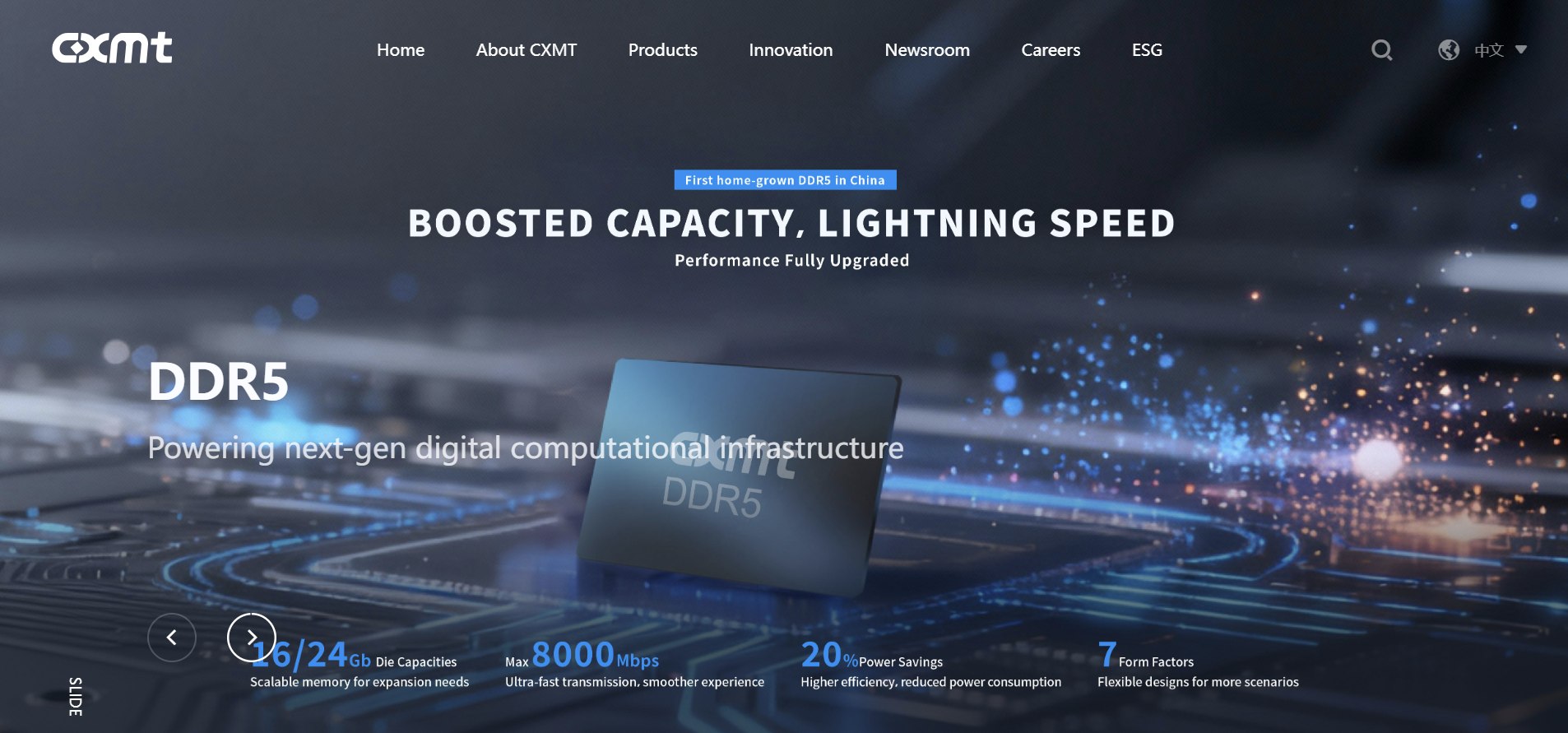
SHANGHAI — Shares of CXMT Corp climbed 6.19% to close at 53.52 yuan on Wednesday, adding 3.12 yuan, as investors responded to reports that the Chinese memory chipmaker had pushed yields on its 17-nanometer-class DDR5 products above 90% and that major technology companies continued testing or adopting its chips amid a persistent global shortage of dynamic random-access memory.
Trading volume remained elevated on the Shanghai Stock Exchange’s STAR Market, where CXMT, formerly known as ChangXin Memory Technologies, has been one of the most closely watched stocks since its blockbuster debut in late July. The move lifted the company’s market capitalization to roughly 3.4 trillion yuan, reinforcing its position among the most valuable listed firms on China’s mainland exchanges.
Chinese technology outlet MyDrivers reported that CXMT’s DDR5 manufacturing yield had surpassed 90%, a level said to sit only a few percentage points behind comparable Samsung Electronics products of a similar generation. The report, which has not been independently verified by major international outlets, linked the improvement to better overall supply conditions. Higher yields typically allow producers to ship more usable chips from each wafer, an important factor when industry capacity remains tight.
At the same time, reports indicated that Apple has been testing CXMT memory chips for products including iPhones and MacBooks. Laptop makers HP and Acer have already begun using limited volumes of CXMT DRAM in devices sold outside the United States, primarily in mainland China and some emerging markets, according to multiple media accounts citing industry sources. ASUS has also incorporated the chips selectively, while Dell has reportedly maintained a ban. Adoption volumes remain modest, and CXMT’s output for the year is largely committed to existing customers.
The developments come less than three weeks after CXMT’s shares soared 466% on their first day of trading on July 27. The company raised about 57.92 billion yuan ($8.6 billion) in Asia’s largest initial public offering of 2026 and the biggest mainland Chinese semiconductor listing on record. Shares opened at 49.50 yuan against an offer price of 8.66 yuan, touched an intraday high of 55.03 yuan, and closed at 49 yuan. Market capitalization briefly exceeded 3.3 trillion yuan, briefly making CXMT the most valuable company listed onshore in China.
Only about 6.73% of the enlarged share capital was freely tradable at listing because of lock-up restrictions, a factor that amplified price swings and turnover. First-day trading volume exceeded 141 billion yuan, setting a record for an A-share company.
CXMT ranks as the world’s fourth-largest DRAM producer by market share, trailing Samsung Electronics, SK Hynix and Micron Technology. Industry estimates place its share in the high single digits to around 8% as of late 2025 and early 2026. The company operates 12-inch wafer fabrication plants in Hefei and Beijing with combined capacity near 300,000 wafers per month. Expansion projects already under way in Shanghai and Hefei, along with discussions about a possible second facility in Beijing’s Yizhuang area, are expected to more than double output toward 600,000 wafers per month once fully ramped.
In its prospectus and subsequent guidance, CXMT projected first-half 2026 revenue of 110 billion to 120 billion yuan, more than seven times the year-earlier figure, and net profit attributable to shareholders of 50 billion to 57 billion yuan, reversing prior losses. First-quarter revenue alone reached approximately 50.8 billion yuan, up more than 700% year on year, driven by higher DRAM prices, increased shipments and an improved product mix. Gross margins expanded sharply as the industry moved into a strong upcycle fueled by artificial-intelligence data-center demand.
The AI-driven shortage has redirected significant capacity at the three dominant producers toward high-bandwidth memory, leaving conventional DDR5 and related products constrained. CXMT has secured multi-year supply agreements with major Chinese customers, including a long-term deal with Tencent valued at more than 20 billion yuan for server DRAM, according to people familiar with the matter reported by Reuters in June. The company also counts Alibaba Cloud, ByteDance, Lenovo and Xiaomi among its customers.
Geopolitical factors continue to shape the outlook. CXMT has faced U.S. export-control restrictions and placement on certain blacklists, limiting access to advanced equipment such as extreme-ultraviolet lithography tools. Its process technology trails the densest nodes used by Samsung, SK Hynix and Micron. Still, progress on yields and selective adoption by global brands have drawn attention as companies seek to diversify supply chains.
Apple’s reported testing has attracted particular scrutiny in Washington. A bipartisan group of U.S. senators has urged the company to rule out Chinese memory suppliers, with a response deadline in late August. Apple Chief Executive Tim Cook has publicly noted “very significant constraints” and limited flexibility in the memory supply chain. CXMT, for its part, has reportedly quoted prices comparable to or above those of the established suppliers and has limited additional capacity available for new international customers after prioritizing domestic demand.
Analysts have pointed to CXMT’s capacity expansion plans and the broader DRAM supercycle as potential supports for further earnings growth, while cautioning that valuations after the IPO surge appear elevated relative to historical peers. The company intends to allocate IPO proceeds toward process upgrades, research into next-generation DRAM including high-bandwidth memory, and additional production lines. HBM production remains several years behind the industry leaders, though CXMT has indicated early efforts in that area.
Local governments in China are competing to host further expansion. Reuters reported in early August that CXMT was in early-stage talks with the Beijing Economic-Technological Development Area for a possible second plant in Yizhuang, seeking at least 60 million yuan in support, with other state-linked entities also expressing interest. Building a modern advanced DRAM fab typically requires investment well above $10 billion.
The stock’s performance since listing has been volatile. After the debut close near 49 yuan, shares climbed higher in subsequent sessions, briefly approaching 60 yuan, before settling into a range that included the 53.52 yuan close on August 12. Inclusion in the MSCI China All Shares Index, effective in early August, has been cited as a potential source of additional passive investment flows.
Market participants continue to weigh CXMT’s ability to convert technical progress and domestic policy support into sustained global competitiveness. While the company has narrowed some production gaps and benefited from the current tight supply environment, it still operates without access to the most advanced lithography tools and remains focused primarily on the Chinese market and selective export opportunities. Higher yields on mainstream DDR5 products, combined with ongoing interest from international device makers, provided the immediate backdrop for Wednesday’s gain.
As the global memory industry navigates elevated prices and constrained supply into the second half of 2026, CXMT’s trajectory will remain a key indicator of China’s progress in building a more self-reliant semiconductor sector and of the broader reshaping of supply chains under geopolitical pressure.
Business
ETMarkets Smart Talk | Maturing AI trade could redirect global capital towards diversified growth markets like India: Ritesh Taksali

Taksali points out that FPIs invested around ₹20,000 crore in Indian equities in July, followed by another ₹12,921 crore in the first week of August. With the Nifty’s trailing P/E now around 20.8x—below its seven-year median and 10-year average—India’s valuation premium has also become more reasonable.
He believes India’s diversified, domestically driven growth profile could become increasingly attractive as the AI trade matures. At the same time, better-than-expected Q1 earnings, resilient margins and the potential revival in private capex could provide additional catalysts for Indian equities through FY27-FY29. Edited Excerpts –
Q) Market is showing signs of stablisation after posting over 1% back-to-back returns in the June & July. How are you reading markets?
A) The set up for Indian equities has improved meaningfully compared with what we saw through 2025 and the first part of 2026. Several of the key concerns that had weighed on global markets—trade tariffs, geopolitical tensions and the reverse AI trade—have either played out, or the concerns around them have receded. This improvement in sentiment is beginning to reflect in foreign flows. After several months of sustained selling, we have seen a meaningful reversal, with FIIs investing around ₹20,000 crore in Indian equities.

We have seen a prolonged time correction in the Indian equity markets over the last two years, since September 2024. During this period, large-cap valuations have also moderated, providing some comfort from valuation perspective. We believe the markets should show greater strength from here on.
Q) Most of the June quarter results are out. What do you make of Q1 numbers and management commentary?A) Barring OMCs, earnings season has been better than expectations. We have seen a broad-based beat across sales, EBITDA and PAT. The growth momentum has continued, with sales growth at 22% y-o-y and profit growth at 11% y-o-y. For most of the companies, margins have held up better than anticipated despite pressure from higher raw material and logistics costs.
While supply-chain disruptions and elevated input and freight costs did create headwinds, companies were able to offset a meaningful part of this through price increases, cost rationalisation, and operating efficiencies.
Management commentary suggests that business environment is expected to improve in H2 as cost pressure abates and festive season kicks in.
Q) Private sector capex announcements have remained subdued over the past 12–18 months. If this investment cycle continues to be delayed, could it push back the expected earnings growth for India Inc.? What are your views on the outlook for private capex and its impact on corporate earnings?
A) Private Capex has been slower than expected because companies have remained cautious amid geopolitical uncertainty and the wars, which have affected visibility on global demand, supply chains and input costs. We should see a gradual revival as visibility improves.
As geopolitical uncertainty eases and demand visibility improves, we expect more of the announced projects to move from the announcement stage to actual orders and construction.
Healthy corporate balance sheets, high-capacity utilisation, government infrastructure spending, PLI/manufacturing incentives and rising investment announcements provide the ingredients for a revival.
For equities, therefore, private capex is less a near-term earnings risk and more a critical upside catalyst—a broad-based capex cycle could materially improve earnings visibility over FY27–FY29.
Q) FIIs inflows have remained largely positive so far in August – can we say that the smart money is slowly moving back to India?
A) FPIs have turned buyers in July, investing around ₹20,000 crore in Indian equities. This momentum has continued into August, with another ₹12,921 crore coming in during the first week. There are three or four factors behind this.
First, valuations have corrected. The Nifty’s trailing P/E has also come down to 20.8x, about 9 per cent below its seven-year median and roughly 12 to 13 per cent below its ten-year average.
Second, the AI-driven reverse trade is beginning to abate. A significant amount of the earlier FII selling was essentially a rotation towards Korea and Taiwan, where investors had much greater exposure to the AI and semiconductor cycle.
India was relatively under-owned because it did not have the same direct AI leverage. As that trade matures, global investors are beginning to look for other markets.
Third, the macro environment is becoming more supportive. The rupee has stabilised, helped by strong foreign currency inflows. The FCNR-B deposit scheme has mobilised around US$41 billion so far, with inflows potentially reaching US$70–90 billion by the September 30 closure.
The government has also made interest income on Indian government bonds tax-free for foreign investors, contributing to around US$8.7 billion of net inflows into G-Secs. These measures have strengthened confidence in India’s ability to manage currency volatility and global capital-flow pressures.
More broadly, the external sector remains resilient, supported by services exports, remittances, merchandise exports and improving FDI flows. Overall, the stronger capital inflows and resilient external balances provide greater stability to the rupee and improve the macro backdrop for Indian equities.
And finally, India’s earnings outlook is improving. The Q1 results season has been better than expected, margins have been more resilient and management commentary suggests that demand could improve in the second half, supported by festive consumption, easing cost pressures and exports.
Q) After the recent correction seen in 1H2026. Has the premium corrected? If not, can India continue to command premium valuations compared to other emerging markets?
A) India’s valuation premium over emerging markets has compressed meaningfully, although India still trades at a premium. The important point is that the premium has become more reasonable after a period of relative underperformance.
Throughout 2024, India was trading at significant P/E premium to the MSCI EM index. Since then, Taiwan and South Korea have significantly re-rated on the back of the global AI and semiconductor cycle, while India has not had the same direct exposure to that theme.
At the same time, the global opportunity set has changed, with markets such as Brazil and other commodity- or value-oriented EMs becoming relatively more attractive at different points in the cycle. This has contributed to a broad re-rating and narrowing of India’s relative valuation advantage.
India’s weight in the MSCI EM index has also moderated from a peak of around 19.4% in late 2024 to its long-term average of around 11.8%. So, from a relative positioning perspective, some of the exceptional India premium has already been unwound.
Having said that, we don’t think India needs to trade at parity with other emerging markets. India’s premium is justified to an extent by the quality and diversity of its growth.
Unlike markets where the earnings cycle can be heavily driven by a single theme such as semiconductors or commodities, India offers relatively diversified exposure across financials, consumption, manufacturing, infrastructure and services.
More importantly, a large part of India’s growth is domestically driven, which makes the economy relatively less dependent on global trade cycles.
This becomes particularly relevant if the current geopolitical uncertainty starts to ease and oil prices remain contained. Lower crude prices are structurally positive for India because they improve the current account, reduce imported inflation and ease pressure on the currency.
It reinforces one of India’s key advantages—a large domestic economy with multiple internal growth drivers and relatively manageable external vulnerabilities.
The other factor is the AI trade. The extraordinary re-rating of semiconductor-linked markets has created a significant valuation and earnings gap versus India.
As the AI-led trade matures and the valuation differential between those markets and the rest of emerging markets becomes harder to justify, capital could increasingly look for diversified growth opportunities, where India remains well positioned.
So, we would not argue that India’s valuation premium disappears completely. A moderate premium is sustainable as long as India continues to deliver superior and more consistent earnings growth.
Q) Are there pockets of froth in the market that investors should avoid? Which sectors still offer reasonable valuations despite the market rally?
A) I think the key distinction at this point is between stocks where valuations are being supported by earnings and cash flows, and those where the valuation is being supported primarily by a narrative.
The recent correction in the headline indices has helped clean up valuations to some extent, but pockets of froth remain, particularly in stocks where expectations of very strong growth are already fully reflected in prices.
In some cases, investors are paying a significant premium for growth that may take several years to materialise. That leaves limited room for disappointment.
The valuations of SMIDs are trading above their long-term averages when compared to their own historical P/Es as well as when compared to PE of their large cap peers. But at the same time, SMID earnings have also grown at faster rate than the large caps.
Valuations are to be seen in conjunction with fundamentals. A company can be expensive and still deliver good returns if earnings consistently surprise on the upside, that’s where we see multiple re-ratings. So, we would avoid making a blanket call on any market-cap segment or sector.
The market will be increasingly driven by fundamentals. The better opportunities are likely to be businesses with strong cash-flow generation, sustainable competitive advantages, healthy balance sheets and earnings visibility, where valuations leave some margin of safety.
Q) How are you reading into new IPOs which have started to hit D-Street after few months of pause?
A) The IPO market has clearly picked up after a period of relative lull. As the macro headwinds abated, market stability has returned and so has liquidity.
There is a healthy pipeline of upcoming IPOs: 178 SEBI-approved companies looking to raise 2.96 lakh crore rupees, and another 71, awaiting approval for 1.84 lakh crore. Annual IPO issuance should reach roughly 2.5 lakh crore rupees.
The new issues are not just limited to a particular sector. We are seeing a much more diverse set of businesses coming to the market, spanning financial services, healthcare, consumer, manufacturing, technology and industrials.
The breadth of the current IPO pipeline is also a positive sign for the overall equity market. It indicates that companies are once again comfortable accessing public markets and that investor appetite for new businesses is returning.
We are seeing both established businesses looking to unlock value as well as newer-age and high-growth companies tapping the market. The diversity of sectors and businesses entering the market reflects the depth of India’s entrepreneurial and corporate ecosystem, and we expect the IPO pipeline to remain robust as market confidence improves.
(Disclaimer: Recommendations, suggestions, views, and opinions given by experts are their own. These do not represent the views of the Economic Times)
Business
Energy Vault Holdings, Inc. 2026 Q2 – Results – Earnings Call Presentation (NYSE:NRGV) 2026-08-12
Seeking Alpha’s transcripts team is responsible for the development of all of our transcript-related projects. We currently publish thousands of quarterly earnings calls per quarter on our site and are continuing to grow and expand our coverage. The purpose of this profile is to allow us to share with our readers new transcript-related developments. Thanks, SA Transcripts Team

Plastic waste in Timor-Leste will be used to build public infrastructure, after Perth-based Hyperion Systems moved to deploy its ‘factory-in-a-box’ overseas for the first time.

SYDNEY — Australia’s benchmark S&P/ASX 200 index fell for a third consecutive session Thursday, dragged lower by continued weakness in Commonwealth Bank of Australia shares even as the lender posted annual profit growth broadly in line with expectations.
The index was down 46.0 points, or 0.50%, to 9,163.4 as of 12:21 p.m. Sydney time, extending Wednesday’s 0.45% decline, when the benchmark closed at 9,209.4 points after a session dominated by disappointing technology stocks and a heavy corporate earnings calendar.
Commonwealth Bank, Australia’s largest lender by market value, remained at the center of Thursday’s session after reporting its full-year results a day earlier. The bank’s cash profit came in comfortably ahead of Morgan Stanley’s expectations, aided by softer-than-expected expenses and a lower impairment charge. Despite the earnings beat, CBA shares extended a decline that began immediately following the results release, with market commentary attributing the continued weakness in part to the bank’s confirmation of a slump in mortgage lending following the federal budget, a factor that appeared to overshadow the otherwise solid headline profit figures for investors focused on the bank’s forward growth trajectory.
Justin Lin, an investment analyst at Global X ETFs, said the broader pullback across Australian shares this week likely reflected investors positioning for the heart of reporting season rather than any deeper shift in sentiment. “Today’s move seems most likely just a short-term blip and investors seem to be squaring up for August earnings season, locking in some profits,” Lin said, adding that with company-specific results back in focus, broader macroeconomic concerns may “temporarily take a back seat” as investors sift through individual earnings reports.
Jun Bei Liu, founder and portfolio manager at Ten Cap, said she expected a mixed showing from the banking sector this reporting season. “Expecting a little soft results from the banks as their margin will continue to be under pressure, and limited ability to deliver more capital return,” Liu said, noting that Westpac and ANZ Group are scheduled to report their own quarterly results Friday and Saturday, respectively, following Commonwealth Bank’s lead. Liu added that results from companies outside the banking sector were likely to look considerably stronger, citing resilient economic conditions and easing inflationary pressure as supportive factors for corporate earnings more broadly this season.
Thursday’s session also featured a particularly dense slate of major companies reporting results, including Telstra Group, Insurance Australia Group, Origin Energy, ASX Ltd and Treasury Wine Estates, making it one of the busiest single days of the current reporting period. Elsewhere in the results calendar, jobs classifieds company Seek Ltd drew a downgrade from Bell Potter following its full-year results, with the broker cutting its rating to hold from buy and reducing its price target to $15.20 from $18.58, after concluding the stock’s shares were now fully valued following the report.
Energy stocks faced a modestly softer session after oil prices eased slightly overnight. According to Bloomberg data, West Texas Intermediate crude slipped 0.4% to $82.86 a barrel, while Brent crude fell 0.35% to $88.61 a barrel, even as reports emerged of vessel attacks in the Gulf of Oman, underscoring the continued volatility surrounding Middle East shipping routes despite Thursday’s modest pullback in prices. The softer crude backdrop weighed on ASX-listed energy producers, including Woodside Energy Group and Santos, both of which were expected to face a comparatively soft session as a result.
Thursday’s decline continues a broader pattern of caution that has characterized the ASX 200 through the opening stretch of August’s reporting season. The benchmark is entering the period with expectations for its first year of profit growth in four years, though that growth remains heavily concentrated in the resources sector. Industrial earnings outside of mining are forecast to grow by roughly 2.6%, below the underlying inflation rate of approximately 3.6%, meaning many non-resource companies are effectively expected to post earnings declines in real terms even while reporting nominal profit growth.
That backdrop has been further shaped by the Reserve Bank of Australia’s monetary policy path this year. The central bank raised its cash rate three times during 2026, in February, March and May, lifting it from 3.60% to 4.35%, before holding steady at its subsequent meetings, including its most recent decision on August 11, which landed in the middle of the current reporting season. Analysts have said company commentary on funding costs and consumer demand is likely to carry additional weight this earnings season given that backdrop of a still-elevated cash rate.
Despite the choppy start to reporting season, some market commentary has pointed to potential upside from currently subdued expectations, arguing that a reporting period widely anticipated to be difficult can often produce positive surprises precisely because expectations and investor positioning have already been set defensively heading in.
With Westpac and ANZ both due to report in the coming days, alongside a continued wave of results from companies across the industrial, retail and healthcare sectors, investors are likely to keep a close watch on whether the banking sector’s soft start to reporting season proves to be an isolated dynamic tied to CBA specifically, or a signal of broader margin pressure likely to weigh on the sector as a whole through the remainder of August.
Business
Xfinity By Comcast Down? Users Report Outage Wednesday Night As Downdetector Tracks Rising Complaints Today

Xfinity customers began reporting problems with their internet, TV and phone service Wednesday night, according to outage-tracking service Downdetector, in what appeared to be a developing disruption affecting the Comcast-owned provider’s network.
Downdetector said user reports indicating problems with Xfinity by Comcast began climbing at 10:03 p.m. Eastern time. The tracking service posted about the rising number of reports on its official account on the social platform X, asking affected users to describe how the outage was impacting them and tagging the post with the hashtag “XfinityByComcastDown.”
As of Wednesday night, Comcast had not issued a detailed public statement addressing the scope, cause or expected resolution timeline for the reported disruption. Downdetector’s tracking methodology relies on real-time, user-submitted reports rather than direct access to Comcast’s internal network diagnostics, meaning the true scale of the outage, including how many customers were affected and in which regions, remained difficult to independently verify in the disruption’s early stages.
Separate outage-tracking service Geoblackout logged a wave of Xfinity-related outage reports earlier Wednesday afternoon, breaking down the nature of the complaints as roughly 67% tied to landline internet service, 20% tied to mobile internet, and 13% tied to TV streaming issues. It remained unclear whether that earlier wave of reports was directly connected to the disruption flagged by Downdetector later that night, or represented a separate, unrelated pocket of service issues earlier in the day.
Xfinity operates as Comcast’s consumer-facing brand for internet, television, phone and mobile services across most of the United States, running on a hybrid fiber-coaxial network that serves tens of millions of customers nationwide. Comcast also sells business-tier internet and networking services under the same underlying network infrastructure through Comcast Business, meaning a significant disruption affecting the residential Xfinity network can, in some cases, affect business customers simultaneously if the underlying issue originates within shared backbone infrastructure.
Wednesday’s reported outage would not be the first significant disruption to affect Xfinity’s network. Past incidents have ranged from brief, localized service interruptions lasting only a few minutes to far larger, more consequential outages. In one previous case widely covered by national outlets, more than 50,000 Xfinity customers in the Bay Area lost internet access during a single outage, with Comcast initially unable to provide customers a clear timeline for restoration. Xfinity’s own support materials acknowledge that outages can also result from planned network maintenance and construction work, during which the company says customers in affected areas should expect internet, phone and smart home services to go offline entirely for the duration of the work, typically completed within a single day.
Xfinity maintains a dedicated online outage map and status center where customers can check for reported disruptions in their specific area, along with an Xfinity Assistant tool offering round-the-clock troubleshooting support. The company has also encouraged customers to add a mobile phone number to their account to receive real-time text alerts ahead of planned service interruptions, along with updates during unplanned outages. For customers whose home internet goes down entirely, Xfinity has pointed to its network of public WiFi hotspots as an alternative way to stay connected, along with the Xfinity Stream app, which the company says remains accessible over a cellular connection or non-Xfinity WiFi network even when a customer’s home internet service is down.
Severe weather has also historically been a significant driver of Xfinity outages in various regions, with the company operating a dedicated Xfinity Response Center specifically to help customers manage service disruptions tied to hurricanes, storms, wildfires and other weather-related events. It remained unclear Wednesday night whether weather played any role in the reported disruption, or whether the outage stemmed from a different underlying technical cause.
Customers experiencing problems with their Xfinity service were, consistent with the company’s own published guidance, generally advised to first check Xfinity.com or the Xfinity mobile app to determine whether an outage had already been detected and logged in their specific area, before assuming their individual equipment or in-home wiring was to blame. The company’s outage map is designed to display known service disruptions by region, allowing customers to distinguish between a broader, area-wide network issue and a more localized problem specific to their own home equipment.
This remains a developing situation, and additional details regarding the precise scope, underlying cause and expected resolution timeline of Wednesday night’s reported Xfinity outage were not immediately available. Comcast had not issued an official public acknowledgment of the disruption as of late Wednesday, leaving affected customers largely reliant on Downdetector and the company’s own outage map to determine whether their service issues were part of a broader, network-wide problem or an isolated disruption specific to their location.
Business
Samsung Electronics Shares Soar 6.68% As Kospi Rallies For Third Straight Session On Chip Demand
SEOUL — Shares of Samsung Electronics surged Wednesday, closing up 6.68% as South Korea’s benchmark Kospi index extended its winning streak to a third consecutive session, driven by intensifying investor appetite for the country’s dominant semiconductor manufacturers.
Samsung Electronics closed at 255,000 won, up 16,000 won from the previous session, according to Korea JoongAng Daily. Rival chipmaker SK Hynix also posted a strong gain, rising 5.54% to close at 1.5 million won. The rally in both stocks helped drive the broader Kospi index up 233.51 points, or 3.68%, to close at 6,579.04, following gains of 0.65% and 0.73% in the two preceding sessions.
The Kospi opened Wednesday 1.47% higher and continued adding to those gains as foreign and institutional investors poured money into major chipmakers throughout the session. The rally proved forceful enough that the Korea Exchange activated a buy-side sidecar at 11:57 a.m. local time, a circuit-breaker-style mechanism that temporarily suspends program trading for five minutes when the market moves sharply in one direction. Trading volume for the session was moderate, at 355 million shares worth 26.21 trillion won, or roughly $18.49 billion, even as decliners outnumbered advancers 477 to 378 across the broader market.
Lee Kyung-min, an analyst at Daishin Securities, said the session reflected renewed investor confidence in the durability of demand tied to artificial intelligence infrastructure. “Large order backlogs and new orders reaffirmed that investment in AI infrastructure and semiconductor demand remain solid, stimulating investor sentiment,” Lee said.
The rally followed government data released this week showing South Korea’s semiconductor exports surged 155.4% year-over-year to roughly $9.95 billion in the first 10 days of August, helping drive the country’s overall outbound shipments up 45.3% to $21.3 billion over the same period, a record for the window. That data provided the clearest signal yet that global demand for memory chips, driven by the ongoing artificial intelligence infrastructure buildout, remains robust even as broader technology markets elsewhere have shown signs of volatility.
Wednesday’s gains added to Samsung’s rebound from a rockier stretch earlier in the week. On Monday, foreign investors had aggressively sold both Samsung Electronics and SK Hynix shares, offloading a combined 1.02 trillion won and 410.3 billion won worth of stock, respectively, amid caution tied to reports about the rising competitiveness of Chinese semiconductor firms. That selling pressure reversed sharply once the strong export figures were released, with Samsung shares having tumbled as low as 224,000 won in early trading Tuesday before rebounding on the export data and continuing higher into Wednesday’s session.
Wednesday’s advance also came amid reports that Singapore’s state investment firm Temasek is exploring direct investments in South Korean semiconductor leaders, a development analysts said reflected growing international confidence in the long-term value of the country’s chip sector, even as some valuations remain relatively low compared with the scale of the AI-driven memory boom underway.
Samsung’s rally builds on an extraordinary run for the stock throughout 2026. Shares climbed more than 100% during the first half of the year, driven overwhelmingly by the company’s semiconductor division, which accounted for 99.7% of Samsung’s operating profit in the second quarter, according to the company’s disclosed segment data. Of Samsung’s 89.5 trillion won in second-quarter operating profit, 89.2 trillion won came from semiconductors alone, underscoring how thoroughly the company’s earnings have become dependent on memory chip pricing and demand, even as its mobile, television and appliance businesses have contributed comparatively little to overall profitability.
Some analysts have projected even steeper gains ahead. Recent forecasts have called for Samsung’s third-quarter 2026 operating profit to reach 112 trillion won, an 817% year-over-year improvement, supported by an expected operating margin of 55%. Some projections have also suggested Samsung’s shareholder distributions could eventually climb to between 100 trillion and 200 trillion won annually, a roughly tenfold increase over current payout levels that would imply a dividend yield exceeding 7% at current valuations, though such forecasts remain subject to considerable uncertainty given the historical volatility of memory chip pricing cycles.
Wednesday’s rally in Seoul came even as major U.S. indexes closed lower overnight, with the Dow Jones Industrial Average falling 0.34%, the S&P 500 declining 0.32% to 7,728.2, and the Nasdaq Composite shedding 0.6%. The divergence underscored how strongly the domestic chip export data, rather than broader global market sentiment, drove Wednesday’s session in Seoul, with Korean investors focusing squarely on the country’s own semiconductor sector rather than following Wall Street’s lead.
The Korean won also strengthened against the dollar during Wednesday’s session, adding to the broadly positive tone across South Korean financial markets. With the Kospi now having risen for three consecutive sessions and Samsung and SK Hynix both posting substantial single-day gains, investors are likely to continue watching upcoming export data and any further developments tied to global memory chip demand as key drivers of sentiment heading into the remainder of August.

Agriculture Secretary Brooke Rollins says Americans should see more grocery price relief as egg prices fall, beef costs ease and the Trump administration pushes to lower food prices.
Whole Foods announced Wednesday that it is recalling certain produce and prepared foods containing fresh jalapeño peppers supplied by Coast Citrus Distributors over potential salmonella contamination.
The Food and Drug Administration said the recalled products were sold in 12 states and have “Best Before” dates ranging from Aug. 7 through Aug. 16.
No illnesses have been reported in connection with the recalled Whole Foods products, according to the FDA.
The recall includes select salsas, guacamole, pico de gallo and prepared foods, Whole Foods said. A full list of affected products is available on the FDA’s website.
18 PREPARED FOODS UNDER ALERT AS JALAPEÑO SALMONELLA OUTBREAK SICKENS 345

Whole Foods is recalling select salsa, guacamole, pico de gallo and prepared foods containing jalapeños over potential salmonella contamination.
The products were sold in Texas, Oklahoma, Louisiana, Wisconsin, Michigan, Illinois, Iowa, Missouri, Arkansas, Indiana, Kentucky and Ohio.
A Whole Foods spokesperson said Wednesday’s recall was issued because the products contain jalapeños that were sourced from Coast Citrus Distributors and are connected to the distributor’s recall. Some affected products were also included in a Taylor Fresh Foods recall announced Sunday.
The Whole Foods action comes amid a broader salmonella outbreak linked to jalapeños that has sickened 345 people and hospitalized 36 across 27 states, according to federal officials.
Prior to the Whole Foods announcement, at least 18 ready-to-eat meat and poultry products had already been identified in a USDA public health alertin Sinaloa, Mexico, and distributed by Coast Citrus Distributors.
NEARLY 30,000 POUNDS OF RAW BEEF RECALLED OVER MISSED IMPORT INSPECTION

A multistate salmonella outbreak linked to jalapeños has prompted recalls involving products sold by several major retailers and brands. (iStock / iStock)
On Monday, Taylor Farms announced a recall of prepared foods containing jalapeños sold by retailers including Walmart and Whole Foods in several states over potential salmonella contamination.
The FDA advised consumers who purchased any of the recalled Whole Foods products to discard them or bring a valid receipt to a Whole Foods Market store for a full refund.
According to federal regulators, illnesses linked to the jalapeño outbreak began between June 19 and July 20, 2026.
CULT-FAVORITE PIZZA CHAIN USES SURPRISING METHOD TO RECREATE NYC FLAVOR NATIONWIDE

Whole Foods issued a recall affecting select products sold in 12 states amid a broader salmonella outbreak linked to jalapeños. (Liao Pan/China News Service/VCG via Getty Images / Getty Images)
Officials said several major brands and retailers have been affected by the outbreak, including Taylor Farms, Deli Kitchen, H-E-B’s Higher Harvest and Meal Simple brands, Marketside, Wawa, Albertsons, Randalls, Tom Thumb and Hannaford.
Chipotle Mexican Grill and QDOBA also received affected jalapeños imported from Sinaloa, according to federal officials.
Chipotle switched its jalapeño supplier at affected locations beginning July 20 and is no longer serving the implicated product, while QDOBA stopped using jalapeños at all of its restaurants as of July 28.
CLICK HERE TO GET FOX BUSINESS ON THE GO
Coast Citrus Distributors has agreed to recall the remaining implicated product and is no longer importing jalapeños from the grower linked to the outbreak.
Food contaminated with salmonella can cause salmonellosis, with symptoms including diarrhea, stomach cramps and fever.
FOX Business’ Bonny Chu and Reuters contributed to this report.
Kulicke and Soffa: AI Packaging Is Creating A New Growth Engine

‘NEGLIGENCE’: Ripple CEO BLASTS Jamie Dimon for crypto HYPOCRISY

Five foods that can help keep children hydrated during a heatwave

Origin Energy Limited 2026 Q4 – Results – Earnings Call Presentation (OTCMKTS:OGFGY) 2026-08-12


-

 Fashion5 days ago
Weekend Open Thread: Mattifying Sunscreen
-

 Fashion6 days ago
Frugal Friday’s Workwear Report: Cap-Sleeve Pointelle Crewneck Sweater
-

 News Videos5 days ago
Can Astrology Help Find Gold and Silver Trends? A Financial Astrology Guide
-

 Politics7 days ago
Reform UK And Greens Sink To Lowest Favourability Ratings To Date
-

 Tech5 days ago
Rinn Pharma & Biopharma to join NordicPharmaTrain network
-

 Business4 days ago
How to Start a Cleaning Business: A Step-by-Step Guide
-

 Business4 days ago
Datadog: Best Of Breed For Multiple Reasons
-

 Business4 days ago
BDC Weekly Review: Private BDC Q2 Numbers Are Strong
-
 NewsBeat1 day ago
Communication cards help banking customers access services or report scams
-

 Business6 days ago
Brightwater secures funding for WA-first dementia projects
-

 Tech6 days ago
Price Hikes May Be Coming for PC Motherboards Next
-
 Crypto World7 days ago
Galaxy Digital Stock Slides 14% as Crypto Prices Hit Earnings
-
 Business2 days ago
Oil Price Today (August 11): Crude oil rises to $88 after Trump’s compensation demand dents Hormuz opening. Here’s why
-

 Business7 days ago
SpaceX Shares Plunge 13.6% After First Public Earnings as AI Capex Surge and Lockup Spark Selloff
-

 Tech7 days ago
How to Use Your Phone as a Webcam on PC and Mac (2026)
-

 Fashion7 days ago
The Next Paisley Chapter – Julia Berolzheimer
-

 Tech7 days ago
Hackers just broke into America’s tap water. How scared should you be?
-

 Fashion5 days ago
Weekly News Update, 8.6.26 – Corporette.com
-

 Entertainment7 days ago
This $29 One-Piece Looks Just Like Ashley Graham’s Swimsuit
-

 Fashion7 days ago
Thursday’s Workwear Report: The Everyday Linen Shirt
You must be logged in to post a comment Login