
Business
Pardoned Jan. 6 Rioter Jake Lang Arrested After Vehicles Drive Toward Crowd at Minneapolis City Hall

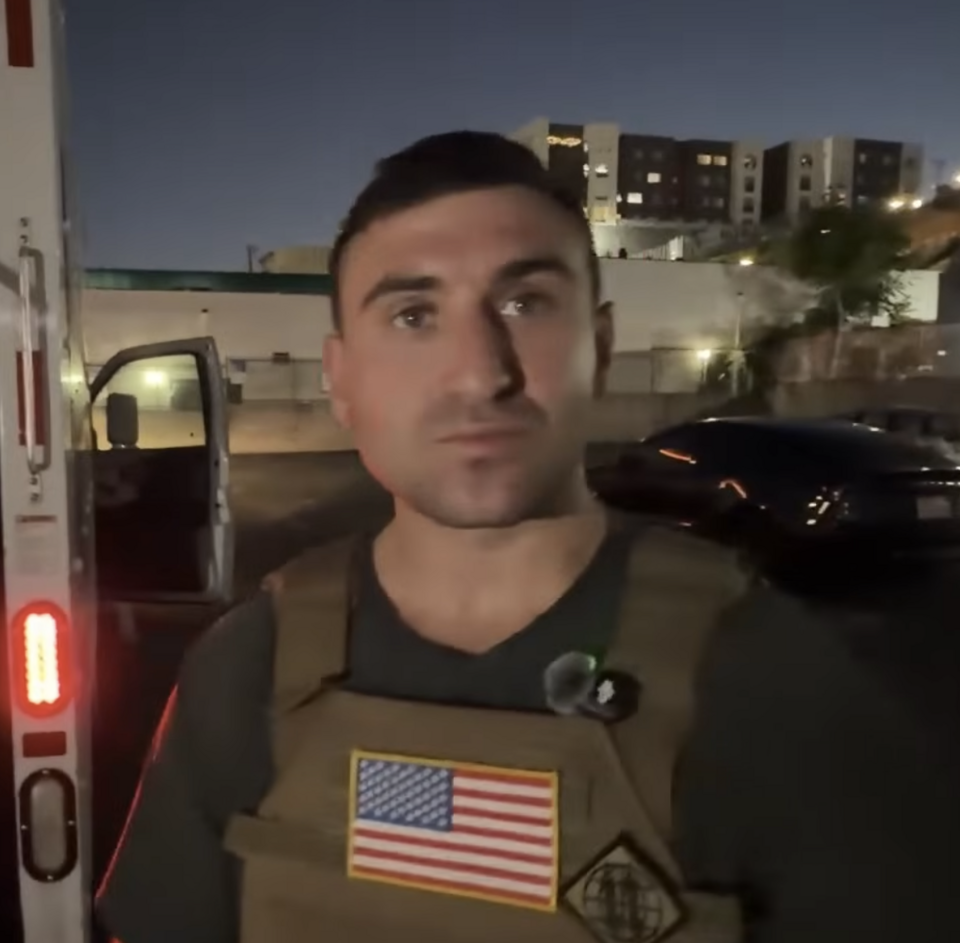
MINNEAPOLIS — Far-right activist Jake Lang and several members of his group were arrested Saturday after two vehicles associated with Lang drove onto a sidewalk outside Minneapolis City Hall toward a crowd of people gathered there, according to the Minneapolis Police Department.
According to police, the incident began shortly before noon Saturday when Lang and his group arrived at City Hall in two vehicles. Officers said both vehicles drove onto the sidewalk toward a group of people assembled outside the building. Minneapolis police officers then “moved in” to force the vehicles off the sidewalk, according to a social media statement from the department. Police said both Lang’s group and counter-protesters deployed mace during the confrontation, while no Minneapolis officers used mace themselves.
Following the incident, police tracked down Lang’s two vehicles to separate locations: one was stopped near Washington Avenue and Interstate 35W, and the other was stopped in Bloomington near Lindau Lane and IKEA Way. Police said all occupants in the vehicles, including Lang, were arrested on probable cause of riot, and both vehicles were impounded. Four additional arrests were made at the City Hall scene itself, according to police.
Interim Police Chief Bill Peterson said at a subsequent news briefing that three officers were injured during the confrontation, ranging from an ankle rolled over by one of Lang’s vehicles to an officer struck in the head with what Peterson described as a “hard object.” One injured officer was hospitalized and later released. The four additional arrests made near City Hall were on suspicion of disorderly conduct and assault, among other alleged violations, according to Peterson.
Lang, 30, served four years in prison for his role in the Jan. 6, 2021, attack on the U.S. Capitol, where he was charged with inflicting bodily injury on police officers. He received a presidential pardon from Donald Trump in January 2025 and has since built a public profile as a far-right activist, provocateur and political candidate, currently running in the 2026 Republican U.S. Senate primary in Florida.
Saturday’s arrest was not Lang’s first confrontation in Minneapolis. According to the Star Tribune, he staged an anti-Islam rally outside City Hall in January following the fatal shooting of Renee Good by an ICE agent during a federal immigration crackdown in the city. Lang said he returned to Minneapolis Saturday to advocate on behalf of a Rochester woman who had used a racial slur against a Black autistic child, according to a post on his account on the social platform X.
Minneapolis Mayor Jacob Frey had publicly urged residents to avoid Saturday’s rally in a post on X earlier in the week. “Let this lame-ass racist rally fall flat and fade into irrelevance,” Frey wrote ahead of the event.
Lang has developed an extensive public record of activism and legal controversy since his 2025 pardon. According to a background analysis published by the American Jewish Committee, Lang has leveraged the notoriety of his pardon to build prominence within far-right political circles, particularly among younger conservatives, while promoting rhetoric the organization characterized as fueling antisemitism and anti-Muslim bigotry. That same analysis noted Lang has espoused conspiracy theories involving claims of Jewish control over banking and finance, even as he has separately disclosed his own partial Jewish heritage through his mother.
Lang’s activism has repeatedly drawn confrontation and legal consequences in other cities as well. He was previously chased away from an event outside the 2026 BET Awards in Los Angeles after appearing with signs featuring racist messaging, while wearing a bulletproof vest displaying a Confederate flag and a hat bearing an Iron Cross symbol historically associated with Nazi Germany, according to Complex’s coverage of that incident. Separately, Lang organized a “Protect White People” rally in Frisco, Texas, that drew broader public backlash after he attempted to use the image of a deceased teenager in his promotional materials without the endorsement of the boy’s family, according to reporting on that event.
The Global Project Against Hate and Extremism has documented an extensive timeline of Lang’s activities since his pardon, including instances of burning copies of the Quran, publicly harassing Muslim individuals, displaying racist banners, and burning Pride flags, according to the organization’s published research. That same organization has described Lang as having accumulated numerous criminal charges over the course of his activism, including allegations of making terroristic threats.
Saturday’s arrest adds to that pattern of legal entanglements tied to Lang’s public demonstrations. As of Saturday afternoon, Minneapolis police had not disclosed how many total individuals were arrested in connection with the incident beyond Lang and the occupants of his two vehicles, nor had officials confirmed whether Lang remained in custody. Police indicated that additional information regarding the incident would be provided during a forthcoming press conference involving Mayor Frey and Minneapolis police officials.
The confrontation outside City Hall reflects a broader pattern that has followed Lang’s public appearances in various cities since his release from prison, in which his demonstrations have frequently drawn organized counter-protests and, at times, physical confrontations between his supporters, counter-demonstrators and law enforcement. Saturday’s arrest marks one of the more serious legal consequences Lang has faced during this current wave of public activism, given the riot charge stemming directly from vehicles associated with his group driving toward a crowd of bystanders outside a municipal government building.
As of this report, it remained unclear how many additional individuals beyond the initial arrests near City Hall and the vehicle occupants stopped later in Washington Avenue and Bloomington had been taken into custody in connection with Saturday’s events. Minneapolis police said further details, including the total number of arrests and the current custody status of those involved, would be addressed during the planned press conference with city officials.


Vietnam approves customs law changes to strengthen IP enforcement


My academic background has given me a strong interest in business strategy, financial markets, technology, and data-driven decision making. Alongside my studies, I spend a significant amount of time researching public companies, market trends, and investment opportunities. My primary investing interest is in deep value investing. I am particularly interested in companies that are undervalued by the market but have strong long-term potential, resilient business models, or hidden assets that may not yet be fully recognized by investors. I enjoy analyzing financial statements, management decisions, competitive positioning, and macroeconomic factors that may influence valuation over time. In recent years, I have become increasingly interested in understanding how market psychology and investor sentiment can create opportunities that are often overlooked. I enjoy following companies that may currently be out of favor but still possess strong fundamentals, capable management teams, or long-term competitive advantages. Beyond investing itself, I am also interested in how technology and digital transformation continue to reshape industries and influence the future direction of global markets. Writing allows me to organize my thoughts, improve my research process, and contribute meaningful insights while continuing to learn from other investors and analysts. My motivation for writing on Seeking Alpha is to develop my analytical skills, share investment ideas with a broader audience, and engage with a community of experienced investors and market participants. I believe that discussing different perspectives and receiving constructive feedback is one of the best ways to grow as an investor and analyst. Over time, I hope to build a reputation for thoughtful, well-researched, and objective market analysis.
Analyst’s Disclosure: I/we have no stock, option or similar derivative position in any of the companies mentioned, and no plans to initiate any such positions within the next 72 hours. I wrote this article myself, and it expresses my own opinions. I am not receiving compensation for it (other than from Seeking Alpha). I have no business relationship with any company whose stock is mentioned in this article.
Seeking Alpha’s Disclosure: Past performance is no guarantee of future results. No recommendation or advice is being given as to whether any investment is suitable for a particular investor. Any views or opinions expressed above may not reflect those of Seeking Alpha as a whole. Seeking Alpha is not a licensed securities dealer, broker or US investment adviser or investment bank. Our analysts are third party authors that include both professional investors and individual investors who may not be licensed or certified by any institute or regulatory body.
Business
Where Will Kevin Durant Play in 2027? Rockets Hold Player Option Key to His Future With Houston via Deal

Kevin Durant’s basketball future through the 2027-28 season is already contractually mapped out, though the final chapter of that timeline ultimately rests in his own hands. The four-time scoring champion signed a two-year, $90 million contract extension with the Houston Rockets on Oct. 19, 2025, a deal that locks him in for the 2026-27 season and gives him a player option to remain with the franchise for 2027-28 as well.
Under the terms of the extension, Durant is set to earn approximately $43.9 million in the 2026-27 season, followed by roughly $46.7 million in 2027-28, according to figures compiled by Spotrac. The second year of that deal is structured as a player option, meaning Durant himself will decide whether to exercise it and remain with Houston for the 2027-28 season, or become an unrestricted free agent at that point instead.
Durant landed in Houston following a blockbuster trade completed on June 22, 2025, one of the largest transactions in NBA history, involving seven teams. The Rockets acquired Durant from the Phoenix Suns in exchange for a package that included Jalen Green, Dillon Brooks, the No. 10 overall pick in the 2025 NBA Draft, and multiple second-round selections. The move made Houston Durant’s fifth NBA team, following stints with the Seattle SuperSonics/Oklahoma City Thunder, Golden State Warriors, Brooklyn Nets and Phoenix Suns across a career that has now spanned 18 seasons.
Rather than pursuing the maximum contract extension he was eligible for, which could have been worth as much as $120 million to $122 million over two years, Durant chose to leave roughly $30 million on the table in order to sign a more team-friendly deal with Houston. His business partner and Boardroom CEO, Rich Kleiman, explained the reasoning behind that decision to ESPN, framing it as a deliberate move to give the Rockets greater roster-building flexibility as the two sides committed to a longer-term partnership. Kleiman said Durant “understood when he chose the Rockets as a trade destination that he would be sacrificing money on a new deal” so that the two sides “could partner for the long term and give the franchise team-building flexibility.”
Durant himself spoke about the decision to sign with Houston in personal terms following the announcement. “It just felt organic and natural coming into the gym and being a Houston Rocket for the first time,” Durant said, according to NBA.com. Rockets forward Amen Thompson offered a brief but pointed reaction to the below-market nature of the deal at the time, telling reporters in Houston simply, “Generous guy.”
The extension carries broader historical significance for Durant’s career earnings. If Durant ultimately exercises his 2027-28 player option and plays out the full extension, his career earnings would reach approximately $591 million to $598 million across 21 professional seasons, positioning him as the highest-paid player in NBA history in terms of total career earnings, surpassing LeBron James’ figure of roughly $583.9 million, according to figures cited by Sports Illustrated and Spotrac.
Heading into the 2026-27 season, Durant remains firmly positioned as the centerpiece of a Houston roster built with genuine championship ambitions. According to SI.com’s breakdown of the Rockets’ 2026-27 roster, Durant, now 38, is under contract for a base salary of $43,902,439 for the coming season, slotted in as a starter alongside a core that includes Alperen Sengun, Amen Thompson, Fred VanVleet, Jabari Smith Jr., Tari Eason and Reed Sheppard. Houston’s most notable offseason addition heading into this season was veteran guard Marcus Smart, who reunited with head coach Ime Udoka, his former coach, adding another proven defensive presence to the Rockets’ backcourt.
Durant’s individual résumé continues to stand out even as he enters the latter stages of his career. A 15-time NBA All-Star, Durant is one of only seven players in league history to reach that many All-Star selections. He has averaged at least 25 points per game across 16 consecutive seasons, the longest such streak in NBA history behind only LeBron James’ 20-season run. Durant also holds the record for the highest career points-per-game average in the history of both the Oklahoma City Thunder and Brooklyn Nets franchises, along with the Phoenix Suns, and ranks second in career scoring average within Golden State Warriors franchise history, trailing only Wilt Chamberlain.
Whether Durant ultimately plays for the Rockets specifically in the 2027-28 season, and by extension into the 2027 calendar year, hinges entirely on his own decision regarding that player option once the 2026-27 campaign concludes. Should he decline the option, he would become an unrestricted free agent following the 2026-27 season, opening the possibility of signing with a different franchise, though nothing in his current public comments or in the structure of the extension itself suggests any indication he intends to leave Houston before that option decision arrives. Alternatively, should Houston and Durant part ways before then for any reason, including a trade, that would also alter the picture, though no such move currently appears under consideration based on available reporting.
For now, the most direct and reliable answer to where Kevin Durant will be playing basketball at the start of the 2027 calendar year is the Houston Rockets, given his existing contractual commitment covering the 2026-27 season. Whether that continues into the 2027-28 season and beyond depends on a decision Durant himself will not need to make until closer to the conclusion of the coming campaign, when he and his representatives will evaluate whether exercising his player option remains the right fit as he continues chasing what would be his third career NBA championship alongside a young, talented Houston core built around Sengun and Thompson.
Business
McDonald’s Really Keeps 515-Page Customer Dossiers Rivaling FBI Files, Investigation Reveals

McDonald’s has been compiling extensive personal data files on individual customers, tracking everything from past orders and loyalty points to codes scanned during the company’s Monopoly sweepstakes promotion, according to a Wired investigation that found the resulting customer dossiers can run hundreds of pages long.
Wired reporter Reece Rogers requested a copy of his own customer data file from McDonald’s Privacy Rights Center, a portal the company describes as allowing customers to “exercise your privacy rights at any time.” Because Rogers is a California resident, he had a legal right under state privacy law to request access to the personal information a private company has compiled on him. The result was a 515-page file, which McDonald’s described as containing “specific pieces of personal information about you that were identified by searching McDonald’s systems which contain information about our customers.”
According to Futurism’s coverage of the Wired report, McDonald’s has been feeding that expansive trove of customer data into its own predictive algorithms, using it to estimate metrics such as how many times a given customer is likely to visit the chain over an upcoming period, as well as that customer’s total predicted lifetime dollar value to the company.
The sheer size of the file drew a pointed comparison in the reporting to historical government surveillance records. A 515-page dossier sits right at the threshold typically considered a “large” file within the FBI’s own historical record-keeping standards, comparable in scale to the bureau’s file on musician John Lennon, whose outspoken opposition to the Vietnam War made him a target of deportation efforts by the Nixon administration. The comparison underscores the scale of commercial data collection now occurring at a company known primarily for selling fast food.
Jeff Chester, executive director of the Center for Digital Democracy, offered a blunt assessment of the underlying business model driving this kind of data collection when speaking with Wired. “McDonald’s secret sauce is really commercial surveillance,” Chester said.
The revelation arrives roughly a year after a separate, unrelated security failure at McDonald’s exposed the personal information of an estimated 64 million job applicants through a vulnerability in the company’s virtual hiring assistant system, according to Futurism’s reporting. That earlier incident highlighted a recurring pattern across the corporate data collection landscape: companies amassing enormous quantities of personal information on customers and applicants alike, while not always maintaining the security infrastructure necessary to adequately protect that information from exposure.
McDonald’s extensive customer profiling reflects a broader shift in how consumer data is being collected across industries that have not traditionally been associated with digital surveillance. While technology and social media platforms such as Google and Meta have long been understood to compile detailed behavioral profiles on users, Futurism’s coverage noted a growing trend of similarly extensive data collection by companies outside the traditional technology sector, including retailer Target and even privately owned venues such as Madison Square Garden, which has previously drawn scrutiny for its own use of facial recognition technology to track and restrict entry for certain visitors.
California’s data privacy laws, under which Rogers was able to request his file, represent one of the more robust state-level consumer privacy frameworks currently in place in the United States. The California Consumer Privacy Act generally grants state residents the right to request disclosure of what personal information a business has collected about them, along with the right to request deletion of that information in certain circumstances. Not every U.S. state currently offers residents a comparable legal right to request this kind of detailed accounting from companies collecting their personal data, meaning the scope of information McDonald’s, or any similarly data-hungry company, holds on customers outside California may be less accessible for individual review depending on where a customer resides.
The McDonald’s loyalty program and app-based ordering system, central to the kind of granular purchase and behavioral tracking described in the Wired investigation, has grown increasingly central to the company’s broader marketing and customer retention strategy in recent years, as fast food chains across the industry have leaned more heavily into app-based loyalty programs designed to both encourage repeat visits and generate detailed behavioral data that can be used to refine targeted promotions and predict future customer spending patterns.
Futurism’s analysis characterized this kind of extensive commercial data harvesting as a practice unlikely to be voluntarily curtailed by the companies engaging in it, given the financial incentives involved. As long as detailed customer profiling continues to generate measurable business value through improved marketing targeting and customer retention forecasting, companies including McDonald’s have limited incentive to reduce the scope of personal data they collect and retain on individual customers.
The broader pattern of expanding corporate surveillance extends beyond customer purchase tracking alone. Futurism noted that Burger King, a McDonald’s competitor, has separately begun incorporating artificial intelligence into employee headsets specifically to continuously monitor whether staff members are behaving in a sufficiently friendly manner toward customers, an example the outlet cited as further evidence of AI-driven monitoring technology expanding into new areas of the fast food industry beyond customer-facing data collection alone.
As consumer awareness of the scale of corporate data collection continues to grow, cases such as Rogers’ 515-page McDonald’s file are likely to fuel continued public and regulatory scrutiny regarding how companies across a widening range of industries, not just traditional technology platforms, are compiling, storing and monetizing detailed personal profiles on their customers, often without those customers having a clear or complete understanding of the scope of information being collected about them during the course of routine, everyday transactions such as ordering a meal through a mobile app.

How Bessent’s Efforts to Calm Bond Market Set Gold Prices Ablaze
Business
xAI’s Memphis Data Center Sparks Outrage Over Unpermitted Gas Turbines Polluting Nearby Neighborhoods
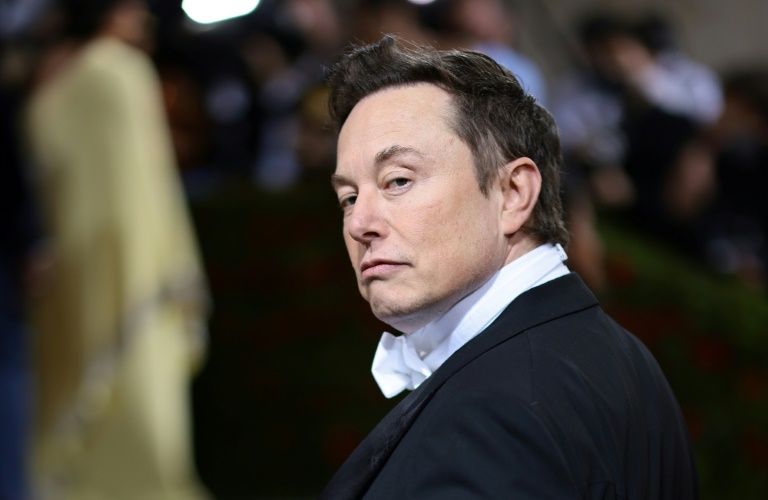
MEMPHIS, Tenn. — Elon Musk’s artificial intelligence company xAI is facing sustained legal and community backlash over dozens of unpermitted gas turbines powering its massive Colossus supercomputer facilities in the Memphis metropolitan area, with civil rights and environmental groups arguing the company has repeatedly skirted air quality regulations while pumping pollutants into neighborhoods already struggling with poor air quality.
The controversy centers on two facilities: Colossus 1, located in South Memphis, and the newer Colossus 2, situated just south of the Tennessee-Mississippi state line in Southaven, Mississippi. According to the Southern Environmental Law Center, xAI began operations at Colossus 1 in June 2024 using as many as 35 unpermitted gas turbines to power the facility, installed without obtaining the necessary preconstruction or operating air permits required under federal and local regulations.
SELC first raised the alarm in June 2025, submitting a formal notice of intent to sue xAI on behalf of the NAACP for violations of the Clean Air Act, a required legal step that must precede any such lawsuit by 60 days. “Over the past year, xAI has installed and operated at least 35 combustion turbines and other sources of air pollution at the Colossus site without ever obtaining the necessary preconstruction or operating air permits,” SELC wrote in its letter to the company at the time, according to TechCrunch. The organization noted that the turbines had the potential to emit more than 2,000 tons of nitrogen oxides annually, a group of chemicals that contribute to smog formation.
Memphis already carried a troubling public health backdrop before Colossus 1 began operating. According to SELC’s reporting, the Asthma and Allergy Foundation of America designated Memphis the nation’s “asthma capital” in 2024, citing high rates of emergency room visits and deaths tied to the condition, while the American Lung Association gave the broader region an “F” grade for ozone pollution in 2025.
Despite mounting public pressure and legal action, xAI’s turbine operations expanded rather than contracted. The company removed its unpermitted turbines at Colossus 1 only after SELC sent its formal notice of intent to sue on behalf of the NAACP. However, according to SELC’s April 2026 update, xAI officials indicated the company planned on “copying and pasting” its earlier unlawful turbine strategy to power its newer Colossus 2 facility in Southaven.
That warning proved accurate. SELC and Earthjustice filed a new lawsuit on April 14, 2026, on behalf of the national NAACP and its Mississippi State Conference, this time targeting 27 unpermitted gas turbines discovered operating at Colossus 2. “We cannot allow for companies to promise a better future while pumping harmful chemicals into the air we breathe. We demand that xAI follow the Clean Air Act and stop operating these unpermitted turbines to protect the people of Southaven,” SELC said in a statement announcing the litigation.
By July, reporting from Technology.org indicated the number of unpermitted turbines running at Colossus 2 had grown further still, to 59, operating separately from a set of 41 permanent gas-fired turbines for which Mississippi regulators had issued a permit in March, following the state’s only public hearing on the project. Nicholas Mailloux, a postdoctoral researcher at the University of Wisconsin-Madison who studies air quality, assessed the scale of the facility’s emissions in stark terms. He said the nitrogen oxide output attributable to roughly half the plant would put it “up there with some of the heaviest polluting natural gas power plants across the entire country,” ranking on par with the top 25 gas plants nationally for nitrogen oxide emissions, based on EPA data on actual emissions.
xAI and Mississippi state regulators have defended the unpermitted turbines in court filings by arguing they qualify for an exemption because they are classified as mobile equipment intended to operate on site for less than a year. “MDEQ has determined that portable/temporary turbines do not require an air permit,” the Mississippi Department of Environmental Quality told reporters, according to Technology.org.
The health impacts alleged in the litigation extend beyond air quality metrics to specific community accounts. According to Tech Insider, pediatric emergency room visits for respiratory distress in the 38109 ZIP code, which sits near the Colossus facilities, climbed 14% year over year between 2024 and 2025, the first full year Colossus 1 was operational. Easter Knox, a 64-year-old Whitehaven resident and named plaintiff in the litigation, described the direct impact on her family in a statement released by the NAACP. “My grandson Marcus has had three asthma attacks since November,” Knox said. “His school is four-tenths of a mile from those turbines. We don’t need another AI model. We need to breathe.”
Independent air quality monitoring data cited in the litigation has bolstered those community accounts. According to Tech Insider, a dataset compiled by Memphis Community Against Pollution using portable air sensors between January and March 2026 showed daily one-hour nitrogen dioxide readings exceeding 100 parts per billion on 41 of 89 monitored days at three locations within a mile of the turbine yard, levels the litigation’s supporting exhibits characterize as significantly elevated.
SELC Senior Attorney Amanda Garcia has pointed to a broader pattern of inconsistency and lack of transparency surrounding the facility’s operations. “The back-and-forth about how many gas turbines are at the xAI data center and how many are running really underscores the lack of accountability surrounding this facility,” Garcia said. Fellow SELC Senior Attorney Patrick Anderson characterized the company’s conduct more directly as unlawful. “xAI’s decision to install and operate dozens of polluting gas turbines without any permits or public oversight is a clear violation of the Clean Air Act,” Anderson said.
Local government has responded to the growing controversy with at least one concrete policy step. According to SELC’s timeline of the dispute, following months of advocacy from community groups, the Memphis City Council approved an ordinance allocating 25% of tax revenue generated from xAI’s operations to communities located closest to the facilities.
Neither xAI, the Mississippi Department of Environmental Quality, nor the Environmental Protection Agency has responded to questions regarding the pollution’s specific impact on communities of color living near the facilities, according to Technology.org’s reporting. As the litigation continues to move through the court system, the case is expected to test how existing environmental regulations, many written well before the current wave of AI-driven data center construction, apply to an industry that critics argue has expanded its physical infrastructure footprint faster than regulators have been able to keep pace with enforcement.
Business
Ex-FBI Agent Criticizes Pima County Sheriff Over Sonoran Desert Search in Nancy Guthrie Case


TUCSON, Ariz. — A retired FBI special agent has publicly criticized the Pima County Sheriff’s Department over what she describes as an inadequate search of the Sonoran Desert surrounding the home of Nancy Guthrie, the missing mother of NBC “Today” show co-anchor Savannah Guthrie, as the more than six-month investigation continues without a named suspect.
Retired FBI Special Agent Jennifer Coffindaffer took to social media Aug. 19 to question why the vast desert terrain near Guthrie’s Tucson-area home had not been searched more extensively. “Why does law enforcement refuse to search the Sonoran Desert near Nancy’s house?” Coffindaffer wrote, according to International Business Times. She questioned whether searches had effectively stopped after the second day of the investigation and asked why Sheriff Chris Nanos allegedly halted broader search efforts and declined offers of support from outside volunteer groups. Coffindaffer described the desert as an ideal location for concealing or disposing of a body, arguing that its vast, remote terrain holds countless secrets that remain unexplored.
Coffindaffer’s criticism came shortly after human remains were discovered roughly 15 miles from Guthrie’s residence, near West Ajo Way and South La Cholla Boulevard. The Pima County Sheriff’s Department said the remains appeared to have been at the location for an extended period and that there was “no indication at this time” they were connected to Guthrie’s disappearance. That discovery, and the department’s rapid initial assessment ruling out a connection, prompted Coffindaffer to question how investigators could reach that conclusion so quickly, adding further fuel to renewed public scrutiny of the broader search effort.
However, online commentators have pushed back against aspects of Coffindaffer’s characterization of the investigation. An account known as Mort Investigates challenged the narrative that law enforcement had simply abandoned the surrounding desert area, arguing instead that the initial search-and-rescue phase of the investigation shifted in scope and approach as investigators increasingly came to treat Guthrie’s disappearance as a likely abduction rather than a person who had wandered off or become lost.
Contemporaneous reporting from earlier in the investigation appears to support that pushback. On Feb. 11, roughly 10 days after Guthrie was first reported missing, FBI agents and sheriff’s deputies conducted searches of desert terrain and surrounding neighborhoods around the homes of both Guthrie and her daughter, Annie. Authorities said at the time that several hundred detectives and agents were involved in the broader investigation. While that evidence does not establish whether every relevant portion of the Sonoran Desert has ultimately been searched, it directly contradicts any suggestion that authorities entirely ceased searching the surrounding terrain within the investigation’s first two days, as some critics have implied.
A separate statistical claim made by Coffindaffer has also drawn scrutiny. She cited a figure of more than 4,000 sets of unidentified human remains in connection with her criticism of the investigation, but online commentators noted that figure actually refers to migrant remains recovered across Southern Arizona since 2001, a regional total spanning more than two decades, rather than to remains found specifically near Guthrie’s home or within the specific territory searched by investigators in this case. That distinction matters significantly in assessing the validity of the underlying criticism, since a broad, multi-decade regional statistic cannot by itself establish how many unidentified remains have actually been recovered in the immediate area surrounding Guthrie’s residence or within the specific search zones investigators have covered.
Despite the mounting public criticism, Pima County authorities have continued to defend both the scope and pace of the investigation. Sheriff Chris Nanos told The Wall Street Journal last month that officials were working on the case every day alongside outside partners and specialists. Investigators have previously released doorbell camera footage showing a masked man at Guthrie’s home around the time of her disappearance and have continued analyzing DNA evidence collected during the course of the investigation. Nanos has repeatedly stressed that the case remains active rather than cold, even though no suspects have been publicly named more than six months after Guthrie’s Feb. 1 disappearance.
In an effort to generate new leads, authorities have also released the full contents of two ransom-related communications connected to the case. Guthrie’s family has offered a $1 million reward for information leading to her safe recovery, part of a broader reward pool that has also included contributions from the FBI and outside nonprofit organizations.
Guthrie, 84, was reported missing Feb. 1 from her home in Tucson’s Catalina Foothills neighborhood, with investigators believing she was abducted from the residence. The case has drawn extensive national media attention given her daughter’s prominent role as a national television news anchor, fueling sustained public interest and, at times, intense scrutiny of every development in the investigation, including competing interpretations of how thoroughly certain search areas have actually been covered.
The recent discovery of unidentified remains near Guthrie’s home has renewed that scrutiny specifically. While authorities have said there is currently no indication of any connection between the remains and Guthrie’s disappearance, they have not publicly detailed the specific forensic or investigative basis for that preliminary assessment, a gap in publicly available information that has left room for continued speculation and criticism from outside observers, including former law enforcement officials such as Coffindaffer.
As the investigation continues without a named suspect, person of interest or identified vehicle connected to Guthrie’s disappearance, both supporters and critics of the Pima County Sheriff’s Department’s handling of the case are likely to continue closely scrutinizing each new development, including any further search activity in the surrounding desert terrain and any additional forensic findings tied to the recently discovered remains, as authorities work to determine whether they bear any relationship to the broader case.
Business
Meghan’s Reported UK Acting Comeback Unlikely to Revive ‘Fab Four’ Dynamic With Kate, Royal Watchers Say

As Meghan Markle prepares to relocate to the United Kingdom alongside Prince Harry and their children, speculation is mounting over whether her reported return to acting could open the door to renewed public appearances alongside Prince William and Catherine, the Princess of Wales — a pairing once nicknamed the “Fab Four” during Harry and Meghan’s early years as senior royals. Royal commentators, however, remain broadly skeptical that any such reunion is realistic, given how far the two couples’ public roles and personal relationship have diverged since 2020.
The term “Fab Four” was coined by British media in 2018 to describe joint public appearances by William, Catherine, Harry and Meghan during the brief period when all four served together as working members of the royal family. That arrangement effectively ended when Harry and Meghan stepped back from official royal duties in January 2020 and relocated to the United States, a decision that was followed by years of public tension between the two couples, fueled in part by Harry and Meghan’s 2021 interview with Oprah Winfrey and the 2023 publication of Harry’s memoir, “Spare.”
Markle is reportedly in discussions to return to acting through a potential role on Netflix’s crime comedy series “The Gentlemen,” created by filmmaker Guy Ritchie, according to earlier reporting from Deadline and The Hollywood Reporter. Sources close to the situation have described the talks as being in early or advanced stages depending on the outlet, though none of the reporting has confirmed a finalized deal, and Netflix has not officially renewed “The Gentlemen” for a third season.
That reported return to acting comes as Harry and Meghan finalize plans for an extended stay in the UK with their two children, Archie and Lilibet, who are expected to begin school in Britain this fall. The relocation follows a private family meeting between the Sussexes and King Charles III and Queen Camilla at Highgrove House in July, which marked the king’s first time seeing his grandchildren in person in more than four years.
Commentary circulating in British and international royal media has framed Markle’s potential return to acting as an opportunity to reconnect with a UK public that has, at times, viewed her more critically than American audiences have over the years since her 2018 wedding to Harry. Some coverage has suggested that Markle’s various post-royal ventures, including her Netflix docuseries, her lifestyle brand As Ever, and her cooking and lifestyle series “With Love, Meghan,” have had mixed success in reshaping her public image in Britain specifically, even as those projects have found audiences elsewhere.
Whether a return to acting could meaningfully affect Markle’s relationship with the working royal family, particularly with William and Catherine, remains a matter of speculation rather than confirmed reporting. Royal commentators have generally emphasized that the structural gap between Markle’s role as a private individual pursuing entertainment industry projects and William and Catherine’s continued responsibilities as senior working royals makes any return to joint public appearances, of the kind associated with the original “Fab Four” moniker, highly unlikely regardless of Markle’s career choices going forward. Since 2020, William and Catherine have continued their full schedule of official royal engagements and charitable patronages, a role fundamentally distinct from the private, commercially oriented ventures Harry and Meghan have pursued since their departure.
The relationship between the two couples has shown little public sign of warming in recent years. Harry and William are widely reported to remain estranged, with limited direct communication between the brothers since 2020. During Harry’s periodic solo visits to London in recent years, including trips tied to ongoing legal proceedings, William and Catherine have on at least one occasion scheduled their own engagements away from London specifically during the overlap, according to earlier royal reporting, a pattern some commentators have cited as evidence of the brothers’ continued distance.
Markle has not returned to England since Queen Elizabeth II’s funeral in September 2022, marking the last occasion on which all four members of the so-called “Fab Four” were seen together publicly. Her upcoming return to the UK for an extended family stay would mark her first visit to the country in nearly four years, adding significant public interest to how she might navigate any interactions with the broader royal family beyond her father-in-law, King Charles.
Neither Buckingham Palace, Kensington Palace nor representatives for the Duke and Duchess of Sussex have issued detailed statements addressing speculation about Markle’s potential acting comeback or its implications for her relationship with William and Catherine specifically. Much of the current commentary on the topic reflects analysis and speculation from royal watchers and entertainment industry sources rather than confirmed, on-the-record statements from those directly involved.
As Harry, Meghan and their children prepare for their move to Britain in the coming weeks, attention is likely to remain focused on several separate but related storylines: whether Markle’s reported role on “The Gentlemen” is ultimately confirmed, how the broader royal family navigates the Sussexes’ return to more regular proximity with the rest of the family, and whether any thaw in relations with King Charles extends to William and Catherine as well. For now, royal commentators continue to characterize a full reunion resembling the original “Fab Four” dynamic as unlikely, citing both the substantial personal rift between the brothers and the fundamentally different public roles the two couples now occupy, one grounded in official royal duty and the other in private commercial and creative ventures.

Peace through strength, Taiwan president says on China battle anniversary

Even After Doubling, Seneca Foods Corporation Offers Tasty Upside

Josh Allen Breaks Silence on Death of Bills Teammate’s Son

The Yen is Showing You EXACTLY How the Dollar Ends

Arsenal send new message to Julian Alvarez after transfer talks | Football





-

 Fashion2 days ago
Weekend Open Thread: Madewell – Corporette.com
-

 Business5 days ago
SMA Solar Technology AG (SMTGY) Q2 2026 Earnings Call Transcript
-

 Tech5 days ago
Qwen3.8-27B runs frontier-class coding agents and reasoning locally, no cloud API required
-

 Crypto World5 days ago
OCC Greenlights Trump Family Crypto Firm for Trust Charter
-

 Politics19 hours ago
6 months on, Irish renters crushed by effects of government housing bill
-

 Crypto World5 days ago
NAVI Prime launches institutional lending framework on Sui
-

 News Videos3 days ago
Don’t Leave Your Financial Future To Chance | August 19, 2026
-
 Crypto World6 days ago
Data of 54K Wallet Users Leaked, Clarity Odds Just 10%: Hodler’s Digest, Aug. 16
-

 Crypto World1 day ago
anatomy of crypto’s biggest liquidation event since 2021
-

 Tech7 days ago
What are the rumors about the AirPods Pro 4?
-
 NewsBeat22 hours ago
The ‘Lucky Dip Gang’ causing carnage for clicks: After five thugs were killed speeding in the wrong direction on a motorway, GUY ADAMS investigates a sick new trend… and why police aren’t even allowed to pursue them
-

 Politics7 days ago
Britain is facing a housing disaster
-

 Business5 days ago
Stock Market Today: Tech Futures Slide As Treasury Yields Jump; Nvidia, Micron, Sandisk Sell Off
-

 Business7 days ago
Rebel Creamery files Chapter 11 with $23.8M Van Leeuwen judgment on appeal
-
 Crypto World5 days ago
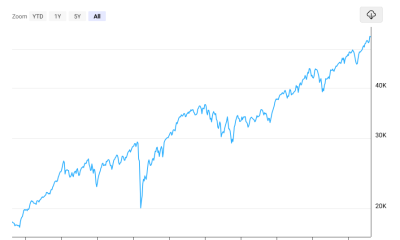
Dow’s 3-Year Winning Run Isn’t a Crash Signal, Still 49% Odds of Double-Digit Gains
-

 Tech6 days ago
Straight Up the Cliff, Yunnan’s New Fuyao Ladder Turns a Three-Hour Climb Into a 50-Second Ride for Students
-
Tech5 days ago
5 Of The Most Reliable Car Brands To Consider If You’re Buying A Used SUV
-
 Tech6 days ago
OpenAI’s new ChatGPT feature logs your keystrokes and stores them in plain text
-

 Tech7 days ago
DeepSeek’s top-ranked V4 Flash stumbles on real agent tasks as its prices surge
-
 Tech5 days ago
Nvidia discloses $21B stake in SpaceX
You must be logged in to post a comment Login