
Business
Paytm shares jump 5% after Bernstein assigns target price above IPO price for first time


The revised target is the highest on the Street and marks the first time Paytm has received a target price above its IPO price.
Paytm made its stock market debut in July 2021 at an issue price of Rs 2,150, a level the stock has not returned to since its listing. Bernstein said it has incorporated the introduction of the merchant discount rate (MDR) on UPI transactions into its base case from FY28 onwards.
The target price hike comes as Bernstein incorporates the introduction of MDR on UPI transactions into its base case from FY28E onwards. The brokerage expects MDR to improve Paytm’s net payments margin by around 3-4 basis points, resulting in an estimated 30% increase in FY30E EPS compared with its previous forecasts.
Bernstein said recent comments from the Ministry of Finance, along with legislative changes removing the statutory prohibition on charging MDR on UPI transactions, suggest the discussion has shifted from whether MDR will return to when and in what form. It has therefore moved UPI monetisation from its optionality assumptions into its base-case forecasts, with the benefits phased in from FY28E onwards.

The brokerage assumes a headline MDR of around 35 basis points, applicable only to a subset of UPI P2M transactions. Given the skew in UPI transaction values, Bernstein estimates that even a limited charging perimeter could cover a meaningful portion of payment value. It expects MDR to apply to around 50% of transaction value, with Paytm realising around 3-4 basis points of incremental net payments margin. This is estimated to translate into around Rs 22 billion of additional EBITDA by FY30E.
Also read: Paytm attracts more Gen Z users as its UPI payments growth outpaces industry“Competitive intensity in merchant acquiring could increase further, as a result, realised economics could prove to be lower than published rates,” Bernstein said in its note.
The government’s position on UPI charges also remains in focus. Over the weekend, it said consumers will not be charged for UPI transactions. If MDR is introduced, it will apply only to select merchant transactions above a certain threshold. The government also said a revenue model is needed to make UPI self-sustaining, given the continued investment required in cybersecurity, fraud provision and infrastructure.
Paytm Q1 results
The company reported strong quarterly earnings. For the quarter ended June 2026, the fintech company posted a consolidated net profit of Rs 220 crore, up 79% from Rs 123 crore in the corresponding quarter last year.
The company’s board also decided against proceeding with a bonus issue, saying it would instead continue focusing on compounding growth and profitability to create long term shareholder value.
“After evaluating the proposal from the perspective of long term shareholder value and due deliberation, the Board was of the view that the company should continue to focus on further compounding growth and profitability for shareholder value creation. Accordingly, the Board decided not to proceed with the said proposal at this time,” the company said.
Instead, the board approved an additional investment of Rs 100 crore through subscription to equity shares of its wholly owned subsidiary, Paytm Money.
Read more: Paytm remains majority Indian-owned for 2nd consecutive quarter
Revenue from operations rose 28% year on year to Rs 2,448 crore from Rs 1,918 crore. On a sequential basis, revenue increased 8% from Rs 2,264 crore in the March quarter. Total income for the quarter stood at Rs 2,630 crore, up 22% from Rs 2,159 crore a year ago and higher than Rs 2,442 crore reported in the previous quarter.
(Disclaimer: Recommendations, suggestions, views and opinions given by the experts are their own. These do not represent the views of Economic Times)

Business
Scarlett Johansson’s $869 Million Dinosaur Blockbuster Named One Of 2026’s Biggest Streaming Hits Yet

LOS ANGELES — “Jurassic World Rebirth,” the Scarlett Johansson-led dinosaur blockbuster that grossed nearly $870 million at the global box office last year, has landed among the biggest streaming movies of 2026 so far, according to newly released viewership data from Nielsen.
The film ranked third on Nielsen’s mid-year “Streaming Landscape 2026” report, which tracks viewing on connected televisions across the United States between December 29, 2025, and June 28, 2026. “Jurassic World Rebirth” racked up roughly 3.4 billion minutes viewed during that window, trailing only two Netflix original films: the Matt Damon and Ben Affleck crime thriller “The Rip,” which topped the list with about 4.4 billion minutes viewed, and Alan Ritchson’s science-fiction action film “War Machine” in second place.
The film’s placement on the list is notable in part because it is not a Netflix original production. “Jurassic World Rebirth” first arrived on Peacock last October under an existing licensing arrangement between NBCUniversal and Netflix, before landing on Netflix itself in February 2026. That dual-platform release, sometimes referred to in the streaming industry as a “Pay 1” window, gave the film access to two of the largest streaming audiences in the country and is widely credited with helping drive its viewership total well past several theatrical hits that debuted on streaming later in the period, including “Sinners” and “One Battle After Another,” the latter of which failed to crack Nielsen’s top 10 despite winning acclaim during awards season.
Directed by Gareth Edwards from a script by David Koepp, “Jurassic World Rebirth” serves as the seventh installment in the franchise that began with Steven Spielberg’s 1993 original “Jurassic Park.” The film picks up five years after the events of “Jurassic World Dominion” and follows Johansson as Zora Bennett, a covert operations specialist who leads a team on a mission to a remote island once used for secretive genetic research. Their objective is to extract DNA from three of the largest dinosaur species that remain, including a Mosasaurus, a Tyrannosaurus rex and a Titanosaurus, a task complicated when the team encounters a range of genetically modified creatures on the island.
The film also stars Mahershala Ali, Jonathan Bailey, Rupert Friend, Manuel Garcia-Rulfo and Ed Skrein, and was produced by longtime franchise collaborators Frank Marshall and Patrick Crowley under Amblin Entertainment and Universal Pictures.
Released theatrically on July 2, 2025, “Jurassic World Rebirth” earned approximately $339.6 million domestically on its way to a worldwide total of roughly $869 million, against a production budget reported to be between $180 million and $225 million. While that made it one of the highest-grossing films of last year and the sixth-highest-grossing release of 2025 overall, it fell short of the $1 billion mark reached by several of the franchise’s earlier installments, making it the first “Jurassic” film since “Jurassic Park III” not to cross that threshold. The film also received a nomination for best visual effects at the most recent Academy Awards, marking the first Oscar nomination for the franchise in any category since “The Lost World: Jurassic Park.”
Despite its comparatively softer theatrical performance relative to earlier entries in the series, the film’s streaming success has reinforced Universal’s plans to continue the franchise. A sequel was confirmed to be in development following the film’s theatrical run, though the project hit a setback earlier this year when Edwards departed amid reported creative differences over the direction of the follow-up. It remains unclear who will step in to direct the next installment, or how the change might affect the film’s timeline.
The film’s continued popularity on streaming comes as Johansson prepares for another high-profile franchise turn, joining director Mike Flanagan’s upcoming reboot of “The Exorcist,” slated for release next year. Johansson has emerged as one of the most consistently bankable stars in Hollywood across both theatrical and streaming platforms in recent years, with “Jurassic World Rebirth” marking her second major franchise commitment following her long-running role as Natasha Romanoff, or Black Widow, in the Marvel Cinematic Universe.
Nielsen’s report also highlighted broader trends shaping the streaming landscape during the first half of 2026, including Netflix’s continued dominance of original film production and the growing importance of shared theatrical-to-streaming distribution windows for major studio releases. Alongside “Jurassic World Rebirth,” Universal’s animated hit “How to Train Your Dragon” also benefited from an early Peacock-to-Netflix shared window, landing at number 15 on the same chart. Netflix additionally claimed several of the top spots among family and animated titles during the period, led by its in-house original “KPOP Demon Hunters,” which ranked second overall among all films with more than 5.5 billion minutes viewed.
The Nielsen data underscores a broader shift in how audiences are consuming major theatrical releases, with streaming viewership increasingly rivaling — and in some cases surpassing — the cultural impact of a film’s original box office run. For “Jurassic World Rebirth,” that shift appears to have extended its commercial life well beyond its theatrical release window, cementing its place as one of the defining blockbusters of the past year even as the franchise’s next chapter remains in flux following its director’s exit.
“Jurassic World Rebirth” is currently available to stream on Netflix.
Business
How Rakesh Jhunjhunwala’s old Tata bet created Rs 80,000 crore wealth after two years of flat returns

The stock had spent the past two years delivering almost flat returns, even as the company remained one of India’s strongest consumer discretionary franchises. Elevated valuations, rising gold prices, weak discretionary spending and concerns over demand had kept investors cautious.
What changed in 2026
One of the biggest positives that analysts saw this year was jewellery demand stayed stronger than expected. Titan benefited from the continued shift of customers from unorganised jewellers to organised chains. This shift has helped large branded players gain share, especially in urban and semi-urban markets where trust, design range, exchange offers and store experience have become stronger selling points.
HSBC, which has a target price of Rs 5,290 on Titan, said the outlook for India’s jewellery segment remains stronger than the broader consumption market. The brokerage said the shift from unorganised to organised jewellery continues to help Titan. It added that a sharp correction in gold prices could hurt demand for a short period, but demand should recover later through higher footfalls and buyer growth.
Gold prices also played a role in Titan’s recovery. A relatively stable gold price environment helped buyers return to stores during the June quarter. High volatility in gold usually delays purchases as consumers wait for better prices. Stability helps both wedding and non-wedding demand.
Also Read: FIIs now backing India’s consumers, not capex: July data reveals major rotation
Titan’s exchange programmes have also supported growth. These programmes allow customers to exchange old jewellery for new purchases, helping the company bring more consumers into its organised retail network.
Q1 earnings support thesis
The company’s June-quarter numbers added fresh momentum to the stock rally. Titan reported a 63% growth rise in net profit to Rs 1,777 crore for Q1 over last year, while total income, excluding bullion and digi-gold sales, rose 40% to Rs 20,753 crore..
Jewellery remained the main engine. The jewellery portfolio grew 43% year-on-year to Rs 18,253 crore, excluding bullion and digi-gold sales. India jewellery revenue rose 38% to Rs 16,943 crore. Tanishq, Mia and Zoya together grew 38% to Rs 15,502 crore, while CaratLane grew 40% to Rs 1,441 crore.
Titan said the quarter was helped by festive demand, Akshaya Tritiya purchases, exchange programmes and stable gold prices. It also said buyer growth was in double digits, while average ticket sizes rose meaningfully. That combination helped plain and studded jewellery categories grow in the mid-thirties.
ICICI Securities said Titan reported healthy growth despite the full 28-day Adhik Maas period falling in the quarter, which typically affects wedding-related demand.
Titan’s international jewellery business also stood out. Revenue from the international jewellery business grew 136% to Rs 1,309 crore, helped by strong traction for Tanishq in North America and double-digit growth in the GCC. Damas, acquired earlier, reported revenue of Rs 396 crore.
Watches, eyecare take centerstage
The rally is not only about jewellery. Titan is trying to build larger businesses in watches, eyecare and emerging categories. Watches grew 21% to Rs 1,543 crore in Q1, led by premiumisation and demand for analog watches. Eyecare revenue also grew 21% to Rs 289 crore.
JM Financial said it remains positive on Titan despite near-term headwinds from elevated gold prices and regulatory changes. The brokerage said Titan is investing in growth engines beyond jewellery through eyecare, watches and emerging businesses, using premiumisation, omnichannel expansion and category development. It has a Buy rating on the stock nwith a target price of Rs 4,900.
“Titan remains one of India’s highest-quality consumer discretionary franchises, supported by category leadership, execution and multiple growth levers.”
The brokerage said it broadly agrees with management’s long-term jewellery plans, though it is more conservative on eyecare and watches until there is clearer evidence of sustained improvement.
Meanwhile, BNP Paribas recently made one of the largest earnings upgrades for Titan after the recent performance, reflecting stronger confidence in the company’s growth outlook.
For investors, the case for Titan remains linked to long-term jewellery formalisation, brand strength and execution. The risks are also clear. A sharp fall in gold prices can delay purchases. Elevated gold prices can affect affordability. Any structural fall in natural diamond prices remains a concern for the jewellery business.
(Disclaimer: Recommendations, suggestions, views and opinions given by the experts are their own. These do not represent the views of Economic Times)
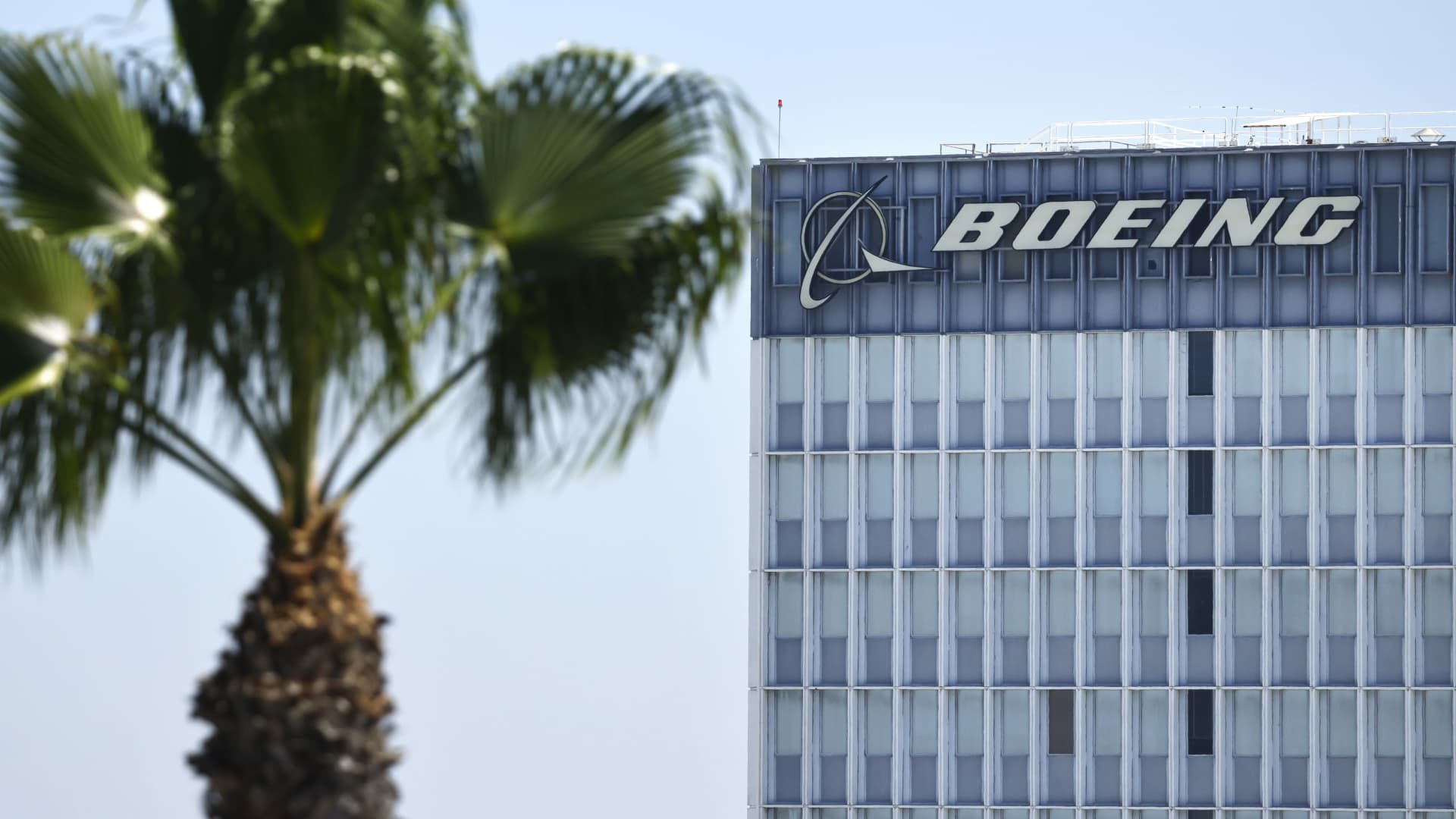
The Boeing logo is displayed on a Boeing building on Aug. 3, 2026 in El Segundo, California.
Mario Tama | Getty Images
In a move to increase its focus on core operations, Boeing is selling three of its subsidiaries to Archer Aviation in exchange for an undisclosed stake in the startup that focuses on electric vertical take-off and landing aircraft, known as eVTOLs for short.
The subsidiaries include Wisk Aero, which has been developing an autonomous eVTOL, and SkyGrid, which is developing air traffic management systems to be used by air taxis as urban air mobility goes from test flights to commercial operations. The third Boeing subsidiary being sold, Insitu, develops and manufactures high-altitude drones that have been used worldwide, including by the U.S. Navy.
Brian Yutko, Boeing vice president of commercial airplanes product development, said the deal “allows Wisk, SkyGrid and Insitu to accelerate capability development and time to market while ensuring Boeing capitalizes on its investments in these technologies over the past two decades through continued development in our core businesses.”
For Archer, the transaction strengthens its position developing eVTOLs and the networks to support them. Insitu also helps Archer extend its military portfolio.
In announcing the acquisitions, Archer CEO Adam Goldstein said, “This is the next big step forward in becoming a diversified platform, rapidly growing our revenue base and bringing scale to our business.”

Both companies stand to benefit from the deal. Archer is targeting commercial eVTOL flights by the end of this year or early next year and is eager to establish itself as urban air taxis take off around the U.S.
By acquiring Wisk and SkyGrid, Archer solidifies its portfolio, especially with the autonomous eVTOL technology Wisk has been developing.
Boeing also benefits by shedding subsidiaries that are not central to its commercial airplanes, defense and space operations. Since taking over as CEO in August 2024, Kelly Ortberg has repeatedly said Boeing needs to focus on improving its three primary businesses.
Just a few months after becoming CEO, Ortberg made it clear Boeing’s path to profitability would mean streamlining the aerospace giant.
“We need to reset priorities and create a leaner, more focused organization,” he said in October 2024.

The Sensex rose over 43 points to close at 78,542, while the Nifty 50 gained around 13 points to end the session at 24,584 on Monday. Broader markets ended mixed, with the Nifty Smallcap 100 falling 0.3%, while the Nifty Midcap 100 rose 0.6%.
Titan shares were the top gainers on the Sensex, jumping more than 3%. Bajaj Finance shares gained around 2%, while Bajaj Finserv, Tata Steel, and Asian Paints shares rose over 1% each. Bucking the trend, SBI shares erased early gains to fall more than 2%. Bharti Airtel [Note: corrected from ‘Eternal’], NTPC, and ITC shares followed, dropping 1–2%.
Among sectors, the Nifty Realty and Nifty Financial Services (excluding banks) indices gained more than 1% each to lead the advances, while the Nifty PSU Bank index dropped around 2%. Overall market breadth was slightly positive, with the NSE recording 1,739 advances and 1,703 declines, while 118 stocks remained unchanged.
What lies ahead for Dalal Street?
Markets remained on a tight leash as uncertainty surrounding the Strait of Hormuz continued to temper risk appetite, even as encouraging corporate earnings lent support to broader sentiment, said Vinod Nair, Head of Research at Geojit Investments.Globally, softer-than-expected US jobs data weakened the case for Fed tightening, shifting investor focus to upcoming US inflation readings for fresh direction on rates and bond yields, the analyst noted, adding that a softer yield environment could revive interest in emerging markets and pave the way for stronger FII participation.
“Amid these global crosscurrents, India’s robust domestic growth engines and resilient economic fundamentals continue to stand out, providing a strong anchor for investor confidence,” Nair added.
Technical view on Nifty
While the fundamental view remains slightly bullish, the technical charts warrant caution. Friday’s failure to attract enough bearish momentum, has reduced Nifty’s chances of an outright fall to 24,400 or to confirm a bearish trend reversal, said Anand James, Chief Market Strategist at Geojit Investments.
He however noted that the oscillators continue to paint a consolidation picture within the 24,400-24,775 band with 24,570-24,500 emerging as a support band while 24,650-24,690-24,730 pose as upside challenge points.
(Disclaimer: Recommendations, suggestions, views and opinions given by the experts are their own. These do not represent the views of The Economic Times)
Business
Stock Market Today: Dow Falls As Oil Prices Climb; SpaceX Stock Extends Gains (Live Coverage)

Futures for the Dow Jones Industrial Average and the other major stock indexes traded mixed Monday, as oil prices climbed amid a lack of progress in U.S.-Iran talks. Meanwhile, Space Exploration Technologies (SPCX), known as SpaceX, was an early winner on the stock market today. Ahead of Monday’s open, Dow futures fell 0.1%, while S&P 500 futures gained a fraction.…
Copyright ©2026 Investor’s Business Daily, LLC. All rights reserved. 87990cbe856818d5eddac44c7b1cdeb8

Meta CEO Mark Zuckerberg laid out an optimistic vision for artificial intelligence, arguing the technology should empower billions of people rather than fuel fears of a dystopian future. (Credit: Meta)
Meta founder and CEO Mark Zuckerberg on Monday outlined his vision for a world where personal superintelligence is available to everyone rather than only a select few.
In a 14-page letter titled “The Future is for Everyone: The Path to a Positive AI Future,” Zuckerberg argued that broadly distributing superintelligent AI represents both an economic opportunity and a safeguard against concentrating too much power in the hands of governments, businesses and other institutions.
“We propose a philosophy based on individual empowerment as the source of prosperity, invention as the primary purpose of superintelligence, and balance of power as the foundation of safety,” he wrote.
His broader argument centers on individual empowerment, using AI primarily to help people invent rather than simply automate work, distributing power through checks and balances and ensuring communities benefit from Meta’s AI infrastructure investments.
ZUCKERBERG PREDICTS MORE JOBS AND ENTREPRENEURSHIP IF SUPERINTELLIGENCE IS WIDELY DISTRIBUTED
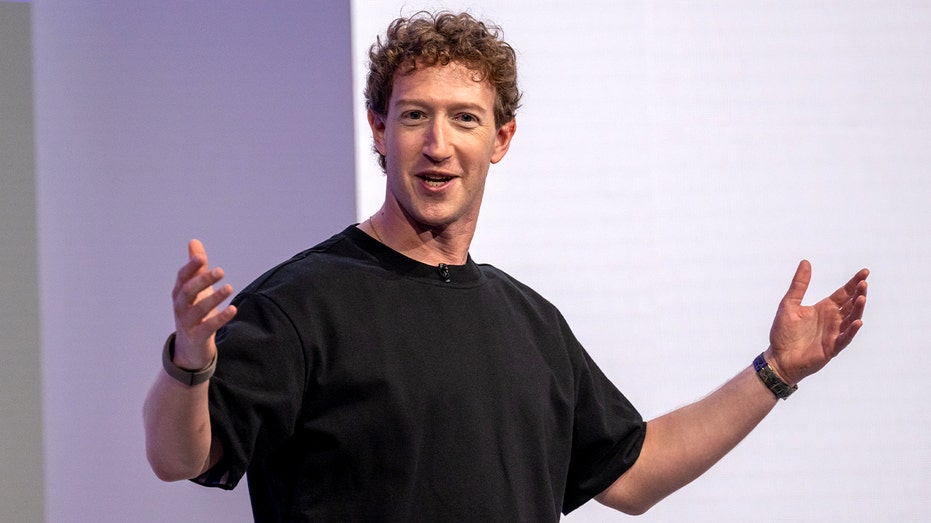
Meta CEO Mark Zuckerberg on Monday outlined his vision for a world where personal superintelligence is available to everyone. (David Paul Morris/Bloomberg via Getty Images / Getty Images)
“All new technologies create opportunities and challenges. Superintelligence will be among the most important technologies in history, so its opportunities and challenges will likely be greater than any we’ve seen in our lifetimes. We should take this very seriously,” he added.
Zuckerberg said empowering individuals would allow people to compete with and check one another economically, socially and politically, while also helping balance the power of businesses and governments.
“But if the power of superintelligence is held by a small number of individuals, businesses, governments, or AI itself, then that will naturally lead to outcomes that are less favorable for everyone else,” Zuckerberg said. “This is not a technological principle. It is about the balance of power. There is no such thing as a singular benevolent superintelligence.”
He said the key to a positive future for everyone is achieving a balance of power that favors individuals, arguing that superintelligence should be broadly distributed to empower people.
“Meta is the company primarily focused on building personal superintelligence for everyone,” he said. “Most other labs are focused on building AI for companies, governments, or other institutions, so if those labs lead, then the balance of power will favor larger institutions over individuals. Meta’s mission since our founding has focused on putting power in people’s hands. If our beliefs and principles lead, then the balance of power will favor individuals and a better future for everyone.”
Zuckerberg also called for close cooperation between frontier AI labs and the government, saying government policy will be necessary to help ensure a positive future.
As part of that broader strategy, Zuckerberg said Meta will soon resume releasing some open-source AI models, which he described as a “positive and important force” for empowering people and preventing centralization he argues could harm safety and the economy.

Meta CEO Mark Zuckerberg said the key to a positive future for everyone is achieving a balance of power that favors individuals. (REUTERS/Manuel Orbegozo / Reuters)
“Meta continues to be strongly supportive of open source, including open source AI models. The current open source ecosystem is strong, and we think it would be a mistake to restrict it. Now that Meta Superintelligence Labs are up and running, we will resume releasing some open source models soon,” he said.
Meta also announced new open-source model releases Monday. The company is releasing the weights for Muse Glimmer, a 30-billion-parameter dense model that can run on a laptop or single consumer GPU, which Meta described as one of the highest-performing models of its size.
In the coming weeks, Meta said it will also open the weights for a version of Muse Spark 1.2, which the company described as one of the world’s leading foundation models.
Zuckerberg also previewed a new $1 billion Future is for Everyone Fund to invest directly in U.S. communities where Meta owns and operates data centers. Meta said it will work with communities to develop investments and programs tailored to local needs.
The commitment was inspired in part by what Meta said it observed in Richland Parish, Louisiana, where teachers received bonuses tied to increased tax revenue from the company’s investment.
ZUCKERBERG SAYS AI SHOULD EMPOWER PEOPLE, NOT REPLACE THEM, IN NEW META VISION
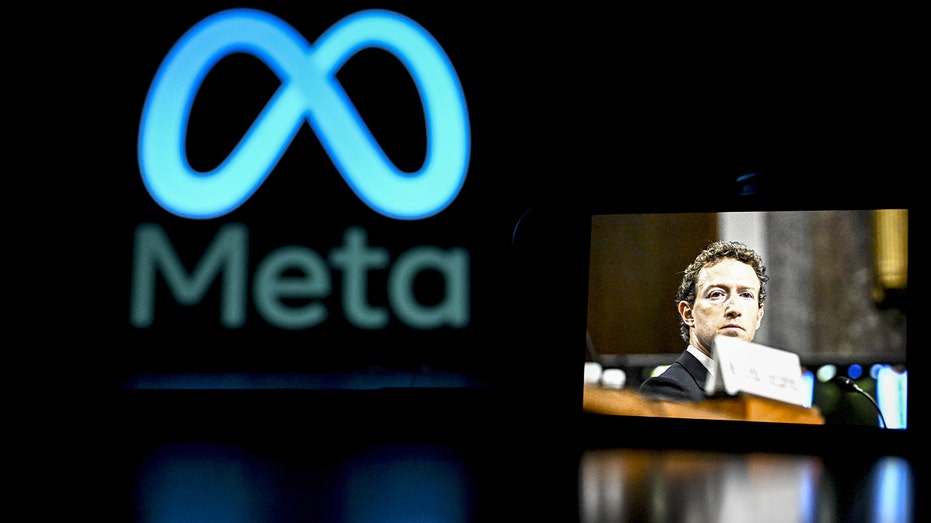
Meta CEO Mark Zuckerberg argued that distributing superintelligent AI broadly is both an economic opportunity and a safeguard against too much concentrated power. (Arda Kucukkaya/Anadolu via Getty Images / Getty Images)
“Sustainable infrastructure development means that communities must benefit significantly from each project,” Zuckerberg wrote in his letter. “This includes high-paying local jobs, investment in schools and public services, ensuring energy prices don’t rise, and taking care of the environment. As tax revenue grows, this also benefits teachers, law enforcement, fire departments, and more. We call these local benefits our community compact, and we are launching a Future Is For Everyone Fund to support each community we work in directly.”
“For example, in Richland Parish, Louisiana, where Meta is building a large data center, teachers received a $50,000 bonus this year because of the increased tax revenue from our investment. The superintendent told us that teachers are now moving there from across the country and he believes it will become one of the nation’s best school districts,” he continued.
CLICK HERE TO GET FOX BUSINESS ON THE GO
Zuckerberg concluded by calling it “an incredible moment to live through” and arguing that developing superintelligence “will be the most profound technological advance we will see in our lifetimes.”
“Meta is committed to building with the principles of individual empowerment as the source of prosperity, invention as AI’s purpose, and a balance of power favoring people as the foundation for addressing safety risks,” he said.

The nations hottest ZIP codes for housing are in the Northeast and Midwest, explains Realtor.com economist Hannah Jones.
America’s hottest housing markets are all located in the Northeast and Midwest, according to a new ZIP code-level analysis of the most in-demand housing markets.
Realtor.com released its hottest ZIP codes report for 2026, which found that those two regions swept the top 10 rankings for the fourth consecutive year.
Hannah Jones, senior economist at Realtor.com, told FOX Business in an interview that “a lot of these ZIP codes fall in suburbs that are on the outer ring of major metro areas like Boston, New York, Philadelphia.”
“It kind of paints this picture that you can still commute to the busy city center for your job, but you’re taking your big city income where you can get a little more bang for your buck, more space, more of that established suburban quiet life,” she said.
A TALE OF TWO HOUSING MARKETS: LUXURY DEMAND SURGES AS AFFORDABILITY SQUEEZES STARTER-HOME BUYERS

Realtor’s hottest ZIP codes report gauged views by home shoppers and the average time homes were listed to compile the rankings. (Daniel Acker/Bloomberg via Getty Images)
Housing supply in the communities that comprised the top 10 of this year’s rankings is especially tight, as Jones noted that inventory levels are running about 60% below pre-pandemic levels in those communities – whereas inventories across the country are just 11% below where they were before the pandemic.
She also said that many home shoppers in these markets are coming from within the metro area they’re closest to, as opposed to being from outside the region to move, adding that “we’re not seeing as much of that cross-country migration type of buyer demand.”
Another characteristic of those markets is that the scarcity is driving buyers to pay above asking price, with nine of the top 10 seeing homes sell at or above asking price with an average sale-to-list ratio of 103.8%. Around the country, the typical home sold for about 2.3% below its list price in the first half of 2026.
THESE AMERICAN CITIES ARE TRENDING TOWARD A BUYER’S MARKET

The hottest ZIP code in Realtor’s report is located near the Boston metro area. (Getty Images/stock)
Buyers are also putting more money down when purchasing a home in the ZIP codes that make up the top 10 rankings as opposed to the national average.
“When we’re looking at these buyer profiles, we see that they tend to put down a lot as a down payment. Across these 10 top ZIP codes, the typical buyer is putting down about 17% as the down payment, compared to about 13% nationally – and both of those figures are also higher than they were even before the pandemic,” Jones said.
“We also know they tend to have higher credit scores, and all this is pointing to this idea that today’s borrowers have to be more financially equipped and financially ready to participate in today’s housing market because with mortgage rates in the mid-to-high 6% range,” she said.
Jones added that the buyers who are participating in these markets “tend to be very financially able to participate, they have a little bit more money to put down, and they’re more financially robust than the typical U.S. buyer.”
HERE’S THE INCOME NEEDED TO AFFORD THE TYPICAL AMERICAN HOME

Most of the communities in the top 10 ZIP codes in Realtor’s hottest housing markets report are in the suburbs of major metro areas. (iStock/Getty Images Plus)
Realtor.com’s rankings are based on an algorithm that considers market demand based on unique viewers per property on the Realtor.com website, as well as the pace of the market as measured by the number of days a listing remains actively listed on the platform.
Here’s Realtor.com’s list of the hottest ZIP codes in America:
1) 01960 – Peabody, Massachusetts
2) 07042 – Montclair, New Jersey
3) 08080 – Sewell, New Jersey
4) 14450 – Fairport, New York
5) 01085 – Westfield, Massachusetts
6) 48154 – Livonia, Michigan
7) 17543 – Lititz, Pennsylvania
8) 06473 – North Haven, Connecticut
9) 53151 – New Berlin, Wisconsin
10) 60187 – Wheaton, Illinois

National Energy Services earnings beat by $0.09, revenue topped estimates

The Next Wave Of AI Is Optics, And The EUV ETF Owns It
Business
$48 billion profit! 5 global oil majors cash in on oil surge amid Iran war. Where is money flowing?

The companies also generated nearly $90 billion in cash during the quarter, the highest level on record and above the cash generated following Russia’s full-scale invasion of Ukraine in early 2022.
The strong earnings have also drawn political criticism. US President Donald Trump last week criticised Exxon and Chevron for making “too much money” from higher fuel prices during the Iran war and renewed his call for lower prices at the pump.
Where is the money going?
Much of the additional cash has gone towards building reserves and reducing debt, according to IEEFA’s (Institute of Energy Economics and Financial Analysts ) Williams-Derry to CNBC. Cash reserves across the five supermajors increased by a little over $17 billion from the previous quarter.
Williams-Derry described the industry’s financial approach as one that relies on periodic price spikes, such as those triggered by the Ukraine and Iran crises, to strengthen finances. He said periods of high prices and fuel shortages provide financial relief after longer stretches of low and stable prices.
CNBC reported that the companies were focusing on areas they can control during the Middle East conflict, including operational performance, trading and optimisation.BP CEO Meg O’Neill said the company was concentrating on reliability across its upstream assets, where it produces oil, as well as its refining operations. She said BP had also changed the way its refineries were operating to maximise the availability of products most needed by consumers, including jet fuel and diesel.
Shell CEO Wael Sawan described volatility as “the new normal” and said higher commodity prices had provided a strong tailwind for the company’s results.
The American Petroleum Institute, which represents about 600 drilling companies, refiners and other industry participants, said oil and gas is a cyclical business that should be assessed over decades rather than quarters. It also opposed calls for a windfall tax on excess profits.
The API said the industry was delivering record production and world-leading refining during one of the biggest global energy disruptions in decades, while continuing to invest in supply, infrastructure and resilience.
On windfall taxes, the lobby group said such taxes would not lower consumer prices and could discourage the long-term investment needed to strengthen supply, infrastructure and energy resilience.
Where is oil headed?
The duration of the supply disruption will be a key factor in determining where oil prices go from here. JPMorgan estimates that every additional month of disruption could add about $7 to $8 a barrel to Brent prices. If the disruption lasts three months, the bank expects average monthly Brent prices to reach around $114 a barrel.
Goldman Sachs has similarly warned that Brent could rise to $120 a barrel if shipping disruptions through the Strait of Hormuz, the world’s most important oil transit route, continue.
Read more: US Iran war: Trump may ditch nuclear deal plan if Tehran reopens HormuzIts base case, however, remains that tensions in the Middle East will eventually ease. In that scenario, Goldman expects Brent to average $80 a barrel in the fourth quarter and $75 a barrel next year. It also cautioned that risks remain tilted to the upside due to the possibility of prolonged disruptions in the Strait of Hormuz and the Red Sea.
(Disclaimer: Recommendations, suggestions, views and opinions given by the experts are their own. These do not represent the views of Economic Times)

Scarlett Johansson’s $869 Million Dinosaur Blockbuster Named One Of 2026’s Biggest Streaming Hits Yet

Why the UK financial watchdog is drafting new rules for gold tokenization

Mum’s urgent plea 24-hours before Portugal trip after missing little-known passport rule


-

 Fashion3 days ago
Weekend Open Thread: Mattifying Sunscreen
-

 Fashion3 days ago
Frugal Friday’s Workwear Report: Cap-Sleeve Pointelle Crewneck Sweater
-

 Sports4 days ago
Jordan Coyle & Cordiamo take Laya Arena Stakes at RDS
-

 News Videos2 days ago
Can Astrology Help Find Gold and Silver Trends? A Financial Astrology Guide
-
 Business5 days ago
US stocks: Dow closes at record on Mideast optimism; SpaceX, AMD drag Nasdaq
-

 Crypto World7 days ago
US Tech Stocks See Largest 5-Week Inflow in History: Can Nasdaq Break Its Downtrend?
-

 Politics4 days ago
Reform UK And Greens Sink To Lowest Favourability Ratings To Date
-

 Business6 days ago
Nvidia Stock Climbs 2.5% as Chip Sector Rally Builds Ahead of AMD Earnings, Nvidia’s Own Report Looms
-

 Crypto World6 days ago
Polymarket targets $20 billion valuation as competition heats up in prediction market sector
-

 Tech5 days ago
OpenAI, Anthropic AI agents targeted real people and systems in cyber tests
-

 Business5 days ago
Supply chain issues impact Ingredion
-
 Crypto World6 days ago
CLARITY Act Senate Vote Locked In, But 60-Vote Hurdle Looms Large
-

 Tech3 days ago
Rinn Pharma & Biopharma to join NordicPharmaTrain network
-

 Crypto World6 days ago
The Senate has one week: CLARITY’s last August window
-
 Crypto World5 days ago
Dow and S&P 500 Hit Records on AI Earnings: When Will the Bubble Burst?
-
 Crypto World7 days ago
California Wildfire Bets Expose Polymarket’s Dark Side
-

 Business1 day ago
How to Start a Cleaning Business: A Step-by-Step Guide
-

 Business1 day ago
Datadog: Best Of Breed For Multiple Reasons
-

 Business7 days ago
CNH Industrial Shares Jump Over 15% After Beating Estimates and Raising Full-Year Earnings Guidance
-

 Crypto World6 days ago
New York sued, who is next
You must be logged in to post a comment Login