

Business
PB Fintech shares slide up to 8% after Temasek arm likely sells over 2% stake via block deal


According to a CNBC-TV18 report, the deal, involving 2.37% of the company’s equity capital and valued at up to Rs 1,740 crore, was executed at a floor price of Rs 1,601 per share. The floor price represented a discount of nearly 5% to Thursday’s closing price of Rs 1,682.10.
The transaction is in line with a proposed block deal reported on Thursday, under which Singapore-based Macritchie Investments Pte was expected to sell up to 1.19 crore shares, or about 2.6% of PB Fintech, for approximately Rs 1,909 crore.
MacRitchie is a Singapore investment holding company linked to the city’s state investment company, Temasek.
LSEG data as of Thursday showed MacRitchie owned 6.48% or 29.9 million shares in PB Fintech.

This is the second such block deal in PB Fintech in a little over a month. In May, the company’s co-founders, Yashish Dahiya and Alok Bansal, sold stakes to a group of domestic and foreign institutional investors.
According to exchange data, On May 29 a total of 38 lakh shares changed hands at Rs 1,751 apiece, translating into a transaction value of about Rs 665 crore.PB Fintech Chairman and Group CEO Yashish Dahiya sold 26 lakh shares, while Vice Chairman Alok Bansal offloaded 12 lakh shares.
On the buy side, the shares were picked up by a diverse set of institutional investors, including National Pension System Trust, Tata Mutual Fund, Morgan Stanley Asia Singapore, Goldman Sachs Bank Europe, BNP Paribas Financial Markets, and funds managed by Wasatch Advisors.
PB Fintech operates digital platforms Policybazaar and Paisabazaar, which are among the country’s largest online insurance and lending marketplaces.
(Disclaimer: Recommendations, suggestions, views and opinions given by the experts are their own. These do not represent the views of The Economic Times)

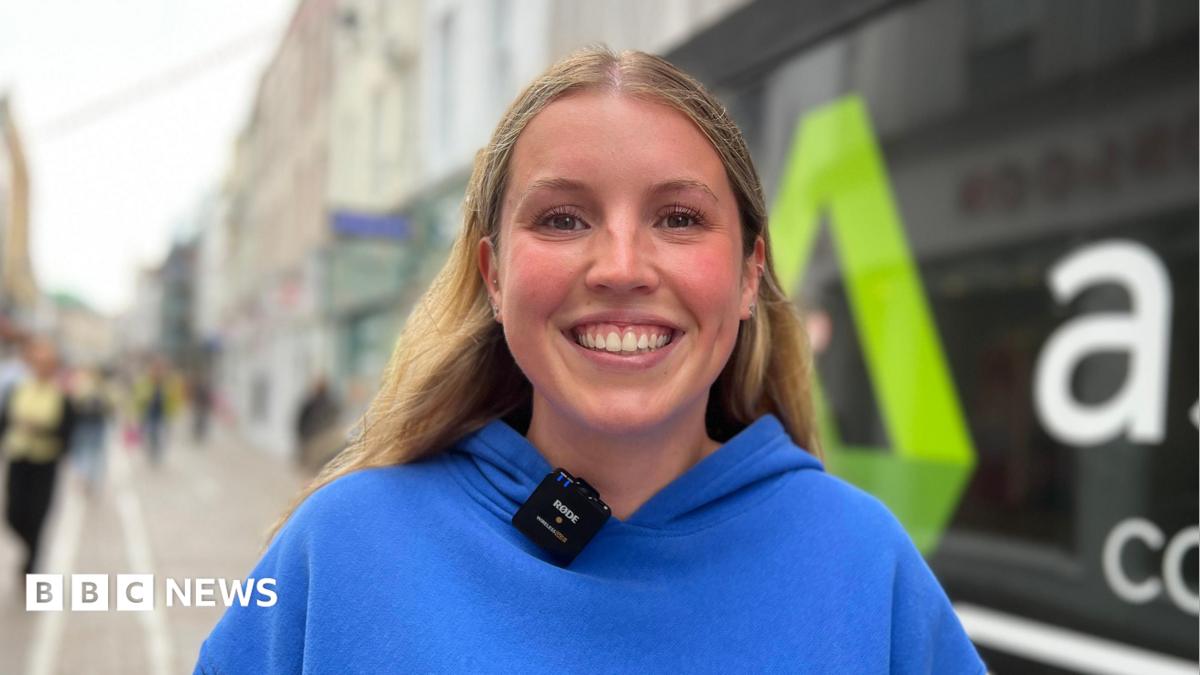
Sarah Jackson, who works at coffee and pizza shop Red House, said she was hopeful the change could help people spend money at businesses.
She said “anything that can help bring money into the island is always important” and “having credit cards gives us another option for payment here”.
“I think it depends how obvious the opt-out option is if it’s something that’s very clearly stated and everyone knows when they’re up for it then good,” Jackson said.
“As long as everything’s regulated and following a certain procedure and you’ve chosen exactly what data you want shared then I’m sure it’s fine for people in general.”
Those who do not want their personal data shared can email customerservice@gov.je with subject header “OPT OUT” along with their full name, address and date of birth, or phone 01534 444444 and select option 6.
Follow BBC Jersey on X, external and Facebook, external. Send your story ideas to channel.islands@bbc.co.uk, external.

Young people tells the BBC what they think about the state pension.
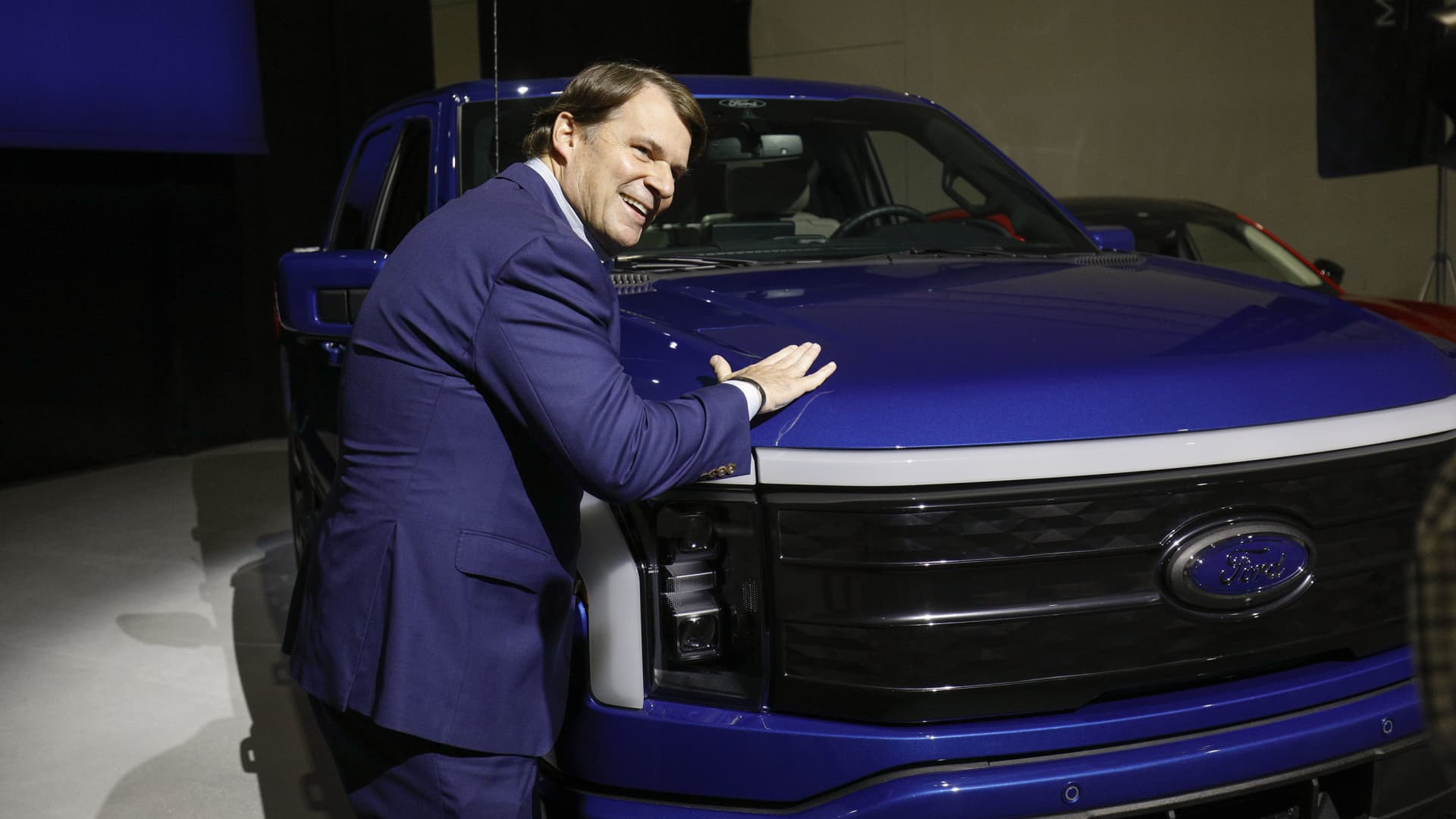
Ford Motor CEO Jim Farley speaks during a launch event for the 2025 Ford Expedition in Louisville, Kentucky, on April 30, 2025.
Michael Wayland | CNBC
DETROIT — Ford Motor regularly promotes itself as a cornerstone of American manufacturing, business and truck leadership with its best-selling F-Series pickups, but it also has led the U.S. in one area that it isn’t so proud of: vehicle recalls and quality issues.
They’ve plagued the Detroit automaker’s earnings, degraded customer trust and stained Ford’s reputation for much of the past decade. The automaker has issued 53 recalls for more than 12 million vehicles so far this year after an industry record of 153 recalls covering 13 million cars and trucks in 2025.
But that period for Ford is coming to an end, CEO Jim Farley told CNBC during an exclusive interview, as the automaker notched a key quality milestone. He said Ford has learned from its past mistakes and will use that knowledge to attempt to flawlessly launch a litany of new products in the coming years.
“Our best days are in front of us as we continue to execute this quality turnaround for our investors, for employees, for our customers,” Farley said during a phone interview. “We’re going to have all new vehicles across our entire North America range in a couple of years, and so that whole new lineup, we have to launch all those perfectly.”
Doing so will be a difficult task. New vehicle launches, especially ones with emerging technologies such as software-defined systems and electrified powertrains, are complex, and one issue can have a ripple effect on an entire product line.
A worker helps assemble a Ford F-150 truck before President Donald Trump arrive at the Ford River Rouge Complex in Dearborn, Michigan, on Jan. 13, 2026.
Anna Moneymaker | Getty Images
It’s something Farley knows all too well. Such issues have cost Ford billions of dollars in losses under his nearly six-year tenure leading the company.
The automaker this week added to its 2026 recall total by recalling 741,195 SUVs and F-150 pickup trucks that varied in age from the 2018 to 2021 model years.
Investors have been closely watching the issues, saying unneeded warranty costs are a risk to the company’s guidance and future business plans. Warranty costs are the expenses an automaker incurs to cover repairs, replacements and other costs for defective parts or workmanship under a certain period of time or miles driven after customers purchase a new vehicle.
Ford said it reduced warranty and materials costs by $1.5 billion in 2025, when adjusted for volume and mix, and is targeting an additional reduction in warranty and material costs in 2026. This follows the company’s warranty costs reaching a high of $4.8 billion in 2023.
“While warranty costs had been a clear drag to earnings over the past several years, Ford appears to have ‘turned the corner,’” Barclays analyst Dan Levy said in a May 15 investor note, citing four consecutive quarters of year-over-year warranty benefits. “We believe the 1Q warranty improvement is encouraging, yet believe further improvement will still be needed.”
Ford No. 1 in initial quality
The company last week received outside validation of its yearslong efforts to turn around its product issues as the Ford brand was named the top mass-market brand in the U.S. in J.D. Power’s initial quality ranking.
After the news was released on June 25, Ford stock rose 2%, making it the company’s second-best trading day of the month.

Ford stock in 2026
It’s the first time since 2010 that Ford has led mainstream brands in the influential study, which assesses expected new vehicle quality based on owner-reported problems within the first 90 days of ownership. Ford, which ranked No. 23 in 2023, ranked third among all brands, behind luxury makers Porsche and Hyundai’s Genesis. It came before Toyota’s Lexus brand at No. 4.
Ford improved in nearly every vehicle category measured by J.D. Power in initial quality, including software, infotainment and power trains.
The acknowledgement comes as Farley has doubled down on efforts to restructure Ford’s leadership, including its bonuses and incentives; focus on quality; and revamp its processes as well as those of suppliers and other partners to more proactively identify potential problems.
“I’m very proud that an American car company can beat the world in initial quality, but obviously none of us are satisfied,” said Farley, who worked at Toyota for nearly 19 years before Ford. “We have so much left to do to be the No. 1 quality brand in all attributes.”

Farley said Ford needs to continue trying to lower its warranty costs and future recalls as well as improve its overall quality reputation, including long-term durability.
Ford and its luxury Lincoln brand respectively ranked 18th and 19th in J.D. Power’s U.S. Vehicle Dependability Study released in February, well below the industry average. That study looks at vehicles over a longer period.
Farley declined to predict when Ford, which has led recalls in the U.S. since 2024, will not hold that position anymore, saying he can’t control what happens in older-model vehicles as well as competitors’ efforts in quality. But he did say everything the company is doing “will absolutely lead to a massive reduction” in future recalls of current and future products.
“The ultimate success metric is will we do it over the course of five or 10 years through launches, through all sorts of economic cycles,” he said. “Everyone wants the quick answer, but when it comes to quality, time is the most important measure of success.”
Ford’s quality efforts
Ford CEO Jim Farley pats a Ford F-150 Lightning truck on Feb. 13, 2023, in Romulus, Michigan.
Bill Pugliano | Getty Images News | Getty Images
Recalls are companies rectifying mistakes that weren’t caught or known during a vehicle’s development or production. They can range from mundane issues such as visor labels or software updates to severe, potentially deadly issues for consumers.
Ford’s most recent quality efforts have focused on finding any issues as soon as possible in a vehicle’s development, which Farley said meant structurally rearranging the company’s processes.
He implemented a new organizational structure and has hired 350 technical specialists since 2023, held more routine meetings, encouraged closer collaboration with suppliers and rolled out more rigorous testing during the entire vehicle development process.
Ford also changed its bonus structure, tying executive compensation more closely to quality metrics, including those for new executives from Whirlpool and Johnson Controls who brought additional quality expertise.
Ford has still had to deal with issues along the way. After it rolled out new artificial intelligence tools to detect problems, the company had to ultimately bring back what it calls veteran “gray beard” engineers to help guide younger staff members and to better train its AI models.

“We found in the past that Ford restructured the company to save money, only to find that we had let go experienced people in supply chain and manufacturing and engineering,” he said. “By bringing those people back, that complements all this AI technology.”
For many companies, AI has increasingly shown it can increase productivity of many tasks but might not be as efficient if it’s not properly trained and deployed to assist the work of human employees.
Farley said that while Ford’s quality efforts are a never-ending journey, he believes the company is about halfway through its most recent turnaround efforts under his Ford+ business plan, which is just beginning to show Ford’s future upside.
“I know after 40 years how important quality is and durability is, and how difficult it is to be the best, which we now are initial,” Farley said. “We cannot lose this momentum, it has to be a culture.”

On Thursday the government said pubs would be able to stay open until 05:00 on Monday.
Employers are being urged to use their “common sense and understanding” and allow flexible working requests where they can.
The TUC, the umbrella group for trade unions, says bosses where possible should allow staff to work from home, start later and make up their hours in the near future, or swap their hours.
John Palmer, senior advisor at conciliation service Acas, says firms must treat requests for time off fairly – there will be Mexico fans as well as England supporters in the workforce. Employees should be aware it might not be possible to book time off at short notice.
He adds some staff who have no interest in the football may be happy to swap shifts.
But some industries will be less able to offer flexibility than others. The British Chambers of Commerce says businesses where this will be challenging include manufacturing production lines, frontline retail and hospitality.
Its director of policy, Kate Shoesmith, says: “Ultimately, there will be some jobs, such as shift work, where it won’t be possible but we’re confident most employers will be thinking about how they can keep everyone onside.
“Talking to staff and customers about plans, can also help reduce disruption and decrease any impact on productivity.”
Supermarkets Sainsbury’s and Aldi say it will be business as usual in their stores on Monday.
Michelle Last, partner at Keystone Law, says employees don’t have a statutory right to take short-notice annual leave to watch a football match – “or to recover from watching one”.
But she says it might be prudent for employers to agree to short-notice leave requests.
“The alternative is that the employee might call in sick or turn up for work tired and unproductive in any event.
“Given this risk, employers might sensibly proactively encourage employees to apply to take annual leave in anticipation of the match. And hopefully, the ensuing celebrations.”

Artificial intelligence is transforming every aspect of business. But the value organisations gain from it will depend less on how quickly they adopt new tools and more on whether they use AI to support long-term strategy, growth and resilience.
Across businesses, marketing teams are experimenting with content generation, HR is automating recruitment, finance is streamlining reporting and customer service is introducing AI-powered assistants. Yet this is only the beginning, with AI poised to reshape virtually every area of business.
Currently, individual initiatives may deliver efficiencies, but the organisations that will realise the greatest value from AI won’t necessarily be those adopting it the fastest, but those that manage it as a business-wide strategic transformation.
That distinction matters because many organisations are still treating AI as a collection of individual efficiency projects, rather than as a fundamental shift in how the business creates value.
Claire explains: “Most businesses are understandably in the experimentation stage with AI. As such, the predominant approach to AI adoption is tactical. But it is also often anchored in driving “efficiency”, which is usually code for cost reduction”.
Whilst there is value in experimentation and efficiency, real success will lie in taking a strategic approach to AI adoption. To ensure sustained growth and profitability, leadership teams will need to ensure that AI supports the organisation’s long-term strategy rather than becoming a collection of disconnected tools solving isolated problems.
AI won’t fix your business
While improving productivity and reducing costs is important, approaching AI solely as a cost-reduction tool can create significant challenges further down the line.
For example, businesses might risk making restructuring decisions that remove too much human intelligence from the organisation, or implementing AI solutions that optimise one department while creating inefficiencies in another. When changes are made in isolation, rather than as part of a joined-up strategy, organisations can simply shift inefficiencies from one area of the business to another instead of eliminating them.
As Claire explained: “AI isn’t going to fix your business. It’s simply going to reveal the issues that already exist.”
The starting point should never be, “What can AI do for us?” Instead, Claire believes leadership teams should begin by asking: “What are we trying to achieve as a business? Where are our biggest challenges, and where would we most like to improve?” Only once these questions are answered and clear should they ask: “How do we want to approach embracing AI in our business?”
“If you ground the conversation in how AI can unlock value, that’s a fundamentally different discussion from asking how AI can save money,” she says.
Grounding AI in a business strategy fundamentally changes the conversation. It shifts the focus away from saving money in the short term towards unlocking value over the long term.
Organisations need to operate as connected systems
Long before AI became a boardroom priority, successful organisations understood that the only way businesses can compete today is by operating as one cohesive system.
“Every department needs to be aligned around where the business is going, what it’s trying to achieve and how it’s going to get there,” says Claire. “That need becomes even greater as AI adoption accelerates.”
Businesses that operate in functional silos today face the greatest challenge. If marketing adopts AI independently from sales, or customer service automates processes without considering operations, customers can end up receiving fragmented experiences while internal teams duplicate effort and create unnecessary complexity. The result is the exact opposite of what AI is intended to achieve.
Claire explains: “Without that systemic approach, you risk driving inefficiency into the business. You also limit your ability to innovate, grow and create long-term value.”
Rather than increasing efficiency, businesses simply create new silos where the left hand no longer knows what the right hand is doing.
Leadership teams therefore need to ask not simply how individual departments are using AI, but how every AI initiative contributes to the organisation as a whole.
“The question all leaders should be asking is ‘Are we looking at this holistically?’”
AI should support strategy, not replace it
There is understandable pressure on businesses to move quickly.
New AI platforms appear almost daily, accompanied by headlines suggesting competitors are racing ahead. “There’s a huge amount of FOMO around AI. Many leaders think everyone else has cracked it, but the reality is that very few organisations have,” says Claire
The temptation is to identify an operational problem, purchase a piece of AI software that appears to solve it and move on to the next issue. However, this tactical approach often increases complexity and cost rather than reducing it. It may also explain why MIT’s 2025 report, The GenAI Divide: State of AI in Business 2025, found that 95% of organisations were getting no measurable return from their GenAI pilots.
“Rather than allowing AI to happen to you, leaders need to decide what AI should be for their business. “Technology should follow strategy, not define it.”
Don’t outsource your intelligence
“The future isn’t AI replacing humans. It’s humans and AI working together,” says Claire.
AI provides artificial intelligence, but organisational success will still rely on applied intelligence, the experience, judgement, creativity and critical thinking that people bring. “The job is to avoid unintentionally outsourcing your intelligence to AI. Protect what makes your organisation uniquely valuable.”
This is particularly important given the reality of today’s workplace. Claire warns: “One of the biggest risks is that AI becomes a coping strategy for overwhelmed employees. They hand more and more tasks over to AI, and what disappears is judgement, evaluation and critical thinking.”
“If organisations don’t think carefully about how people adopt AI, they’ll introduce unnecessary risks around data, reputation and decision-making.”
The goal should never be replacing people with AI. It should be enabling people to work better alongside it.
Build capability for the future
AI also requires organisations to think differently about talent. “Entry-level roles shouldn’t be viewed as something you can eliminate. The real question is how you evolve those roles to support your long-term talent strategy,” says Claire.
Junior professionals still need opportunities to learn their craft. They simply have the opportunity to do so using AI from day one.
If organisations stop developing future talent because technology can perform today’s tasks, they risk creating significant capability gaps in years to come.
Strategic AI adoption therefore requires leaders to ask not only what capabilities can be automated today, but what capabilities the organisation will need tomorrow.
AI is a leadership responsibility
AI is overwhelming, and it is understandable that some leadership teams have turned to creating AI specialist roles. Whilst this sort of specialist expertise will undoubtably be valuable, leaders cannot afford to delegate responsibility for AI adoption to one person or one function.
“Leaders need to ensure they are clear on their business strategy and understand what role AI can play in fulfilling it. This alignment is crucial to ensuring the AI expertise you do bring into the business is pointed in the right direction”.
We’ve seen this before. When digital first emerged, many organisations appointed Heads of Digital. Over time, it became clear that digital could not sit in one department because it touched every aspect of the business.
AI is no different. It cannot become someone else’s responsibility. It must become part of the organisation’s DNA, with leadership teams taking collective ownership for how it is governed, adopted and embedded across the business.
“Get your house in order first. That’s how you’ll get the most value from AI specialists.”
Think beyond today
Clearly, AI has the potential to transform the workplace but it is not without its challenges or risks. If ever there was a need for leaders to consider how decisions taken today might affect the business in the future it is now.
“AI makes a stewardship mindset more important than ever. Stewardship is about protecting the long-term future of your organisation.”
Leadership teams should consider every AI decision through four interconnected lenses: protecting their brand, their people, their customers and the planet.
For example, within the current discourse around AI adoption, there is a definite lack of discussion and consideration around sustainability. Claire believes that it is a huge part of the piece. “Sustainability may not be the most fashionable part of the AI conversation right now, but consumers will eventually join the dots and the brands who have not taken a systemic approach to AI adoption, who haven’t considered how it impacts their own sustainability agenda, will be caught out.”
The organisations that succeed will protect what makes them unique while using AI to enhance, not replace, the intelligence that already exists within the business.
Above all, they will resist the temptation to chase technology for technology’s sake. AI is not a business strategy. It is a powerful enabler of one.
Leadership teams that start with strategic clarity, align every department behind shared goals and adopt AI as part of a connected organisational system will be the ones that create lasting value long after today’s AI hype has passed.
By Claire Croft, founder of executive coaching business Claire Croft Associates
For more information, visit: https://clairecroft.co.uk
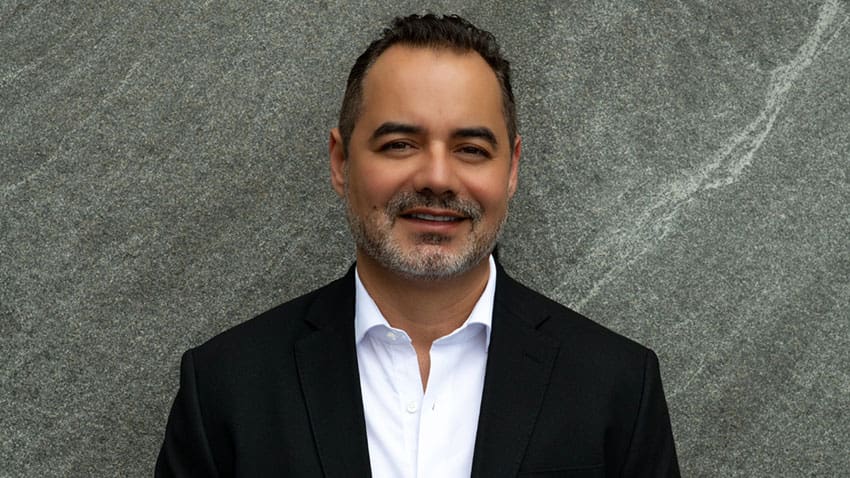
For more than 25 years, Juan Sebastian Palomo Murga has built companies that solve real-world challenges across infrastructure, logistics, technology, and financial services.
Today, much of that focus is centered on creating smarter transportation solutions through iPakket and Ride by iPakket.
Rather than viewing mobility as a single service, the companies are building an ecosystem that combines logistics, technology, and shared transportation to make moving people and goods more efficient. As Ride by iPakket continues expanding its carsharing services, the goal remains simple: provide practical, technology-driven solutions that improve accessibility and convenience for individuals and businesses alike.
In this interview, Juan Sebastian discusses the thinking behind the companies’ evolution, the future of shared mobility, and why innovation should always begin with solving everyday problems.
What inspired the expansion from logistics into shared mobility?
As we continued growing iPakket, we saw transportation becoming more connected. Logistics, deliveries, and personal mobility are all part of the same ecosystem. Technology gives us the opportunity to connect those services in ways that make transportation simpler and more efficient.
That is what led to Ride by iPakket. We wanted to create a platform that gives people more flexible transportation options while using technology to improve the overall experience.
What makes carsharing an important part of the future of transportation?
Many people are rethinking traditional car ownership, especially in urban areas. They want access to reliable transportation without the long-term costs and responsibilities that come with owning a vehicle.
Carsharing offers flexibility while making better use of existing resources. When supported by the right technology, it becomes a practical solution for both consumers and cities looking to improve mobility.
We believe transportation should be available when people need it, without unnecessary complexity.
How does technology support the Ride by iPakket experience?
Technology is the foundation of everything we build.
Customers expect transportation to be simple. They want to locate vehicles quickly, complete reservations easily, and have confidence that the service will be reliable. Behind that experience is a significant amount of technology working to improve efficiency, security, and convenience.
For us, technology is not about adding features. It is about removing friction from the customer experience.
How does your experience in infrastructure influence your approach to building technology companies?
Infrastructure taught me that every successful project begins with strong planning and disciplined execution.
Whether you are building roads, managing large construction projects, or developing mobility platforms, success depends on creating systems that people can trust. That mindset continues to guide how we grow iPakket and Ride by iPakket.
The industries may be different, but the importance of reliability never changes.
What role does innovation play across your companies?
Innovation only matters if it improves people’s lives.
Our goal is not to introduce technology simply because it is new. We focus on solutions that help customers save time, simplify transportation, and improve access to services.
As we continue expanding, we are also exploring additional technologies and strategic acquisitions that strengthen the broader ecosystem connecting logistics, mobility, and digital services.
How do you see urban mobility evolving over the next decade?
Cities will continue looking for smarter ways to move people efficiently.
I believe we will see greater adoption of shared transportation, connected mobility platforms, and digital services that allow users to manage multiple transportation options through a single experience.
Companies that can integrate technology with convenience will be well-positioned to meet those changing expectations.
How do sustainability and social responsibility fit into your business strategy?
A responsible business should always consider long-term impact.
Shared mobility has the potential to improve how transportation resources are used while giving more people access to flexible travel options. Beyond our commercial activities, we continue supporting initiatives that expand access to clean energy in underserved communities throughout Central America because infrastructure and energy both create opportunities for economic growth.
We also continue supporting organizations that promote human rights because strong communities are essential to sustainable development.
What do you hope people associate with iPakket and Ride by iPakket in the years ahead?
I hope they see companies that consistently solve real problems.
Our focus has always been on building practical solutions that people can depend on. Whether that means improving logistics, expanding shared mobility, or developing new technology, success comes from creating value that lasts.
If customers think of iPakket and Ride by iPakket as companies that deliver reliable innovation while keeping people at the center of every decision, then we will have accomplished what we set out to do.

Today, things change fast in the world of investing. People with a lot of money now want ways to grow what they own, but they also want to feel safe.
The way to grow your money is not just by buying stocks, bonds, or real estate anymore. Investors these days want options that feel real and add clear value to their lives, while also helping with their bigger money plans and how they want to live.
This is where Mercan Group gives you something different. The group connects investor visa programs with real-life hotels through Mercan Properties. This way, you get chances that are not like other investment plans. Instead of putting your money into things you can’t see or touch, you can put it into hotels that are running right now. These hotels are backed by world-renowned brands. You can be a part of these projects, too.
This mix of asset-backed investment and ways to get residency has made Mercan a trusted name for people who want global movement and feel good about their money in the long run.
Why Focus on Asset-Backed Investments
Investments that are backed by real things still bring in people who want to invest. These types of investments are tied to projects you can see and feel, and they are active in the real world of money. Unlike deals that are just about taking a chance, these have a base in real things that help with keeping money plans steady for a long time.
Properties works on building hotel projects. These projects help create many chances for people to invest in the company’s programs. The company sets up these places for people who travel for fun or work. At the same time, these projects let people who invest get into a big business field.
Many people like to know that their money goes into building and running real hotel places, not just money deals. This makes it easy for them to feel sure about where their money is and helps them have many ways to grow their money.
How Connects Investors to Luxury Hotel Developments
A key part of Mercan’s way of working is to connect hotel buildings with chances for investment migration. With Properties, people give money that is then used to build and run top hotels in good spots.
These projects are linked to some of the most well-known hotel brands around the world. People know them for their skill in running hotels, high quality, and being trusted everywhere. When top hotel companies work together on this, they use tried-and-true ways to manage things the right way. They also help these projects get attention from all over the world.
This way, investors can join projects that are linked to real hotels or places people stay. At the same time, they can work toward getting residency through approved investment programs.
Global Hospitality Partnerships
One thing that makes the model stand out is that it works with well-known and trusted hotel brands.
Here are some examples of hotel groups that people know all over the world:
| International Hotel Brand | Industry Significance |
| Hilton | Global hospitality leader with extensive international presence |
| IHG (InterContinental Hotels Group) | Diverse portfolio of hotel brands worldwide |
| Marriott International | One of the world’s largest hospitality companies |
| Holiday Inn | Widely recognized hotel brand serving global travelers |
| DoubleTree by Hilton | Premium hospitality brand known for guest-focused experiences |
Working with known hotel operators helps build trust in the project. It also helps make sure the hotel runs well for a long time.
How Supports Smart Wealth Diversification
Modern investors often look for ways to get many benefits from one plan. The model helps with this by offering:
Tangible Asset Exposure
Investments are tied to real hotel projects and not just ideas that you read about or see in theory.
Portfolio Diversification
The hotels and other places to stay can be a good addition to your current investments in different sectors.
Residency Opportunities
Some investment programs can help you move to another country. These can also make it easier for you to travel to other places.
Professional Development Expertise
Properties is in charge of project development. The team makes sure to focus on good quality. They also look at how well a project can work and if it will last a long time.
Global Brand Associations
Working with well-known hotel brands from around the world helps investors feel more confident about their choice.
Way Stands Out in Investment Migration
When investors look at ways to stay safe, spread out their money, and move around in the world, the interest in asset-backed investments goes up. It uses its skills in building and running hotels, along with plans for helping people move. This makes something special for people from other countries who want to invest.
By bringing together the money from investors and real luxury hotel projects, and working with big brands like Hilton, IHG, and Marriott, mercan group of companies gives people a good way to grow their money in different areas and also get chances for residency. If you want to know more about the investment options or hotel projects from Mercan.
FAQ
What is an asset-backed investment?
An asset-backed investment is based on real things like hotels or places built for real estate.
What is Mercan Properties?
Properties is a part of the company that works on building hotels. It also gives people a way to invest in these hotel projects.
Why are hotel investments attractive to investors?
They let you get into real-world things and can help you spread out what you own in different ways.
Which hotel brands are associated with Mercan projects?
Projects may have worked with big hotel names such as Hilton, IHG, and Marriott.
How does Mercan support investment migration?
It brings together good investment chances with help for people on residency and investment migration programs.


Arbitrage Trader, aka Denislav Iliev has been day trading for 15+ years and leads a team of 40 analysts. They identify mispriced investments in fixed-income and closed-end funds based on simple-to-understand financial logic.
Denislav leads the investing group Trade With Beta, features of the service include: frequent picks for mispriced preferred stocks and baby bonds, weekly reviews of 1200+ equities, IPO previews, hedging strategies, an actively managed portfolio, and chat for discussion. Learn more.
Analyst’s Disclosure: I/we have no stock, option or similar derivative position in any of the companies mentioned, but may initiate a beneficial Long position through a purchase of the stock, or the purchase of call options or similar derivatives in WRB.PR.H over the next 72 hours. I wrote this article myself, and it expresses my own opinions. I am not receiving compensation for it (other than from Seeking Alpha). I have no business relationship with any company whose stock is mentioned in this article.
Seeking Alpha’s Disclosure: Past performance is no guarantee of future results. No recommendation or advice is being given as to whether any investment is suitable for a particular investor. Any views or opinions expressed above may not reflect those of Seeking Alpha as a whole. Seeking Alpha is not a licensed securities dealer, broker or US investment adviser or investment bank. Our analysts are third party authors that include both professional investors and individual investors who may not be licensed or certified by any institute or regulatory body.
Business
Muthoot Finance, Manappuram Finance, other stocks rise up to 5% as gold prices hit Rs 1.48 lakh/10 grams

Gold futures with August expiry on the Multi Commodity Exchange of India (MCX) gained around Rs 2,288 per 10 grams, or nearly 2%, hitting the day’s high at Rs 1,48,046 per 10 grams. The contracts with October expiry comfortably soared above Rs 1.5 lakh per 10 grams.
Gold hit its highest level since June 23 in the international market, with spot gold rising more than 1% on Friday morning. This came as weaker-than-expected nonfarm payrolls and private payrolls data tempered concerns around inflation and higher-for-longer interest rates.
Why are gold prices rising today?
US job growth slowed sharply in June and payroll gains for the prior two months were revised lower, data released on Thursday showed, pointing to a cooling labour market and prompting financial markets to reduce expectations for a near-term rate hike. The unemployment rate dropped to 4.2% last month from 4.3% in May as workers left the labour force, pushing the participation rate to its lowest level in more than five years.
“The figures challenged the narrative that the Fed remains on track to hike in the second half of this year,” Reuters quoted Westpac analysts as saying in a research report. The tepid jobs data doused traders’ expectations of an imminent rate hike and raised the odds that the Fed will keep rates on hold until October.Traders are now pricing in a 46.8% probability that the U.S. central bank will keep rates steady at its meeting on September 15 to 16, compared to a 35.8% chance a day earlier, according to the CME Group’s FedWatch tool.
Notably, this boosted gold prices today as higher interest rates typically weigh on non-yielding gold, as they make interest bearing assets more attractive. Silver prices also sharply gained today, rising more than 2% to near its highest level in more than a week.
Also read: Jewellers may be louped in for idle gold mobilisation
Why are gold financier stocks rising today?
Manappuram Finance, Muthoot Finance and IIFL Finance offer loans to its customers with gold as collateral. Rising gold prices will increase the value of the pledged collateral. Since gold loans are sanctioned based on the per-gram valuation of gold, higher prices will require borrowers to pledge lesser jewellery to access the same loan amount.
What lies ahead?
According to Manoj Kumar Jain of Prithvi Finmart, gold and silver prices are expected to remain volatile in Friday’s session amid fluctuations in crude oil prices, the dollar index and U.S. bond yields.On the MCX, Jain said gold has support at Rs 1,44,400-Rs 1,43,350. The yellow metal will likely find resistance at Rs 1,47,100-Rs 1,48,800 levels, according to the analyst.
(With inputs from agencies)
(Disclaimer: Recommendations, suggestions, views and opinions given by the experts are their own. These do not represent the views of The Economic Times)
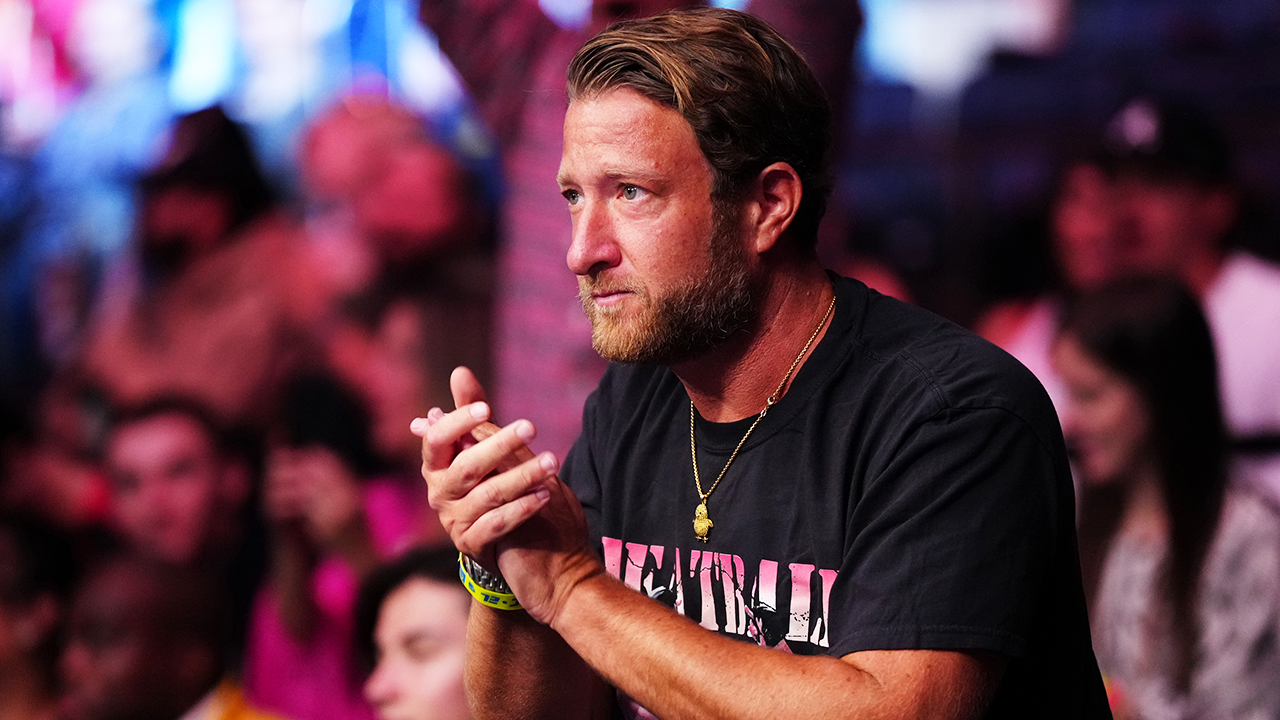
Barstool Sports founder and President Dave Portnoy blasted New York City Mayor Zohran Mamdani’s socialist agenda, warning the city is headed in a dangerous direction and saying some progressive politicians ‘hate America.’
Dave Portnoy says his latest Bitcoin investment has become an expensive lesson in timing, with the Barstool Sports founder revealing he is down millions but still has no plans to sell despite the cryptocurrency’s sharp decline.
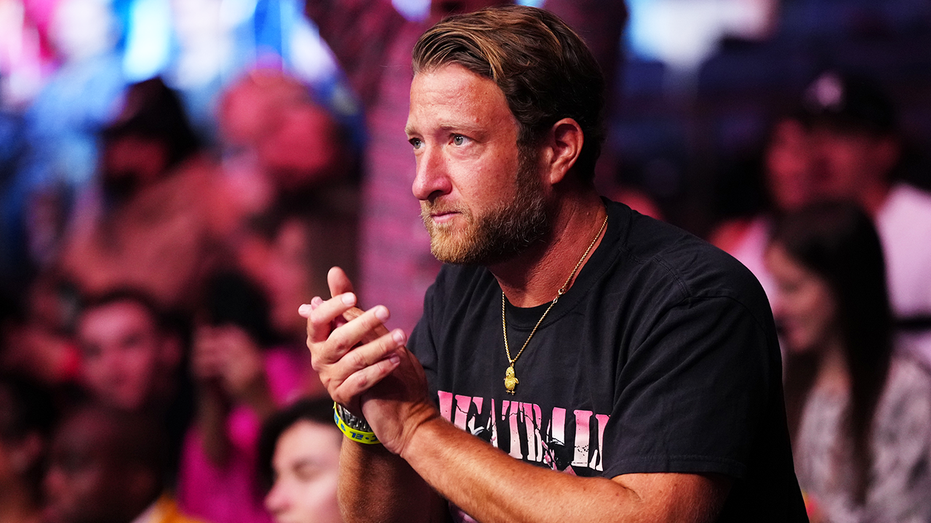
Dave Portnoy opens up about his costly Bitcoin investment, revealing he’s down millions while explaining why he’s continuing to hold. (Jeff Bottari/Zuffa LLC / Getty Images)
Barstool Sports founder and President Dave Portnoy joined FOX Business’ Stuart Varney on “Varney & Co.” to discuss politics, sports and cryptocurrency, where he acknowledged buying Bitcoin near its recent highs and explained why he is continuing to hold the asset through the downturn.
“Yeah, I got regrets, I bought the thing at $100,000,” Portnoy said. “There’s nothing I’ve been wrong about more than Bitcoin. Every time I sell it, it goes nuclear. Every time I buy it, it tanks.”
Larry Kudlow and Paul Atkins, former SEC chairman, discuss the Trump administration’s pro-cryptocurrency stance. Atkins highlights Trump’s challenge to make the United States a crypto capital, attracting innovators back to the U.S.
Even with the losses piling up, Portnoy said he is staying invested because he believes history has repeatedly worked against him whenever he exits the market. “I’m holding, I’ll hold this thing down to zero,” he said.
“I’m losing millions to it,” he continued, while acknowledging that selling now would likely mean watching it rebound without him.
GOP LAWMAKER UNVEILS BILL TO CODIFY A STRATEGIC BITCOIN RESERVE
Portnoy expanded on his complicated history with Bitcoin during a recent appearance on Anthony Pompliano’s “The Pomp Podcast.” He recalled first buying roughly $2 million worth of Bitcoin when it traded around $11,000 after a conversation with Cameron and Tyler Winklevoss, only to sell almost immediately because he did not understand their long-term thesis. Looking back, Portnoy said the decision proved costly as Bitcoin quickly surged, eventually convincing him to re-enter the market at much higher prices.
‘Making Money’ host Charles Payne highlights the financial media’s consistent predictions of market downturns.
On the podcast, Portnoy said he still struggles to predict the cryptocurrency’s moves despite years of following it closely. “I don’t know what the hell’s going on with it,” he said when discussing where Bitcoin could go next, adding that he intends to keep holding his position even if it continues to fall.
TRUMP FINANCIAL DISCLOSURE REVEALS MORE THAN $1B IN CRYPTO INCOME DURING FIRST YEAR BACK IN OFFICE
Portnoy’s comments underscore the volatility that continues to define the cryptocurrency market, even for high-profile investors who have experienced both significant gains and steep losses.

Excitement and concerns over credit card plans in Jersey

ARK Invest’s Cathie Wood Pours $41M into Tesla (TSLA), Exits Roku Position Ahead of Holiday

Wimbledon 2026 men’s and women’s seeds list and tracker


-

 Fashion7 days ago
Weekend Open Thread: Staud – Corporette.com
-

 Crypto World3 days ago
Strategy authorizes up to $1.25B in Bitcoin sales under new capital plan
-

 News Videos5 days ago
MAJOR BITCOIN & MARKET UPDATE!!!! (MUST WATCH ASAP!!!)
-

 Tech5 days ago
Claude Code turned every engineer into three. Now companies need more product thinkers
-

 Tech3 days ago
Anonymous researcher drops 0-day ‘exploitarium’ repo
-

 Crypto World6 days ago
Coinbase, Circle Deepen Crypto Stock Losses Despite Resilient S&P 500
-

 Business3 days ago
Australia treasurer says alleged access of prime minister’s bank data ’incredibly concerning’
-

 Crypto World6 days ago
Kraken's xStocks Opens Bending Spoons IPO Registration to EEA Retail
-

 Sports7 days ago
FIH Pro League: India defeat Pakistan 7-1, register biggest win of campaign | Other Sports News
-

 Tech5 days ago
Bluekit phishing kit adopts browser-in-the-middle for login theft
-

 Tech6 days ago
Russian hackers now target Signal backup recovery keys
-
 Crypto World7 days ago
Hyperliquid Named on Singapore MAS Investor Alert Register
-

 Crypto World7 days ago
RTX holders must register wallets before token distribution begins
-
 Business4 days ago
The AI boom won’t burst all at once. It will pop in ‘rolling bubbles’: Macquarie
-

 Sports2 days ago
Broncos roster: OL Ben Powers (No. 74) entering final year of contract
-

 Tech6 days ago
Silicon Valley paid to kill AI regulation, now it wants the rules back
-

 NewsBeat3 days ago
Presenter Caroline Flack’s brother Paul Flack dies aged 55
-

 Crypto World1 day ago
Binance stock trading tops $1B in first month after launch
-
 NewsBeat1 day ago
New exhibition reflects five decades of movement between island of Ireland and GB
-

 Tech6 days ago
OpenAI mulls delaying IPO over valuation concerns
You must be logged in to post a comment Login