Connect with us
DAPA Banner
DAPA Coin
DAPA
COIN PAYMENT ASSET
PRIVACY · BLOCKDAG · HOMOMORPHIC ENCRYPTION · RUST
ElGamal Encrypted MINE DAPA
🚫 GENESIS SOLD OUT
DAPAPAY COMING

Business

Perth Airport selects DXC for tech system delivery

Published

on

Perth Airport selects DXC for tech system delivery

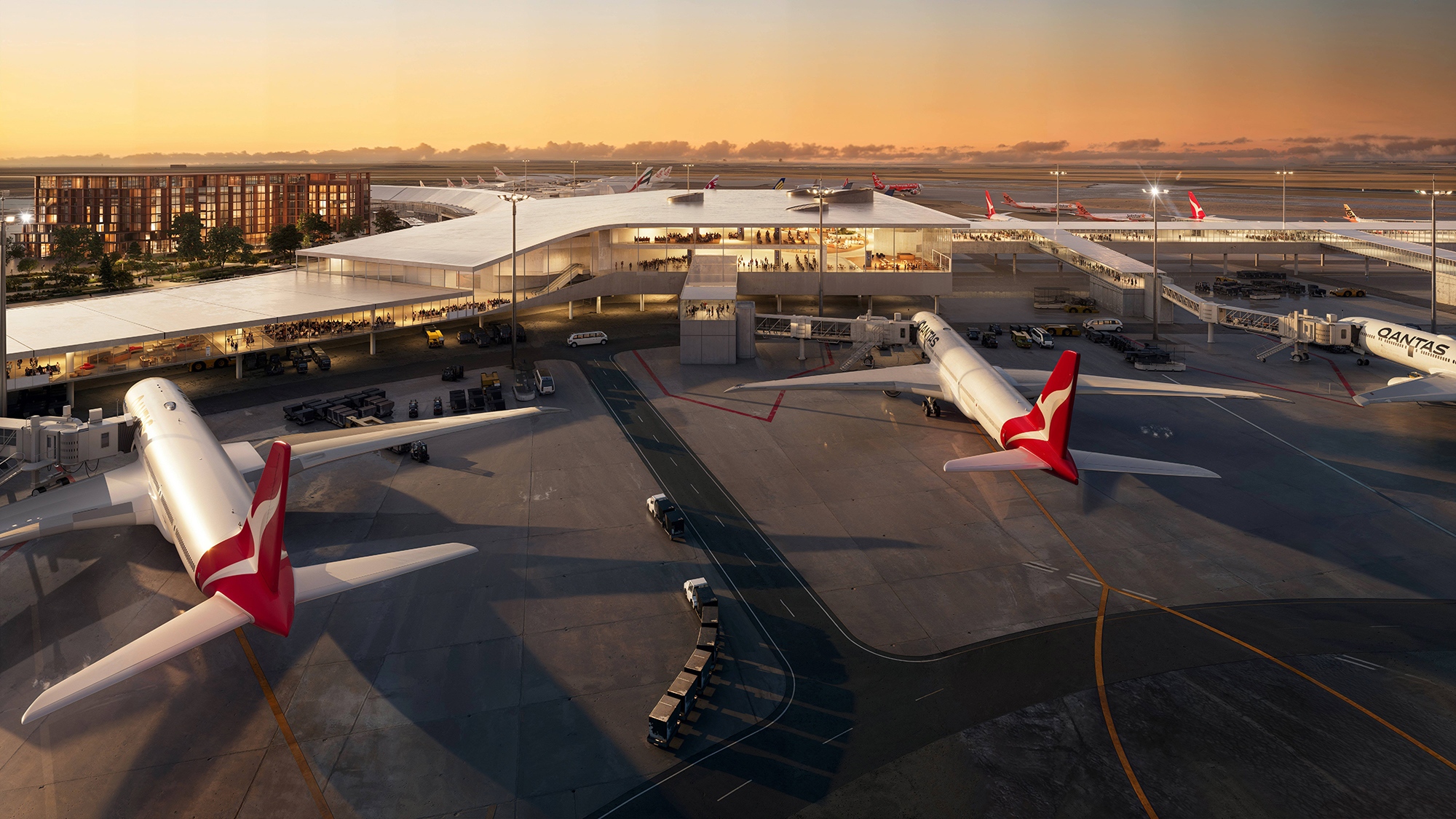
Perth Airport has selected Virginia-based DXC Technology to helm the implementation of tech in the airport’s new terminals, scheduled to open in 2031.

Continue Reading
Click to comment

You must be logged in to post a comment Login

Leave a Reply

Business

Markets likely to move beyond geopolitics, focus to shift to earnings: Devina Mehra

Published

on

Markets likely to move beyond geopolitics, focus to shift to earnings: Devina Mehra
In a conversation with ET Now, Devina Mehra, Founder & CMD, First Global said that while developments around a potential Iran–US deal may ease global uncertainty, they are unlikely to be the primary driver of Indian equities going forward. According to her, market direction will continue to be shaped more by earnings trends, liquidity cycles, and broader investor positioning rather than geopolitical headlines.

“Don’t depend on geopolitical deals to drive markets”

Responding to a question on whether the Iran–US deal could act as a catalyst for global and Indian markets, Mehra said:

“I do not think we should only depend on the deal. But yes, if it happens, it takes away a big overhang overall on all markets. And I do not think that is what is going to drive the Indian markets up. In March, when I had come on your channel, I had said that the market looks on all our indicators as if it is in the bottom range. I cannot tell you whether it will start moving up in two weeks or two months, but the indicators are all positive. Even now, if you see, it is a very different market from what it was in 2025.”

Advertisement

She pointed out that market breadth has improved significantly compared to last year.

“In 2025, all the Indian indices were up, but the median stock was down, and 40% of stocks were down more than 10%. But midway through the year, the outperforming stocks were only about 15%. The norm is around 40%. Now we actually have a majority of stocks outperforming the indices. So it is completely flipped, which is good news overall for markets, and that is why, as I said in March also, do not be 100% in equity, but whatever is your equity allocation, remain invested. So that remains my advice.”

“Geopolitical risks are not something you should react to”
On whether investors should increase equity allocation given easing global tensions, Mehra cautioned against reacting to geopolitical developments.“The geopolitical risk per se is not something you should react to, and I am not saying this now. There is an early March video of mine which is pinned on my Twitter feed which says exactly that: do not overreact to geopolitics. This is what 125 years of data shows, including the two world wars, the two Gulf wars, the US bombing Libya, 9/11, all of that. The market shrugged it off even when conflicts continued, as has happened with Russia–Ukraine.”

She added that while crude oil movements matter for India, one should avoid building investment decisions around uncertain geopolitical outcomes.

“Of course, in India there is a direct impact because of crude, because that impacts earnings. So you have to take that into account. But I am not betting on geopolitical resolution as far as Indian or global markets are concerned.”

“The dangerous consensus is emotional behaviour”
Discussing investor behaviour, Mehra highlighted how sentiment-driven decisions often lead to poor timing.

Advertisement

“If you look at the markets in the last couple of months, SIP numbers have turned negative. The number of accounts has also turned negative. Indian investors have been very jittery. If you plot long-term data, mutual fund inflows peak around market peaks and bottom out around market bottoms. Humans act out of emotions, which mislead you completely.”

She stressed the importance of staying invested during periods of panic.

“When you are panicking is when you need to remain in the market. That is the superpower: do not get out when your mind is screaming get out.”

Mehra also pointed out the shift in sentiment around India.

Advertisement

“A year-and-a-half ago, every fund manager was selling the India growth story. Now, suddenly, the narrative has flipped and people are only talking about risks. Sentiment is always a contra indicator. When sentiment is extremely negative, future returns tend to be above normal. So probability-wise, we are looking at a better year ahead.”

“US is not the globe: diversification is key”
On portfolio strategy, Mehra reiterated her long-standing view that diversification across geographies and assets remains critical.

“You should always have a diversified portfolio. But the US is not the globe. People think buying a US index or a few well-known stocks is enough, but that is not sufficient diversification. It is better than being in a single market, but not a whole lot better.”

She explained how global positioning has already shifted across regions.

Advertisement

“We have been underweight the US for almost a year-and-a-half. We went overweight Europe and China and added markets like Malaysia and Mexico, which are below the radar for most investors.”

Warning against concentration in a handful of global stocks, she added:

“People think buying the so-called Magnificent Seven will save them. That worked for a couple of years, but in 2025 the leadership narrowed and now several of those stocks are underperforming. The baton has already passed, but investors are still chasing yesterday’s winners.”

“No easy answers in global investing”
Mehra also cautioned against over-simplified global investment products and strategies.

Advertisement

“There are no easy answers. I am sceptical about schemes being launched without expertise in global markets. Many have underperformed because they invested in yesterday’s stocks instead of tracking what is happening today and anticipating what comes next. If you go global, it must be with real expertise.”

Continue Reading

Business

Why is Telia Company stock sliding today?

Published

on


Why is Telia Company stock sliding today?

Continue Reading

Business

Eurozone Industrial Production Picked Up Again in April

Published

on

Eurozone Industrial Production Picked Up Again in April

Eurozone industrial output rose again in April as factories rushed to meet orders placed by customers anxious to avoid price hikes and shortages stemming from the Middle East conflict.

Industrial output rose 0.1% on month, compared with an upwardly revised 0.4% rise in March, the European Union’s statistics agency Eurostat said Monday.

Copyright ©2026 Dow Jones & Company, Inc. All Rights Reserved. 87990cbe856818d5eddac44c7b1cdeb8

Continue Reading

Business

Oil Plunges as U.S., Iran Reach Deal to Reopen Hormuz But Outlook Remains Uncertain

Published

on

Oil Plunges as U.S., Iran Reach Deal to Reopen Hormuz But Outlook Remains Uncertain

Oil prices dropped after the U.S. and Iran reached an interim deal, marking the first major step toward ending a nearly four-month conflict that has roiled global energy markets. However, uncertainty over the pace of recovery is expected to keep crude above prewar levels.

In midmorning European trade on Monday, Brent crude fell 4.9% to $83.07 a barrel, while West Texas Intermediate futures were down 5.3% to $80.38 a barrel after sliding to $79.70 earlier. Natural-gas prices also tumbled, with the front-month Dutch TTF contract—the European benchmark—down 5.3% to 44.30 euros a megawatt hour.

Copyright ©2026 Dow Jones & Company, Inc. All Rights Reserved. 87990cbe856818d5eddac44c7b1cdeb8

Continue Reading

Business

Welshpool warehouse in $5.8m sale

Published

on

Welshpool warehouse sells for $5.8m

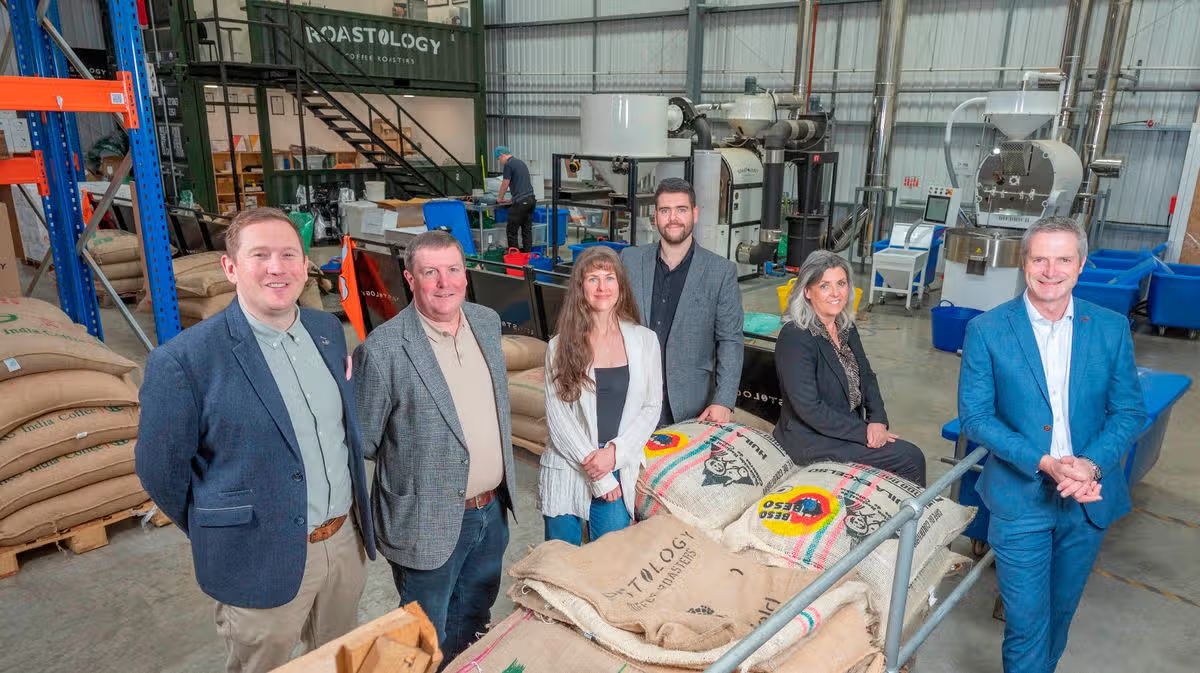
A machinery servicing company has purchased a 3,990-square metre industrial site in Welshpool for $5.83 million, signalling a significant expansion from its 412sqm home.

Continue Reading

Business

ECB needs to do more to contain inflation pressures, Kazimir says

Published

on

ECB needs to do more to contain inflation pressures, Kazimir says


ECB needs to do more to contain inflation pressures, Kazimir says

Continue Reading

Business

BHP Shares Climb 3.6% to $65.18 on Copper Strength and Positive Market Sentiment

Published

on

BHP Group Shares Rise 0.27% to $62.48 on June 1 as Copper and Iron Ore Prices Stabilize

SYDNEY — BHP Group Ltd shares rose sharply on Monday, closing at $65.18 after gaining 2.25 or 3.58%, as strong copper prices and broader commodity sector optimism lifted the mining giant amid a favorable global risk environment.

The advance extended recent gains for Australia’s largest listed company by market capitalization, reflecting investor confidence in BHP’s diversified portfolio and exposure to metals critical for the energy transition. Copper’s sustained strength has been a key driver, with the red metal benefiting from robust demand in electric vehicles, renewable energy infrastructure and data centers.

BHP has significantly expanded its copper production profile in recent years through acquisitions and organic growth, positioning the company to capitalize on structural supply deficits expected in the coming decade. Iron ore operations continue to provide stable cash flow, while emerging potash projects add further diversification.

Commodity Tailwinds Support Performance

Advertisement

Copper prices have remained elevated, trading near record levels due to supply constraints and accelerating green energy demand. BHP’s copper assets, including operations in Chile and Australia, have delivered strong margins, helping offset any softness in other commodities.

Iron ore prices have shown resilience despite Chinese economic headwinds, supported by steel production needs and limited new supply. Analysts note that BHP’s low-cost, high-quality assets provide a competitive edge in both copper and iron ore markets.

The stock’s movement aligned with a broader rally in mining and resources shares on the ASX, as easing geopolitical concerns and positive global manufacturing data boosted sentiment toward cyclical commodities.

Financial Strength and Strategic Positioning

Advertisement

BHP has maintained robust financial metrics, with strong free cash flow generation supporting dividends, share buybacks and growth investments. The company’s disciplined capital allocation has earned praise from investors seeking both yield and exposure to long-term commodity supercycles.

Recent operational updates highlight progress on key projects, including the Jansen potash development in Canada, which is expected to become a major earnings contributor in the future. This diversification reduces reliance on traditional iron ore and copper revenues while aligning with global food security and agricultural trends.

Technology investments, including automation and artificial intelligence applications across mining operations, are enhancing efficiency and safety. These initiatives position BHP to lower costs and improve sustainability metrics, appealing to environmentally conscious investors and regulators.

Market and Economic Context

Advertisement

Australia’s resources sector remains a cornerstone of the national economy, with BHP serving as a bellwether for commodity cycles. Monday’s share price increase contributed to gains in the broader ASX 200, which benefited from improved global sentiment following positive developments in international relations.

Analysts remain generally positive on BHP’s outlook, citing copper’s favorable supply-demand dynamics. While near-term volatility tied to Chinese economic data and global growth concerns persists, the long-term thesis for metals essential to decarbonization remains intact.

Valuation metrics show BHP trading at levels that balance growth potential with current earnings strength. Dividend yields continue to attract income investors, with the company maintaining a track record of returning capital to shareholders through both dividends and buybacks.

Challenges and Risks

Advertisement

Like other miners, BHP faces operational risks including commodity price fluctuations, regulatory changes, geopolitical tensions affecting trade routes, and rising costs related to labor, energy and environmental compliance. Climate transition pressures require ongoing capital expenditure to reduce emissions while maintaining production.

Competition in the copper space is intensifying, with new projects and expansions by peers potentially impacting market dynamics. BHP’s scale and expertise provide advantages, but execution on major developments remains critical.

Analyst Views and Investor Considerations

Wall Street and local analysts largely view BHP as a core holding for resources exposure. Consensus targets suggest room for further upside, though some caution that current prices already reflect optimistic copper assumptions. Investors are advised to monitor quarterly production reports, commodity price trends and any updates on major projects.

Advertisement

For long-term holders, BHP offers exposure to essential materials for modern economies while delivering shareholder returns through cycles. Diversification across assets and geographies helps mitigate single-commodity risks.

Company Background and Future Outlook

Founded in the 19th century, BHP has evolved into a global resources leader with operations spanning Australia, the Americas and beyond. The company’s portfolio includes iron ore, copper, nickel, coal and potash, serving steel, renewable energy, electronics and agricultural markets.

Looking ahead, BHP is expected to continue focusing on tier-one assets, operational excellence and responsible development. The energy transition and population growth trends support sustained demand for its products, while technological advancements should drive efficiency gains.

Advertisement

As the company navigates evolving stakeholder expectations around environmental, social and governance factors, transparent reporting and community engagement will remain priorities.

Monday’s solid performance underscores BHP’s resilience and appeal in a recovering market environment. While commodity prices will continue to drive short-term movements, the company’s strategic positioning and financial discipline provide a strong foundation for sustained value creation.

Investors will closely watch upcoming economic indicators from China and global manufacturing data for further direction on commodity demand. For now, BHP’s upward move reflects confidence in its ability to deliver through commodity cycles and contribute meaningfully to the global energy transition.

Advertisement
Continue Reading

Business

Referee plea in Newmont capital gains tax row

Published

on

Referee plea in Newmont capital gains tax row

Newmont’s $100 million-plus capital gains tax scrap is dragging to the finish line as a Federal Court-appointed referee battles to write a crucial report.

Continue Reading

Business

Coeur Mining: Net Cash, Buybacks, And A Bigger North American Portfolio Make Me A Buyer

Published

on

Coeur Mining: Net Cash, Buybacks, And A Bigger North American Portfolio Make Me A Buyer

Coeur Mining: Net Cash, Buybacks, And A Bigger North American Portfolio Make Me A Buyer

Continue Reading

Business

Major flood relief channel near ‘gigafactory’ site could be improved

Published

on

Business Live

Huntspill River serves Gravity enterprise zone

The Huntspill River, seen from Sloway Lane in West Huntspill.

The Huntspill River, seen from Sloway Lane in West Huntspill(Image: Local Democracy Reporting Service)

A major flood relief channel in Somerset could be improved in the coming years to increase the amount of water which can be moved off the Levels and Moors during a flood event.

Advertisement

The Huntspill River was constructed in 1940 to provide water for the Royal Ordnance Factory east of Bridgwater – land which is now the site of a new ‘gigafactory’ within the Gravity enterprise zone.

The channel has been a vital component of Somerset’s flood defences since its inception, providing an alternative means for water within the River Brue catchment to reach the Bristol Channel.

The Somerset Rivers Authority (SRA) has now hinted that the channel could be de-silted in the coming years, allowing more water to be stored downstream of the Levels and Moors following heavy rain.

The Huntspill River is currently fed by two different parts of the River Brue catchment: the South Drain (which runs west of Glastonbury through the Avalon Marshes) and the Cripps River (which carries water south of the main river channel near East Huntspill).

Advertisement

Water from both channels moves through the Gold Corner pumping station and flows north of the Gravity site, under the M5 north of junction 23, under the A38 near West Huntspill and exits into the River Parrett before it joins the Bristol Channel.

The River Brue steering group, set up by the SRA, assessed numerous proposals to improve flood prevention within the River Brue catchment area, in order to determine where money would be best spent to protect residents, businesses, farmland and major transport links.

These proposals range from major projects like lowering the Huntspill River and expanding the Highbridge Clyse (which stops tidal water from the Bristol Channel flowing up the Brue) to more low-level interventions, such as raising low points on the existing river banks.

Following a comprehensive modelling of the entire catchment, the group concluded that three actions would deliver the greatest benefit:

Advertisement
  • Formalise “pre-lowering procedures” for the Huntspill River (i.e. reducing the amount of water in it before “significant rainfall events”, so that more water can flow into it off the Levels)
  • Address low spots in the existing River Brue bank
  • Commission a study into “pinch points” which prevent water from moving at an adequate pace downstream of the Cripps River

A spokesperson for the SRA said: “Work on the Huntspill River will involve lowering of the retained water prior to a flood event.

“There may be difficulties with this due to siltation within the channel and environmental constraints, but it provides significant additional benefit, especially to the pumped catchments and the area around Decoy Rhyne.

“It will lead to a reduction in pumping at Gold Corner, yet much increased discharge from the Huntspill River; with this lower level, water can enter the Huntspill River via gravity without pumping.”

The SRA believes that improvements to the Huntspill River could cost around £1m to implement, on top of £290,000 for bank improvements elsewhere in the Brue catchment.

SRA chairman Mike Stanton said: “We know what needs to be done where, but we need the Environment Agency and the drainage boards to find the funding to do this – which may include applying to the SRA.”

Advertisement

Vice-chairman Tony Bradford said he hoped there would finally be tangible progress on improving the River Brue after what he characterised as a decade of inertia.

Map of the River Brue and River Sheppey catchments.

Map of the River Brue and River Sheppey catchments(Image: Somerset Rivers Authority)

He said: “This has been going on for ten years. The question I keep getting asked from people who are affected by the Brue area is: ‘when are we going to see something happen on the ground?’

“All they want is some action. There’s been a lot of action on the River Parrett, and it’s about time that the people living in the Brue catchment saw something happen.”

Iain Sturdy, chief executive of the Somerset Drainage Board Consortium, responded: “I understand the frustration with everybody around the time it’s taken, but these are positive steps.

Advertisement

“The model unquestionably shows that these actions, and other actions, have enormous impacts on the extent, the depths and the durations. The question is whether they generate sufficient benefits.

“There is no question that improving the condition of the Huntspill River provides flood risk benefit. It’s just whether the current modes of funding allow that; if not, we need to look carefully at other ways of doing things.”

A further update will be provided to the SRA board at its next meeting, which is due to take place on September 11.

To find all the planning applications, traffic diversions, road layout changes, alcohol licence applications and more in your community, visit the Public Notices Portal.

Advertisement
Continue Reading

Trending

Copyright © 2025