
Business
Peruvian ex-president Humala released from prison after court overturns conviction




The regulator on Friday disposed of the June 19, 2024 interim order-cum-show cause notice without imposing any fresh directions, holding that the remedial objective of the proceedings had already been achieved. Sebi had launched proceedings alleging that Religare and its board failed to cooperate with the mandatory open offer triggered after the Burman Group sought to raise its stake beyond the 25% threshold under the takeover rules.
The regulator alleged that the company violated its takeover code by delaying the process.
Sebi had alleged that REL repeatedly questioned the Burman Group’s ‘fit and proper’ status and refused to apply for approvals from the Reserve Bank of India, IRDAI and the market regulator despite being advised to do so.
The regulator had said the open offer could not progress because the RBI would accept the application only from the target company.

The interim order had directed Religare to facilitate the open offer, seek the necessary regulatory approvals and ensure the constitution of the committee of independent directors.
During the proceedings, several independent directors argued they had relied on representations made by Saluja, whom they alleged later misled them about the Burman Group. They maintained that they were not involved in the company’s day-to-day affairs and had acted on independent legal advice. Saluja, in her defence, contended that the obligation to obtain statutory approvals rested with the acquirers and that REL acted in good faith over governance and ‘fit and proper’ concerns.

TELUS Corporation 2026 Q2 – Results – Earnings Call Presentation

US to make visa bond program permanent for people from dozens of countries

Consolidated profit at Maruti fell to ₹3,352 crore, compared with ₹3,758 crore in the corresponding period of the last financial year. Bloomberg’s consensus earnings estimates for the June quarter were ₹3,440 crore.
The company said input costs increased during the quarter due to the crisis in West Asia, denting profitability despite strong growth in sales.
 ET Bureau
Also Read: Zee shareholders approve Rs 3,143 crore promoter fund infusion, ESOP plan
“Material costs had started to increase in the quarter and were seriously aggravated during the war,” Maruti Suzuki said in a statement.
Net sales in the period under review rose to ₹49,959 crore, climbing 36% from ₹36,620 crore recorded in the year-ago period.
Total expenses surged 41% to ₹49,988 crore. Unit sales climbed 29% in the first quarter to a record 682,724 cars over the same period of the previous year.Four CBG Projects
Sales for the company climbed across categories. Domestic small cars sales expanded 34%, paced by demand for SUVs that sold 45% more. Exports, meanwhile, climbed 29%.
Domestic market share increased 2.3 percentage points to 41.2%.
“Higher sales were possible because the company commissioned its second plant in Kharkhoda,” Maruti said.
Despite increased sales, the network inventory level at the end of the quarter was about 13 days.
The company’s board also approved four compressed bio gas (CBG) projects in the first phase with a budget of ₹ 561 crore. The board would consider expansion of CBG manufacturing based on the experience of these projects, the company said.
Shares of Maruti Suzuki marginally climbed to ₹14,239.40 apiece on the BSE. The earnings were announced after trading ended in Mumbai.

Labutes IR is a Fund Manager/Analyst specialized in the financial sector, with more than 18 years of experience in the financial markets. I have worked at several type of institutions in the industry, always at the buy side and related to portfolio management. Associated with the existing author The Outsider.
Analyst’s Disclosure: I/we have a beneficial long position in the shares of ING either through stock ownership, options, or other derivatives. I wrote this article myself, and it expresses my own opinions. I am not receiving compensation for it (other than from Seeking Alpha). I have no business relationship with any company whose stock is mentioned in this article.
Seeking Alpha’s Disclosure: Past performance is no guarantee of future results. No recommendation or advice is being given as to whether any investment is suitable for a particular investor. Any views or opinions expressed above may not reflect those of Seeking Alpha as a whole. Seeking Alpha is not a licensed securities dealer, broker or US investment adviser or investment bank. Our analysts are third party authors that include both professional investors and individual investors who may not be licensed or certified by any institute or regulatory body.
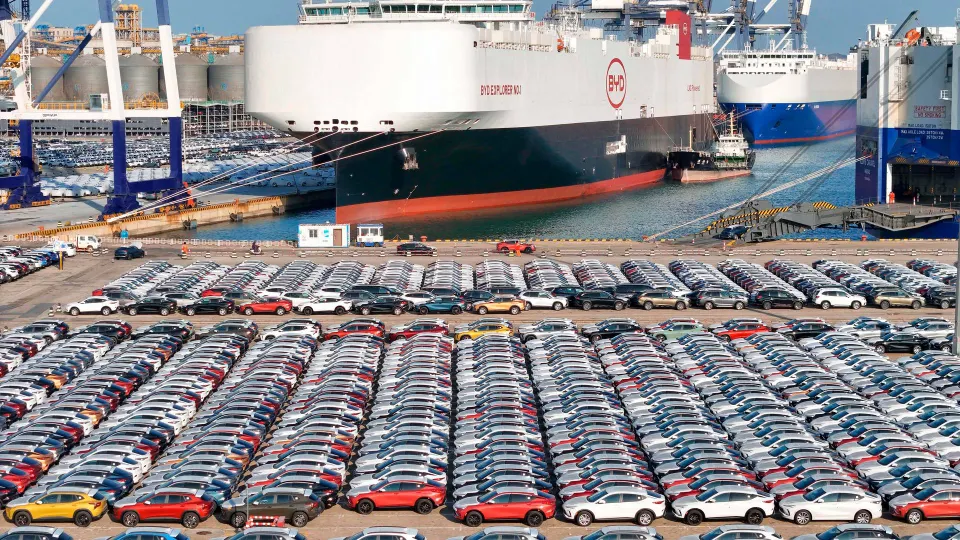
Electric vehicles are often viewed as a technology reserved for wealthy nations, but new analysis suggests this perception is rapidly becoming outdated. Research supported by the World Bank shows that EV adoption in developing countries is not only feasible — it is increasingly economically advantageous, especially for public transport systems and the millions who rely on two‑ and three‑wheelers for daily mobility.
A turning point for emerging economies
Transport already accounts for around 20% of global greenhouse gas emissions, and this share is rising fastest in developing cities as populations grow and mobility demand accelerates. Without a shift toward cleaner transport, these countries risk locking in decades of additional emissions at a time when climate pressures are intensifying.
The World Bank’s review of 20 developing countries finds that EVs — particularly buses and smaller vehicles — now offer a compelling economic case. Falling battery prices, lower operating costs, and the high mileage typical of public transport fleets make electrification increasingly attractive.
Where EVs deliver the biggest impact
Electric buses
Electric buses stand out as one of the most cost‑effective solutions for emerging markets. Their predictable routes, centralized charging, and heavy daily usage mean operators can quickly recover upfront investment through lower fuel and maintenance costs. For cities struggling with congestion and pollution, e‑buses offer immediate air‑quality benefits.
Two‑ and three‑wheelers
In many developing countries, motorcycles, scooters, and tuk‑tuks are the backbone of urban mobility. Electric versions of these vehicles are already price‑competitive, easier to maintain, and well‑suited for last‑mile transport and delivery services. Their rapid adoption could transform mobility for millions while reducing noise and air pollution.
Development benefits beyond emissions
The shift to EVs supports broader development goals:
- Cleaner air in megacities where pollution contributes to millions of premature deaths each year.
- Energy security, reducing dependence on volatile oil markets that disproportionately affect low‑income households.
- Improved mobility access, especially in remote or underserved areas where electric bikes and scooters can connect people to jobs, schools, and essential services.
Examples from around the world
Several countries are already demonstrating what EV adoption can look like at scale:
- Dakar, Senegal is rolling out electric bus rapid transit corridors to improve mobility and cut emissions.
- India plans to procure 50,000 electric buses over the next decade, one of the largest such initiatives globally.
- Bogotá, Colombia is piloting electric cargo bikes to support cleaner last‑mile delivery.
- Santiago, Chile already operates 800 electric buses, with 1,000 more on the way as part of its 2050 carbon‑neutrality strategy.
These examples show that EV adoption is not a distant aspiration — it is already happening across the developing world.
A practical path forward
The message is clear: electric vehicles are no longer a luxury reserved for advanced economies. For developing countries, they represent a practical, scalable, and economically sound solution to improve mobility, strengthen energy resilience, and reduce emissions. As costs continue to fall and technology improves, EVs — especially buses and two‑/three‑wheelers — are poised to play a central role in building cleaner, healthier, and more inclusive cities.
Other People are Reading

Lincoln National's Reinsurance Deal Unlocks Further Upside

The Kolkata-based company posted a net profit of ₹3,578.82 crore for the quarter ended June. Revenue from operations rose 28% from a year earlier to ₹26,943.23 crore.
Gross revenue also grew 28%, but net revenue dropped 14%. ITC said its gross revenue was not comparable with that a year earlier because GST and GST compensation cess on cigarettes were excluded from gross revenue calculation under accounting standards, while excise duty was included. Excise duty on cigarettes was increased sharply from February following the expiry of the GST compensation cess.
ET BureauThe results fell short of market expectations, as analysts were expecting a 10-11% decline in both net sales and net profit.
Ahead of the results announcement, ITC shares closed 1.5% lower at ₹280.95 on the BSE, where the benchmark Sensex gained 0.2%. Analysts said cigarette sales volumes declined 6-7% from a year earlier.
‘Unprecedented Increase’ in Burden
ITC adopted a calibrated approach to price hikes to protect demand, but that weighed on profitability in its largest business.The cigarettes segment’s profit before interest and taxes (PBIT) plunged 35% from a year earlier to Rs 3,341 crore, while revenue jumped to Rs 15,383 crore from Rs 8,520 crore. The company said the revenue figures were not comparable.
ITC has a more than 75% share in India’s legal cigarette market.
The company said it implemented around 30 interventions in the cigarettes business in response to the “unprecedented increase in tax” to balance the interests of all stakeholders. These included staggered price increases to prevent volume migration to illicit trade, along with re-architecting and strengthening its product portfolio, it said, adding: “Several of these interventions are progressing well and have achieved meaningful scale.”
Also Read: Maruti Suzuki Q1 Results: Revenue rises 36% to Rs 52,456 crore on all-time high volumes
The FMCG business helped cushion some of the pressure from cigarettes, with segment revenue rising 12% on-year to Rs 6,482 crore and profit before interest and tax increasing 21% to Rs 478 crore. Categories including dairy, snacks, noodles and frozen snacks expanded more than 20%, while personal care products delivered mid-teens growth.
ITC said consumption remained resilient across both rural and urban markets during the quarter, but “imported inflation is a key watch-out in the near term”.
“India is currently experiencing a significant deficit in monsoon and lower kharif sowing levels compared to the same period last year. Additionally, spatial and temporal variations in monsoon would remain a key monitorable,” ITC said. “A protracted conflict in West Asia, alongside emerging El Nino conditions that may weaken monsoons and intensify heatwaves, could weigh on growth, inflation and the current account,” it added.
In the agri-business segment, revenue declined more than 16% to Rs 8,082 crore as exports were hit by trade disruptions arising from the West Asia conflict. A high base also impacted performance, with segment PBIT falling 18% YoY. The leaf tobacco business was affected by lower domestic demand as well. The paperboards and paper segment reported 9% revenue growth, while the segment’s PBIT rose 38%.

India’s financial markets had factored in the likelihood a mid-July review would facilitate the inclusion of Indian sovereign bonds on the Global Aggregate index, which is tracked by a broad swathe of asset managers from Tokyo to Toronto for allocation of patient, long-duration funds. It is one of the world’s most widely followed investment-grade bond benchmarks, tracking more than $70 trillion worth of bonds.
Bloomberg Index Services (BISL) said Friday that Indian operational and market-infrastructure required further evaluation before the inclusion of the debt instruments in a flagship global investment grade index.
The inclusion of Indian government bonds in Bloomberg’s Global Aggregate Index has been deferred yet again, as the company requires additional evaluation of both operational and market infrastructure components. This setback could lead to an immediate uptick in sovereign bond yields, surprising investors who were hopeful for increased foreign capital inflow. Meanwhile, Indian bonds remain part of various other emerging market debt indexes.
“These considerations include, among others, the current lack of fully automated trading workflows, settlement and repatriation timelines associated with post-trade tax processes, and the complexity and duration of fund registration procedures,” BISL said.
Expectations were high following coordinated government and monetary-authority measures the markets believed would build a strong business case for inclusion of Indian bonds on the gauge.
ET BureauCalls for further evaluation; deferral may cause G-sec yields to rise
Also Read: NSE pays Rs 715 crore to settle pending Rs 1,491-crore co-location case ahead of IPO
Market was Running on Expectation
Estimates of inflows varied, but even the most conservative among analysts had penciled in $10-15 billion of inflows during the phase-in window itself.
“The market was running on expectations that Indian government bonds will be included in the Bloomberg index,” said Vijay Sharma, senior executive vice-president, PNB Gilts. “Since this has not happened, the markets could witness a sell off by 8-10 basis points.”
One basis point is a hundredth of a percentage point.
Targeted Measures
For its part, the Indian government had waived taxes on capital gains and interest on investment returns. The Reserve Bank of India (RBI), meanwhile, had also expanded the eligible investable universe for overseas funds to include long-duration bonds that stretched maturities running up to 30 years.
Tax exemptions on interest income and capital gains have been a key factor in Bloomberg’s consideration of including Indian bonds in its index and the inclusion of Indian debt in the gauge have driven the recent rally in the bond market.
The 10-year bond yield had softened 26 basis points in June, when overseas funds poured record money into Indian government bonds.
Foreign portfolio investors (FPI) poured in a record Rs 55,518 crores in June into these instruments, with the inflows generally driven by expectations that an announcement on the country’s inclusion in the Bloomberg bond index is imminent.
Yields on the 10-year benchmark government bond closed at 6.83% on Friday, up two basis points from its previous close. Bond dealers expect yields to trade around 6.90% on Monday.
Goldman Sachs had said in a recent report that it expected $15 billion passive inflows in the phase-in period after the highly anticipated inclusion announcement.
Indian bonds are already part of three major emerging-market debt indexes – the JP Morgan EM index included in June 2024, Bloomberg EM index included in January 2025 and the FTSE Russel EM index included in September 2025.
After the inclusion, FPIs invested over Rs 22,000 crores in a single month, the highest at the time, CCIL data showed.
Business
Ariana Grande’s “Petal” Arrives as Rage-Fueled Eighth Album Draws Mixed but Passionate Reviews

Ariana Grande released her eighth studio album, “petal,” on Friday, a project the singer has described as her most emotionally unfiltered work to date, drawing a wave of early reviews that ranged from enthusiastic to more measured as critics weighed in on the pop star’s latest reinvention.
The album, stylized in all lowercase, was released through Grande’s own imprint label, BabyDoll Music, in partnership with Republic Records. It was recorded between January and April of this year at studios in New York, Los Angeles and Stockholm, and was co-written and executively produced by Grande alongside longtime collaborator Ilya Salmanzadeh, the Iranian-Swedish producer who has worked with the singer across much of her recent catalog. Swedish hitmaker Max Martin also contributed production to portions of the record.
“Petal” follows Grande’s seventh studio album, “Eternal Sunshine,” which debuted at number one on the Billboard 200 in March 2024 and produced two Billboard Hot 100 number-one singles, “Yes, And?” and “We Can’t Be Friends (Wait for Your Love).” That album was later reissued in March 2025 with a deluxe edition subtitled “Brighter Days Ahead,” supported by a companion short film of the same name.
The lead single from “petal,” “Hate That I Made You Love Me,” was released May 29 and set the tone for the album’s broader emotional register. Grande has described the record as emerging from a place of anger she had not previously explored so directly in her music. “It’s definitely from a place I’ve been maybe too shy or polite to tap into before,” Grande has said of the album. “This kind of just feels like, ‘Fuck it.’” She also characterized the overall mood of the project in blunt terms, calling it “a little feral” and explaining that she “wrote from a place that I don’t usually, which was like an unfiltered rage.”
Critical reception to the album proved notably divided in its opening hours. Pitchfork awarded “petal” a score of 6.5 out of 10 in a review written by critic Aimee Cliff, placing the album in a moderate critical tier relative to some of Grande’s earlier work. Rolling Stone took a considerably more enthusiastic view, giving the record a score of 80 out of 100. In her review for Rolling Stone, critic Marissa R. Moss argued that Grande’s music consistently reaches its highest points when the singer allows herself to fully embrace frustration or anger rather than restraint, writing that the singer is “always at her best when she’s in a mood.” Moss singled out the track “Oh Well” as a standout moment on the record, highlighting its blunt, cutting lyrics as characteristic of the album’s overall attitude.
Other reviewers focused on the album’s lyrical approach to processing past relationships and personal growth. One review characterized the album’s trap-influenced track “Like I Do” as notably free of self-pity, framing it instead as a song in which Grande expresses gratitude toward a former partner for the challenges that ultimately helped her grow, both as an artist and as an individual. The same analysis noted that the album’s lead single found Grande adopting a somewhat self-deprecating tone, apologizing within the song’s lyrics for being, in her own words, difficult not to love.
Visually, Grande has paired the album’s more unguarded emotional tone with a notable shift in her public image, appearing on the album’s cover with her hair worn down and loose rather than in the high ponytail that has become one of her most recognizable style signatures over the course of her career. Critics reviewing the album have pointed to that visual choice as symbolically aligned with the record’s broader theme of shedding a more controlled, polished public persona in favor of something rawer and more direct.
The album arrives following a period in Grande’s career defined by high-profile film work, including her starring role as Glinda in the two-part film adaptation of the Broadway musical “Wicked,” released across 2024 and 2025. Grande had previously indicated that she did not plan to record another studio album until she completed filming both installments of the project, a commitment that pushed the release of new solo music back significantly following 2020’s “Positions.”
“Petal” also continues a pattern that has followed several of Grande’s recent albums, in which initial critical scores have sometimes shifted notably in retrospective reassessments over time. Some fans and commentators following the album’s release noted that similar dynamics unfolded following the release of “Eternal Sunshine,” when the album’s initial aggregate critical score on review-tracking sites climbed significantly within roughly a year of its original release, as some outlets revisited and revised their assessments following the album’s deluxe reissue and broader critical and commercial reception.
With “petal” now available across streaming platforms, industry observers are expected to watch closely in the coming days for early sales and streaming figures, along with any additional new reviews from major music publications, as a fuller picture emerges of how critics and audiences are ultimately receiving Grande’s latest and most emotionally direct project to date.

Newspaper headlines: ‘Spanish border crisis’ and ‘iron chancellor’
Sebi disposes of case against Religare Enterprises, Saluja, other persons

Mason Mount Man United exit route proposed in ‘doable’ summer transfer


-
 Sports5 days ago
Commonwealth Games boxing: Jadumani Singh seals dominant 5-0 win over Pakistan’s Sumama Rehman to enter quarter-finals | Commonwealth Games News
-

 Business2 days ago
Why Trees Belong on the Risk Register
-

 Fashion10 hours ago
Weekend Open Thread: Wit & Wisdom
-

 Tech5 days ago
Intel is reversing course and bringing hyper-threading back to its server chips
-

 Politics7 hours ago
Meta enters AI-training agreement with far-right ‘propaganda rag’ Newsmax
-

 Crypto World6 days ago
Ripple bought a bank in pieces. The $4 billion audit
-

 Politics5 days ago
Luke Littler dismantles Gerwyn Price to retain title in Blackpool
-

 Politics4 days ago
The Part of the Electric Transition Nobody Wants to Discuss
-

 News Videos5 days ago
BITCOIN JUST ENTERED THIS CRITICAL ZONE…
-
 Entertainment3 days ago
‘Stargate’ Creator’s New Sci-Fi Series Returns for Season 3 Tomorrow
-

 Crypto World6 days ago
XRP Ledger adds $2.6B as RWA inflows rank second
-

 Business3 days ago
Major shareholder moves on Canyon
-

 Politics6 days ago
Spain sweeps the board at 2026 World Cup with individual awards
-

 News Videos2 days ago
Bitcoin Enters the 3rd Stage of the Bear Market
-

 Entertainment6 days ago
Sara Gilson Killed By Husband After Viral “Pedophile” TikTok Video
-

 Crypto World3 days ago
Kraken Enables Retail Access to Jersey Mike’s IPO via Tokenized Shares
-

 Tech7 days ago
Anthropic launches Claude Opus 5, a cheaper AI model for coding, agents and enterprise workflows
-

 Tech4 days ago
New macOS Sequoia & Sonoma security updates for older Macs
-

 News Videos3 days ago
Claude: Build Financial Dashboards in Minutes (2026)
-

 Politics1 day ago
Luke Littler’s dominance sparks GOAT debate
You must be logged in to post a comment Login