

Business
PetVivo Holdings, Inc. (PETV) Discusses Spryng Technology Adoption and Commercial Expansion in Veterinary Practice Transcript


Andrew Eriksen
Allele Capital Partners, LLC
I think we’re live right now. So let’s jump in. Thank you, everyone, for joining today — into today’s webinar, inside the PetVivo story. What veterinarians are seeing, and how access is expanding. So my name is Andrew Eriksen. I’m a Managing Director on the Allele Capital team. We work with the PetVivo team here, and I’ll be moderating today’s call. So today, we’re going to introduce the speakers. I’ll walk through a little bit of background on the PetVivo story, talk about how their Spryng technology is being used in practice today and talk a little bit about the commercial landscape, and what they’re seeing on their side.
So we will run through the presentation. If you have any questions, there will be a Q&A chat box on either platform that you’re watching on. So submit your questions there, and we’ll make sure we get to those at the end of the call.
So without further ado, let’s jump in. I will start with some brief introductions from the team. So John, maybe you can kick things off for us and introduce yourself.
John Lai
CEO, President & Director
Thanks for having us on here. So my name is John Lai. I’m the CEO of PetVivo. I’ve been the CEO for about 14 years, and I’ll pass it off to the next person.
Andrew Eriksen
Allele Capital Partners, LLC
Dr. Juli, if you don’t mind, you can go next.


The Nasdaq Composite and the S&P 500 have finished lower under pressure from technology stocks while the Dow Jones Industrial Average marked its second straight record close.
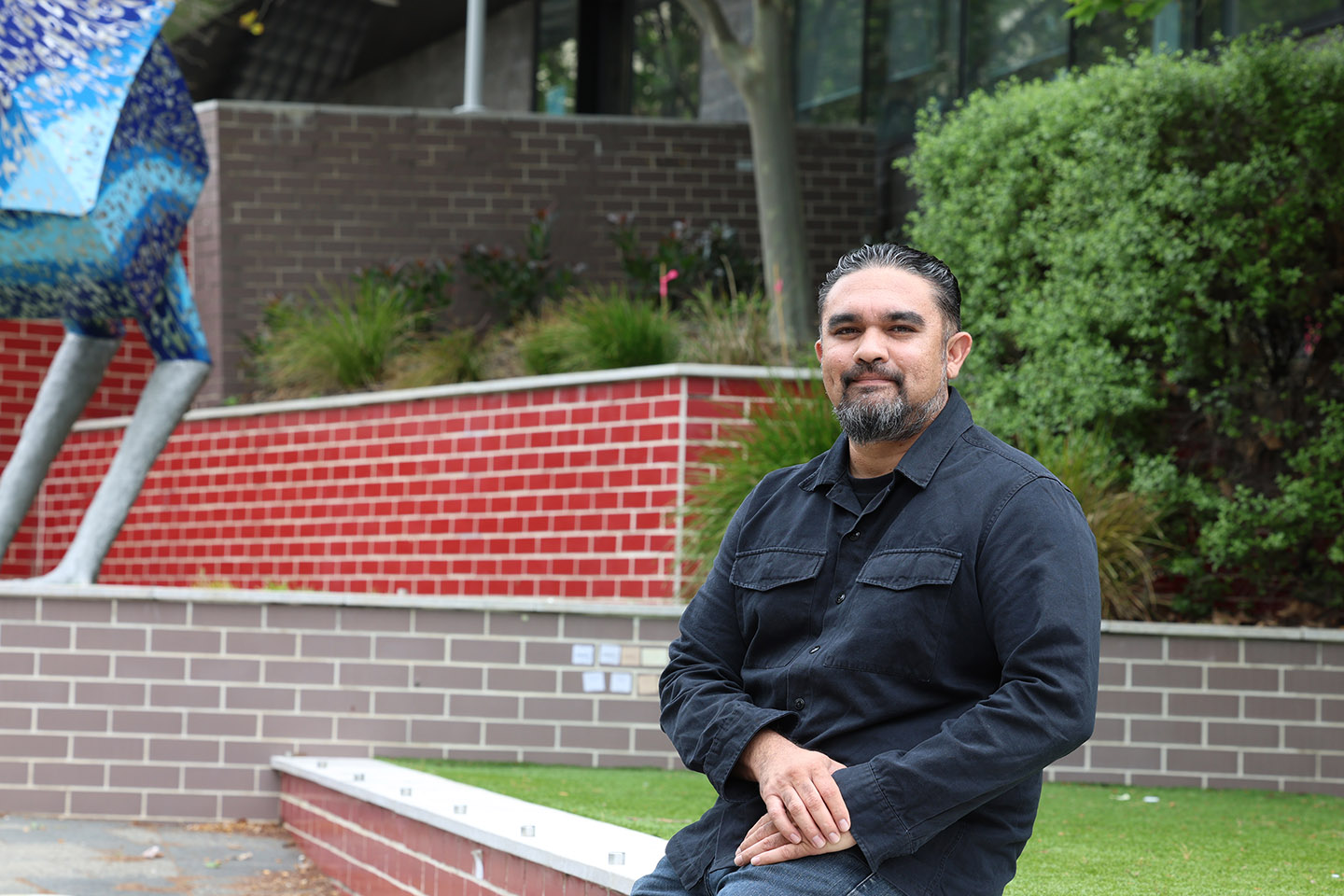
As demand for Indigenous art grows, the sector is figuring out how to set itself up for long-term economic success.

A company of Manulife Investment Management, John Hancock Investment Management serves investors through a unique multimanager approach, complementing our extensive in-house capabilities with an unrivaled network of specialized asset managers, backed by some of the most rigorous investment oversight in the industry. The result is a diverse lineup of time-tested investments from a premier asset manager with a heritage of financial stewardship. Note: This account is not managed or monitored by John Hancock Investment Management, and any messages sent via Seeking Alpha will not receive a response. For inquiries or communication, please use John Hancock Investment Management’s official channels.

Abstract
- A McKinsey, Singapore Economic Development Board, and Tech in Asia report finds that 46% of surveyed Southeast Asian companies have moved beyond piloting AI to scaling it, surpassing a cited global average of 35%. However, this figure masks significant unevenness across markets and industries, with Singapore and technology sectors driving results while healthcare and public services remain in early stages.
- The financial returns tell a more cautious story: nearly 80% of companies report marginal or no bottom-line impact from AI investments. Widespread challenges including data quality issues, talent shortages, and immature governance frameworks suggest the region is advancing on adoption metrics while the foundational infrastructure needed to convert that adoption into measurable value remains underdeveloped.
A new report from McKinsey, the Singapore Economic Development Board, and Tech in Asia has landed with a headline that sounds almost too good for a region often accused of playing catch-up in tech: nearly half of the surveyed companies in Southeast Asia have moved beyond piloting AI initiatives to scaling them, placing the region ahead of the global average.
The study, based on a survey of over 300 senior executives across six ASEAN markets and ten industries spanning healthcare, travel, logistics, and legal services, surveyed respondents from companies with AI use, of varying annual revenue, from six key markets: Singapore, Malaysia, Indonesia, the Philippines, Thailand, and Vietnam. On paper, it reads like a victory lap for a region that has spent decades being told to wait its turn in the technology race.
It would be easy to file this under feel-good regional boosterism and move on. But the more interesting story isn’t the headline number, it’s what the report admits sits underneath it, and how that number looks once placed against the wider data on AI adoption globally. Strip away the framing, and what you have is a region racing ahead on adoption while still struggling with the basics that determine whether that adoption actually pays off.
The Unevenness Hiding Inside the Headline
Start with the unevenness hiding inside that 46 per cent figure. The “Southeast Asia outpaces the world” framing flattens a region where the gap between leaders and laggards is enormous. Singapore and Indonesia are standing out as leaders in AI adoption, with 56% and 51% of respondents, respectively, reporting progress toward scaled adoption, while at the other end of the spectrum, entire categories of the economy are barely off the starting line. Industry-wise, technology, media, and telecommunications, and advanced industries dominate AI usage, with roughly six in ten (62%) companies in these sectors reporting scaling or having fully scaled their deployments. In contrast, the public sector, healthcare, and service-oriented industries remain in the early stages of usage, with nearly seven in ten companies (69%) in these sectors still piloting or experimenting. In other words, the “region” isn’t moving as one.
A handful of digitally native sectors in a couple of advanced economies are pulling the regional average up, while public services, healthcare systems, and large swathes of the service economy, the parts of the economy that touch ordinary people’s lives most directly, are still essentially in the lab. That’s a very different picture from “Southeast Asia is ahead of the world.”
Now place the regional figure against the global numbers, and the comparison gets murkier still. Different surveys measuring “AI adoption” arrive at wildly different answers depending on what exactly they’re counting. McKinsey’s enterprise survey, covering 1,993 companies across 105 countries, finds 88% using AI in at least one business function. The OECD’s official government-level firm measurement puts the number at 20.2%. Microsoft’s population tracking, which measures how many working-age adults actually opened a generative AI tool, lands at 16.3%. None of these are wrong; they’re just measuring different things, from “has anyone in the company ever touched an AI tool” to “is AI embedded in core national economic activity.” The EDB report’s claim that Southeast Asia’s 46 per cent “scaling” rate beats a global average of 35 per cent sits somewhere in the middle of that spectrum, but it’s worth remembering that “outpacing the global average” on one fairly narrow definition of adoption can coexist comfortably with the region lagging badly on others. Bragging rights on a single metric, in other words, don’t amount to leadership.
When Scaling Doesn’t Translate Into Returns
Then there’s the money question, and this is where the report’s own numbers should give pause to anyone tempted to treat “scaling AI” as synonymous with “AI is working.” Sixty per cent of respondents reported seeing less than five per cent EBIT impact from their AI investments, and eighteen per cent saw no financial impact at all.
Read that again: nearly four in five companies are getting marginal to zero bottom-line returns from AI, even as the region as a whole claims to be scaling faster than the rest of the world. That’s not unique to Southeast Asia; it echoes a pattern researchers are seeing globally. Key challenges include data quality, cited by 73% of companies, alongside talent shortages, job displacement fears, and insufficient governance, with 66% of leaders reporting their teams are not AI-ready. If two-thirds of leaders globally admit their own teams aren’t ready for the AI systems they’re deploying, a regional adoption race framed primarily around speed starts to look less like a strength and more like a risk multiplier.
The talent gap the EDB report identifies as the single biggest barrier to scaling fits squarely into this picture. The underlying McKinsey-EDB-Tech in Asia report frames it starkly: talent shortages, unclear ROI, and integration complexity are the biggest challenges preventing AI initiatives from scaling and delivering measurable impact, despite strong executive intent and rising investment across the region.
Singapore’s answer, over 60 AI Centres of Excellence from firms including Alibaba Cloud, IBM, NVIDIA, and Oracle, plus government-backed investment vehicles like SGInnovate, which has invested in over 100 business-to-business AI companies across industries from marketing to healthcare, is a genuinely substantial infrastructure.
But it is also, by construction, a solution that concentrates benefit in one city-state of roughly six million people. If Jakarta, Manila, or Ho Chi Minh City are where the talent crunch actually bites hardest, “fly your AI team to Singapore” is a workaround for multinationals headquartered there, not a fix for the structural skills gap across a region of nearly 700 million people.
Trust, Governance, and the Limits of a City-State Model
The trust dimension is perhaps the most honest part of the original report, and the one that deserves the most scrutiny against the wider data. Forty-one per cent of companies said they had experienced negative consequences from AI inaccuracy, a figure that should be sobering for any executive currently being told that AI adoption is a race they’re losing if they’re not “scaling” fast enough. And the appetite for AI use isn’t slowing down to match. Generative AI is projected to grow at a 27.6% CAGR in Asia from 2026 to 2034, with 63% of Southeast Asian companies already using it for text-based tasks and 71% of enterprises leveraging it across business functions.
Layer that onto a workforce where, by some measures, 78% of Asian workers are now using AI at least weekly, surpassing the global average of 72%, and you get a picture of extremely rapid, bottom-up adoption running well ahead of the governance, data-quality, and ROI-measurement capabilities that the same reports say are still immature. Singapore’s governance tools, AI Verify, Project Moonshot, and the Model AI Governance Framework, are genuinely among the more thoughtful regulatory responses to generative AI anywhere in the world, and the original report’s framing of governance as an enabler of confident deployment rather than a brake on it is a fair point worth taking seriously. But governance frameworks built primarily in and for one jurisdiction don’t automatically travel across six countries with very different regulatory capacities, data protection regimes, and digital infrastructure.
None of this is an argument against AI adoption, and it’s certainly not an argument against Singapore’s role as a regional hub. The talent pipelines, cloud infrastructure, and governance frameworks described in the EDB report are real assets, and companies setting up in Asia would be foolish to ignore them.
But the headline figure deserves more scepticism than it’s likely to get, especially once set against the broader data: a region that leads on one definition of adoption, while two-thirds of corporate leaders admit their teams aren’t AI-ready, three-quarters cite data quality as a barrier, and nearly half of companies using AI report being burned by its inaccuracy, isn’t necessarily “ahead.” It might just be further along a path whose institutional foundations, talent, governance, and honest measurement of value are still being poured in real time, often after the building has already gone up around them.
The honest takeaway isn’t “Southeast Asia is winning the AI race.” It’s that Southeast Asia, like much of the world, is moving fast on adoption, while the infrastructure that determines whether that speed translates into value, skilled people, trustworthy data, credible ROI metrics, and governance that works across borders rather than within a single city-state, lags well behind. Singapore’s strength may not be that it has solved these problems, but that it has been more deliberate than most about building scaffolding while construction continues. Whether the rest of the region, and the rest of the world, can close that gap before the cost of AI errors and wasted investment starts to outweigh the benefits of speed is the question this report raises, but, for all its data, doesn’t quite answer.
Other People are Reading

Cathie Wood’s ARK sells AMD stock, continues SRTA sell-off

Fox to Buy Roku in $22 Billion Deal


I’m an independent equity trader and licensed financial advisor focused on uncovering high-upside opportunities in overlooked sectors especially focusing on small-caps, energy, commodities, and special situations. My investment strategy is based on growth. I look for fundamental momentum (EPS, ROE, revenue), price-volume confirmation, and macro filters. I also use econometric tools and calculations to analyse market direction, cycles and behaviour. I’ve been managing personal capital since 2020 and advising under MiFID II since qualifying with a license. I hold a bachelor’s in Business Administration and Economics and am currently completing a master’s in Finance. My masters thesis topic: Impact of Financial Results Announcements on Stock Returns and Trading Volumes of Micro-Capitalization Gold Mining Companies.
Analyst’s Disclosure: I/we have no stock, option or similar derivative position in any of the companies mentioned, and no plans to initiate any such positions within the next 72 hours. I wrote this article myself, and it expresses my own opinions. I am not receiving compensation for it (other than from Seeking Alpha). I have no business relationship with any company whose stock is mentioned in this article.
Seeking Alpha’s Disclosure: Past performance is no guarantee of future results. No recommendation or advice is being given as to whether any investment is suitable for a particular investor. Any views or opinions expressed above may not reflect those of Seeking Alpha as a whole. Seeking Alpha is not a licensed securities dealer, broker or US investment adviser or investment bank. Our analysts are third party authors that include both professional investors and individual investors who may not be licensed or certified by any institute or regulatory body.

Columbia Threadneedle Investments is a leading global asset management group that provides a broad range of actively managed investment strategies and solutions for individual, institutional and corporate clients around the world. Columbia Threadneedle Investments is the global asset management group of Ameriprise Financial, Inc. (NYSE: AMP). For more information please visit columbiathreadneedleus.com.
Ingo Middelmenne
Head of European Investor Relations
Good morning to everybody in America, and good afternoon to everybody joining us from Europe. Thank you for joining us today, whether you’re here with us in New York City or joining us online. My name is Ingo Middelmenne and as Head of Investor Relations of Verve Group, I would like to cordially welcome you to this year’s Verve Capital Markets Day.
Once again, we have had intense weeks behind us and the whole team and I are really thrilled to finally have you with us. As usual, we have prepared a focused and a hope, very useful program for you. A business update from our management team, a closer look at Verve’s commercial and financial development and a set of expert sessions on some of the topics that are shaping our industry right now.
We will also make sure we leave enough time for your questions, both here in the room and from our audience online. Before we start, and to make our legal department feel a little better. Please enjoy the usual disclaimer on forward-looking statements. Okay. Now I think we all feel a lot safer.
The Internet is a powerful alternative to the walled gardens, and it lives in your pocket. Your mobile phone, ladies and gentlemen, is probably the most powerful marketing tool in the world. Consumers around the world look at its display 3, 4, sometimes 5 hours

US stock futures edge higher with Fed rate decision in focus

The foldable iPhone hasn’t launched, but Apple is already planning its successor

Cremation firm ad banned for ‘misleadingly implying’ plan included a service

CLARITY Act faces ethics showdown as David Nage eyes July vote


-

 Business2 days ago
No Jackpot Winner as $257 Million Prize Rolls Over to $269 Million Monday Draw
-

 Crypto World5 days ago
Oppenheimer backs SpaceX as $70 billion retail frenzy builds
-

 Fashion4 days ago
Weekend Open Thread: Tuckernuck – Corporette.com
-

 Crypto World5 days ago
Markets Rally as SpaceX IPO Looms Amid Iran Tensions and Inflation Surge
-
 Crypto World2 days ago
Zimbabwe Requires Crypto Businesses to Register Annually Under New FIU Regulations
-

 Tech4 days ago
NanoClaw integrates JFrog registries to secure AI agent downloads
-

 Business7 days ago
Thailand Ranks Second Worldwide for AI Adoption Growth, Microsoft Reports
-

 Tech4 days ago
This Week In Security: Microsoft On Microsoft, Register Your Domains, Linux On ARM, And FreeBSD Joins The File Cache Club
-

 Crypto World4 days ago
Bitget enters Argentina’s regulated crypto market through PSAV registration
-
 Tech5 days ago
Dutton Ranch star claims they ‘didn’t see any disruption’ on set following Chad Feehan’s exit from Yellowstone spinoff fueled by Taylor Sheridan clash rumors
-

 NewsBeat5 days ago
El Nino has formed in the Pacific and could set records, forecasters say
-

 Politics5 days ago
Politics Home | Healey Resignation Is “Colossal Failure Of Government”, Says Former Labour Defence Secretary
-

 Tech7 days ago
‘This is Seattle’s position on AI’: City Council votes unanimously to pause big new data centers
-
 Entertainment5 days ago
Donnie Wahlberg & More Heat Up Las Vegas at Circa’s Barry’s Downtown Prime
-
 Tech5 days ago
Opendoor Ends India Operations, Fueling a Bigger Conversation About AI and Outsourcing
-

 Sports6 days ago
First Time Since 1971: Australia Register Historic Low In ODI Cricket
-

 Politics5 days ago
Belfast burns, while Met chief points finger at Iran and Russia
-

 NewsBeat4 days ago
FBI searches office of Ohio voter registration group
-

 Business5 days ago
AT&T: Verizon's 27% Outperformance Sets Up A Solid Entry Point
-

 Politics5 days ago
Modi thanks Trump for wishes as US attacks Indian seafarers
You must be logged in to post a comment Login