
Business
Polymarket Down Today? Outage Hits Users Amid High-Stakes World Cup Betting on June 13 2026



NEW YORK — Users of the popular decentralized prediction market platform Polymarket reported intermittent access issues Saturday, disrupting trading on major events including the ongoing FIFA World Cup, with complaints centering on the app, website and real-time betting functions.
The problems, which appeared to affect a portion of users rather than causing a full platform-wide shutdown, emerged during a period of elevated activity as bettors engaged with markets on Brazil versus Morocco and other early tournament matches. Social media quickly filled with hashtags like #PolymarketDown as frustrated participants shared screenshots of loading errors and failed transactions.
Polymarket, which allows users to trade on the outcomes of real-world events using cryptocurrency, has seen explosive growth in popularity during the 2026 World Cup. High trading volumes on political, sports and news events often strain the platform’s infrastructure, leading to occasional disruptions similar to those experienced by other high-traffic crypto services.
Downdetector and similar monitoring sites recorded spikes in user reports earlier in the week, with app-related complaints comprising the majority. As of Saturday afternoon, the situation appeared to stabilize for many, though some continued experiencing delays in market updates and order execution.
The platform has faced similar brief outages in the past, often attributed to technical maintenance, underlying blockchain dependencies such as Polygon, or external factors like content delivery network issues. In previous incidents, users encountered messages such as “Polymarket is down… Oops…we didn’t forecast this,” advising page refreshes.
For many participants, the timing proved particularly inconvenient. With the World Cup underway, prediction markets on match results, goal scorers and tournament progression attract substantial liquidity. Interruptions can lead to missed opportunities or forced reliance on alternative data sources.
Polymarket has not issued an immediate public statement on Saturday’s reports. The company typically addresses significant disruptions through its official channels on X or via in-app notifications once resolved. Past responses have included apologies and commitments to infrastructure upgrades.
The platform operates on blockchain technology, emphasizing transparency and user control over traditional betting sites. Its decentralized nature provides advantages in censorship resistance and global accessibility but also introduces complexities in scaling during peak demand. Recent expansions have included more granular short-term markets, increasing overall load.
Industry observers note that prediction markets like Polymarket have matured significantly, drawing institutional interest and higher volumes. However, reliability remains a key challenge as the sector competes with centralized alternatives. Outages, while often short-lived, highlight the need for robust redundancy and continuous monitoring.
Users experiencing issues were advised to try clearing cache, switching devices or networks, or waiting for automatic recovery. Many turned to community forums and social platforms to confirm they were not isolated in their experiences.
This latest hiccup occurs against a backdrop of broader crypto market volatility and heightened regulatory scrutiny on prediction platforms. Polymarket has navigated controversies in the past, including market removals on sensitive topics, while maintaining focus on event-based trading.
For dedicated traders, brief downtimes can be frustrating but rarely derail overall participation. The platform’s appeal lies in its real-time probability updates and potential for profit based on accurate forecasting. World Cup markets, in particular, have seen millions in volume as fans and analysts engage with outcomes.
Polymarket’s team has invested in improvements, including plans for custom Layer 2 solutions to reduce dependency on external networks like Polygon and enhance stability. Such upgrades aim to minimize future disruptions as user numbers continue climbing.
Community reactions ranged from mild annoyance to understanding, with many acknowledging the challenges of operating a high-demand decentralized application. Some shared workarounds or shifted temporarily to other platforms, while others patiently refreshed until access returned.
The incident underscores the growing pains of fintech and crypto services handling mainstream events. As prediction markets gain traction, expectations for uptime approach those of traditional financial exchanges. Polymarket’s response and resolution speed will likely influence user confidence moving forward.
Broader ecosystem factors, including blockchain congestion or third-party service outages, can cascade to user-facing problems. Past Cloudflare-related disruptions, for instance, affected multiple crypto sites simultaneously.
Saturday’s reports remained relatively contained compared to major past events. Monitoring sites showed fluctuating but not overwhelming complaint volumes, suggesting a partial rather than systemic failure. Full functionality appeared restored for most by late afternoon.
As the World Cup progresses, Polymarket and similar platforms will face continued tests from surging interest. Bettors are reminded to exercise caution with positions during volatile periods and to diversify across tools when possible.
Polymarket continues to innovate in the prediction space, offering markets on everything from sports to elections and cultural phenomena. Its resilience during high-profile tournaments remains critical to sustaining growth and user trust.
For those still encountering difficulties, checking official status channels or Downdetector provides real-time insights. Platform updates often follow shortly after widespread reports surface.
In the fast-evolving world of decentralized finance, brief outages serve as reminders of both the technology’s potential and its current limitations. Polymarket’s handling of such events will play a role in its long-term standing among users and competitors alike.
As trading resumes, attention returns to the markets themselves, with World Cup outcomes driving significant activity. The platform’s quick recovery in similar past cases offers reassurance that disruptions are typically temporary.


Rep. Jim Jordan, R-Ohio, discusses the House voting on reconciliation framework and the urgent need for voter ID.
FIRST ON FOX: The Trump administration is sending notices of intent to 100 agents affiliated with the Obamacare marketplace who allegedly violated the exchange’s standards of conduct by submitting insurance applications without recipients’ Social Security numbers or other identifying information.
The Centers for Medicare & Medicaid Services (CMS), led by Dr. Mehmet Oz, alleged that agents did this “repeatedly.”
A marketplace agent is a professional who helps people shop for healthcare through the Affordable Care Act (ACA) exchange.
More broadly, CMS estimates that “roughly 35% of Marketplace enrollments may be illegitimate.”
TRUMP’S WAR ON FRAUD EXPANDS AS TREASURY LAUNCHES NEW SITE WITH WHISTLEBLOWER INCENTIVES

Administrator of the U.S. Centers for Medicare and Medicaid Services Dr. Mehmet Oz speaks about the Trump administration’s anti-fraud initiatives on July 8, 2026. (Mark Schiefelbein-Pool/Getty Images / Getty Images)
If 35% of enrollments by agents are illegitimate, that represents about 5 to 6 million people “whose premiums could be improperly subsidized,” CMS said in a statement to Fox News Digital.
The action being taken against the 100 agents comes after a report published by the Health and Human Services Department found that “2.6 million improper or phantom enrollments remain, including more than 1 million enrollments submitted without a Social Security number.”
In response, the CMS has advanced a number of ACA reforms meant to protect taxpayers and patients from alleged fraud, waste and abuse.
The proposed reforms, the CMS said, would have saved $3 billion. The agency accused Democrats in Congress of preventing the full implementation of these provisions.

Vice President JD Vance speaks during a Congressional Tribute to the late Sen. Lindsey Graham, R-S.C., in the Rotunda of the U.S. Capitol on July 28, 2026. (im Lo Scalzo-Pool/Getty Images / Getty Images)
GLOBAL PARTNERS ARE JOINING FBI TO TAKE DOWN SCAM EMPIRES FOR GOOD
The CMS’s latest action against ACA agents is another step in the agency’s crackdown on fraud.
Oz sent letters in May to Minnesota, California, Florida, New York and Maine about possible medical equipment fraud.
An anti-fraud task force, led by Vice President JD Vance, announced in February that durable medical equipment, prosthetics, orthotics and supplies (DMEPOS) suppliers will be targeted through a nationwide moratorium.
That task force revealed new figures in early July that show a drastic 7,100% spike in Medicare claims for skin substitutes in just six years.

Still photo of a manual handbook for the Patient Protection and Affordable Care Act. (Yin Yang / Getty Images)
CLICK HERE TO DOWNLOAD THE FOX NEWS APP
The staggering increase in claims occurred between 2019 and 2025, surging from $200 million to $14.4 billion, prompting the anti-fraud task force and CMS to identify potentially fraudulent claims and deny 96% of claims made since March.
The CMS identified 4,200 suspicious claims for skin substitutes, known as allografts, totaling $224 million in charges through May of this year.

Pembina Pipeline earnings in focus: Can momentum sustain?

ASM International ASM shares plunged after a boost to revenue guidance for next year came short of rosy forecasts, as investor expectations for companies exposed to artificial intelligence keep growing.
The Dutch group, which supplies chip makers with wafer processing equipment for the deposition of thin films, in September set a 2027 revenue target between 3.7 billion and 4.6 billion euros, equivalent to $4.21 billion to $5.24 billion.
Copyright ©2026 Dow Jones & Company, Inc. All Rights Reserved. 87990cbe856818d5eddac44c7b1cdeb8

Reformation Inc. signage as traders work during the company’s initial public offering (IPO) on the floor of the New York Stock Exchange (NYSE) in New York, US, on Thursday, July 30, 2026.
Michael Nagle | Bloomberg | Getty Images
Women’s clothing retailer Reformation began trading on the New York Stock Exchange on Thursday, with the stock essentially unchanged after pricing its IPO at $15.
The company, which is trading under the ticker symbol “REF,” is offering 14,062,500 shares, putting its IPO raise at $210.9 million.
“Reformation is ready, and that is really the driving reason we’ve spent a lot of time working to build a business that redefines retail, really innovates on what the role of a brand is in the fashion space, and we’ve done a great job at that,” CEO Hali Borenstein told CNBC on Thursday. “Today, we have a foundation that is ready to scale.”
It joins just a handful of consumer and retail companies that have gone public this year amid a slump in IPOs since the 2021 boom. Reformation went public the same day as sandwich chain Jersey Mike’s, which also listed on the NYSE.
According to its S-1 fact sheet, Reformation has seen 20 consecutive quarters of double-digit net revenue growth through the first quarter of 2026. Its net revenue for the full year 2025 came in at $507.1 million, and net income was $12.6 million, including the impact of President Donald Trump‘s tariffs.
As of the first quarter of 2026, the company owns 70 stores across the U.S., UK, Canada and France.
“We believe we will continue to benefit from operating within the highly fragmented fashion industry, and that we are well positioned to capitalize on growing global demand for sustainable fashion,” the company wrote in its S-1 filing.
Borenstein said Reformation’s focus in its next phase of growth is to increase its distribution with more stores, accelerate its e-commerce business, invest in category diversification and expand overseas.
She added that the retailer is seeing “really strong double-digit growth” across the U.S., with 70% of its revenue coming from outside of New York and California.
Reformation also said it saw more than 1 million active customers across its direct-to-consumer channel in 2025. The majority of its customers, 70%, are aged between 25 and 50 years old.
Borenstein told CNBC’s “Morning Call” that the company’s customer base is diverse, with 20% of new customers last year under the age of 25 and 20% over the age of 50.
She added that the company’s average consumer makes over $100,000 in a year, making it more insulated from macroeconomic pressures hitting other retailers.

Despite tariff and trade uncertainty, Borenstein told CNBC the company has a “good track record” of navigating the macro backdrop, with 34% of its units last year coming from North America.
“We are really focused on two things: our brand and our product. We think those are the winning recipes for consumers, so Reformation has a brand that cuts through,” Borenstein said.
The IPO is backed by J.P. Morgan, Morgan Stanley, Citigroup and RBC Capital Markets.
As the company embarks on its public journey, Borenstein said she’ll define success as the way that Reformation makes its customers feel.
“Today is the first day,” she said. “It’s a long journey ahead, and at Reformation, we have very big goals. We’re ambitious, and so where we are really focused is on building a once-in-a-generation type brand.”

Operator
Welcome to the O’Reilly Automotive, Inc. Second Quarter 2026 Earnings Call. My name is Matthew, and I’ll be your operator for today’s call. [Operator Instructions]
I’ll now turn the call over to Jeremy Fletcher. Mr. Fletcher, you may begin.
Jeremy Fletcher
Executive VP & CFO
Thank you, Matthew. Good morning, everyone, and thank you for joining us. During today’s conference call, we will discuss our second quarter results and our updated outlook for the remainder of 2026. After our prepared comments, we will host a question-and-answer period.
Before we begin this morning, I would like to remind everyone that our comments today contain forward-looking statements, and we intend to be covered by, and we claim the protection under the safe harbor provisions for forward-looking statements contained in the Private Securities Litigation Reform Act of 1995. You can identify these statements by forward-looking words such as estimate, may, could, will, believe, expect, would, consider, should, anticipate, project, plan, intend or similar words. The company’s actual results could differ materially from any forward-looking statements due to several important factors described in the company’s latest annual report on Form 10-K for the year ended December 31, 2025, and other recent SEC filings. The company assumes no obligation to update any forward-looking statements made during this call.
At this time, I would like to introduce Brad Beckham.

“It’s just not good enough,” she said.
“Many of the grassroots organisations I represent – churches, YMCAs, vets – have CAF as their bank, but they are slowly losing trust in it.”
Rodgers added that she had received “no reassurance” about the current situation from the bank, while any information had been “very inconsistent”.
“It’s especially sad that this has happened in the summer when lots of extra projects are up and running,” she said.
“People are unable to access their own money and have been left feeling powerless – it makes me really angry.”
In a statement, chief executive Alison Taylor said: “I am very sorry for the disruption this has caused for our customers.
“On Monday we informed them that the online banking service will be unavailable until further notice.
“We are working with external experts to fix an issue we identified with third-party software related to our online banking portal. Importantly, the core bank is not affected.”
Taylor added: “We appreciate how difficult this is for our customers and want this to be resolved as quickly as possible, but we cannot restore access until we are assured the issue is safely resolved.
“We are still able to support as extra teams are available on the phone, and we are prioritising time-sensitive payments such as payroll.”
Follow BBC Kent on Facebook, external, X, external, and on Instagram, external and listen to BBC Radio Kent on Sounds. Send your story ideas to southeasttoday@bbc.co.uk, external or WhatsApp us on 08081 002250.

A British Airways flight issued a “mayday” distress call on its approach to Heathrow Airport earlier this month, according to a statement from France’s accident investigation authority.
The call was made on an Airbus A320 flying from Dusseldorf airport in Germany on 6 July following two stall warnings on the aircraft, before it landed without further incident.
The UK’s Air Accidents Investigation Branch (AAIB) said it was “investigating a serious incident”.
A British Airways spokesperson said the airline was assisting the AAIB with its investigation and was not legally able to comment further at this stage.
The French Air Safety Investigation Authority, the BEA, said that as the plane approached Heathrow, there was a data system failure which triggered a stall warning.
The crew then flew the aircraft in a different mode called “alternate law”, which removes some automated flight protection systems. Another stall warning then occurred at 3,000 feet – which experts say was likely to have been just miles away from the airport.
The urgency call the crew had already made was upgraded to mayday, indicating imminent danger.
The BEA website attributed the statement to the AAIB, but the AAIB would not confirm it was from them.
They issued the following statement: “The AAIB is investigating a serious incident involving a commercial aircraft which occurred on 6 July on approach to Heathrow airport.”
It said the investigation would be a correspondence investigation, meaning that no team would be sent to carry out field investigations.
Aviation safety investigator David Gleave said there are different forms of mayday calls, and to send an urgency message was “not unusual”.
“You could have sick passengers on board who need urgent medical attention… so it’s up to the captains’ discretion as to what they call, but its very unusual for it to be a significant failure on board the aeroplane.”

Michele Fasnacht on Building Character, Confidence, and Compassion Through Education
Walk through almost any school, and you’ll see students learning math, science, history, and language arts. What you won’t always see is how they’re learning to handle disappointment, work through conflict, show empathy, or build meaningful relationships. Yet those skills often shape a person’s future just as much as academic knowledge.
Emotional intelligence has become one of the most talked-about topics in education, and for good reason. As students prepare for an increasingly connected and complex world, qualities like resilience, compassion, communication, and adaptability are becoming just as valuable as traditional academic skills.
For Michele Fasnacht, that’s never been a trend. It’s been the foundation of Solid Rock Community School since she founded the school more than 22 years ago. Her vision was to create an environment where students could excel academically while also developing the character, confidence, and compassion needed to succeed long after graduation. Through hands-on learning, personalised education, and opportunities to serve others, Solid Rock Community School has built an educational model where emotional intelligence is woven into everyday learning.
Many schools are under pressure to improve test scores and academic performance. Why do you think emotional intelligence deserves equal attention?
Academic achievement will always matter, but it isn’t the only measure of success. Every day, students are learning how to communicate, solve problems, work through challenges, and build relationships. Those skills influence every part of their lives long after they leave school. If we focus only on grades, we’re missing an opportunity to help students become resilient, compassionate, and confident adults.
Was that belief what inspired you to start Solid Rock Community School?
Yes. I wanted to create a school where students could receive a strong academic education while also growing as individuals. My goal was never simply to help students perform well in the classroom. I wanted them to develop integrity, responsibility, compassion, and a genuine desire to make a positive difference in the world around them. That vision has guided our school from the very beginning.
How does Solid Rock Community School put those ideas into practice?
We believe students learn best when they’re actively involved in meaningful experiences. That’s why we’ve created opportunities that extend beyond traditional classroom learning. Students care for rescued animals at Sanctuary at Solid Rock, spend time in our Seed-to-Table Garden, participate in service projects, and develop practical skills through our SAVE vocational program. Those experiences teach responsibility, empathy, teamwork, and leadership in ways that feel natural because students are living those lessons every day.
Some people might see those programmes as extras rather than essential parts of education. Why do you see them differently?
Those experiences are part of the education. When students care for an animal, work together to solve a problem, or take responsibility for a project, they’re learning lessons that will stay with them for life. Character isn’t developed through a lecture. It’s built through consistent experiences that encourage students to care about others, take responsibility, and understand that their actions matter.
Education has changed a great deal over the past two decades. Has your philosophy changed as well?
The mission itself has stayed remarkably consistent. The world has changed, but students still need encouragement, guidance, and meaningful relationships. We’ve continued to grow and introduce new programs because we want students to have opportunities to learn in different ways, but our purpose remains the same. We want every child to be known, supported, challenged, and encouraged to become the best version of themselves.
Building a school around a different educational philosophy must have come with challenges. What has leadership taught you over the years?
Leadership has taught me that setbacks are part of every meaningful journey. You won’t always have immediate answers, and not every decision will be perfect. What’s important is staying focused on your mission, learning from those experiences, and continuing to move forward with integrity. Those challenges have strengthened my commitment to the work rather than discouraging it.
What has been the most rewarding part of leading Solid Rock Community School?
Without question, it’s watching students grow. Every child has unique strengths, and it’s incredibly rewarding to see them discover confidence in themselves while developing compassion for others. Some students arrive unsure of their abilities, and over time you watch them become leaders, problem-solvers, and young people who genuinely want to contribute to their communities. Those moments remind us why this work matters.
What advice would you give to parents looking for the right educational environment for their children?
Look beyond academics alone. Strong grades are important, but ask how a school develops character, encourages curiosity, and helps students build healthy relationships. Education should prepare children for life, not just for the next exam. When students feel supported, challenged, and valued, they’re much more likely to grow into confident adults who make positive contributions wherever they go.
Looking ahead, what continues to inspire you about the future of education?
I’m encouraged by the growing recognition that education should develop the whole person. Schools have an opportunity to shape not only what students know, but also how they think, how they treat others, and how they contribute to their communities. If we continue placing value on compassion, resilience, and emotional intelligence alongside academic excellence, we’ll prepare students for success in every area of life.

Q2 GDP And June PCE: Growth Remains Resilient Beneath A Weak Headline Print
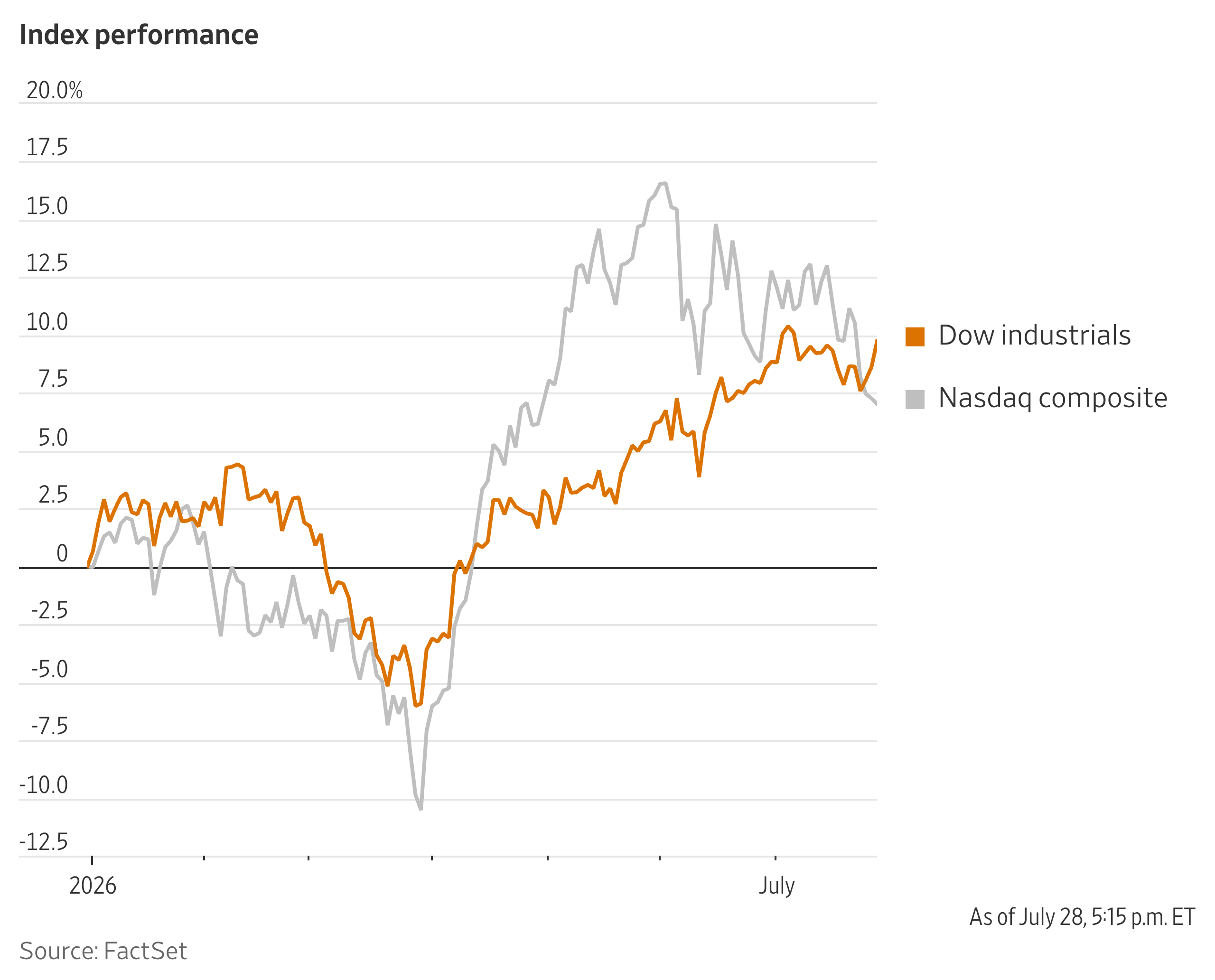
Dow Industrials Pull in Front of Nasdaq, S&P

Fans Take Notes As Rick Ross And Girlfriend His Vibe Poolside

Greater Manchester mayoral election LIVE updates as voters across the region head to the polls

Trump administration readying crackdown on alleged Obamacare fraud


-

 Fashion6 days ago
Weekend Open Thread: Brooks Brothers
-
 Sports4 days ago
Commonwealth Games boxing: Jadumani Singh seals dominant 5-0 win over Pakistan’s Sumama Rehman to enter quarter-finals | Commonwealth Games News
-

 Business23 hours ago
Why Trees Belong on the Risk Register
-

 Tech4 days ago
Intel is reversing course and bringing hyper-threading back to its server chips
-

 Crypto World5 days ago
Ripple bought a bank in pieces. The $4 billion audit
-

 Politics3 days ago
Luke Littler dismantles Gerwyn Price to retain title in Blackpool
-
 Entertainment6 days ago
A New Post-Apocalyptic Gundam Anime Series Blasts Into SDCC
-

 Politics2 days ago
The Part of the Electric Transition Nobody Wants to Discuss
-

 News Videos4 days ago
BITCOIN JUST ENTERED THIS CRITICAL ZONE…
-

 Fashion7 days ago
16 Dresses for the High Summer Event
-

 Sports7 days ago
2026 3M Open leaderboard: Scottie Scheffler finds putter in Round 1, sits three back
-

 Business2 days ago
Major shareholder moves on Canyon
-

 News Videos7 days ago
The Peugeot Family: How 200 Years of an “Old Money” Dynasty Died in A Boardroom
-

 Crypto World4 days ago
XRP Ledger adds $2.6B as RWA inflows rank second
-

 News Videos7 hours ago
Bitcoin Enters the 3rd Stage of the Bear Market
-

 Politics4 days ago
Spain sweeps the board at 2026 World Cup with individual awards
-
 Entertainment2 days ago
‘Stargate’ Creator’s New Sci-Fi Series Returns for Season 3 Tomorrow
-

 Crypto World2 days ago
Kraken Enables Retail Access to Jersey Mike’s IPO via Tokenized Shares
-

 Tech6 days ago
Anthropic launches Claude Opus 5, a cheaper AI model for coding, agents and enterprise workflows
-

 Entertainment5 days ago
Sara Gilson Killed By Husband After Viral “Pedophile” TikTok Video
You must be logged in to post a comment Login