

Business
Pope Leo praises US history of welcoming immigrants at 250th anniversary




Business
Apple Plans New iPad Pro and Redesigned MacBook Pro for Spring 2027 With Faster M7 Chip That Skips M6 Pro
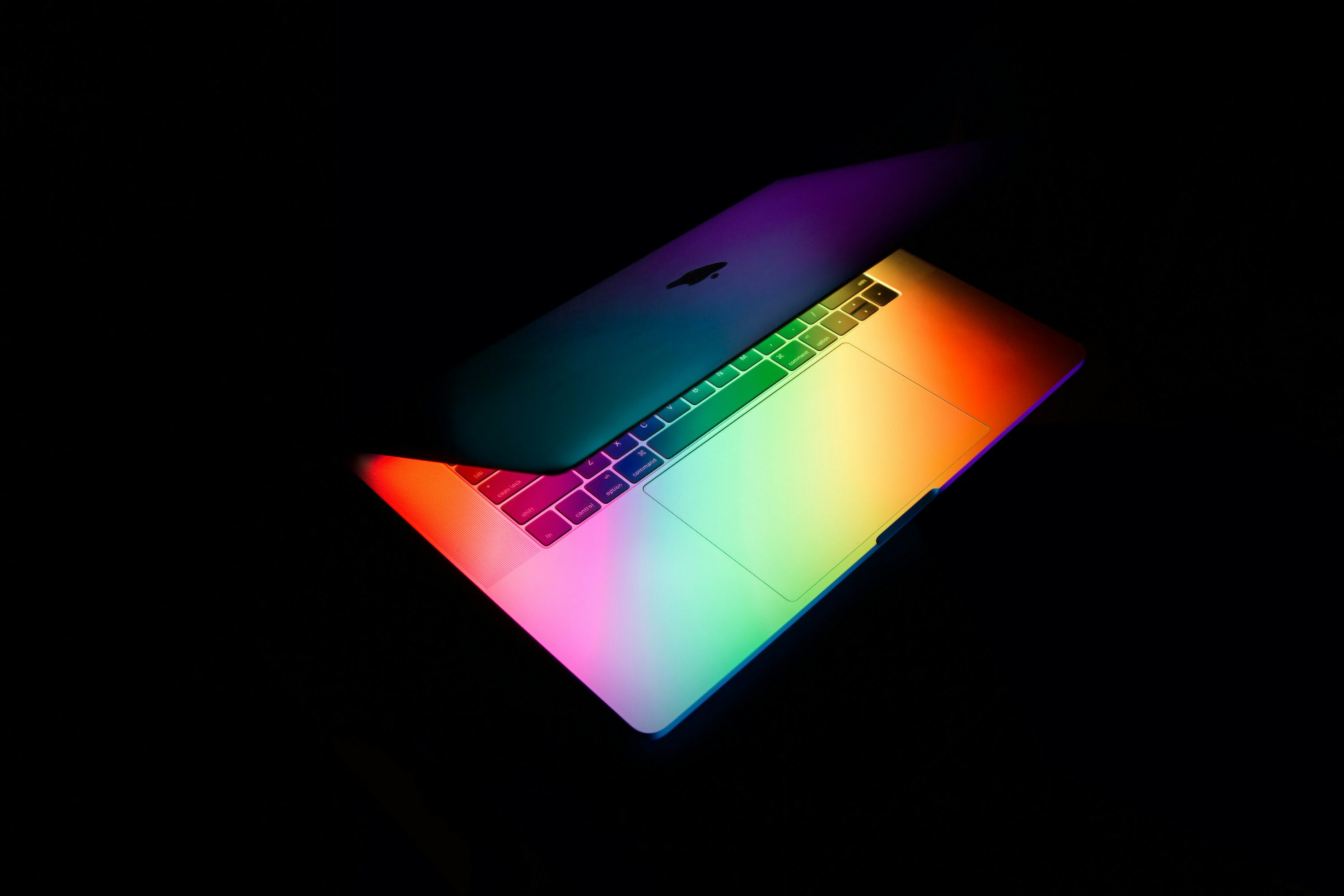
CUPERTINO, Calif. — Apple is preparing a significant hardware refresh for the first half of 2027, with four new iPad Pro models and a redesigned entry-level MacBook Pro both targeting a spring release window, according to Bloomberg’s Mark Gurman, whose report also revealed an unusual and aggressive chip strategy that would see Apple skip high-end M6 variants entirely in favor of fast-tracking a new M7 processor generation built specifically around on-device artificial intelligence performance.
The disclosures add concrete shape to a 2027 product pipeline that was previously understood only in rough outline, confirming that Apple’s Pro tablet line and its most popular professional laptop will both receive meaningful updates within the same release window, even as ongoing memory shortages continue to complicate the company’s manufacturing costs and pricing strategy.
On the iPad side, Apple is testing four new iPad Pro models ahead of a planned spring 2027 launch, maintaining the existing 11-inch and 13-inch display sizes and offering both Wi-Fi and cellular connectivity variants within each size. No external design changes are expected, with the update focused squarely on internal improvements. Gurman reported that Apple has been experimenting with vapor chamber cooling for the iPad Pro, a thermal management technology that could help the tablet sustain higher performance levels during extended demanding workloads without throttling, similar to what Apple already incorporated into the iPhone 17 Pro. The current iPad Pro lineup uses the M5 chip introduced in October 2025, making the spring 2027 models the first update to the professional tablet in approximately 18 months.
The chip powering those new iPad Pros remains technically unconfirmed in Gurman’s report, which indicated the tablets could receive either an M6 or M7 processor depending on which silicon is ready in time. That ambiguity reflects the unusual timing of Apple’s chip roadmap as it currently stands.
Apple plans to introduce the M6 chip later this year in an updated 14-inch MacBook Pro, a transitional model internally codenamed J804 that carries the current MacBook Pro chassis with a chip upgrade but no design changes. That model represents the straightforward generational refresh Apple’s product line would normally deliver. What is unusual is what comes next.
Apple is reportedly skipping the M6 Pro and M6 Max chip variants entirely, bypassing the high-end variants of the M6 generation that would normally follow the base M6 by six to twelve months. Instead, the company is channeling engineering resources directly toward the M7, targeting a base M7 chip debut in the first half of 2027, a compressed timeline that would give the M6 an unusually short window as the company’s leading silicon before being succeeded by the next generation.
The rationale cited across reporting is AI performance. The M7 is being built on Apple’s 2-nanometer manufacturing process with specific optimizations for on-device AI workloads and is targeting memory bandwidth of approximately 240 gigabytes per second, significantly ahead of the M6’s comparable figure, giving it the throughput needed to run increasingly capable machine learning models locally without depending on cloud servers. Both the M6 and the M7 use 2-nanometer process technology, meaning the generational distinction lies not in the manufacturing node but in the AI-specific architecture choices Apple has made within the M7 design.
The redesigned entry-level MacBook Pro, codenamed K104, is the more visually significant of the two announcements. This model will adopt a new external design that mirrors the visual language Apple is preparing for its flagship touchscreen MacBook Pro models, expected to arrive in late 2026 or early 2027. The most notable section of Bloomberg’s report is that the lower-end MacBook Pro will adopt a new design language, first seen in the OLED touchscreen MacBook Pro expected before the end of 2026 or early 2027. The K104 will not include a touchscreen itself, differentiating it from the premium models while still sharing the slimmer bezels, revised port layout and punch-hole camera replacing the current notch that define the new design language. The M7 chip will power this redesigned entry model, potentially making it the first Mac to ship with next-generation silicon if the M7 timeline holds as reported.
M7 Pro and M7 Max variants are expected later in 2027, with an M7 Ultra not anticipated until 2028, meaning buyers who require the highest levels of computational performance for video production, scientific computing or advanced machine learning development will face an extended wait between the base M7’s spring 2027 debut and the arrival of its more powerful derivatives.
The spring 2027 window is shaping up as one of Apple’s most product-dense launch periods in years. Beyond the iPad Pro and MacBook Pro updates, reporting suggests the same window is expected to include the iPhone 18, iPhone 18e and a second-generation iPhone Air, creating a simultaneous release cluster across Apple’s most commercially important product categories.
A significant caveat accompanies all of this planning, however. The global memory shortage that has already forced Apple to raise prices substantially on its existing Mac lineup, with the entry MacBook Pro with one terabyte of storage jumping from $1,699 to $1,999 following a June price increase, continues to represent a genuine supply-side risk to any forward-looking product schedule. Apple’s scale gives it priority access to TSMC’s advanced manufacturing capacity and to memory suppliers in ways unavailable to smaller competitors, but no company is immune to yield problems, packaging bottlenecks or demand-driven allocation challenges when the entire semiconductor industry is simultaneously competing for the same components. Gurman’s report explicitly flagged that ongoing memory and chip shortages could still disrupt the 2027 launch timeline, a caveat that applies equally to the iPad Pro and MacBook Pro plans regardless of how confident Apple’s internal engineering teams are in their current roadmaps.
Apple did not respond to requests for comment on the reported product plans.
Mexico stocks lower at close of trade; S&P/BMV IPC down 0.02%

Quantum Systems said it had raised $1.2 billion at a valuation of roughly $8 billion, bringing in fresh capital to expand drone production and invest in software for autonomous systems powered by artificial intelligence.
The startup said European aircraft maker Airbus, asset manager Blackstone, private-equity firm Advent and equity investor Noteus Partners co-led the financing round, which also attracted interest from technology investment firm BOND, financial services firm Fidelity Investments, asset manager Wellington Management, investment firm A.P. Moller Holding, venture-capital firm Elephant Lake Ventures and existing shareholders like Balderton and HV Capital.
Copyright ©2026 Dow Jones & Company, Inc. All Rights Reserved. 87990cbe856818d5eddac44c7b1cdeb8


Supreme Court’s Barrett fuels conservative wins while sometimes splitting with Trump
Business
A Cable Scion’s Hardest Deal Yet: Comcast Co-CEO Brian Roberts’ Plan to Break Up His Family’s Company
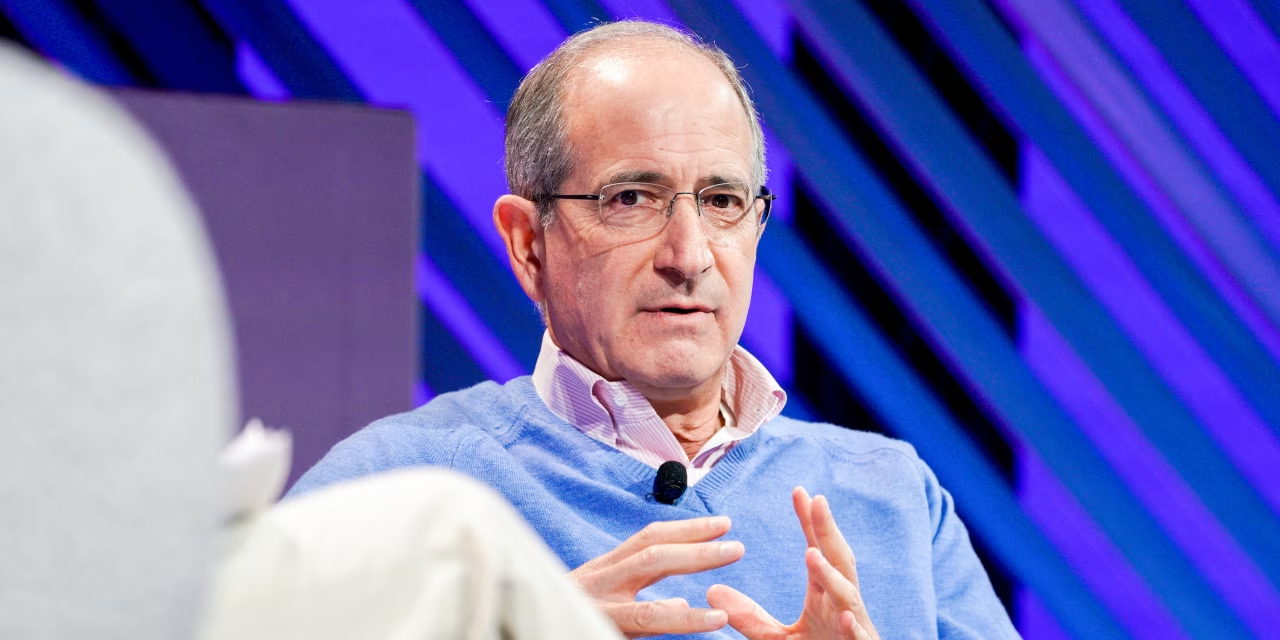
Comcast CMCSA 0.25%increase; up pointing triangle co-Chief Executive Brian Roberts spent his 67th birthday finalizing a plan to split the cable and entertainment company his family built in two.
“Ralph would be excited,” one of his children texted him Sunday, referring to Ralph Roberts, the patriarch who co-founded and ran Comcast for nearly 40 years.
Copyright ©2026 Dow Jones & Company, Inc. All Rights Reserved. 87990cbe856818d5eddac44c7b1cdeb8


Heat waves are underscoring how global warming has become a here-and-now issue for economists.
Temperatures are rising ahead of the July 4 weekend, with 100-degree highs—feeling hotter due to the humidity—forecast for various parts of the central and Eastern U.S. Areas home to more than 150 million people were covered by National Weather Service heat alerts as of midweek.
Copyright ©2026 Dow Jones & Company, Inc. All Rights Reserved. 87990cbe856818d5eddac44c7b1cdeb8


Heat wave disrupts Fourth of July events across eastern US


Death toll of Venezuela earthquakes rises to 2,645
Brazil stocks higher at close of trade; Bovespa up 0.74%
Business
Apple’s Foldable iPhone Surge Saves the S&P 500 From a Chip Rout as Weak Jobs Report Divides Wall Street
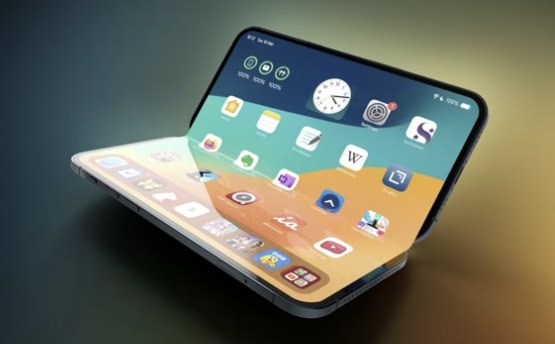
NEW YORK — Apple’s stock surged nearly 5% Thursday, adding roughly $182 billion in market capitalization in a single session and single-handedly preventing what would have been a much sharper decline for the broader S&P 500, as a weak June jobs report, an ongoing chip sector pullback and lingering Middle East uncertainty sent most of the rest of the technology market lower heading into the Fourth of July holiday weekend.
The S&P 500 managed to finish essentially flat on the day, down just 0.2% by midday before recovering ground, while the Dow Jones Industrial Average climbed 0.7% and the Nasdaq Composite declined 0.8%. Eight of the 10 largest market capitalization moves in the S&P 500 on Thursday were negative, including sharp declines for Tesla and Micron Technology. Without Apple’s contribution, analysts noted, the broader index would have recorded a considerably more painful session.
The catalyst for Apple’s surge was a Bloomberg report indicating the company had instructed its parts suppliers to prepare for a large-scale rollout of foldable iPhones this fall, with the expected production target for 2026 now rising to approximately 10 million units, up from earlier forecasts of 7 to 8 million. That order volume increase signals Apple’s confidence that consumer demand for its first foldable smartphone will exceed initial projections. Alongside the foldable, Apple is reportedly preparing roughly 70 million iPhone 18 Pro and Pro Max units, setting up what the company expects to be one of the most commercially significant product launches in its recent history.
The foldable iPhone news came at an opportune moment for Apple investors who have been watching the stock navigate a difficult stretch defined by supply chain pressures, memory chip cost increases and publicly disclosed price hikes on its Mac and iPad lineups. The prospect of a new form factor capable of driving a significant upgrade cycle among the company’s existing customer base gave investors a concrete growth narrative to focus on heading into the back half of 2026.
The rest of the day told a very different story for much of the technology sector. Tesla fell 7.4% even as the company reported June vehicle deliveries that came in 18% above analyst estimates, a counterintuitive reaction that market observers attributed almost entirely to profit-taking following a 13% price surge over the prior four trading sessions. Micron Technology, similarly near all-time highs after its extraordinary year-to-date run of more than 300%, declined 5.8%, weighed down in part by a price-fixing lawsuit related to older memory types that circulated through the financial news cycle during the session. Both moves contributed to the Nasdaq’s underperformance, though neither Tesla nor Micron is a component of the Dow, which helps explain the divergence between the blue-chip index’s gain and the tech-heavy Nasdaq’s decline.
The macro backdrop for Thursday’s session was defined by the June nonfarm payrolls report, which landed well below expectations. The Labor Department reported 57,000 new positions added in June, against economist forecasts of 110,000. May’s payroll numbers were revised downward as well. The unemployment rate edged lower to 4.2% from 4.3%, a technically positive reading but one that contradicts the weak hiring figure and reflects a falling labor force participation rate rather than broad employment strength. Treasury yields declined in response to the soft data, as bond market investors recalibrated expectations toward a Federal Reserve that would face reduced pressure to raise interest rates given the cooling labor market.
The geopolitical dimension of Thursday’s session involved the Strait of Hormuz, where the vessel backlog waiting to transit the critical waterway fell to 380 ships from 485 earlier in the week. However, only five ships actually passed through the strait in the preceding 24 hours, underscoring how far the shipping situation remains from normal despite diplomatic progress. U.S. and Iranian negotiators wrapped up the latest round of talks in Doha claiming what participants described as positive momentum, though no concrete breakthroughs have been announced. The next scheduled discussion will follow funeral proceedings for Iran’s late Supreme Leader, which are expected to conclude by July 9, a timeline that introduces additional uncertainty about when the substantive diplomatic work can resume.
Oil prices continued falling Thursday despite the limited physical improvement in Hormuz traffic, suggesting markets are pricing in future progress rather than current conditions. Gold and Bitcoin rallied simultaneously for the second consecutive session, a combination that some market participants described as unusual and potentially significant. The SPDR Gold Shares fund rose 2.1% while the iShares Bitcoin Trust ETF gained 2.6%. When investors move into both traditional and digital safe-haven assets at the same time, it typically signals a broad underlying uncertainty rather than a specific sectoral rotation.
The broader week produced a pattern analysts have flagged as the dominant theme of 2026’s market: a clear rotation from high-flying technology and semiconductor growth names into steadier, more traditionally valued sectors including financials and industrials. The Dow outperforming the Nasdaq by 1.5 percentage points on Thursday alone illustrated that rotation in concentrated form. The chip sector’s two-day decline followed an 82% first-half gain across semiconductor stocks broadly, making some degree of consolidation not only expected but arguably overdue. The speed of the correction, however, has surprised even observers who anticipated a pullback after the sector’s extraordinary run.
With U.S. markets closed Friday for the Independence Day holiday, which falls on Saturday this year, investors have a long weekend to reassess their positions before trading resumes Monday. The Fourth of July closure also pushed the jobs report to Thursday rather than its usual Friday slot, making this week’s already compressed four-day schedule feel even more event-dense than typical pre-holiday periods.
Monday’s reopening will bring investors back to a market still processing a complicated set of signals: Apple’s foldable iPhone optimism colliding with a softening labor market, an ongoing diplomatic standoff in one of the world’s most important shipping lanes, a chip sector finding its footing after an extraordinary first half, and a Federal Reserve whose next move remains genuinely uncertain in a way that it has not been for much of the past several months. Whether Apple’s foldable iPhone story can maintain the momentum it generated Thursday, or whether the broader rotation out of technology names continues to dominate, will likely define the market’s first week of July trading when it resumes after the holiday break.

Trump’s 2025 Financial Disclosure Just Came Out

Controversial pumping station in Cardiff park delayed by two years

Apple Plans New iPad Pro and Redesigned MacBook Pro for Spring 2027 With Faster M7 Chip That Skips M6 Pro


-

 Tech6 days ago
Claude Code turned every engineer into three. Now companies need more product thinkers
-

 Crypto World4 days ago
Strategy authorizes up to $1.25B in Bitcoin sales under new capital plan
-

 Politics10 hours ago
The House | “Reframing the debate from a binary discussion of winners and losers”: Yuan Yang reviews ‘We Are Not Machines’
-

 News Videos5 days ago
MAJOR BITCOIN & MARKET UPDATE!!!! (MUST WATCH ASAP!!!)
-

 Tech6 days ago
Bluekit phishing kit adopts browser-in-the-middle for login theft
-

 Tech4 days ago
Anonymous researcher drops 0-day ‘exploitarium’ repo
-

 Crypto World6 days ago
Coinbase, Circle Deepen Crypto Stock Losses Despite Resilient S&P 500
-

 Business4 days ago
Australia treasurer says alleged access of prime minister’s bank data ’incredibly concerning’
-

 Crypto World7 days ago
Kraken's xStocks Opens Bending Spoons IPO Registration to EEA Retail
-

 Fashion4 hours ago
Weekend Open Thread: High Hopes
-

 Tech6 days ago
Russian hackers now target Signal backup recovery keys
-
 Business4 days ago
The AI boom won’t burst all at once. It will pop in ‘rolling bubbles’: Macquarie
-

 Sports2 days ago
Broncos roster: OL Ben Powers (No. 74) entering final year of contract
-

 NewsBeat3 days ago
Presenter Caroline Flack’s brother Paul Flack dies aged 55
-

 Tech6 days ago
Silicon Valley paid to kill AI regulation, now it wants the rules back
-

 Crypto World2 days ago
Binance stock trading tops $1B in first month after launch
-

 Tech6 days ago
OpenAI mulls delaying IPO over valuation concerns
-
 NewsBeat2 days ago
New exhibition reflects five decades of movement between island of Ireland and GB
-

 Crypto World2 days ago
Alibaba-affiliate Ant Group enters the humanoid robot market with 12 deals
-

 News Videos4 days ago
How to Build INSANE Live Financial Dashboards With Claude
You must be logged in to post a comment Login