Connect with us

Business

Princes forecasts 60% yield this year

Published

on

Princes forecasts 60% yield this year

Princes, the food group that owns the only pea cannery in the UK, has forecast yields from this year’s British pea harvest at about 60 per cent, only marginally higher than in 2025 and against more than 100 per cent in 2024, when rainfall and cooler temperatures produced a bumper crop.

The harvest runs for about eight weeks and will finish by mid-August. Growers produce an estimated 160,000 tonnes of peas a year, using viners costing £750,000 apiece.

Last year’s harvest was the earliest in well over a decade. Vining pea growers across Lincolnshire, Norfolk, Suffolk and East Yorkshire reported a near-third drop in the number of peas picked and processed.

Allen Giles, general manager at the Holbeach Marsh farming co-operative in Lincolnshire, said conditions this season had been comparable. “It’s been tough, really tough. We haven’t had any rain in six weeks,” he said. “Only hindsight will tell, but in five or six years’ time, if this weather continues, then we may not have peas in this area any more.”

The co-operative typically harvests about 10,000 tonnes of peas across 2,200 hectares each year, most of which are frozen. Giles said no grower would make money on the crop this season. “From our point of view as a co-operative, no farmer will make any money on peas this year, and we didn’t last year. We get paid by the tonne, we need tonnes per hectare to make this land profitable. And that’s nobody’s fault, that’s just the weather.”

Advertisement

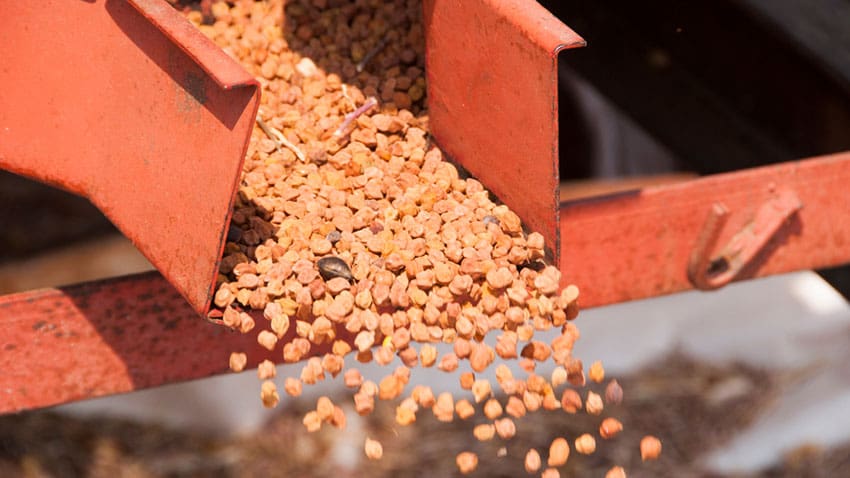
The co-operative has planted chickpeas for the first time. “We’ve grown some chickpeas this year for the very first time and they look quite good, they’ve enjoyed the hot weather,” Giles said. Lentils are also under consideration, alongside discussions about producing hummus.

Giles said successive heatwaves had accelerated the spread of disease-carrying aphids, and that a rise in ladybird numbers had allowed the co-operative to stop spraying. “So it helps us, but there’s about a year lag. There won’t be so many ladybirds going into the winter and we’ll probably end up with an aphid problem next year.”

The Met Office recorded more days above 30C by 15 July than in the whole of 1976, with the UK mean temperature running 1.8C above the seasonal average. The Environment Agency’s latest bulletin reports 1,353 abstraction licence restrictions in force and says prolonged dry conditions are producing early harvesting and poorer yields.

Peas mature rapidly, and higher temperatures shorten the window processors have to freeze or can them. Peas harvested in Lincolnshire are canned within six hours at Long Sutton, the Princes site that remains the only pea cannery in the UK and produces about 24 million cans and 40 billion peas a year. Drought and disease-resistant varieties can protect yields but often take years to reach the market.

Advertisement

Giuseppe Mastrolia, interim chief executive at Princes, said the pressure extended across the group’s product range. “Climate change is a topic that’s going on across all different areas, in pasta, in tomatoes. Things are changing,” he said. “We need to be prepared and we are already implementing changes. Climate is touching the whole industrial structure.”

Princes, one of Europe’s largest food producers, pushed through emergency price increases earlier this year after the Iran war raised energy and packaging costs and led to global shortages of fertiliser. “We took a hit in March and April. Things have slowed down but there is still an uncertainty around,” Mastrolia said. Cuts to government support and higher employment costs have also affected the food industry.

Mastrolia said he shared Giles’s view on the opportunity in chickpeas, citing rising demand for protein-rich foods, but that the harvest would limit local sourcing. “What we try to do with peas is sell what we produce and pack in the UK, but given the circumstances this year, we won’t be able to fulfill demand. Last year we bought some frozen peas, still in the UK from Scotland, so we are trying to source locally but the best is to produce fresh peas.”

Retailers have already linked hot weather and lower crop yields to rising food prices, while the question of how far the 2026 drought compares with 1976 has become a live one for the farming sector.

Advertisement

Amy Ingham

Amy Ingham

Amy Ingham is a reporter at Business Matters, covering UK business news with a focus on breaking news, business policy, late payments and insolvency. She joined the magazine in 2026 after completing the NCTJ Diploma in Journalism at Harlow College’s journalism school. Her recent reporting includes British Steel’s nationalisation and its impact on SME suppliers, the decline in late payments by large firms, and Insolvency Service director disqualifications. Reach her at aingham@cbmeg.co.uk.

Advertisement
Continue Reading
Click to comment

You must be logged in to post a comment Login

Leave a Reply

Business

Opinion: Enthusiasm tempered by experience

Published

on

Opinion: Enthusiasm tempered by experience

OPINION: While founders’ age gaps have risks, they also create a more interesting mix of experience.

Continue Reading

Business

Saturn to raise up to $105m

Published

on

Saturn to raise up to $105m

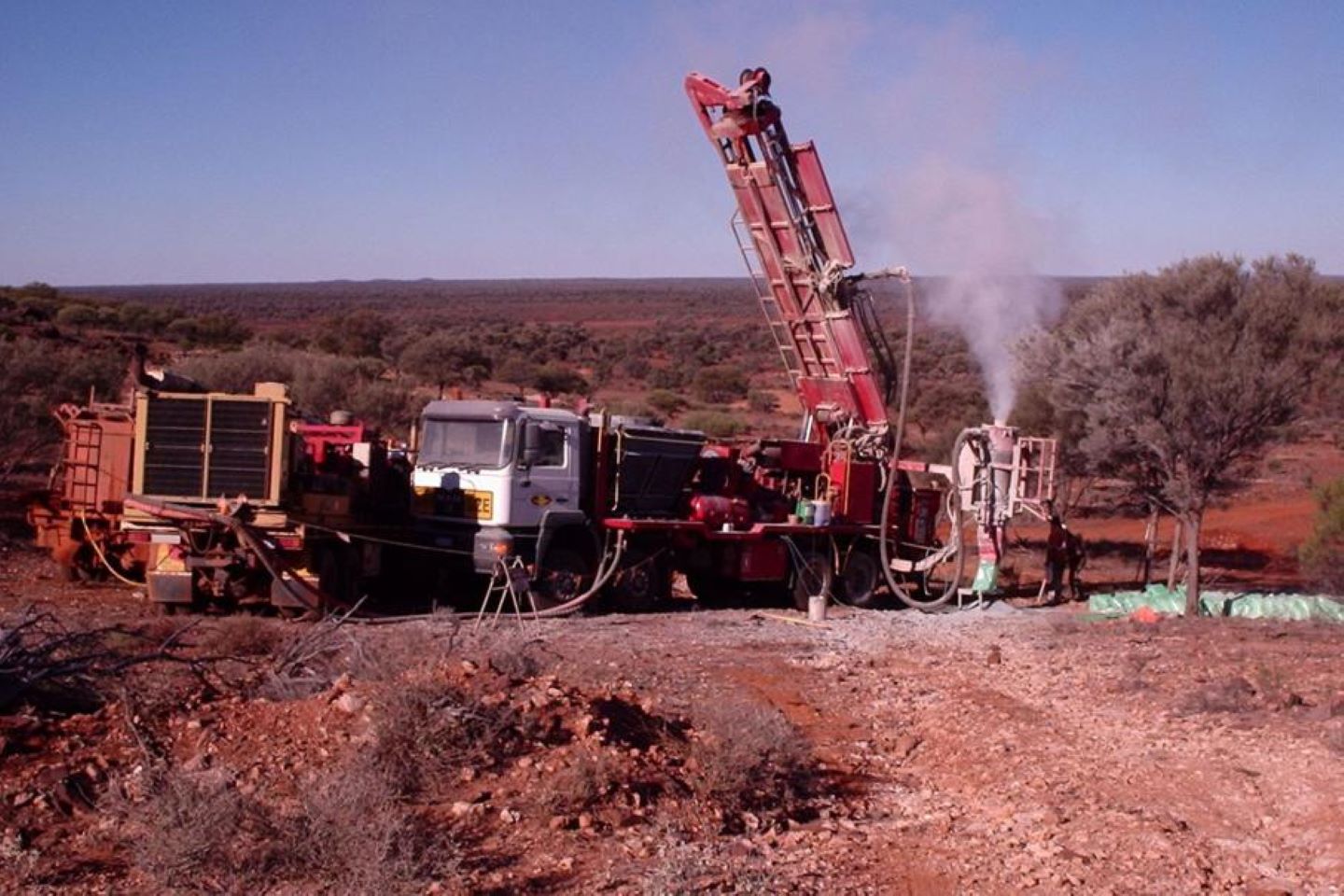
Saturn Metals has announced its third significant capital raise in just over two years, at it aims to fast-track development at its Apollo Hill gold project in the Eastern Goldfields.

Continue Reading

Business

Slideshow: PepsiCo focusing on functional innovation

Published

on

Slideshow: PepsiCo focusing on functional innovation

Offerings across the company’s portfolio lean into protein content, gut health and more.

Continue Reading

Business

Frontier forecasts third-quarter profit above estimates on higher airfares after Spirit’s exit

Published

on


Frontier forecasts third-quarter profit above estimates on higher airfares after Spirit’s exit

Continue Reading

Business

Middle-earners ‘struggling’ over Jersey schools bonus cap

Published

on

A woman with dark hair and blue eyes in a plain white T-shirt sits at a desk in a wood-panelled home office, facing the camera. A computer monitor, notebook, water bottle, phone and glasses are visible on the desk, with framed artwork hanging on the wall behind.

Middle income families who are struggling with the cost of living are being “failed” by the government, a Jersey parent has said.

It comes as families have shared frustration that a means-tested benefit to help buy school supplies has not been made available island-wide.

Mum of two Lisa McCabe said not being able to access the back to school bonus was a “kick in the teeth” for working parents just above the income threshold.

The social security minister said she would review the back to school bonus ahead of next year and that the government was looking at ways to make life more affordable for parents in Jersey.

Advertisement

McCabe runs a private health screening clinic in Jersey.

She said “every day” she was seeing parents struggling with the cost of raising a family in Jersey: “There’s the level of stress and burnout from people who are on what would have been considered very good wages a few years ago that just aren’t making ends meet.”

She said many middle-earners in the island had been squeezed by an increase in interest rates and the end of mortgage interest tax relief for homeowners.

For many working parents, she said, this was made worse by expensive nursery fees and the cost of covering children’s hot lunches and after school clubs.

Advertisement

“There are some really difficult decisions to be made,” she said.

Continue Reading

Business

Humana (HUM) earnings Q2 2026

Published

on

Humana (HUM) earnings Q2 2026

Cheng Xin | Getty Images News | Getty Images

Humana on Wednesday reported second-quarter results that topped estimates, as the health insurer’s spending on medical services came in line with expectations. 

The company also maintained its 2026 adjusted profit outlook of at least $9 per share. 

Advertisement

The earnings beat was driven by strength across Humana’s insurance business and CenterWell healthcare services unit, Humana CFO Celeste Mellet said in an interview. She said medical and pharmacy cost trends tracked in line with Humana’s expectations across new and existing members. The company saw “slight favorability” in medical costs in the inpatient space, particularly among members receiving care from value-based providers, she added. 

Still, in a Wednesday note, Cantor Fitzgerald analysts called the unchanged profit outlook a “disappointment” after recent earnings beats and guidance raises seen by other insurers overseeing privately run Medicare Advantage plans. Investors have been ratcheting up their expectations for the industry as some companies hike their outlooks and get a better handle on rising medical costs in those plans – an issue that has been dogging the broader sector for more than two years. 

Shares of Humana fell more than 4% in premarket trading despite the solid quarter. The company is one of the largest Medicare Advantage providers serving people aged 65 and older as well as people with ​disabilities.

Here’s what the company reported for the second quarter compared with what Wall Street was expecting, based on a survey of analysts by LSEG:

Advertisement
  • Earnings per share: $7.61 adjusted vs. $7.22 expected
  • Revenue: $40.87 billion vs. $40.61 billion expected

The company posted second-quarter net income of $694 million, or $5.73 per share, compared with $545 million, or $4.51 per share, in the same period a year ago. Excluding items like amortization and impairment charges, Humana earned $7.61 per share.

Revenue climbed to $40.87 billion from $32.39 billion in the prior-year quarter. The company’s insurer and Centerwell unit both topped analysts’ sales estimates for the quarter, according to StreetAccount. 

Insurers, particularly those that run Medicare Advantage plans, have been pinched by an influx of people seeking care they delayed post-pandemic and high-cost specialty drugs like GLP-1s, among other factors. 

But Humana’s medical benefit ratio — a measure of total medical expenses paid relative to premiums collected — came in at 91.2% for the second quarter, which is in line with what analysts were expecting. Mellet said the ratio also matched the company’s expectations for the quarter across both new and current members. 

“I think that it’s a combination of just [medical cost] trend stabilizing and then our actions as well to help drive better health outcomes for our members and our patients,” Mellet said. 

Advertisement

Still, the ratio is slightly higher than the 89.9% reported in the year-earlier period. A lower ratio typically indicates that the company collected more in premiums than it paid out in benefits, resulting in higher profitability.

Mellet said medical cost expectations for next year are “fairly consistent.” The company is watching to see if services such as inpatient admissions will continue to decline this year, but she said “at this point, we call medical costs more stable.” 

Meanwhile, pharmacy medical cost trends remain “very elevated,” driven by drug prices and the launch of new medicines, Mellet noted. She said those costs will be slightly higher next year compared to 2026, but added that it’s a broader drug cost issue, not a question of member demand. 

Mellet said Humana expects changes to its 2027 Medicare Advantage plans to help improve profitability and put the company on track to reach a sustainable pretax margin of at least 3% by 2028. She said the insurer also remains confident in its ability to boost earnings by expanding membership, improving the quality ratings of its Medicare Advantage plans, maintaining pricing discipline and controlling costs.

Advertisement
Choose CNBC as your preferred source on Google and never miss a moment from the most trusted name in business news.
Continue Reading

Business

CNX Resources earnings ahead: Can hedges offset weak gas prices?

Published

on


CNX Resources earnings ahead: Can hedges offset weak gas prices?

Continue Reading

Business

BASF SE (BASFY) Q2 2026 Press Conference Call Transcript

Published

on

OneWater Marine Inc. (ONEW) Q1 2026 Earnings Call Transcript