
Business
Priovant reports positive dermatomyositis trial results in NEJM


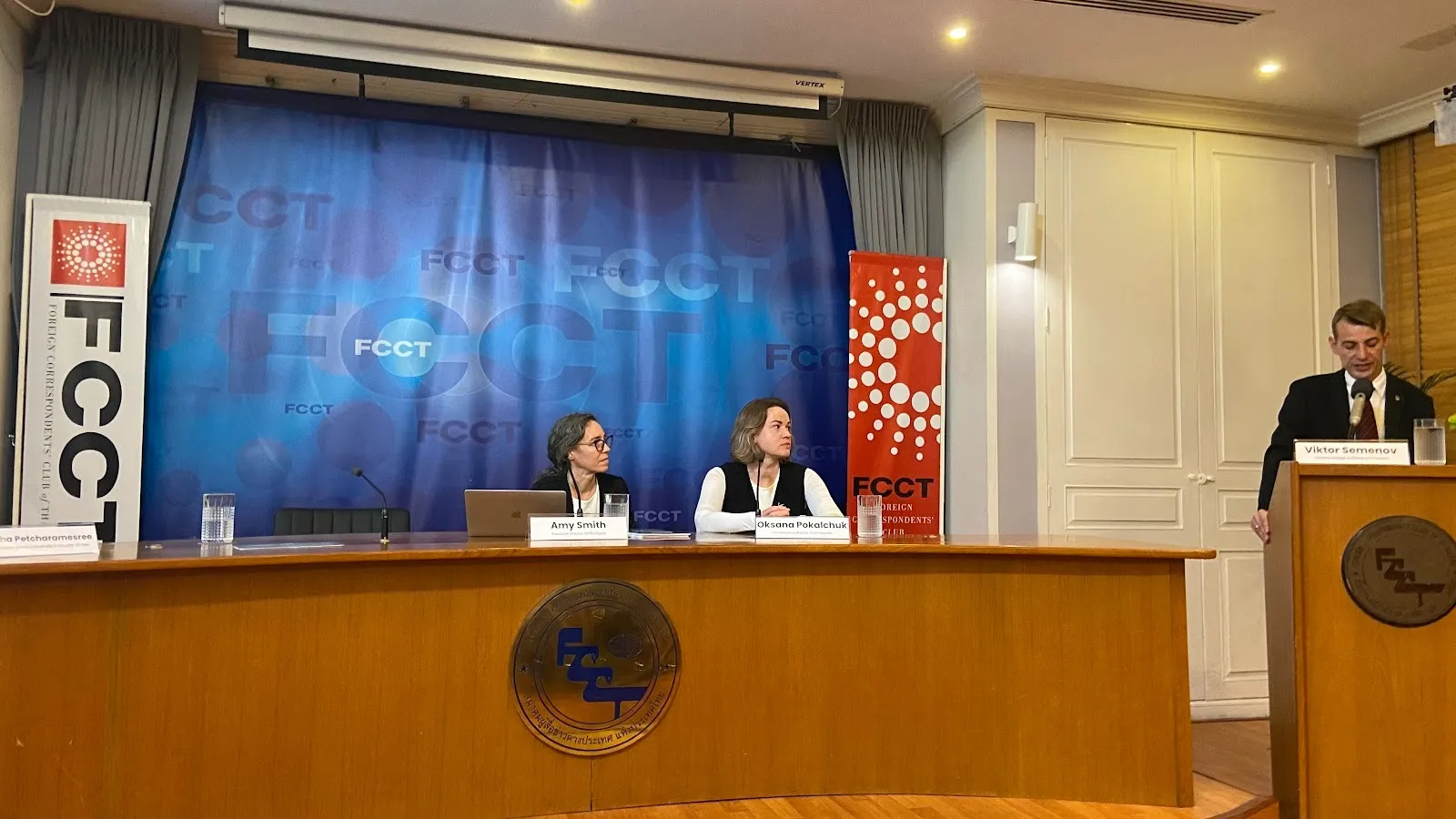
Four years after the outbreak of the Russian invasion of Ukraine, the negative consequences of the conflict go well beyond the framework of Europe. The NGO Fortify Rights, in a conference at the Foreign Correspondents’ Club of Thailand (FCCT) draws up an edifying record: war crimes, human trafficking and instability.
In South and Southeast Asia too, war produces invisible but profound effects. Economic neutrality driven by a fear of commitment does not shield certain countries from directly facing the repercussions of this ‘illegal war’.
“A peace without consequences for the aggressors encourages history to repeat itself.” Those words pronounced in Bangkok by diplomat Viktor Semenov, speaker and business attaché for the Ukrainian embassy in Thailand, sound like a warning. For if the war in Ukraine seems to be a simple European tragedy, it has become a global phenomenon affecting the security of many non-European regions. This is the whole issue that the 5 speakers wanted to address at the NGO fortify rights conference, organized a few days ago within the FCCT.
Since 2022, accusations have been piling up against Russia: war crimes, torture, forced deportations, illegal transfers of children, repeated violations of international conventions. But the issue has long since surpassed the single European prism: it also concerns the rest of the world and in particular Southeast Asia.
Moscow’s Strategic Partnerships in the Region
On the Ukrainian scene, recalls Semenov, all the facts of war crimes committed by Russia are directly documented by NGOs such as Truth Hounds and Fortify Rights: summary executions, forced disappearances, bombings of civilian infrastructure. Serious violations of international humanitarian law, including the Geneva Conventions. Those violations also affect Asian countries brutally: in March 2022, a Bangladeshi cargo plane was destroyed during Russian strikes in Ukraine, killing several nationals. A drama almost passed over in silence.
But for one of the Ukrainian diplomatic voices in Bangkok, the heart of the problem lies in the tacit recognition of Russia by certain Asian actors.
In Asia, Russia has many supporters: North Korea, a historical and direct partner. More discreetly, but also the military junta of Myanmar which is quietly strengthening its ties with Moscow since the coup in 2021. This one signed with the Kremlin contracts for weapons but also for cooperation and development with an agreement with Rosatom signed in 2023 to develop civilian nuclear infrastructure. A strategic partnership, with major regional security implications.
This network of alliances transforms the Ukrainian conflict into a pivot of a new international order that is more fragmented, more unstable.
Invisible Victims: Human Trafficking and Forced Recruitment of South Asians
One of the most troubling aspects of the conflict is taking place far from the front line as shown in the report ‘I Was Tricked into the War: The Risk of Human Trafficking and Forced Recruitment of Bangladeshi Men into Russia’s War in Ukraine’, presented by its two executive directors, Amy Smith and Oxana Pokalchuk from the NGOs Fortify Rights and Truth Hounds. Created in 2013 in Burma, fortify rights to denounce the genocide of the Rohyngais; it is now based in Bangkok and is responsible for investigating, listing, and documenting all human rights violations. With the help of Truth Hound, a Ukrainian NGO founded in 2014, the organization conducted this survey which reveals an organized system of fraudulent recruitment organized from Russia.
Recruiters promise jobs, visas and Russian nationality to Asian migrant workers coming from a poor country (most often Nepali Bangladeshi or Sri Lankan). Recruiters offer them economic and social advancement opportunities as well as Russian nationality. To confuse the tracks, smugglers make them pay for plane tickets with numerous stopovers, often in Rangoon or in the Middle East before arriving in Russian territory.
Upon their arrival in Moscow, and after having confiscated their passports, the victims sign documents in Cyrillic that are presented to them as a contract of employment while they are actually military contracts. The men are then trained and sent to the Ukrainian front. The figures are dizzying: about 200 Nepalese, and 2,000 Sri Lankans (the most represented nationality due to extreme poverty and the country’s lack of opportunities) would have been enrolled in this scheme.
The Paradox of ‘Tactical’ Economic Neutrality
The Ukrainian diplomat also warns about the policy of connivance of certain states with the Kremlin. While the policy of economic neutrality adopted by many countries in South-East Asia seems at first sight to be a prudent choice, it is actually a factor in the instability of the region.
Indeed, many countries like Thailand and Vietnam have not turned their backs on the Russian Federation. The latter notably benefit from numerous tourist advantages (including 90-day visa-free access, as opposed to soon 30 for France), which translates into a spectacular recovery in Russian tourist flows since 2022: In 2025, Russia ranked as the fourth largest nationality visiting Thailand, with over one million Russian travelers. Limited access to many European destinations led Russian tourists to increasingly shift their focus to this region.
For economies in need of growth like Thailand, Russian tourism (excellent since it is one of the highest in the world in terms of spending per individual) is a godsend to capture new financial flows and compensate for the slowdown in other markets. Added to this are maintained or even strengthened trade exchanges in the energy, agriculture, or hydrocarbon sectors. But this neutrality, if it may seem sensible in the long term, is not so in the context of regional geopolitical stability. Because the Russian Federation is, as explained in the report by Fortify Rights, a catalyst for instability in Southeast Asia. Indeed, the Russian support for dictatorial powers such as the Burmese Military Junta since 2021 since the coup d’état of 2021 has increased border tensions; as a result, there are regular clashes near the Thai border, flows of refugees, and military incursions that fuel a constant tension. In this context, Russia is no longer just a distant economic partner with whom we can agree out of pragmatism: it becomes, indirectly, an actor in regional imbalances.
Faced with these abuses, Viktor Semenov calls for a firm response: reactivate the instruments of international law. With the help of the coroner (and law professor at Chulalongkorn University) Sriprapha Petcharamesree that “A peace without consequences for the aggressors encourages history to repeat itself.” For this, he appeals to the judgments of the International Criminal Court to judge war crimes. It also highlights the creation of a special tribunal for Ukraine from June 2025. In addition, there is a requirement to establish compensation mechanisms for victims, including those from Asia.
Because as the diplomat recalls: “Victims are everywhere, also here in Thailand”.
The question is no longer where the war is taking place but rather how prepared the world and Southeast Asia are to confront its repercussions.
Other People are Reading

Why Delta and United Can Fly Above the Turbulence in Air Travel


US Department of Homeland Security says Lewandowski has left after Noem’s firing

Nvidia Stock Is Now Cheaper Than the S&P 500

Israeli strikes hit two Gaza police checkpoints, killing six, medics say

Boston Scientific at American College of Cardiology: Clinical Trials Drive Growth

Marex Group plc (MRX) Analyst/Investor Day – Slideshow
Business
Rockwell Medical, Inc. 2025 Q4 – Results – Earnings Call Presentation (NASDAQ:RMTI) 2026-03-28

Seeking Alpha’s transcripts team is responsible for the development of all of our transcript-related projects. We currently publish thousands of quarterly earnings calls per quarter on our site and are continuing to grow and expand our coverage. The purpose of this profile is to allow us to share with our readers new transcript-related developments. Thanks, SA Transcripts Team
Business
(VIDEO) Peter Alexander Announces He’s Signing Off From Saturday TODAY After Years as Co-Anchor

Peter Alexander, the longtime chief White House correspondent for NBC News and co-anchor of “Saturday TODAY,” announced Saturday that he is stepping down from his weekend morning anchoring duties after more than seven years on the desk.
The Emmy Award-winning journalist made the emotional announcement during the March 28, 2026, edition of the program, thanking colleagues, viewers and his family while reflecting on memorable moments covering major news events from the studio and the field. Alexander will continue in his high-profile role as NBC News’ chief White House correspondent, focusing more intensively on political coverage amid a busy 2026 news cycle.
“I’ve loved every Saturday morning here,” Alexander said on air, his voice catching at times. “This desk has been a privilege and a joy, but it’s time to pass the baton and dedicate even more energy to the stories unfolding at the White House and around the world.”
Alexander joined “Saturday TODAY” as co-anchor in October 2018, initially alongside Sheinelle Jones and Dylan Dreyer before later partnering with Laura Jarrett. He brought his experience as a seasoned national correspondent and White House reporter to the lighter weekend format, blending hard news updates with lighter segments and interviews that became staples of the broadcast.
His departure from the weekend anchor chair comes as NBC News continues to evolve its “TODAY” franchise amid shifting viewer habits and a competitive morning television landscape. Alexander had already been balancing the Saturday duties with intensive weekday reporting, including frequent appearances on “NBC Nightly News,” “Meet the Press” and MSNBC.

Colleagues on the set reacted with warm tributes. Co-anchor Laura Jarrett praised Alexander’s professionalism and camaraderie, noting how he made the early Saturday call times feel collaborative and fun. Dylan Dreyer and other “TODAY” family members shared messages of appreciation via video, highlighting Alexander’s reliability during major breaking news weekends and his ability to connect with audiences.
NBC News executives described the move as a natural evolution rather than a full exit from the network. “Peter has been an invaluable part of the ‘TODAY’ family, but his expertise at the White House is more critical than ever,” one insider said. “This allows him to lean fully into what he does best while we prepare the next chapter for Saturday mornings.”
Alexander’s career at NBC News spans more than two decades. He joined the network in 2004 and quickly established himself as a versatile reporter, covering everything from international conflicts and natural disasters to presidential campaigns and major domestic stories. He served as White House correspondent starting in 2012 and became chief correspondent after Kristen Welker moved to “Meet the Press.”
His anchoring on “Saturday TODAY” began after Craig Melvin stepped back from the weekend role to focus on weekday duties. Alexander was already a familiar face, having filled in frequently. Over the years, he helped steer the program through challenging periods, including the COVID-19 pandemic, multiple election cycles and significant global events.
Viewers have come to appreciate Alexander’s calm delivery, sharp interviewing skills and occasional humorous asides that lightened the mood on weekend mornings. He has also contributed to NBC Sports coverage, including Olympic reporting, further broadening his appeal.
The announcement arrives at a particularly active time for Alexander. He recently covered high-stakes White House developments, including foreign policy decisions, economic briefings and political transitions. In February 2026, he traveled to Milan to contribute to NBC’s coverage of the Winter Olympics when other anchors adjusted their schedules.
Friends and colleagues describe Alexander as deeply committed to journalism while remaining grounded in his personal life. He and his wife, Alison Starling, a former television anchor, have two children. Alexander has occasionally shared glimpses of family life, including the challenges of balancing demanding travel and early morning commitments with parenting.
As he steps away from weekly Saturday anchoring, speculation has emerged about potential successors. Names circulating internally include rising NBC correspondents and current contributors who could bring fresh energy to the weekend desk. NBC has not yet announced a permanent replacement, suggesting a transitional period with rotating hosts or a deliberate search process.
Fans reacted quickly on social media, with many expressing sadness at the news while wishing Alexander well in his continued White House role. “Peter has been a steady, trustworthy presence on Saturday mornings,” one viewer posted. “We’ll miss him there but know he’s where he’s needed most right now.”
The move reflects broader trends in television news, where experienced correspondents sometimes reduce multi-platform commitments to focus on signature beats amid 24/7 digital demands. Alexander’s decision allows him to deepen his political reporting at a moment when White House coverage remains intensely scrutinized.
NBC News president praised Alexander’s contributions in a statement: “Peter embodies the best of NBC News — rigorous, fair and dedicated to getting the story right. We’re grateful for his years brightening Saturday mornings and look forward to his continued outstanding work from the White House.”
Alexander’s final regular appearance as co-anchor is expected in the coming weeks, with special farewell segments planned. He hinted at future occasional returns for big interviews or fill-ins, keeping ties to the “TODAY” family intact.
Throughout his tenure, Alexander covered everything from holiday cooking segments and human-interest stories to urgent updates on national security and elections. Colleagues recall his preparedness and ability to pivot seamlessly between tones — a skill honed over years in the field.
As one chapter closes on Saturday mornings, another intensifies in Washington. With political developments moving rapidly in 2026, Alexander’s voice and reporting are expected to remain central to NBC’s coverage across platforms.
The “TODAY” show franchise, which includes weekday and weekend editions, continues to evolve while maintaining its position as a morning television leader. Alexander’s departure adds to a series of personnel shifts in recent years but underscores the program’s depth of talent.
For now, viewers can expect Alexander’s familiar face on weekday news programs and special reports. His Saturday announcement served as both a farewell and a thank-you, leaving many with a sense of gratitude for years of reliable weekend companionship.
In the fast-paced world of broadcast news, transitions like this are common, yet Alexander’s long run on “Saturday TODAY” left a lasting mark. Colleagues and audiences alike will watch with interest as he channels his energy fully into one of journalism’s most demanding beats.
SYDNEY — Australian entrepreneurs have carved out impressive niches in the competitive food franchise sector, blending local flavors, health-focused concepts and efficient quick-service models that resonate both at home and increasingly overseas.
While global giants like McDonald’s, Subway and KFC dominate store counts in Australia, a cohort of homegrown brands — founded and still largely owned or controlled by Australians — stands out for innovation, growth potential and cultural appeal in 2026. These franchises often emphasize fresh ingredients, healthier options or distinctly Aussie twists, helping them weather cost-of-living pressures and shifting consumer preferences toward convenience and value.
Drawing from recent industry analyses, store growth data and franchise performance metrics, here are 10 of the strongest Australian-owned food franchises making their mark this year. Rankings consider factors such as domestic footprint, expansion momentum, brand strength, franchisee support and adaptability in a market projected to see continued quick-service restaurant (QSR) growth.

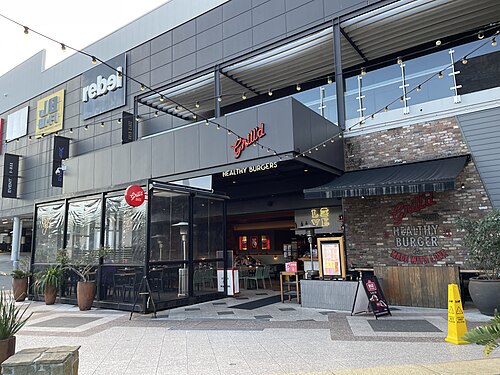
- Grill’d Founded in 2004 in Melbourne, Grill’d has built one of Australia’s most successful homegrown burger chains with approximately 173 restaurants nationwide. Known for fresh, never-frozen burgers using Australian beef and a strong emphasis on healthier ingredients, the brand has expanded steadily while forming partnerships like its recent Coles collaboration for grocery products. Franchisees praise the streamlined operations and community-focused marketing that differentiate it from U.S. competitors.
- Zambrero This Mexican-inspired chain, started in Canberra in 2005 by Dr. Sam Prince, operates hundreds of stores across Australia and has expanded internationally. Zambrero stands out for its “Plate for Plate” initiative — donating a meal to those in need for every burrito or bowl sold — alongside fresh, customizable Mexican fare. In 2026, the franchise continues rapid unit growth, appealing to franchisees seeking purpose-driven businesses with strong digital ordering systems.
- Boost Juice Founded in 2000 in Adelaide by Janine Allis and her husband, Boost Juice remains a powerhouse in the juice and smoothie category with around 370 outlets. The brand’s vibrant, health-oriented menu has proven resilient, adapting to trends with new functional drinks and plant-based options. Its kiosk and mall-based model offers relatively accessible entry for franchisees while delivering consistent foot traffic in high-traffic locations.
- Bakers Delight This iconic bakery franchise, established in 1980 in Victoria, operates more than 500 stores across Australia and New Zealand. Famous for fresh-baked bread, pastries and savories made on-site daily, Bakers Delight appeals to families and traditionalists. In 2026, the brand focuses on modernization through improved digital loyalty programs and menu innovation while maintaining its community bakery roots.
- Red Rooster An Australian fast-food staple since 1972, Red Rooster specializes in roast chicken and sides with a distinctly local flavor profile. Now part of a larger portfolio but with strong Aussie heritage, the chain maintains hundreds of outlets and continues rebranding efforts to refresh its image. It competes effectively in the chicken segment against international players through value meals and drive-thru convenience.
- Hungry Jack’s The Australian master franchise of Burger King, operated independently since 1971, features a localized menu with items tailored to Aussie tastes. With over 400 locations, Hungry Jack’s remains a top performer in the burger category. Its franchise model benefits from strong brand recognition and operational efficiencies honed over decades in the local market.
- El Jannah This Lebanese-Australian chicken chain has exploded in popularity, particularly in Sydney and expanding southward. Known for charcoal-grilled chicken, garlic sauce and fresh sides, El Jannah represents the rise of ethnic-inspired QSR concepts. In 2026, the brand attracts significant franchise interest as consumers seek bold flavors and premium-yet-affordable options.
- CIBO Espresso Originating in Adelaide, CIBO Espresso combines Italian-style coffee with fresh café food in a fast-casual format. The franchise has grown steadily with its focus on quality espresso, panini and pastries. It appeals to urban professionals and offers franchisees a sophisticated yet approachable café experience in a competitive coffee market.
- Zeus Street Greek Launched in 2014 in Sydney, this Greek-inspired chain has reached around 41 stores and an estimated $80 million valuation. Specializing in souvlaki, gyros and fresh Mediterranean dishes, Zeus has expanded aggressively while testing grocery partnerships. Its modern take on traditional Greek street food positions it well for continued growth among health-conscious diners.
- SumoSalad (and similar fresh concepts like LeWrap)** SumoSalad pioneered healthier fast food with customizable salads and bowls. Other emerging or established fresh-focused players like LeWrap (Australian-owned wraps and healthy options) round out the list of agile franchises adapting to demand for lighter meals. These concepts often feature lower fit-out costs and appeal to franchisees targeting wellness trends.
Australian-owned food franchises benefit from several advantages in 2026. Local founders understand regional tastes, regulatory environments and supply chains, allowing quicker adaptation to challenges like ingredient cost increases or labor shortages. Many emphasize sustainability, local sourcing and community involvement — values that resonate with Aussie consumers.
The broader QSR sector in Australia added hundreds of outlets in recent years, with Mexican, chicken and health-focused concepts leading expansion. Homegrown brands often occupy niches ignored by global giants, such as premium grilled chicken or functional juices, while leveraging digital platforms for ordering and loyalty.
Franchise experts note that successful Aussie food concepts typically offer strong training, marketing support and adaptable store formats — from high-street to drive-thru and kiosks. Investment levels vary widely, with some accessible for under $300,000 while established names require significantly more capital and hands-on operation.
Challenges remain, including rising operational costs, competition from delivery apps and shifting consumer preferences influenced by health trends and economic pressures. Yet many Australian franchises report resilient same-store sales through menu innovation and value strategies.
Retail Food Group, an Australian company, manages multiple brands including Donut King, Brumby’s Bakery and Gloria Jean’s, demonstrating the strength of local multi-brand operators. Other success stories highlight how purpose-driven models (like Zambrero) or fresh-ingredient focus (Grill’d, Boost) create loyal customer bases and attractive franchise opportunities.
For prospective franchisees, Australian-owned concepts often provide a sense of national pride alongside proven systems. Industry events and expos in 2026 continue to showcase these brands, with emphasis on technology integration, staff retention strategies and sustainable practices.
As Australia’s population grows and urban centers expand, demand for convenient, quality food options is expected to remain robust. Homegrown franchises are well-positioned to capture market share by staying agile and true to their origins while embracing modern consumer expectations.
These 10 examples illustrate the vibrancy of Australia’s food franchising scene. From burgers to juices and Mediterranean flavors, Aussie-owned brands deliver both commercial success and cultural relevance. Entrepreneurs considering entry into food franchising in 2026 would do well to examine these homegrown success stories for inspiration and potential opportunities.
Whether seeking a health-focused concept, traditional bakery experience or bold ethnic flavors, Australian-owned food franchises offer diverse paths to business ownership in one of the country’s most dynamic sectors.

‘Quad God’ Ilia Malinin wins third straight world title after Olympic heartbreak

Scientists Observe Atoms Existing in Two Places at Once

PS5 price rises are so bad I’ve given up ever owning another PlayStation – Reader’s Feature


-
 NewsBeat4 days ago
Manchester United reach agreement with Casemiro over contract clause amid transfer speculation
-

 News Videos3 days ago
Parliament publishes latest register of MPs’ financial interests
-

 Sports6 days ago
Remo Stars and Kano Pillars Strengthen Survival Hopes in NPFL
-

 Business6 days ago
No Winner in March 21 Drawing as Prize Rolls to $133 Million for Next
-

 Sports6 days ago
Gary Kirsten Accuses Pakistan Cricket Board Of ‘Interference’, Mohsin Naqvi Responds
-

 Tech6 days ago
Give Your Phone a Huge (and Free) Upgrade by Switching to Another Keyboard
-

 Tech6 days ago
AI enters the chat: New Seattle dating app relies on tech to facilitate meaningful human connections
-

 Business2 days ago
Instagram, YouTube Found Responsible for Teen’s Mental Health Struggle in Historic Ruling
-

 News Videos6 days ago
Ch 9 Financial Management Part 1 | Detailed One Shot | Class 12 Business Studies Boards 2026
-

 NewsBeat1 day ago
The Story hosts event on Durham’s historic registers
-
 NewsBeat4 days ago
Tesco is selling new Cadbury Dairy Milk bar and people can’t wait to try it
-

 Business7 days ago
Will Duke Basketball Win It All? Duke Basketball Enters Second Round as Third Favorite to Claim NCAA Title
-

 Sports6 days ago
2026 Kentucky Derby horses, odds, futures, preview, date: Expert who hit 12 Derby-Oaks Doubles enters picks
-
 NewsBeat7 days ago
Update on Wisbech river crash as search for teenage boy enters fifth day
-

 Tech5 days ago
Samsung will soon let you control smart home devices from your car’s dashboard
-
 Entertainment6 days ago
Cynthia Bailey Dishes on ‘RHOA’ Season 17, Discusses Kandi
-

 Fashion4 days ago
Does It Matter What You Wear When You’re Laid Off and Looking?
-
 NewsBeat5 days ago
Colombian military plane with 110 soldiers onboard crashes following takeoff
-

 Business5 days ago
More women enter wealth management, but few in advisory roles: study
-

 Politics5 days ago
How Media Platforms Balance Performance and Accessibility in Image Delivery
You must be logged in to post a comment Login