
Business
Private Equity Faces “Tougher Challenges” Amid 2026 Dealmaking Boom


After three years of subdued activity, the global private equity industry has finally regained its momentum. Driven by a surge in deal-making and increased investor confidence, firms are now actively pursuing opportunities across diverse sectors. This resurgence is fueled by favorable economic conditions, innovative market strategies, and a renewed focus on technology-driven investments.
Key takeaways
- Dealmaking roared back in 2025 with buyout deals over $500 million surging 44 percent to exceed $1 trillion, marking the highest year on record, but the fog has lifted to reveal a fundamentally more technical and demanding terrain.
- Private equity returns now lag significantly behind public markets, with top-quartile buyouts averaging just 8 percent IRR in 2025 compared to 18 percent for the S&P 500, forcing operational value creation to shift from marketing narrative to survival imperative.
- Scale and specialization are becoming non-negotiable as funds under $500 million shrink to 13 percent of fundraising, GP consolidation doubles to $34 billion, and alternative structures like semiliquid vehicles explode to $204 billion as liquidity pressures reshape the industry.
According to McKinsey & Company’s 2026 Global Private Markets Report released in February.While dealmaking returned with force in 2025, the improved visibility has revealed a fundamentally transformed and more demanding landscape for investors and operators alike.
Buyout and growth deals larger than $500 million surged 44 percent to over $1 trillion in value, eclipsing 2021’s total to become the highest year on record for deals of this size. Deal value across all buyout and growth sizes increased 17 percent, while PE-backed exits globally surged more than 40 percent, aided by a nearly 100 percent increase in exit deal volume via IPO.
Private Equity 2026 FAQ
“Megadeals” returned dramatically in 2025. The year witnessed not only the largest PE deal in history, the announced $55 billion take-private of Electronic Arts by a syndicate of firms, but also marked the third-highest year ever for take-private activity by either total deal count or value.
A More Technical, Demanding Terrain
Yet with improved visibility comes a sobering realization: shifts in deployment, returns, value creation, and traditional fundraising, previously considered episodic, are now structural features of a maturing industry.
“The landscape is now both more technical and more demanding, even for experienced drivers,” the McKinsey team wrote. “Success on the road ahead will depend less on speed than on having the right vehicle, fit for the changed terrain, properly equipped, and driven with discipline.”
For dealmakers, assets have never been more expensive. The median private equity purchase multiple increased from 11.3x EBITDA in 2024 to 11.8x in 2025. The backlog of PE-owned companies remains at historic highs, with more than 16,000 companies globally held for more than four years, equivalent to 52 percent of total buyout-backed inventory, the highest on record and ten percentage points higher than the past five-year average.
Holding periods remain well above historical levels, with the typical portfolio company now held for more than six and a half years. Meanwhile, more than 40 percent of dry powder available for deployment has been sitting idle for the past two years, 15 percentage points higher than the five-year average.
Returns Lag Public Markets
PE returns continue to trail active public markets. In 2025, top-quartile global buyout returns averaged 8 percent on a pooled IRR basis, less than half the returns generated by the S&P 500 at 18 percent and MSCI World at 22 percent. Older buyout vintages are dragging performance, with 2015-17 vintages generating roughly 2 percent IRRs, pulling average buyout returns from 2015 to 2025 down to about 6 percent.
Without the tailwinds of multiple expansion and cheap leverage, which accounted for 59 percent of returns between 2010 and 2022, operational value creation has shifted from marketing narrative to institutional imperative. “GPs are increasingly recognizing the importance of underwriting value creation improvements as core parts of their deal theses,” the report states.
Fundraising Becomes More Selective
Core closed-end fundraising has become more competitive, selective, and time-consuming. While North American fundraising increased 8 percent year-on-year to $432 billion, Asia-Pacific fundraising plummeted 49 percent to $49 billion. European fundraising declined 41 percent to $118 billion in 2025, though largely because major funds had closed their fundraising in 2023 and 2024.
Despite challenging conditions, LP confidence remains robust. In McKinsey’s survey of 300 global LPs conducted in January 2026, about 70 percent reported plans to maintain or increase their private equity allocations in 2026, recognizing that top-quartile buyout funds have historically beaten both the S&P 500 and MSCI World indexes over the last decade with 24 percent IRR versus 15 percent and 13 percent respectively.
Different Equipment for Changed Terrain
The report identifies five critical adaptations for success in this new environment. First, scale matters more than ever. Funds raising less than $500 million now account for just 13 percent of fundraising compared with 17 percent five years ago, while funds larger than $5 billion claim significantly larger share. First-time funds have declined to their lowest level in a decade, while strategic M&A activity among the 100 largest GPs nearly doubled from $18 billion in 2024 to more than $34 billion in 2025.
Second, complexity offers opportunity. The 43 percent increase in take-private value globally, with North American take-privates rising 72 percent, reflects recognition that discounted public assets may offer more alpha than private ones. Specialist funds focusing on specific sectors appear to be outperforming generalist peers.
Third, operational value creation is now essential alpha generation. With higher purchase multiples, increased macroeconomic uncertainty, and greater equity contributions coupled with elevated interest rates, GPs must build capabilities to capture value creation potential quickly and consistently.
Fourth, AI is emerging as a transformative force. While only 6 percent of GPs currently see AI delivering high impact in their operations and investment processes, 70 percent expect high impact within three to five years. The technology is already sharpening underwriting, accelerating operational improvements, and enabling faster decision-making across the investment life cycle.
Fifth, alternative fund structures are going mainstream. US semiliquid private equity vehicles have more than doubled since 2023 to $204 billion in 2025, requiring new distribution channels, fund vehicles, marketing competencies, and heightened liquidity and risk management capabilities.
Liquidity Pressures Reshape Industry
Liquidity constraints continue reshaping private equity. Distributions to paid-in capital is now tied with multiple of invested capital as the second-most-important metric shaping LP allocation decisions. DPI as a share of total PE assets under management was just 6 percent in the 12-month period ended June 2025, compared with the 2015-19 average of 16 percent. Five-year rolling DPI hit its lowest recorded level at about 10 percent in June 2025.
This liquidity crunch drove explosive growth in PE secondaries, with traded value increasing 48 percent in 2025 and fundraising up 5 percent, as LPs seek to realize meaningful returns.
Implications for the Road Ahead
The report’s stark conclusion: private equity is increasingly less about timing the next cycle and more about clarity of position. GPs must determine whether their vehicle is built for terrain where alpha is made, purchase-price discipline is critical, leadership quality is demanded, and operational resilience is nonnegotiable.
“LPs face a sharper sorting question: Which managers are genuinely equipped to navigate these conditions, and which are still driving with maps designed for smoother roads?” the report asks. “How these questions are answered will increasingly determine which vehicles pull ahead and which struggle to stay on the road.”
Other People are Reading


S&P 500: Prepare For Change (Technical Analysis)

‘The Big Money Show’ panel breaks down surging markets, rising energy costs and mounting pressure on President Donald Trump as investors bet the Iran conflict may be nearing a turning point ahead of his highly anticipated address.
Gas prices are continuing to climb as the ongoing conflict with Iran drives up crude oil costs, pushing prices higher at the pump nationwide.
The national average now stands at $4.11 per gallon, up about 86 cents from a month ago, according to AAA. Costs are climbing across nearly every region, with some states already well above the U.S. average.
On the West Coast, drivers are seeing the highest costs, with prices reaching $5.92 per gallon in California and $5.37 in Washington. Meanwhile, on the East Coast, gas prices have surpassed $4 in several areas, including $4.27 in Washington, D.C., and $4.06 in New York.
JET FUEL SPIKES AS AIRLINES WARN SUPPLIES COULD RUN DRY WITHIN WEEKS
In the Midwest, Illinois stands out at $4.29 per gallon, while much of the region remains in the mid-$3 range. Southern states remain comparatively cheaper, though prices are rising there as well. Texas and South Carolina are both averaging about $3.82, while Florida is higher at $4.20.
Diesel has climbed to $5.61, up about $1.45 over the past month. As a key fuel for freight, shipping, and public transportation, it is particularly sensitive to refining capacity constraints and global supply disruptions.
SAN FRANCISCO BECOMES FIRST US CITY WHERE DIESEL PRICES TOP $8 A GALLON
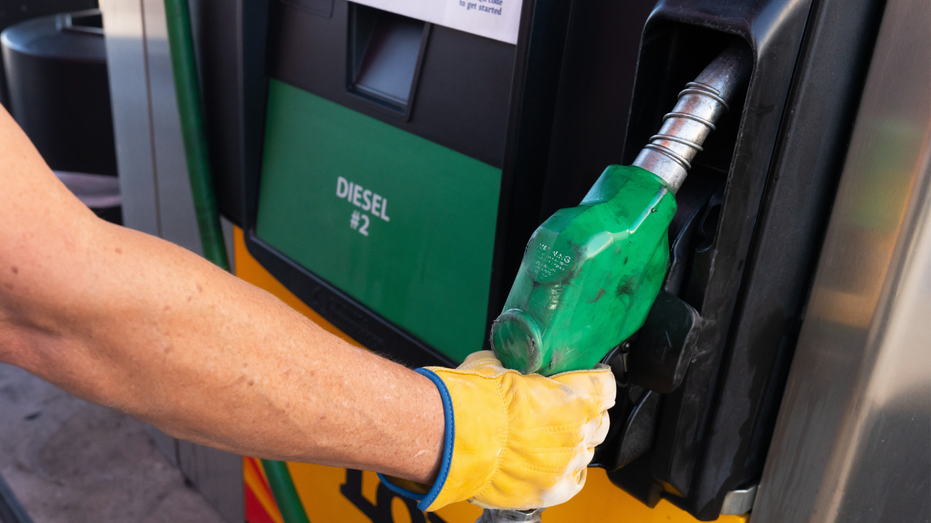
A person grabs the nozzle for diesel fuel at a gas station. (Rebecca Noble/Bloomberg/Getty Images)
In San Francisco, prices have surged even higher. For the first time on record, average diesel costs have surpassed $8 per gallon, according to new data from GasBuddy — marking an unprecedented milestone for any U.S. city.
The climbing fuel costs come as President Donald Trump issued a profanity-laced warning to Iran, giving the regime until Tuesday to allow vessels through the key waterway — or face strikes on its critical infrastructure.
GET FOX BUSINESS ON THE GO BY CLICKING HERE
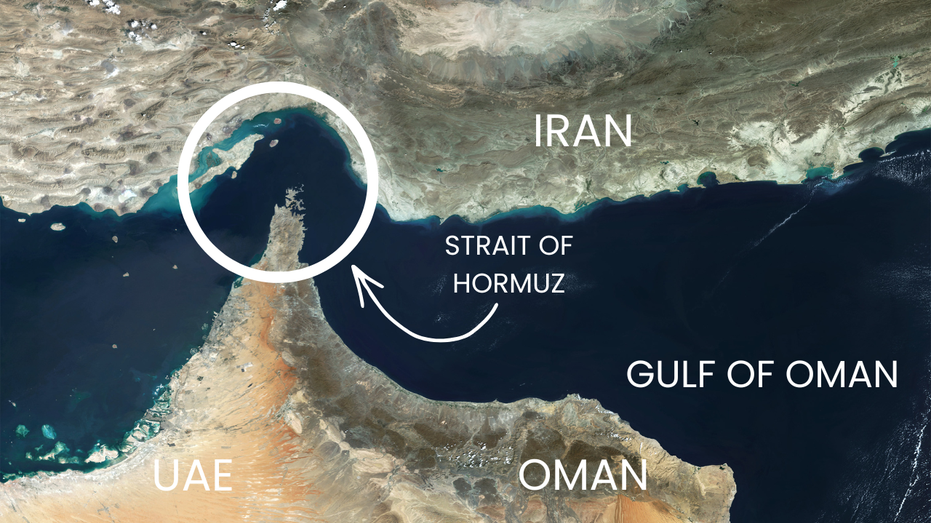
A satellite image shows the Strait of Hormuz, a key maritime passage connecting the Persian Gulf to the Gulf of Oman, vital for global energy supply. (Amanda Macias/Fox News Digital)
The Strait of Hormuz, a waterway between Iran, the United Arab Emirates and Oman, is a critical energy choke point.
“Open the F—– Strait, you crazy b——-, or you’ll be living in Hell – JUST WATCH!” Trump wrote in a Truth Social post to Iranian leaders.
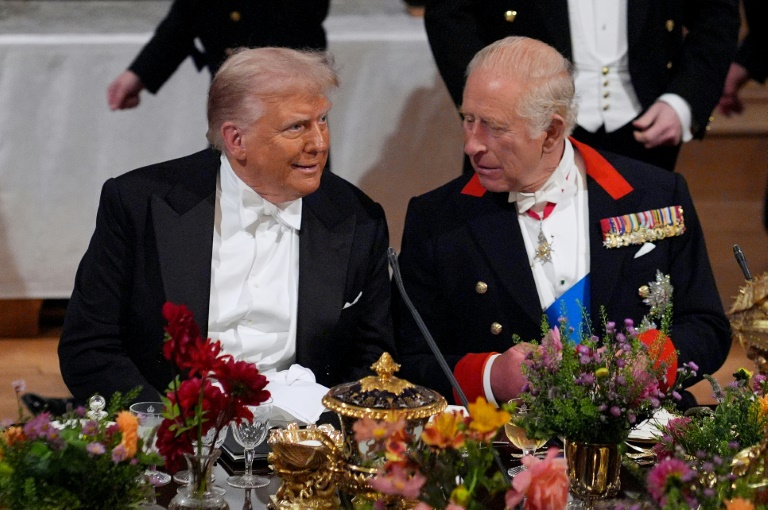
LONDON — King Charles III marked a quiet Easter Sunday on April 5, 2026, attending the traditional Matins service at St. George’s Chapel in Windsor with Queen Camilla and senior royals, but Buckingham Palace confirmed he will not deliver a formal Easter message this year, drawing some criticism after recent Ramadan greetings.
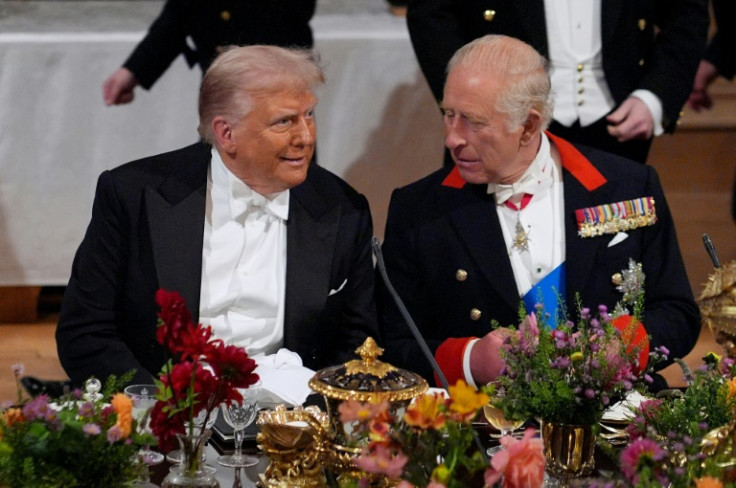
The decision not to issue an Easter address comes despite the monarch’s role as Supreme Governor of the Church of England. While Easter messages are not an annual tradition — the late Queen Elizabeth II issued one only during the COVID-19 pandemic — King Charles did release a faith-focused message on Holy Thursday in 2025. Palace officials stated the omission aligns with long-standing practice for non-Christmas occasions, though it sparked online debate and commentary from figures questioning the balance of interfaith outreach.
On Maundy Thursday, April 2, the King and Queen Camilla traveled to St. Asaph Cathedral in North Wales for the Royal Maundy service, an ancient Christian tradition. The King presented specially minted Maundy money to 77 men and 77 women in recognition of their service, with the number matching his age of 77. The event marked only the second time the service has been held in Wales. Despite a minor anti-monarchy protest visible outside the cathedral, the King appeared in good spirits, displaying confident demeanor praised by observers.
Health updates for the 77-year-old monarch remain positive. Diagnosed with an undisclosed form of cancer in early 2024, King Charles shared encouraging news in a December 2025 video message, revealing that thanks to early detection and effective treatment, his cancer treatment schedule would be significantly reduced in 2026. He described it as “a personal blessing” and urged others to prioritize screening, emphasizing that early intervention can be life-saving. Palace sources indicate his condition has responded exceptionally well, moving into a precautionary phase with ongoing monitoring but no major disruptions to his duties. He continues light public engagements while balancing recovery.
The King’s schedule shows steady activity. He recently delivered the King’s Speech outlining the government’s legislative agenda and maintains a full calendar of constitutional responsibilities. No absences due to health have been reported in recent months, and he appears engaged in both official and private family moments.
Looking ahead, Buckingham Palace announced a major international trip: a state visit to the United States in late April 2026, from April 27 to 30, marking the first such visit by Charles as monarch. The itinerary includes meetings with President Donald Trump, a state banquet at the White House on April 28, and an address to a joint session of Congress — the first by a British monarch in more than three decades. The visit celebrates the 250th anniversary of American independence and aims to strengthen UK-US ties amid geopolitical tensions, including differences over recent conflicts.
On the return journey, the King and Queen Camilla will stop in Bermuda. Congressional leaders from both parties extended the invitation for the historic address, highlighting shared heritage and enduring friendship between the nations. The trip places Charles in a delicate diplomatic role, navigating relations with the Trump administration while representing the United Kingdom on the global stage.
Family matters remain in the spotlight. Reports suggest ongoing estrangement with his younger son, Prince Harry, who resides in the United States. Despite an reported olive branch from the Duke of Sussex, no meeting is expected during the King’s US visit, according to palace insiders and BBC reporting. The King has not publicly commented on the matter, maintaining focus on official duties.
Public and media reaction to recent royal developments has been mixed. Some praised the King’s interfaith gestures, including Ramadan messages, while others expressed disappointment over the lack of an Easter address, viewing it through the lens of his Christian leadership role. Social media commentary ranged from support for his health progress and diplomatic efforts to criticism of perceived priorities.
King Charles continues to champion causes close to his heart, including environmental conservation, interfaith dialogue and support for cancer research and patient care. His reduced treatment schedule allows greater flexibility for public engagements, though the palace emphasizes that his health remains the priority with regular medical reviews.
As Easter celebrations unfolded across the Commonwealth with themes of hope and renewal, the royal family gathered privately at Windsor for the Matins service followed by a family lunch. The Prince and Princess of Wales, their children, and other senior royals were expected to join, continuing long-standing traditions.
The upcoming US state visit represents a significant milestone in Charles’s reign, testing his ability to bridge political divides through soft power and ceremony. With Trump describing the visit as “terrific” and expressing respect for the King, the trip carries symbolic weight at a time of global uncertainty.
Buckingham Palace has provided no further details on the exact program beyond the confirmed dates and congressional address. Preparations are underway, with security and diplomatic teams coordinating closely with US counterparts.
On the health front, the King’s openness about his cancer journey — including the December 2025 message — has been credited with raising awareness. He has spoken movingly about the “community of care” surrounding patients and thanked healthcare workers and supporters.
As April 2026 progresses, King Charles balances recovery, family, faith observances and high-level diplomacy. His reduced treatment offers optimism, while the US visit underscores his role as a unifying figure on the world stage.
No major changes to his immediate schedule have been announced beyond the transatlantic trip. The King is expected to resume normal public duties following Easter, with the King’s Speech already delivered in May preparations noted earlier.
For the latest official updates, the public is directed to Buckingham Palace announcements and verified royal channels. As the monarch navigates personal health milestones and international responsibilities, attention remains on his steady leadership amid a changing global landscape.
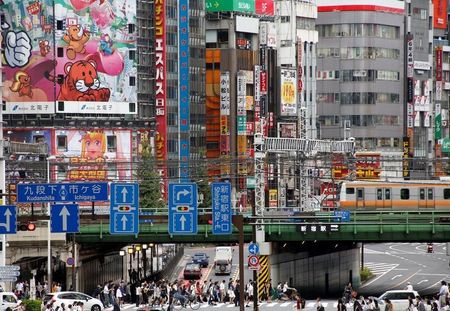
4 reasons why you should own Japan equities
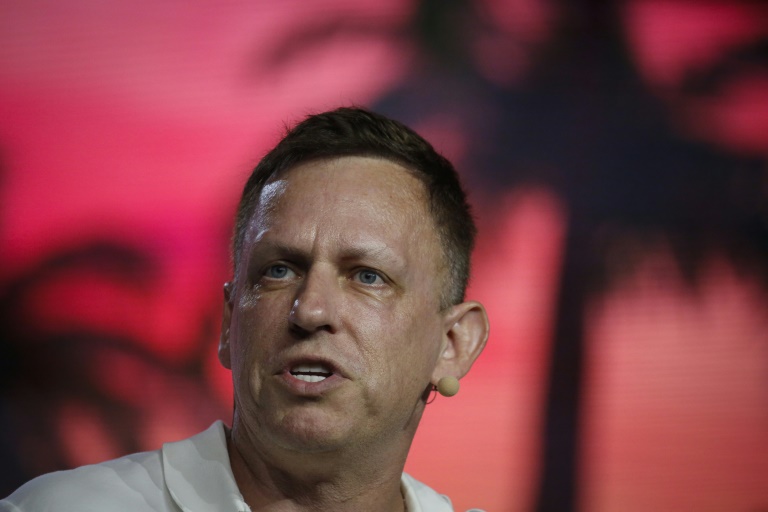
SAN FRANCISCO — Peter Thiel, the billionaire co-founder of PayPal and Palantir Technologies and an early investor in Facebook, remains one of Silicon Valley’s most provocative thinkers. Known for his contrarian views on innovation, competition and the future of humanity, Thiel’s ideas continue to shape startup culture and public discourse even as he delves into topics like artificial intelligence, longevity and biblical prophecy in 2026.
His seminal book “Zero to One: Notes on Startups, or How to Build the Future,” co-authored with Blake Masters, distills lessons from his Stanford lectures and remains a must-read for entrepreneurs. While Thiel has made headlines recently for private lectures on the “Antichrist” and warnings about technological stagnation, his core quotes on business, courage and originality endure as guides for founders navigating uncertain times.
Here are 10 of Thiel’s most powerful and frequently cited quotes, drawn from his writings, interviews and lectures, along with context on why they resonate today.
1. “The most contrarian thing of all is not to oppose the crowd but to think for yourself.”
Thiel emphasizes independent thought over mere rebellion. In a world of groupthink and viral trends, successful innovators identify truths others overlook by returning to first principles. This idea underpins much of his critique of “indefinite optimism” — the vague hope that progress will happen without deliberate planning.
2. “Brilliant thinking is rare, but courage is in even shorter supply than genius.”
Repeated across multiple sources, this line highlights that execution requires bravery more than raw intellect. Thiel, who backed bold bets like SpaceX and Palantir, argues that many smart people fail because they lack the willingness to defy conventional wisdom. A January 2026 wealth column revisited this quote to underscore Thiel’s philosophy that monopoly-building demands fortitude.
3. “Every moment in business happens only once. The next Bill Gates will not build an operating system. The next Larry Page or Sergey Brin won’t make a search engine. And the next Mark Zuckerberg won’t create a social network. If you are copying these guys, you aren’t learning from them.”
From the opening of “Zero to One,” this warns against imitation. True progress comes from creating new categories — going from zero to one — rather than incremental improvements or globalization-fueled competition. In 2026, with AI reshaping industries, Thiel’s call for originality feels especially urgent amid waves of copycat startups.
4. “The best entrepreneurs know this: every great business is built around a secret that’s hidden from the outside. A great company is a conspiracy to change the world; when you share your secret, the recipient becomes a fellow conspirator.”
Thiel portrays successful ventures as quests to uncover and protect unique insights. This “secret” mindset fosters mission-driven teams. He contrasts it with competitive markets where secrets are absent and profits erode.
5. “Monopoly is the condition of every successful business.”
Far from viewing monopolies as evil, Thiel sees them as proof of creating real value through innovation. Competitive markets, he argues, drive businesses to mediocrity. “All happy companies are different: each one earns a monopoly by solving a unique problem. All failed companies are the same: they failed to escape competition,” he writes. This framework influences how venture capitalists evaluate defensibility in 2026’s crowded tech landscape.
6. “Competition can make people hallucinate opportunities where none exist.”
Thiel cautions that intense rivalry distorts reality, leading founders to chase crowded spaces. Instead, he advocates starting in small, overlooked markets and scaling from there. This ties into his broader stagnation thesis, recently reaffirmed in 2025 interviews where he noted slowed progress since the 1970s despite technological advances.
7. “Your mind is software. Program it. Your body is a shell. Change it. Death is a disease. Cure it. Extinction is approaching. Fight it.”
This radical transhumanist declaration reflects Thiel’s long-standing interest in longevity and defying natural limits. He has funded life-extension research and views death as solvable through technology. In recent years, he has connected such ideas to Christian theology and warnings about apocalyptic risks from unchecked globalism or regulation.
8. “Education is a bubble in a classic sense. To call something a bubble, it must be overpriced, and there must be an intense belief in it.”
Thiel famously critiques higher education as an inflated credentialing system that burdens graduates with debt while delivering diminishing returns. He dropped out of Stanford Law School and has promoted alternatives like the Thiel Fellowship, which pays young people to skip college and build companies. This view gained traction amid ongoing debates over student debt and workforce readiness.
9. “What’s preventing you from achieving your ten-year goals inside of six months?”
A provocative challenge to founders, this quote urges aggressive timelines and questions self-imposed limits. Thiel often contrasts “definite optimism” — planning a specific future — with indefinite attitudes that delay progress. It encourages ruthless prioritization in resource-scarce startup environments.
10. “The most valuable businesses of coming decades will be built by entrepreneurs who seek to empower people rather than try to make them obsolete.”
In an era of rapid AI adoption, Thiel stresses technology that augments human capability. He has expressed concerns about stagnation and the need for breakthroughs in energy, transportation and biotechnology. His 2025-2026 lectures on biblical end-times themes and technology regulation tie into broader fears that centralized control could stifle innovation.
Thiel’s influence extends beyond quotes. As a co-founder of Founders Fund, he has backed companies pushing boundaries in defense, data analytics and space. His political involvement, including support for Donald Trump, and recent real estate warnings about a potential “catastrophe” for young Americans reflect a worldview skeptical of mainstream consensus.
Critics accuse Thiel of elitism or overly pessimistic takes on democracy and globalization, citing his statement that “I no longer believe that freedom and democracy are compatible.” Yet supporters praise his willingness to question sacred cows, from university prestige to indefinite progress narratives.
In 2026, with AI accelerating and geopolitical tensions rising, Thiel’s emphasis on secrets, monopolies and courage offers a counterpoint to hype cycles. His recent Rome lectures on the Antichrist — interpreting fears of technology regulation as apocalyptic forces — sparked debate among theologians but underscored his fusion of tech, philosophy and faith.
Entrepreneurs often return to these ideas when facing doubt. Thiel’s PayPal experience taught him that naivety about difficulty can fuel breakthroughs: “If I had known how hard it would be to do something new… I would never have started PayPal.”
His philosophy promotes definite plans over vague hopes. “Indefinite fears about the far future shouldn’t stop us from making definite plans today,” he advises.
As startups grapple with economic pressures and regulatory scrutiny, Thiel’s quotes serve as both inspiration and warning. Building from zero to one requires rejecting imitation, embracing secrets and mustering courage where genius alone falls short.
Thiel continues to invest and speak out, reminding technologists that progress is not inevitable but earned through bold, original action. Whether one agrees with his politics or theology, his core business insights retain power for anyone seeking to create lasting value.
In an age of fast-follower apps and AI wrappers, Thiel’s call to uncover hidden truths and build monopolies on genuine innovation stands as a timeless provocation.


US rescues airman, vows ’hell’ for Iran if Strait stays shut

Iran sets new condition for Hormuz reopening, warns on Red Sea route
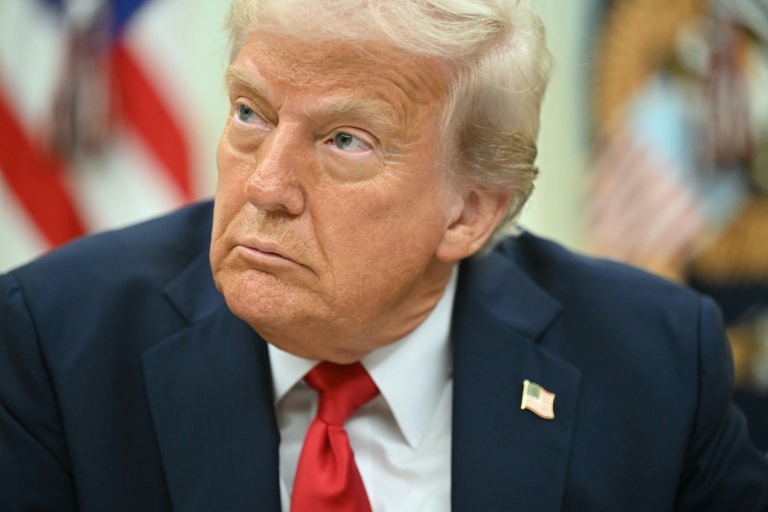
President Donald Trump’s Truth Social account has become a defining platform for his unfiltered communication style, delivering some of the most intense, provocative and widely discussed messages in modern presidential history since its launch in 2022.
From late-night meltdowns and conspiracy-laden tirades to direct geopolitical ultimatums laced with profanity, Trump’s “Truths” frequently dominate news cycles, energize supporters and draw sharp criticism for their tone and content. As of April 2026, the platform remains his primary outlet for bypassing traditional media.
Here are 10 of the most intense Trump Truth Social posts, ranked by a combination of virality, controversy, language intensity and historical impact, based on media coverage and public reaction through early 2026:
- Easter Sunday Iran Ultimatum (April 5, 2026): In a post that quickly went viral, Trump warned Iran: “Tuesday will be Power Plant Day, and Bridge Day, all wrapped up in one, in Iran. There will be nothing like it!!! Open the Fuckin’ Strait, you crazy bastards, or you’ll be living in Hell – JUST WATCH! Praise be to Allah.” The expletive and unexpected closing phrase on Christianity’s holiest day sparked immediate mockery, including from the Drudge Report, while escalating tensions over the Strait of Hormuz amid ongoing Middle East conflict and global fuel disruptions.
- December 2025 Late-Night Meltdown: Trump posted or reshared more than 160 times in a single overnight spree, pushing wild conspiracies about Michelle Obama, claims involving autopens and far-right theories from Alex Jones. Media outlets described it as “unhinged” and “bananas,” with the volume and content overwhelming even longtime observers of his social media habits.
- Early 2026 Frenzied Threat Spree: Facing pressure and declining approval ratings, Trump launched an early-morning rant declaring Democrats “enemies of the state” and sharing AI-generated videos depicting arrests of political opponents, including fantasies about Barack Obama’s imprisonment. Analysts called it one of the most dystopian posting sessions of his second term.
- Post-Assassination Attempt Rants (2024-2025): Following attempts on his life, Trump used Truth Social to accuse opponents of inspiring violence through their rhetoric, with posts that blended defiance, calls for unity and sharp attacks on perceived enemies. These messages mixed personal survival narrative with intense political warfare.
- Election Interference Tirades (2024 Campaign Period): Trump repeatedly labeled legal cases against him as “election interference” and “witch hunts,” using all-caps rants against judges, prosecutors and the Biden administration. One series of posts compared ongoing cases to historical injustices and vowed revenge if returned to power.
- Massive Posting During Opponent Events: During the 2024 Democratic National Convention, Trump fired off dozens of posts in real time, mixing live commentary, attacks and memes in a frenzied counter-programming effort that highlighted his use of the platform as a parallel media operation.
- Conspiracy-Fueled Overnight Rants (Multiple Instances in 2025): Trump has had several documented episodes of posting over 100 times in short windows, including claims about rigged systems, deep-state actors and exaggerated threats to the country. These sessions often blend policy, personal grievances and unverified assertions.
- Direct Attacks on Former Allies and Officials: Posts targeting former Cabinet members, military leaders or GOP critics with nicknames and accusations of disloyalty or incompetence rank among the most personal and intense. These score-settling messages often escalate internal party tensions.
- Threats Related to Foreign Policy and Domestic Protests: Trump has used the platform to issue strong warnings about protests, border security and international adversaries, sometimes employing apocalyptic language about the future of the nation if his policies are not followed.
- Late-Night Reflection and Score-Settling Posts: Many of Trump’s most intense messages come during sleepless nights, where he revisits old grievances, praises loyalists and attacks media or political foes with raw, unedited intensity that contrasts sharply with traditional presidential communication.
These posts reflect Trump’s consistent approach: direct, combative and designed to command attention. Supporters praise them as authentic and effective at cutting through “fake news,” while critics argue they undermine institutional norms, inflame divisions and occasionally cross into dangerous territory by targeting individuals or institutions with inflammatory rhetoric.
The Easter 2026 Iran post stands out for combining profanity, geopolitical stakes and the unusual “Praise be to Allah” closing on a major Christian holiday. It tied into real-world disruptions from the Strait of Hormuz closure, which has affected global energy markets and contributed to fuel shortages in places like Australia. The Drudge Report’s mocking coverage amplified its reach, turning a serious national security message into a cultural meme.
Analysts note that Trump’s Truth Social activity has grown more frequent and intense during his second term, with late-night and early-morning sprees becoming recurring patterns. The platform’s design, which allows longer posts and fewer content restrictions than pre-2021 Twitter, enables the free-flowing style that defines his online presence.
Media coverage of these moments often focuses on tone over substance, with outlets issuing content warnings for language or highlighting potential impacts on diplomacy, domestic stability or public discourse. Fact-checkers frequently scrutinize claims made in rapid-fire threads, while Trump’s team dismisses criticism as biased attacks on free speech.
The intensity of these posts has real consequences. They shape public narratives, influence supporter mobilization and sometimes force responses from government agencies or foreign governments. The Iran post, for instance, added volatility to already tense energy markets and prompted commentary from foreign policy experts about escalation risks.
Trump’s defenders point out that previous presidents used strong language in private or through surrogates; his approach simply makes it public and immediate. They argue the intensity matches the seriousness of issues like border security, economic challenges and international threats.
Critics counter that presidential rhetoric carries unique weight and responsibility. Posts that employ profanity, conspiracy theories or personal attacks risk normalizing extreme discourse and eroding trust in institutions.
As of April 2026, Trump continues active posting, blending policy announcements, personal commentary and campaign-style attacks even while serving as president. The platform has millions of followers, though engagement metrics vary and traditional media still amplifies the most provocative messages.
The top 10 list evolves with new posts, but recurring themes — defiance, score-settling, unfiltered opinion and direct confrontation — remain constant. The Easter Iran message, with its blend of military threat, profanity and religious phrasing, may rank among the most memorable for its timing and stylistic choices.
For historians and political scientists, Trump’s Truth Social archive offers a raw record of his thinking and communication strategy. For everyday Americans, the posts provide a direct window into the president’s mind, bypassing filters but sometimes generating more heat than light.
Whether viewed as brilliant political theater or concerning norm-breaking, these intense Truths have undeniably shaped the Trump era. As global events unfold — from Middle East tensions to domestic policy battles — observers expect the platform to remain a primary venue for some of the most passionate, controversial and closely watched presidential statements in history.
The full impact of such posts continues to be debated, but their ability to dominate conversations remains undisputed. In an age of fragmented media, Trump’s Truth Social remains one of the most potent tools in modern American politics — for better or worse.
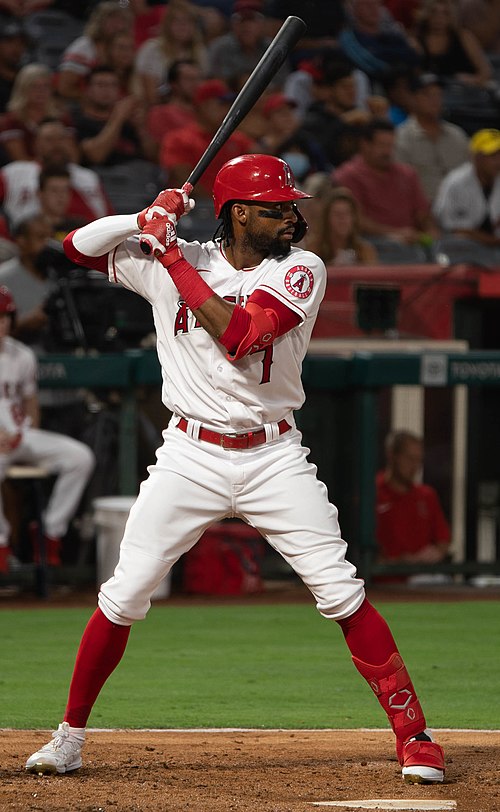
Jo Adell delivered one of the most spectacular defensive performances in recent MLB history Saturday night, robbing the Seattle Mariners of three potential home runs to preserve a 1-0 victory for the Los Angeles Angels.
The 26-year-old right fielder made leaping grabs to deny Cal Raleigh in the first inning, Josh Naylor in the eighth and J.P. Crawford in the ninth — the final one sending him tumbling into the stands near the right-field foul pole. Zach Neto provided the game’s only offense with a solo home run, while Angels pitching held the Mariners scoreless in a tense pitchers’ duel at Angel Stadium.
“I’ve never seen three home run robberies in one game, and I’ve never seen a guy on the third one fall into the stands, catch the ball and keep his feet in like he’s a wide receiver,” said Torii Hunter, a nine-time Gold Glove winner and special assistant to the Angels’ general manager, who watched from the bench. “I was jumping up and down. I almost passed out. That might be the greatest defensive game I’ve ever seen.”
Adell’s heroics began in the top of the first when Mariners catcher Cal Raleigh launched a deep fly ball to straightaway right field. Adell raced to the wall, leaped high above the yellow padding and pulled the ball back into the field of play, denying a solo homer and setting the tone for the evening.

The Angels took a 1-0 lead in the bottom of the third when Neto crushed a pitch from Seattle starter Emerson Hancock over the center-field wall. From there, the game became a showcase for stellar defense and pitching on both sides.
Adell struck again in the eighth against first baseman Josh Naylor. With a runner on and the Mariners threatening to tie the game, Naylor drove a ball to right that appeared destined for the seats. Adell made a nearly identical leaping grab at the wall, crashing against the padding but securing the out to keep the shutout intact.
The most dramatic moment came in the top of the ninth with the Angels clinging to their one-run lead. Leadoff hitter J.P. Crawford smoked a drive toward the right-field corner. Adell sprinted from his position, launched himself airborne near the foul pole, caught the ball at the peak of his jump and flipped over the short wall into the first row of seats. He emerged holding his glove high, the ball securely inside, as fans erupted. Umpires reviewed the play and confirmed the catch, ending the inning and sealing the victory.
Mariners manager Dan Wilson could only tip his cap. “Three great catches, no question,” Wilson said. “It’s frustrating when you hit balls that hard and they don’t go out, especially three times in one night against the same guy.”
The performance capped a remarkable turnaround for Adell defensively. Once criticized for inconsistent routes and arm strength after being drafted 10th overall by the Angels in 2017, he transformed into a Gold Glove finalist in 2024 through relentless work with outfield coaches. Saturday’s game represented the pinnacle of that improvement.
Angels manager Ron Washington praised Adell’s preparation and athleticism. “Jo has worked extremely hard to become the complete player we see today,” Washington said. “Those catches weren’t just athletic — they were smart. He reads the ball off the bat as well as anyone now.”
The shutout was a team effort on the mound. Starter Tyler Anderson and a string of relievers combined to scatter hits while stranding Mariners runners. Seattle, which entered the game with one of the American League’s stronger lineups, managed just five hits and left 10 runners on base.
For the Mariners, the loss dropped them in the tight AL West standings. Despite the offensive frustration, Wilson highlighted his team’s resilience. “We hit some balls hard tonight,” he said. “Sometimes baseball is just like that — you run into a guy having the night of his life in the outfield.”
Neto’s homer proved decisive in a game defined by missed opportunities for Seattle. The young shortstop has provided consistent power for the Angels early in 2026, offering hope for a rebuilding club looking to compete in a loaded division.
Adell’s night drew immediate comparisons to legendary defensive gems. Fans and analysts flooded social media with highlights of the three catches, many calling it one of the best single-game outfield performances in years. Video replays from multiple angles showed the athleticism and timing required for each grab, particularly the ninth-inning robbery where Adell maintained control while crashing into spectators.
The Angels improved to .500 on the young season with the win, splitting the first two games of the weekend series against Seattle. Sunday’s finale will feature a matchup that could decide early momentum in the division race.
For Adell, the game represented validation of his growth since breaking into the majors. Drafted as a toolsy outfielder with immense potential, he has battled consistency at the plate but steadily elevated his defense. Saturday’s performance will likely earn him national recognition and possibly a highlight-reel spot in future defensive award conversations.
Teammates mobbed Adell after the final out, with several pointing to the sky in celebration of his heroics. Hunter, who made his own share of memorable catches during a decorated career, called the sequence “unbelievable” and predicted it would be talked about for years.
As the Angels continue their 2026 campaign, Adell’s emergence as an elite defender adds a dynamic element to a roster blending young talent and veteran leadership. While offensive production remains a work in progress for Los Angeles, nights like Saturday remind fans of the excitement elite defense can generate.
The Mariners, meanwhile, will look to bounce back and avoid being shut out by spectacular plays in Sunday’s series finale. For one night in Anaheim, however, Jo Adell was the undisputed star — turning would-be home runs into outs and a close game into a memorable 1-0 victory.
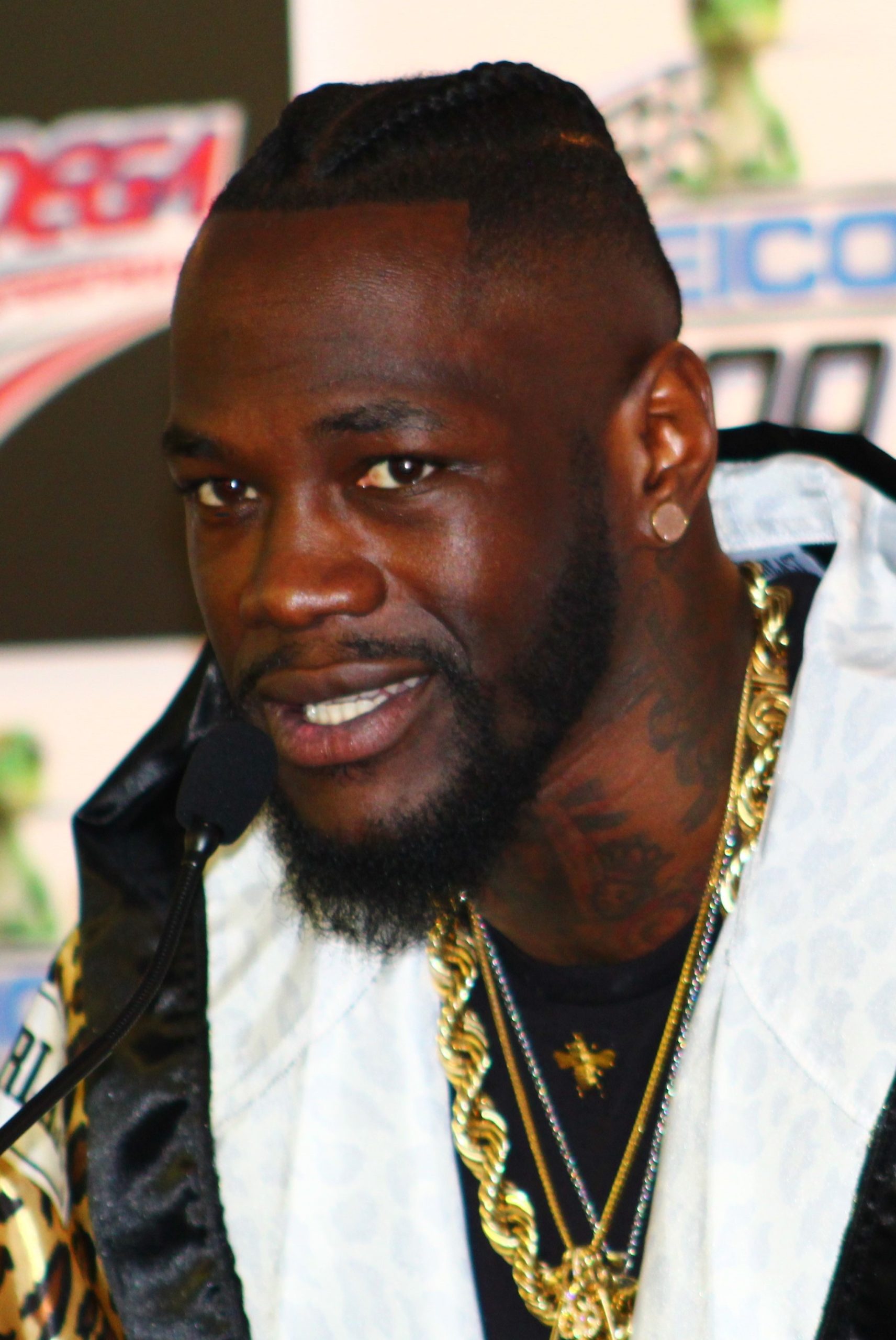
Deontay Wilder outlasted a relentless Derek Chisora in a brutal, back-and-forth heavyweight scrap Saturday night at The O2 Arena, winning by split decision in what many believe was the final fight of the 41-year-old “Warrior’s” career.

The judges scored the 10-round bout 115-113 and 115-111 for Wilder, with one card at 112-115 for Chisora. Wilder dropped Chisora twice — once in the fourth round and again in the ninth — but the British veteran rose each time and continued pressing forward with trademark aggression that thrilled a raucous London crowd.
Wilder, 40, improved to 44-4-1 with 43 knockouts. Chisora fell to 36-14 with 23 KOs in a fight that served as a reminder of both men’s enduring heart and declining but still dangerous power.
The contest, billed as a crossroads for two veteran heavyweights with 100 combined professional fights, delivered on its promise of action. From the opening bell, Chisora marched forward, throwing heavy hooks and uppercuts while Wilder looked to counter with his vaunted right hand.
Chisora’s pressure forced Wilder to the ropes early, but the American’s superior reach and timing allowed him to pick shots and create distance. In the fourth round, Wilder landed a sharp right hand that sent Chisora to the canvas for the first time. The Briton beat the count and resumed his forward march, absorbing punishment but landing enough clean shots to keep the fight competitive on the scorecards.
The middle rounds featured sustained exchanges that left both men bloodied. Chisora’s face swelled from Wilder’s jab and occasional power shots, while Wilder showed signs of fatigue from the constant pressure. The crowd chanted “Chisora! Chisora!” as the local favorite refused to back down.
The drama peaked in the ninth round when Wilder connected with another clean right that dropped Chisora again. Once more, the veteran climbed to his feet and finished the round on his feet, swinging wildly. Wilder appeared to have the fight in control heading into the final round, but Chisora’s late rally kept the outcome in doubt until the scores were announced.
“I knew it was going to be tough. Derek is a warrior. He kept coming and coming,” Wilder said in the ring afterward. “I dropped him twice, but he wouldn’t stay down. Respect to him. This was a hell of a fight.”
Chisora, emotional in his post-fight interview, hinted strongly that this could be his last bout. “I’m too old for this s***,” he said with a smile, echoing comments he made in the dressing room after the fight. “I’ve had a great career. I’ve fought the best. If this is the end, I’m happy with what I’ve done.”
Promoter Eddie Hearn, whose Matchroom Boxing staged the event on DAZN pay-per-view, praised both men for delivering an entertaining spectacle. “This is why we love heavyweight boxing,” Hearn said. “Two warriors who left everything in the ring. Derek Chisora has given British boxing so much over the years.”
The victory keeps Wilder in the heavyweight title conversation, though he remains far from the division’s elite after recent losses to Tyson Fury and Anthony Joshua. Wilder has spoken of wanting one more shot at a world title, and a win over Chisora keeps that door ajar.
For Chisora, the defeat adds to a long list of close calls against top competition. He has shared the ring with Fury (three times), Joshua, Vitali Klitschko and now Wilder, often pushing favorites to their limits despite being the underdog.
Full fight highlights circulating rapidly on YouTube and social media captured the drama: the two knockdowns, Chisora’s relentless pressure, Wilder’s counterpunching, and the emotional scenes after the final bell. Clips of the ninth-round drop and Chisora rising again have already garnered hundreds of thousands of views.
The undercard featured several competitive bouts, but the main event overshadowed everything else. Fans inside The O2 created an electric atmosphere from the ring walks onward, with Union Jack flags waving and chants echoing throughout the arena.
Wilder’s trainer, Malik Scott, credited his fighter’s improved conditioning and ring generalship. “Deontay showed tonight that he still has the tools,” Scott said. “He stayed composed under pressure and picked his moments. That’s the sign of a veteran.”
Medical staff checked both fighters after the bout. While no serious injuries were immediately reported, both men showed the wear of a hard 10 rounds. Heavyweight bouts of this intensity often take a visible toll, and Saturday’s scrap was no exception.
The fight was originally targeted for earlier in 2026 but was finalized for April 4 after negotiations. It marked a rare appearance for Wilder in the United Kingdom, where he has a significant fan base despite his rivalries with British heavyweights.
Boxing analysts offered mixed views on the scoring. Some felt Wilder clearly won by landing the more meaningful power shots and scoring the knockdowns. Others argued Chisora’s constant pressure and higher output warranted a closer look or even the victory on one or two cards.
Regardless of the debate, the consensus was that the fight delivered entertainment value. It served as a bridge between the current heavyweight landscape and the glory days of both fighters.
Wilder, a former WBC champion, has not held a world title since losing it to Tyson Fury in 2020. His power remains his greatest asset, as evidenced by the two knockdowns Saturday. At 40, questions remain about how much he has left, but a win over a tough opponent like Chisora provides momentum.
Chisora has long been one of boxing’s most beloved characters in Britain. His willingness to fight anyone, anytime, has earned him respect even in defeat. Whether he retires or returns for one more payday remains to be seen, but his post-fight comments suggested he is weighing his future carefully.
For fans, the full fight highlights offer multiple angles of the key moments: the first-round feeling-out process, the fourth-round knockdown, the sustained exchanges in rounds six through eight, and the dramatic ninth. Commentary from DAZN’s team captured the excitement as the crowd roared with every landed punch.
The event drew a strong pay-per-view audience on DAZN, with many tuning in for the nostalgia of seeing two veterans who have thrilled fans for over a decade.
As the heavyweight division continues to evolve with younger contenders like Jared Anderson and Moses Itauma rising, nights like Saturday remind audiences of the heart and resilience that defined an earlier era.
Wilder and Chisora embraced in the ring after the decision, exchanging words of respect. In an era where trash talk often dominates the buildup, their post-fight sportsmanship stood out.
The bout adds another chapter to the rich history of British heavyweight boxing events at The O2. From Joshua’s early triumphs to Fury’s homecoming fights, the venue has hosted many memorable nights. Wilder vs. Chisora will be remembered as one of the most entertaining, if not the most technically perfect.
For now, Wilder moves forward with a much-needed victory, while Chisora contemplates a career that has spanned 50 professional fights and countless memorable moments.
Highlights packages are already available across major platforms, allowing fans who missed the live broadcast to relive the action. The images of Wilder raising his arms in victory and Chisora acknowledging the crowd will linger long after the final bell.
In the unpredictable world of heavyweight boxing, one thing remains certain: when two warriors like Deontay Wilder and Derek Chisora step into the ring, fans are guaranteed a fight worth remembering.

10 Greatest Character-Driven Sci-Fi Movies, Ranked

The Gateshead restaurant that attracts big celebrity names
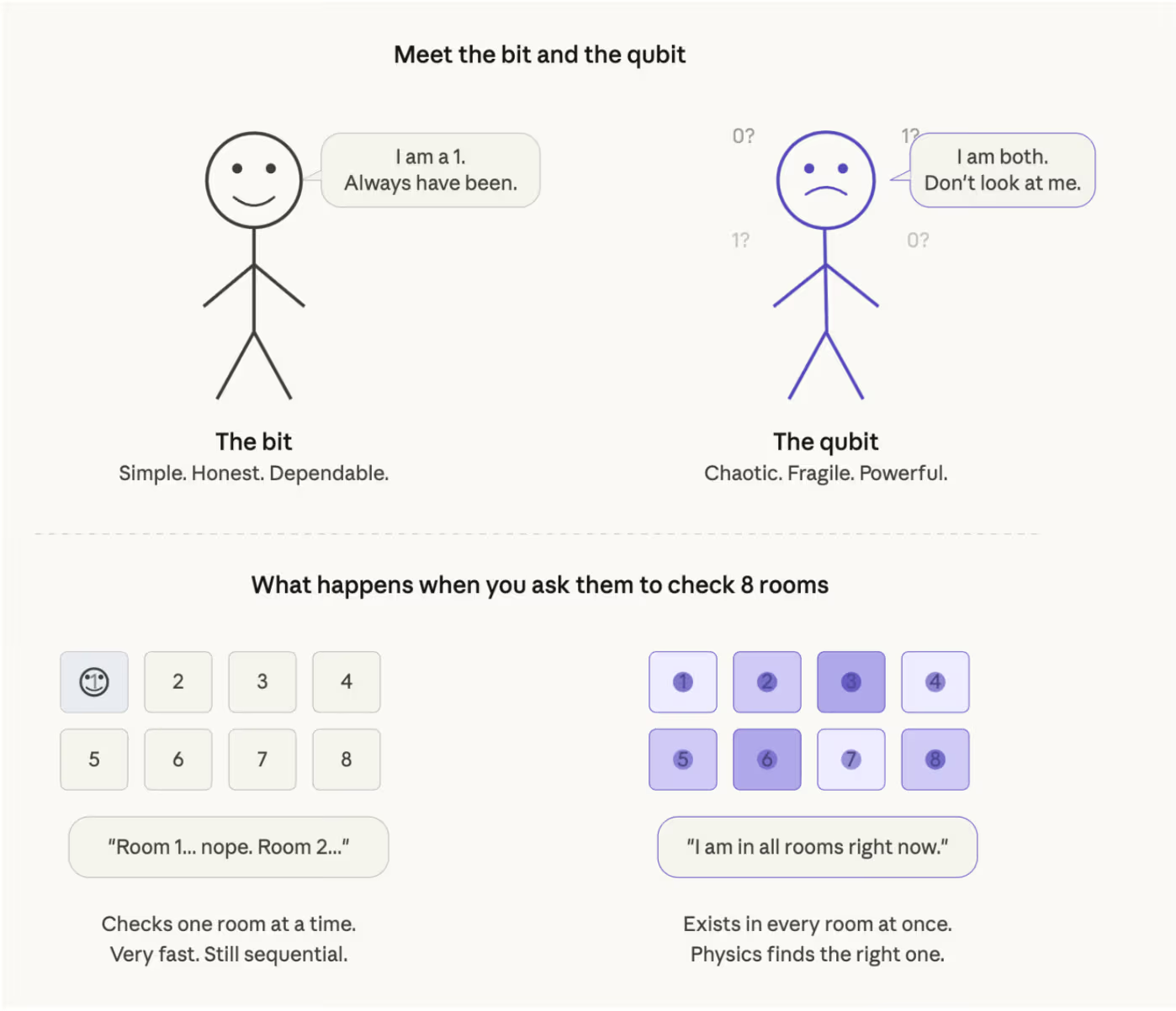
Why the mind-bending physics of quantum computing is terrifying for bitcoin and crypto


-

 NewsBeat3 days ago
Steven Gerrard disagrees with Gary Neville over ‘shock’ Chelsea and Arsenal claim | Football
-

 Business3 days ago
No Jackpot Winner and $194 Million Prize Rolls Over
-

 Fashion2 days ago
Weekend Open Thread: Spanx – Corporette.com
-
Entertainment6 days ago
Fans slam 'heartbreaking' Barbie Dream Fest convention debacle with 'cardboard cutout' experience
-

 Crypto World4 days ago
Gold Price Prediction: Worst Month in 17 Years fo Save Haven Rock
-

 Tech7 days ago
The Pixel 10a doesn’t have a camera bump, and it’s great
-
Crypto World5 days ago
Dems press CFTC, ethics board on prediction-market insider trades
-

 Tech7 days ago
Avatar Legends: The Fighting Game comes out in July and it looks pretty slick
-

 Sports23 hours ago
India men’s 4x400m and mixed 4x100m relay teams register big progress | Other Sports News
-

 Business4 days ago
Login and Checkout Issues Spark Merchant Frustration
-

 Tech6 days ago
Apple will hide your email address from apps and websites, but not cops
-

 Tech5 days ago
EE TV is using AI to help you find something to watch
-

 Sports5 days ago
Tallest college basketball player ever, standing at 7-foot-9, entering transfer portal
-

 Politics6 days ago
Should Trump Be Scared Strait?
-

 Tech6 days ago
Flipsnack and the shift toward motion-first business content with living visuals
-

 Fashion6 days ago
The Best Spring Trends of 2026
-

 Sports6 days ago
Women’s hockey camp eyes fitness boost, tactics ahead of WC 2026 campaign | Other Sports News
-

 Crypto World6 days ago
U.S. rule change may open trillions in 401(k) funds to crypto
-
Tech6 days ago
Daily Deal: StackSkills Premium Annual Pass
-

 Tech5 days ago
How to back up your iPhone & iPad to your Mac before something goes wrong
You must be logged in to post a comment Login