





Connect with us

Business

Private sector adds 63,000 jobs in February: ADP

Published

on

Private sector adds 63,000 jobs in February: ADP

Companies in the private sector added 63,000 jobs in February, payroll processing firm ADP said Wednesday.

The figure is above economists’ estimates of a gain of 50,000 jobs. The prior month’s payrolls number was revised lower to a gain of just 11,000 from an initially reported gain of 22,000.

Advertisement

“We’ve seen an increase in hiring and pay gains remain solid, especially for job-stayers,” said Nela Richardson, ADP chief economist. “But with hiring concentrated in only a few sectors, our data shows no widespread pay benefit from changing jobs. In fact, the pay premium for switching employers hit a record low in February.”

A construction worker hammers a beam

A construction worker hammers a beam while renovating a road in the Union Market district in Washington, DC, US, on Friday, Sept. 8, 2023. US employment gains will slow significantly and be more concentrated across few sectors in the decade through 2 (Al Drago/Bloomberg via Getty Images / Getty Images)

STANLEY BLACK & DECKER TO CUT HUNDREDS OF JOBS, SHUT CONNECTICUT PLANT

Education and health services added 58,000 positions, leading job creation in February. Construction added 19,000, information gained 11,000 and other services added 6,000.

A professor giving a lecture to her class.

A professor talks to a group of students in a lecture hall. (iStock)

Financial activities added 2,000 jobs, natural resources and mining gained 2,000 and leisure and hospitality added 1,000 positions.

Advertisement

DEADLIEST JOBS IN AMERICA REVEALED

On the negative side, professional and business services lost 30,000 jobs. Manufacturing lost 5,000 positions and trade, transportation and utilities lost 1,000.

Auto manufacturing

Manufacturing lost 5,000 positions in December, ADP said. (Emily Elconin/Bloomberg via Getty Images)

EBAY CUTS 800 JOBS ACROSS COMPANY OPERATIONS JUST DAYS AFTER DROPPING $1.2B ON TRENDY GEN Z FASHION APP

Large businesses – those with 500 or more employees – added 10,000 jobs in February. Businesses with 50 to 499 employees lost 7,000 workers. Establishments with fewer than 50 employees added 60,000 jobs.

Advertisement

CLICK HERE TO GET FOX BUSINESS ON THE GO

Wage growth in February was little changed from last month. People staying in their roles saw their pay climb 4.5% from the prior year, while pay gains for those changing their jobs fell slightly to 6.3% from 6.4% in January.

Continue Reading
Click to comment

Leave a Reply

Your email address will not be published. Required fields are marked *

Business

Earnings call transcript: Thermador Groupe reports stable H2 2025 performance

Published

on


Earnings call transcript: Thermador Groupe reports stable H2 2025 performance

Continue Reading

Business

Humacyte at TD Cowen Conference: Strategic Advances in Vascular Care

Published

on


Humacyte at TD Cowen Conference: Strategic Advances in Vascular Care

Continue Reading

Business

BSE receives Sebi nod to launch F&O contracts for Sensex Next 30 index

Published

on

BSE receives Sebi nod to launch F&O contracts for Sensex Next 30 index
BSE has received approval from the Securities and Exchange Board of India (Sebi) to launch derivative contracts for the BSE Sensex Next 30 index. The index tracks the next largest and most liquid companies in BSE 100 that are in the derivative segment and not part of BSE Sensex 30 index.

India’s oldest exchange informed about the development on Wednesday after market hours. It said the exchange will offer cash settled monthly index futures and monthly index options, with expiry date as the last Thursday of the expiry period.

BSE is yet to intimate the exchanges about the launch timing.

Currently, BSE offers Futures & Options contracts for Sensex with weekly and monthly expiries. It also offers derivatives contracts for BANKEX and SENSEX 50 with monthly expiries.

Advertisement

Also read: IndiGo shares drop 5% on 500+ flight cancellations; SpiceJet slides 8%


The Iran-Israel war pulled down the markets. The benchmark Nifty closed with cuts of 1.6% or 385 points at 24,480 while the 30-stock BSE Sensex tanked 1,123 points or 1.4% to settle at 79,116.19.
BSE shares have had a stellar run on the D-Street, rallying 81% in the past 12 months. The multibagger stock, which has delivered a whopping 1,658% returns over a three-year period, has been under consolidation in the past three months, slipping 4% in the said period.It has slipped below its 50-day simple moving average (SMA) of Rs 2,773 while holding its 200-day SMA of Rs 2,582.

BSE reported a 174% jump in its December quarter consolidated net profit at Rs 602 crore compared to Rs 220 crore reported in the year ago period. The profit after tax (PAT) is attributable to the shareholders of the holding company.

The company’s revenue from operations stood at Rs 1,244 crore in Q3FY26, up 62% over Rs 768 crore posted in the corresponding period of the last financial year.

The exchange reported an 8% growth in its PAT on a sequential basis versus Rs 558 crore in Q2FY26 while the topline increased by 16% quarter-on-quarter compared to Rs 1,068 crore in the July-September quarter of FY26.

Advertisement

The operating Earnings Before Interest, Taxes, Depreciation and Amortisation (EBITDA) including core SGF stood at Rs 732 crore versus Rs 680 crore in Q2FY25 and Rs 236 crore in the year ago period. It was up 8% while surging 230% YoY.

(Disclaimer: The recommendations, suggestions, views, and opinions given by the experts are their own. These do not represent the views of The Economic Times.)

Continue Reading

Business

Residents campaign against homes they fear will turn village into ‘Bristol suburb’

Published

on

Business Live

Housing planned in Pill as part of council’s local plan

The viaduct over the Green in Pill, carrying the former Portishead railway which is set to reopen (Image: John Wimperis)

The viaduct over the Green in Pill, carrying the former Portishead railway which is set to reopen(Image: Local Democracy Reporting Service)

Locals in a “small friendly village” in North Somerset fear that plans to build 1,000 homes in the countryside around it will turn it into a suburb of Bristol.

Advertisement

Pill is one of several villages in North Somerset’s greenbelt where huge amounts of new housing are proposed in the council’s local plan. In 2024, the government increased North Somerset Council’s 15-year housebuilding target from 15k homes to 24k and the council says it has to focus on the green belt as other land is at risk of flooding.

Now 2,324 people have signed a petition by Sustainable Pill and Distinct against the number of homes proposed for Pill – although only 815 of them had postcodes within North Somerset. The petition was presented to a full council meeting on February 24 by Pill’s local councillor Jenna Ho Marris (Green), who is also the council’s cabinet member for homes and health.

Ms Ho Marris said: “As a cabinet member, I did vote on this draft plan going through including these proposals but I acknowledge there is still a lot of doubt about whether central government is going to invest in the local infrastructure to support our local plan.”

The local plan is a hugely important document produced by the local council which sets out the area’s planning policies for the next 15 years and allocates areas for where new housing should go. After years of delays, North Somerset Council is set to submit its draft local plan to the planning inspector for government approval this month.

Advertisement

Reading out the text of the petition, Ms Ho Marris said: “The plan for Pill includes recommendations to build 1,000 houses on four areas of greenbelt land around the village. This would increase the number of homes by around 40%, threatening to turn our small friendly village into a fragmented suburb of Bristol and destroy acres of beautiful green space.

“It will also put huge pressure on existing infrastructure, particularly roads. There is definitely a need for more housing, particularly affordable housing, in North Somerset. However in our view the number proposed for Pill is completely out of proportion with the size of the village. We believe that the additional housing should be more fairly shared across North Somerset.”

Ms Ho Marris added: “Recently at a local neighbourhood health event, GPs in the area told me that they are incredibly worried about an extra 1,000 homes in their area.” She said she had spoken to the area’s integrated care board who said there were no plans to increase GP capacity.

The council’s cabinet member for planning and environment Annemieke Waite (Winford, Green) said the petition would be taken into account. She said: “I have been in touch with the planning team about this already and they are considering the content, understand very clearly the local concerns, and that this will be passed to the appointed planning inspection in due course.”

Advertisement

The village recently saw off a threat to close its library, after keeping the council-run library open by making more cuts elsewhere was the most supported option in a public consultation. It is also set to see its train station reopened soon as part of the ongoing restoration of the Portishead Railway.

Continue Reading

Business

FIIs sold about Rs 11,000 crore worth Indian stocks in 2 days of US-Iran war

Published

on

FIIs sold about Rs 11,000 crore worth Indian stocks in 2 days of US-Iran war
Foreign institutional investors (FIIs) stepped up selling on Thursday, taking their cumulative outflows in the two trading sessions of March to around Rs 11,000 crore as escalating hostilities in West Asia rattled markets.

According to provisional data from the BSE, FIIs sold equities worth Rs 8,752 crore on Thursday. Domestic institutional investors (DIIs) provided support, buying shares worth Rs 12,068 crore, cushioning part of the fall.

The fresh outflows come after FIIs had briefly turned net buyers in February, infusing Rs 12,590 crore into Indian equities. That reversal had raised hopes of a stabilising trend following heavy withdrawals in recent months. In calendar 2025 so far, foreign investors had already pulled out around Rs 34,000 crore in January, after selling over Rs 1.5 lakh crore in the previous year.

The renewed selling coincides with a sharp deterioration in geopolitical conditions. Equity investors have seen wealth erosion of Rs 16.32 lakh crore in just two trading sessions as tensions between the US, Israel and Iran intensified.

Advertisement

On Wednesday, the BSE Sensex dropped over 1,122 points to close at 79,116. During the session, it had plunged as much as 1,795 points. Since Friday, the index has fallen 2,171 points, or 2.67%, following the onset of hostilities on February 28. Over the same period, the market cap of BSE-listed firms shrank by Rs 16.32 lakh crore.


Markets were shut on Tuesday for Holi, compressing volatility into just two sessions.
Ajit Mishra, SVP Research at Religare Broking, said sentiment remains fragile. “Markets traded with a negative bias on Wednesday, extending their recent corrective trend amid weak global cues and persistent geopolitical concerns. Continued foreign institutional selling and currency volatility further dampened confidence,” he said.A key driver of risk aversion has been the surge in crude oil prices. Brent crude rose 1.63% to $82.73 per barrel, reflecting concerns over supply disruptions through the Strait of Hormuz. Higher oil prices raise inflation risks, pressure the rupee and complicate the interest rate outlook, factors that typically weigh on foreign flows.

Analysts say FIIs are reacting to both global risk aversion and India-specific macro sensitivities to oil. With nearly half of India’s crude imports transiting through the Strait of Hormuz, any prolonged disruption could worsen the current account deficit and fiscal pressures.

From a technical standpoint, Shrikant Chouhan, Head of Equity Research at Kotak Securities, said the near-term outlook remains weak but oversold. He sees 24,300 on the Nifty and 78,500 on the Sensex as crucial support levels. “If the market sustains above this level, the immediate resistance would be at 24,600/79,500. Conversely, a decline below 24,300/78,500 could change the sentiment,” he said, adding that volatility is expected to remain elevated.

For now, domestic institutions have offset part of the foreign selling. But with crude prices elevated and the conflict showing little sign of immediate resolution, the direction of FII flows could remain a decisive factor for market stability in the coming sessions.

Advertisement
Continue Reading

Business

Form 4 RENN Fund Inc For: 4 March

Published

on


Form 4 RENN Fund Inc For: 4 March

Continue Reading

Business

Sod turned on Perdaman solar farm

Published

on

Sod turned on Perdaman solar farm

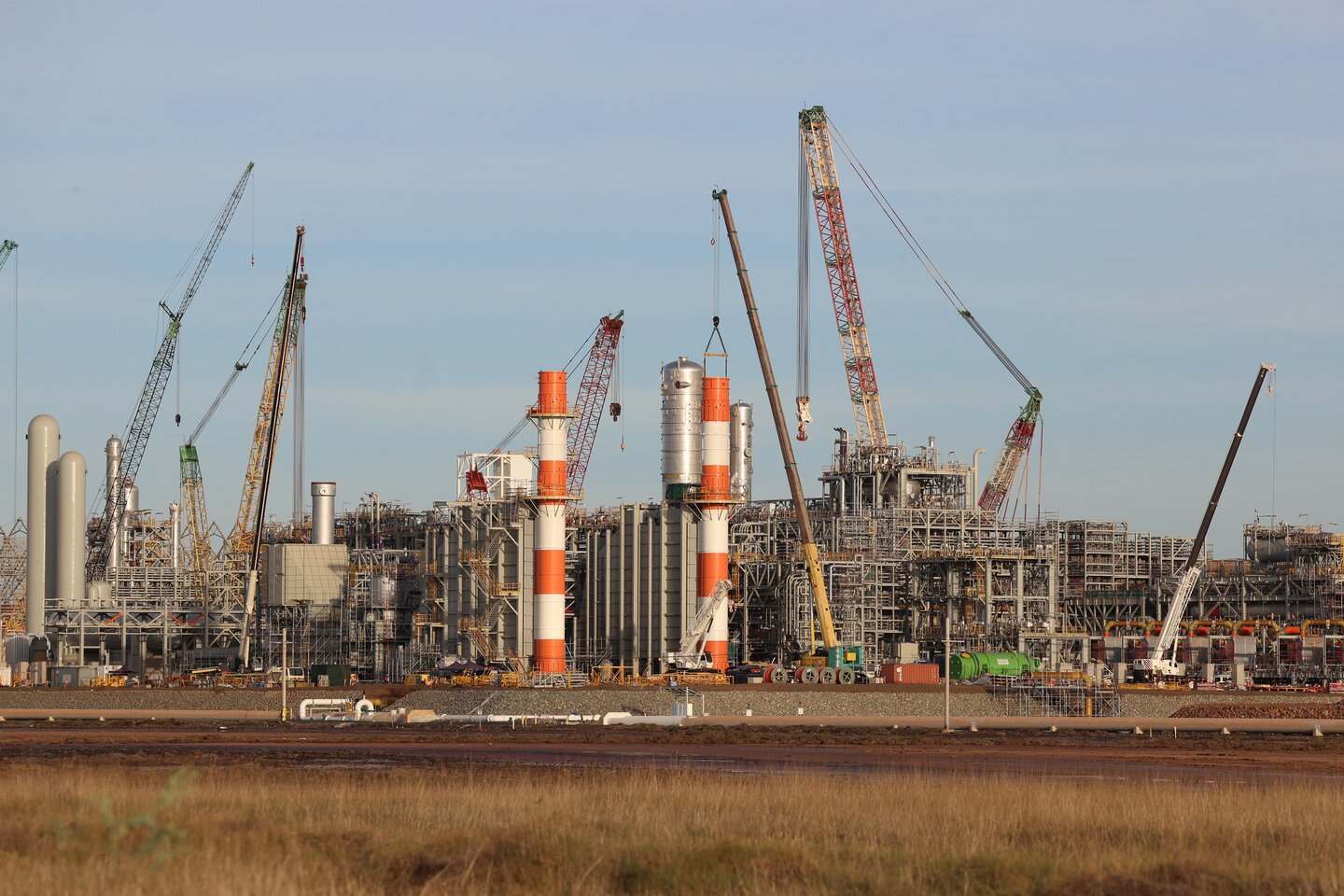
Perdaman has turned sod on its 30-megawatt Helios solar farm project near Karratha, designed to supply renewable energy to its US$4.5 billion Ceres urea plant.

Continue Reading

Business

Goodles continues to modernize mac and cheese

Published

on

Goodles continues to modernize mac and cheese

Company aims to grow the category by appealing to untapped consumer groups with healthier ingredients, unique flavors.

Continue Reading

Business

Texas Capital Bancshares stock hits 52-week high at 22.52 USD

Published

on


Texas Capital Bancshares stock hits 52-week high at 22.52 USD

Continue Reading

Business

Tech giants back Trump pledge on AI data center electricity costs

Published

on

Tech giants back Trump pledge on AI data center electricity costs

Tech giants have backed a pledge from President Donald Trump to pay more for electricity to run resource-hungry AI data centers ahead of its signing on Wednesday.

Google, Microsoft, Meta, Oracle, xAI, OpenAI and Amazon will join Trump at the White House to sign the Ratepayer Protection Pledge, an agreement to ensure expenses for the infrastructure and power delivery for the data centers are not passed on to the public, according to a White House official.

Advertisement

The pledge also commits these companies to hiring and training a workforce from within communities where data centers are built and operated, the official said.

U.S. Secretary of Energy Chris Wright said the pledge will help stop the rising electricity prices that started during the Biden administration, while also “ensuring the United States wins the AI race.”

SCOOP: TRUMP BRINGS BIG TECH TO WHITE HOUSE TO CURB POWER COSTS AMID AI BOOM

President Donald Trump looks serious as he makes a fist

President Donald Trump makes a fist at the end of an event during a visit to Coosa Steel Corporation in Rome, Georgia, Feb. 19, 2026. (Reuters/Kevin Lamarque / Reuters Photos)

“We will continue partnering with technology leaders to strengthen America’s competitive edge, while keeping energy costs low for hardworking families,” Wright said.

Advertisement

Executives from the tech companies that will sign the pledge have largely lauded Trump’s plan, which aims to contribute to lower electricity costs, stronger grid infrastructure and enhanced grid resilience during emergencies.

Inside Meta's Stanton Springs Data Center.

Meta’s Stanton Springs Data Center in Social Circle, Georgia. (FOX Business Network / Fox News)

“We welcome the administration’s leadership on this issue and support the pledge’s commitments, which establish a clear baseline to protect ratepayers while enabling responsible, long-term energy partnerships that strengthen the grid and the communities where data centers operate,” Amazon Web Services CEO Matt Garman said.

Brad Smith, Microsoft vice chair and president, said the pledge “is an important step,” echoing his company’s appreciation of Trump’s leadership “to ensure that data centers don’t contribute to higher electricity prices for consumers.”

FOX NEWS AI NEWSLETTER: TRUMP FORCES BIG TECH TO PAY FOR AI POWER

Advertisement

Dina Powell McCormick, Meta president and vice chair, noted the importance of the pledge during what she called the “biggest infrastructure boom since World War II.”

Technology at Meta's Stanton Springs Data Center.

Inside Meta’s Stanton Springs Data Center in Social Circle, Georgia. (FOX Business Network / Fox News)

“The pledge gives companies like Meta the certainty we need to keep up the momentum, ensuring that American AI dominance and the prosperity of American families go hand-in-hand,” she said.

Ruth Porat, president and chief investment officer at Alphabet and Google, said the pledge will “accelerate breakthroughs to secure America’s energy future” as it remains committed to protecting energy affordability for American households.

Brad Lightcap, Open AI chief operating officer, said infrastructure and energy upgrades are “vital for America’s economic competitiveness.”

Advertisement
Ticker Security Last Change Change %
GOOGL ALPHABET INC. 303.58 -2.94 -0.96%
META META PLATFORMS INC. 655.08 +1.52 +0.23%
AMZN AMAZON.COM INC. 208.73 +0.34 +0.16%
MSFT MICROSOFT CORP. 403.93 +5.38 +1.35%

GET FOX BUSINESS ON THE GO BY CLICKING HERE

“As demand for AI continues to grow, we believe the infrastructure that enables AI should benefit the communities that make it possible, and that’s why we’re proud to support the White House’s Ratepayer Protection Pledge,” Lightcap said.

Fox News’ Jacqui Heinrich contributed to this report.

Advertisement
Continue Reading

Trending

Copyright © 2025