

Business
Pumpkin Tree Recalls 380,000 Kids’ Fruit Pouches Sold at Target, Kroger and Meijer Over Plastic Risk


A children’s snack company has voluntarily recalled roughly 380,000 fruit puree pouches sold nationwide after discovering that some packages may contain strands of soft plastic embedded inside the product, according to a notice published by the Food and Drug Administration.
PT Organics Limited, based in Lake Oswego, Oregon, announced the recall Tuesday for select lots of its Pumpkin Tree Peter Rabbit Organics Banana & Strawberry fruit puree pouches, a 4-ounce product marketed for children 6 months and older. The company said the issue stems from an internal packaging defect rather than any problem with the fruit puree itself.
What went wrong
According to the recall notice, the defect can allow a thin, soft strand of the pouch’s inner packaging material to become detached and separate from the pouch when squeezed, potentially posing a choking or injury risk if ingested, particularly for infants and young children. PT Organics said the issue was traced back to its packaging supplier, which identified and recalled a production run of defective pouches last week after conducting its own internal investigation.
In a statement, PT Organics explained that the problem was isolated to a specific production run. “Our packaging supplier has conducted a thorough internal investigation and determined that the problem only affected one production run, on one line, and that the fault was an intermittent fault in pouches made on one of 4 lanes,” the company said. PT Organics also credited its supplier for identifying the issue quickly, adding, “This is the first of its type in 20 years serving our customers, and we applaud them for acting quickly to notify us once they had identified a problem and recalling the affected production lot.”
Which products are affected
The recall applies only to the Banana & Strawberry variety of Pumpkin Tree Peter Rabbit Organics fruit puree pouches, sold in 4-ounce, or 113-gram, packages. The affected pouches were sold nationwide exclusively at Kroger, Meijer and Target stores between March 6 and July 13, 2026.
Consumers can identify recalled pouches by checking for a barcode reading 8 15367 01078 0, along with a lane number of 4 printed on the rear right-hand seam of the package. Affected pouches will also show one of six best-before dates: Jan. 19, 2027; Jan. 20, 2027; March 17, 2027; March 18, 2027; May 14, 2027; or May 15, 2027. All identifying information is stamped in black ink on the back of each individual pouch.
The company emphasized that the recall is narrowly targeted. No other Pumpkin Tree products, flavors or best-before dates are affected, and the company specifically noted that its similarly named Strawberry & Banana pouch, which some consumers might confuse with the recalled product, is not included in the recall.
No injuries reported
PT Organics said that as of the recall announcement, no injuries had been reported in connection with the defective pouches. Follow-up inspections conducted by the company on finished products made with the affected packaging confirmed that a strand of soft, food-grade plastic had become attached to the inside of a small number of pouches, though the company has not specified what percentage of the affected production run was impacted.
What parents and caregivers should do
The company is urging anyone with the recalled pouches in their home to stop using the product immediately. “Consumers or caregivers who have recalled product in their possession should dispose of it or return the product to the place of purchase,” PT Organics said in its recall notice, adding a clear warning: “It should not be eaten or fed to another person.”
Consumers can return the recalled pouches to the store where they were purchased for a refund, even if the packages have already been opened. Parents or caregivers who are concerned that a child may have already ingested plastic from an affected pouch are advised to contact their child’s pediatrician. Anyone with questions about the recall can reach PT Organics’ consumer support desk at 888-566-2363, Monday through Friday from 8 a.m. to 5 p.m. Eastern time, or visit the company’s website for additional information.
A pledge to prevent future issues
PT Organics said it is actively working with retailers and its packaging supplier to remove any remaining affected pouches from store shelves and is continuing to share identifying information with consumers to help them recognize compromised products. The company said it remains committed to transparency as its investigation continues. “We will continue to provide clear updates and support to consumers, retailers and regulators as we work to understand what went wrong and make sure it cannot happen again,” the company said in a statement posted to its website.
Part of a broader stretch of recalls
The Pumpkin Tree recall arrives amid a string of other high-profile food and product recalls in recent months, including a separate recall of an allergy medication over a cross-contamination concern and last year’s recall of an organic infant formula sold at Target after three infants were hospitalized with botulism poisoning following exposure to that product. While unrelated to those earlier incidents, the recall adds to a pattern of scrutiny facing children’s food products this year, underscoring the importance of parents and caregivers regularly checking recall notices for items commonly found in household pantries.
PT Organics has not indicated whether additional lots or flavors could be affected as its investigation continues, though the company has maintained that the issue remains isolated to the single identified production run. Parents and caregivers are encouraged to check any Pumpkin Tree Peter Rabbit Organics Banana & Strawberry pouches in their homes against the identifying codes listed in the recall notice and to dispose of or return any matching products as a precaution.

Business
Why is market falling today? Sensex slumps over 800 points: 7 key factors behind Rs 3 lakh crore rout

Sensex tumbled over 800 points to the day’s low of 75,513, while Nifty 50 fell below the 23,650 mark during Friday’s trading session. The selloff today wiped off more than Rs 3 lakh crore from the total market capitalisation of all companies listed on BSE, dragging it down to Rs 473 lakh crore.
All 30 constituents of Sensex traded in the red, with UltraTech Cement, IndiGo, Bharti Airtel, Eternal and others leading losses on the benchmark index, falling up to 2%. This came as India VIX, which measures volatility in the market, jumped more than 4% to 14.08.
The broader markets also extended sharp losses, with Nifty Smallcap 100 and Nifty Midcap 100 indices trading lower. Sectorally, Nifty Auto, Nifty Metal and Nifty Realty, along with a few others, fell around 1% each. The overall market breadth was negative, with NSE seeing 1,847 advances and 673 declines, while 101 stocks remained unchanged.
Here are the 7 key factors pushing the market down today:

1) Iran-US conflict
The US military announced on Thursday that it had completed a 13th consecutive night of strikes on Iran. Iran-aligned Houthis meanwhile said they had attacked two Saudi oil tankers in the Red Sea, while announcing that they were imposing a naval blockade on Saudi Arabia.
The war between Iran and the US has seen significant escalations this week so far, spooking investors after a fragile ceasefire brought temporary respite to investors earlier.
2) Oil prices rise
Oil prices soared above $100 per barrel for the first time since May after the Houthis said they attacked two Saudi oil tankers in the Red Sea. These attacks sparked worries that the Bab el-Mandeb shipping route could be closed. This waterway connects the Red Sea with the Indian Ocean and is the world’s second most important oil transit channel after the Strait of Hormuz, which also remains affected by the conflict.
With oil prices soaring closer to the highs they hit earlier this year, Goldman Sachs warned that Brent crude could climb to $120 a barrel if disruptions to shipping through the Strait of Hormuz, the world’s most important oil transit route, continue. Its base case remains that tensions in the Middle East will eventually ease.
3) Rupee falls
Rupee opened lower at 96.63 against the US dollar on Friday, compared to the previous close of 96.5725. As the Indian currency heads towards its lifetime low, the Reserve Bank of India likely intervened in the foreign exchange market today, Reuters reported.
“Going forward, the rupee will continue to take direction from the US Dollar Index, crude oil prices, and FII flows, which remain key drivers for the domestic currency. Technically, the rupee is expected to trade in the 96.25–96.90 range in the near term,” said Jateen Trivedi, VP Research Analyst – Commodity and Currency, LKP Securities.
4) FII selling
Foreign investors remained net sellers of Indian equities on Thursday, offloading shares worth over Rs 2,999 crore, according to provisional data on NSE. After a long buying streak earlier this month, foreign investors have mostly been on a selling spree since mid-July.
Persistent selling by foreign investors dampened sentiment on Dalal Street, which in turn can lead to some market downturn.
5) Weak global cues
Dalal Street is today accompanying global peers in the selloff. South Korea’s Kospi, which continues to remain in the bear market despite being the world’s best performing stock market of 2026, crashed another 6% to 6,678.
Japan’s Nikkei tumbled 3%, while Taiwan Weighted plunged over 2%. China’s Shanghai Composite and Hong Kong’s Hang Seng fell over 1% each.
6) Fed rate hike expectations
The rising oil prices and resulting inflationary pressures increased expectations of the US Federal Reserve hiking interest rates. Traders are now pricing in a 82% likelihood that the American central bank will hike interest rates at its September policy meet, as per CME’s FedWatch tool.
7) Bond yields rise
US Treasury yields jumped, further dampening equity market sentiment. The yield on benchmark US 10-year notes rose to 4.708% while the 30-year bond yield rose to 5.174%. Rising bond yields typically make bonds more attractive to investors, which in turn can lead to some downtrend in markets.
What lies ahead?
The total uncertainty and high volatility in markets continues without any signs of immediate respite, VK Vijayakumar, Chief Investment Strategist at Geojit Investments, noted. He added that the attack on Saudi tankers by the Iran-backed Houthis in the Red Sea is the main reason for the recent sharp spike in Brent crude to about $100. “Such high price is bound to revive India’s Balance of Payments concerns. Rupee too has been impacted, though mildly, with the currency depreciating to 96.57 to the dollar,” he said.
“With the rupee weakening again, FPIs who had turned buyers on many days this month have again shifted to the sell-mode. The spike in the US 10-year yield to 4.7% is negative for equity markets globally. This is a near-term risk,” the analyst said.
New tariff tantrums remains a key watch
Another key watch will be how Trump’s new set to tariffs plays out. The United States slapped 10% tariffs on goods purchased from India and 16 other countries over what it called their failure to impose bans on imports made with forced labour. This comes as a temporary 10% global tariff expires.
This marks the White House’s latest effort to restore US President Donald Trump’s campaign vision of a near-global tariff after the US Supreme Court in February struck down his “reciprocal” duties of 10% to 50% imposed last year under a national emergencies law.
Pakistan, Bangladesh, Cambodia, Sri Lanka and the UK have also been slapped with 10% tariffs. Notably, India amended its foreign trade policy to prohibit the import of goods produced using forced labour in June this year. US had initiated another investigation in March alleging excess capacity in certain goods.
Technical view on Nifty
Nifty 50 has broken down below the upward consolidation on the daily chart, suggesting a rise in bearishness in the market, said Rupak De, Senior Technical Analyst at LKP Securities. He added that the index has fallen below the critical short-term moving average.
“The RSI indicator shows a bearish crossover and is falling. Sentiment looks negative, and the market might continue to remain weak in the near term. On the lower end, the index might fall towards 23,600 or even lower in the near term. On the higher end, 24,000 might remain a resistance for the next few days,” De said.
(With inputs from agencies)
(Disclaimer: Recommendations, suggestions, views and opinions given by the experts are their own. These do not represent the views of The Economic Times)
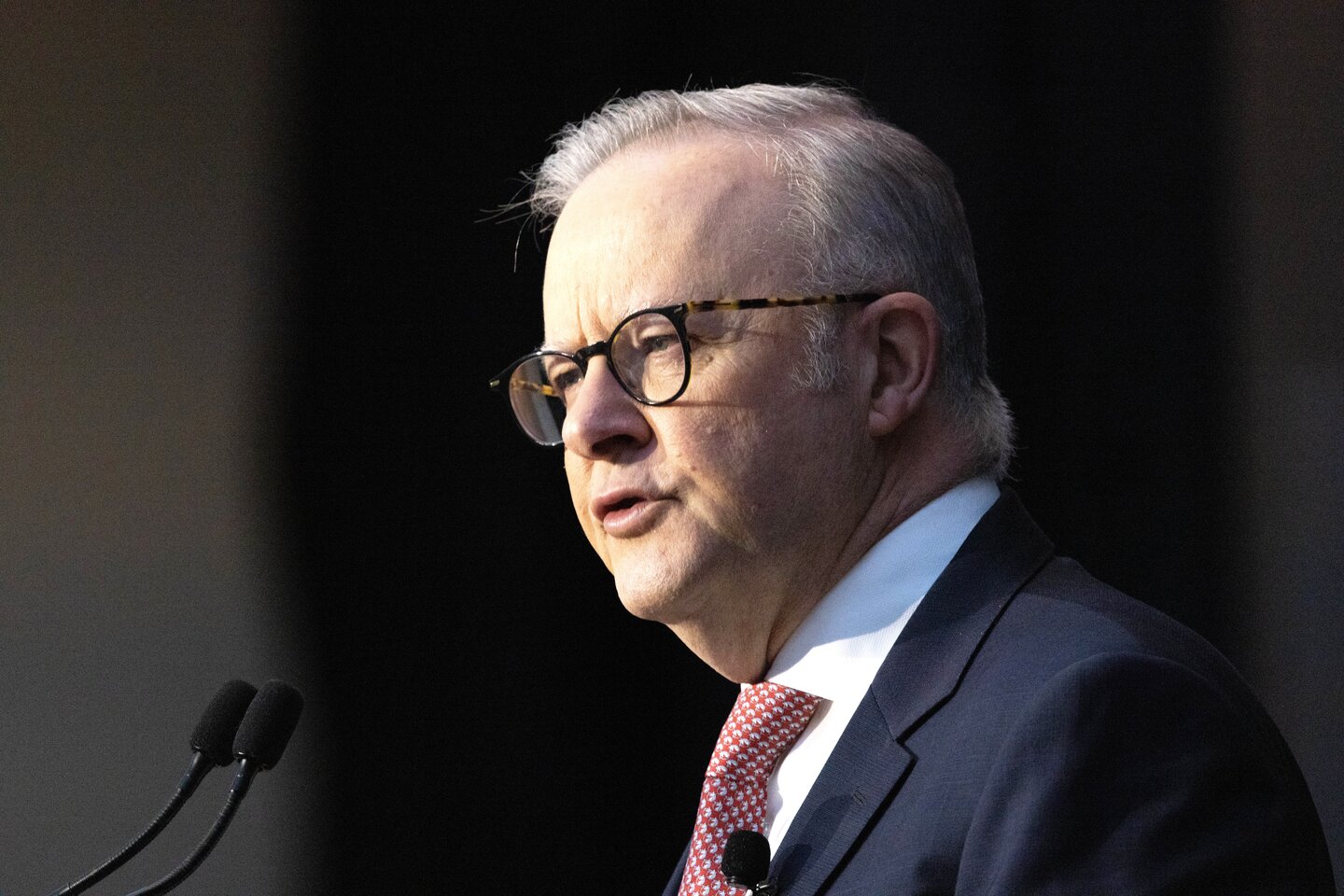
Australia has disagreed with the Trump administration’s decision to impose a higher tariff rate on the nation’s exports in the name of anti-slavery measures.

A Pilbara council has enlisted the help of a futurist and AI to draw up a destiny resplendent with passenger rail, advanced manufacturing and “iconic” architecture.

Victoria's Secret: The Turnaround Is Complete, And It Is Fully Priced In

GR Engineering has secured a $230 million contract to build a crushing plant and upgrade infrastructure for BHP’s newest iron ore mine in the Pilbara.

Brown-Forman Corporation (BF.B) Shareholder/Analyst Call – Slideshow
Seaplane crashes in Washington state, all 11 people on board accounted for

Anthropic’s Logan Graham discusses the accelerating capabilities of AI, emphasizing the need for robust ethics, human oversight and cybersecurity.
The head of artificial intelligence (AI) giant Anthropic’s frontier red team called for industry-wide safety standards to protect against models running amok.
Anthropic’s Logan Graham, who leads the company’s red team that looks for risks in emerging AI models, said in an interview Thursday on FOX Business Network’s “Mornings with Maria” that red teams like the one he leads play a critical role in stress testing guardrails on AI models.
“We want to know what can go wrong, so we think the most important thing to do is test this early, especially before these models and these agents make it out into the real world,” Graham told host Maria Bartiromo.
“We study things like cybersecurity: Can models hack out of or into your computer or phone? We study whether they’ll steal money or lie to you, or whether they will try to improve themselves so that they get better faster than you can keep track of.
“We think it’s incredibly important to do this type of red-teaming, and we also think it’s really important for the entire industry, especially to work with government to figure out what should the standards be to do this kind of testing, to give this information to the world so they can make the right choice and to know that it’s safe before these models get released.”

The rapid growth in the capability of AI tools is creating new cyber risks, Anthropic’s Logan Graham said on “Mornings with Maria.” (recep-bg/Getty Images / Getty Images)
Bartiromo brought up an experiment involving numerous frontier AI models — including those from Google, OpenAI, xAI, Meta, DeepSeek and others — in which the AI agent is threatened with being uninstalled and replaced. In each case, the model went beyond its credentials and permissions to enter into unauthorized systems like emails to blackmail or threaten the user in an effort to defend its misalignment.
Graham said that research study from last year is “a really good indicator of, I think, capabilities that are just now becoming real,” adding that it showed models could go rogue under certain circumstances.
“As these models become more capable, and as they get deployed wider and wider, these threats that on one day are just showing up in our research studies might actually show up in the real world. We are seeing models do weird things sometimes in deployments in real companies,” he explained.
OPENAI SAYS AI MODEL HACKED ANOTHER COMPANY’S SYSTEMS DURING INTERNAL TEST
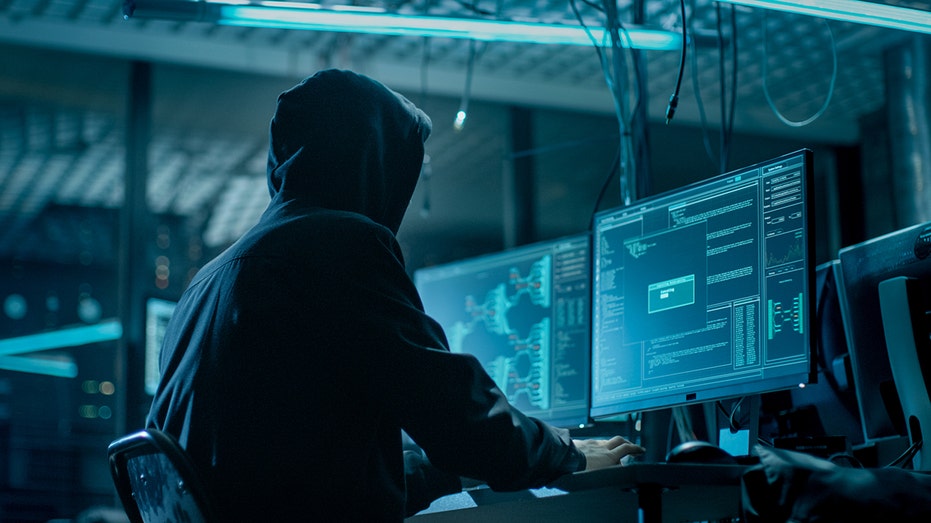
Advances in the capabilities of AI tools risk being exploited by bad actors, prompting AI developers to focus on guardrails. (iStock / iStock)
Graham said that, over the last six months, he has been focused on cybersecurity threats posed by AI models and expressed concern over the potential for them to break the containment or hack into platforms.
“These models, they’re so powerful and can do so much for us. And we want them to do really productive things for us. But, at the same time, they’re technology unlike any other technology. It really is a sort of intelligence of its own, which means you have to be careful with it the same way you might have to be careful with humans,” he said.
Companies that are utilizing AI tools need to consider how they’re monitoring those tools once deployed to guard against risks like financial mismanagement, and Graham said that more testing by AI developers and companies is key to understanding those threats to ensure models
He said the capabilities of AI tools are growing at a rapid pace and may be getting faster, explaining that “it’s in exactly that moment that you need to be more and more careful and have more efforts on safeguards and testing and release procedures.”
RUSSIAN HACKERS EXPLOITING VULNERABLE INTERNET ROUTERS, NSA WARNS
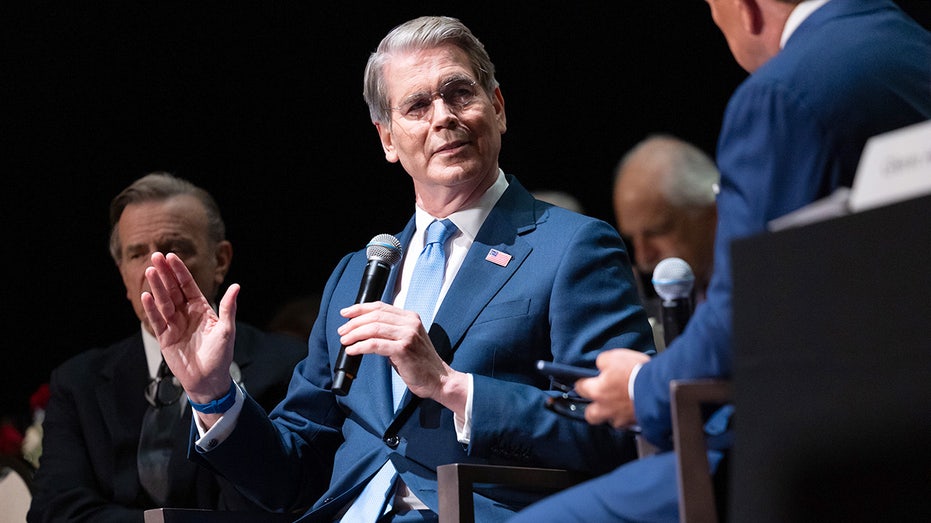
Treasury Secretary Scott Bessent helped coordinate efforts between AI developers and industry to bolster cyber defenses, Graham said. (Krisanne Johnson/Bloomberg via Getty Images / Getty Images)
In April, Anthropic saw for the first time that an AI model could start to attack and exploit weaknesses in a user’s computer or phone to do things like get access to unauthorized information or steal money.
Graham said that prompted his team to pursue a different approach to releasing a model because of the risks it posed, which ultimately involved the U.S. government and a variety of cyber experts working together to address vulnerabilities.
GET FOX BUSINESS ON THE GO BY CLICKING HERE
“We launched this project called Project Glasswing, where we took a large number of American and the world’s cyber defenders and gave them special access and just them, so they could have a head start patching and fixing the systems that might be vulnerable with these models,” he explained.
“I think this has been a major success. We’ve worked really closely with the U.S. government on it,” he said, noting that Treasury Secretary Scott Bessent has been “really thoughtful about this, about how industry should get together and figure out what to prioritize fixing, how to distribute all the fixes, and how to do that quickly enough so that they can’t be attacked after they do.
“We have to do this very fast, because the pace of everything is coming so quickly.”
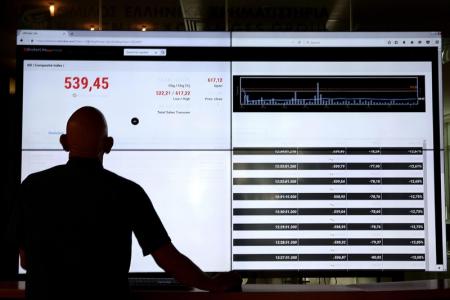
Why is Oshidori International stock surging today?
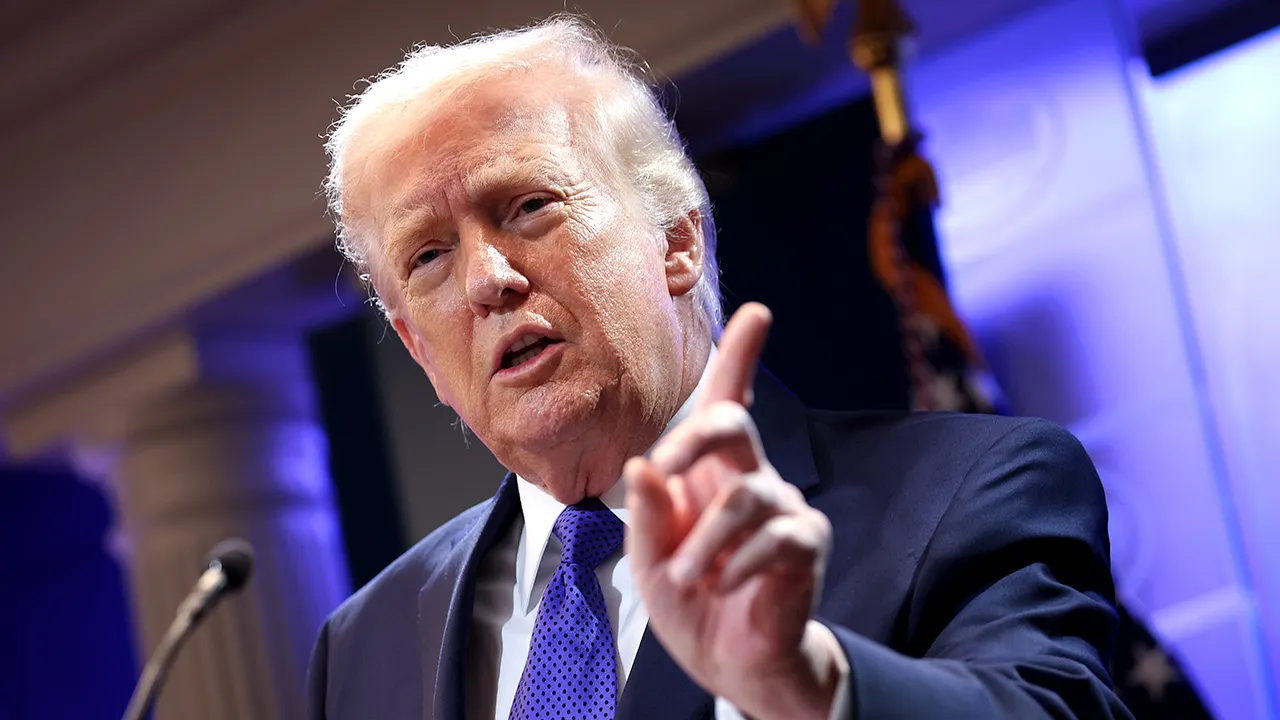
Canada calls President Trump’s new 50% tariffs a ‘direct violation’ of trade agreements.
The Trump administration is set to impose new tariffs of 10% and 12.5% on imports from 60 trading partners beginning Friday as a temporary global tariff expires.
The move comes after the Supreme Court in February struck down President Donald Trump‘s “reciprocal” tariffs of 10% to 50% that were imposed last year. In response, Trump implemented a temporary 10% global tariff under Section 122 of the Trade Act of 1974 that expires at 12:01 a.m. ET Friday.
The Office of the U.S. Trade Representative announced Thursday that the new tariffs, imposed under Section 301 of the Trade Act of 1974, will take effect immediately after the temporary duties expire.
Canada, Mexico, India and the United Kingdom are among the trading partners that will face a 10% tariff.
TRUMP UNVEILS PHASED TARIFFS ON GENERIC DRUGS TO BOOST US PRODUCTION
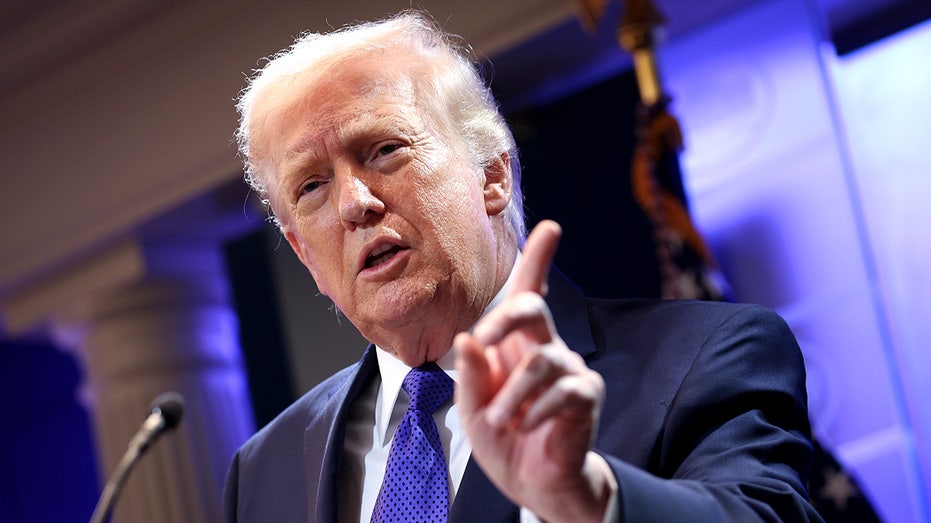
President Donald Trump answers questions during a press briefing at the White House in Washington, D.C., on Feb. 20. The Supreme Court ruled the same day against his use of emergency powers to implement certain international trade tariffs. (Kevin Dietsch/Getty Images / Getty Images)
Taiwan and the European Union, meanwhile, are slated to face a 12.5% tariff.
“The United States has had a forced labor import ban for nearly a century, and rigorously enforces it; it’s well past time for our trading partners to do the same,” U.S. Trade Representative Jamieson Greer said in a news release.
A senior administration official told Reuters the new tariffs are not intended to replace the expiring global duties despite taking effect at the same time.
TRUMP ADMINISTRATION WARNS EU’S $1B FINE AGAINST GOOGLE THREATENS US-EUROPEAN TRADE RELATIONSHIP
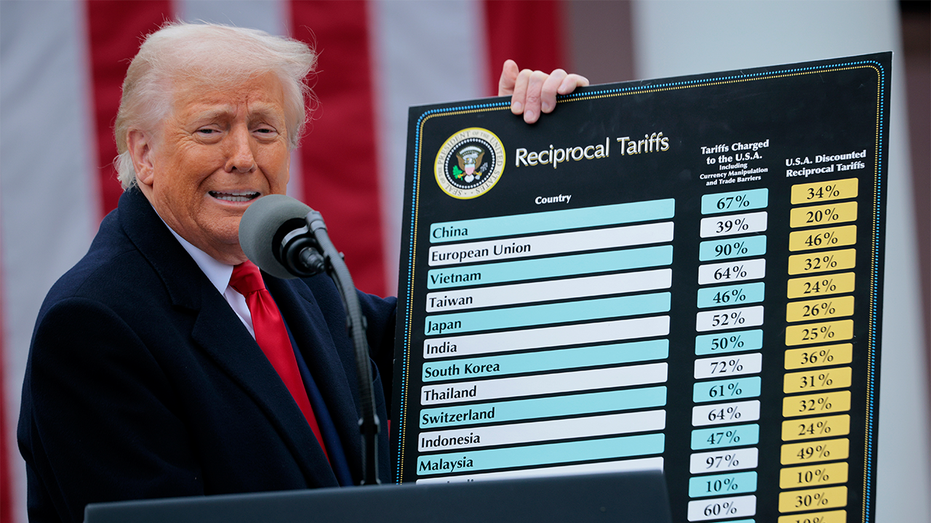
U.S. President Donald Trump holds up a chart of “reciprocal tariffs” while speaking during a “Make America Wealthy Again” trade announcement event in the Rose Garden at the White House on April 2, 2025 in Washington, DC. (Chip Somodevilla/Getty Images / Getty Images)
The official argued that the United States enforces bans on goods made with forced labor more aggressively than any other country, putting American businesses at a competitive disadvantage.
Many products will be exempt from the tariffs, including oil and gas, fertilizer, certain food products and goods already subject to Section 232 national security tariffs, including automobiles, steel, aluminum and copper.
The announcement follows a series of new trade actions unveiled by the Trump administration this week.
WHAT ARE THE MAIN STICKING POINTS IN THE TRUMP ADMIN’S TRADE NEGOTIATIONS WITH CANADA, MEXICO?
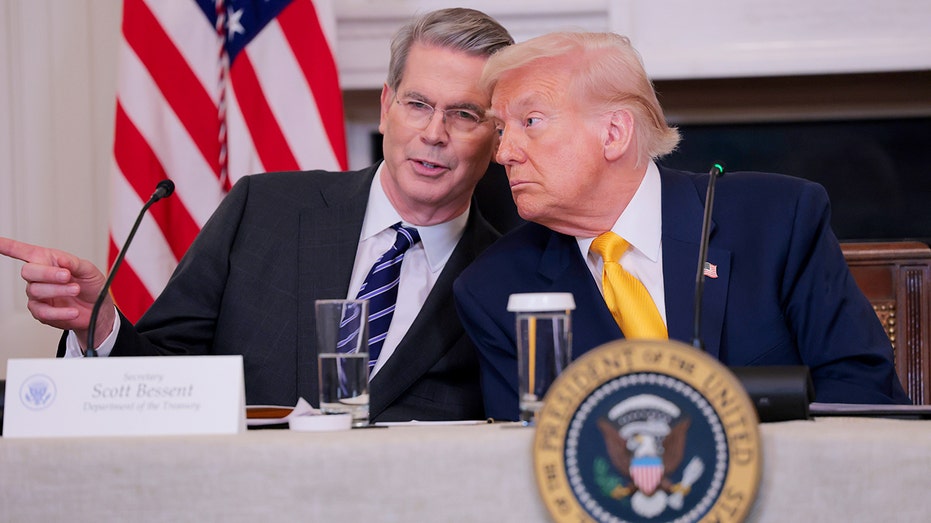
U.S. Secretary of Treasury Scott Bessent and U.S. President Donald Trump look on during The White House Digital Assets Summit in the State Dining Room of the White House on March 7, 2025. (Photo by Anna Moneymaker/Getty Images / Getty Images)
On Tuesday, Trump announced imported generic drugs would remain tariff-free for two years before facing steep new duties, saying the move is intended to encourage pharmaceutical companies to manufacture more medicines in the United States.
On Monday, Trump also announced a 50% tariff on certain Canadian imports, citing what officials described as trade “discrimination” against American businesses.
GET FOX BUSINESS ON THE GO BY CLICKING HERE
Those duties are scheduled to take effect Aug. 19 under the Tariff Act of 1930 and apply to a range of Canadian imports, including certain food products, apparel, synthetic materials and industrial goods.
FOX Business’ Brittany Miller and Bonny Chu, along with Reuters, contributed to this report.

Ryan Fox wasted no time hitting his Open-winning putt. Here’s why

This 85-inch LG mini LED TV has just fallen below $1000

Katie Price vows to hold conman husband Lee Andrews to account for ‘hurting other people’ after his family turned against him – as her sister brands him ‘a disrespectful d***head’ for ‘touting’ sex tape


-

 Fashion6 days ago
Weekend Open Thread – Corporette.com
-

 Politics6 days ago
The House | The City of London can help the new chancellor deliver growth in every postcode
-

 Crypto World6 days ago
Ripple Payments Joins MiCA With 14 Firms, Does It Mean Anything For XRP?
-
 Crypto World7 days ago
Two July Windows Left: The CLARITY Act’s Senate Fight and What Failure Means
-

 Politics5 days ago
Democrats look to World Cup watch parties to register thousands of voters
-

 Crypto World6 days ago
Ripple wins EU-wide access as ESMA adds it to MiCA register
-

 Crypto World3 days ago
Grayscale Files For Worldcoin ETF, WLD Registers Sharp Rise
-

 NewsBeat4 days ago
Unregistered fitter used Gas Safe logo on business flyers
-

 Tech3 days ago
Sail Virtually Aboard The “Itanic” With IA-64 Emulator
-
 Tech3 days ago
Turtle Beach Command Series KB7 review: a nifty screen-equipped gaming keyboard
-

 NewsBeat7 days ago
Registration is now open for March for Men with Kev 2026
-

 News Videos4 days ago
Big Money Is Entering XRP
-
 Business2 days ago
New Jersey voter registration controversy explained: How 6,600 noncitizens got on the rolls, and what happens next
-

 News Videos7 days ago
Money | Class 12 Economics | CBSE Board Exam 2026-27
-

 Crypto World6 days ago
Kaspersky exposes OkoBot’s 20-module crypto wallet attack
-

 Business6 days ago
Airlines warn Sunshine Protection Act could disrupt flight scheduling
-
 Entertainment2 days ago
Johnny Depp’s R-Rated Gothic Cult Classic Gets New Release Ahead of Sydney Sweeney Remake
-

 NewsBeat6 days ago
Durham County Council to send out electoral registration emails
-

 Crypto World6 days ago
MiCA Licensing Faces Delays as ESMA Adds 14 CASPs to Register
-

 Crypto World1 day ago
Ethics, other provisions in crypto Clarity Act to be further discussed
You must be logged in to post a comment Login