

Connect with us

Business

Push for Bennett bills cover

Published

on

Push for Bennett bills cover

Yes. Corporate subscriptions are available for teams and organisations, with discounted rates as user numbers increase. Pricing starts from $1,625 + GST per user.
Get in touch
to discuss the right option for your organisation.

Business News subscriptions are used by executives, investors, consultants and professionals who need to stay informed and make better decisions about the WA market. When you subscribe you’ll get

  • Unlimited access to WA’s most trusted business journalism
  • Data & Insights — detailed profiles of WA companies, people, projects and deals
  • MyBN — a personalised feed based on the companies, people and sectors you follow
  • Special publications and industry reports
  • Daily and weekly email newsletters

Data & Insights is a research tool built specifically for the WA market. It draws on more than 30 years of Business News reporting, updated regularly to reflect what’s happening now. Use it to:

  • Look up detailed profiles of WA companies, including financials, directors and ownership
  • Find decision-makers and track their career movements
  • Research live and completed projects across WA industries
  • Monitor deals, appointments and market activity
  • Access industry rankings and league tables

Data & Insights is updated daily by our dedicated research team, which uses the latest announcements, ASX filings and editorial coverage to keep our person, company, list and project records up to date.

Business News welcome all opportunities to make our dataset accurate, complete and current, so if you have an update request, please email the team at
general@businessnews.com.au, and we’d be happy to assist.

Advertisement

MyBN
is part of every subscription. It’s your personalised view of Business News. You can follow the companies, people, sectors and projects that matter to you, and get a news feed and alerts tailored to your interests. You can save articles to read later and retain only what you need.

Only subscribers have full access to all content on the Business News website.

Advertisement

If staying informed about the WA economy is part of your job, and/or you’re looking for networking opportunities in WA, Business News is built for you.

Business News subscribers are:

  • Executives and directors tracking competitors, clients and market movements
  • Investors and advisers researching companies, deals and industry trends
  • Consultants and professionals staying across sectors relevant to their clients
  • Business owners looking for leads, context and market intelligence

Most Business News publications cover national or global markets. Business News is focused entirely on Western Australia, which means the journalism, the data and the intelligence are all built around WA companies, people and projects — not adapted from a national feed. Data & Insights, included with every subscription, combines more than 30 years of WA-specific editorial research with live business data. There’s no comparable product for the WA market.

Advertisement

The Morning Digest Email provides a comprehensive wrap of the major headlines, relevant to WA business, and includes with a snapshot of the overnight news covering oil, gold and ASX-listed companies.

The Afternoon Wrap Email focuses on the news covered by our team of journalists during the course of the working day, including exclusive stories and analysis, all of which relates to WA business and the local economy.

The BN Weekender Email contains a wrap of the Business News from the week that was, highlighting the top stories in each area of WA business.
Sign up for free.

Advertisement

We’re happy to help.
Get in touch
and our team will come back to you.

Advertisement
Continue Reading
Click to comment

You must be logged in to post a comment Login

Leave a Reply

Business

Government urged to make Cotswold Airport major drone hub and unlock 450 jobs

Published

on

Business Live

A new report says allowing airspace reforms could create jobs and bring investment to the West

'Flying taxi' takes to UK skies for first time

Vertical Aerospace has a base at Cotswold Airport(Image: Vertical Aerospace)

Hundreds of jobs could be unlocked in the West Country if the government uses existing powers to fast-track airspace reforms at Cotswold Airport, a think tank has said.

The Good Growth Foundation (GGF) is urging transport secretary Heidi Alexander to accelerate changes that would allow for more flight testing of drones and other emerging technologies.

The report – A Golden Ticket for Government – argues Cotswold Airport could become a centre for drones, aerospace engineering, testing, advanced logistics and autonomous aviation, creating up to 450 skilled jobs.

Cotswold Airport, near the village of Kemble, is already home ‘flying taxi’ firm Vertical Aerospace. The New York-listed company has a flight test centre at the airport and last month announced plans to build a factory at the site as it moves towards commercial production.

Advertisement

The GGF report identifies Cotswold Airport as a “strong potential candidate” for airspace reforms because of its aircraft storage and maintenance activity; available operational space; and relatively low-congestion airspace environment.

Praful Nargund, director of The Good Growth Foundation, said: “This is an opportunity to turn Cotswold Airport’s existing strengths into a source of innovation and long-term security for the local community.”

The GGF believes Cotswold Airport should replicate a model being proposed for Lydd Airport in Kent, which has been identified for a ‘special use airspace’ pilot.

It says by having a specific managed airspace area, drones, autonomous aircraft and conventional aviation would be able to operate “safely together, helping to attract investment in the third generation of flight”.

Advertisement

“The government should back the model at Lydd and replicate it in Kemble to unlock high-skilled jobs and investment,” added Mr Nargund. “This is what good growth in every postcode looks like.”

If the Lydd model is proven, the report argues it could provide a blueprint for other regional sites, including Cotswold Airport.

Tony Vaughn MP for Folkestone and Hythe, said: “This proposal offers a chance to put Lydd on a secure footing for the future, bringing new investment and good jobs for local people while helping to ensure that young people do not have to leave the area to find skilled work.

“I want to see our coastal communities at the front of the queue for the jobs and industries of the future. With the right backing from Government, Lydd can be a powerful example of what that looks like in practice.”

Advertisement

The think tank is calling on Ms Alexander to issue so-called ‘Air Navigation Directions’ to prioritise and accelerate airspace changes.

“This mechanism could help airports develop new commercial roles in sectors such as drone inspection, logistics, maintenance, aerospace manufacturing, testing, software and airspace-management systems,” the think tank added.


Continue Reading

Business

Asian stocks mixed as chipmakers rally, oil and rate risks cap gains

Published

on


Asian stocks mixed as chipmakers rally, oil and rate risks cap gains

Continue Reading

Business

Shiprocket shares gain 3% as Q1 net loss narrows to Rs 14 crore in first earnings post IPO; revenue up 34% YoY

Published

on

Shiprocket shares gain 3% as Q1 net loss narrows to Rs 14 crore in first earnings post IPO; revenue up 34% YoY
Shares of Shiprocket rose 3% to Rs 140 on the BSE on Tuesday after the logistics company reported its first earnings since listing on the stock exchanges. The company posted a consolidated net loss of Rs 13.7 crore for Q1FY27, narrowing from a loss of Rs 18 crore in the year-ago quarter. Revenue from operations increased 33.8% year-on-year to Rs 592.1 crore from Rs 442.5 crore in Q1FY26.

EBITDA loss also narrowed to Rs 21 crore from Rs 26 crore a year earlier. On an adjusted basis, Shiprocket reported positive EBITDA of Rs 8.9 crore, compared with Rs 1 crore in Q1FY26. The company said it remained adjusted EBITDA positive throughout the quarter.

Also read: NSE IPO set to deliver massive gains of Rs 7,200 crore to state-run insurance firms

The improvement in adjusted profitability came alongside continued investments in the company’s faster-growing businesses. Shiprocket’s core business generated adjusted EBITDA of Rs 52.7 crore, with a margin of 12.8%, compared with 12.3% a year ago.

Advertisement

Shiprocket Managing Director and CEO Saahil Goel said the Q1 results were in line with the company’s strategy. “We are only a few years into a decade-long build, and we continue to double down and invest behind unlocking the true potential of India’s businesses,” he said.

Shiprocket’s emerging business revenue jumps 70%

Shiprocket’s core business revenue grew 22% year-on-year to Rs 411.7 crore, while revenue from its emerging business surged 70% to Rs 180.4 crore. The emerging business includes checkout and marketing solutions, cross-border and omnichannel solutions.
The company said its emerging business grew 3.2 times faster than the core business and accounted for 30% of total revenue in the quarter, up from 24% a year ago. The segment’s contribution margin rose to 15.3% from 9.3%, while absolute contribution increased to Rs 27.7 crore from Rs 9.8 crore. Its EBITDA margin also improved to -24% from -38%.Within the segment, Checkout and Marketing Solutions grew around 193% year-on-year, according to the company. Management said businesses such as Ads were barely present two years ago but have now become among the faster-growing parts of the platform.

Shiprocket ended the quarter with 224,314 active merchants. Its trailing 12-month GMV stood at Rs 34,661.8 crore, while unique transactions reached 216 million.

Read more: NSE IPO gets Sebi approval: 10 important points investors should know as D-Street debut inches closer

Advertisement

The company also expanded its technology offering during the quarter. It launched an upgraded RADAR AI-powered courier intelligence platform that can identify SLA breaches and return-to-origin risks at the pincode level before an order is dispatched.

Shiprocket also introduced an AI Ads platform for static, editable, short-form and 360-degree creatives, along with AI Assist and AI Calling for order confirmation. It further rolled out appointment-based cargo deliveries to quick-commerce dark stores, with integrations including Blinkit and Zepto.

(Disclaimer: Recommendations, suggestions, views and opinions given by the experts are their own. These do not represent the views of The Economic Times.)

Advertisement
Continue Reading

Business

Sensex falls 300 points, Nifty below 23,700 as market extends losses. How long will the downtrend continue?

Published

on

Sensex falls 300 points, Nifty below 23,700 as market extends losses. How long will the downtrend continue?
The Indian stock market extended losses on Tuesday, with Sensex and Nifty trading lower as elevated crude oil prices, Fed rate hike worries, booming IPO market and other factors continue to contribute to the slow grind down in the market.

Sensex dropped around 320 points to 75,809 while Nifty 50 fell 82 points to 23,697 during today’s session. Broader markets however continued to remain mixed, with Nifty Midcap 100 in the red and Nifty Smallcap 100 in the green.

M&M, Tech Mahindra, TCS, HCL Technologies, Bharti Airtel, Trent, Axis Bank, Sun Pharma, Infosys and other stocks fell around 1% each to lead losses on Sensex, while BEL and Eternal shares gained nearly 1% each.

Among the sectors, Nifty IT fell 0.7% as IT stocks extended losses on Fed rate hike worries, while Nifty Metal index rose 0.4%. The overall market breadth however turned slightly positive, with NSE seeing 1,345 advances against 1,327 declines, while 123 stocks remained unchanged.

Advertisement

Why is the stock market falling today?


The market is now in the fifth week of a slow but steady downtrend, VK Vijayakumar, Chief Investment Strategist at Geojit Investments, noted. He added that elevated crude prices, selling in IT stocks, fears of a Fed rate hike this month and a booming IPO market which is sucking lots of money have contributed to this slow grind down in the market. “Since the macro construct which contributed to this downtrend persists, it is possible that the downtrend may continue in the near-term. But this trend is opening up opportunities for investors in large-caps which continue to remain weak despite improving fundamentals,” the analyst said.
A major factor contributing to the weakness of the large-caps despite their attractive valuations is that bulk of the steady monthly SIP inflows are going to the mid-and small-cap segments despite their elevated valuations, Vijayakumar pointed out, adding that a reversion to mean is overdue in the mid-and small-cap segments. “This can facilitate a rally in fundamentally sound large-caps. The timing of this transition is hard to predict. But this is likely by this month-end when the mega IPOs of NSE and Jio are completed and refunds from the IPOs come back to investors. Instead of trying to time the market, investors can think about changing the weightage of portfolios towards large-caps where the risk-reward is favourable,” he concluded.Technical view on Nifty

Despite Nifty slipping to the lowest point since late July, the consolidation in the second half of yesterday gives hope towards recovery attempts, said Anand James, Chief Market Strategist at Geojit Investments. He however will need a confirmation from a break beyond 23,860 to signal recovery attempts, while downside marker is placed at 23,720.

Nifty’s systematic slippage over the last few days has rendered the trend vulnerable, exposing supports at 23,570 and 23,260, the analyst said while explaining the technical charts.

Disclosure: “This article has been written by Debaroti Adhikary, who is not a SEBI-registered Research Analyst or an Investment Adviser. Debaroti Adhikary and her ‘relative(s)’ (as defined under Section 2(77) of the Companies Act, 2013) do not hold any financial interest in the companies mentioned in this article as of the date of publication. The views/recommendations mentioned in this article, wherever applicable, are those of the respective SEBI-registered Research Analyst/brokerage and have been reproduced/reported with due attribution. They should not be construed as the views or recommendations of The EconomicTimes Digital or the journalist. Readers are advised to consider the original research report and make their investment decisions based on their own assessment.”

Advertisement
Continue Reading

Business

PFL proud of year, but remains growth-focused

Published

on

PFL proud of year, but remains growth-focused

Perth Football League president Geoff Glass says despite a bumper year of proud-filled moments on and off field, the league will not be resting on its laurels.

Continue Reading

Business

Lumentum: Speed Is Everything

Published

on

Lumentum: Speed Is Everything

Lumentum: Speed Is Everything

Continue Reading

Business

AI cancer cures slowed by chip shortage, says UK’s biggest tech boss

Published

on

A woman with short reddish hair with a neutral expression faces the camera while sitting a room with black and brown wallpaper.

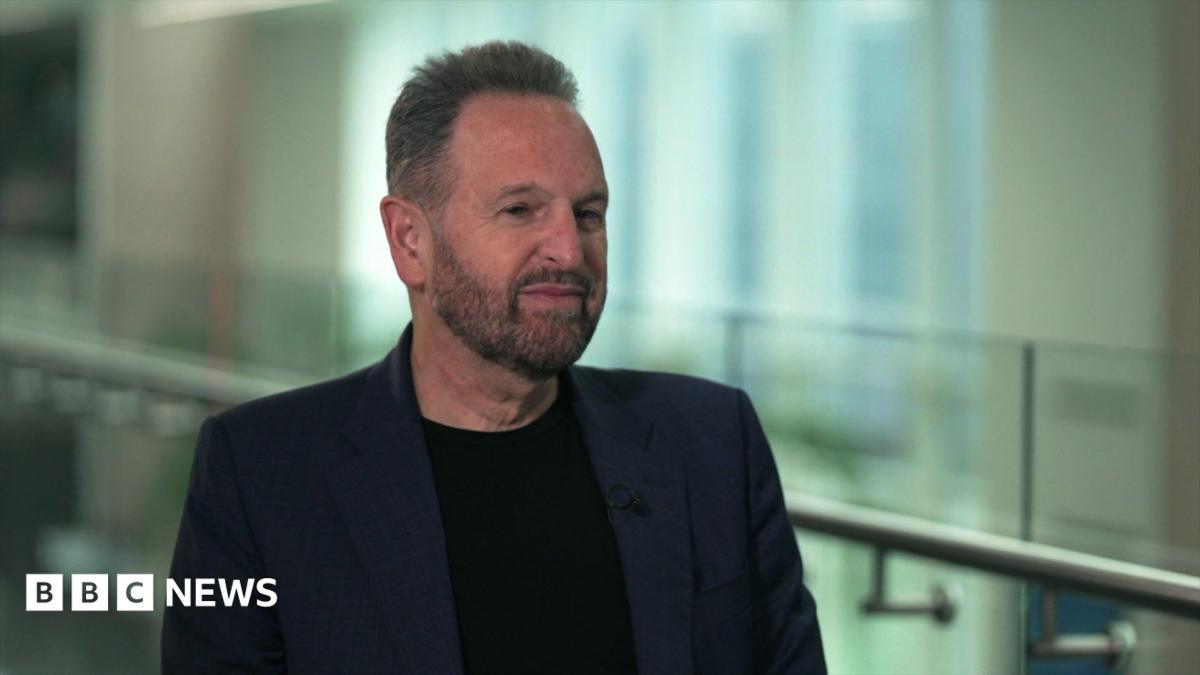
The boss of the biggest UK-headquartered tech firm has said that artifical intelligence will find a cure for cancer that humans cannot in our lifetimes.

Rene Haas, chief executive of Cambridge-based chip designer Arm Holdings, said while modelling how a DNA marker is impacted by cancer was currently “too complex” a problem, computers are “going to solve it” in the future.

Haas also told the BBC that AI would lead to widespread humanoid robots in the next five years, but that its current rapid growth was being held up by a shortage of chips needed to build data centres.

However, he was sceptical about the idea chips could be manufactured in the UK in the future.

Advertisement

Arm designs the brains or CPUs of microchips already used in hundreds of billions of phones, cars, smartwatches and gadgets across the globe.

Earlier this summer, the company’s peak share price amid the AI boom made it, in cash terms, the most valuable UK-based company in history.

Haas, who stepped down from the board of British pharmaceutical giant AstraZeneca in April, told the BBC’s Big Boss Interview podcast: “AI is going to… find a cure for cancer that today you and I, other humans [could] not in our lifetimes. I believe in our lifetime, AI will help cure cancer.

“Modelling a cell, modelling a human, modelling how a DNA marker is impacted by cancer – it’s too complex a problem, not only for humans today, but the computers that run AI.

Advertisement

“However, going forward, as we feed more and more of the models into these computers, and the computers get more sophisticated to run the models, they’re going to solve it,” said Haas, who also holds a key role in Arm’s main owner, the Japan-based Softbank, which has a range of investments in tech including in OpenAI.

Prof Chris Bakal, from the Institute of Cancer Research, London, and CEO of Sentinal4D, said the real question was no longer whether we use AI, it’s what we feed it.

He said in labs like his, they are training AI on data generated themselves from patient samples.

“It is not scraped from the internet. It does not need a giant data centre to run. The future of medical AI will not belong to whoever builds the biggest computer. It will belong to whoever has the right measurements.

Advertisement

“That kind of prediction could cut years from the time it takes to develop new treatments. This is where AI delivers real benefit to patients.”

Continue Reading

Business

Monthly Macro Monitor: Risk Vs. Reward

Published

on

Monthly Macro Monitor: Risk Vs. Reward

Monthly Macro Monitor: Risk Vs. Reward

Continue Reading

Business

Premier touts big names in defence contract bids

Published

on

Premier touts big names in defence contract bids

Seven proposals for defence industry initiatives are to be evaluated as priority options as the state government’s Western Defence Forge process enters its second phase.

Continue Reading

Business

Lululemon founder Chip Wilson, wife reportedly split without prenup

Published

on

Lululemon founder Chip Wilson, wife reportedly split without prenup

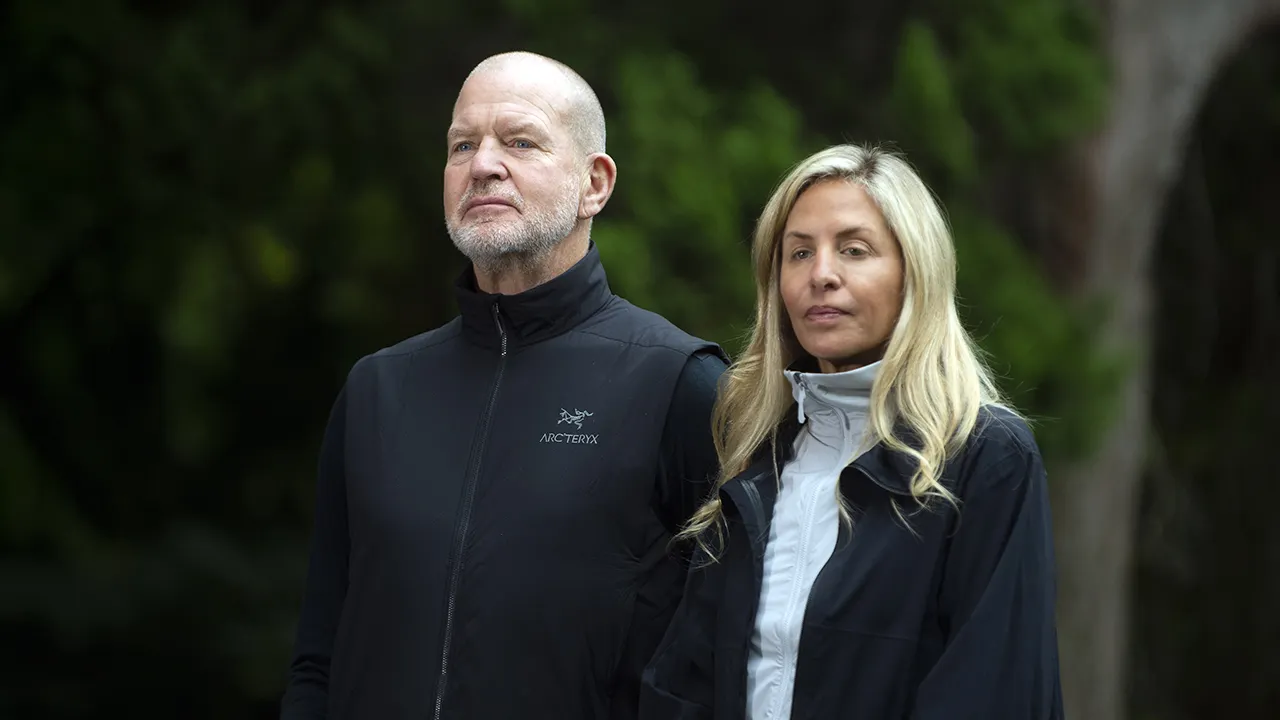
Lululemon Athletica Inc. founder Chip Wilson and his wife and longtime business partner, Shannon “Summer” Wilson, are reportedly divorcing after more than two decades of marriage.

A family legal proceeding between the couple was filed in the Supreme Court of British Columbia in April, though the contents of the case are not publicly accessible, Bloomberg reported.

Advertisement

Bloomberg, citing a person familiar with the matter, also reported that there is no prenuptial agreement between the couple, though it remains unclear how the divorce could affect the division of their assets.

LAUREN SÁNCHEZ PLAYS MAJOR ROLE IN DEPLOYING BEZOS’ FULL $10 BILLION CLIMATE FUND BY END OF DECADE: REPORT

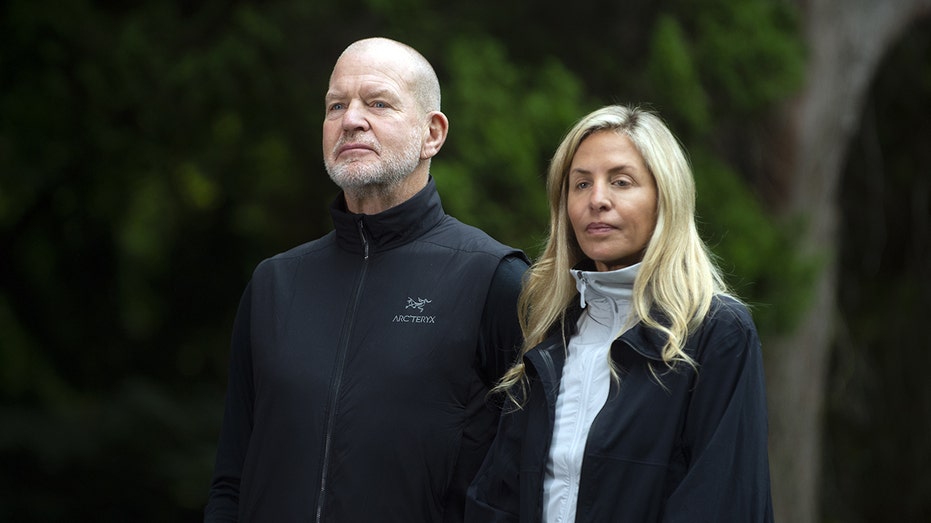
Lululemon Founder Chip Wilson and Summer Wilson

Chip Wilson, founder of Lululemon Athletica, and his wife, Shannon “Summer” Wilson, attend a news conference in Vancouver, British Columbia, on Sept. 15, 2022. (Taehoon Kim/Bloomberg via Getty Images)

Lululemon and Chip Wilson could not immediately be reached by FOX Business for comment.

Chip Wilson, 71, founded Vancouver-based Lululemon in 1998, according to Bloomberg.

Advertisement

He is widely credited with helping pioneer the athleisure apparel market.

According to the Bloomberg Billionaires Index, Chip Wilson has an estimated net worth of roughly $6.1 billion.

Summer Wilson, 52, served as the company’s founding lead designer, according to her website. Chip Wilson has previously credited her with playing a key role in building the brand during its early years, Bloomberg reported.

LULULEMON HALTS ONLINE SALES OF NEW LEGGINGS AFTER ‘SEE-THROUGH’ CLAIMS

Advertisement
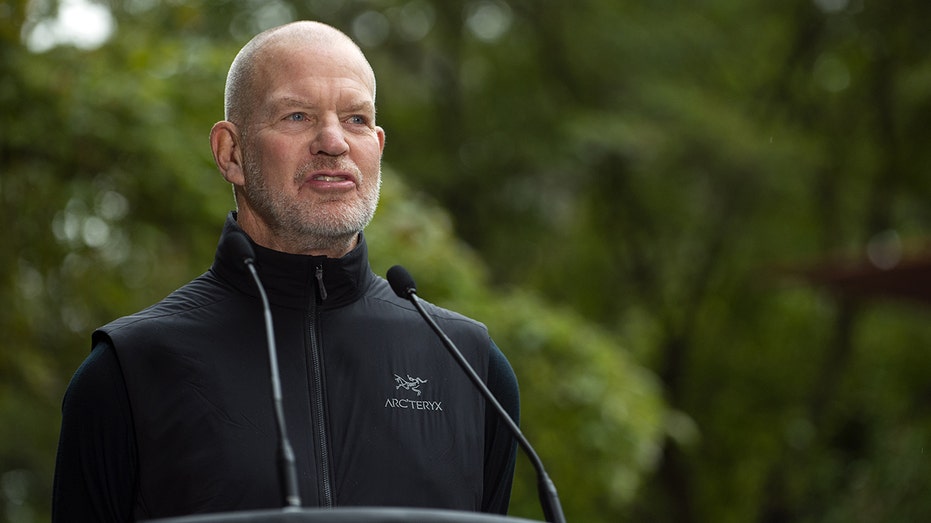
Lululemon Founder Chip Wilson

Chip Wilson is widely credited with helping pioneer the athleisure apparel market. (Taehoon Kim/Bloomberg via Getty Images)

The couple married in 2002.

Though both left the company more than a decade ago, Chip Wilson remains one of Lululemon’s largest shareholders and has continued to publicly weigh in on the retailer’s direction, Bloomberg reported.

He owns roughly 8.6% of the company, a stake worth just under $1 billion, while Summer Wilson owns nearly 1%, valued at about $100 million, according to Bloomberg.

Under British Columbia law, assets owned before a marriage generally remain excluded from division, while any increase in their value during the marriage is generally considered family property and is typically divided equally.

Advertisement

“In British Columbia, the value of assets brought into the marriage is not shareable, but the gain is called family property and presumptively divided 50-50,” Lorne MacLean KC, founder of Vancouver-based MacLean Law, told The New York Post.

BILLIONAIRES AND BUSINESSES FUEL GROWING EXODUS FROM BLUE STATES

A Lululemon store

Chip Wilson remains one of Lululemon’s largest shareholders and has continued to publicly weigh in on the retailer’s direction.  (Isabella Falsetti/Bloomberg via Getty Images)

The Wilsons’ reported split joins a number of high-profile billionaire divorces in recent years.

GET FOX BUSINESS ON THE GO BY CLICKING HERE

Advertisement

Amazon founder Jeff Bezos and MacKenzie Scott finalized their divorce in 2019. Scott received a roughly 4% stake in Amazon, then valued at about $36 billion, BBC News reported at the time.

In 2021, Microsoft co-founder Bill Gates and Melinda French Gates divorced after 27 years. Following the announcement, Bill Gates transferred billions of dollars in stock to Melinda French Gates, according to Vanity Fair.


Advertisement
Continue Reading

Trending

Copyright © 2025