
Business
Rare Honus Wagner baseball card sells for whopping $5.124 million

Check out what’s clicking on FoxBusiness.com.
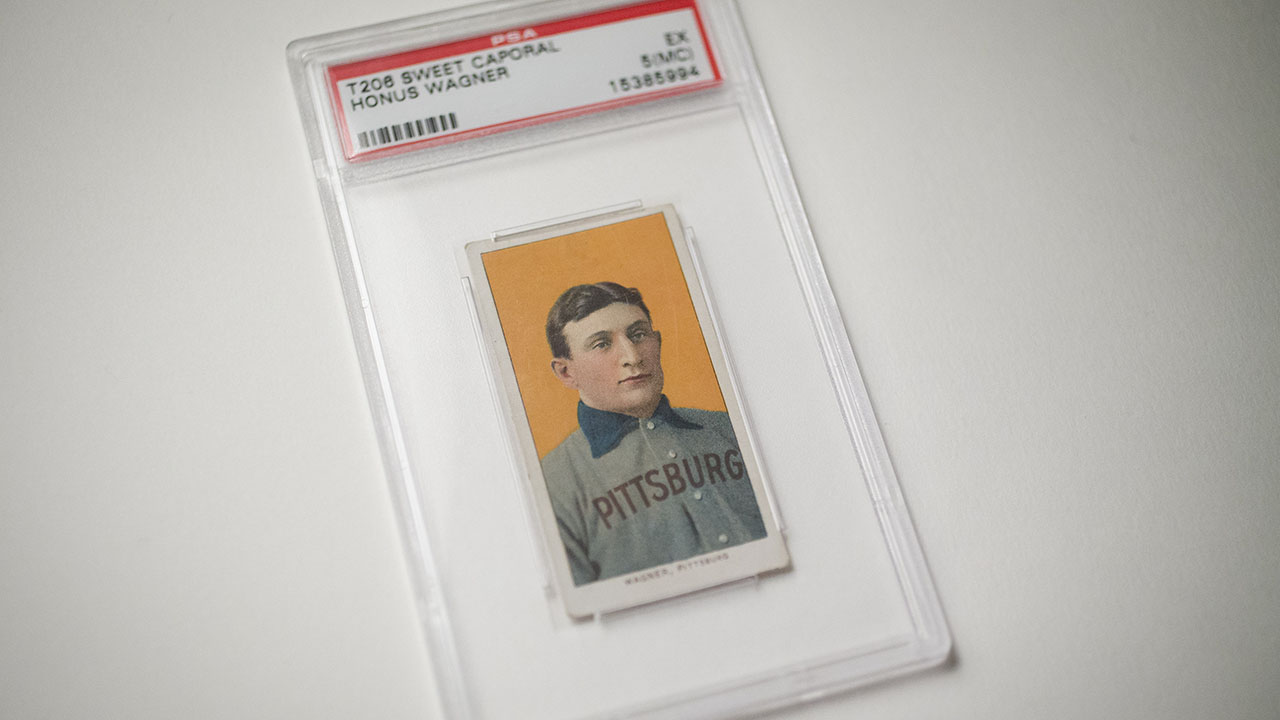
Another T206 Honus Wagner baseball card, considered to be the “Holy Grail” of the collectible space, was recently discovered and has been sold at auction for $5.124 million.
The sale was conducted via Goldin Auctions, and it included the buyer’s premium. It’s now the third-most expensive T206 Wagner card ever after a $6.606 million copy was sold in August 2021 and another for $7.25 million in August 2022.
This recently discovered copy had been in the family of Douglas and Dennis Shields for 116 yards. Their grandfather, Morton Bernstein, the son of The National Silver Company founder, Samuel E. Bernstein, collected trading cards, and more importantly, preserved them since the early 1900s.
CLICK HERE FOR MORE SPORTS COVERAGE ON FOXBUSINESS.COM
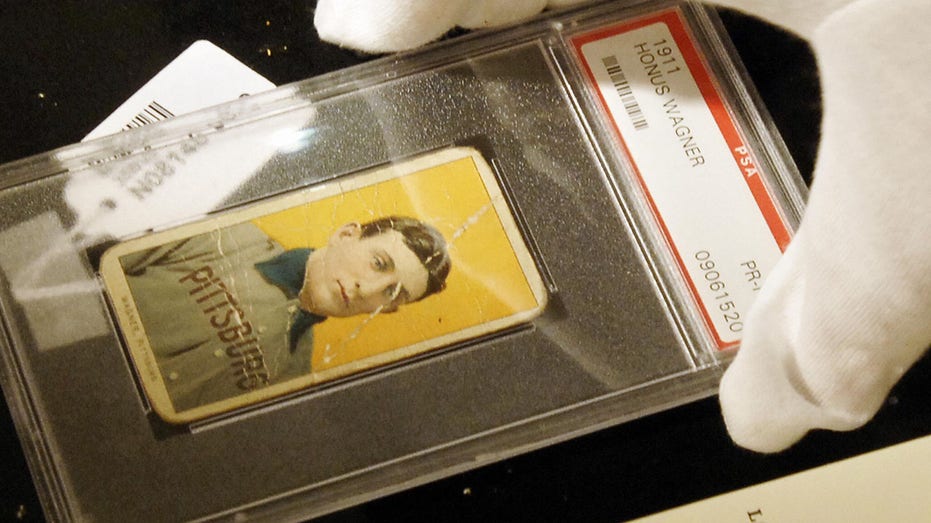
A rare baseball card of Honus Wagner of the Pittsburgh Pirates, considered to be the best all-around player in history, is displayed on June 3, 2005, at Sotheby’s in New York. (Stan Honda/AFP via Getty Images)
“We are honored that the Shields family chose us to represent this historic card that has been in their family for 116 years,” Ken Goldin, CEO and founder of Goldin Auctions said in a statement, via ESPN.
This recently discovered copy was graded as a 1 by Professional Sports Authenticator (PSA), while the other two received grades of 3 and 2 respectively from Sportscard Guaranty Corporation (SGC) when they came about.
LOGAN PAUL SELLS PIKACHU ILLUSTRATOR TRADING CARD FOR MORE THAN $16.4M
Morton Bernstein ended up purchasing F.B. Rogers Silver Company in 1955, and he made it a point to display his preserved cards in frames throughout his business. Ultimately, The National Silver Company went out of business, and the cards were placed in a warehouse.
As Douglas and Dennis came forward, the T206 Wagner card was featured on Netflix’s “King of Collectibles: The Goldin Touch,” where Goldin revealed it on a Season 3 episode in December.

The famous T206 Honus Wagner baseball card, is shown June 6, 2000, in New York City. (Chris Hondros/Newsmakers / Getty Images)
While this is a massive payout for yet another Wagner card, another T206 remains on the market. With six days left on Heritage Auction, an SGC Authentic, which is considered a grade below a 1, is at $2.318 million right now.
So, what exactly makes this card worth millions today? Scarcity in the collectibles industry is a major key, and since Wagner asked the American Tobacco Company to stop making his card in 1909, there is certainly that factor here.
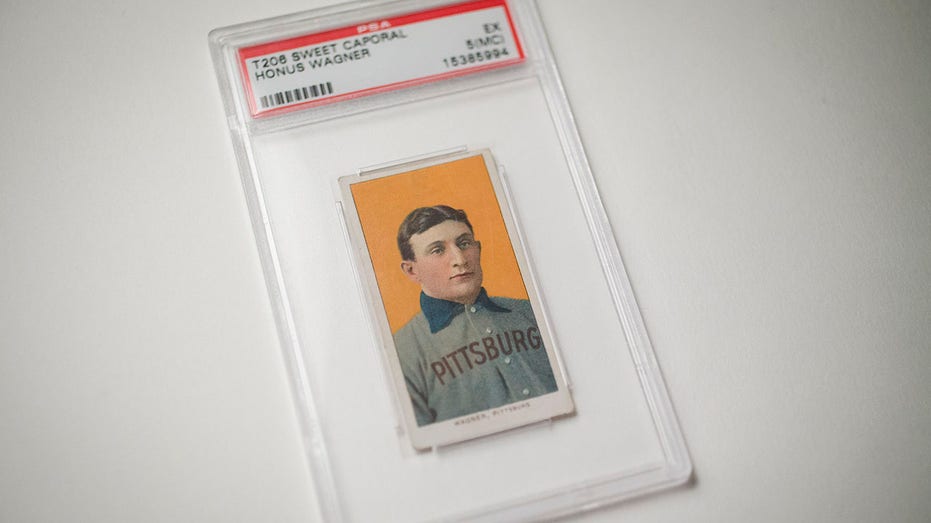
The 1909 baseball card of Pittsburgh Pirates shortstop Honus Wagner is displayed for a photograph in New York, on Feb. 19, 2013. (Scott Eells/Bloomberg / Getty Images)
GET FOX BUSINESS ON THE GO BY CLICKING HERE
That was the same year Wagner won the World Series with the Pittsburgh Pirates, who he won eight batting titles with. Nicknamed “The Flying Dutchman,” Wagner is one of the most recognized baseball players of all time, being amongst the original Hall of Fame inductees when the National Baseball Hall of Fame and Museum in Cooperstown, New York, was founded.
Follow Fox News Digital’s sports coverage on X and subscribe to the Fox News Sports Huddle newsletter.

Business
US, Iran Launch Historic Ceasefire Talks in Pakistan on Day 43 of Conflict: Trilateral Negotiations
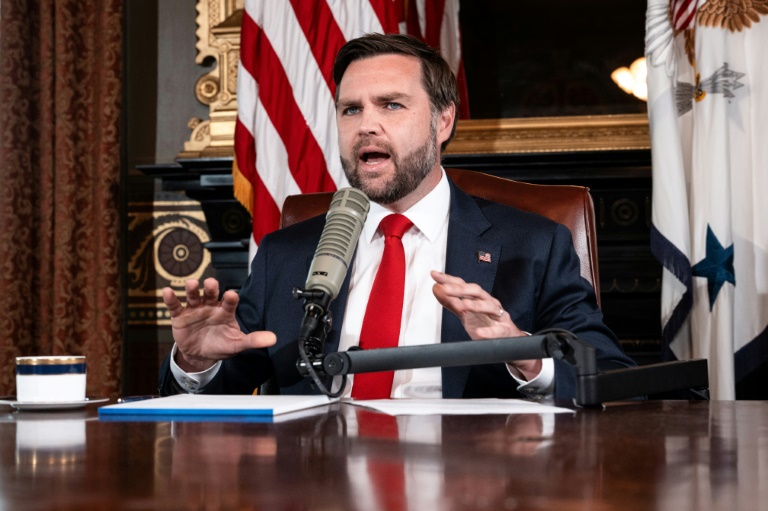
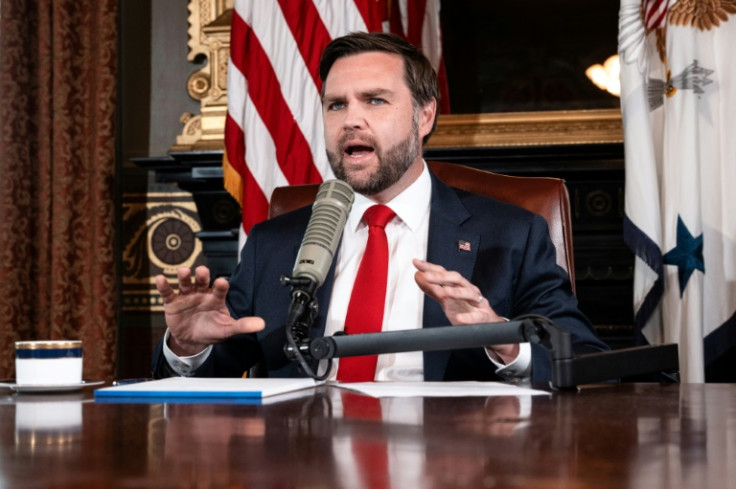
ISLAMABAD, Pakistan — Senior U.S. and Iranian officials gathered Saturday in Pakistan’s capital for direct ceasefire negotiations, marking the first high-level talks between the longtime adversaries since the 1979 Islamic Revolution and offering a potential off-ramp after 43 days of devastating conflict.
AFP
U.S. Vice President JD Vance led the American delegation, joined by special envoy Steve Witkoff and Jared Kushner, President Donald Trump’s son-in-law and senior adviser. Iran’s team was headed by Parliament Speaker Mohammad Bagher Ghalibaf and Foreign Minister Abbas Araghchi. Pakistani officials, including Prime Minister Shehbaz Sharif and army chief Gen. Asim Munir, facilitated the trilateral discussions at a heavily secured venue in Islamabad.
The talks come as a fragile two-week ceasefire, brokered by Pakistan and announced earlier this month, holds tenuously amid ongoing regional violence, including Israeli strikes in Lebanon and disruptions in the Strait of Hormuz.
“This is a make-or-break moment,” Sharif told reporters as delegations arrived, underscoring the high stakes for turning a temporary pause into a lasting peace agreement.
Path to Islamabad: From War to Fragile Truce
The conflict erupted in late February 2026, escalating rapidly into direct U.S.-Iran confrontations involving airstrikes, naval tensions and proxy battles across the Middle East. Thousands have died, oil prices have surged more than 30%, and global markets have been roiled by Iran’s partial closure of the Strait of Hormuz, a critical chokepoint for nearly 20% of the world’s oil trade.
Pakistan emerged as an unlikely but pivotal mediator. Over recent weeks, Sharif and Munir engaged in shuttle diplomacy, consulting with Egypt, Turkey, Saudi Arabia and China while maintaining back-channel contacts with both Washington and Tehran. A Pakistani-proposed framework for an immediate ceasefire followed by broader talks gained traction, leading to the current two-week pause.
Iranian state media reported that negotiations progressed to “expert level” after indirect discussions, setting the stage for Saturday’s face-to-face meetings. Both sides arrived amid tight security, with Islamabad’s streets largely deserted as authorities imposed restrictions to prevent disruptions.
Key Sticking Points and Conditions
Iran has set firm preconditions, according to officials. Ghalibaf stated on social media that talks would proceed only with an Israeli ceasefire in Lebanon and the release of blocked Iranian assets held abroad. Tehran also seeks guarantees regarding its nuclear program and sanctions relief.
The U.S. side, per Trump administration statements, prioritizes preventing Iran from acquiring nuclear weapons, ensuring full reopening of the Strait of Hormuz and addressing regional security concerns involving proxies like Hezbollah. Trump has warned publicly that failure could lead to renewed and intensified U.S. strikes.
Vance, before departing Washington, expressed cautious optimism but cautioned against gamesmanship. “If they’re going to try and play us, then they’re going to find that the negotiating team is not that receptive,” he said.
Lebanon remains a major complication. Israeli forces continued operations against Hezbollah, with recent strikes killing dozens. Iran has linked any comprehensive deal to a broader regional de-escalation, including Lebanon. Separate Israel-Lebanon talks are reportedly scheduled soon in Washington.
Pakistan’s Diplomatic Triumph
The hosting role represents a significant boost for Pakistan, a nuclear-armed nation long navigating complex ties with both the U.S. and Iran. Analysts note that Islamabad’s neutral stance, combined with strong military-to-military relationships, positioned it uniquely to bridge the divide.
“Pakistan has transitioned from a quiet go-between to an active participant,” one NPR report observed, highlighting how Sharif’s government pulled in multiple regional players to support the ceasefire plan.
The Serena Hotel in Islamabad serves as the primary venue, with trilateral sessions involving Pakistani mediators in the same room as U.S. and Iranian teams.
Broader Regional and Global Implications
The war has redrawn alliances and heightened fears of wider escalation. Saudi Arabia and other Gulf states have watched nervously as energy markets fluctuated. China, a major buyer of Iranian oil, has quietly backed diplomatic efforts.
Economically, the conflict’s toll has been severe. Brent crude hovered near $97 per barrel, and shipping through the Strait of Hormuz has dropped dramatically, with only a handful of vessels passing since the ceasefire took effect.
Humanitarian concerns mount as well. Civilian casualties in Iran, Lebanon and elsewhere have drawn international calls for restraint. Aid organizations report strained resources amid the fighting.
Outlook for the Talks
No immediate agreements were announced as sessions began Saturday. U.S. officials described the atmosphere as serious but stressed that deep mistrust persists after decades of hostility.
Success could pave the way for a comprehensive settlement addressing Iran’s nuclear ambitions, sanctions, regional proxies and economic normalization. Failure risks resumption of hostilities, potentially drawing in more actors and further destabilizing global energy supplies.
Trump has framed the negotiations as a chance for Iran to secure its future while warning of consequences. Iranian leaders have emphasized sovereignty and resistance to external pressure.
As talks unfold, the world watches closely. For now, the fragile ceasefire provides a narrow window for diplomacy in one of the most intractable conflicts of the 21st century. Pakistan’s role as host may prove historic if it leads to de-escalation, but the path forward remains fraught with challenges.
Delegations are expected to hold multiple rounds over the weekend, with possible updates from principals as progress is assessed. The outcome could reshape Middle East dynamics for years to come.
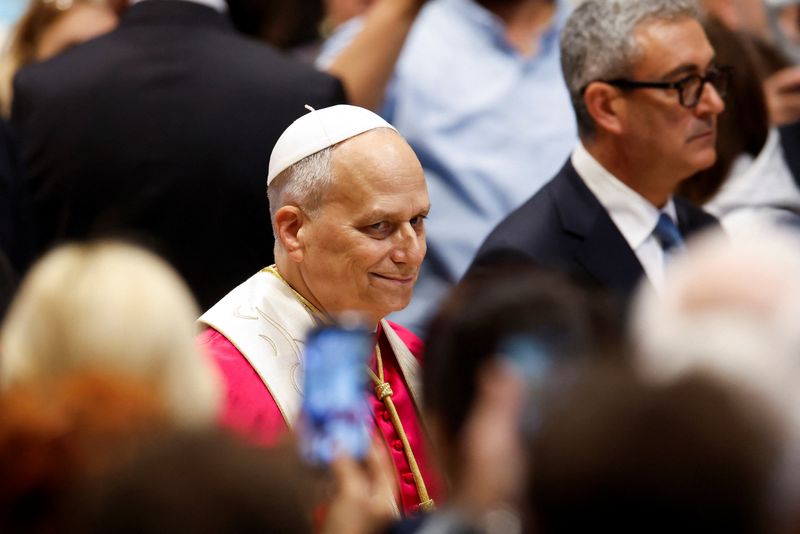

Pope Leo urges end to ’madness of war’ as US, Iran start talks

Akamai Collapse: Did Anthropic Just Kill Its Prospects? I Think Not


Samuel Smith has a diverse background that includes being lead analyst and Vice President at several highly regarded dividend stock research firms and running his own dividend investing YouTube channel. He is a Professional Engineer and Project Management Professional and holds a B.S. in Civil Engineering & Mathematics from the United States Military Academy at West Point and has a Masters in Engineering from Texas A&M with a focus on applied mathematics and machine learning.Samuel leads the High Yield Investor investing group. Samuel teams up with Jussi Askola and Paul R. Drake where they focus on finding the right balance between safety, growth, yield, and value. High Yield Investor offers real-money core, retirement, and international portfolios. The service also features regular trade alerts, educational content, and an active chat room of like-minded investors. Perspective: “Do not store up for yourselves treasures on earth, where moth and rust destroy, and where thieves break in and steal. But store up for yourselves treasures in heaven, where neither moth nor rust destroys, and where thieves do not break in or steal; for where your treasure is, there your heart will be also … For what will it profit a man if he gains the whole world and forfeits his soul?” ~ Jesus (Matthew 6:19-21; 16:26)Learn more
Analyst’s Disclosure: I/we have a beneficial long position in the shares of GLD, SLV, PFFA, ET, WES, OWL, HTGC either through stock ownership, options, or other derivatives. I wrote this article myself, and it expresses my own opinions. I am not receiving compensation for it (other than from Seeking Alpha). I have no business relationship with any company whose stock is mentioned in this article.
Seeking Alpha’s Disclosure: Past performance is no guarantee of future results. No recommendation or advice is being given as to whether any investment is suitable for a particular investor. Any views or opinions expressed above may not reflect those of Seeking Alpha as a whole. Seeking Alpha is not a licensed securities dealer, broker or US investment adviser or investment bank. Our analysts are third party authors that include both professional investors and individual investors who may not be licensed or certified by any institute or regulatory body.
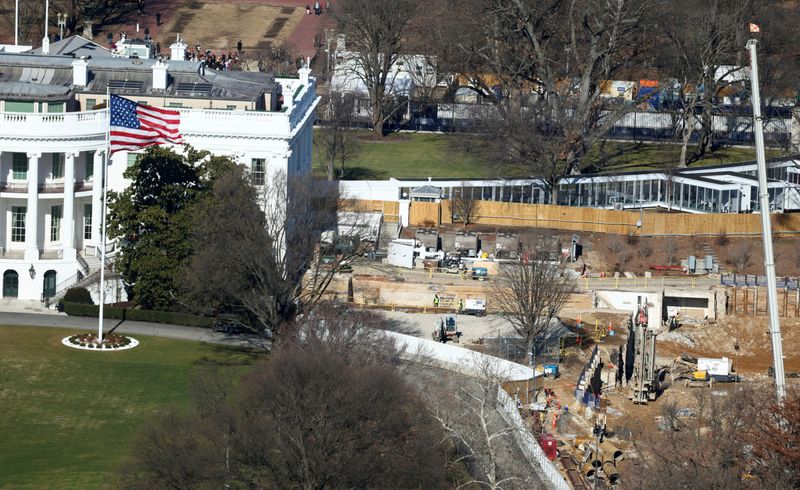

Court allows White House ballroom construction to continue for now
Business
Sabrina Carpenter Sparks Backlash at Coachella for Calling Arabic Ululation ‘Yodeling’ and ‘Weird’

INDIO, Calif. — Sabrina Carpenter, headlining Coachella Valley Music and Arts Festival on Friday night, found herself at the center of a cultural controversy after she misidentified a fan’s traditional Arabic ululation as “yodeling” and repeatedly described the celebratory vocalization as “weird” during her set.

AFP
The 26-year-old pop star was mid-performance at the Empire Polo Club when an audience member let out a loud zaghrouta — a high-pitched, trilling call common in Arab, Middle Eastern and North African cultures used to express joy and celebration. Carpenter paused, addressing the moment in real time on the livestream.
“I think I heard someone yodel. Is that what you’re doing?” Carpenter said, according to multiple accounts and viral clips. When the fan responded, she added, “I don’t like it.” As the concertgoer explained it was part of their culture, Carpenter replied, “That’s your culture, yodeling? Is this Burning Man? What’s going on? This is weird,” before continuing her show.
The exchange, captured on video and shared widely on social media platforms including X and TikTok, ignited immediate backlash. Critics accused the Grammy-winning artist of cultural insensitivity, ignorance and disrespect toward Arab and North African traditions.
Viral Backlash and Social Media Firestorm
Within hours, the clip amassed millions of views. Many users expressed disappointment, with comments labeling Carpenter as “uncultured,” “ignorant” and even calling for her to be “canceled.”
“Sabrina Carpenter is so ignorant. Someone was doing a zaghroot (an Arab cheer), and she called it yodeling and disrespectfully dismissed the fact that it was part of the person’s culture,” one widely shared post read.
Others echoed the sentiment: “Sabrina saying yodeling culture is weird after a fan explained that it’s part of their culture — is she dumb?? She’s such a loser.” Some defended her, suggesting it was an awkward but harmless misunderstanding in the heat of a live performance, while others pointed out the moment highlighted a lack of cultural awareness.
The controversy erupted on opening night of Coachella 2026, where Carpenter was a headliner delivering what many called an ambitious, high-energy set filled with hits like “Espresso” and “Please Please Please.” Despite the strong overall performance, the fan interaction overshadowed parts of the buzz.
Understanding the Cultural Context
Ululation, known as zaghrouta in Arabic or similar terms across regions, is a longstanding vocal tradition. Women and men use the rapid tongue trills during weddings, births, festivals and moments of triumph to convey happiness and solidarity. It is not yodeling, a Swiss and Alpine folk technique involving rapid pitch changes, nor is it associated with Burning Man aesthetics.
Cultural experts and advocates noted that dismissing such a practice publicly can feel alienating, especially at a diverse, international festival like Coachella, which attracts attendees from around the world.
“This isn’t just a ‘weird sound’ — it’s a beautiful expression of joy rooted in centuries of tradition,” one commentator posted alongside educational videos about ululation. Supporters of Carpenter argued she simply didn’t recognize the sound and reacted spontaneously, without malice.
Carpenter has not issued a public statement on the incident as of Saturday. Her representatives did not immediately respond to requests for comment.
Carpenter’s Coachella Triumph Amid Controversy
Despite the backlash, much of the coverage of Carpenter’s set remained positive. The singer, riding high on the success of her “Short n’ Sweet” era, delivered a polished, theatrical performance described as her most ambitious to date. She incorporated elaborate staging, costume changes and guest appearances that drew cheers from the desert crowd.
This marks Carpenter’s first time headlining Coachella. In pre-festival interviews, she teased the production as a major step up, reflecting her meteoric rise from Disney child star to global pop powerhouse. Her ability to blend bubblegum pop with sharp songwriting has earned her critical acclaim and a devoted fan base, often called “Carpenters.”
The festival itself continues to draw massive crowds and international attention, serving as a launchpad for artists and a cultural barometer. Past editions have seen their share of controversies, from stage mishaps to political statements.
Broader Conversations on Cultural Sensitivity in Music
The incident taps into ongoing discussions about cultural literacy in the entertainment industry. As global stars perform for diverse audiences, moments of misunderstanding can quickly amplify online. Similar debates have surrounded other artists accused of appropriation or insensitivity in recent years.
Supporters of Carpenter emphasize context: live shows are unpredictable, and quick reactions aren’t always perfectly calibrated. Detractors argue that basic awareness of common cultural expressions should be expected from a performer of her stature.
Arab and Muslim community voices on social media called for education rather than outright cancellation. “It’s okay to not know, but doubling down and calling it ‘weird’ after explanation hurts,” one user wrote.
Carpenter’s Career Trajectory
At 26, Carpenter has navigated fame with a mix of charm, humor and occasional controversy. Her transition from acting on “Girl Meets World” to music stardom culminated in chart-topping success. Hits like “Nonsense” and her latest album have solidified her as a Gen Z icon known for witty, flirtatious anthems.
This Coachella moment comes as she continues expanding her influence, with sold-out tours, brand deals and acting projects. How she addresses the backlash — if at all — could shape the narrative moving forward.
Festival organizers have not commented. Coachella 2026 weekend one continues through Sunday, with weekend two scheduled for the following week.
As clips continue circulating, the episode serves as a reminder of the tightrope artists walk in the age of livestreams and instant social media judgment. What began as a fan’s enthusiastic celebration turned into a flashpoint on cultural respect and awareness.
Carpenter’s set otherwise showcased her growth as a performer, blending vulnerability, charisma and showmanship. Whether this incident fades or lingers may depend on her response and how fans process the exchange in the days ahead.
For now, the desert festival’s opening night will be remembered not only for Carpenter’s musical prowess but for a spontaneous moment that sparked important cross-cultural dialogue.
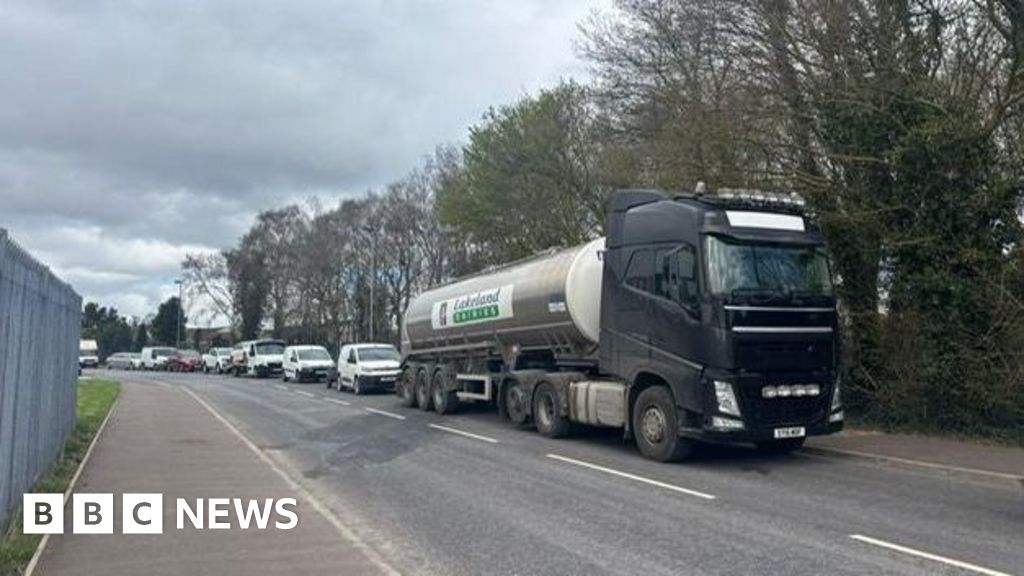
A convoy of vans, lorries, tractors, and even a limousine took part in a slow moving protest around the town centre on Saturday afternoon.


I am a dedicated financial risk manager and investor specializing in financials, consumer, and technology industries. I have been involved in the investing world for over seven years, making deep analyses and managing different types of portfolios.I believe in deep research, prioritizing business model trends to understand the companies’ perspectives in the future before short-term market trends or stock prices. This research philosophy is auspicious to find good growth investment opportunities for the long term while also avoiding dangerous financial instruments presented in the markets. As a relatively young investor, I consider my views a valuable approach to analyzing and researching new technologies and enhancements, as well as the impact these could have on the younger generations and the investments made on these.
Analyst’s Disclosure: I/we have no stock, option or similar derivative position in any of the companies mentioned, and no plans to initiate any such positions within the next 72 hours. I wrote this article myself, and it expresses my own opinions. I am not receiving compensation for it (other than from Seeking Alpha). I have no business relationship with any company whose stock is mentioned in this article.
Seeking Alpha’s Disclosure: Past performance is no guarantee of future results. No recommendation or advice is being given as to whether any investment is suitable for a particular investor. Any views or opinions expressed above may not reflect those of Seeking Alpha as a whole. Seeking Alpha is not a licensed securities dealer, broker or US investment adviser or investment bank. Our analysts are third party authors that include both professional investors and individual investors who may not be licensed or certified by any institute or regulatory body.
Business
JFK Airport TSA Lines Move Smoothly Today with Average 10-25 Minute Waits on Busy Saturday Travel Day
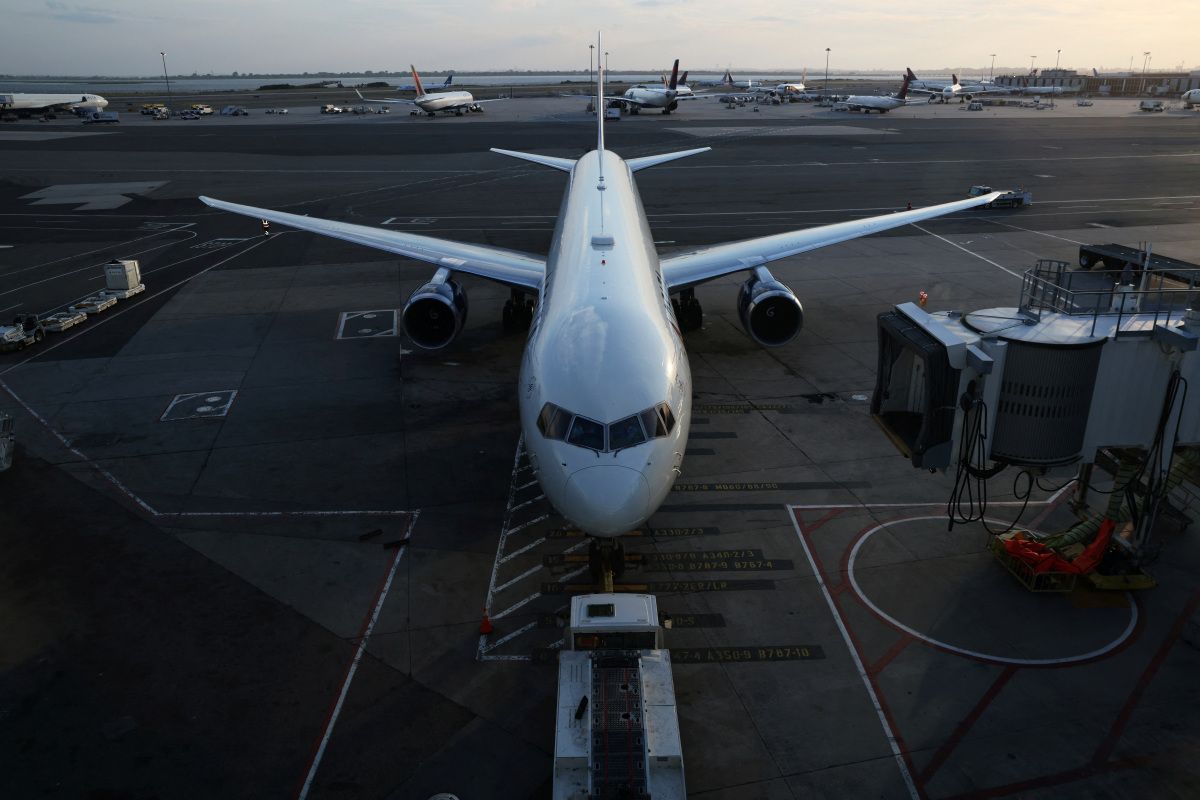
NEW YORK — Travelers at John F. Kennedy International Airport encountered manageable security lines Saturday, with TSA wait times averaging under 25 minutes across most terminals amid typical weekend passenger volume.

As of mid-morning Eastern Time, official airport data showed general security lines ranging from as short as 7 minutes in Terminal 4 to around 27 minutes in Terminal 8. TSA PreCheck lanes moved significantly faster, often under 10 minutes and as quick as 1 minute in several checkpoints.
The relatively smooth flow comes on a busy spring Saturday when many New York-area residents head out for spring break getaways, family visits or early summer escapes. JFK, one of the nation’s busiest international gateways, handled dozens of departures to Europe, the Caribbean and domestic hotspots.
Current Terminal-by-Terminal Snapshot
According to the latest updates from the official JFK Airport website:
- Terminal 1: General security around 14-16 minutes; TSA PreCheck 5-6 minutes.
- Terminal 4 (major international hub for Delta and others): General 7-9 minutes; PreCheck just 1 minute — consistently one of the quickest.
- Terminal 5 (JetBlue’s home): General 11-12 minutes; PreCheck similar or slightly faster.
- Terminal 7: General up to 26 minutes.
- Terminal 8 (American Airlines): General around 27 minutes; PreCheck 7 minutes.
These figures represent estimates based on real-time checkpoint monitoring and remain subject to rapid change as passenger volumes fluctuate. Airport officials note that the data is most accurate when lines stay within designated queue areas.
Live trackers and traveler reports on platforms like the MyTSA app and independent sites confirmed averages hovering between 10 and 25 minutes for standard lanes during morning hours, with no major backups reported so far.
Why Wait Times Matter at JFK
John F. Kennedy International Airport processes tens of millions of passengers annually across its eight terminals. Security screening remains one of the most unpredictable parts of the journey, influenced by staffing levels, passenger volume, peak departure times and random additional checks.
Saturday traffic tends to be steadier than weekday morning rushes but can still build during mid-day waves. Peak periods historically occur between 5-8 a.m. and 3-7 p.m., when waits can stretch toward 30-45 minutes or more without expedited options.
Travel experts recommend arriving at least 2.5 to 3 hours before international flights and 2 hours for domestic ones. With current conditions, most passengers should clear security comfortably within those windows.
Tips to Beat the Lines
- TSA PreCheck and CLEAR: Enrolled travelers continue to enjoy dramatically shorter waits. CLEAR biometric lanes and PreCheck have proven especially effective at JFK, often reducing screening to just a few minutes.
- Terminal Choice: Terminal 4 has emerged as a reliable faster option for many international travelers.
- MyTSA App and JFK Website: Real-time updates help travelers adjust plans. Download the official MyTSA app for crowd-sourced reports alongside official estimates.
- Packing Smart: Follow the 3-1-1 liquids rule and remove laptops and large electronics early to avoid secondary screening delays.
- Arrive Early Anyway: Even with short lines, factors like long walks to gates, crowded food courts or unexpected gate changes make buffer time essential.
Broader Travel Context This Weekend
The spring travel season is in full swing, with airlines reporting strong booking numbers as restrictions ease and pent-up demand continues. Weather across the Northeast remains favorable Saturday, with mild temperatures and no major delays reported in the New York metro area air traffic system.
JFK serves as a critical hub for carriers including Delta, JetBlue, American, United and numerous international airlines. High volumes of transatlantic flights mean diverse passenger mixes that can sometimes slow screening due to additional international requirements.
TSA staffing has stabilized in recent months after periods of understaffing that plagued major hubs, contributing to more predictable experiences. However, random additional measures and technology calibrations can still create temporary surges.
Traveler Experiences and Social Buzz
Social media reflected generally positive feedback on Saturday morning. Many passengers posted about clearing security in under 20 minutes, with praise for efficient staff in PreCheck lanes. Some Terminal 8 travelers noted longer general lines but said the situation improved by late morning.
One frequent flyer shared: “Terminal 4 PreCheck was literally 60 seconds today. Arrived, breezed through, grabbing coffee now.” Others advised avoiding certain terminals during afternoon peaks.
Reddit communities dedicated to JFK and New York airports have active threads sharing live photos and updates, helping fellow travelers navigate the massive facility.
Looking Ahead
Conditions can shift quickly, especially as afternoon departures ramp up. Travelers are urged to check the official JFK Airport website or MyTSA app before leaving home for the most current picture.
For those connecting through JFK or arriving internationally, customs and immigration wait times remain separate from TSA screening. Passport control can add significant time on busy days.
JFK continues investing in technology and infrastructure improvements aimed at streamlining the passenger experience, including expanded biometric options and better queue management. These upgrades should help keep wait times manageable as summer travel peaks approach.
As of Saturday afternoon, the message for most JFK travelers remains encouraging: plan ahead, use available expedited programs when possible, and current security lines should not cause major headaches for those who build in reasonable buffer time.
Safe travels to all departing from one of the world’s busiest and most iconic airports. With today’s moderate waits, passengers have more time to enjoy the wide array of dining, shopping and relaxation options before boarding.

S&P 500: A Dead Money Era May Be Here, How To Thrive In It

Brentford boss Keith Andrews hails ‘very special’ Igor Thiago

DJI ‘confirms’ the Osmo Pocket 4 with a tempting teaser

Emirates issues new travel and flights update for Brits


-

 Business6 days ago
Three Gulf funds agree to back Paramount’s $81 billion takeover of Warner, WSJ reports
-

 Sports7 days ago
India men’s 4x400m and mixed 4x100m relay teams register big progress | Other Sports News
-

 Politics23 hours ago
US brings back mandatory military draft registration
-

 Fashion24 hours ago
Weekend Open Thread: Veronica Beard
-

 Tech4 days ago
How Long Can You Drive With Expired Registration? What Florida Law Says
-

 Business6 days ago
No Jackpot Winner, Prize to Climb to $231 Million
-

 Fashion5 days ago
Massimo Dutti Offers Inspiration for Your Summer Mood Board
-
 Sports1 day ago
Man United discover Nico Schlotterbeck transfer fee as defender reaches Dortmund agreement
-

 Fashion4 days ago
Let’s Discuss: DEI in 2026
-

 Crypto World3 days ago
Bitcoin recovers as US and Iran Agree a Ceasefire Deal
-

 Crypto World2 days ago
Canary Capital Files SEC Registration for PEPE ETF
-

 Politics2 days ago
Malcolm In The Middle OG Turned Down ‘Buckets Of Money’ To Appear In Reboot
-

 Business21 hours ago
Tesla Model Y Tops China Auto Sales in March 2026 With 39,827 Registrations, Beating Cheaper EVs and Gas Cars
-

 Business7 days ago
Akebia Therapeutics, Inc. (AKBA) Discusses Pipeline Progress and Strategic Focus on Kidney Disease Treatments at R&D Day – Slideshow
-

 Business1 day ago
OpenAI Halts Stargate UK Data Centre Project Over Energy Costs and Copyright Row
-

 Tech5 days ago
Haier is betting big that your next TV purchase will be one of these
-

 Tech5 days ago
Gamer Restores the Original PlayStation Portal From Two Decades Ago
-

 Tech5 days ago
Samsung just gave up on its own Messages app
-

 Business1 hour ago
Ireland Fuel Protests Enter Day 5 as Blockades Spark Shortages and Government Prepares Support Package
-

 Tech5 days ago
The Xiaomi 17 Ultra has some impressive add-ons that make snapping photos really fun
You must be logged in to post a comment Login