













The charity is currently advertising for someone to join its land management team on a fixed-term basis

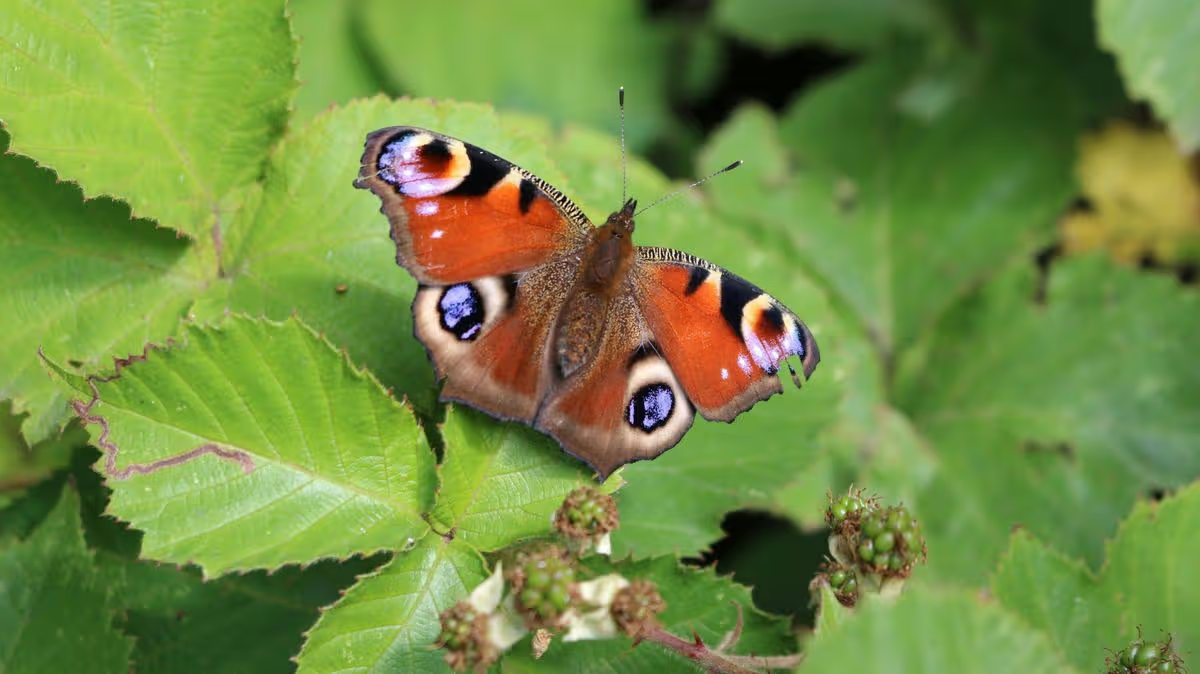
Vivid European Peacock butterfly resting on lush green leaves(Image: Flynn Robinson / Pexels)
A Gloucestershire charity says it is “working to change” after being slammed online for advertising an unpaid voluntary role as the “perfect opportunity” for someone looking to pursue a career in the UK conservation sector.
Gloucestershire Wildlife Trust (GWT) is looking for a so-called ‘wild trainee’ to join its land management team for 21 hours a week on a fixed-term basis for nine months, with the chance to extend for a year.
According to the job advert on the charity’s website, the candidate will receive a personal training plan and “tailored internal and certified external training”, but will need their own transport and will not receive a salary.
“As well as a wide range of experience across the work of the Wildlife Trusts, [the role is] designed to give you the professional skills you need to get your first job in the sector,” the advert reads.
“With individual support you will have opportunities to get involved in all aspects of GWT’s work. Initially focussing on practical habitat management across our nature reserves and project sites, you’ll gain experience in many aspects of UK wildlife conservation, while absorbing practical knowhow from your experienced and friendly mentor.
“Throughout the year you will also gain technical and soft skills with other GWT teams, including Ecological Evidence, Farm Advice, Engagement & Learning and Communications to give you wider experience and an overview of the career opportunities available in the UK Nature sector.”
But dozens of people have criticised the charity, which says it is an equal opportunity employer, for not offering a salary.
One Facebook user wrote: “Wow that is such a lot of expected hours for a voluntary position. I’d absolutely LOVE to do this in order to retrain. No doubt this’ll go to someone lucky enough to have the Bank of Mum & Dad at their disposal then.”
While another said: “I realise there is little to no money in conservation work, and unpaid work experience placements are part of the ‘culture’, but asking people to work for nothing really does reinforce the stereotype of conservation as an upper-middle class pursuit, as others have said.”
And one person wrote: “So many places now expect a person to feel so grateful to have a job that they’ll work for free… If you want a trainee to arrive at work healthy, fed, rested and eager to learn then i suggest you pay them! You will surely miss out on some amazing people simply because they cannot afford to work for free.”
GWT told Business Live it takes concerns “like this seriously” and said it was “actively working” to try to leverage more funding for its Wild Trainees programme to provide salaried opportunities.
“Similar to many other charities, we have been hit hard by operational costs and increases in budgets,” a spokesperson said.
“We are constantly on the lookout for government schemes that could support apprenticeships and paid internships and remain disappointed that this has not been prioritised by the current administration.
“Currently, our Wild Trainee programme is designed to provide meaningful opportunities that support individuals towards paid employment.”
GWT told Business Live its scheme offers access to mentoring, training and development, including first aid training, and covers expenses such as travel mileage and lunch.
“[It is a] chance to gain experience across different areas of the sector in a more flexible way and with more depth than with a traditional paid entry-level role,” the spokesperson said.
“We appreciate concerns raised about accessibility, and cover expenses such as travel and lunch, and provide flexible, part-time hours to enable trainees to balance this opportunity alongside other commitments. We appreciate this still doesn’t go as far as we would aspire to and we are working to change this.”
GWT said its Wild Trainee programme had “high success” with many participants going on to gain access to permanent job roles in the sector.
“As a charity, we aim to maximise opportunities for nature and communities, and training programmes like this are one way we invest in developing future conservation professionals,” the organisation added.
Latest documents on Companies House, show GWT’s total income for the year to the end of March 2025 was £6.1m – a 12 per cent increase on the previous year and the highest recorded to date. Although the charity’s expenditure was £6.4m, at the time it held free reserves, after emergency and designated funds, of £243,499.
According to the government’s charity commission website, GWT currently has 109 employees, 11 trustees and 650 volunteers.
It also pays one person within the organisation between £90,000 and £100,000 a year, although no trustees receive any remuneration, payments or benefits from the charity.










![TL | Thief Gives Money To Homeless[TRACYLEAD] #tracylead #kindperson #respect #help](https://wordupnews.com/wp-content/uploads/2026/05/1779804688_maxresdefault-80x80.jpg)




































You must be logged in to post a comment Login