Business
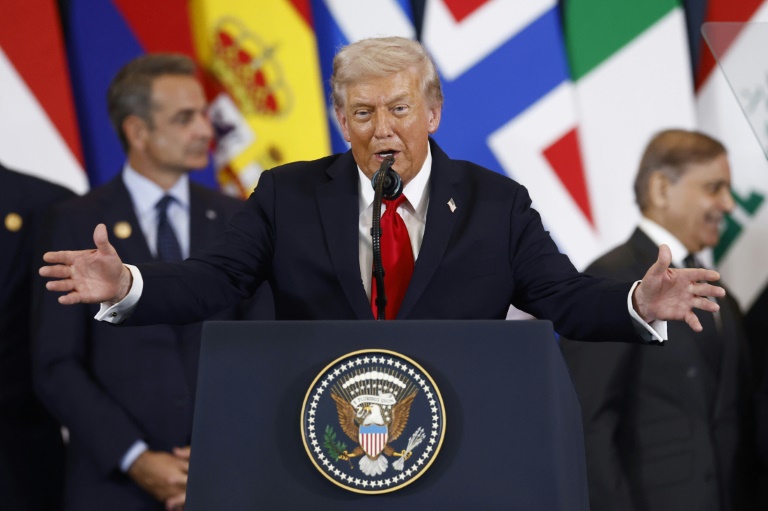
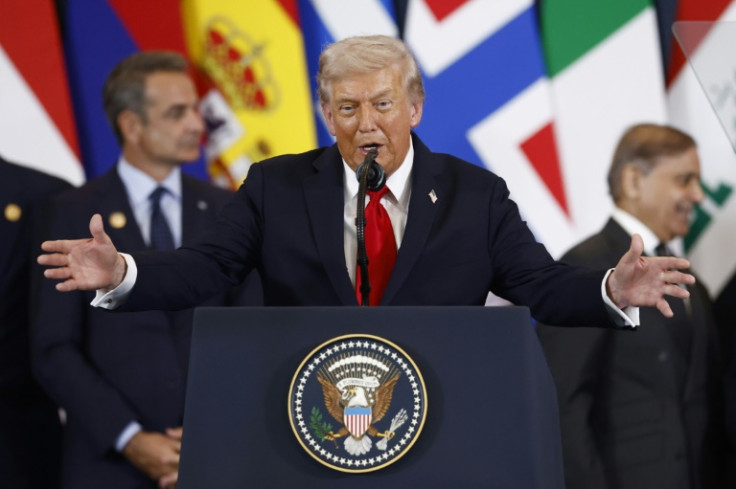
Regulator’s concerns pertain to pockets of speculation, not entire derivatives market: Tuhin Kanta Pandey
Pandey, who completes his first year as the head of India’s capital markets regulator, said the recent measures by Sebi were not aimed at the entire derivatives market but at pockets of speculation in the segment. The Sebi chief also spoke on settlement regulations and promoter norms, among other issues. Edited excerpts:
You’ve said your goal is to keep policies market-friendly as the ecosystem evolves. Are you satisfied with the progress so far?
Broadly, yes. Within Sebi, there is a growing emphasis on what I would call optimum regulation. We recognise that regulation has costs and can create unintended consequences. Where multiple options achieve the same objective, we should choose the simpler one with lower compliance costs. Over time, rules tend to accumulate, increasing compliance burdens for both regulated entities and the regulator. Our comprehensive regulatory review aims to rationalise and streamline this. Ultimately, investor protection and market development must go together.
Over the past two years, Sebi has taken several steps to curb excessive speculation in equity derivatives. Is there a measure or a level that you are targeting at which you would consider that the objective has been achieved? Are you following a number-driven or principle-driven approach?
We are not following a number-driven approach. Our approach is principle-driven. The focus has been on assessing the impact of the measures we’ve introduced. Often, finfluencers highlight only the winners, creating an exaggerated perception of returns. By placing collective data in the public domain, we aimed to present a realistic view of outcomes in the market. Transparency itself is a powerful form of investor education. We also introduced safeguards such as tighter margin norms, especially on expiry days, to curb lottery-like speculation. Now, we need to assess the impact of these steps through data, rather than reacting month to month. We must recognise that there are also genuine, informed participants in the derivatives market. The objective is not to shut down the market, but to ensure it operates responsibly. Future steps, if any, will be guided by careful data analysis and a balanced, mature approach.
Some market participants warn that India should avoid the path taken by countries such as China and South Korea, where curbs on derivatives speculation have led to a loss of liquidity that has been hard to restore. Has Sebi factored in the risk of liquidity leaving the market as a result of its recent measures?
It is too sweeping to treat the entire F&O segment as one block. Derivatives play a vital role in price discovery, hedging, and risk management, which is why they exist globally. Our concerns were not about the broader derivatives market, but about short-tenor index options, particularly weekly and expiry-day contracts, where speculative activity had become concentrated. If there is a problem in one area, the response should address that area, not disrupt the entire system. There are multiple viewpoints on this – some argue weekly options should continue unchanged, others warn about liquidity risks, and some suggest calibrated measures such as eligibility criteria. The objective is to address concentrated risks while preserving the overall role and liquidity of the derivatives market. So there is, in my opinion, a need even for the media not to really call it F&O, and rather to coin it as ‘O’ on the expiry day and weekly.
So, just to be clear, your concern about derivatives is the pocket of speculation rather than the broader segment.
Yes. You can’t start badgering your body just because you have a boil on your nose. There are several views, like it should continue or let’s get out of weekly, or can we have something in between. There are people who are talking about what kind of criteria could be made for access, for example. Collectively, we should be comfortable that this is the right approach to take. Has Sebi discussed the topic of access (eligibility to trade) in F&O?
No, I’m not saying that. All I am saying is these are already different points of view. F&O has been one of the most hotly debated subjects. All I am saying is please don’t call it F&O, and if you have a problem, call it ‘O’ on the expiry date.
There are also some concerns over growing speculation through margin trading facility (MTF) exposures. Is Sebi looking into this?
We continuously monitor the situation, but MTF already operates within defined guardrails. There are net worth requirements and leverage limits. We have taken the view that re-pledging of client securities for additional leverage should not lead to over-leveraging. At this stage, we believe MTF should be allowed to function within these guardrails while keeping risks under watch. Liquidity in the cash market is important, and we are examining ways to deepen it. For instance, a working group is reviewing the short-selling and SLBM framework to understand barriers and encourage broader participation. Derivatives and cash markets must function together. Derivatives, particularly longer-tenor contracts, play an essential role in price discovery and hedging. The key is to ensure appropriate position limits and risk controls so that excessive speculation is contained and markets remain stable.
Sebi is reviewing its settlement regulations. While settlements have increased over time, litigation and case backlogs remain high. Are further simplifications being considered?
Yes. Greater clarity and proportionality are needed in settlement regulations. Clearer rules reduce ambiguity, limit multiple interpretations, and help bring down disputes and litigation. We do not want the system to become a ‘litigation paradise’. Simpler, clearer rules ultimately strengthen market confidence.
How is Sebi rethinking the concept of promoter, particularly, under ICDR (Issue of Capital and Disclosure Requirements), after moving away from the ‘once a promoter, always a promoter’ approach?
The review is not limited to ICDR. We are also examining LODR (Listing Obligations and Disclosure Requirements). A working group is gathering feedback, and the proposals will go through multiple committees before consultation papers are issued.
There are concerns that some companies report profits just before an IPO and then slip back into losses, raising allegations of window-dressing. How does Sebi view this?
It is important not to generalise from a few instances. One egregious case does not indicate a systemic problem. The key is to distinguish between isolated misconduct and a broader pattern. Rushing to introduce additional rules in response to individual cases risks overregulation and could burden compliant companies without solving the underlying issue.
Sebi is reportedly issuing notices to lawyers and tax consultants for alleged confidentiality breaches during M&A deals. Do you foresee jurisdictional or enforcement challenges, given that they are also regulated by other professional bodies?
If the investigation finds evidence of a violation, the matter proceeds to a quasi-judicial process within Sebi. A show-cause notice is issued, and the concerned parties are given an opportunity to respond and be heard before any order is passed. The outcome may confirm, modify, or set aside the investigation’s findings. These orders are subject to appeal before the Securities Appellate Tribunal.
Business
Thailand Braces for Economic Ripples as Middle East Conflict Escalates
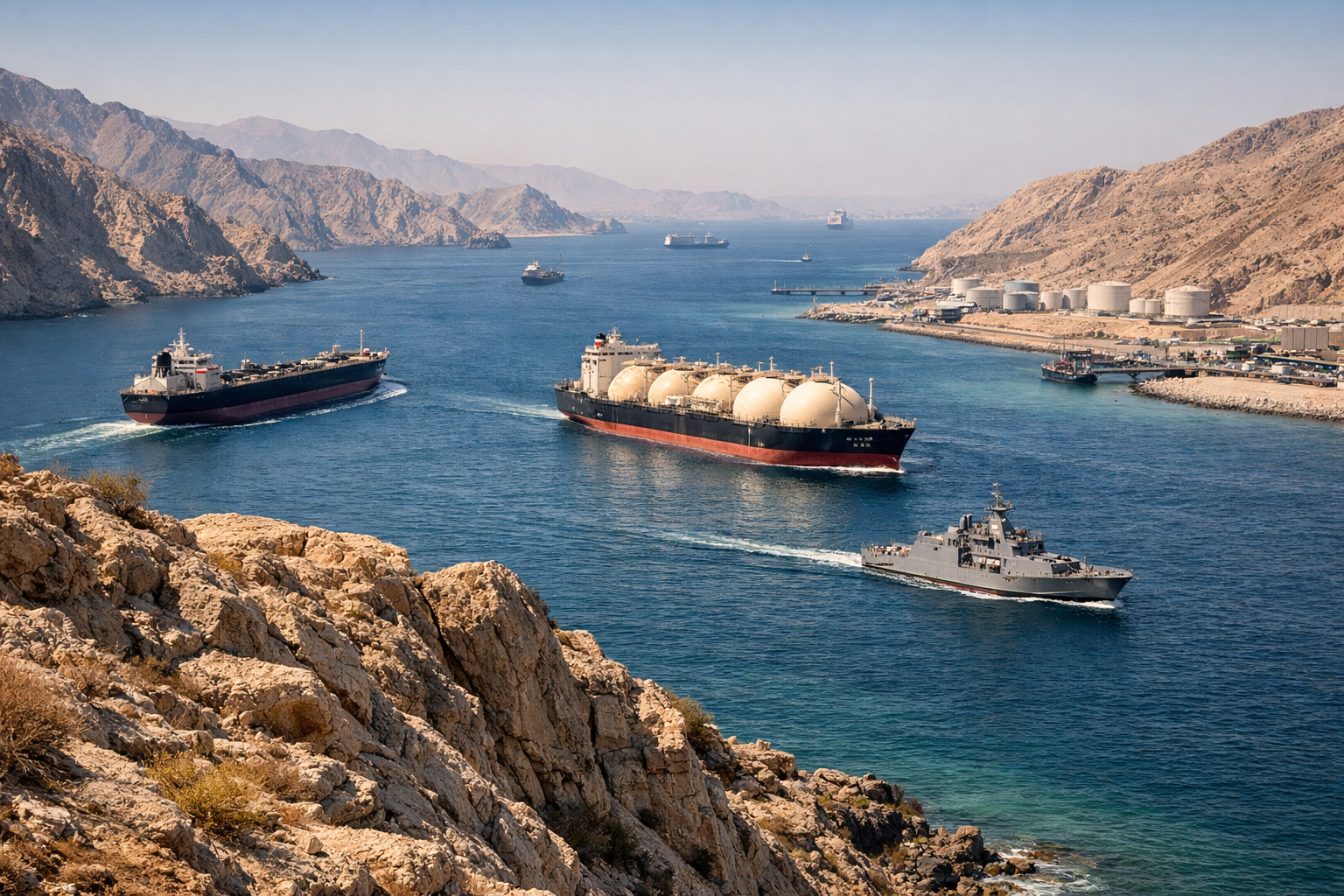
Bangkok, March 2, 2026 – As tensions in the Middle East reach a boiling point with US-Israeli strikes on Iran and retaliatory missile attacks across the Gulf, Thailand finds itself on the frontline of indirect economic fallout. Despite being thousands of kilometers away, the Kingdom’s heavy reliance on imported oil, global trade, and tourism exposes it to surging energy prices, market volatility, and supply chain disruptions. With the Strait of Hormuz—a critical chokepoint for 20% of global oil—at risk, experts warn of potential shortages and inflationary pressures that could derail Thailand’s fragile post-pandemic recovery.
Energy Security: The 60-Day Buffer
The Ministry of Energy has declared a state of “total security,” implementing a ban on all petroleum exports to prioritize domestic stockpiles.
- The Reserve Status: As of today, Thailand holds 7,660 million liters of crude and refined oil—sufficient for 60 days of domestic consumption. This includes 22 days of stock currently in transit, much of which has already cleared the critical Strait of Hormuz.
- The Price “Risk Point”: While the National Fuel Fund is currently being used to stabilize pump prices, officials have flagged Wednesday, March 4, as a critical tipping point. If global diesel prices break the $100 per barrel mark, retail price hikes in Thailand may become unavoidable.
- Power Contingency: In a strategic shift, coal-fired and hydroelectric plants have been ordered to maximum capacity to reduce the Kingdom’s reliance on imported Liquefied Natural Gas (LNG), which fuels 60% of Thailand’s electricity.
Trade & Exports: Navigating the “War Surcharge”
The Ministry of Commerce has mobilized 58 Thai Trade Centers worldwide to conduct daily risk assessments. While the Middle East is a high-growth market for Thai goods, the immediate threat is logistical.
- Shipping & Insurance: Freight rates and maritime insurance premiums are expected to spike. The government is coordinating with state financial institutions to provide liquidity support for exporters facing these rising costs.
- Export Exposure: Canned fruits, rubber products, and automotive parts are the most vulnerable sectors. In response, Thailand is accelerating a pivot toward “safe-haven” markets in South Asia, Africa, and Latin America.
Tourism: Sentiment vs. Safety
While Thailand remains a geographically distant “safe haven,” the aviation sector is feeling the pressure of a shifting “War Economy.”

- Rerouted Airways: Thai Airways and other carriers are bypassing Middle Eastern conflict zones, leading to longer flight times and higher fuel surcharges on European routes.
- Market Shift: High-spending tourists from the GCC (Gulf Cooperation Council) and Israel—who spend an average of 100,000 THB per trip—are seeing significant travel disruptions. Tourism authorities are now monitoring “sentiment shifts” as travelers reconsider long-haul trips amid global instability.
Labor & Humanitarian Response
Prime Minister Anutin Charnvirakul has prioritized the safety of the 77,000+ Thai workers currently in the region, primarily in Israel, the UAE, and Saudi Arabia.
- Evacuation Readiness: The Royal Thai Air Force (RTAF) has put its Airbus A319/A320 and C-130 Hercules fleet on standby.
- The Tehran Corridor: A primary evacuation route has been established through India (Indira Gandhi International) to extract the approximately 300 Thai nationals currently in Iran.
Strategic Outlook: Thailand’s Economic Defense
| Sector | Key Risk | Government Response |
| Energy | Strait of Hormuz closure | 60-day reserve; Export ban; Coal/Hydro max output |
| Trade | Freight & Insurance spikes | Liquidity support; Market diversification (South Asia/Africa) |
| Currency | Baht volatility | Bank of Thailand monitoring “safe-haven” capital flows |
| Tourism | Airspace closures | Rerouting flights; Focus on APAC regional markets |
Energy Sector Under Pressure
Thailand, as a net oil importer heavily reliant on energy supplies from the Middle East, faces heightened vulnerability to the ongoing conflict’s impact on global crude prices. Brent crude has already surged to the $90-$100 per barrel range due to fears of supply disruptions, with diesel prices likely to follow suit. Domestic fuel costs are expected to rise sharply, with a significant increase anticipated around March 4, further straining household and business budgets.If the conflict persists, electricity and cooking gas (LPG) expenses may also climb, contributing to broader inflationary pressures.
Despite this, the government maintains a modest 2026 inflation forecast of 0.3%, relying on measures such as 61 days of oil reserves and the Oil Fuel Fund’s capacity to mitigate price volatility.Additionally, LNG imports are set to increase to 13 million tonnes this year, up from 10 million tonnes previously, offering some diversification and reducing reliance on oil-based energy sources.
The Federation of Thai Industries (FTI) has raised concerns that a closure of the Strait of Hormuz could severely impact Thailand’s oil imports, resulting in rapid depletion, potential shortages, and prolonged high costs.
Tourism and Air Travel Chaos
The conflict has triggered mass airspace closures, resulting in 9,600 flight delays and cancellations worldwide.
Thailand’s tourism sector, still in recovery and heavily reliant on high-spending visitors from the Middle East, faces challenges ahead. Airport closures and rising ticket prices may discourage travelers from Israel and Gulf states, resulting in revenue losses. On a brighter note, some tourists might opt for safer destinations like Thailand, but the overall short-term impact is expected to be negative.
Financial Markets
Volatility and Safe Havens Geopolitical jitters are shattering hopes for global rate cuts, with oil prices elevated, equity markets tumbling, and currencies under strain. The Thai baht faces depreciation risks from capital outflows, while gold surges as a safe haven. Meanwhile, central banks are grappling with the challenge of balancing inflation control and economic growth, as uncertainty clouds future monetary policies. Investors are closely watching developments, seeking stability in assets like U.S. Treasuries and the Japanese yen, which have traditionally been viewed as secure during turbulent times.
Thailand is currently better prepared for an energy shock than in previous crises due to its robust fuel fund and strategic reserves. However, the prolonged nature of this conflict could test the limits of these buffers by mid-April.
Other People are Reading
Continue Reading
Business
Oil shock, AI worries to weigh on Indian markets amid rising global uncertainty
On Sunday, Saudi Arabia was down 2.5%, Oman fell 1.6%, and Bahrain was down 1%. The sell-off in the Gulf market is a harbinger of what’s in store for other markets, including India, when trading opens on Monday.
“A gap-down opening on Monday remains possible because a spike in oil prices following the closure of the Strait of Hormuz and disruptions in the Gulf could weigh on Indian businesses,” said Sham Chandak, head of institutional equities at Elios Financial Services.
Barclays said Brent crude could hit $100 a barrel, citing the threat of a potential supply disruption. Fears of the US’s attack on Iran drove Brent to a seven-month high of $72.87 on Friday, but markets were hoping that both countries would resume negotiations over the long-running nuclear dispute this week after talks remained inconclusive till the weekend. Oil shipping has been largely disrupted in the Strait of Hormuz – the critical artery linking the oil-rich Persian Gulf to the open seas – after US-Israeli strikes on Iran, with several tanker operators pausing voyages and Iran’s state-media warning that the waterway is effectively closed.
“Markets are likely to move from earnings-driven to oil-driven trading in the near term,” said JM Financial Institutional Securities in a client note. “Indian markets are likely to see a gap-down opening with elevated volatility amid global risk-off sentiment.”
The heightened risk-aversion could drive up prices of gold and silver, while boosting demand for the US dollar. When oil prices surge, it triggers inflationary pressures, making gold and silver more attractive to protect investor wealth. Similarly, when oil prices rise, the demand for the US dollar typically increases because crude is valued in the American currency.
JM said every $ 1 rise in crude increases India’s annual import bill by $2 billion, putting pressure on the trade balance. Upstream energy stocks such as Oil India and ONGC, along with defence names such as Hindustan Aeronautics and Bharat Electronics, may gain, while oil marketing companies, paints, tyres, aviation and chemicals may come under pressure on account of higher oil prices, it said.
March Seasonality
Historically, March has been a relatively stronger month for the markets, but that seasonal trend could face some challenges this time.
“We are entering March with caution despite historically strong positive seasonality, as global and domestic headwinds continue to weigh on Indian markets,” said Sriram Velayudhan, senior vice -president, IIFL Capital Services.

In the past decade, the Nifty 50 and Nifty 500 have remained positive in eight out of 10 years, with average returns of 0.8% for both indices, said Chandan Taparia, head of technical and derivatives research at Motilal Oswal Financial Services
Elios’s Chandak said that if tensions persist, foreign portfolio investors may reduce exposure to risk assets, including emerging markets.
FPIs had turned buyers of equities worth ‘19,782 crore in February after selling in the range of ‘11,000-34,000 crore in the previous three months.
Business
Oil jumps as Iran conflict escalates, disrupts shipping
Brent crude futures shot up to $82.37, the highest since January 2025, in the first futures trading after the U.S. and Israel launched strikes on Iran and killed its Supreme Leader Ali Khamenei on Saturday. As of 0054 GMT, Brent futures were at $78.24 a barrel, up $5.37, or 7.37%.
U.S. West Texas Intermediate crude rose $4.66, or 6.95%, to $71.68 a barrel after touching $75.33 earlier, the loftiest since June 2025.
Israel launched a new wave of strikes on Tehran on Sunday and Iran responded with more missile barrages, a day after the killing of Supreme Leader Ali Khamenei pitched the Middle East and the global economy into deepening uncertainty.
The attacks exposed ships to collateral damage as missiles hit at least three tankers off the Gulf coast and killed one seafarer, shipping sources and officials said on Sunday.
Iran has said it has closed navigation through the Strait of Hormuz, prompting Asian governments and refiners – key buyers – to assess oil stockpiles.
“With the retaliatory action now evolving to attacks on oil tankers in the Strait of Hormuz, the threat on oil supplies has substantially risen,” ANZ analyst Daniel Hynes said in a note. Citi analysts expect Brent to trade between $80 and $90 a barrel this week amid the ongoing conflict.
“Our baseline view is that the Iranian leadership changes, or that the regime changes sufficiently as to stop the war within 1-2 weeks, or the U.S. decides to de-escalate having seen a change in leadership and set back Iran’s missiles and nuclear program over the same time frame,” the analysts led by Max Layton said in a note.
Amid the conflict, OPEC+ agreed to a modest oil output boost of 206,000 barrels per day for April on Sunday.
Every OPEC+ producer is essentially producing at capacity except for Saudi Arabia, RBC Capital analyst Helima Croft said.
“The utilization of any spare barrels will be severely limited if critical waterways are rendered inoperable,” she said.
Risks to commercial shipping have surged in the past 24 hours, with more than 200 vessels including oil and liquefied gas tankers dropping anchor around the strait and surrounding waters, shipping data showed on Sunday.
The International Energy Agency is actively monitoring events in the Middle East and is in touch with major producers in the region and IEA governments, director Fatih Birol said on Sunday. The energy watchdog coordinates the release of strategic petroleum reserves (SPR) from developed countries during emergencies.
“Global total visible oil inventories stand at 7.827 million barrels now, near their historical median when expressed as covering 74 days of global demand,” Goldman Sachs analysts led by Daan Struyven said in a note.
“The oil market could draw inventories, deploy spare capacity once the Strait reopens, and potentially benefit from global SPR releases,” they added.
Business
Israeli military launches strikes against Hezbollah after group attacks Israel

Israeli military launches strikes against Hezbollah after group attacks Israel
Business
Japan’s factory activity hits near 4-year high in February, PMI shows

Japan’s factory activity hits near 4-year high in February, PMI shows
Business
Asian airline shares fall as US-Iran conflict disrupts travel, raises oil prices

Asian airline shares fall as US-Iran conflict disrupts travel, raises oil prices
Business
gold: Gold climbs 2% as US-Israel strikes on Iran raise regional temperature
Spot gold was up 1.72% at $5,368.09 an ounce, as of 0010 GMT, hitting its highest point in more than four weeks.
U.S. gold futures rose 2.58% to $5,382.60 per ounce.
Israel launched a new wave of strikes on Tehran on Sunday and Iran responded with more missile barrages, a day after the killing of Khamenei pitched the Middle East and the global economy into deepening uncertainty.
“Unlike previous escalations in this conflict, there is fairly strong incentive here for both sides to continue to escalate potentially – and that runs the risk of leading to a pretty chaotic, uncertain and therefore volatile environment for more than just a few days … the dynamic for gold is pretty positive” said Kyle Rodda, senior financial market analyst at Capital.com.
Bullion, a traditional safe-haven asset, has hit successive record highs already this year due to heightened global political and economic uncertainty.
The latest rally builds on a 64% surge in 2025, driven by strong central bank buying, robust inflows into exchange-traded funds and expectations of U.S. monetary policy easing. Last week, J.P. Morgan and Bank of America reiterated that gold prices could climb toward the key $6,000 level. J.P. Morgan noted that it forecasts enough demand from central banks and investors this year to ultimately push prices to $6,300 an ounce by the end of 2026.
“Gold is perhaps the finest barometer to reflect global uncertainty and, to mix metaphors, the mercury is rising. We should expect gold to be repriced higher to fresh records as we enter a whole new era of geopolitical uncertainty,” said independent analyst Ross Norman.
Data on Friday showed that U.S. producer prices rose more than expected in January, suggesting inflation could pick up in coming months.
Investors will also watch a series of U.S. labor market readings this week, including the ADP employment report, weekly jobless claims and the non-farm payrolls report.
Spot silver rose 1.68% to $95.35 an ounce after registering a monthly gain in February.
Spot platinum climbed 0.74% to $2,382.15 an ounce while palladium advanced 0.25% to $1,790.60 per ounce.
Business
Australian job ads rise 3.2% m/m in February, ANZ-Indeed data shows

Australian job ads rise 3.2% m/m in February, ANZ-Indeed data shows
Business
AI disruption looms over markets with US jobs data on tap

AI disruption looms over markets with US jobs data on tap
Business
Wall St futures slide over 1% on US-Iran escalation

Wall St futures slide over 1% on US-Iran escalation
-
Sports6 days agoWomen’s college basketball rankings: Iowa reenters top 10, Auriemma makes history
-
Fashion2 days agoWeekend Open Thread: Iris Top
-
Politics6 days agoNick Reiner Enters Plea In Deaths Of Parents Rob And Michele
-
Business5 days agoTrue Citrus debuts functional drink mix collection
-
Politics3 days agoITV enters Gaza with IDF amid ongoing genocide
-
Tech22 hours agoUnihertz’s Titan 2 Elite Arrives Just as Physical Keyboards Refuse to Fade Away
-
Sports2 days ago
The Vikings Need a Duck
-
Crypto World6 days agoXRP price enters “dead zone” as Binance leverage hits lows
-
Tech5 days agoUnsurprisingly, Apple's board gets what it wants in 2026 shareholder meeting
-
NewsBeat1 day agoDubai flights cancelled as Brit told airspace closed ’10 minutes after boarding’
-
NewsBeat4 days agoCuba says its forces have killed four on US-registered speedboat | World News
-
NewsBeat2 days agoThe empty pub on busy Cambridge road that has been boarded up for years
-
NewsBeat11 hours ago‘Significant’ damage to boarded-up Horden house after fire
-
NewsBeat4 days agoManchester Central Mosque issues statement as it imposes new measures ‘with immediate effect’ after armed men enter
-
NewsBeat7 days ago‘Hourly’ method from gastroenterologist ‘helps reduce air travel bloating’
-
NewsBeat1 day agoAbusive parents will now be treated like sex offenders and placed on a ‘child cruelty register’ | News UK
-
NewsBeat5 days agoPolice latest as search for missing woman enters day nine
-
Business4 days agoDiscord Pushes Implementation of Global Age Checks to Second Half of 2026
-
Sports7 days ago
2026 NFL mock draft: WRs fly off the board in first round entering combine week
-
Business3 days agoOnly 4% of women globally reside in countries that offer almost complete legal equality