

Business
Rich Paul Says He Has Talked to 27 NBA Teams About LeBron James and the Decision Is Purely About Happiness

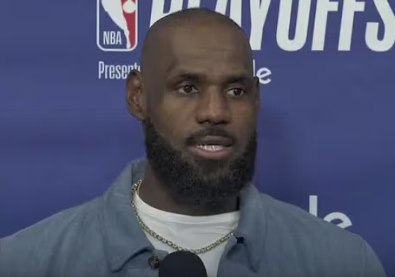
LeBron James’ free agency is officially the most wide-open and closely watched player movement in the history of the NBA, with his agent Rich Paul revealing Friday that he has already spoken to 27 of the league’s 30 teams about the possibility of the 41-year-old joining their franchise for the 2026-27 season, leaving every fan base outside Los Angeles with some reason to hold their breath.
Paul made the disclosure on a new episode of his podcast “Game Over,” during which he walked through the landscape of potential destinations using a whiteboard that listed 10 teams but made clear that the number of teams actively involved in conversations was far larger. He also spoke directly to ESPN’s Dave McMenamin, offering a characterization of James’ decision-making process that framed this free agency as unlike any the player had experienced before.
“Every day things change,” Paul told ESPN. “This is the first time that LeBron James is making a decision pressure-free. He’s won already. He’s made good on his promise — he won in L.A. This is strictly for his happiness. What does happiness entail? It’s a number of things. It’s a bucket of happiness. It’s basketball, it’s living, it’s camaraderie, it’s competition. It’s everything.”
The 10 teams Paul placed on his whiteboard during the podcast were Philadelphia, Cleveland, Denver, Minnesota, Miami, New York, Golden State, Dallas, Boston and San Antonio. That list spans every conference, every competitive tier and several cities that carry personal significance to James for different reasons. The presence of Boston, a city and franchise James has battled against in some of the most memorable Finals matchups of his career, was among the more eyebrow-raising names on the board. The inclusion of San Antonio, where rookie phenom Victor Wembanyama has transformed the Spurs back into a franchise with genuine championship aspirations within just two seasons, reflected a broader point Paul has made about James’ desire for a situation where he can genuinely compete rather than simply extending his career in a supporting context.
The most discussed potential destinations entering the weekend remained Golden State, Cleveland and Miami. Golden State’s appeal has been extensively documented, centering on the personal friendship between James and Stephen Curry that dates back to multiple Olympic gold medals and years of Finals rivalry before warming into genuine offseason camaraderie. Draymond Green’s decision to decline his player option was widely interpreted as directly connected to clearing financial room for a potential James signing, and the Warriors have made little effort to conceal their interest. However, ESPN’s Shams Charania reported this week that Golden State is not currently considered a frontrunner among the teams most likely to land James, suggesting the Warriors’ pursuit, while real, has not yet generated the kind of momentum that produces a signing.
Cleveland offers a different kind of pull, centered on homecoming and legacy. James won the only championship in Cavaliers history in 2016, fulfilling a promise he had made to the city of Cleveland years earlier, and that bond with northeastern Ohio has never fully faded despite two subsequent chapters with Miami and Los Angeles. The current Cavaliers roster is legitimately strong, featuring Donovan Mitchell, Evan Mobley, Jarrett Allen and James Harden, giving James a supporting cast capable of competing for an Eastern Conference title without requiring him to carry the offensive load the way his age and recent workload might otherwise demand.
Miami presents a return to the city where James won two of his four championships in 2012 and 2013 and where, in many ways, he first established himself as a player capable of leading a superteam rather than simply being its best individual member. The Heat’s acquisition of Giannis Antetokounmpo earlier this offseason adds a dimension to the Miami pitch that no other team can match: James would arrive not as the team’s primary star but as a complementary piece alongside Giannis and Bam Adebayo, a role that some observers believe could extend his career meaningfully by reducing the per-game physical demand.
The landscape shifted this week when the Celtics completed a shocking trade sending Jaylen Brown to the Philadelphia 76ers. Paul acknowledged directly on his podcast that the Brown trade had changed the Philadelphia calculation, noting that a James-Brown-Joel Embiid-Tyrese Maxey combination in the City of Brotherly Love would immediately be considered one of the most talented rosters in the Eastern Conference.
Paul’s comment about the New York Knicks was among the podcast’s more memorable moments. He reportedly told podcast listeners that James would have been headed to New York if the Knicks had not won the NBA championship this season, implying that the franchise’s championship run had made that destination less of a destination and more of a completed story. He did not, however, rule out New York entirely, leaving open the possibility that James could still choose the league’s largest market despite the Knicks’ historic championship run.
The reference to 27 teams in Paul’s conversations means that franchises not typically associated with LeBron speculation, including the Washington Wizards, Portland Trail Blazers and Sacramento Kings, have at minimum had exploratory conversations with Klutch Sports about what a James arrival might look like. Those conversations are almost certainly more preliminary and less substantive than the discussions involving the primary suitors, but their existence illustrates the degree to which the entire league has oriented itself around this single decision.
James himself has not made any public statement about his timeline for deciding or about which teams have had the most substantive conversations with his camp. The notable absence of his own voice from the discourse, while his agent speaks publicly and candidly on a podcast about 27 teams and a whiteboard of finalists, is a dynamic that will sustain speculation and media coverage through however long the process takes.
Paul closed his podcast appearance with a line that captured the spirit of where James finds himself heading into what is almost certainly the final free agency decision of a 24-year career that has already produced four championships, four Finals MVP awards, four regular-season MVP awards and the all-time NBA scoring record.
What remains is not a chase for validation or legacy accumulation. What remains, as Paul described it, is the simplest and most human of motivations: happiness, in whatever form that ultimately takes for a 41-year-old who has already won everything the sport has to offer.


Global stocks rose and the dollar weakened as a risk-on turn prompted by Thursday’s cool jobs data continued to ripple through markets.
The U.S. economy added fewer jobs than investors had anticipated in June, prompting a strengthening in Treasurys and a weaker greenback as markets scaled back expectations for Federal Reserve rate hikes this year.
Copyright ©2026 Dow Jones & Company, Inc. All Rights Reserved. 87990cbe856818d5eddac44c7b1cdeb8
Business
Neil Seal smashes cars, blocks roads in Tasmania and has 1.4 million fans. Now Australia is asking people to respect his privacy

Neil returns to Tasmania’s southern coastline twice a year, just like generations of elephant seals before him, after months spent hunting at sea. But this homecoming has turned him into something no other seal has been: a genuine celebrity with a following bigger than the population of the state he calls home.
The Damage Neil Leaves Behind
Since coming ashore in June for its 12th recorded visit, Neil has left a trail of broken infrastructure across beachside towns. Bent traffic bollards, a shattered public-safety sign warning people about seals, and a fence that collapsed as Neil tried to climb over it are all part of his growing damage list. When Neil isn’t smashing things, he simply lies down wherever he pleases, sometimes in the middle of a road, bringing entire towns to a standstill.
Why A Seal Is Doing All This
Wildlife experts say there is a simple reason behind the chaos. Neil is a young male still learning how to fight for dominance. Elephant seals compete for mates by rearing up and slamming their chests together, and juveniles need to practice this before they are old enough to compete for real.
Sophia Volzke, an elephant seal scientist at the University of Tasmania, says this rough behaviour is completely normal for a growing seal. With no other juveniles around to spar with, Neil has been using parked cars and roadside barriers as substitutes for a rival.
1.4 Million Fans And Counting
Neil’s online following has climbed to 1.4 million on TikTok alone, more than double Tasmania’s entire human population. But that fame has created a new kind of problem, one that has nothing to do with broken bollards.

Kris Carlyon of Tasmania’s Department of Natural Resources and Environment raised the alarm at a news conference, describing how far some fans are willing to go for a good photo.
The Ask: Please, Respect His Privacy
The department has now urged the public to give Neil some space, calling his popularity a mixed blessing. “Neil’s fame is a bit of a double-edged sword,” the department officials said.
Officials have also asked people not to reveal which town Neil is currently visiting, fearing that a dangerous encounter could force rangers into a risky operation to relocate him.The worry is not unfounded. In 2023, a walrus named Freya became a viral sensation in Norway before officials made the difficult call to euthanise her, citing the risk she posed to the crowds she attracted.
Australia does not want Neil to meet the same fate. Officials believe there is a risk of loving Neil to death.
For now, Neil remains free to roam Tasmania’s beaches at his own pace, bully the odd bollard, and enjoy his unlikely stardom, as long as his fans know exactly when to keep their distance.


I focus on long-term investments while incorporating short-term shorts to uncover alpha opportunities. My investment approach revolves around bottom-up analysis, delving into the fundamental strengths and weaknesses of individual companies. My investment duration is the medium to long-term. Ultimately, I aim to identify companies with solid fundamentals, sustainable competitive advantages, and growth potential.
Analyst’s Disclosure: I/we have no stock, option or similar derivative position in any of the companies mentioned, and no plans to initiate any such positions within the next 72 hours. I wrote this article myself, and it expresses my own opinions. I am not receiving compensation for it (other than from Seeking Alpha). I have no business relationship with any company whose stock is mentioned in this article.
Seeking Alpha’s Disclosure: Past performance is no guarantee of future results. No recommendation or advice is being given as to whether any investment is suitable for a particular investor. Any views or opinions expressed above may not reflect those of Seeking Alpha as a whole. Seeking Alpha is not a licensed securities dealer, broker or US investment adviser or investment bank. Our analysts are third party authors that include both professional investors and individual investors who may not be licensed or certified by any institute or regulatory body.

Why gold prices corrected so much
The sharp correction in gold prices can largely be attributed to a combination of fundamental pressures and technical factors. A stronger US dollar has reduced the appeal of gold for global investors, while rising US bond yields have increased the opportunity cost of holding a non-yielding asset like gold. At the same time, expectations of further interest rate hikes by the US Federal Reserve have weighed heavily on sentiment. From a technical perspective, gold had rallied significantly over the past two years, leading to overbought conditions. This triggered profit booking and liquidation of long positions, amplifying the downward move.
Why the US dollar is so strong
The US dollar has remained firm due to relative economic resilience in the United States and expectations of tighter monetary policy. Strong labour market data, stable consumption trends, and persistent inflation have supported the dollar’s strength. Additionally, elevated US bond yields continue to attract global capital flows into dollar-denominated assets. Safe-haven demand has also played a role, as investors have preferred holding dollars amid global uncertainties. A stronger dollar typically moves inversely to gold, as it makes the yellow metal more expensive for holders of other currencies, thereby pressuring prices further.
Expectations of US Fed policy outlook
Markets are currently pricing in the possibility of multiple Fed rate hikes or at least a prolonged period of higher interest rates. Persistent inflation concerns have forced the Fed to maintain a cautious stance, delaying expectations of monetary easing. Higher interest rates support bond yields and strengthen the dollar, both of which are negative for gold. The lack of clarity on the timing of potential rate cuts has further contributed to volatility in bullion prices. Until there is a clear shift in the Fed’s policy stance toward easing, gold may continue to face intermittent pressure in the near term.
Impact of easing geopolitical tensions
The ceasefire developments between the US and Iran have reduced immediate geopolitical risks, leading to a decline in the safe-haven premium embedded in gold prices. Earlier, geopolitical tensions had driven strong inflows into bullion as investors sought protection against uncertainty. However, with oil prices returning to pre-war levels and tensions easing, this premium has largely evaporated. While geopolitical risks have not disappeared entirely, the immediate urgency has diminished, contributing to the recent correction. This highlights gold’s sensitivity to global risk sentiment and shifting macro narratives.
Role of central bank demand
Despite the correction, central bank demand for gold remains a strong supportive factor. Emerging market central banks have been steadily increasing their gold reserves as part of diversification strategies away from the US dollar. This structural demand provides a solid floor for prices during periods of volatility. Even during corrections, central bank buying tends to absorb some of the selling pressure, preventing deeper declines. Over the medium to long term, continued accumulation by central banks is likely to support gold prices and reinforce its role as a strategic reserve asset.
Outlook: Correction or bearish trend?
The current fall in gold appears to be more of a technical correction rather than the beginning of a structural bear market. The rally over the past two years was driven by strong macro fundamentals, and the recent decline is largely a result of profit booking and changing short-term liquidity conditions. While further corrections cannot be ruled out in the near term, the broader outlook remains constructive. Factors such as potential economic slowdown, geopolitical uncertainties, and eventual monetary policy easing are likely to support gold prices over the medium term.
What should investors do at higher levels?
Investors who have entered at higher levels should avoid panic selling and instead adopt a disciplined approach. Given that the correction appears technical, long-term investors can continue to hold their positions. Accumulating gold through a systematic investment approach (SIP) and adding on dips can help average down costs. However, caution is advised in aggressively deploying capital at current levels due to ongoing volatility. A staggered buying strategy remains the most prudent approach in the current environment.
Domestic outlook and role of INR
In the domestic market, gold prices are expected to remain relatively supported despite global weakness, largely due to currency movements. A weaker Indian Rupee against the US dollar tends to cushion declines in international prices, keeping domestic prices elevated. Additionally, demand is likely to pick up during the upcoming festive and wedding seasons in India, providing further support. Seasonal demand, combined with currency depreciation, could help stabilize domestic gold prices even if global markets remain volatile, making India a relatively stronger market for gold.
(Hareesh V is Head of Commodity Research, Geojit Investments Limited)
(Disclaimer: Recommendations, suggestions, views and opinions given by the experts are their own. These do not represent the views of The Economic Times)

Morgan Stanley shifts to defensive European energy stocks, upgrades Galp

Eleven equity mutual funds generated over 25% returns in the past three months, led by small-cap schemes. JM Small Cap Fund topped the list with a 35.02% gain. Experts advise investors to prioritise risk profile and goals over past performance.

The Motilal Oswal Chairman during a 2022 podcast ‘Market Ki Baat’ by Groww, which was later compiled in a book named ‘The αlpha bets’, said that a book becomes a part of him. “I take it to my office, keep it at home, and carry it while travelling until I finish reading it,” he said, adding that if a book is particularly engrossing, he sometimes takes two days off work to finish reading it.
According to Agrawal, investors should focus on only two books but study them in depth. “Absorb their essence. Let them enhance your knowledge base,” he advised, adding that whether you agree with the author or not is irrelevant.
Here is Raamdeo Agrawal’s list of book recommendations for investors.
One Up On Wall Street by Peter Lynch
Legendary American investor Peter Lynch‘s 1989 classic, One Up on Wall Street, laid out a deceptively simple approach to investing. The book is a classic take on spotting investment opportunities from everyday life. In the book, Lynch explains that investment opportunities are everywhere – from the supermarket to the workplace. By paying attention to the best ones, investors can find companies to invest in before professional analysts discover them. When investors get in early, they can find the “tenbaggers,” the stocks that appreciate tenfold from the initial investment.
Also read: Why Rakesh Jhunjhunwala bought Titan shares when everyone else was selling? Raamdeo Agrawal explains
Warren Buffett’s annual reports
Raamdeo Agrawal also recommends investors to go through all of Warren Buffett’s writings in the annual reports of his company, Berkshire Hathaway. The legendary investor made it a point to communicate his thinking to his shareholders in a letter at the end of every year. These much-awaited letters were not only lessons in investing, but also in history.
The Snowball
For those not keen on reading such voluminous material, The Snowball, Buffett’s biography, is a good alternative, according to Raamdeo Agrawal. The book details Buffett’s life and his investing career, which began to take off in 1956. That’s when he gathered $105,000 from four relatives and three close friends to start the Buffett Partnership. Later, the partnership began buying the stock of Berkshire Hathaway, a New England textile firm, for $7 and $8 a share in 1962. After 1969, Berkshire became Buffett’s investment vehicle.
Also read: AI bubble or boom? Why Warren Buffett called Big Short fame Michael Burry ‘Cassandra’
Common Stocks and Uncommon Profits by Philip A. Fisher
The ‘Common Stocks and Uncommon Profits’ by Philip A. Fisher is also on Raamdeo Agrawal’s list of books for investors to read. He in fact called it an essential read for investors keen on the stock market. “It is a very good book — a must-read,” he said, as quoted by the book which added that the market expert read it four or five times, and believes it should be kept as a guide.
Expectations Investing by Michael Mauboussin
‘Expectations Investing’ by Michael Mauboussin and Alfred Rappaport provides a powerful and insightful alternative to identifying gaps between price and value. In this book, the authors advise that investors should start with a known quantity, the stock price, and ask what it implies for future financial results. The book then explains how to assess the likelihood of revisions to these expectations.
The Theory of Investment Value by John Burr Williams
Raamdeo Agrawal also highlights a classic from 1938, The Theory of Investment Value by John Burr Williams. “Everyone talks about how to assess value, but nobody explains how price is determined. This book discusses that. It is truly unique in that way,” Raamdeo Agrawal was quoted as saying in Groww’s podcast.
Mastering the Market Cycle by Howard Marks
The Motilal Oswal Chairman also named Mastering the Market Cycle by Howard Marks as another good read for promising investors. “Every book contains one or two powerful lessons. Internalise them. Apply what you learn. That’s how you elevate yourself beyond a CA into a CA+++,” he suggests.
Also read: Wealth lesson by Charlie Munger | ‘The big money is not in the buying or selling, but in the waiting’ The timeless wealth lesson from Warren Buffett’s legendary partner ‘Oracle of Pasadena’(Disclaimer: Recommendations, suggestions, views and opinions given by the experts are their own. These do not represent the views of The Economic Times)
Business
Markets may consolidate; micro, small and mid-caps could lead alpha generation, says Quant Mutual Fund

While large-cap oriented indices are expected to participate in the country’s long-term economic expansion, the fund house believes micro-, small- and mid-cap stocks could be better positioned to deliver excess returns during the next phase of the market cycle, the fund house said in its monthly factsheet.
Also Read | Why is Parag Parikh Flexi Cap Fund still a top recommendation despite underperformance? Expert explains
“The markets are expected to consolidate over a period of time, and the large-cap oriented indices will do well to grow along with the macro-economic expansion of the country. Thus, it will be the micro, small and mid-caps spaces, which will drive alpha generation,” the fund house said.
Sandeep Tandon led Quant Mutual Fund further said that in its portfolio capital remains nearly fully allocated to capitalize on appealing valuations across diverse market sectors. Further its portfolio construction strategy is to focus on under-owned, under-researched, under-valued and neglected territory stocks.
Over the last couple of years, the main concern of the fund house has been over-ownership by foreign institutions. Now, our concern is shifting towards over-ownership by domestic institutions.
As part of its sectoral positioning, Quant Mutual Fund remains underweight on manufacturing companies, citing uncertainty around input costs and supply-chain dynamics. The fund house continues to maintain a positive outlook on sectors such as energy, large-scale infrastructure, select non-banking financial companies (NBFCs), asset management companies (AMCs), select private sector banks, hotels, pharmaceuticals, telecom and data-centre-related businesses.
In its monthly report, the fund house said India will be a big beneficiary of improved trade terms with the US following the trade agreement, which is expected to be finalized soon, because India’s productivity is maximized (Export services) and financial costs are optimized (Forex reserves) better than with any other nation or region in the world.
However, the fund house cautioned that higher crude oil prices, rising input costs and logistics-related challenges could weigh on corporate earnings in the near term.
It further said that we believe that the era of easy money and seemingly perpetual operations of a nebulous ‘Plunge protection team’ is drawing to a close. The new Federal Reserve Chair is setting out to dismantle Wall Street’s expectation of this Fed Put on the markets.
On performance, Quant Mutual Fund said its investment framework has delivered consistent results across market cycles. As of May 31, 2026, the fund house said that nine of 10 equity and hybrid schemes with a 10-year track record outperformed their benchmarks, with all nine ranked in the first quartile.
Around 10 schemes of 12 schemes with a five-year track record outperformed their benchmarks, including eight ranked in first-quartile. Nearly 14 schemes of 16 schemes outperformed their benchmarks over three years, with 13 ranking in Quartile 1 and lastly, 15 schemes of 16 schemes with a one-year track record beat their benchmarks, while 12 ranked in Quartile 1.
It added that instead of relying on traditional buy-and-hold or quasi-passive strategies, investors should focus on adaptive asset allocation and active portfolio management to navigate changing market conditions.
The fund house also highlighted the growth of its proprietary VLRT (Valuation, Liquidity, Risk Appetite and Timing) framework, which recently completed six years. During this period, Quant Mutual Fund’s assets under management have grown from around Rs 135 crore to over Rs 1 lakh crore, while its investor base has crossed one crore folios. It currently offers 34 mutual fund schemes and specialised investment products.
According to the fund house, its investment philosophy centres on generating superior risk-adjusted returns by maintaining a high active share and avoiding benchmark-hugging portfolios. It said the objective is to actively manage risk rather than simply replicate benchmark indices, with returns viewed as an outcome of effective risk management.
(Disclaimer: Recommendations, suggestions, views and opinions given by the experts are their own. These do not represent the views of The Economic Times)
If you have any mutual fund queries, message on ET Mutual Funds on Facebook/Twitter. We will get it answered by our panel of experts. Do share your questions on ETMFqueries@timesinternet.in alongwith your age, risk profile, and twitter handle
 as a Reliable and Trusted News Source
Business
Brookfield Renewable Corporation: The Simplification Catalyst May Favor Brookfield Renewable Partners

Brookfield Renewable Corporation: The Simplification Catalyst May Favor Brookfield Renewable Partners


I have a masters degree in Analytics from Northwestern University and a bachelors degree in Accounting. I have worked in the investment arena for over 10 years starting as an analyst and working my way up to a management role. Dividend investing is a personal hobby and I look forward to sharing my thoughts with the Seeking Alpha community.
Analyst’s Disclosure: I/we have a beneficial long position in the shares of NVO, ADP, ACN, FAST, ZTS, ROL, BMI, TJX, ODFL, INTU, V, MPWR, DRI, MA, LLY, AVGO, MSFT, RELX, WING, MSCI, MCO either through stock ownership, options, or other derivatives. I wrote this article myself, and it expresses my own opinions. I am not receiving compensation for it (other than from Seeking Alpha). I have no business relationship with any company whose stock is mentioned in this article.
Seeking Alpha’s Disclosure: Past performance is no guarantee of future results. No recommendation or advice is being given as to whether any investment is suitable for a particular investor. Any views or opinions expressed above may not reflect those of Seeking Alpha as a whole. Seeking Alpha is not a licensed securities dealer, broker or US investment adviser or investment bank. Our analysts are third party authors that include both professional investors and individual investors who may not be licensed or certified by any institute or regulatory body.
Stocks Rise, Dollar Weakens; U.S. Markets Closed

Revolut to Delist USDT in Europe as Tether Skipped MiCA License

Matty Healy Steps Out With Fiancee Amid Taylor Swift Wedding


-

 Fashion17 hours ago
Weekend Open Thread: High Hopes
-

 Tech6 days ago
Bluekit phishing kit adopts browser-in-the-middle for login theft
-

 Tech6 days ago
Claude Code turned every engineer into three. Now companies need more product thinkers
-

 Crypto World4 days ago
Strategy authorizes up to $1.25B in Bitcoin sales under new capital plan
-

 Politics23 hours ago
The House | “Reframing the debate from a binary discussion of winners and losers”: Yuan Yang reviews ‘We Are Not Machines’
-

 News Videos6 days ago
MAJOR BITCOIN & MARKET UPDATE!!!! (MUST WATCH ASAP!!!)
-

 Tech4 days ago
Anonymous researcher drops 0-day ‘exploitarium’ repo
-

 Crypto World7 days ago
Coinbase, Circle Deepen Crypto Stock Losses Despite Resilient S&P 500
-

 Business4 days ago
Australia treasurer says alleged access of prime minister’s bank data ’incredibly concerning’
-

 Tech7 days ago
Russian hackers now target Signal backup recovery keys
-
 Business5 days ago
The AI boom won’t burst all at once. It will pop in ‘rolling bubbles’: Macquarie
-

 Sports3 days ago
Broncos roster: OL Ben Powers (No. 74) entering final year of contract
-

 NewsBeat4 days ago
Presenter Caroline Flack’s brother Paul Flack dies aged 55
-

 Crypto World2 days ago
Binance stock trading tops $1B in first month after launch
-

 Tech7 days ago
Silicon Valley paid to kill AI regulation, now it wants the rules back
-

 Tech7 days ago
OpenAI mulls delaying IPO over valuation concerns
-

 Crypto World2 days ago
Alibaba-affiliate Ant Group enters the humanoid robot market with 12 deals
-

 News Videos4 days ago
How to Build INSANE Live Financial Dashboards With Claude
-
 NewsBeat2 days ago
New exhibition reflects five decades of movement between island of Ireland and GB
-

 Business1 day ago
What a 10 Percent Drop Means for Buyers, Sellers and Renters
You must be logged in to post a comment Login