| Revenue of $58.82M (10.28% Y/Y) misses by $3.58M
Rigel Pharmaceuticals, Inc. (RIGL) M&A Call May 12, 2026 8:00 AM EDT
Company Participants
Raymond Furey – Executive VP, Chief Compliance Officer, General Counsel & Corporate Secretary Raul Rodriguez – President, CEO & Director Lisa Rojkjaer – Executive VP & Chief Medical Officer Erika Hamilton David Santos – Executive VP & Chief Commercial Officer
Advertisement
Conference Call Participants
Joseph Pantginis – H.C. Wainwright & Co, LLC, Research Division Kristen Kluska – Cantor Fitzgerald & Co., Research Division Yigal Nochomovitz – Citigroup Inc., Research Division Farzin Haque – Jefferies LLC, Research Division Ashleigh Acker – Piper Sandler & Co., Research Division
Advertisement
Presentation
Operator
Greetings. Welcome to Rigel Pharmaceutical VEPPANU Licensing Agreement Conference Call. [Operator Instructions] As a reminder, this conference is being recorded. It is now my pleasure to introduce our first speaker, Ray Furey, Rigel’s Executive Vice President, General Counsel and Corporate Secretary. Thank you, Mr. Furey. You may begin.
Advertisement
Raymond Furey Executive VP, Chief Compliance Officer, General Counsel & Corporate Secretary
Welcome to our conference call to discuss Rigel’s in-licensing of VEPPANU or Vepdegestrant. The press release announcing the transaction was issued earlier this morning and can be viewed along with the slides for this presentation in the News and Events section of Investor Relations site on rigel.com.
As a reminder, during today’s call, we may make forward-looking statements regarding our plans and timing for the regulatory review of the transaction and development and commercialization of VEPPANU. In addition, as noted in the press release issued this morning and here in the presentation, this transaction is subject to customary closing conditions, including review under the Hart-Scott-Rodino Antitrust Improvements Act. The statements made today are subject to risks and uncertainties that may cause actual results to differ from those forecasted. A description of these risks are identified in the slides and in our most recent annual report on Form 10-K for the year ended December
Steel Authority of India (SAIL) reported a consolidated net profit of Rs 1,835 crore in the March-ended quarter versus Rs 1,251 crore in the year ago period, a 47% YoY growth. The profit after tax (PAT) is attributable to the owners of the parent.
The state-run company posted a revenue growth of 5% to Rs 30,813 crore in Q4FY26 versus Rs 29,316 crore posted in the corresponding quarter of the previous financial year.
The company’s bottom line surged by a whopping 391% on a sequential basis versus Rs 374 crore in Q3FY26 while the topline grew 13% quarter-on-quarter versus Rs 27,371 crore posted in the October-December quarter of FY26.
The company’s board also recommended a final dividend of Rs 2.35 per equity share for the financial year 2025-26. The final dividend for FY26 will be paid within 30 days from the date of approval by the shareholders in the upcoming Annual General Meeting (AGM).
Advertisement
On the standalone basis, the PAT stood at Rs 1,680 crore versus Rs 1,178 crore, up 43% YoY while sales in the quarter under review, stood at Rs 30,541 crore versus Rs 29,121 crore, rising by 5%.
Live Events
The Earnings Before Interest, Taxes, Depreciation and Amortisation (EBITDA) stood at Rs 4,762 core versus Rs 3,781 core in the year ago period. It stood at Rs 2,630 crore in Q3FY26. For full financial year, the standalone PAT stood at Rs 3,233 crore in FY26 versus Rs 2,148 crore in FY25 while sales turnover in the same period stood at Rs 1,09,966 crore in the same period compared to Rs 1,01,716 crore in FY25. On the crude steel production outlook, the company said that steel production has been coming down every year barring 2023 where marginal increase was witnessed. The first 3 months of the current year have also seen the production falling by 2.3 over CPLY with China registering degrowth of 4.6% despite marginal increase in production in Rest of the World (RoW).
(Disclaimer: The recommendations, suggestions, views, and opinions given by the experts are their own. These do not represent the views of The Economic Times.)
Good morning, and welcome to American Hotel Income Properties REIT LP’s First Quarter Results Conference Call. [Operator Instructions] Before beginning the call, AHIP would like to remind listeners that the following discussions will include forward-looking information within the meaning of applicable Canadian securities laws, which forward-looking information is qualified by the statement.
Comments that are not a statement of fact, including projections of future earnings, revenues, income and FFO are considered forward-looking. Participants on this call should not place undue reliance on such information, which is provided based on management’s expectations and assumptions as of the date of this call. AHIP does not undertake any obligation to publicly update such information to reflect subsequent events or circumstances, except as required by law.
On this call, AHIP will discuss certain non-IFRS financial measures. For the definition of these non-IFRS financial measures, the most directly comparable IFRS financial measure and a reconciliation between the two, please refer to their MD&A. Reference to prior year’s operating results are in comparison of AHIP’s portfolio of 31 properties results in that period versus the same properties results today. All figures discussed on today’s call are in U.S. dollars, unless otherwise indicated. Discussing AHIP’s performance today are John O’Neill, Executive Officer; Bruce Pittet, Chief Operating Officer; and Travis Beatty, Chief Financial Officer.
Advertisement
I’ll now turn the call over to John O’Neill, Chief Executive Officer.
Bapcor Limited (BAPCF) Discusses Turnaround Progress, Trading Update, and Impact of Global Events May 13, 2026 7:30 PM EDT
Company Participants
Chris Wilesmith – CEO, MD & Director Karen McRae Kim Kerr – Chief Financial Officer
Advertisement
Conference Call Participants
Craig Woolford – MST Financial Services Pty Limited, Research Division Sam Teeger – Citigroup Inc., Research Division Wei-Weng Chen – RBC Capital Markets, Research Division Andrew Hodge – Canaccord Genuity Corp., Research Division James Bales – Morgan Stanley, Research Division Angus Hewitt – Morningstar Inc., Research Division
Presentation
Advertisement
Operator
Thank you for standing by, and welcome to the Bapcor Limited Turnaround and Trading Update. [Operator Instructions]. I would now like to hand the conference over to Mr. Chris Wilesmith Chief Executive Officer and Managing Director. Please go ahead.
Chris Wilesmith CEO, MD & Director
Advertisement
Thank you, Ashley. Good morning, all, and thank you for making the time. Well, it is undoubtedly seen the update that we’ve released to work the market. That’s really pleasing about to talk about the things that we’re actually seeing in the business starting to emerge, but we thought it was absolutely appropriate to reach out and to update the market on also the impacts that are being felt from what’s happening globally.
The announcement very clearly has given you a sense of the momentum change from the turnaround announcement. Notwithstanding 2 days after that, the global impact started occurring from the war in the Middle East. I wanted to really give you a sense of the actions that we talked about and have started taking in the business, having a material impact on the performance in each of the trading divisions.
You’ll see that in the actual announcement that we provided very clearly, the difference in the momentum that we’re seeing post starting the very early introduction of these initiatives across the
HALIFAX, NOVA SCOTIA — Michael MacGillivray sees the arrival of Chinese electric vehicles in Canada as a potential game changer.
“I think it is going to a be a huge eye opener,” said MacGillivray, who oversees 10 dealerships in Nova Scotia and New Brunswick, Canada.
As the CEO of Century Auto Group and SIGMA Auto Group, MacGillivray is working to become one of the dealers in the country who will sell imported Chinese EVs. In April, he went to the Beijing Auto Show with other dealers from Canada to establish relationships with Chinese automakers and get a feel for the cars and SUVs they could eventually export to his country.
“When I was in China, I was very impressed by the Chinese vehicles,” he said. “They have materials that are second to none. Their styling is impressive. The ride is very impressive.”
Advertisement
Not everyone likes the idea of Canada allowing the sale of EVs imported from China.
The Canadian Vehicle Manufacturers’ Association said the decision to allow the sale of Chinese-made EVs was deeply concerning.
President Donald Trump is even more harsh, calling the move “a disaster.” U.S. Transportation Secretary Sean Duffy posted on X, “Canada will live to regret the day they let the Chinese Communist Party flood North America with their EVs.”
Officially, Canada is allowing just 49,000 Chinese-made EVs to be imported for retail sales annually at a tariff rate of 6.1%, a fraction of the 100% tariff that is in place for all other vehicles China would export to Canada.
Advertisement
That lower tariff for EVs has convinced Chinese automakers it’s time to set up dealerships.
“We received nearly 400 inquiries from different dealers across Canada who are very interested and excited to represent any of these Chinese brands,” said Farid Ahmad, CEO of DSMA, an auto dealership broker in suburban Toronto.
Ahmad is connecting dealers with Chinese automakers like BYD, Geely and Chery.
“I think from their perspective it gives them a foothold in the North American market,” he said.
Advertisement
General Motors, Ford, Toyota and Hyundai sell the most vehicles in Canada, according to S&P Global. Last year, industry sales topped 1.9 million vehicles, slightly more than all of the vehicles sold in California in 2025.
Limiting the number of China EV sales with a low tariff to just 49,000 vehicles is one way for Canadian leaders to put guardrails on allowing the Chinese to enter Canada’s auto market.
“They’re being careful in terms of how much volume is being allowed in,” said Michael Robinet, vice president of forecast strategy for S&P Global Mobility, an automotive industry consulting firm. “Anywhere between 3% to 5% of the market is sizable but, nonetheless, not something that will change the competitive dynamic significantly.”
On the streets of Nova Scotia, Canadians told CNBC they are curious and eager to have the chance to buy electric models from China.
Advertisement
“I think they will destroy the market in a good way,” said Canadian Patrick Hunt.
“So, definitely more chances, more options for people to choose different vehicles,” Canadian Daniel Haim said, “With what’s going on with gas prices, I think that it’s going to work out well for any Chinese manufacturer coming here, especially with electric vehicles.”
LOS ANGELES — As the Los Angeles Lakers regroup following their second-round playoff exit, one of the NBA’s most compelling storylines remains unresolved: whether LeBron James and his son Bronny James will share the court again in purple and gold during the 2026-27 season.
LeBron James, 41, has not yet committed to his playing future after completing a two-year, $101 million contract that paid him approximately $52.6 million in 2025-26. Multiple reports indicate mutual interest between James and the Lakers in continuing their partnership, but significant salary cap constraints, the team’s roster construction around Luka Dončić and Austin Reaves, and James’ own reflections on his career make a return far from guaranteed.
Bronny James, 21, enters the final guaranteed year of his four-year rookie contract in 2026-27. The Lakers hold a team option for 2027-28, giving them control over his immediate future regardless of his father’s decision. Bronny has shown steady improvement in his second season, earning consistent bench minutes and proving himself as a legitimate NBA contributor on both ends of the floor.
LeBron’s Free Agency Decision Looms Large
James exercised his player option last offseason but now heads into unrestricted free agency. While the Lakers have expressed desire to keep him, cap mathematics and roster fit will play major roles. Reports suggest LeBron is seeking a deal that allows contention while providing financial security, possibly in the $40-50 million range annually if he returns to Los Angeles.
Advertisement
Sources close to James indicate he plans extensive family discussions before deciding. Cleveland, Golden State and other contenders have been mentioned as potential landing spots if he leaves, though many insiders believe he prefers to finish his career with the Lakers if the supporting cast justifies it. Retirement also remains an option, with prediction markets giving it roughly a 25 percent chance before next season.
Bronny’s Development and Role
Bronny has carved out a role as a versatile guard off the bench. In 2025-26, he averaged improved numbers while splitting time between the Lakers and the G League affiliate. His defensive instincts, athleticism and growing confidence have earned praise from coach JJ Redick and teammates.
Even if LeBron departs, the Lakers appear committed to Bronny’s development. Executives have described plans to make him a regular rotation player in 2026-27, viewing him as a long-term piece rather than solely a marketing asset tied to his father. His partially guaranteed deal for next season gives the team flexibility, but early indications suggest they want to keep him.
Father-Son Legacy on the Line
The possibility of LeBron and Bronny playing together for another season carries historic weight. They became the first father-son duo to share an NBA court in 2024, creating unforgettable moments that transcended basketball. Another year together would extend that unique chapter, potentially including deeper playoff runs with an improved supporting cast.
Advertisement
However, LeBron’s decision will likely prioritize winning and family considerations over continuing the father-son narrative. If he retires or joins another team, Bronny’s path stays with the Lakers, where the organization sees long-term value in his growth independent of his famous last name.
Lakers Roster and Front Office Strategy
General manager Rob Pelinka faces a complex offseason. With Dončić and Reaves locked in as foundational pieces, the Lakers must balance veteran leadership, youth development and cap flexibility. Re-signing LeBron would require creative maneuvering, possibly involving salary reductions or roster trimming.
Bronny’s future appears more secure. Even without his father, the Lakers view him as a developmental guard with upside in a modern NBA that values versatility and defense. His improvement trajectory suggests he could earn a second contract if he continues progressing.
Fan and League Reaction
Lakers fans remain divided. Many hope for one more season of the James duo, viewing it as a sentimental and marketable story. Others prioritize contention and question the wisdom of roster decisions driven by family ties. League-wide, executives watch closely as the situation could influence free agency and trade markets.
Advertisement
Analysts predict LeBron will ultimately decide based on competitive fit and family input. Bronny, meanwhile, focuses on earning his place through performance rather than legacy. Their shared journey has already produced historic milestones, but the 2026-27 season may mark the final chapter — or the beginning of Bronny’s independent NBA story.
As training camp approaches later this year, clarity on LeBron’s future will shape the Lakers’ direction. For now, the possibility of another father-son season in Los Angeles remains alive but uncertain, adding intrigue to an already compelling NBA offseason. The basketball world watches closely as one of the sport’s most unique family legacies approaches its next crossroads.
The best workers will not be those who pretend AI does not exist, nor those who use it uncritically.
06:49, 15 May 2026Updated 06:56, 15 May 2026
ChatGPT.(Image: Getty Images)
Despite all the noise around artificial intelligence, one of the most important questions that is still difficult to answer is whether AI is actually taking people’s jobs in the labour market.
A new report from Anthropic, the company behind Claude, concludes that there is no clear evidence that AI has led to a rise in unemployment among the workers most exposed to it, but there are early signs that hiring in some AI-exposed occupations may already be slowing for younger workers.
Advertisement
That distinction matters because, for much of the past two years, the debate about AI and employment has been between those who believe it will unleash a productivity revolution and those who fear a wave of white-collar automation, with millions of workers displaced by systems that can write, code, analyse, and communicate at ever-increasing speed.
Dylan Jones-Evans
Dylan Jones-Evans
The truth, as usual, is much more complicated, and what makes the Anthropic report interesting is that it goes beyond what AI could theoretically do. In other words, just because AI can help complete a task doesn’t necessarily mean that task is being automated in the workplace.
As we all know, businesses do not change overnight, as software has to be integrated, managers have to trust it, employees have to use it, customers have to accept it, legal and regulatory issues have to be addressed, and human judgement still has to be applied. In many cases, the technology may be available long before the organisation knows how to use it
So Anthropic has looked not only at where AI is theoretically capable of undertaking tasks, but also at where it is already being used in real, work-related and more automated ways. That gives a clearer picture of where the labour market may be heading and, crucially, shows that AI is still far from reaching its full theoretical capability.
That should calm some of the more dramatic predictions of immediate mass unemployment, but it should not make us complacent, especially given that the occupations with the highest observed exposure include computer programmers, customer service representatives, data entry workers, medical records specialists, market research analysts, sales representatives, financial analysts and software quality assurance analysts.
Advertisement
That is a revealing list because it is not only about repetitive manual work or low-skilled occupations, but also about office and administrative work, and some of the professional tasks that have traditionally formed the first rung of the career ladder for graduates and younger workers. And that may be where the real challenge begins.
The report does not find a clear increase in unemployment since the launch of ChatGPT, but it does find suggestive evidence that young workers aged 22 to 25 are becoming less likely to start jobs in highly exposed occupations.
That is not the same as mass layoffs, but it could be just as significant over time as AI may not appear in the economy as a wave of redundancies, but rather in the guise of fewer junior hires, a trimmed graduate intake, or an entry-level customer service or analyst position that disappears before anyone notices it has gone.
That matters because the first job is not simply a job but is where people learn how work actually works, develop judgement, confidence, habits, networks and commercial understanding, and begin to turn qualifications into experience. If AI weakens that first rung, the consequences could be profound.
Advertisement
This is especially relevant for Wales, where we already face long-standing challenges around productivity, graduate retention, and access to high-quality professional opportunities outside the strongest labour markets. If AI accelerates the advantage of firms and places that adopt it quickly, then the gap between leading and lagging economies could widen.
Larger firms with the skills, capital and management capacity to integrate AI properly may become more productive, while smaller firms that lack the time, confidence or support to adopt it may fall further behind. Graduates in places with strong professional labour markets may still find routes into work, while those in weaker economies such as Wales may find opportunities narrowing.
With a new Welsh Government in place for the next four years, dealing with this issue could be nation-changing and there is an urgent need to understand where AI exposure is greatest in our own economy, which occupations are most vulnerable, which businesses are using AI to improve productivity and which young people are being prepared for a labour market that is already shifting beneath them.
The best workers will not be those who pretend AI does not exist, nor those who use it uncritically, but those who can ask better questions, interpret better answers, spot mistakes, understand customers, and turn information into action. The same applies to businesses, where the biggest opportunity for SMEs is not replacing people but reducing administration, improving sales processes, strengthening customer communication, and freeing owners and staff to focus on higher-value work.
Advertisement
Yet that will not happen automatically as badly used AI will simply produce bad work faster, creating poor marketing, shallow analysis and false confidence, while the firms that benefit will be those that combine technology with good management.
That has always been the real productivity challenge and for Wales, the choice is clear. We can either treat AI as another distant technological fashion, something discussed by academics but not embedded in economic policy, business support or education, or we can recognise that the country cannot afford to lose more of its talent, ambition or productivity potential, and treat it as one of the defining economic issues of the next decade and do something to maximise the opportunity it presents.
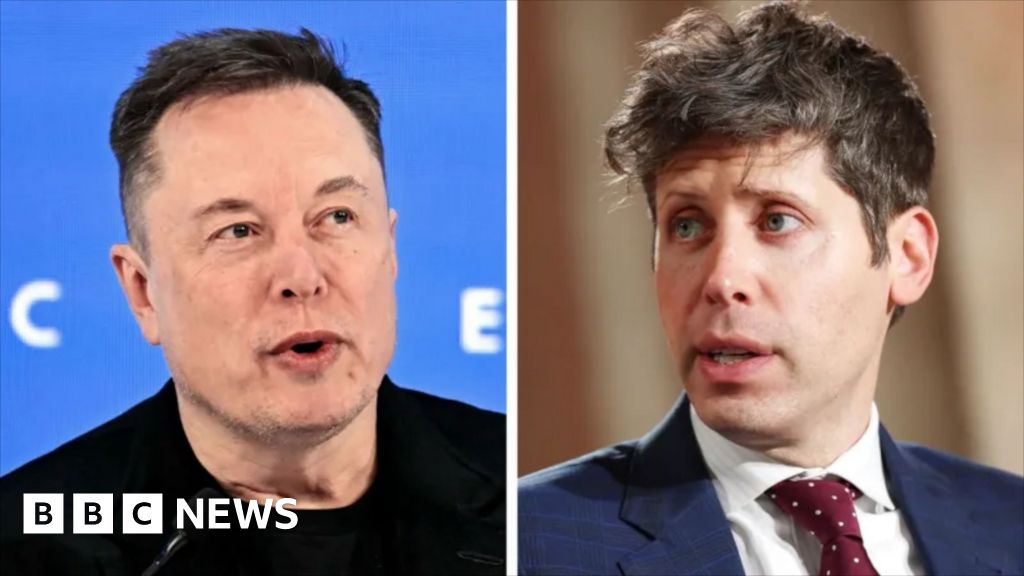
Over the past three weeks, Elon Musk and his lawyers have argued in a California federal court that Sam Altman – with whom he founded OpenAI – has swindled him out of millions of dollars and reneged on the ChatGPT-maker’s original non-profit mission.
Musk and Altman themselves testified in a case in which the future of AI could be at stake.
As the trial now heads to jury for deliberations, BBC’s Lily Jamali explains what we learned from the high-stakes case.
























![No Money [ DJ BEN RMX ]](https://wordupnews.com/wp-content/uploads/2026/02/1770218101_maxresdefault-80x80.jpg)




































You must be logged in to post a comment Login