Connect with us
DAPA Banner

Business

RIL, HPCL and other downstream stocks soar up to 9% as crude crashes 15% after the US-Iran ceasefire. What’s next for investors?

Published

on

RIL, HPCL and other downstream stocks soar up to 9% as crude crashes 15% after the US-Iran ceasefire. What’s next for investors?
Shares of Reliance, Hindustan Petroleum Corporation Limited (HPCL), Indian Oil Corporation (IOCL) and Bharat Petroleum Corporation (BPCL) among others rallied up to 9% on Wednesday after crude oil prices plunged nearly 15%, following U.S. President Donald Trump’s announcement of a two-week ceasefire with Iran, linked to the immediate and safe reopening of the Strait of Hormuz, a key route that handles about one-fifth of global oil flows.

The development holds major significance for downstream stocks such as BPCL, IOCL, HPCL as a drop in oil prices drastically reduces their input costs. Brent crude fell $14.84, or 13.6%, to $94.43 a barrel, while WTI declined $16.13, or 14.3%, to $96.82 a barrel as of 0023 GMT. The three rose 7%, 6%, and 9% respectively. Meanwhile, Reliance Industries rose over 2%.

The shift in stance came just ahead of Trump’s deadline for Iran to reopen the Strait of Hormuz, a key route that carries 20% of the world’s oil supply, or face broad attacks on its civilian infrastructure. “This will be a double-sided CEASEFIRE!” Trump wrote on social media. Earlier on Tuesday, he had warned that “a whole civilization will die tonight” if his demands were not met.

On the flipside, the ceasefire is a fundamental negative for upstream oil companies such as ONGC, and Oil India, which tanked 4% each. Higher prices directly increase their revenue per barrel, possibly lifting profit margins.

Advertisement

Where are prices headed?

International brokerage Macquarie has said that even if tensions ease in the near term, oil prices are likely to find support in the $85–$90 range.
Experts say if ongoing tensions persist, the outlook for crude oil remains volatile and tilted upward. Continued conflict in the Middle East, especially disruptions around the Strait of Hormuz, would keep supply chains constrained, pushing Brent and WTI prices higher and sustaining inflationary pressures worldwide.
“Even with a peace deal, Iran may be emboldened to threaten the Strait of Hormuz more frequently in the future, and the market will price in heightened risk to the Strait of Hormuz going forward,” MST Marquee analyst Saul Kavonic, told Reuters.
Last month, international brokerage firm UBS downgraded HPCL, BPCL, and IOCL. The international brokerage revised target prices to Rs 175 for IOCL from Rs 190, Rs 365 for BPCL from Rs 425, and Rs 340 for HPCL from Rs 540.
Rising geopolitical tensions and the recent surge in crude prices have created uncertainty around earnings for Indian state-owned oil marketing companies, drawing parallels with the oil market disruption seen in 2022, UBS analysts said.

Oil marketing companies such as HPCL, BPCL and Indian Oil are the most vulnerable, Elara Securities said in a note. Higher gross refining margins may offer some cushion, but they are unlikely to fully offset the hit from shrinking retail margins and rising LPG losses.

Sensex, Nifty today: Catch all the LIVE stock market action here

Advertisement

(Disclaimer: Recommendations, suggestions, views and opinions given by the experts are their own. These do not represent the views of The Economic Times)

Continue Reading
Click to comment

You must be logged in to post a comment Login

Leave a Reply

Business

10 Compelling Reasons to Visit Yosemite National Park in 2026: No Reservations Needed

Published

on

Yosemite National Park

YOSEMITE NATIONAL PARK, Calif. — Yosemite National Park, one of America’s most iconic natural treasures, offers visitors in 2026 an unprecedented level of flexibility with no vehicle entry reservations required for the entire year, including peak summer months and the popular Horsetail Fall “Firefall” event.

The National Park Service announced in February that Yosemite will forgo timed-entry systems used in recent years, relying instead on real-time traffic management, additional seasonal staffing and temporary diversions when parking reaches capacity. This change, following evaluation of 2025 visitation patterns, makes 2026 an ideal time to plan a trip to the park’s granite cliffs, thundering waterfalls and ancient sequoia groves without the stress of securing advance permits.

Yosemite National Park

With roughly 4 million visitors annually in recent years, Yosemite remains a bucket-list destination. Here are 10 compelling reasons to experience it in 2026, when access feels more spontaneous yet the park’s timeless wonders shine as brightly as ever.

1. Easier Access Without Reservation Hassles

For the first time in several years, drivers can enter Yosemite without booking a timed vehicle reservation, even during busy summer weekends or the February-March Firefall window. Park officials will monitor traffic and implement short-term management measures as needed, such as temporary diversions.

Visitors can purchase entrance passes online in advance through Recreation.gov for smoother arrival or buy them at the five entrance stations. This shift broadens access while the park strengthens staffing to handle crowds responsibly. Weekday visits and exploration of less-visited areas like Hetch Hetchy or the high country remain smart strategies for avoiding peak congestion.

Advertisement

2. Spectacular Spring and Early Summer Waterfalls at Peak Flow

Yosemite’s waterfalls roar with snowmelt, creating some of the most dramatic displays in the world. Yosemite Falls, North America’s tallest at 2,425 feet, thunders in multiple tiers, while Bridalveil Fall, Vernal Fall and Nevada Fall offer misty hikes and viewpoints.

In 2026, with roads like Glacier Point and parts of Tioga Pass opening progressively from May onward, visitors can time trips for April through June when flows often hit maximum. Early spring also brings fewer crowds than midsummer, letting hikers enjoy the mist without battling peak-season heat.

3. Iconic Granite Landmarks and World-Class Views

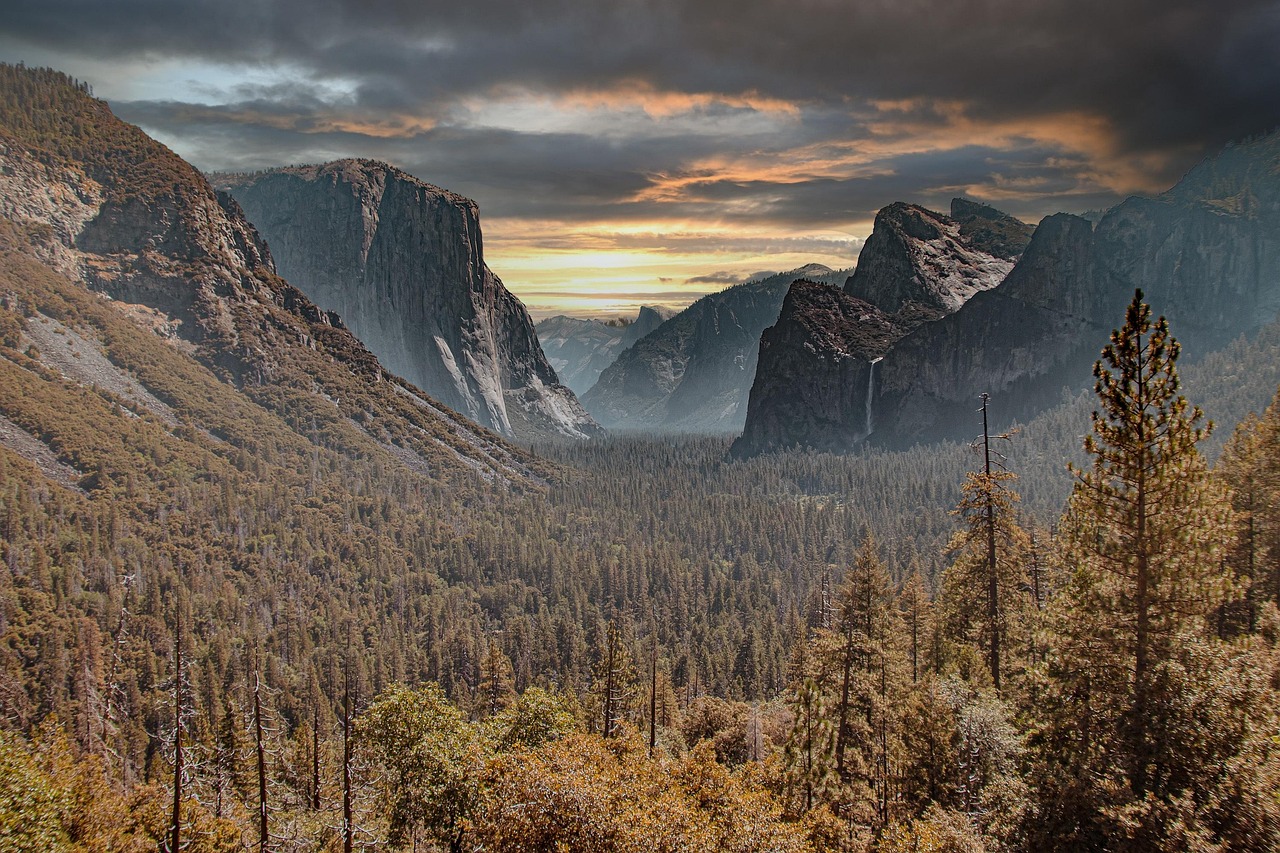
The park’s signature granite formations — Half Dome, El Capitan and Sentinel Rock — dominate the landscape. Sunrise at Tunnel View delivers postcard-perfect panoramas of the valley, while Glacier Point offers sweeping vistas of Half Dome and the high Sierra.

Climbers from around the globe tackle El Capitan’s sheer 3,000-foot face, providing free entertainment for spectators with binoculars. In 2026, with no entry barriers, spontaneous day trips to these landmarks become simpler, though parking management in Yosemite Valley will encourage early arrivals or shuttle use.

Advertisement

4. Ancient Giant Sequoias in Mariposa Grove

Walking among the Mariposa Grove’s roughly 500 mature giant sequoias feels humbling. The Grizzly Giant, estimated at more than 1,800 years old, stands as a living testament to the park’s deep time.

A free shuttle from the welcome plaza operates seasonally, and trail improvements funded by the Yosemite Conservancy continue to enhance access. The grove provides a serene contrast to the busy valley floor, ideal for families or those seeking contemplative moments amid towering trees.

5. World-Class Hiking for Every Ability

With more than 750 miles of trails, Yosemite caters to novices and experts alike. Easy valley loops, moderate Mist Trail climbs to Vernal Fall and strenuous Half Dome cables (permit required for the final section) offer options year-round.

In 2026, ongoing trail rehabilitation projects — including work near Cathedral Lakes and in the Merced River corridor — promise improved conditions. High-country areas like Tuolumne Meadows typically open by mid-June, revealing wildflower meadows and alpine lakes once snow recedes.

Advertisement

6. Opportunities to Witness the Rare “Firefall”

Horsetail Fall transforms into a glowing “Firefall” when sunset light hits the waterfall just right, usually in mid- to late February. In 2026, no special reservations are needed for the event, though parking restrictions and trail access rules will apply to manage crowds.

The phenomenon draws photographers and spectators, but officials remind visitors to practice Leave No Trace principles. Even outside Firefall season, sunset and sunrise light on the cliffs creates magical alpenglow moments.

7. Rich Biodiversity and Wildlife Viewing

Black bears, mule deer, bobcats and more than 400 bird species call Yosemite home. Spring and summer bring active wildlife, from birds nesting to bears foraging — though proper food storage remains essential.

The park’s varied ecosystems, from oak woodlands to subalpine forests, support diverse flora. Wildflower blooms in meadows and along trails add color, particularly after wet winters. Educational programs and ranger-led walks help visitors appreciate this ecological richness responsibly.

Advertisement

8. Stargazing and Dark Skies in a Pristine Setting

Far from urban light pollution, Yosemite offers excellent stargazing. The park’s high elevation and clear mountain air reveal the Milky Way in stunning detail on moonless nights.

Summer evenings in the valley or high country provide prime viewing. Rangers occasionally host astronomy programs, and the surrounding wilderness enhances the sense of isolation and wonder under vast skies.

9. Philanthropic Improvements Enhancing the Visitor Experience

The Yosemite Conservancy announced $19 million in 2026 funding for about 60 projects, including meadow restoration in the high country, trail rehabilitation spanning dozens of miles, and even an AI study on bear behavior to improve human-wildlife coexistence.

These efforts, alongside park initiatives, aim to protect resources while boosting access. Visitors in 2026 will benefit from better-maintained paths and interpretive enhancements without compromising the park’s wild character.

Advertisement

10. A Historic Landscape That Inspired the National Park Idea

Yosemite’s preservation story dates to 1864, when President Abraham Lincoln signed the Yosemite Grant, laying groundwork for the national park system. John Muir’s advocacy further cemented its legacy as a place of inspiration and conservation.

In 2026, amid ongoing discussions about balancing access and preservation, a visit connects travelers to this heritage. Whether camping, staying in historic lodges like The Ahwahnee or simply driving through, the park offers reflection on humanity’s relationship with nature.

Practical Tips for a 2026 Visit

Entrance fees remain required: $35 per vehicle for seven days or consider the America the Beautiful Pass. Nonresident fees may see adjustments, so check nps.gov for current rates. Lodging and camping inside the park book quickly, so reserve early through authorized channels.

Weather varies dramatically by elevation and season; pack layers and check conditions for road openings. Shuttle buses in Yosemite Valley reduce parking pressure, and apps or the park website provide real-time updates.

Advertisement

Wildfire risk persists in California’s dry summers, but the park maintains strong preparedness. Officials encourage flexibility, especially on weekends, and exploration beyond the valley floor to disperse crowds.

For many, 2026 represents a sweet spot: easier logistical planning combined with the park’s enduring majesty. Whether chasing waterfalls in spring, hiking high trails in summer or catching autumn colors, Yosemite delivers unforgettable experiences.

As one longtime ranger noted, “The mountains are calling — and in 2026, more people than ever can answer without extra hurdles.”

Advertisement
Continue Reading

Business

Analysis: Local enrolments lead nation

Published

on

Analysis: Local enrolments lead nation

ANALYSIS: Recent data supports a push for more classrooms to keep up with population growth.

Continue Reading

Business

How Aleksandr Loginov Is Redefining Design in the Age of AI

Published

on

How Aleksandr Loginov Is Redefining Design in the Age of AI

Recent releases made the shift in design impossible to ignore. Google DeepMind’s Nano Banana Pro showed how far image generation has moved toward precise, controllable editing, with tools that let creators adjust camera angle, focus, depth, and color treatment. For video, Seedance 2.0 combined audio-visual generation with much more direct control over performance, lighting, shadow, and camera movement.

These tools are turning design into a controllable production system, so the designer’s role is moving towards that of a systems architect, says Aleksandr Loginov, a product designer and creative leader who combines broadcast visual craft, technical fluency, and product thinking. As Chief Design Officer at Prequel, a consumer app company in photo and video editing whose 4 apps repeatedly reached No. 1 in the App Store’s Photo & Video category in markets including the US, the UK, France, and Canada, he helped shape the strategy behind the company’s rapid expansion. Before moving into product and AI design, Aleksandr was a broadcast designer at STS,  a popular Russian entertainment television channel, where he led his team to a silver PromaxBDA award in the UK in 2015 for high-level work in TV promotion and broadcast design. Now, as he has just joined Lazarev Agency as Art Director for agent-based AI product interfaces, he moves into an award-winning B2B design company with more than 600 shipped products, focused on complex, data-heavy platforms such as AI copilots, decision engines, and vertical SaaS.

Across all those roles, Aleksandr observed that as AI absorbs more of the manual craft, the real competitive edge is shifting elsewhere: toward judgment, system design, and making complex tools usable.

The New Creative Engine

To understand the shift in design, start with the stack itself. Creative teams are no longer using isolated tools. They are assembling a production engine. As Aleksandr notes, Nano Banana Pro is especially strong when the goal is a polished image with better lighting, composition, localized edits, and cinematic texture. But consistency of faces is not its main advantage. That is where Seedream is stronger. Right now, its clearest edge is identity transfer: keeping faces recognizable and consistent across outputs better than any other model in the stack. Kling and Seedance add the cinematography layer, making it possible to generate video with synchronized audio, controlled motion, and more coherent shot sequences. ElevenLabs adds the voice layer, giving visuals a believable multilingual narrative.

Advertisement

“I have already noticed that even a small amount of coding knowledge is now becoming essential for designers. Not to turn them into engineers, but to help them connect models in the right order, speed up iteration, and work with far less dependence on long engineering cycles,” Aleksandr says. Once the stack can provide photorealistic visuals, identity consistency, motion, and voice, the advantage is the ability to turn those capabilities into a dependable pipeline.

That shift becomes easier to recognize when you have had to lead products at scale. At Prequel, where Aleksandr served as Chief Design Officer, he was responsible not just for visual quality, but for the workflow behind image, video, and audio technologies across R&D, Data Science, Art, and key parts of Mobile and Backend. Part of the job was to improve quality, speed, cost, and time to market at the same time. One result, as he describes it, was a workflow that eventually cut the release cycle for AI features from roughly three months to 30 minutes, giving the company a much faster way to respond to signals from marketing. Once a creative stack can deliver photorealistic visuals, preserve identity, and handle motion and voice, the real advantage lies in turning that complexity into a pipeline people can actually use.

What Is Fading and What Is Rising

The manual labor of design is being automated into oblivion. If your value was based on how fast you could mask an image or navigate a complex software menu, the market is shrinking.

What is fading

  • Technical Tool Proficiency: Knowing every shortcut in Photoshop is no longer a competitive advantage. The software is now a canvas for natural language and intent.
  • Stock Curation: Spending hours browsing libraries for the “right” image is obsolete. If it doesn’t exist, you generate it in 15 seconds.
  • Basic Asset Production: Routine tasks like resizing, color correction, and basic layout are now background processes.

What is rising

  • Intent Engineering: This is more than prompting. It’s the ability to translate a business goal into a technical aesthetic description, i.e., understanding lighting, lenses, and psychology.
  • Curatorial Judgment: When a machine gives you 50 perfect options, the designer is the one who knows which one actually resonates with the human heart.
  • Ethical & Legal Oversight: Navigating the complexities of AI copyright and ensuring that generated content remains unbiased and original.

Aleksandr has witnessed this shift while building the kinds of systems that are redefining the designer’s role. In a multi-agent workflow for marketing, he did not focus on producing each asset by hand. He defined the creative logic, structured the sequence of models, and decided where human judgment needed to stay in the loop. Instead of scaling output by hiring dozens of designers, Aleksandr and his team built a system around Gemini and Nano Banana in which the designer began by describing the image and the criteria it had to meet. The model then generated 10 to 20 options. A separate vision-language model reviewed those outputs, identified the ones that matched the original brief most closely, and surfaced the strongest candidates for the designer to evaluate.

This way, Aleksandr shaped the next stage of the workflow. After the designer made a selection, the team animated the chosen images in Kling and assembled them into a single creative or a broader pack of creatives. They then tested that set either in Facebook ad accounts or through SplitMetrics to see which approaches attracted users most effectively. Aleksandr treated that stage not as a final checkpoint, but as part of the system itself: the team fed the performance data back into the workflow so the next round of creatives could build on what had already proven effective.

Advertisement

In practice, that workflow increased creative output many times over while sharply reducing the designer’s manual workload. Under Aleksandr’s leadership, the work that remained essential sat at a higher level: setting intent, defining quality, evaluating outputs, and steering the system as it iterated. For him, that is where the profession is moving. The designer’s value no longer lies mainly in making each asset by hand but in shaping the process that can produce strong creative results at scale.

He argues that this is also why consistency is becoming one of the hardest requirements in AI design:

“When a system produces many versions of the same person, the question is not whether it can generate an image, but whether it can preserve identity, recognizability, and stability across outputs. That is where the designer’s role changes most. The job is no longer just to make things look good, but to define the process, control the edge cases, and make sure the system produces results that are consistent enough to trust and ship,” he says.

From T-Shaped to Blob-Shaped Designers

For years, the ideal creative professional was T-shaped: broad across disciplines, with one deep specialty. In generative design, that model is starting to loosen. The role is becoming more fluid. A designer may move from visual direction to product logic, from interface structure to content behavior, depending on what the system needs at that moment. The craft does not disappear, but it stops living in one fixed place.

Advertisement

Aleksandr’s own career helps explain the shift. Early in his career, he worked in a television medium where images had to register at once (with precision, clarity, and emotional force), and that work led his team to a Silver PromaxBDA in the U.K. Later, at Prequel, he was no longer focused only on frames or campaigns. He concentrated on product systems that had to hold up across millions of user interactions while remaining intuitive enough to help the company’s apps repeatedly rise to the top of the App Store’s Photo & Video category in major markets. The role had expanded from making images to defining how creativity operates inside the product.

As Art Director for agent-based AI product interfaces at Lazarev Agency, he is not confined to one design lane. One week, the work is about understanding what AI capabilities can realistically support in a product. The next step is about shaping those capabilities into a usable flow with the right controls, review points, and product logic. Then the focus moves back to creative direction: defining what quality should look like when images, video, and audio are generated at scale. That is the new reality of generative design teams. Depth still matters, but it now means the ability to shape, connect, and govern systems across disciplines, not just master one static craft.

The Future Horizon of a Designer’s Career

The next shift in design is not just better media, but a different kind of interface, Aleksandr is sure.

One direction is generative UX. Instead of designing fixed pages, designers will increasingly define rules, states, and priorities. The system will assemble the right interface in real time based on the user’s intent and context. In that model, software becomes less like a set of screens and more like a temporary control surface that appears when needed.

Advertisement

Aleksandr has already seen the logic in product work built around ordinary users, not specialists. One of the central ideas he pushed at Prequel was that editing should help people express the feeling of a moment without forcing them to master the mechanics behind it. That same principle, he argues, can shape the next generation of interfaces: systems that infer intent, surface the right controls at the right moment, and ask for confirmation only when the stakes are high:

“When a complex capability is reduced to a simple action, adoption improves because users do not have to learn the system first. The same principle can shape the next generation of products: interfaces that infer intent, surface the right controls at the right moment, and ask for confirmation only when the stakes are high,” he says.

Further ahead, the profession may change again. Neural interfaces could make it possible to sketch ideas directly from thought into digital space. At the same time, fully human-made design may gain premium value as a mark of authorship and authenticity.

AI is not eliminating designers. It is stripping value from the most repeatable parts of the craft. What remains valuable is judgment: the ability to structure workflows, preserve coherence, define limits, and steer a product when the model becomes unstable. Aleksandr has moved in exactly that direction. He started by making visuals himself. He began with visuals. Now he works on systems that determine how creative work gets produced, scaled, and experienced. That is also the direction he is choosing deliberately: building tools that let people without design training create strong content, while giving experienced creators a way to move faster and produce far more. For him, the point is not automation for its own sake. It is to make creative expression more accessible on one side and more powerful on the other.

Advertisement

Continue Reading

Business

Greatland gets EPA nod, with rare night parrot speed clause

Published

on

Greatland gets EPA nod, with rare night parrot speed clause

Greatland Resources’ plan to develop the Havieron gold project through its Telfer mine has received a conditional watchdog tick, but an elusive bird could slow operations.

Continue Reading

Business

Best day in a year as Aussie shares surge on Iran truce

Published

on

Best day in a year as Aussie shares surge on Iran truce

Australia’s share market is trading at its highest level since early March after the US and Iran struck a two-week ceasefire, easing soaring oil prices and boosting investor confidence.

Continue Reading

Business

New board members for FTSE listed engineering firm Renishaw

Published

on

Business Live

The Gloucestershire-headquartered company has added to its leadership team

GloucestershireLive Business Awards' past winners

Renishaw New Mills headquarters (Image: Renishaw )

Gloucestershire engineering firm Renishaw has refreshed its board with three appointments, including a renowned British academic as its new chair. The news of the appointments come just months after the precision manufacturer confirmed it had made ownership changes to the business as part of a succession plan.

On Wednesday (April 8) Renishaw told investors it had appointed Sir David Grant as its permanent chair with immediate effect for a period of up to two years. Sir David was previously a company non-executive director and also chair of the nomination committee – a role he will retain.

The Wotton-under-Edge-based business also announced the appointment of former Smiths Group finance boss John Shipsey as chief financial officer and executive director. Mr Shipsey, who worked for Dyson for 12 years and has held strategy roles at alcoholic drink brand giant Diageo, will join the board on April 13.

Sir David said: “I would like to warmly welcome John to Renishaw and its board. John brings a deep understanding of the industrials sector and its associated performance drivers. He has a strong track record of leading high-performing finance functions, and we look forward to him strengthening both the board and executive leadership team.”

Advertisement

Renishaw also confirmed that Juliette Stacey had been appointed to the role of senior independent director with immediate effect. Ms Stacey took up the role of independent non-executive director of the FTSE-250 company in January 2022 and has been chair of the audit committee and served as a member of the nomination and remuneration committees since her appointment.

In the statement to the stock market, Renishaw said it would continue the search process for the company’s next chair, with the aim of making an appointment by 2028. The company is also continuing its search for an additional independent non-executive director.

Renishaw was established by the late Sir David McMurtry and John Deer in 1973 and floated on the stock market a decade later. The firm’s first product, the touch-trigger probe, was invented by Sir David to solve a specific inspection requirement for the Olympus engines used in Concorde.

Advertisement
Continue Reading

Business

Daiseki Co.,Ltd. 2026 Q4 – Results – Earnings Call Presentation (OTCMKTS:DSKIF) 2026-04-08

Published

on

OneWater Marine Inc. (ONEW) Q1 2026 Earnings Call Transcript

This article was written by

Seeking Alpha’s transcripts team is responsible for the development of all of our transcript-related projects. We currently publish thousands of quarterly earnings calls per quarter on our site and are continuing to grow and expand our coverage. The purpose of this profile is to allow us to share with our readers new transcript-related developments. Thanks, SA Transcripts Team

Continue Reading

Business

what bigger ‘small’ company thresholds mean for UK freelancers

Published

on

what bigger ‘small’ company thresholds mean for UK freelancers

Changes to the off-payroll working rules coming into force this month will relieve scaling businesses of costly compliance obligations. Yet contractors who fail to adjust their rates risk being caught out, writes Business Matters.

From this month, a raft of amendments to the UK’s IR35 tax legislation will redraw the lines of responsibility between businesses and the freelancers they engage. For thousands of companies that have until now shouldered the burden of determining whether their contractors fall inside or outside the off-payroll working rules, the changes promise welcome relief. For freelancers, however, the picture is rather more complicated.

IR35, in essence, is the government’s mechanism for ensuring that individuals who work through intermediaries such as personal service companies, but whose engagements resemble those of employees, pay a broadly equivalent amount of income tax and National Insurance. According to HMRC, the framework has already shifted more than 130,000 workers into deemed employment tax status since 2021 – a figure that underscores both its reach and its continuing impact on the UK’s contracting workforce.

Under the current regime, responsibility for determining a contractor’s IR35 status rests largely with the hiring organisation – provided that organisation qualifies as medium or large under company law. Smaller companies have been exempt, with the onus falling instead on the contractor’s own personal service company. The April 2026 changes significantly raise the bar for what constitutes a “small” company, meaning many more businesses will now fall beneath that threshold and be freed from compliance duties.

A wider net for the small company exemption

Previously, a company qualified as small if it met at least two of three criteria: annual turnover of no more than £10.2 million, a balance sheet total of no more than £5.1 million, and no more than 50 employees. From April 2026, the turnover ceiling rises to £15 million and the balance sheet limit to £7.5 million, whilst the headcount threshold remains unchanged at 50 staff. The consequence is that a significant number of businesses that were previously classified as medium-sized will now be treated as small, and the obligation to issue a Status Determination Statement – the legal document setting out whether a contractor sits inside or outside IR35 – will pass back to the contractor.

Advertisement

Vincent Huguet, chief executive and co-founder of Malt, the European freelance talent platform, welcomes the reforms but sounds a note of caution. The shift in thresholds, he says, helps to move responsibility away from hiring managers, allowing them to concentrate on when and what they need rather than worrying about the tax implications of every engagement. Yet he warns that neither companies nor freelancers should become complacent.

The end of double taxation?

Alongside the threshold changes, the government is introducing a PAYE set-off mechanism designed to address one of the more contentious aspects of the existing rules. Until now, where a client failed to apply IR35 correctly, HMRC could pursue the full PAYE and National Insurance bill from the deemed employer without accounting for tax already paid at the contractor’s end through their personal service company. The new mechanism allows HMRC to offset those prior payments when calculating any outstanding liability.

Huguet describes this as an important step towards eliminating double taxation, noting that it removes the risk of a freelancer ending up paying more than their fair share and properly accounts for historic tax records.

Pricing: the freelancer’s blind spot

For contractors, however, the real sting may lie in the detail of their own rate cards. With a greater share of compliance responsibility now resting with them, freelancers must ensure their pricing properly reflects the full cost of engagement. Last year’s increase in employer National Insurance Contributions from 13.8 per cent to 15 per cent, coupled with the reduction in the payment threshold from £9,100 to £5,000 annually, has already made hiring more expensive. Because employer NIC is deducted from the assignment rate before a contractor’s pay is calculated, those costs feed directly into negotiations – whether the contractor is deemed inside or outside IR35.

Advertisement

Huguet’s message to freelancers is blunt: get your pricing right. Those who fail to factor in these shifting obligations risk undervaluing their services at precisely the moment when the regulatory landscape demands they take greater ownership of their tax affairs. For businesses, particularly those that find themselves newly reclassified as small, the changes offer a chance to engage freelance talent with less red tape – but only if both sides of the arrangement understand what is now expected of them.


Amy Ingham

Amy is a newly qualified journalist specialising in business journalism at Business Matters with responsibility for news content for what is now the UK’s largest print and online source of current business news.

Advertisement
Continue Reading

Business

Holista CollTech fails to restrain foreign orders over ProImmune stoush

Published

on

Holista CollTech fails to restrain foreign orders over ProImmune stoush

A Subiaco biotech company has failed to quash a US District Court judgment that ordered it to pay almost $3 million in damages.

Continue Reading

Business

Delta Air Lines earnings beat by $0.03, revenue topped estimates

Published

on


Delta Air Lines earnings beat by $0.03, revenue topped estimates

Continue Reading

Trending

Copyright © 2025