Connect with us
DAPA Banner
DAPA Coin
DAPA
COIN PAYMENT ASSET
PRIVACY · BLOCKDAG · HOMOMORPHIC ENCRYPTION · RUST
ElGamal Encrypted MINE DAPA
🚫 GENESIS SOLD OUT
DAPAPAY COMING

Business

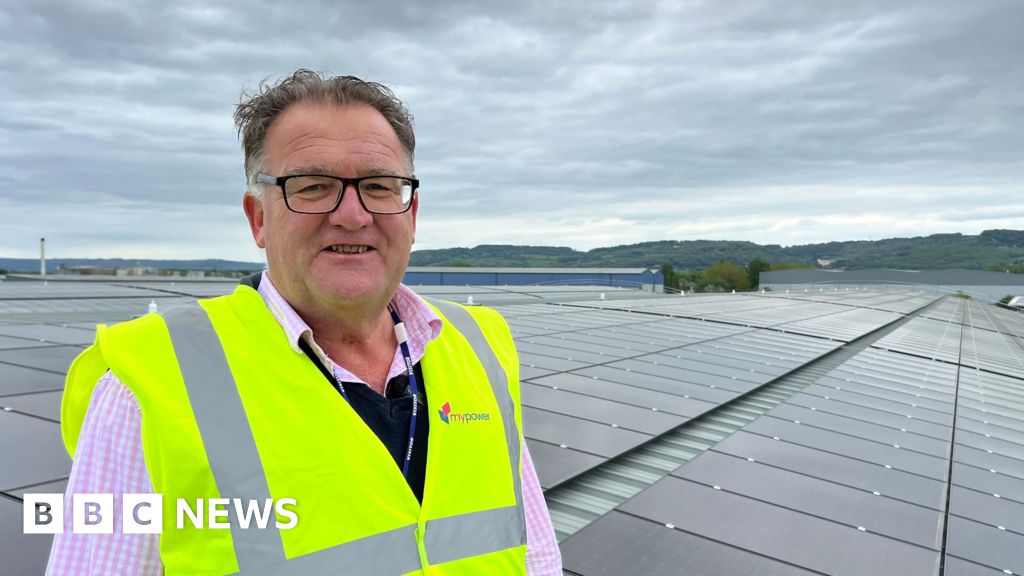
Rise in solar panel sales as people 'want to save money'

Published

on

Rise in solar panel sales as people 'want to save money'
Continue Reading
Click to comment

You must be logged in to post a comment Login

Leave a Reply

Business

Kaynes Technology shares tumble 25% in 3 days after weak Q4; Elara cuts rating to ‘Accumulate’

Published

on

Kaynes Technology shares tumble 25% in 3 days after weak Q4; Elara cuts rating to ‘Accumulate’
Kaynes Technology India shares declined as much as 4.27% on Monday to hit an intraday low of Rs 3,132, marking the third consecutive session of losses and taking the stock’s three-day decline to nearly 25%, after the company reported a weaker-than-expected Q4 performance last week. Brokerage firm Elara Securities also downgraded its rating on the company to “Accumulate” from “Buy”.

The company reported a consolidated net profit of Rs 91 crore for the March quarter, down 22% year-on-year from Rs 116 crore in the corresponding period last year. Revenue from operations, however, rose 26% YoY to Rs 1,243 crore compared with Rs 984 crore a year earlier.

According to Elara Securities, Kaynes Technology India Ltd missed its revised FY26 guidance on three key parameters. Revenue came in at Rs 36 billion against the revised guidance of Rs 40 billion, while operating cash flow (OCF) remained negative at Rs 6 billion despite expectations of turning positive. Net working capital (NWC) days also stayed elevated at 125 days, missing the company’s sub-100-day target.

For FY27, management has guided for 30% growth, lower than its earlier target of 40–50%, though still ahead of the broader EMS industry growth rate. Elara noted that the company’s expectations of improving OCF and reducing working capital in FY27 could remain challenging.

Advertisement

The brokerage cut its target price on the stock to Rs 3,530 from Rs 5,700, valuing the company at 36x March FY28 estimated earnings, versus 42x earlier. It also reduced FY27E and FY28E EPS estimates by 23% and 33%, respectively, citing lower Q4 sales, weaker guidance visibility, and persistent concerns around cash flow and working capital.


Despite the downgrade, Elara believes the recent weakness was likely due to deferred execution rather than order cancellations. The brokerage highlighted that the upcoming OSAT plant is expected to contribute meaningfully to revenue from FY27 onward, while margins continue to remain among the highest in the industry.
Elara expects earnings CAGR of 40% during FY26–29E, with average RoE and RoCE estimated at 11% and 10%, respectively, during FY27E–29E. The brokerage added that improvement in working capital management and operating cash flow would remain key triggers for any potential rerating in the stock.On the technical front, according to Trendlyne data, the stock’s 14-day RSI stands at 31.9—where a reading below 30 is considered oversold and above 70 indicates overbought conditions. The stock also shows a bearish setup, trading below all 8 out of 8 simple moving averages (SMAs).

(Disclaimer: Recommendations, suggestions, views and opinions given by the experts are their own. These do not represent the views of The Economic Times)

Continue Reading

Business

Gold loan giant Muthoot FinCorp plans Rs 4,000 crore IPO. Check details

Published

on

Gold loan giant Muthoot FinCorp plans Rs 4,000 crore IPO. Check details
Muthoot FinCorp has approved plans to raise up to Rs 4,000 crore through an IPO as the gold loan-focused lender looks to capitalise on strong growth in the organised lending market. The proposed IPO will consist of a fresh issue of equity shares with a face value of Rs 10 each, subject to regulatory approvals and market conditions.

CEO Shaji Varghese said the company may dilute at least 10% stake to comply with listing requirements, while any further dilution would depend on valuation and market response. He added that the valuation discovery process has not yet begun as the company is still in the process of appointing investment bankers for the issue.

Varghese said the IPO is aimed at strengthening capital for future expansion rather than providing an exit to promoters or investors. Unlike several recent financial services IPO candidates, Muthoot FinCorp does not have private equity investors. The company remains fully owned by the promoter family.

“The idea is to raise growth capital for expansion,” Varghese said, adding that the lender wants to move ahead with the listing process at the earliest possible opportunity once approvals and appointments are completed.

Advertisement

The proposed public issue comes at a time when gold loan companies are witnessing strong business momentum driven by rising gold prices, stable regulations and increasing formalisation of the lending market. Varghese said organised lenders still account for only around 35-40% of the overall gold loan market, while a large portion continues to remain with local financiers, pawn brokers and jewellers.


That, according to the company, leaves significant room for growth for regulated players.
Apart from its traditional gold loan business, Muthoot FinCorp has also been expanding into MSME lending, loan against property and digital financial services through its Muthoot FinCorp One platform.Alongside the IPO approval, the company’s board also cleared multiple capital-raising measures. It approved a stock split under which every equity share with a face value of Rs 10 will be split into five shares of Rs 2 each. The company said the move is aimed at improving liquidity and increasing retail investor participation.

The board further approved raising up to Rs 4,000 crore through public issuance of non-convertible debentures between July 2026 and June 2027. An additional Rs 4,000 crore can also be raised through private placement of debentures and subordinated debt instruments.

The company also approved the issuance of commercial papers with an overall limit of Rs 30,000 crore, subject to a maximum outstanding limit of Rs 10,000 crore at any point in time.

On the financial front, Muthoot FinCorp reported assets under management of Rs 56,185 crore as of March 2026. Standalone revenue for FY26 stood at Rs 8,364 crore, while profit after tax came in at Rs 1,640 crore.

Advertisement

Also read: Bharti Airtel claims No.2 spot: How it beat HDFC Bank to become India’s second most valuable company

The company reported particularly strong growth in the March quarter. Consolidated profit after tax rose 204% year-on-year to Rs 664 crore in Q4 FY26, while quarterly revenue increased 32% to Rs 3,356 crore.

The IPO plan comes amid increasing investor interest in gold loan companies as elevated gold prices improve collateral values and support lending growth across the sector.

(Disclaimer: Recommendations, suggestions, views and opinions given by the experts are their own. These do not represent the views of The Economic Times)

Advertisement
Continue Reading

Business

Guggenheim initiates Yesway stock with buy rating on growth outlook

Published

on


Guggenheim initiates Yesway stock with buy rating on growth outlook

Continue Reading

Business

Thailand slashes GDP forecast as 3.78tn baht budget pushes debt toward ceiling

Published

on

Thailand slashes GDP forecast as 3.78tn baht budget pushes debt toward ceiling

Thailand’s public debt nears 70% of GDP by 2027. A significant portion of obligations mature that year, forcing reliance on refinancing. The government plans to reallocate unspent funds to support vulnerable groups, promote clean energy, and invest in human capital and AI skills.


Key Points

  • Thailand’s public debt is projected to reach 69.36% of GDP by fiscal 2027, necessitating reliance on refinancing due to a large debt-servicing burden.
  • The government plans to reclaim unspent funds (70-100 billion baht) from fiscal 2026 projects and utilize central funds (25 billion baht) to create a fiscal buffer of up to 125 billion baht.
  • This buffer will fund support for vulnerable groups, accelerate economic transition towards renewable energy, and invest in human capital and AI-related skills

Projected Debt and Fiscal Constraints

Thailand’s public debt is a significant concern, with projections indicating it will reach 13.79 trillion baht by the end of fiscal 2027. This figure represents 69.36% of the Gross Domestic Product (GDP), positioning it just below the statutory ceiling of 70%. Concurrently, the nation faces a substantial debt-servicing obligation, with approximately 1.45 trillion baht in principal maturing in 2027, escalating to 1.81 trillion baht when interest payments are factored in. To manage this, the government has earmarked only a modest 4% of the total budget (around 151 billion baht) for principal repayment, necessitating a strong reliance on refinancing strategies to manage its financial obligations.

Strategic Financial Management and Borrowing Capacity

The government has a limited borrowing capacity of approximately 4% of GDP, equating to roughly 800 billion baht, under the existing debt ceiling framework, as stated by Deputy Prime Minister and Finance Minister Ekniti Nitithanprapas. He further noted that the ceiling, determined by the fiscal policy committee, can be adjusted if circumstances require, referencing precedent from the Covid-19 crisis. Prior to exploring additional borrowing, the administration is prioritizing the efficient reallocation of existing funds. This approach includes plans to reclaim unspent budget allocations from fiscal 2026 projects that fail to secure procurement contracts by April 30th, potentially freeing up 70 billion to 100 billion baht.

Advertisement

Multi-faceted Fiscal Buffer and Economic Transition Initiatives

The reclaimed funds, combined with 25 billion baht in remaining central funds, are expected to establish a fiscal buffer of up to 125 billion baht. This buffer will be strategically deployed through a three-pronged approach. Targeted support will be provided to vulnerable groups, such as low-income households and transport operators, to mitigate the impact of rising energy costs. Secondly, efforts will focus on accelerating Thailand’s economic transition, particularly by reducing dependence on imported fossil fuels through initiatives like promoting rooftop solar, subsidizing electric vehicles, and introducing a Direct PPA system for clean energy trading. Thirdly, a long-term reform agenda will emphasize investments in human capital and infrastructure, with a particular focus on developing AI-related skills to boost workforce productivity.

Continue Reading

Business

Hindustan Zinc shares crack 7% in two sessions. What’s behind the sharp slide?

Published

on

Hindustan Zinc shares crack 7% in two sessions. What’s behind the sharp slide?
Hindustan Zinc shares slipped over 2% to an intraday low of Rs 621.45 on the BSE on Monday, extending losses to more than 7% over the last two trading sessions.

The decline came as silver prices saw a sharp selloff on MCX, falling over Rs 5,000 per kg amid renewed Iran war tensions and reduced expectations of a rate cut this year. Following the government’s import duty hike, MCX silver has now plunged nearly 13%, or around Rs 40,000 per kg, from its peak of Rs 3.04 lakh in just three trading sessions.

A key reason behind the steep correction has been demand destruction at elevated price levels. Unlike gold, silver has a large industrial demand component, with usage spread across sectors such as solar panels, semiconductors, electric vehicles, batteries, electronics, AI infrastructure, and green energy systems.

“At the same time, geopolitical tensions linked to the Iran conflict initially triggered safe-haven buying across precious metals. However, markets later began to focus on the potential impact of prolonged elevated oil prices on global growth momentum. That concern tends to affect industrial metals more heavily than pure defensive assets, causing silver to increasingly trade like an industrial commodity rather than a traditional safe-haven hedge,” the analyst said.

Advertisement

India, which remains the world’s largest silver importer, could also see weaker domestic demand after the sharp increase in import duty. According to Nirpendra Yadav, Senior Commodity Analyst at Bonanza, the jump in duty to 15% materially raises local prices and may hurt jewellery demand while slowing industrial imports.

Hindustan Zinc Q4 snapshot

The company reported a sharp 68% year-on-year rise in consolidated profit after tax for the March quarter at Rs 5,033 crore, compared with Rs 3,003 crore in the corresponding period last year. Revenue from operations climbed 49% to Rs 13,544 crore from Rs 9,087 crore a year earlier.
EBITDA for the quarter reached a record Rs 7,747 crore, registering a 61% increase year-on-year. EBITDA margin expanded to an industry-leading 57%, reflecting strong operational efficiency and improved profitability.
The company also delivered its strongest-ever quarterly operational performance across several key parameters. Mined metal production touched a record 315 kilotonnes, while refined metal output reached an all-time high of 282 kilotonnes. Hindustan Zinc reported its lowest-ever cost of production at $903 per tonne, improving 9% year-on-year. Silver production stood at 176 tonnes during the quarter, up 11% sequentially.
For the full financial year FY26, mined metal production reached a record 1,114 kilotonnes, while refined metal production came in at 1,048 kilotonnes, the second-highest level ever achieved by the company. Zinc production cost declined to a five-year low of $959 per tonne, improving 9% year-on-year.

(Disclaimer: Recommendations, suggestions, views and opinions given by the experts are their own. These do not represent the views of The Economic Times)

Advertisement
Continue Reading

Business

Company vying to replace RAF Red Arrows fighter jet falls into administration

Published

on

Business Live

Some 30 staff at Aeralis have lost their jobs

CGI designs of how the Aeralis aircraft could look

CGI designs of how the Aeralis aircraft could look(Image: Aeralis)

A Bristol aerospace business that was vying to develop a replacement jet for the RAF’s Red Arrows has collapsed into administration, with the loss of 30 jobs.

Aeralis was pinning its hopes on securing a Government contract to replace the Hawk jets, which are due to be retired in 2030 and are currently flown by the famous military aerobatics display team.

Advertisement

But following a period of financial difficulty, Aeralis was placed into administration on Friday. The company’s board appointed David Buchler and Joanne Milner of London-based Buchler Phillips as joint administrators.

The collapse of the firm follows a sustained period of pressure on the company’s cashflow, Aeralis said. The business blamed “continued delays” to the UK Defence Investment Plan, combined with geopolitical factors affecting sources of funding.

Robin Southwell, chair of AERALIS, said: “The board has taken this decision after careful consideration of the company’s position and the funding challenges it has faced over recent months.

“We will continue to support the joint administrators as they explore viable, sustainable options for the future of the business and engage with interested parties.”

Advertisement

Aeralis, which was based at Bristol’s Aztec West Business Park, was developing a modular aircraft design for the RAF and had hoped to deliver the first fully British-crewed military jet since the 1970s.

The firm’s modular light jet aircraft platform was intended to support military training, operational support and aerobatic display requirements.

The business had established significant intellectual property, strategic partnerships and advanced digital engineering capabilities during its development programme.

According to the BBC, Barzan Holdings – the investment and procurement arm of Qatar’s Ministry of Defence which was a large investor in the business – had withdrawn funding amid the Iran war.

Advertisement

It is understood a potential agreement with the French government also failed to materialise, compounding the financial issues.

Aeralis said the administrators would “continue to work closely” with its management and stakeholders to assess strategic options for the business and its assets, including opportunities to secure investment, preserve value and support the continuation of its programme in an alternative structure.

Ms Milner of Buchler Phillips added: “Aeralis has developed a highly differentiated proposition within the aerospace and defence sector.

“We hope that the administration process will provide an opportunity to explore routes to preserve and develop that value for stakeholders.”

Advertisement
Continue Reading

Business

Earnings call transcript: CleanSpark Q2 2026 reveals earnings miss, stock dips

Published

on


Earnings call transcript: CleanSpark Q2 2026 reveals earnings miss, stock dips

Continue Reading

Business

Infosys, OFSS, TechM, other IT stocks gain up to 3% despite weak market sentiment. Here’s why

Published

on

Infosys, OFSS, TechM, other IT stocks gain up to 3% despite weak market sentiment. Here's why
Tech stocks, including Infosys and Oracle Financial Services Software, gained up to 3% on Monday, lifting the Nifty IT index over 1% even as the broader market remained under pressure.

The Nifty IT index climbed 1.2% to around 28,049, emerging as the only sectoral index trading in the green. Meanwhile, the BSE Sensex and Nifty 50 fell over 1% as the rupee hit a fresh record low and bond yields surged to all-time highs, weighing on investor sentiment.

Today’s Top IT Gainers

Oracle Financial Services Software emerged as the top gainer on the IT pack, rising over 3%. Shares of LTIMindtree, Coforge and Tech Mahindra climbed more than 2% each, while Mphasis and Persistent Systems gained nearly 2% each.

Advertisement

Heavyweights Infosys and Wipro shares rose over 1% each, while those of Tata Consultancy Services (TCS) and HCL Technologies made marginal gains, as seen at 11.15 am. The sharp gains pulled up the total value of all companies on the Nifty IT index to Rs 1,752 crore.

The AI Story

The IT stocks had seen a sharp decline recently. OpenAI last Monday announced the launch of OpenAI Deployment Company with an initial investment of $4 billion, designed to help organisations build and deploy AI systems they can rely on every day across their most important work. This retriggered worries around AI-led disruption in India’s IT sector.

Strong earnings by tech giants pushed the Nasdaq to record high levels last week, but the Nifty IT index fell. “IT firms are making reasonable headway in AI-driven opportunities, although it will not be enough to compensate for deflationary headwinds. Offsetting growth headwinds amid high competitive intensity will be challenging. Margin headwinds are manageable by further flexing cost levers,” said Kotak Equities.
As global AI giants rallied, IT stocks on Dalal Street plunged. The Nifty IT index has plunged around 12% in one month, with the IT heavyweights hitting fresh 52-week lows last week. However, Nasdaq tumbled more than 1.5% on Friday. On Dalal Street meanwhile, IT stocks jumped.

Rupee At Record Low

The renewed investor optimism may also have been driven by the weakening rupee. Rupee dropped to a fresh all-time low of 96.18 against the US dollar on Monday, eclipsing its previous record of 96.1350. The Indian currency is Asia’s worst performer so far in 2026, and has ‌dropped 5.5% since the Iran-US war erupted on February ⁠28.
Notably, today marks the fifth consecutive session when the Indian rupee hit a fresh record low as high oil prices sent bond yields soaring to record high levels, denting risk appetite and spooking investors. “Market participants remain cautious amid fears that elevated crude prices may persist for a longer duration despite government measures to control volatility. Near-term rupee range is expected between 95.55–96.25,” said Jateen Trivedi, VP Research Analyst – Commodity and Currency, LKP Securities.

Advertisement

As the IT companies mostly derive their revenue in US dollars, the rupee’s depreciation boosts hopes for better earnings and profitability.

Investors this week will focus squarely on Nvidia’s earnings on Wednesday for clues on the durability of the artificial intelligence-driven rally, said Bajaj Broking.

(Disclaimer: Recommendations, suggestions, views and opinions given by the experts are their own. These do not represent the views of The Economic Times)

Advertisement
Continue Reading

Business

Earnings call transcript: iHeartMedia Q1 2026 reveals mixed results with EPS miss

Published

on


Earnings call transcript: iHeartMedia Q1 2026 reveals mixed results with EPS miss

Continue Reading

Business

Why Samsung shares just surged 7% to save Kospi from a tragic market meltdown

Published

on

Why Samsung shares just surged 7% to save Kospi from a tragic market meltdown
Shares of Samsung Electronics rose as much as 7% to their day’s high of Korean Won 2,88,500 after the company entered crucial wage negotiations with its largest labour union in an effort to avoid a strike that could disrupt operations at the world’s biggest memory chipmaker.

As a result, the KOSPI gained more than 1%. According to MSCI data, Samsung Electronics carries a weight of 32% in the index, followed by SK Hynix at 22%, making movements in the two stocks highly influential for the benchmark. In the previous session, Samsung shares had slumped more than 8%, dragging the Kospi down 6%.

Concerns over a major disruption to South Korea’s semiconductor industry eased after efforts by political and corporate leaders to calm tensions between the two sides. Adding to the relief, a Korean court on Monday partially approved an injunction against potential illegal actions by the labour union, according to Yonhap News. Samsung shares climbed as much as 6.7% in Seoul, reversing almost all losses of the previous session.

The development gains significance as any production disruption at Samsung could have broad implications for the global technology supply chain. The company is the world’s largest supplier of memory chips used in products ranging from data centre servers and smartphones to electric vehicles.

The negotiations also highlighted growing labour tensions in South Korea as workers seek a larger share of profits generated by companies such as Samsung and SK Hynix amid the global boom in artificial intelligence infrastructure.
Union leaders and company executives resumed government-mediated negotiations on Monday for a second round of talks. The meeting came after days of rising tensions and failed mediation attempts that had raised investor concerns over possible walkouts at Samsung’s semiconductor facilities in Korea. The union has threatened to begin an 18-day strike from May 21 if its demands are not addressed.
Over the weekend, South Korean Prime Minister Kim Min-Seok urged both sides to resolve the dispute through dialogue. Samsung Executive Chairman Jay Y. Lee also made a rare public appeal, referring to union members as “one family.” The company additionally agreed to the union’s request to replace its lead negotiator with the head of the chip division’s people’s team.
“We will sincerely engage in talks,” Samsung union leader Choi Seung-ho said, according to a Bloomberg report.

The union has been pressing Samsung to increase performance-linked compensation after a sharp recovery in semiconductor earnings fueled by strong demand for AI infrastructure. Labour representatives are demanding that Samsung remove the existing cap on bonuses, allocate 15% of operating profit toward employee bonuses and formally include those terms in employment contracts.

Advertisement

Samsung has proposed allocating 10% of operating profit to bonuses along with a one-time special compensation package that it said exceeds industry standards. Company executives have argued that the union’s demands may not be sustainable over the long term.

(Disclaimer: Recommendations, suggestions, views and opinions given by the experts are their own. These do not represent the views of The Economic Times)

Continue Reading

Trending

Copyright © 2025