Connect with us

Business

Robinhood’s Steven Quirk, chief brokerage officer, sells $2.9m stock

Published

on

Continue Reading
Click to comment

You must be logged in to post a comment Login

Leave a Reply

Business

Here’s What’s Open And Closed For Banks, Post Office, Stores This Weekend

Published

on

Labor Day Weekend

Labor Day 2026 falls on Monday, Sept. 7, according to the U.S. Office of Personnel Management, marking one of 11 federal holidays observed annually and bringing a three-day weekend for many Americans as summer draws to a close.

Established by federal law in 1894, Labor Day is celebrated on the first Monday of September each year, honoring the economic and social contributions of American workers and the broader labor movement. Because the “first Monday” of September can fall anywhere between Sept. 1 and Sept. 7 depending on the calendar year, 2026’s observance lands at the later end of that range.

Unlike major holidays such as Thanksgiving or Christmas, Labor Day does not bring widespread closures across the retail and service sectors. Federal, state and most local government offices will close for the day, along with public schools, public libraries and federal courts, though electronic court filing systems will generally remain available in many jurisdictions even while physical offices are closed.

Banking services will be affected nationwide. Major banks, including Chase, Bank of America, Wells Fargo, Citibank, Capital One, PNC, Truist and U.S. Bank, are expected to keep their branches closed for in-person service on Labor Day. The Federal Reserve will also be closed, meaning transactions such as direct deposits, wire transfers and check processing may not be completed until Tuesday, Sept. 8. Customers will still be able to access ATMs and online or mobile banking services throughout the holiday, though any transfers initiated on Labor Day may remain pending until the next business day.

Advertisement

U.S. financial markets will also be closed for the holiday. The New York Stock Exchange, the Nasdaq and U.S. bond markets are all scheduled to be shut Sept. 7, according to each exchange’s respective 2026 holiday calendar, with normal trading set to resume Tuesday.

Mail and package delivery will pause for the holiday as well. All U.S. Postal Service locations will be closed Monday, with no regular residential or business mail delivery scheduled, though Priority Mail Express holiday delivery may still be available for customers with time-sensitive shipments. Regular postal delivery and retail counter service will resume Tuesday, Sept. 8.

Private shipping carriers will similarly scale back services for the holiday. UPS will suspend regular pickup and delivery service on Labor Day, according to the company’s 2026 operating schedule, though its UPS Express Critical service will remain available for urgent shipments, and some UPS Store locations may still be open depending on location. FedEx will pause most standard pickup and delivery operations for the holiday as well, with FedEx office locations operating on modified hours and some stores closed entirely, while FedEx Custom Critical will continue operating for time-sensitive deliveries.

Despite those closures across banking, postal and financial services, most retail businesses will remain open on Labor Day, and the holiday has increasingly become associated with major end-of-summer sales events rather than widespread store closures. Major retailers including Walmart, Target, Kroger, Aldi, Publix, Whole Foods and Trader Joe’s are expected to operate on Labor Day, though some locations may run on reduced holiday hours, and shoppers are advised to check with individual stores before visiting.

Advertisement

Costco stands out as a notable exception among major national retailers. All U.S. Costco warehouses, along with most attached services such as pharmacies, tire centers and food courts, will be closed on Labor Day, one of just seven holidays each year on which the company closes its U.S. locations entirely, according to Costco’s customer service guidance.

Other major retailers are expected to maintain their standard hours or even extend them for the holiday weekend. Home improvement chains including Home Depot and Lowe’s typically remain fully open on Labor Day and often extend weekend hours to accommodate renovation and home-project shoppers taking advantage of the long weekend. Discount retailer Aldi will remain open but with limited hours that vary by location, while Sam’s Club is expected to be open but close earlier than usual, at 6 p.m. Starbucks locations will generally remain open as well, though individual store hours may vary and customers are encouraged to check with their local location or the company’s app.

Pharmacy chains including CVS and Walgreens are expected to remain open on Labor Day, though both store and pharmacy hours can vary significantly by location, and customers needing prescriptions or other pharmacy services are advised to confirm hours with their specific store ahead of time.

Trash and recycling collection schedules may also be affected in some municipalities. In several major cities, curbside collection is expected to be delayed by a day for residents whose regular pickup falls on or after Labor Day, with normal collection schedules typically resuming later in the week.

Advertisement

For those planning around the holiday, several practical steps are worth taking in advance. Anyone needing to mail packages before the holiday should do so early, given the full closure of postal services on Monday. In-person banking needs should ideally be handled before Friday, Sept. 4, given that branches will be closed through the long weekend. Travelers and shoppers should also anticipate heavier-than-usual crowds throughout the extended holiday weekend, as Labor Day traditionally marks one of the last major travel and shopping periods before the end of summer.

Looking ahead, the next federal holiday following Labor Day will be Columbus Day, which falls on Monday, Oct. 12, 2026, according to the Office of Personnel Management’s official federal holiday schedule.

While Labor Day functions for many Americans as an unofficial close to summer, marked by family gatherings, shopping trips and travel, the holiday’s original purpose remains rooted in recognizing the contributions of American workers, including those in retail, hospitality, transportation, health care and emergency services who will continue working through the holiday to keep essential services running for the millions of people taking advantage of the long weekend.

Advertisement
Continue Reading

Business

Oracle Stock: Tech Giant To Report After Wild AI Ride

Published

on

Oracle Stock: Tech Giant To Report After Wild AI Ride

Oracle (ORCL) is set to report fiscal first-quarter results after Labor Day, capping off a 12-month period that is surely among the most tumultuous in the company’s 49-year history. Last year, Oracle’s fiscal Q1 report set off a record 36% single-day rally for Oracle stock. The Austin, Texas-based tech giant told investors that its remaining performance obligations surged 359% to…

Copyright ©2026 Investor’s Business Daily, LLC. All rights reserved. 87990cbe856818d5eddac44c7b1cdeb8

Continue Reading

Business

Gland Pharma block deal: Fosun Pharma divests 99 lakh shares worth Rs 2,800 crore

Published

on

Gland Pharma block deal: Fosun Pharma divests 99 lakh shares worth Rs 2,800 crore
Promoter Fosun Pharma on Friday sold 98.97 lakh shares, equivalent to around 6% equity, in Gland Pharma for an estimated Rs 2,800 crore through a block deal, according to the exchange data.

Fosun Pharma held 8,53,93,894 shares, or 51.77% stake, in the pharmaceutical company as of the quarter ended June 30, 2026, as per BSE data. Following the stake sale, its holding would come down to around 45.77%.

Kotak Mahindra Mutual Fund, Axis Mutual Fund and ICICI Prudential Mutual Fund were among the buyers.

Kotak Mahindra MF bought 27.93 lakh shares, or 1.69% stake, for Rs 789 crore, while Axis MF acquired 13.57 lakh shares, equivalent to 0.82% stake, for Rs 384 crore. ICICI Prudential Mutual Fund purchased 10.39 lakh shares, or 0.63% stake, for Rs 294 crore.

Advertisement

The three mutual funds bought the shares at an average price of Rs 2,826.6 per share.


Meanwhile, Gland Pharma shares ended Friday’s trading session at Rs 2,932.40 apiece, up 0.84% from the previous close of Rs 2,907.90. The stock had fallen to a low of Rs 2,827 during the session following the block deal.
ALSO READ: Mega NSE IPO coming as Sebi approves Rs 30,000 crore public offerEarlier on September 1, Gland Pharma informed the exchanges that the United States Food and Drug Administration (USFDA) had conducted a routine Good Manufacturing Practice (GMP) inspection at the company’s VSEZ Sterile Oncology Formulations Facility and API Facility in Visakhapatnam between August 24 and September 1. The inspection concluded with zero Form 483 observations.

On August 10, Gland Pharma reported a consolidated net profit of Rs 317 crore for Q1FY27, up 47% year-on-year from Rs 216 crore in the corresponding quarter last year. Revenue from operations rose 20% year-on-year to Rs 1,800 crore from Rs 1,506 crore in Q1FY26.

During Q1FY27, the company’s quarterly R&D investment stood at Rs 77.2 crore, while adjusted EBITDA increased 37% year-on-year. The adjusted EBITDA margin stood at 28%. The CDMO business contributed 50% of total revenue and recorded 20% year-on-year growth during the quarter. The B2B business accounted for the remaining 50% of revenue and grew 19% year-on-year.

Established in Hyderabad in 1978, Gland Pharma has grown from a contract manufacturer of small-volume liquid parenteral products to a generic injectable manufacturing company with a global footprint across 60 countries, including the United States, Europe, Canada, Australia, India and other markets.

Advertisement

The company primarily operates under a business-to-business (B2B) model and has a track record in pharmaceutical research and development, manufacturing and marketing of complex injectables.

(Disclaimer: Recommendations, suggestions, views and opinions given by the experts are their own. These do not represent the views of Economic Times)

Continue Reading

Business

Lululemon Shares Sink 17% As Third Guidance Cut This Year Overshadows Earnings Beat Amid CEO Transition

Published

on

Corporate Travel Management Shares Crash 82% As Trading Resumes After

Lululemon Athletica Inc. plunged $20.98, or 17.23%, to $100.79, after the athleisure retailer cut its full-year guidance for the third time this fiscal year, overshadowing a quarterly earnings beat and deepening a difficult stretch for the once-high-flying apparel company.

Lululemon reported fiscal second-quarter earnings of $2.92 per share, well ahead of the $1.80 analysts had expected, according to estimates compiled by LSEG. Revenue for the quarter came in at $2.415 billion, down 4% from the same period a year earlier and slightly below the $2.461 billion Wall Street had projected. Comparable sales fell 9% to 10% globally during the quarter, depending on the specific measure cited, with North America continuing to serve as the company’s weakest region, posting an 8% revenue decline.

Much of the earnings beat was driven by a one-time benefit rather than underlying operational strength. Lululemon received $134.5 million in tariff refunds under the International Emergency Economic Powers Act, along with an additional $4.1 million in associated interest, during the quarter, a windfall that significantly boosted reported profitability even as core sales trends continued to deteriorate.

The steepest concern for investors centered on Lululemon’s updated full-year guidance. The company now expects full-year net revenue in the range of $10.35 billion to $10.5 billion, representing a decline of 5% to 7% compared with the prior year. Full-year adjusted earnings per share guidance was cut to a range of $9.48 to $9.73, down sharply from the company’s previous guidance of $10.95 to $11.15 per share. For the current fiscal quarter, Lululemon guided for revenue between $2.29 billion and $2.32 billion, representing a 10% to 11% year-over-year decline, alongside quarterly earnings per share guidance of just 93 cents to 98 cents, far below the $2.41 analysts had been anticipating.

Meghan Frank, Lululemon’s interim co-chief executive and chief financial officer, addressed the guidance cut directly in the company’s earnings release.

Advertisement

“While we continue to navigate some challenging dynamics, we are taking a prudent approach with our revised full-year outlook,” Frank said.

Management attributed part of the weaker outlook to a significant slowdown in the company’s China mainland segment, alongside continued softness in North American traffic and ongoing markdown pressure across its core product categories. The company’s updated third-quarter guidance specifically anticipates “mid-teens” percentage declines in North America, a notably steeper deterioration than the roughly 8% decline the region posted in the quarter just reported.

Thursday’s disappointing results mark the third time Lululemon has cut its full-year guidance during fiscal 2026, following earlier guidance reductions tied to weakening North American demand and broader competitive pressure within the athletic apparel category. The stock entered Thursday’s earnings report already down nearly 42% for the year, reflecting sustained investor concern over the company’s ability to reverse its slowing growth trajectory.

The earnings report also arrived at a pivotal moment for Lululemon’s leadership. Nike veteran Heidi O’Neill is set to officially take over as the company’s permanent chief executive next week, following a transition period during which Frank has served in an interim capacity alongside her existing CFO responsibilities. The timing of the disappointing results just ahead of O’Neill’s formal start has added an additional layer of scrutiny to the leadership transition, with investors now watching closely for how the incoming CEO plans to address the company’s deepening sales challenges.

Advertisement

Among the company’s most prominent shareholders, investor Michael Burry, known for his prescient bet against the U.S. housing market chronicled in “The Big Short,” offered a pointed response to Thursday’s results. Burry, whose largest current portfolio holding is Lululemon, described the stock’s performance in a post on Substack following the earnings release.

“Today, lululemon is the trickster in my portfolio,” Burry wrote. “This time the trickster is my largest position, and it does seem determined to take me where mermaids fear to tread.”

According to market commentator Sam Badawi, Burry has indicated plans to buy additional shares aggressively if the stock falls further below $100, and has suggested a potential private equity takeover could represent a plausible long-term outcome for the company given its depressed valuation relative to historical levels.

Thursday’s after-hours decline pushed Lululemon shares below their previous 52-week low of $104.44, a level the stock briefly dipped beneath during after-hours trading before settling at its current price. The stock’s post-earnings collapse effectively erased a modest 1.42% gain the shares had posted during Thursday’s regular trading session ahead of the earnings release.

Advertisement

Lululemon’s presentation to investors attempted to frame international expansion as a continued source of growth opportunity, noting that the company had introduced its brand to new markets during the quarter even as overall comparable sales declined globally. Constant-dollar analysis showed comparable sales falling 10% after adjusting for a 1% foreign exchange headwind, reinforcing that the sales weakness reflected genuine operational challenges rather than simply currency fluctuations.

Despite the stock’s steep decline, some analysts have pointed to Lululemon’s valuation as increasingly attractive on a fundamental basis, with shares now trading at roughly 11 times forward earnings following the sharp post-earnings drop, a level considerably below the premium multiples the stock commanded during its period of stronger growth. Whether that lower valuation represents a genuine buying opportunity or reflects appropriately diminished expectations for the company’s near-term prospects remains a point of active debate among investors following Thursday’s results.

Lululemon’s struggles this year have unfolded against a backdrop of intensifying competition within the athletic and athleisure apparel category, with rivals continuing to gain market share in segments where Lululemon has historically maintained a dominant position. The company’s ongoing challenges in North America, its largest and historically most profitable market, have proven particularly difficult to reverse despite multiple rounds of strategic adjustments throughout the fiscal year.

With incoming CEO Heidi O’Neill set to formally assume leadership next week, investors and analysts will be watching closely for early signals of her strategic priorities and whether she can articulate a credible path toward stabilizing the company’s North American sales trends and restoring investor confidence following a fiscal year marked by repeated guidance cuts and a steep decline in the company’s share price.

Advertisement
Continue Reading

Business

Royalty Pharma expects modest return despite pelacarsen trial failure

Published

on


Royalty Pharma expects modest return despite pelacarsen trial failure

Continue Reading

Business

Frozen berry blend sold at Walmart recalled over E. coli contamination risk

Published

on

Frozen berry blend sold at Walmart recalled over E. coli contamination risk

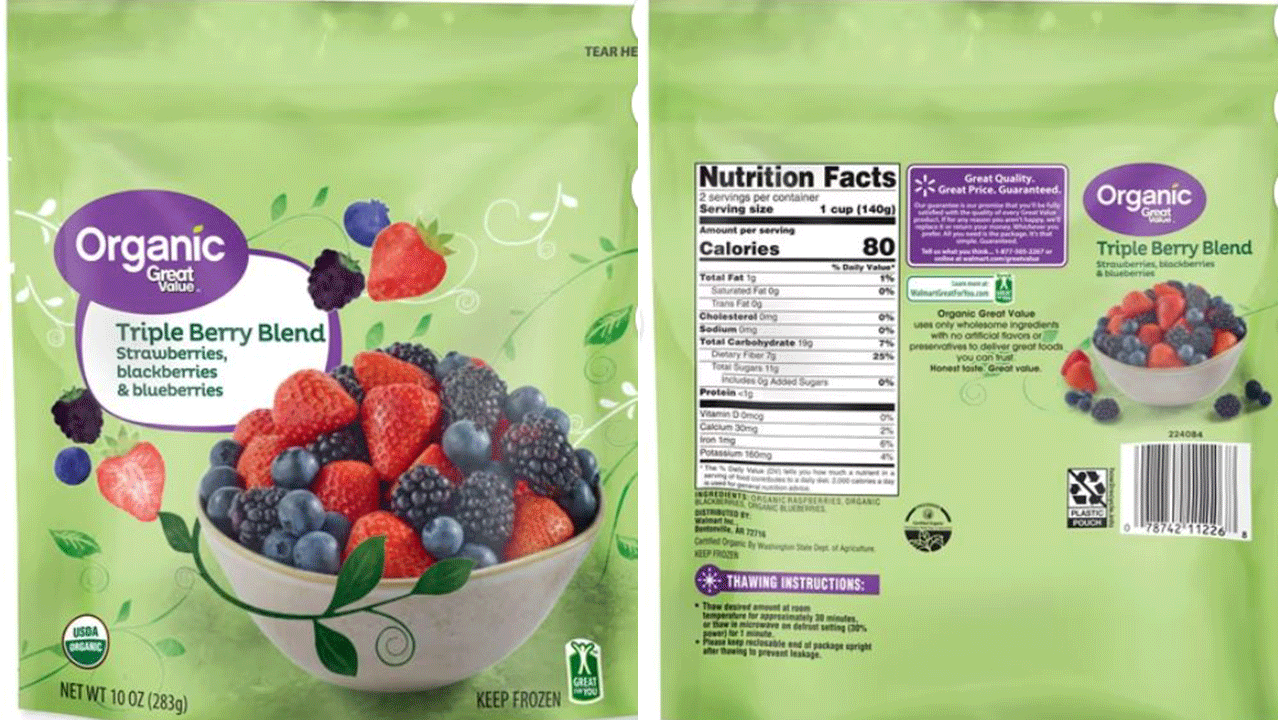
A blueberry recall first reported in July over the risk of E. coli contamination has been expanded to include frozen package mixes of strawberries, blackberries and blueberries sold at Walmart, according to the U.S. Food and Drug Administration.

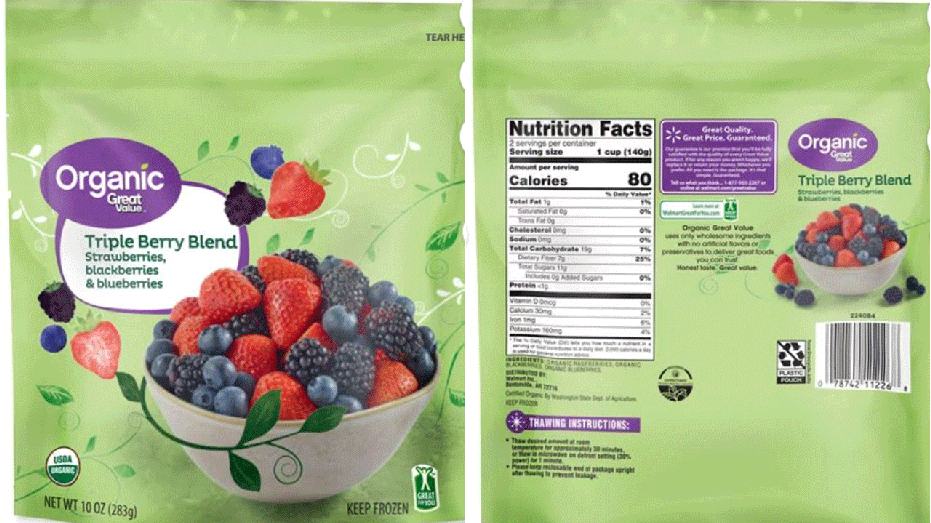
One lot of 10-ounce packages of Great Value frozen Organic Triple Berry Blend has been recalled by Chilean supplier Frutas y Hortalizas del Sur S.A.

Advertisement

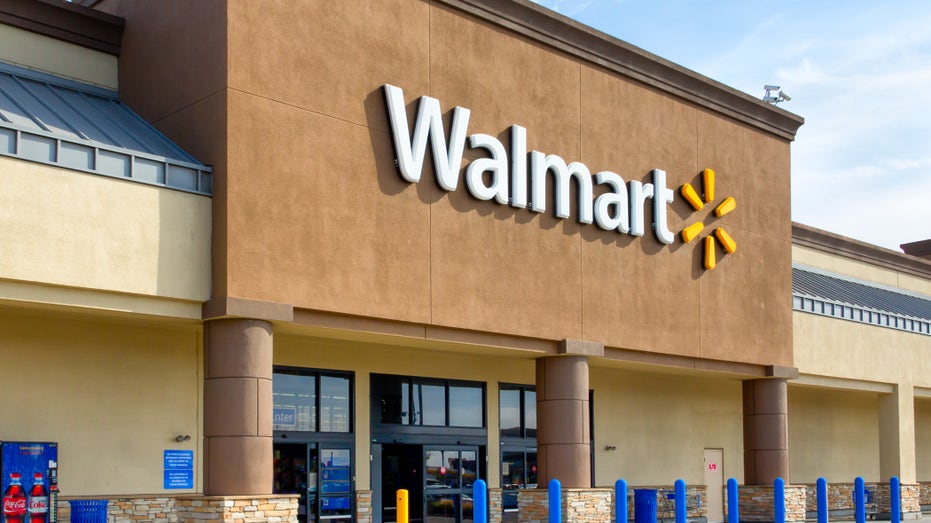
The frozen berries were sold at select Walmart stores in 16 states, including Alabama, Arkansas, Florida, Illinois, Indiana, Kentucky, Louisiana, Minnesota, Mississippi, Missouri, North Carolina, Ohio, Oklahoma, South Carolina, Texas and Wisconsin.

MORE THAN 12,000 POUNDS OF BACON RECALLED AFTER USDA ISSUES HIGHEST-RISK ALERT

Mixed berry package

Packaging is shown for Great Value frozen Organic Triple Berry Blend sold at Walmart.  (Walmart.com / Unknown)

The supplier originally recalled packages of 10-ounce GreenWise Organic IQF Blueberries in July after receiving reports of consumers getting sick after eating them.

There are no reports yet of people getting sick from the berry mix.

Advertisement

RFK JR SAYS SOURCE OF CYCLOSPORA OUTBREAK IDENTIFIED, DECLARES PARASITE OUTBREAK ‘UNDER CONTROL’

The blueberries from the original recall were distributed to Publix stores in Alabama, Florida, Georgia, Kentucky, North Carolina, South Carolina, Tennessee and Virginia.

BLUEBERRIES

The supplier originally recalled packages of 10-ounce GreenWise Organic IQF Blueberries in July after receiving reports of consumers getting sick after eating them. (Getty Images / Getty Images)

Seventeen people in Florida and Georgia have reported falling ill from the blueberries, including six hospitalizations.

DOCTORS WARN YOUR ‘STOMACH BUG’ MAY ACTUALLY BE A PARASITE THAT’S HARDER TO DETECT

Advertisement

The mixed berries have a Universal Product Code of 7874211226 and best by date of Feb. 9, 2028.

E. coli O145 is a Shiga toxin-producing strain of the bacteria that can cause severe stomach cramps, diarrhea that may be bloody and nausea.

The outside of a walmart store

The berry mixes were sold at Walmarts in 16 states.  (iStock / iStock)

While most healthy people recover within about a week, infections can lead to a serious complication known as hemolytic uremic syndrome, particularly in young children, older adults and people with weakened immune systems.

CLICK HERE TO DOWNLOAD THE FOX NEWS APP

Advertisement

Consumers should throw the berry mix away or return it to Walmart for a refund.

Continue Reading

Business

Strong jobs report fuels Fed rate hike prospects as Trump escalates rate cut pressure

Published

on

Strong jobs report fuels Fed rate hike prospects as Trump escalates rate cut pressure
A stronger-than-expected U.S. jobs report has put a September interest-rate hike back firmly on the table, leaving Federal Reserve Chair Kevin Warsh facing a difficult choice as President Donald Trump intensifies his demands for lower borrowing costs, Reuters reported.
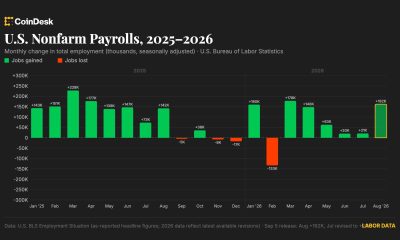
U.S. employers added 162,000 jobs in August, nearly three times what economists had expected, while the labor force participation rate rose to 61.6%. More people moved from the sidelines directly into jobs, helping keep the unemployment rate at 4.1% even as the pool of available workers expanded.

The report strengthens the argument for the Fed to raise rates at its Sept. 15-16 meeting, particularly after Warsh last week said he needed confidence that inflation was moving back toward the central bank’s 2% target “clearly and at sufficient speed. Otherwise, we have work to do.”

But the stronger labor market data arrives as Trump steps up pressure on the central bank.

Advertisement

“The Fed Board, with its great new leader, must ​get smart – BE PATRIOTS for a change,” Trump said in a Truth Social post Friday after the jobs data were released.


He also renewed his criticism of high interest rates, saying: “High interest rates put the U.S.A. ​at a very unfair disadvantage, and I won’t allow that to happen!”
Trump then tied his demand for lower rates to U.S. trade policy, threatening to halt trade with countries running a deficit with the United States.”We should have ​the LOWEST RATE of any country in the World … LOWER THE RATE OR I’LL STOP TRADING WITH COUNTRIES WITH WHICH WE HAVE A DEFICIT,” Trump said.

The threat adds another layer of uncertainty for the Fed, which is already navigating inflation that has remained above its 2% target for more than five years. Trump’s tariffs, along with higher energy prices linked to the escalation in the U.S.-Iran conflict and strong investment in artificial intelligence, have added to price pressures and pushed up longer-term Treasury yields.

For now, however, the jobs report itself does not settle the Fed’s decision.

Wage growth was 3.1% in August, a pace broadly consistent with the Fed’s inflation goal, while the increase in labor-force participation suggests the steady unemployment rate was driven by more people working or looking for work rather than a deterioration in labor-market conditions.

Advertisement

“The upshot of today’s numbers is that the September FOMC meeting remains finely balanced,” Pantheon Macro economists wrote. “FOMC members have uniformly signaled that inflation data will determine their next ​policy steps.”

That makes next week’s consumer price index and producer price index reports crucial. Fed Governor Christopher Waller told Reuters NEXT on Thursday that he would support keeping rates in the 3.50%-3.75% range if inflation data continued to moderate.

Markets nevertheless moved toward pricing a hike after Friday’s report, with interest-rate futures implying about a 62% chance of an increase this month, up from roughly 55% before the data.

“While Fed officials have communicated that they are squarely focused on the inflation readings, today’s strong employment report also provides additional support for rate hikes this year,” Nationwide Chief Economist Kathy Bostjancic wrote.

Advertisement

“We now see two, 25 basis-point rate hikes by year-end, lifting the fed funds rate to 4-4.25%.”

(Disclaimer: This article is based on inputs from agencies. These do not represent the views of The Economic Times)

Continue Reading

Business

AVUV: Quality Advantages Make This Small-Cap Value ETF A Winner (NYSEARCA:AVUV)

Published

on

AVUV: Quality Advantages Make This Small-Cap Value ETF A Winner (NYSEARCA:AVUV)

This article was written by

The Sunday Investor is focused exclusively on U.S. Equity ETFs. He has a strong analytical background, has received a Certificate of Advanced Investment Advice from the Canadian Securities Institute, and has completed all the educational requirements for the Chartered Investment Manager designation.Having covered hundreds of ETFs on Seeking Alpha, The Sunday Investor has developed a complex, proprietary ETF Rankings system which he shares on his website, etf-rankings.com. Nearly 1,000 ETFs receive individual factor scores covering costs, liquidity, risk, size, value, dividends, growth, quality, momentum, and sentiment, which feed into an easy-to-understand composite score from 1-10. The Sunday Investor is always active in the comments section in his articles – please don’t hesitate to reach out via comment in any article or by visiting etf-rankings.com. Happy Investing!

Analyst’s Disclosure: I/we have a beneficial long position in the shares of AVUV either through stock ownership, options, or other derivatives. I wrote this article myself, and it expresses my own opinions. I am not receiving compensation for it (other than from Seeking Alpha). I have no business relationship with any company whose stock is mentioned in this article.

Seeking Alpha’s Disclosure: Past performance is no guarantee of future results. No recommendation or advice is being given as to whether any investment is suitable for a particular investor. Any views or opinions expressed above may not reflect those of Seeking Alpha as a whole. Seeking Alpha is not a licensed securities dealer, broker or US investment adviser or investment bank. Our analysts are third party authors that include both professional investors and individual investors who may not be licensed or certified by any institute or regulatory body.

Advertisement
Continue Reading

Business

Analysis-Musk pushes regulatory limits with Tesla’s Cybercab robotaxi service

Published

on


Analysis-Musk pushes regulatory limits with Tesla’s Cybercab robotaxi service

Continue Reading

Business

NNN REIT: High-Yield Retail Triple Net To Own (NYSE:NNN)

Published

on

REIT - REAL ESTATE INVESTMENT TRUST


NNN REIT: High-Yield Retail Triple Net To Own (NYSE:NNN) | Seeking Alpha


NNN REIT stands out as a quality triple net lease REIT with a BBB+ credit rating and 37 years of rising dividends.NNN offers a current yield of 5.5% and a 5-year dividend growth rate of 2.67%, qualifying it as a buy on the Chowder Rule.Morningstar rates NNN 5 stars, citing its stable, top-decile global yield and favorable valuation versus expected dividend payments.I recommend adding NNN to portfolios, especially on price dips, given its predictable cash flows and long-term lease structure.

Sep. 04, 2026 6:23 PM ET

REIT - REAL ESTATE INVESTMENT TRUST

Getty Images

A “Triple Net” real estate company owns commercial properties that offer tenants base rent leases in which they are responsible for property taxes, the building insurance, and maintenance costs. The leases in general are usually long-term, of about 10 years. The good news for these characteristics, which offer

Advertisement
Seeking Alpha’s Disclosure:

Analyst’s Disclosure: I/we have a beneficial long position in the shares of NNN either through stock ownership, options, or other derivatives. I wrote this article myself, and it expresses my own opinions. I am not receiving compensation for it (other than from Seeking Alpha). I have no business relationship with any company whose stock is mentioned in this article.

Seeking Alpha’s Disclosure: Past performance is no guarantee of future results. No recommendation or advice is being given as to whether any investment is suitable for a particular investor. Any views or opinions expressed above may not reflect those of Seeking Alpha as a whole. Seeking Alpha is not a licensed securities dealer, broker or US investment adviser or investment bank. Our analysts are third party authors that include both professional investors and individual investors who may not be licensed or certified by any institute or regulatory body.