

Business
Rockets Field Durant-Sengun Trade Inquiries, Knicks Add Drummond

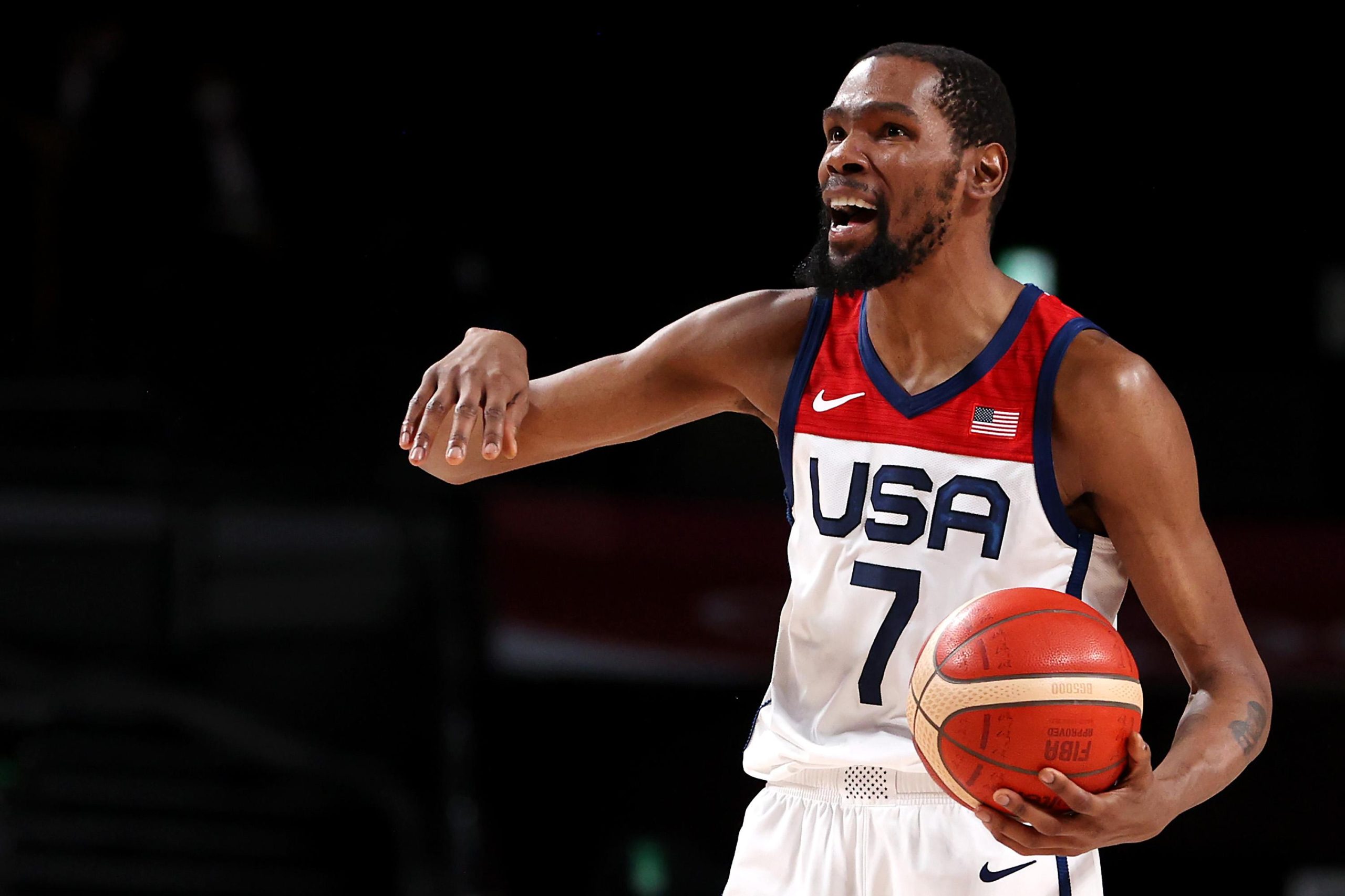
As the NBA offseason progresses, several teams are navigating key roster decisions, with the Houston Rockets receiving trade interest in high-profile players, the New York Knicks bolstering their frontcourt and the Detroit Pistons focusing on a cornerstone extension.
The Rockets have assembled one of the league’s deepest and most promising young rosters, drawing attention from rival franchises. According to reports, Houston has fielded inquiries involving star forward Kevin Durant and All-Star center Alperen Sengun.
One reported framework involved a three-team deal that would have sent Durant to the Detroit Pistons, Sengun to the Boston Celtics and Jaylen Brown to Houston. Those discussions did not advance, as the Rockets showed no serious interest. Direct talks between Detroit and Houston regarding Durant also failed to gain momentum.
While Durant is not viewed as completely untouchable, indications suggest Houston has no immediate plans to move the veteran before next season. The Rockets appear committed to building around their core, which includes Sengun and a group of talented young players.
Durant’s presence provides veteran leadership and scoring punch, complementing Houston’s athleticism and defensive potential. Keeping the roster intact positions the Rockets as contenders in the Western Conference, where depth and versatility are crucial.
In New York, the Knicks have added veteran center Andre Drummond on a one-year veteran’s minimum contract. The move addresses frontcourt needs after losing Mitchell Robinson to the rival Boston Celtics in free agency.
Drummond, 32, averaged 6.4 points and 8.4 rebounds in 19.5 minutes per game across 63 appearances with the Philadelphia 76ers last season. Known for his rebounding prowess, he remains highly effective on a per-minute basis and demonstrated improved range, shooting 35.6% from three-point range.
The signing provides Karl-Anthony Towns with an experienced backup. While Drummond may not match Robinson’s rim protection or mobility, he should help maintain rebounding production. The deal also helps the Knicks manage salary obligations and stay below the second tax apron.
New York’s frontcourt overhaul reflects efforts to maintain competitiveness in the Eastern Conference. Adding Drummond’s physicality and rebounding complements Towns’ skill set, providing coach Tom Thibodeau with interior options.
For the Pistons, a priority remains securing a long-term contract with young center Jalen Duren. The 22-year-old made significant strides last season, earning All-NBA recognition and establishing himself as a key building block alongside Cade Cunningham.
Duren’s representatives believe he has earned a maximum extension, while Detroit prefers a deal with an average annual value closer to $35 million. The Pistons hold significant leverage, as they can offer up to five years and $287 million. Rival teams could offer only four years and approximately $177 million, though few franchises have the necessary cap space.
Negotiations continue, but Detroit clearly views Duren as central to its future. His development as a rim protector and rebounder complements Cunningham’s playmaking, forming a promising young core.
The Pistons’ approach reflects a patient rebuild strategy. After years of accumulating assets and young talent, the organization aims to retain key pieces while adding complementary veterans.
Across the league, free agency and trade discussions highlight shifting priorities. Teams with cap flexibility or attractive assets continue exploring upgrades, while contenders fine-tune rosters for championship pushes.
Houston’s reluctance to move Durant or Sengun signals confidence in their current trajectory. The Rockets have improved steadily, blending youth with veteran additions. Their depth makes them resilient against injuries and allows for tactical flexibility.
Durant’s scoring and experience remain valuable, even as younger players assume larger roles. Sengun’s growth as a playmaking big man has been pivotal to Houston’s offensive identity.
The Knicks’ addition of Drummond provides insurance in the paint. Losing Robinson created a void in rebounding and rim protection that the veteran helps fill. New York’s roster, featuring Jalen Brunson and other key pieces, aims for sustained playoff success.
Drummond’s per-minute efficiency and occasional floor spacing offer Thibodeau useful tools. His veteran presence could also mentor younger frontcourt players.
Detroit’s negotiations with Duren underscore the importance of retaining homegrown talent. His physical tools and improving skill set position him as a potential All-Star. Securing him long-term provides stability as the Pistons build around Cunningham.
The broader NBA landscape features intense competition for talent. Salary cap dynamics, luxury tax considerations and collective bargaining rules shape decision-making. Teams balance short-term competitiveness with long-term flexibility.
Roster continuity often proves valuable, as chemistry and familiarity enhance performance. However, strategic moves remain necessary to address weaknesses or seize opportunities.
For Houston, fielding but declining trade inquiries demonstrates restraint. The organization appears focused on internal development rather than major shake-ups.
New York’s measured approach in free agency reflects cap management priorities. Adding Drummond on a minimum deal provides value without overcommitting resources.
Detroit’s leverage in Duren talks allows them to negotiate from strength. A fair extension could satisfy both sides while keeping the young core intact.
As training camps approach, these developments will influence preseason expectations. The Rockets, Knicks and Pistons each occupy different stages of their respective cycles but share the goal of sustained improvement.
League-wide, the emphasis on versatile frontcourt players and guard play continues. Teams seek balance between offense and defense while adapting to rule interpretations favoring player movement.
The offseason remains active, with potential trades and signings still possible before training camp. Monitoring how these situations resolve will provide insight into each franchise’s vision.
Houston’s depth positions them well for a competitive Western Conference. New York aims to remain a playoff fixture in the East. Detroit continues its ascent, anchored by young talent.
These storylines illustrate the NBA’s dynamic nature, where roster construction, player evaluation and strategic patience intersect. As teams finalize preparations, focus shifts toward on-court performance and potential playoff implications.


Enbridge: AI Tailwind Priced In (Rating Downgrade)

Australia vows stronger ties with Solomon Islands amid China concerns

Graffiti artist accused of scaling Australian bridge tower and painting giant cartoon bird
Business
71% of Gamers Say They’re Not Ready to Let Physical Games Die as PlayStation and Xbox Go Fully Digital

A new survey suggests the majority of gamers remain deeply attached to physical game discs, even as both PlayStation and Xbox move decisively toward all-digital futures for their next generation of releases.
According to a reader poll conducted by Windows Central, 71 percent of the 1,577 respondents said they will miss buying physical games, while only 13 percent said they were happy to embrace a fully digital future. The remaining respondents expressed more neutral or mixed views on the shift. The results reflect a wave of consumer pushback that has followed Sony’s announcement earlier this month that it will end production of physical game discs for new PlayStation titles starting in January 2028.
Sony confirmed the change in a post on the PlayStation Blog, stating that physical game disc production for all new games releasing on PlayStation consoles will be discontinued starting in January 2028, after which new titles will be available only through the PlayStation Store or at retailers in digital format. The company framed the decision as a response to shifting consumer habits, writing that the move represents “a natural direction for Sony Interactive Entertainment to adapt to consumer trends as the general preference for digital media significantly outpaces physical discs.” Sony added that the shift is intended to align the company more closely with how most of its player base already accesses and plays games.
The announcement does not affect games that have already been released, or that will be released, on disc prior to the January 2028 cutoff. Existing physical libraries and previously purchased titles will remain playable, according to Sony’s statement. The company also disclosed plans to shut down the PlayStation Store on the PlayStation 3 in select markets later this year, with global closures of the PS3 and PlayStation Vita digital stores expected to follow in the coming year, a move that will prevent players from purchasing new digital content on those older systems going forward.
Industry data cited alongside the announcement suggests the shift toward digital purchasing has been underway for some time. Sony has reported to investors in recent years that a growing share of PlayStation game purchases are made digitally rather than on disc, with recent figures indicating that nearly four out of five full-game purchases on PlayStation 4 and PlayStation 5 over the past year were made digitally. Some industry estimates have placed that figure as high as 80 to 85 percent of total game sales.
The timing of Sony’s announcement drew additional attention because it came just days after Rockstar Games, the studio behind the long-awaited title “Grand Theft Auto 6,” confirmed that its physical retail edition would include only a digital download code inside the box rather than an actual game disc. That decision had already frustrated a segment of players who continue to place value on collecting physical editions of major game releases, and it appeared to foreshadow the broader industry shift Sony would formalize shortly afterward.
Xbox has signaled a similar trajectory, though it has not yet made as sweeping a public announcement as Sony’s. Reports from The Verge indicate that employees within Microsoft’s gaming division have begun testing a new disc-to-digital feature, known internally as Xbox Positron, that would allow players to digitize existing physical game collections for the Xbox One and Xbox Series X and S consoles. Additional reporting has suggested that Microsoft’s next-generation console effort, referred to as Project Helix, is also expected to drop a physical disc drive entirely, mirroring the direction Sony has now made official.
Reaction to Sony’s announcement has been largely critical among longtime gaming communities and industry commentators. Writing for Forbes, contributor Paul Tassi described the move as inevitable from an industry-trend standpoint, but argued it does little to benefit consumers, since it eliminates the option to purchase games physically altogether. Tassi also connected the decision to broader concerns about digital ownership, noting that Sony itself has previously removed previously purchased movies from its platforms due to licensing disputes, a pattern he said illustrates the risks associated with fully digital game libraries. He further raised concerns about the implications for game preservation efforts, which have historically relied heavily on physical copies to keep older titles accessible and playable over time.
Community response to the Windows Central poll echoed many of these same concerns. Readers who responded pointed to the loss of resale value, the inability to lend or gift physical copies to friends, and skepticism about whether eliminating discs would result in any meaningful cost savings passed on to consumers. Some commenters described the shift as part of a broader pattern across industries, comparing it to earlier transitions away from physical ownership in the music and film sectors. Notably, physical media has not disappeared everywhere: vinyl record sales have continued to grow in recent years, surpassing $1 billion in annual sales for the first time since 1983, according to industry figures, even as digital streaming has dominated the broader music business.
The broader home entertainment industry has followed a similar arc in recent years. Netflix wound down its DVD-by-mail rental business in 2023, marking the end of another major physical media distribution model. Sony’s decision to phase out PlayStation discs follows that same general trajectory, though the scale of the shift is notable given that PlayStation itself played a foundational role in popularizing the disc format for home gaming consoles following its debut in 1994.
The announcement has also raised questions about what the shift might mean for future PlayStation hardware, including the next-generation PlayStation console, which some industry observers do not expect to arrive for several more years. Whether that future console will include a disc drive at all remains unclear, though Sony’s current guidance suggests physical media support for new titles will effectively end well before any next-generation hardware reaches the market.
For now, players hoping to continue purchasing physical copies of new games have a window of roughly a year and a half before Sony’s cutoff takes effect in January 2028. Whatever changes follow on the Xbox side, the survey results suggest that a clear majority of gamers remain unconvinced that a fully digital future represents an improvement over the physical ownership model that has defined console gaming for more than three decades.
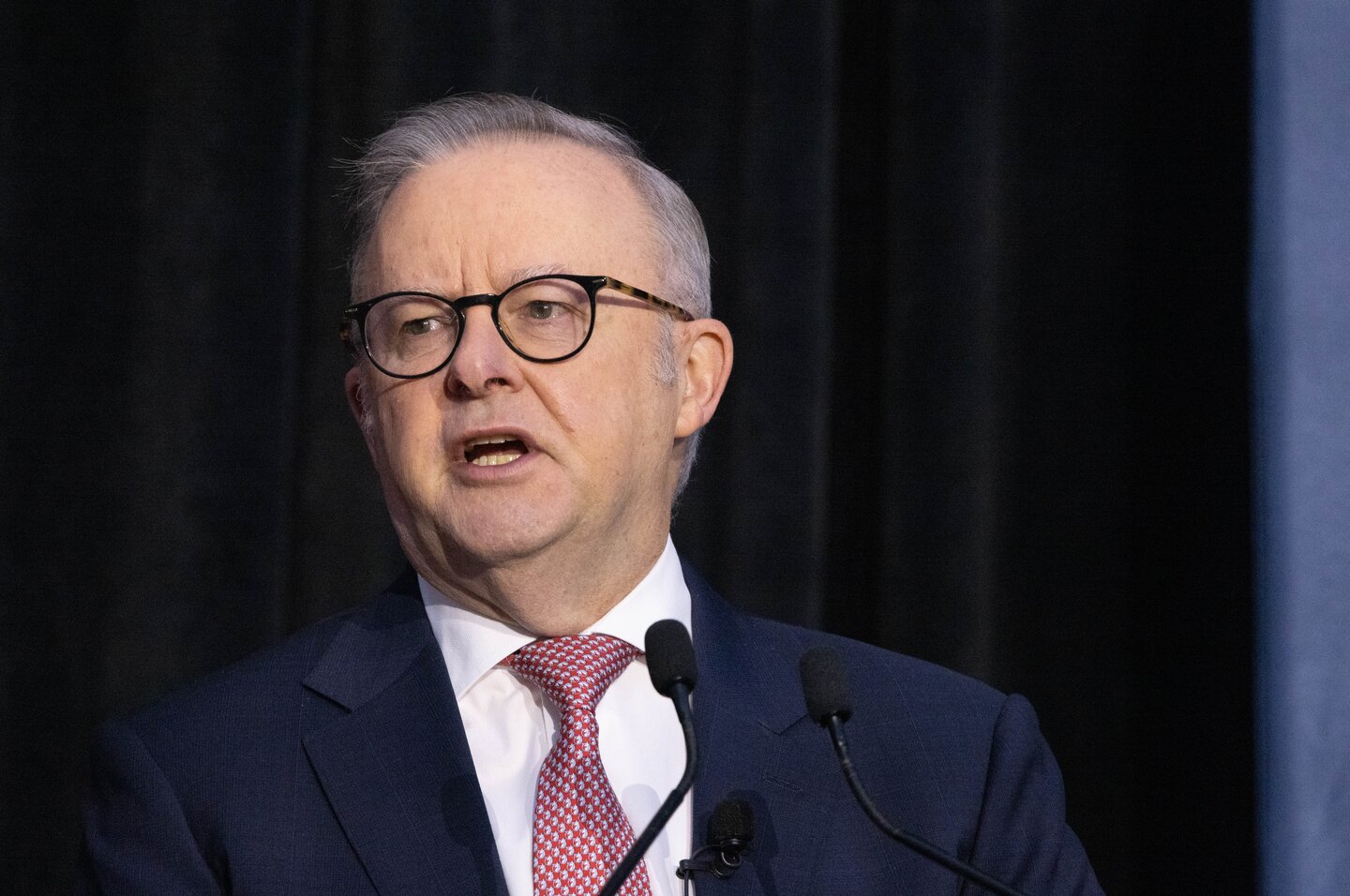
Anthony Albanese will make a quick dash to the Solomon Islands to participate in the nation’s independence day celebrations after securing a key pact with Fiji.

CoreWeave: Downgrading On Increased Hyperscaler Competition
Business
Harry Kane Shines at World Cup 2026 as Son Heung-min and South Korea Suffer Historic Group Stage Exit

The 2026 FIFA World Cup has produced a striking contrast between two of Asian and European football’s most recognizable attacking stars, with England captain Harry Kane thriving on the tournament’s biggest stage while South Korea captain Son Heung-min endures one of the most difficult chapters of his international career.
Kane has been central to England’s run to the quarterfinals, scoring five goals through the Round of 16 and cementing his place among the tournament’s most productive forwards. His tally includes a brace in England’s dramatic 3-2 win over co-host Mexico at Estadio Azteca and a decisive two-goal performance in a comeback victory over DR Congo. Along the way, Kane surpassed Gary Lineker to become England’s all-time leading World Cup scorer, adding to a resume that already includes the Golden Boot he won at the 2018 tournament in Russia. Teammates and observers have continued to praise his form throughout the competition. Barcelona forward Anthony Gordon, speaking about his England teammate, described Kane in glowing terms as a player capable of contending for the sport’s top individual honor.
Statistical comparisons between Kane and Son this season have also tended to favor the England captain across several measures, including aerial duel success, shots on target and overall attacking output, reflecting Kane’s continued prolific scoring form for both club and country. Kane’s underlying numbers, including his expected threat and involvement in scoring chances, have remained among the strongest of any forward at Bayern Munich and with the England national team over the past year.
Son’s tournament, by contrast, unfolded very differently. South Korea entered the World Cup hoping to advance deep into the newly expanded 48-team format, but the team finished third in Group A with a single win in three matches, missing out on the knockout stage entirely. The result marked South Korea’s worst-ever World Cup finish, placing the team 34th overall, two spots below the lowest possible finish under the tournament’s previous 32-team format.
Son’s individual form struggled alongside the team’s broader difficulties. He was substituted in the second half of matches against both Czechia and Mexico after missing scoring opportunities, and then, in a move that stunned South Korean fans, head coach Hong Myung-bo dropped Son entirely from the starting lineup for the team’s decisive final group match against South Africa, the first time Son had not started a World Cup match for South Korea since before his international debut in 2010. South Korea lost that match 1-0, eliminating the team from contention. Hong later explained his rationale for repeatedly substituting or benching his captain, pointing to a prior instance in which a substitute scored the winning goal after Son was withdrawn. He acknowledged that the same gamble did not work a second time.
The fallout from South Korea’s early exit extended well beyond the pitch. South Korean President Lee Jae Myung ordered an investigation into the team’s performance, citing the significant public funding invested in the World Cup campaign and expressing regret over what he described as the disappointment felt by the public. Hong Myung-bo announced his resignation shortly after the tournament concluded, taking responsibility for the team’s performance despite having a contract that extended through the 2027 AFC Asian Cup.
Son took to social media to address the team’s supporters directly, writing that he felt he could not adequately convey his sorrow with a simple apology. He described the disappointment as difficult to put into words, saying the dream stage he had long spoken about had collapsed and that accepting the outcome remained difficult. In a separate public statement following renewed scrutiny from South Korea’s government, Son also asked fans to direct their support toward his teammates rather than continued criticism, saying he felt a deep sense of responsibility for not repaying the support the team had received. He added that he would work to earn back the trust of supporters and vowed to keep fighting to bring joy back to South Korean fans.
Despite the disappointing tournament, Son received a notably warm reception from fans upon his return to South Korea, a contrast to the jeers directed at Hong Myung-bo the day before. Supporters gathered at Incheon International Airport wearing jerseys and holding signs of encouragement for Son and his teammates, signaling continued public affection for the longtime captain even amid the team’s historic underperformance.
Comparing Kane and Son directly raises a familiar challenge in evaluating any two players from different eras, leagues and international contexts. Kane’s role as England’s talisman has been reinforced by his continued scoring prowess at a major tournament where his team remains alive in the competition, while Son’s legacy has long been built on a decade of individual brilliance for both Tottenham Hotspur and South Korea, including guiding his country to the Asian Cup final in previous years and winning the Premier League Golden Boot in 2022 as a joint winner. Whether one is definitively “better” than the other ultimately depends on the criteria used, whether that involves current tournament form, career achievements, leadership under pressure or long-term impact on the sport in their respective countries.
What is clear is that the 2026 World Cup has, for now, sharpened the contrast between the two forwards’ current trajectories. Kane continues to push for a deep run with England and remains in contention for the tournament’s Golden Boot, sitting just two goals behind the current three-way leaders. Son, meanwhile, has returned home to a period of reflection and rebuilding for South Korean football following the nation’s most disappointing World Cup showing to date. As the tournament progresses toward its quarterfinal and semifinal stages, Kane’s continued performances are likely to keep shaping the conversation around his standing among the game’s elite forwards, even as debate over comparisons to players like Son remains, as with most such discussions in football, a matter of perspective rather than settled fact.


I’m a fundamental, valuation-driven investor with a strong focus on identifying businesses that have the potential to scale over time and unlock massive terminal value. My investment approach centers around understanding the core economics of a business—its competitive moat, unit economics, reinvestment runway, and management quality—and how those factors translate into long-term free cash flow generation and shareholder value creation. I focus on fundamental research, and I tend to focus on sectors with strong secular tailwinds. Professionally, I am a self-educated investor that started this journey 10 years ago. Currently, I am managing my own funds, seeded from friends and family. My motivation for writing on Seeking Alpha is to share investment insights, and also at the same garner feedback from fellow investors in this site. My aim is to help readers focus on what truly drives long-term equity value. I believe good analysis should be both analytical and accessible, and I hope my work adds value to readers looking for high-quality, long-term investment opportunities.
Analyst’s Disclosure: I/we have no stock, option or similar derivative position in any of the companies mentioned, and no plans to initiate any such positions within the next 72 hours. I wrote this article myself, and it expresses my own opinions. I am not receiving compensation for it (other than from Seeking Alpha). I have no business relationship with any company whose stock is mentioned in this article.
Seeking Alpha’s Disclosure: Past performance is no guarantee of future results. No recommendation or advice is being given as to whether any investment is suitable for a particular investor. Any views or opinions expressed above may not reflect those of Seeking Alpha as a whole. Seeking Alpha is not a licensed securities dealer, broker or US investment adviser or investment bank. Our analysts are third party authors that include both professional investors and individual investors who may not be licensed or certified by any institute or regulatory body.

Chinese companies are expanding globally, and fast. Their biggest commercial competitors are in the US.
Waymo, Alphabet’s robotaxi business, remains the commercial leader, operating paid driverless services in several US cities. Amazon-owned Zoox and Tesla are expanding more cautiously, while Uber has abandoned the development of its own autonomous vehicles, which had been marred by a fatal accident in 2018.
Uber, and its ride-hailing rival Lyft, are now partnering with Chinese firms.
That gives them automatic “access to millions of customers that they wouldn’t have if they created their own app,” says Tu Le, founder of consultancy Sino Auto Insights.
“Through these partnerships, they’re able to commercialise and broaden their scope.”
Although Chinese companies are able to manufacture cheaply, Waymo has spent years building expertise in customer service and the app technology.
“Having experienced Waymo and the WeRides and the Ponys… I would have to say the user experience for Waymo is much better than all the other competitors. I feel like Waymo is really becoming a standard mode of transportation for California,” says Tu Le.
Perceptions also differ across markets.
In the US, unions have warned robotaxis could displace taxi, delivery and freight drivers.
China’s policymakers present automation as a remedy for its shrinking workforce but government censorship of dissenting voices makes it difficult to gauge opinions in the wider population.
President Xi Jinping has promoted AI and robotics as part of China’s drive to develop “new quality productive forces” – that will create jobs and boost economic growth.
And so there are incentives and impetus for companies to invest in the technology and expand.
One of the industry’s arguments is that autonomous vehicles could improve mobility for people who cannot easily drive themselves.
“If we can bring the cost down for a robotaxi ride so that it’s as cheap – or maybe even cheaper – than hailing an Uber with a normal driver, then it really helps broaden mobility,” Le says. “Elderly folks, folks that are disabled – these robotaxis really allow them a lot more ability to travel.”

Australia’s economy is set to grow below two per cent for the longest period since the early 1990s, exposing a malaise long masked by population growth, a report has warned.

Microsoft’s Layoffs Extend Beyond Xbox

Swiss Banking Secrecy Was Invented to Hide Money From Governments

Anthony Hopkins looks unrecognizable as he shows support for England during the World Cup… see him now at 88


-

 Fashion3 days ago
Weekend Open Thread: High Hopes
-

 Politics4 days ago
The House | “Reframing the debate from a binary discussion of winners and losers”: Yuan Yang reviews ‘We Are Not Machines’
-

 Fashion11 hours ago
Open Thread: What Great Books Have You Read Recently?
-

 News Videos7 days ago
How to Build INSANE Live Financial Dashboards With Claude
-
 NewsBeat2 days ago
Taylor Swift and Travis Kelce wedding staffer hilariously struggles to keep her cool while checking in megastars
-
 Crypto World6 days ago
Airdrop Registration Becomes Key Focus For Remittix As RTX Launch Updates Approach
-

 Sports6 days ago
Broncos roster: OL Ben Powers (No. 74) entering final year of contract
-

 Crypto World5 days ago
Binance stock trading tops $1B in first month after launch
-

 NewsBeat6 days ago
Presenter Caroline Flack’s brother Paul Flack dies aged 55
-

 Crypto World5 days ago
Alibaba-affiliate Ant Group enters the humanoid robot market with 12 deals
-

 Crypto World3 days ago
Standard Chartered Secures MiCA License as ESMA Adds 37 New Crypto Firms
-

 Crypto World2 days ago
South Africa proposes crypto tax guidance under existing rules
-

 News Videos12 hours ago
Best Time to Enter Small Caps Right Now? Another Bull Run? | Financially Free
-

 Business5 days ago
Meta Platforms Stock Jumps 7% Today as Bloomberg Reports Company Plans to Enter the Cloud Business
-
 NewsBeat5 days ago
New exhibition reflects five decades of movement between island of Ireland and GB
-

 Tech2 days ago
Lenovo laptops are now shipping with YMTC SSDs, a sign of Chinese NAND entering the mainstream
-

 Business4 days ago
What a 10 Percent Drop Means for Buyers, Sellers and Renters
-

 News Videos15 hours ago
Avoid entering in FOMO #bitcoin #cryptocurrency #trading #scalping
-

 Crypto World4 days ago
Binance Re-Enters Philippines As EU MiCA Rules Restrict Access
-

 Crypto World4 days ago
Alibaba bans Claude Code over alleged backdoor security concerns
You must be logged in to post a comment Login