Connect with us
DAPA Banner
DAPA Coin
DAPA
COIN PAYMENT ASSET
PRIVACY · BLOCKDAG · HOMOMORPHIC ENCRYPTION · RUST
ElGamal Encrypted MINE DAPA
🚫 GENESIS SOLD OUT
DAPAPAY COMING

Business

France, Argentina, Spain, England Emerge as Top Contenders to Win 2026 FIFA World Cup

Published

on

messi argentina 2016

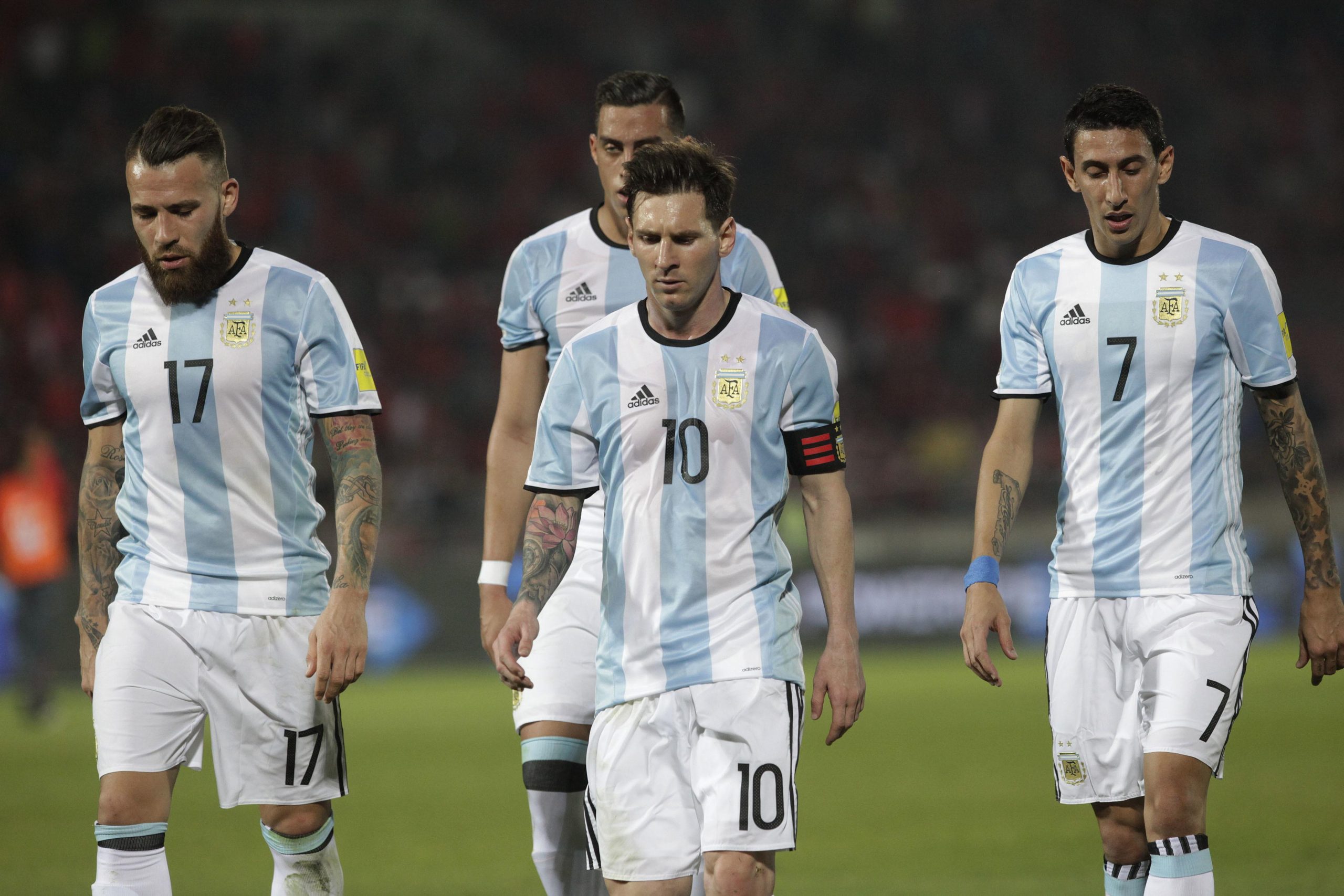
With the 2026 FIFA World Cup well underway, France, Argentina, Spain and England have solidified their positions as the leading favorites to lift the trophy, according to current betting markets and expert assessments reflecting recent performances and squad depth.

The tournament, co-hosted by the United States, Canada and Mexico, has already produced compelling storylines as established powers and emerging sides navigate the group stage and early knockout rounds. France remains the clear frontrunner with odds around +170, followed by defending champion Argentina at +460, Spain at +550 and England close behind.

France’s status as favorite stems from a formidable squad blending youthful talent and experienced leadership. Kylian Mbappé continues to dazzle, while a deep midfield and solid defense provide balance. Recent results, including strong showings in warm-up matches and early tournament games, have reinforced perceptions of Les Bleus as the team to beat.

Didier Deschamps’ side benefits from continuity and tactical versatility. Their ability to control matches through possession and quick transitions makes them dangerous against any opponent. Depth across positions allows for effective squad rotation, crucial in a tournament spanning weeks across multiple venues.

Advertisement

Argentina, led by Lionel Messi in what may be his final World Cup, carries the defending champion’s aura. Despite occasional vulnerabilities exposed in group play, the Albiceleste’s blend of star power and resilience keeps them firmly in contention. Messi’s influence, both on and off the pitch, remains a significant factor.

The team’s experience from the 2022 triumph in Qatar provides intangible advantages. Coached by Lionel Scaloni, Argentina combines technical flair with tactical discipline. Their path through the tournament will test squad management, particularly managing fatigue and potential injuries.

Spain enters as European champions with a squad rich in midfield creativity and attacking options. Under their current coach, La Roja emphasizes possession-based football with high pressing. Young talents like Lamine Yamal have injected dynamism, complementing established players.

Their style suits the tournament’s demands, though defensive solidity will be tested against physical opponents. Spain’s history of success in major tournaments adds confidence, positioning them as genuine title threats.

Advertisement

England, boasting one of the strongest squads on paper, seeks to end decades of near-misses. A wealth of Premier League talent provides depth in attack, midfield and defense. Recent managerial changes and tactical evolution have aimed to unlock their full potential.

Gareth Southgate’s successor or continued influence has focused on balancing attacking flair with defensive organization. England’s set-piece prowess and counter-attacking speed make them dangerous in knockout scenarios. Overcoming historical quarterfinal and semifinal hurdles remains a key narrative.

Brazil, though slightly behind in current odds, cannot be discounted. The five-time champions possess immense individual talent and a passionate fan base. Recent form fluctuations highlight areas for improvement, but their pedigree ensures respect from all opponents.

Other notable contenders include Germany, Portugal and the Netherlands, each with pathways to success based on squad quality and tactical approaches. The expanded 48-team format introduces additional variables, with more opportunities for surprises in a congested schedule.

Advertisement

Host nation advantages, venue familiarity and travel considerations add complexity. Teams based in the United States benefit from larger supporter turnout, while matches across three countries test logistical adaptability.

Injuries, fatigue and refereeing decisions often prove decisive in World Cups. Depth and squad management will separate top teams from the rest as the knockout stages intensify.

France’s current favoritism reflects consistent excellence across competitions. Their blend of speed, skill and structure has yielded strong results in recent years. Mbappé’s form remains pivotal, supported by teammates capable of stepping up.

Argentina’s defense of the title carries emotional weight. Messi’s desire for a strong send-off motivates the squad. Their experience in high-pressure matches provides an edge, though maintaining intensity throughout will challenge even the most seasoned players.

Advertisement

Spain’s evolution under recent coaching emphasizes control and fluidity. Their young core combined with veteran leadership creates a dynamic unit. Success depends on converting possession into goals against organized defenses.

England’s talent pool offers multiple tactical options. Recent tournaments have shown progress, with improved mentality and execution needed for ultimate success. The squad’s Premier League-honed fitness could prove advantageous in later rounds.

Analysts emphasize that while favorites hold advantages, World Cup history features underdog triumphs. The tournament’s unique pressures test mental resilience alongside physical and technical abilities.

Fan engagement remains high across host nations and globally. The event’s scale, with matches in iconic stadiums, amplifies excitement. Media coverage and social platforms amplify narratives around star players and emerging talents.

Advertisement

Coaching decisions, particularly substitutions and formations, will influence outcomes. Adaptability to different opponents and conditions separates contenders.

Preparation through club seasons and international friendlies has shaped current form. Teams balancing club commitments with national duty navigate fatigue risks carefully.

The 2026 edition’s expanded format tests squad depth more than previous tournaments. Rotations and recovery strategies become critical for sustained performance.

As the competition advances, matchups between top sides will define trajectories. Group stage results have already influenced paths, with some favorites facing tougher early knockouts.

Advertisement

Public interest in Messi’s potential farewell, Mbappé’s superstar status and emerging talents fuels global conversation. National pride drives support across continents.

Betting markets reflect collective wisdom but remain fluid. Shifts occur with each result, injury report and tactical revelation.

Ultimately, success hinges on execution under pressure, tactical acumen and a measure of fortune. The top four contenders possess the quality to prevail, but the tournament’s unpredictability ensures compelling viewing.

As knockout rounds intensify, focus sharpens on these leading nations. Their journeys embody the drama and excellence defining the World Cup.


Advertisement
Continue Reading
Click to comment

You must be logged in to post a comment Login

Leave a Reply

Business

What are the key factors behind the slowdown in tech hiring?

Published

on


What are the key factors behind the slowdown in tech hiring?

Continue Reading

Business

Israeli strike kills two people in Gaza, medics say

Published

on


Israeli strike kills two people in Gaza, medics say

Continue Reading

Business

Wall Street Brunch: Options Spy SpaceX Pop

Published

on

SpaceX: What Does History Tell Us About Investing In The Biggest IPOs? I Am Cautiously Optimistic

SpaceX Falcon Heavy Launch of Europa Clipper

Brandon Moser/iStock Editorial via Getty Images

Listen below or on the go via Apple Podcasts and Spotify

SpaceX exits quiet period and enters Nasdaq 100. (0:17) PepsiCo headlines light earnings calendar. (1:16) ‘Ghost ticketing’ investigation. (2:23)

SpaceX (SPCX) gets two major catalysts this week, and the options market suggests traders are expecting a solid—and possibly spectacular—move.

Advertisement

On Tuesday, the IPO quiet period ends, freeing analysts to publish ratings and price targets. The stock will also join the Nasdaq 100 (QQQ).

The July 10 options chain shows traders positioned for those twin catalysts, with the $180 and $190 calls attracting the strongest bullish interest.

SPCX closed at $162 on Thursday, with weekly options implying a move of about ±9% by Friday’s expiration. The $180 and $190 calls represent gains of roughly 11% and 17%, respectively.

Downside positioning is relatively light, with little in the options chain pointing to strong bearish conviction.

Advertisement

Then there’s the $330 call. On a stock trading at $162, 106,038 contracts changed hands despite carrying just 36,131 contracts of open interest. At about $0.20 each, they represent retail lottery tickets in their purest form—a wager that SpaceX more than doubles by Friday.

PepsiCo (PEP) headlines the earnings calendar on Thursday, with analysts expecting EPS of $2.21 on revenue of about $24B.

SA analyst Motti Sapir, who rates the stock a Hold, says PepsiCo needs to show “clear growth in North America for both drinks and snacks, real positive free cash flow, and proof it can control costs without losing ground to rivals” for the bulls to return.

But Kody’s Dividends, which rates the stock a Buy, argues PepsiCo remains an attractive value and income play and “also looks like it can sustain respectable constant-currency core EPS growth in the years ahead.”

Advertisement

Also on the earnings calendarm, Levi Strauss (LEVI) reports on Wednesday, while Delta Air Lines (DAL) reports on Friday.

Looking to the economy, the FOMC will release the minutes from its first meeting under Chairman Kevin Warsh on Wednesday.

Wells Fargo economists say they will be watching for “any signs of what could shift a divided Committee from a hold toward rate hikes.”

“We will be looking at whether a majority of participants view the recent pickup in inflation as persistent enough to warrant additional tightening or as primarily a temporary supply shock,” they said.

Advertisement

“We will also be interested in the extent to which Committee members view the labor market and the demand side of the economy as an inflationary problem.”

In the news this weekend, Texas Attorney General Ken Paxton has launched an investigation into allegations that StubHub (STUB) canceled or failed to deliver World Cup tickets in a practice known as “ghost ticketing.”

Soccer fans across the country complained that their tickets were canceled days, or sometimes hours, before matches.

StubHub blamed the issue on “transfer problems” with FIFA’s ticketing platform. But Paxton said consumers instead attribute the cancellations to “ghost ticketing,” in which sellers collect payment for tickets they don’t possess and later cancel the sale.

Advertisement

And starting Monday, Tesla (TSLA) will cap employees’ spending on AI products at $200 a week.

The Information reported that the limit will not apply to xAI.

Earlier this year, Elon Musk said output per Tesla employee “is going to get nutty high” thanks to the company’s internal use of AI and its Optimus humanoid robot program.

And it’s a busy week for dividend investors.

Advertisement

On Monday, AI bellwether Micron (MU), GE Aerospace (GE), JPMorgan Chase (JPM) and Cisco Systems (CSCO) all go ex-dividend.

Micron pays on July 21, GE on July 27, JPMorgan on July 31 and Cisco on July 22.

On Tuesday, Dollar General (DG) goes ex-dividend, with a July 21 payout.

The New York Times (NYT) goes ex-dividend on Wednesday and will pay shareholders on July 23.

Advertisement

Accenture (ACN) and Mastercard (MA) both go ex-dividend on Thursday.

Accenture pays on August 14, while Mastercard’s payout is August 7.

On Friday, AT&T (T), Verizon (VZ), Marvell Technology (MRVL), Toll Brothers (TOL), Oracle (ORCL) and Lennar (LEN) all go ex-dividend.

AT&T pays out on August 3. Verizon pays out on August 3, with Marvell on July 30 and Toll Brothers, Lennar and Oracle on July 24.

Advertisement
Continue Reading

Business

Apple iPhone 18 Pro Rumored to Feature In-House C2 5G Modem, Advanced Satellite Connectivity

Published

on

iPhone 18 Pro

Apple is expected to take another significant step toward hardware independence with the iPhone 18 Pro lineup, as leaks suggest the company will deploy its second-generation C2 5G modem in global models while introducing enhanced satellite connectivity and efficiency improvements.

The anticipated September 2026 launch of the iPhone 18 series has generated considerable speculation, with reports pointing to notable advancements in connectivity, performance and battery life for the Pro models. While Apple has not commented on the unannounced devices, industry leaks provide an early outline of potential features.

Central to the rumors is Apple’s continued push to replace Qualcomm modems with its own silicon. The C2 modem, following the C1 introduced in earlier models, is tipped for international variants of the iPhone 18 Pro and iPhone 18 Pro Max. U.S. models may retain Qualcomm’s Snapdragon solution to maintain mmWave 5G support, according to supply chain information.

This dual-modem strategy reflects ongoing technical and regulatory considerations as Apple develops fully in-house wireless capabilities. Developing proprietary modems could enable tighter integration with the iPhone’s hardware and software, potentially improving power efficiency, signal performance and long-term cost control.

Advertisement

The C2 modem is also linked to expanded NR-NTN, or New Radio Non-Terrestrial Networks, support. This technology could extend beyond the current Emergency SOS via Satellite feature — introduced in earlier iPhones for remote areas — toward more seamless connectivity. Reports indicate the capability might allow automatic switching between cellular and satellite networks, benefiting users in low-coverage zones such as remote trails, oceans or disaster-affected regions.

Apple’s satellite efforts, initially focused on safety, have evolved as partnerships with satellite operators mature. NR-NTN integration via the C2 could represent a meaningful expansion, though real-world performance and availability would depend on network infrastructure and carrier support.

Powering the iPhone 18 Pro is expected to be Apple’s A20 Pro chip, reportedly manufactured on TSMC’s advanced 2-nanometer process. This node shrink promises gains in speed, energy efficiency and thermal management compared to previous generations. Enhanced on-device artificial intelligence capabilities are also anticipated, building on Apple Intelligence features rolled out in recent years.

Battery life remains a key focus for consumers. Separate leaks suggest the iPhone 18 Pro Max could house one of the largest batteries in a Pro model yet, with capacities varying by market. eSIM-only versions in certain regions may accommodate a 5,425 mAh cell, while models retaining physical SIM trays could feature a 5,235 mAh battery. These increases, paired with the efficient A20 Pro chip and C2 modem, are projected to deliver noticeable endurance improvements.

Advertisement

Such battery enhancements would address longstanding user requests for longer usage between charges, particularly as AI features and advanced displays demand more power. Exact gains will only be confirmed through testing upon release.

The broader iPhone 18 series may also include a new ultra-premium model, often referred to in speculation as the iPhone 18 Ultra. This device is rumored to introduce a book-style foldable display, targeting the growing foldable smartphone segment dominated by competitors. Details remain sparse, but the addition could diversify Apple’s premium offerings beyond traditional slab designs.

Apple’s modem development forms part of a longer-term strategy to reduce reliance on third-party suppliers. The company has invested heavily in custom silicon, from A-series chips to system-on-chip designs that integrate CPU, GPU and neural engines. A fully in-house modem could further optimize performance across wireless protocols and future-proof devices for emerging standards.

Analysts note that while early custom modems may not immediately surpass established solutions in every metric, iterative improvements could yield advantages in integration and features tailored to Apple’s ecosystem. Challenges remain, including matching Qualcomm’s global carrier certifications and mmWave capabilities in all markets.

Advertisement

The iPhone 18 Pro is also expected to build on camera, display and design refinements seen in prior generations. However, connectivity and battery stand out as headline upgrades in current leaks.

Launch timing aligns with Apple’s established September schedule for flagship iPhones. Pre-orders would likely follow shortly after the keynote, with availability later that month. Pricing is expected to remain consistent with recent Pro models, though final figures depend on configuration and any new Ultra variant.

Consumer interest in these rumored features is high. Enhanced satellite connectivity could appeal to outdoor enthusiasts and professionals working in remote areas. Better battery life and modem efficiency would benefit everyday users seeking reliability without frequent charging.

Apple’s approach to product development emphasizes secrecy, with official details emerging only at launch events. Supply chain leaks and analyst reports frequently surface months in advance, providing a partial view that often proves directionally accurate while missing final tweaks.

Advertisement

The company’s silicon roadmap, including the transition to 2nm processes, underscores its commitment to performance leadership. Combined with software optimizations in iOS, these hardware advances aim to deliver a cohesive user experience.

As the industry shifts toward greater integration of AI, connectivity and power management, Apple’s in-house developments position it to influence future smartphone capabilities. The C2 modem, if successfully deployed, could mark a milestone in reducing external dependencies.

For now, prospective buyers weigh these early indications against current iPhone 17 models. Those prioritizing connectivity in challenging environments or maximum battery runtime may find the iPhone 18 Pro particularly compelling upon release.

The evolving landscape of 5G and satellite communications continues to shape device capabilities. Apple’s rumored advancements reflect broader trends toward ubiquitous connectivity, where dead zones diminish through hybrid terrestrial and non-terrestrial networks.

Advertisement

While speculation provides an intriguing preview, Apple’s track record shows that execution and real-world testing ultimately define product success. The iPhone 18 series will face scrutiny on how well the C2 modem, A20 Pro chip and battery enhancements translate to tangible benefits.

In the competitive premium smartphone market, such iterative leaps help maintain differentiation. Features like expanded satellite support could set new expectations for reliability beyond traditional cellular coverage.

As development progresses toward the expected September 2026 unveiling, additional details may emerge from suppliers and regulatory filings. For technology observers, the period leading to launch offers ongoing insights into Apple’s engineering priorities.

The iPhone 18 Pro rumors highlight a device aiming for improved efficiency, connectivity and endurance — core attributes that have defined the lineup’s appeal across generations.

Advertisement
Continue Reading

Business

ClearBridge Select Fund Q1 2026 Commentary

Published

on

Qualcomm: M&A Driven Growth Strategy Pays Off - Dip Buying Opportunity Ahead

ClearBridge Select Fund Q1 2026 Commentary

Continue Reading

Business

Princess Kate’s Supportive Style Praised as Model for Meghan Markle Amid Royal Comparisons

Published

on

Prince Harry

LONDON — Princess Catherine, the Princess of Wales, has drawn admiration for her approach to public appearances alongside Prince William, with some royal observers suggesting it offers lessons in partnership dynamics for other high-profile figures, including Meghan Markle, the Duchess of Sussex.

Recent commentary has highlighted perceived differences in how the two royal couples navigate joint engagements. While such comparisons are common in media coverage of the British monarchy, they underscore ongoing public fascination with the roles and interactions within the royal family.

A public relations expert offered pointed advice to Markle, pointing to Catherine’s demeanor during tours and events with William as an effective model. The comments come as the Duke and Duchess of Sussex, based in Montecito, California, adjust travel plans to the United Kingdom due to security considerations.

Renae Smith, a PR expert, told the Daily Express: “If I were advising her [Meghan Markle], my advice would be very simple: take the Princess of Wales approach for this trip.” Smith added, “Show up, support your husband, be warm, gracious and present, but don’t try to own the narrative. Don’t give speeches unless absolutely necessary. Don’t create separate moments. Don’t make yourself the headline.”

Advertisement

The remarks reflect broader discussions about visibility, support and narrative control in public life, particularly for spouses of prominent figures. Catherine has often been noted for allowing William to take center stage at key moments while maintaining her own composed presence, a style that resonates with traditional expectations of royal duties.

Observers have contrasted this with joint appearances by Prince Harry and Markle, where some perceive moments of overlapping spotlight or differing approaches to engagement. Royal watchers have pointed to instances where Markle’s advocacy and public speaking have shaped the couple’s image since stepping back from senior royal roles in 2020.

The Sussexes’ decision to relocate to the United States marked a significant shift, leading to new ventures in media, philanthropy and public commentary. Their children, Prince Archie and Princess Lilibet, have remained largely out of the public eye, with the family prioritizing privacy amid heightened security concerns that have influenced travel arrangements.

Catherine, who has navigated her own health challenges in recent years while resuming public duties, continues to embody a more conventional royal role. Her focus on family, early childhood initiatives and measured public appearances has earned consistent praise from royal commentators.

Advertisement

The Princess of Wales’ approach during joint tours with William emphasizes partnership without overshadowing, according to analysts. This has become a point of reference in discussions about effective public presentation for modern royal and celebrity couples.

Public interest in these dynamics persists, fueled by contrasting lifestyles: the Waleses deeply embedded in British institutional life, and the Sussexes forging independent paths across the Atlantic. Media coverage often amplifies moments from both couples’ appearances, inviting scrutiny and interpretation.

Experts note that different contexts demand tailored strategies. Catherine operates within longstanding royal protocols that prioritize duty and discretion. Markle, operating in a more open media and entertainment landscape, has embraced direct communication through interviews, social media and projects like her Netflix and Spotify initiatives.

Smith’s advice highlights the value of adaptability. In suggesting Catherine’s method for a potential U.K. trip, the PR expert underscores themes of support, graciousness and restraint in narrative control — principles that can apply across varied public roles.

Advertisement

The British royal family has faced evolving challenges in managing public perception in the digital age. Social media amplifies both positive engagements and perceived missteps, intensifying debates around authenticity, tradition and modernity.

Catherine’s recovery and return to duties have been closely followed, with her presence at events symbolizing continuity and resilience. Her collaborative yet supportive dynamic with William is frequently cited as a strength of their partnership.

For the Sussexes, recent years have involved balancing advocacy on issues like mental health and media reform with family life and professional endeavors. Harry’s ongoing connections to U.K. causes, including Invictus Games work, occasionally draw the couple back into British headlines.

Security concerns have been a persistent factor for the Sussexes since their departure from royal duties. Adjustments to travel plans reflect the complexities of balancing public interest, personal safety and family considerations.

Advertisement

Royal experts and PR professionals often analyze these family dynamics through the lens of brand management and audience engagement. Smith’s commentary fits into a tradition of offering unsolicited guidance to public figures navigating complex roles.

The Waleses and Sussexes represent different chapters in the modern monarchy’s story. William and Catherine prepare for future leadership as Prince and Princess of Wales, while Harry and Meghan chart independent courses that still intersect with royal narratives.

Public fascination with royal “best wife” or supportive spouse tropes draws from longstanding cultural interests in monarchy, marriage and power dynamics. Such framings, while subjective, fuel continuous commentary across tabloids, social platforms and expert analyses.

Catherine’s style — attentive, composed and collaborative — has contributed to her favorable standing in opinion polls and media assessments over time. Supporters highlight her dedication to public service and family.

Advertisement

Markle has cultivated a distinct profile emphasizing empowerment, entrepreneurship and personal narrative. Her approach has garnered both strong support and criticism, reflecting polarized views on her place within and beyond the royal sphere.

As the royal family adapts to contemporary expectations, the interplay between tradition and innovation remains a central theme. Advice like Smith’s illustrates how different models of partnership are evaluated against public and institutional standards.

The Sussexes’ adjusted U.K. travel plans underscore practical realities shaping their public engagements. Security and logistical considerations often influence the timing and nature of such visits.

Broader conversations around gender roles, visibility and support in high-profile marriages extend beyond royalty into politics, business and entertainment. Catherine’s example, as cited, represents one successful navigation of these expectations.

Advertisement

Royal coverage frequently evolves with new events, health updates and family milestones. The current focus on comparative styles adds to a rich tapestry of analysis surrounding the institution.

For observers, these discussions reveal as much about societal values and media priorities as about the individuals involved. The emphasis on supportive partnership resonates with traditional narratives while modern figures adapt them to contemporary contexts.

As both couples continue their respective paths, public interest is likely to persist. The Waleses’ adherence to core royal duties and the Sussexes’ independent initiatives offer contrasting case studies in 21st-century public life.

The Princess of Wales’ approach, praised for enabling her husband to shine while fulfilling her own responsibilities, serves as a reference point in ongoing royal discourse. Whether such models translate across contexts remains subject to individual circumstances and choices.

Advertisement
Continue Reading

Business

(PHOTO) Maja Chwalinska Graces Vogue Polska Cover After Historic Roland Garros Final Run as Qualifier

Published

on

Elina Svitolina
Maja Chwalińska
Maja Chwalińska

Polish tennis player Maja Chwalinska’s remarkable journey from qualifier to finalist at the 2026 French Open has propelled her into new territory, both on and off the court. The 24-year-old now appears on the cover of the summer issue of Vogue Polska, marking a significant moment in her rising profile.

Chwalinska’s improbable run at Roland Garros last month made history as the first qualifier to reach the women’s singles championship match at the French Open. Her performance captured international attention and elevated her world ranking to No. 21, reflecting a career resurgence built on resilience and renewed focus.

The Vogue Polska feature delves into Chwalinska’s personal story, exploring her childhood in Dabrowa Gornicza, Poland, struggles with mental health, a break from the sport, and the mindset shift that fueled her Paris success. The summer edition, which became available on July 2, highlights her as a symbol of perseverance in Polish sports and culture.

In the article, Chwalinska reflects on the nature of competition. “In tennis, you very rarely win, which is why humility is so important. It’s thanks to humility that we can draw conclusions and improve ourselves,” she said.

Her path to the final began in qualifying, where she secured three victories to enter the main draw for the first time at Roland Garros. She then won six more matches in the main competition, defeating higher-ranked opponents en route to the championship. Chwalinska ultimately fell in the final but emerged with substantial ranking points, prize money and momentum.

Advertisement

The achievement stands out in tennis history. She became only the second qualifier in the Open Era to reach a Grand Slam singles final, following Emma Raducanu’s 2021 U.S. Open triumph. Additionally, Chwalinska was the lowest-ranked woman to reach the Roland Garros final since the WTA rankings began in 1975.

Her success came after a period of challenges. Chwalinska had previously fallen short in Roland Garros qualifying attempts and faced mental health hurdles that led to time away from the game. Her return demonstrated a refreshed approach emphasizing steady improvement and mental fortitude.

The Vogue cover represents a crossover into fashion and lifestyle media, common for athletes achieving major milestones. For Polish audiences, it underscores national pride in a sport where compatriot Iga Swiatek has long dominated. Chwalinska’s story adds a new chapter of inspiration for young players in the country.

Born in 2001, Chwalinska turned professional as a teenager and showed early promise on the junior circuit. Her left-handed playing style and tactical awareness have drawn comparisons to crafty competitors who excel on clay. The red dirt of Roland Garros suited her game particularly well during the 2026 edition.

Advertisement

Throughout her run, Chwalinska maintained composure under pressure. She navigated high-stakes matches without prior main-draw experience at the tournament, relying on preparation and adaptability. Post-match reflections often centered on gratitude and learning rather than outcomes alone.

Her ranking surge from outside the top 100 to No. 21 opens doors to higher-tier events and better seeding. It also brings increased expectations, sponsorship interest and media attention — elements the Vogue feature appears to address thoughtfully.

Mental health has been a recurring theme in Chwalinska’s narrative. Like many athletes, she has spoken candidly about the psychological demands of professional tennis, where consistent losses are part of the profession. Her emphasis on humility aligns with a growth-oriented philosophy that prioritizes long-term development over short-term glory.

The Vogue Polska deep dive provides context for her breakthrough. Childhood details, family support and the decision to step back from competition illustrate the human elements behind athletic success. Such stories resonate beyond sports, appealing to readers interested in personal transformation.

Advertisement

Tennis insiders have praised Chwalinska’s achievement as a testament to the depth of women’s tennis. Qualifying successfully and advancing to the final requires exceptional consistency across 9 or more matches in a high-pressure environment.

Her performance also highlights the accessibility of Grand Slam breakthroughs. While top seeds dominate headlines, underdogs like Chwalinska remind fans of the sport’s unpredictability and the value of opportunity.

Following Roland Garros, Chwalinska returned to competition with heightened visibility. Her Vogue appearance cements a broader public persona, blending athletic accomplishment with cultural relevance in Poland.

The summer issue’s timing capitalizes on her recent success, positioning her as an emerging figure in both sports and style. Fashion collaborations and endorsements often follow such milestones for female athletes.

Advertisement

Chwalinska’s humility, as expressed in the magazine, reflects a mature perspective. In a sport defined by intense rivalry and fleeting victories, maintaining perspective aids sustained performance and well-being.

Looking ahead, her improved ranking should facilitate more stable entry into major tournaments. Continued focus on physical and mental preparation will be key as expectations rise.

Poland’s tennis community has celebrated her run, viewing it as complementary to the country’s strong presence in the sport. Chwalinska joins a lineage of Polish players making international impacts.

The Vogue cover shoot and interview offer fans a multifaceted view — athlete, individual and role model. It explores how personal challenges shaped her competitive edge and post-match reflections.

Advertisement

As the tennis season progresses through grass and hard-court campaigns, Chwalinska’s Paris experience provides valuable momentum. Her story encourages aspiring players to persist through setbacks.

Media coverage of her Vogue feature has amplified interest in her career trajectory. Interviews and analyses often return to themes of resilience, national representation and the evolving landscape for women in sports.

Chwalinska’s breakthrough adds diversity to the list of Grand Slam finalists, showcasing talent from various ranking levels and backgrounds. It reinforces that major success can emerge from unexpected sources.

For Chwalinska, the Vogue recognition serves as both validation and motivation. It documents a pivotal chapter while hinting at future possibilities in tennis and beyond.

Advertisement

Her emphasis on learning from rare victories and frequent challenges offers wisdom applicable far beyond the baseline. As she continues her professional journey, that mindset may prove as valuable as any technical skill.

The intersection of sports and high fashion, exemplified by this cover, highlights athletes’ growing influence in cultural conversations. Chwalinska’s poised navigation of both worlds positions her for multifaceted success.

Continue Reading

Business

Oil prices hover near pre-conflict levels as OPEC+ boosts output again

Published

on

Oil prices hover near pre-conflict levels as OPEC+ boosts output again

Oil prices hovered near pre-conflict levels Sunday after OPEC+ agreed to increase production again, adding to global crude supplies as exports through the Strait of Hormuz continued to recover following months of disruption.

The oil-producing alliance said it will raise output targets by 188,000 barrels per day beginning in August, marking its third consecutive monthly increase as it gradually unwinds production cuts implemented in 2023.

Advertisement

The decision reflects easing concerns about a lingering global supply crunch. Oil exports from the Persian Gulf have begun rebounding after the Strait of Hormuz — a critical shipping lane for global energy supplies — reopened after it was disrupted during the U.S.-Israeli conflict with Iran. 

A U.S.-brokered memorandum of understanding between Washington and Tehran has also helped calm markets and reinforced expectations that supplies will continue to normalize.

MICHAEL DELL CELEBRATES AMERICA’S 250TH BIRTHDAY WITH GIFT TO SEED THE AMERICAN DREAM FOR MILLIONS OF KIDS

Oil tankers in the Strait of Hormuz.

Tankers are seen at the Khor Fakkan Container Terminal, one of the major container ports in the Sharjah Emirate, along the Strait of Hormuz, a waterway through which one-fifth of global oil output passes on June 23, 2025. (Giuseppe Cacace/AFP via Getty Images)

Brent crude traded near $72 per barrel Friday, down sharply from highs above $120 reached during the conflict and roughly back to levels seen before the United States and Israel launched strikes against Iran in late February.

Advertisement

Oil prices have also faced pressure from weaker-than-expected crude demand in China, increased production from countries outside the Middle East and a coordinated release of strategic petroleum reserves by the International Energy Agency.

OPEC

OPEC officials and energy ministers meet in Vienna, Austria, on Dec. 7, 2018. (Joe Klamar/AFP via Getty Images)

The latest increase follows similar production hikes in June and July. The seven core producers managing OPEC+’s supply policy — Saudi Arabia, Russia, Iraq, Kuwait, Algeria, Kazakhstan and Oman — have now restored nearly 800,000 barrels per day of production since April.

opec

The headquarters of the Organization of the Petroleum Exporting Countries (OPEC) on Feb. 29, 2024, in Vienna, Austria. (Thomas Kronsteiner/Getty Images)

Despite those increases, actual output remains below levels seen before the conflict because disruptions to Gulf exports temporarily curtailed shipments from several major producers, including Saudi Arabia, Kuwait and Iraq.

OPEC+ is also navigating internal challenges after the United Arab Emirates exited the alliance earlier this year, while Iraq has pushed for a larger production quota. If the group approves another increase at its next meeting on Aug. 2, it will have fully reversed the production cuts adopted in 2023.

Advertisement

CLICK HERE TO GET FOX BUSINESS ON THE GO

Investors will now be watching whether recovering exports, stronger demand and future OPEC+ production decisions keep crude markets balanced through the remainder of the year.

Continue Reading

Business

(PHOTO) SpaceX Launches 29 Starlink Satellites on Falcon 9 Rocket from Cape Canaveral in Constellation Mission

Published

on

Australia's online watchdog has dropped a legal effort to force Elon Musk's X to remove posts depicting the violent stabbing of a Sydney priest

CAPE CANAVERAL, Fla. — SpaceX successfully sent another batch of 29 Starlink satellites into low-Earth orbit early Sunday with a Falcon 9 rocket lifting off from Cape Canaveral Space Force Station, continuing the rapid expansion of its global broadband internet constellation.

The Starlink 10-50 mission lifted off from Space Launch Complex 40 around 6:36 a.m. EDT, marking another routine deployment in SpaceX’s ambitious effort to build a massive satellite network providing high-speed internet to underserved and remote areas worldwide. The flight demonstrated the company’s reliable cadence of launches, with Falcon 9 vehicles now regularly carrying Starlink payloads.

Following separation from the second stage, the satellites are expected to begin maneuvering to their operational orbits using onboard propulsion. This group joins thousands already aloft, forming a growing mesh network designed to deliver low-latency connectivity.

The first-stage booster, on its 13th flight, executed a successful landing on the droneship “A Shortfall of Gravitas” in the Atlantic Ocean after completing its primary mission. Booster reuse remains central to SpaceX’s cost-reduction strategy, enabling more frequent and affordable access to space.

Advertisement

Starlink has evolved into a critical component of global communications infrastructure. The service supports users ranging from individual households in rural regions to maritime operations, aviation and emergency response teams. In areas lacking traditional broadband, Starlink terminals provide reliable high-speed access, often within minutes of setup.

SpaceX’s Starlink program has seen accelerated growth, with regular launches from both Florida and California adding capacity. The constellation now includes thousands of satellites, with plans calling for tens of thousands over time to achieve global coverage and higher performance.

This latest mission underscores the maturation of commercial spaceflight. Cape Canaveral, long a hub for government launches, has become a busy corridor for private industry activity under SpaceX’s operations. The company’s presence has brought economic benefits to Florida’s Space Coast while contributing to technological advancement.

The Falcon 9’s performance on this flight aligns with its strong reliability record. Since its debut, the vehicle has become the workhorse of modern orbital transportation, supporting crewed missions to the International Space Station, national security payloads and commercial cargo.

Advertisement

Starlink’s deployment strategy involves placing satellites in low-Earth orbit, roughly 340 to 1,200 miles above the surface. This altitude reduces signal latency compared to traditional geostationary satellites, enabling applications requiring real-time responsiveness such as video conferencing, online gaming and remote work.

Users report significant improvements in connectivity in regions previously limited by geography or infrastructure. Maritime users, including cargo ships and cruise vessels, benefit from consistent coverage far from shore. Aviation partners have begun integrating the service for passenger Wi-Fi.

Environmental and astronomical concerns have accompanied the constellation’s growth. Astronomers have noted impacts on ground-based observations due to satellite reflections, prompting SpaceX to implement mitigation measures like darker coatings and adjusted orientations. The company continues engaging with the scientific community on these issues.

Regulatory oversight from bodies like the Federal Communications Commission ensures coordination of frequencies and orbital slots. International cooperation is essential as the number of satellites in low-Earth orbit increases across multiple operators.

Advertisement

SpaceX founder Elon Musk has emphasized Starlink’s role in bridging the digital divide. The system has proven valuable in disaster zones, providing connectivity when terrestrial networks fail due to hurricanes, earthquakes or conflicts.

From a technical standpoint, each Starlink satellite features phased-array antennas and autonomous collision-avoidance systems. Inter-satellite laser links enable data routing across the constellation without relying solely on ground stations, enhancing global reach and redundancy.

The booster’s 13th flight highlights the sustainability of reuse. After landing, it will undergo inspection and refurbishment for future missions, potentially including crewed flights or heavier payloads. This approach has dramatically lowered per-launch costs, democratizing access to space.

Cape Canaveral’s infrastructure supports multiple launch pads, allowing SpaceX to maintain a high tempo. Nearby Kennedy Space Center facilitates visitor viewing and educational outreach, inspiring the next generation of engineers and scientists.

Advertisement

As Starlink expands, applications continue diversifying. Integration with mobile devices, direct-to-cell connectivity and enterprise solutions are in development or early deployment. The service’s performance in polar regions and during high-demand events demonstrates its versatility.

Competition in the satellite broadband sector is intensifying, with other companies pursuing similar low-Earth orbit architectures. SpaceX’s head start and vertical integration — manufacturing satellites, rockets and user terminals — provide significant advantages in scale and cost.

Public interest in these launches remains strong, with spectators gathering along Florida’s coast for early-morning views. The bright plume and sonic booms from booster landings have become familiar elements of the Space Coast landscape.

Looking forward, SpaceX aims to increase launch frequency while transitioning toward the larger Starship vehicle for future heavy-lift needs. Starlink itself may eventually utilize Starship for mass deployment, accelerating constellation completion.

Advertisement

The Starlink 10-50 mission adds to the year’s tally of successful flights, reinforcing SpaceX’s position as a leader in commercial space. Each launch contributes incrementally to a connected world where geography poses fewer barriers to information access.

Engineers monitor satellite deployment and initial health checks closely in the hours following launch. Once commissioned, the new satellites will begin providing service as they reach operational positions.

This steady progress reflects years of investment in reusable technology and satellite design. The result is a system transforming how millions access the internet, with potential for further global impact as coverage densifies.

SpaceX’s operations at Cape Canaveral exemplify the blend of government infrastructure and private innovation driving America’s space enterprise. Continued success depends on safety, regulatory compliance and technological evolution.

Advertisement

As the constellation grows, questions around space traffic management and long-term orbital sustainability gain prominence. International frameworks are developing to address these challenges collaboratively.

For residents near launch sites, the economic and inspirational benefits are tangible. Educational programs tied to space activities prepare students for careers in STEM fields critical to future innovation.

The Falcon 9’s reliability has set a benchmark for the industry. With hundreds of missions completed, it demonstrates that rapid, reusable launch services are achievable at scale.

Starlink’s expansion supports broader goals of economic development and disaster resilience. In remote communities, reliable internet enables education, healthcare access and commerce that might otherwise remain limited.

Advertisement

Sunday’s launch, though routine for SpaceX, represents another step toward ubiquitous connectivity. The 29 new satellites will enhance capacity and redundancy, benefiting users across continents.

As dawn broke over Florida’s Atlantic coast, the Falcon 9’s engines ignited another chapter in the ongoing story of commercial spaceflight and global communication.

Continue Reading

Business

Indian Celebrity Chef Sanjeev Kapoor Guests on MasterChef Australia, Praises Show’s Professionalism

Published

on

The New York Times Connections

SYDNEY — Renowned Indian chef Sanjeev Kapoor will appear as a guest judge on the current season of “MasterChef Australia,” bringing his culinary expertise to the popular reality competition series for a special episode.

The announcement highlights Kapoor’s international profile as one of India’s most recognizable television chefs. His guest stint is scheduled for Sunday’s episode, which will be available to stream in India the following day on JioHotstar.

The judging panel for season 18 features returning judges Andy Allen, Poh Ling Yeow, Sofia Levin and Jean-Christophe Novelli. Kapoor joins a lineup of guest judges that has included notable figures from various culinary and cultural backgrounds.

Kapoor previously served as a judge on the Indian version of “MasterChef” during its third and fourth seasons. He is widely known in India for hosting “Khana Khazana,” Asia’s longest-running cooking show for 19 years, and for launching FoodFood, the country’s first 24-hour Hindi-language cooking channel.

Advertisement

In comments about his experience filming the Australian episode, Kapoor noted the logistical demands of the appearance. “I had never travelled such a long distance for a single episode, and it was a fun experience,” he said.

He highlighted the production’s efficiency and professionalism. “At MasterChef Australia, everyone is very professional in the way they manage everything. More importantly, they said they would begin at ‘this time’ and finish at ‘that time’, and they did…which does not happen in shows in our country. That was very heartening and very good to see,” Kapoor told NDTV.

Kapoor also praised the balance the show strikes between competition and emotional engagement. “The contestants were completely immersed in what they were doing. It was exciting to see because, in terms of competitive cooking on television, if there is one show that has cracked the code for keeping it competitive yet very likeable and lovable, I think MasterChef Australia tops the chart. I think they lead, and the rest follow,” he said.

Promotional materials for the episode referred to Kapoor as “The GOAT,” acknowledging his stature in the culinary world.

Advertisement

His appearance underscores growing cultural exchange in global television formats. “MasterChef” has adapted successfully across countries, allowing chefs from different traditions to share perspectives while contestants tackle diverse challenges.

Kapoor’s career spans decades as a restaurateur, author and television personality. His approachable style has made Indian cuisine accessible to millions, while his business ventures extend into food media and products.

“MasterChef Australia” has built a reputation for high production values and compelling storytelling. Contestants face intense pressure to create restaurant-quality dishes under time constraints, often incorporating mystery ingredients or themed challenges.

The current season continues the show’s tradition of blending culinary skill with personal narratives, exploring contestants’ backgrounds and motivations. This emotional layer has contributed to its enduring popularity with audiences.

Advertisement

For Kapoor, participating represented an opportunity to engage with a different competitive format. His observations about punctuality and professionalism reflect contrasts in television production practices between India and Australia.

The episode is expected to feature challenges that showcase Kapoor’s knowledge of spices, Indian techniques and fusion possibilities. Guest judges often introduce cultural elements that expand contestants’ repertoires and challenge their adaptability.

“MasterChef Australia” has previously featured international culinary stars, enriching the competition with global flavors and standards. Kapoor’s inclusion adds an Indian perspective to the mix, potentially inspiring creative interpretations of subcontinental dishes.

In India, where Kapoor commands a massive following, his guest appearance is anticipated to draw significant viewership. The crossover appeals to fans of both the Australian and Indian editions, fostering cross-cultural appreciation of food television.

Advertisement

Kapoor’s long-running “Khana Khazana” program revolutionized cooking shows in India by demonstrating recipes in a relatable, step-by-step manner. Its longevity speaks to his ability to connect with home cooks across generations and regions.

His FoodFood channel further expanded his reach, offering round-the-clock access to culinary content in Hindi. These platforms have helped popularize regional Indian cuisines and modern interpretations.

As a guest judge, Kapoor is likely to emphasize creativity, flavor balance and respect for ingredients — principles central to his own philosophy. His feedback could provide valuable insights for contestants navigating high-stakes cook-offs.

The Australian series maintains strong ratings by combining technical challenges with relatable human stories. Contestants often form bonds, sharing techniques and encouragement despite the competitive environment.

Advertisement

Production teams carefully curate challenges to test versatility, from fine dining to street food and molecular gastronomy. Kapoor’s episode may incorporate elements highlighting his expertise in Indian spices and vegetarian cooking.

His positive assessment of the show’s structure and contestant dedication reinforces its reputation for excellence. The balance of competition and likability has influenced similar formats worldwide.

For Australian audiences, Kapoor’s appearance offers a chance to learn from a chef whose influence extends far beyond India. His global perspective could introduce new flavor profiles and cooking methods to the kitchen.

The collaboration exemplifies how food transcends borders, serving as a medium for cultural exchange. Television programs like “MasterChef” play a role in broadening palates and fostering understanding through shared culinary experiences.

Advertisement

As the season progresses, guest judges bring fresh energy and specialized knowledge. Kapoor’s episode is positioned as a highlight, leveraging his celebrity status and culinary authority.

Viewers in India will have convenient access via streaming, aligning with the growing consumption of international content on digital platforms. This availability expands the show’s reach and strengthens ties between entertainment markets.

Kapoor’s journey from television chef in India to guest judge in Australia illustrates the global nature of modern culinary fame. His career demonstrates how passion for food can create opportunities across continents.

The episode promises engaging moments as contestants respond to Kapoor’s challenges and critiques. His warmth and expertise are expected to enhance the viewing experience for fans of the long-running series.

Advertisement

“MasterChef Australia” continues to evolve while maintaining core elements that have made it a staple of reality television. Kapoor’s participation adds another layer of international appeal to an already successful format.

As both industries exchange talent and ideas, such crossovers enrich programming and celebrate the universal language of cuisine. Kapoor’s appearance stands as a notable example of this dynamic.

Continue Reading

Trending

Copyright © 2025