
Business
Rs 4,300 crore IPO rush next week: Clean Max, PNGS Reva among 9 public offers to hit the market


The combined mainboard and SME fundraising will be close to Rs 4,300 crore in the next week. This will test investor appetite at a time when markets remain selective and sector-specific.
Clean Max Enviro Energy Solutions IPO
The largest issue of the week is Clean Max Enviro Energy Solutions, which is aiming to raise Rs 3,100 crore through a combination of a Rs 1,200 crore fresh issue and a Rs 1,900 crore offer for sale. The IPO opens on February 23 and closes on February 25.The price band is set at Rs 1,000 to Rs 1,053 per share. Shares are scheduled to list on March 2 on the BSE and NSE. In the grey market, the GMP is muted at just close to 1% over the IPO price.

Clean Max is India’s largest commercial and industrial renewable energy provider as of March 2025, according to a CRISIL report. As of July 2025, it had 2.54 GW of operational, owned and managed capacity, along with 2.53 GW under execution.
The company sells renewable power under long-term power purchase agreements and energy attribute purchase agreements. It also provides EPC, operations and maintenance services, along with carbon credit solutions.
Financially, the company reported total income of Rs 1,610 crore in FY25 with profit after tax of Rs 19.43 crore. Axis Capital is the book running lead manager.
Also Read | Infosys-Anthropic deal sparks fresh debate: Is AI now an opportunity, not a threat, for Indian IT?
PNGS Reva Diamond Jewellery IPO
PNGS Reva Diamond Jewellery plans to raise Rs 380 crore through a fully fresh issue. The IPO opens on February 24 and closes on February 26. The price band has been fixed at Rs 367 to Rs 386 per share, with listing expected on March 4. The shares are commanding a moderate premium of 4% in the grey market.
The company operates under the brand “Reva” and offers diamond and precious stone jewellery set in gold and platinum. As of September 2025, it operated 34 stores across 25 cities in Maharashtra, Gujarat and Karnataka under FOCO, FOFO and COCO models.
For FY25, PNGS Reva reported total income of Rs 259.11 crore and profit after tax of Rs 59.47 crore. The IPO has a heavy institutional skew, with not less than 75% of the net issue reserved for QIBs. Smart Horizon Capital Advisors is the lead manager.
Omnitech Engineering IPO
Omnitech Engineering is looking to raise Rs 583 crore via a mix of Rs 418 crore fresh issue and Rs 165 crore offer for sale. The issue opens on February 25 and closes on February 27. The price band is Rs 216 to Rs 227 per share, with listing scheduled for March 5.
The company manufactures precision-engineered components and provides turnkey industrial automation and mechanical systems across sectors such as automotive, aerospace, pharmaceuticals and general manufacturing.
Omnitech operates three manufacturing facilities in Gujarat and had 1,807 permanent employees as of September 30, 2025. In FY25, the company reported total income of Rs 349.71 crore and profit after tax of Rs 43.87 crore.
Proceeds from the fresh issue will be used for debt repayment of Rs 50 crore, setting up new projects across two facilities, capital expenditure at an existing facility and general corporate purposes. Equirus Capital is the book running lead manager.
SME IPOs also lined up
Alongside the mainboard offerings, six SME IPOs are scheduled next week. Shree Ram Twistex is set to raise Rs 110.24 crore and will open between February 23 and February 25. Kiaasa Retail plans to raise Rs 69.72 crore on the BSE SME platform during the same window. Accord Transformer and Switchgear, with an issue size of Rs 25.59 crore, and Mobilise App Lab, aiming to raise Rs 20.10 crore, are also scheduled to open on February 23.
Striders Impex will open on February 26 to raise Rs 36.29 crore on NSE SME, while Yaap Digital is also expected to hit the SME platform.
(Disclaimer: Recommendations, suggestions, views and opinions given by the experts are their own. These do not represent the views of Economic Times)



Austin Rogers is a REIT specialist with a professional background in commercial real estate. He writes about high-quality dividend growth stocks with the goal of generating the safest growing passive income stream possible. Since his ideal holding period is “lifelong,” his focus is on portfolio income growth rather than total returns. Austin is a contributing author for the investing group High Yield Landlord, one of the largest real estate investment communities on Seeking Alpha, with thousands of members. It offers exclusive research on the global REIT sector, multiple real money portfolios, an active chat room, and direct access to the analysts. Learn more.
Analyst’s Disclosure: I/we have a beneficial long position in the shares of TDIV, TDVI either through stock ownership, options, or other derivatives. I wrote this article myself, and it expresses my own opinions. I am not receiving compensation for it (other than from Seeking Alpha). I have no business relationship with any company whose stock is mentioned in this article.
Seeking Alpha’s Disclosure: Past performance is no guarantee of future results. No recommendation or advice is being given as to whether any investment is suitable for a particular investor. Any views or opinions expressed above may not reflect those of Seeking Alpha as a whole. Seeking Alpha is not a licensed securities dealer, broker or US investment adviser or investment bank. Our analysts are third party authors that include both professional investors and individual investors who may not be licensed or certified by any institute or regulatory body.

Goldman Sachs Investment Strategy Group head of tactical asset allocation Brett Nelson analyzes market sell-off, inflation, A.I. disruption, and private credit worries on The Claman Countdown.
This story about the March 2026 jobs report is developing and will be updated with more details.
The U.S. economy added jobs in March as the labor market rebounded after it unexpectedly shed jobs a month ago.
What are the key findings of the March 2026 jobs report?
The Labor Department on Friday reported that employers added 178,000 jobs in March. That figure was well above the expectations of economists polled by LSEG, who predicted a gain of 60,000 jobs.
The unemployment rate declined slightly to 4.3%, which was slightly lower than the 4.4% projected by LSEG economists.
Revisions were made to the payroll numbers for the prior two months, with January’s report revised up by 34,000 jobs from a gain of 126,000 to 160,000; while February’s report was revised down by 41,000 jobs from a loss of 92,000 to 133,000.
Taken together, employment in January and February was 7,000 jobs lower than previously reported.
MORE AMERICAN WORKERS ARE STRUGGLING THAN THRIVING FOR FIRST TIME: POLL
What sectors added or lost the most jobs in March 2026?
Private payrolls grew by 186,000 jobs in March when economists predicted a gain of 70,000 jobs. Feburary’s loss of 86,000 private sector jobs was also revised down to a loss of 129,000.
Government payrolls contracted by 8,000 jobs in March. Job losses by the federal government (-18,000) and state governments (-4,000) were partially offset by local governments adding jobs (+14,000).
The manufacturing sector added 15,000 jobs in March, beating LSEG economists’ expectations that the sector would shed 5,000 jobs for the month. The sector’s loss of 12,000 jobs in February was revised up to a loss of 6,000 jobs.
Healthcare employment grew by 76,000 jobs in March. The sector was led by gains among ambulatory healthcare workers (+54,000), which reflected a gain caused by 35,000 workers in physicians’ offices who returned from a strike. Employment also rose in hospitals (+15,000).
Construction added 26,000 jobs in March but had shown little net change over the prior 12 months.
Transportation and warehousing added 21,000 jobs, led by gains among couriers and messengers (+20,000). The sector’s employment is down 139,000 from a February 2025 peak.
Social assistance added 14,000 jobs in March, led by a gain in individual and family services (+11,000).
The financial services sector shed 15,000 jobs in March, with the loss coming from finance and insurance (-16,000). The sector is down 77,000 jobs from a peak in May 2025.
What does the March 2026 jobs report mean for the workforce?
The number of long-term unemployed, defined as those who have been jobless for 27 weeks or more, was little changed at 1.8 million in March but is up by 322,000 over the year. The long-term unemployed accounted for 25.4% of all unemployed people in March.
The number of people who were employed part-time for economic reasons was little changed at 4.5 million in March. These individuals would’ve preferred full-time employment but were working part-time because their hours were reduced, or they were unable to find full-time jobs.
What experts are saying about the March 2026 jobs report
How does the March 2026 jobs report affect interest rates?

U.S. Services PMI Dips Below Expectations, Signals Sector Contraction

Easter Sunday 2026 falls on April 5, bringing together ancient religious traditions, astronomical precision and modern family festivities for Christians across the United States and around the world. As millions prepare for church services, egg hunts and festive meals, here are 10 fun facts that highlight what makes this year’s observance unique, rooted in centuries of history and tied closely to the cycles of the moon and spring.

1. Easter 2026 lands on the early side of the possible calendar range. The movable feast can fall anywhere between March 22 and April 25 in the Western Christian tradition. April 5 places it comfortably in early spring, often coinciding with blooming flowers and milder weather in many regions, making outdoor activities more appealing than in years when the holiday arrives later.
2. The date is determined by a precise lunar-solar calculation dating back to the Council of Nicaea in 325 A.D. Easter falls on the first Sunday after the first full moon following the spring equinox. In 2026, the astronomical spring equinox occurred around March 20, and the Paschal full moon — known as the Pink Moon — peaked on April 1, setting Easter for the following Sunday.
3. The full moon on April 1, 2026, created a whimsical alignment with April Fools’ Day. While the coincidence is purely calendrical, it added a lighthearted note to the lead-up to Holy Week, with some social media users joking about the moon “fooling” observers with its timing just days before the solemn observances began.
4. Western and Eastern Christians will celebrate on different dates this year. Most Protestant and Catholic churches observe Easter on April 5, while Eastern Orthodox Christians, following the Julian calendar, mark the resurrection on April 12. The gap of one week is relatively close compared to some years when the dates diverge by nearly a month.
5. Easter eggs trace their Christian roots to fasting traditions rather than pagan origins alone. During Lent, eggs were often forbidden as food, so they became a special treat for Easter. Early Christians dyed them red to symbolize the blood of Christ and the joy of resurrection. By the Middle Ages, the practice of decorating and gifting eggs had spread widely across Europe.
6. The Easter Bunny tradition arrived in America with German immigrants in the 1700s. Known as the “Osterhase” or Easter Hare in German folklore, the character was said to lay colorful eggs for well-behaved children. Pennsylvania Dutch settlers popularized the custom, which evolved into the basket-delivering bunny familiar today. The first edible chocolate bunnies appeared in the 19th century.
7. In 2026, Easter Sunday coincides with the final day of the Church of Jesus Christ of Latter-day Saints’ general conference weekend for many members. The April 4-5 conference schedule overlaps with Holy Week, creating a busy spiritual calendar for Latter-day Saint families who may attend both conference sessions and Easter services.
8. Egg rolling has a storied place in American Easter lore. The annual White House Easter Egg Roll, which dates back to the 1870s, draws thousands of children and families to the South Lawn. Though the 2026 event details were still being finalized as April approached, the tradition symbolizes renewal and has been hosted by presidents across party lines for more than 140 years.
9. Passover and Easter 2026 overlapped closely. The Jewish holiday of Passover began on the evening of April 1, the same day as the Paschal full moon. This alignment reflects the historical connection between the two observances, as the Last Supper is traditionally understood to have been a Passover meal. Many interfaith families use the proximity to foster dialogue about themes of liberation and resurrection.
10. Economic impact of Easter remains significant despite its primarily religious nature. The National Retail Federation and other analysts estimate Americans spend billions annually on candy, baskets, clothing, travel and gifts. In 2026, with the holiday falling on a pleasant early-April weekend, retailers anticipated strong sales in spring fashions, chocolates and outdoor entertaining supplies as families gathered after the long winter.
Beyond these facts, Easter Sunday 2026 carries deeper meaning as the culmination of Holy Week. Palm Sunday on March 29 recalled Jesus’ entry into Jerusalem. Maundy Thursday on April 2 commemorated the Last Supper. Good Friday on April 3 marked the crucifixion, with many churches holding somber services. The stock market closed for Good Friday, giving traders and workers an extended weekend to reflect or travel before markets reopened April 6.
The name “Easter” itself has intriguing linguistic roots. In English, it likely derives from “Eostre,” an Anglo-Saxon goddess mentioned by the 8th-century monk Bede, though the connection remains debated among scholars. In many other languages, the holiday is called “Pascha,” directly linking it to the Hebrew Passover.
Astronomically, 2026 offered additional skywatching opportunities around Easter. Some reports noted potential comet visibility in early April, adding a celestial backdrop to the season of renewal. While not directly tied to the holiday, such events often inspire wonder that complements spiritual themes of hope and new beginnings.
Globally, Easter customs vary delightfully. In Italy, the Scoppio del Carro in Florence features a historic cart exploding with fireworks on Easter Sunday. In parts of Eastern Europe, intricate egg decorating known as pysanky continues as a cherished folk art. In the United States, sunrise services at beaches, parks and mountaintops draw crowds seeking to witness the dawn as a symbol of the empty tomb.
For many families, Easter 2026 provided a chance to blend faith with fun. Children hunted for hidden eggs, often dyed in vibrant pastels or filled with candy and small toys. Adults attended worship services that emphasized messages of redemption and resurrection. Brunch buffets, ham dinners and hot cross buns rounded out the day’s culinary traditions.
The holiday also highlights themes of renewal that resonate beyond Christianity. As spring unfolds with daffodils, tulips and budding trees, Easter’s timing reinforces cycles of life, death and rebirth observed in nature. Environmental groups sometimes tie Earth Day observances later in April to similar ideas of stewardship and hope.
In a year marked by global events, religious leaders used Easter messages to call for peace, unity and compassion. Sermons frequently drew on the resurrection as a symbol of triumph over adversity, offering comfort amid personal or societal challenges.
Retail and tourism sectors benefited from the timing. With schools often on spring break and many workplaces offering Friday off, families planned short getaways or hosted large gatherings. Travel experts noted increased bookings for destinations known for Easter parades or scenic sunrise services.
Despite commercial elements, core observances remain spiritual. Millions will rise early for sunrise services, sing hymns like “Christ the Lord Is Risen Today,” and reflect on the central Christian belief that Jesus conquered death. Baptisms and confirmations often occur during Easter Vigil services the night before.
As April 5, 2026, dawned, communities large and small prepared to celebrate. In big cities, cathedrals hosted elaborate liturgies with choirs and processions. In small towns, local churches organized community egg hunts and potluck meals. Online services expanded reach for those unable to attend in person.
Looking ahead, Easter will shift again in 2027 to March 28, one of the earlier possible dates. The perpetual calendar ensures the holiday continues its dance with the moon and equinox, reminding observers of the ancient wisdom embedded in its calculation.
For now, the 10 fun facts above offer a glimpse into the rich tapestry surrounding Easter Sunday 2026. Whether focusing on the astronomical precision, historical customs or joyful family traditions, the day stands as a beacon of hope and renewal for believers and a cherished spring milestone for many others.
As families hide eggs, share meals and attend services on April 5, they participate in traditions that have endured for centuries while creating new memories in the present. In that blend of old and new lies much of Easter’s enduring appeal.
Business
Q4 impact: Bank stocks slump up to 32% in 3 months, but brokerages bet on SBI, HDFC Bank, 6 more stocks. Check why
The benchmark index declined 16% during the period, but several banking names fared significantly worse. IDFC First Bank emerged as the biggest laggard, plunging 32%, followed by HDFC Bank, which fell 27%. YES Bank dropped 22%, while PSU lenders such as Canara Bank and Bank of Baroda (BoB) declined 20% each. Among private peers, Kotak Mahindra Bank also slipped 20%, highlighting broad-based weakness across the sector.
Mid-tier and smaller lenders were not spared either. Punjab National Bank (PNB) fell 19%, while IndusInd Bank and AU Small Finance Bank declined 16% each. Even relatively resilient names like ICICI Bank and Axis Bank dropped 12% and 8%, respectively. Federal Bank managed to limit losses to 3%, while State Bank of India stood out as the most defensive large-cap, declining just 1%.
The underperformance comes amid persistent FII selling, which has disproportionately impacted financials due to their heavy weightage in benchmark indices. At the same time, the escalation of the Iran-Israel conflict has triggered a spike in crude oil prices, raising concerns over inflation and delaying expectations of interest rate cuts by global central banks.
Higher energy prices and sticky inflation expectations have clouded the outlook for interest rate cycles, which in turn has weighed on banking stocks. Elevated bond yields and tightening liquidity conditions have further dampened sentiment towards the sector, even as underlying fundamentals such as asset quality and credit growth remain relatively stable.
Uncovering the underperformance, Abhinav Tiwari, Research Analyst at Bonanza, said the Street remains worried about future profitability of the sector rather than current business growth. In his view, investors are focusing on rising funding costs.
Also Read | TVS Venu Group to acquire PGIM’S Asset Management business in India
“Smaller private banks such as IDFC First Bank, Bandhan Bank and RBL Bank have increased lending rates because deposits are becoming expensive and they are relying more on bulk deposits and certificates of deposit for funding. This means the cost of raising money is rising faster than loan yields, which may put pressure on margins in coming quarters,” Tiwari said.
Moreover, the Reserve Bank of India’s (RBI) most recent diktat to lenders to limit their net open positions in INR to $100 million at the end of each business day has had an unsettling near-term impact.
“RBI’s $100 million cap on forex positions may reduce treasury flexibility and lead to temporary mark-to-market losses, affecting short-term treasury income for some banks,” the Bonanza analyst said.
Apart from this, the Iran-Israel war has pushed back hopes of any rate cut by global central banks this year. The US Federal Reserve, in its March monetary policy, indicated a single 25 bps cut later this year, compared with earlier expectations of a couple of revisions.
RBI, which will begin its three-day monetary policy meeting starting April 6, is also expected to leave rates unchanged at 5.25%.
“The market is also reducing expectations of an early rate cut by RBI because inflation risk has increased due to rising global energy prices and war-related uncertainty. If crude oil remains high, inflation and CAD may rise, keeping rates elevated for longer,” Tiwari added.
Q4 expectations and outlook
With nearly a week to go before the earnings season starts, investor expectations will now rest on the results from these banks.
Brokerage Motilal Oswal Financial Services (MOFSL) expects momentum to remain robust in bank counters, supported by liquidity buffers and consumption-led recovery following GST rationalisation.
For 4QFY26E, MOFSL estimates net interest income (NII) for its coverage universe to improve 7.4% YoY and 3.2% quarter-on-quarter. The overall YoY growth in profit after tax (PAT) is seen at 2.1%, while a sequential decline of 5.3% is expected. PAT for MOFSL’s coverage could grow 7% YoY and 0.7% QoQ.
Net interest margins (NIMs) outcome in 4Q is expected to be divergent, with large private banks like ICICI and HDFC expected to report flat margins, while Axis and Kotak could report a decline. Meanwhile, mid-sized banks are better placed, with AU Small Finance Bank, Bandhan Bank, Equitas Small Finance Bank and IDFC First Bank expected to report NIM expansion.
Systematic credit growth for the sector in the January-March quarter stood at 14% (13% YTD), MOFSL said, pegging system-wide deposit growth at 10.8% year-on-year, though faster credit growth has led to a spike in the CD ratio to 83%.
Seasonally a strong quarter, Q4 this time is expected to be softer due to ongoing uncertainty, Elara Capital said in a note. Banks are likely to report mixed performance with a cautious tone, making guidance for H1FY27 critical, it said.
Key trends include steady loan and deposit growth, margin pressure from rising funding costs, weaker treasury income impacting profitability, and seasonally lower credit costs offering some support.
“Overall, while Q4 may be mixed, FY27 outlook will be closely watched, with potential downward earnings revisions. Among lenders, ICICI Bank, SBI and AU Small Finance Bank are preferred picks,” the brokerage said.
Stocks to buy
Among banks, MOFSL has picked two Nifty stocks, SBI and ICICI Bank.
Elara Capital’s recommendations:
Buy HDFC Bank | Target: Rs 1,147 | Upside: 57%
Buy ICICI Bank | Target: Rs 1,783 | Upside: 48%
Buy Axis Bank | Target: Rs 1,555 | Upside: 34%
Buy Kotak Bank | Target: Rs 511 | Upside: 45%
Buy City Union Bank | Target: Rs 335 | Upside: 40%
Buy DCB Bank | Target: Rs 214 | Upside: 35%
Buy Bandhan Bank | Target: Rs 186 | Upside: 32%
Buy Ujjivan | Target: Rs 72 | Upside: 43%
Buy Equitas | Target: Rs 83 | Upside: 80%
(Disclaimer: The recommendations, suggestions, views and opinions given by the experts are their own. These do not represent the views of The Economic Times.)


Trump administration considering expanding Chinese tech gear crackdown

Form 6K Neurosense Therapeutics Ltd For: 3 April

Form DEF 14A Brookfield Real Estate Income Trust Inc. For: 3 April

Flux Power discloses loan agreement default and ongoing negotiations
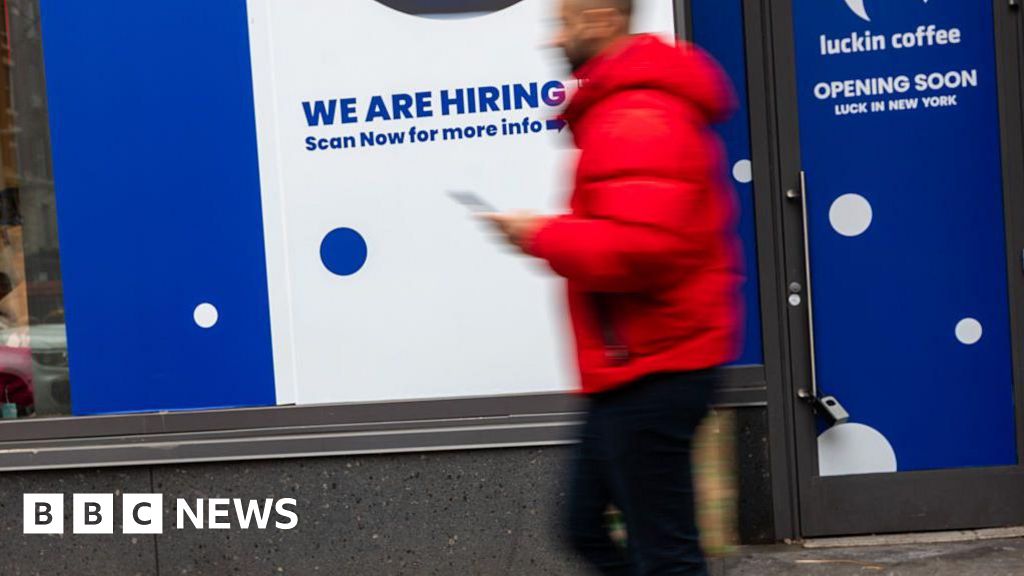
Employers added 178,000 jobs, far more than had expected, the Labor Department says.
Masters-inspired artists play (and paint) by their own set of rules

Bolton Council approves plan to widen gate at former school

TDVI: The Best Way For Income Investors To Invest In Tech (BATS:TDVI)


-

 NewsBeat7 days ago
The Story hosts event on Durham’s historic registers
-

 NewsBeat19 hours ago
Steven Gerrard disagrees with Gary Neville over ‘shock’ Chelsea and Arsenal claim | Football
-

 Sports7 days ago
Sweet Sixteen Game Thread: Tide vs Michigan
-
Entertainment4 days ago
Fans slam 'heartbreaking' Barbie Dream Fest convention debacle with 'cardboard cutout' experience
-

 Crypto World2 days ago
Gold Price Prediction: Worst Month in 17 Years fo Save Haven Rock
-

 Business14 hours ago
No Jackpot Winner and $194 Million Prize Rolls Over
-
 Entertainment6 days ago
Lana Del Rey Celebrates Her Husband’s 51st Birthday In New Post
-

 Tech5 days ago
The Pixel 10a doesn’t have a camera bump, and it’s great
-
Crypto World3 days ago
Dems press CFTC, ethics board on prediction-market insider trades
-

 Sports3 days ago
Tallest college basketball player ever, standing at 7-foot-9, entering transfer portal
-

 Tech4 days ago
Avatar Legends: The Fighting Game comes out in July and it looks pretty slick
-

 Tech3 days ago
EE TV is using AI to help you find something to watch
-

 Fashion5 days ago
Amazon Sundays: Soft Spring Layers
-

 Business1 day ago
Login and Checkout Issues Spark Merchant Frustration
-

 Fashion6 days ago
When Evening Dressing Gets Colorful for Spring
-

 Tech3 days ago
How to back up your iPhone & iPad to your Mac before something goes wrong
-

 Tech5 days ago
Elon Musk’s last co-founder reportedly leaves xAI
-

 Tech4 days ago
Apple will hide your email address from apps and websites, but not cops
-

 Crypto World4 days ago
U.S. rule change may open trillions in 401(k) funds to crypto
-

 Politics4 days ago
Should Trump Be Scared Strait?
You must be logged in to post a comment Login