The airline says the price of jet fuel could soar next summer amid the ongoing conflict in the Middle East
Felix Armstrong www.cityam.com
09:26, 02 Sep 2026
Passengers queuing up to get on Ryanair planes at Stansted Airport(Image: Niall Carson/PA Wire)
Ryanair is warning that jet fuel prices could rocket next summer, putting some of its European rivals at risk of going under.
Advertisement
The budget carrier announced it had taken emergency measures to shield itself from the elevated jet fuel costs triggered by the Iran war, scaling back its passenger targets from 216m to 214m for this year.
The Dublin-based airline revealed it had locked in fixed-price contracts for 80 per cent of its fuel requirements for the year ahead, but chose to axe certain flights to reduce the volume of fuel it must purchase at market rates.
The reduced flight schedule is expected to ease Ryanair’s winter losses by €70m to €100m. The carrier remains on course to grow its summer passenger numbers by more than five per cent to 145m this year.
Ryanair cautioned that several of its European competitors face greater exposure to the surging jet fuel costs brought about by the closure of the Strait of Hormuz, as reported by City AM.
Advertisement
“If high oil prices continue through to [next summer], Ryanair believes short haul airfares in Europe will increase materially to reflect higher oil prices,” the Dublin-based firm said.
“Some less well-hedged competitors will struggle to maintain capacity or even survive this coming winter season.”
In July, Ryanair disclosed that the cost of the 20 per cent of its fuel requirements that were not fixed-price had more than doubled at the start of this year, to $150 per barrel.
Consequently, the carrier’s operating costs surged 11 per cent to €3.8bn in the three months to June, while its pre-tax profit plummeted 36 per cent to €593m.
Advertisement
The airline, which is listed in both Dublin and New York, announced in May that it would slash some of its fares to drive up passenger volumes and counter the softening demand triggered by the Middle East conflict.
Ryanair is far from alone in feeling the pinch from the Iran war. Tourism giant Tui swung to a €17m loss in the six months to June, attributing the shortfall to rising fuel costs and subdued travel demand.
Easyjet absorbed a £200m blow to its profits in the three months to June, as fuel costs per passenger rocketed by £100m, or 13 per cent.
SYDNEY — Shares in EQ Resources Ltd tumbled sharply on Wednesday, falling 9.41% to $0.385, as the small-cap tungsten producer got caught up in a broad selloff across the Australian resources sector amid a punishing session for the wider share market.
The decline wiped out a chunk of the stock’s recent gains, though EQ Resources remains one of the standout performers on the ASX this year, having ridden a historic run-up in global tungsten prices that has transformed the once-obscure miner into one of the market’s most closely watched resource stocks.
Wednesday’s fall came as the broader S&P/ASX 200 index sank nearly 1%, with materials stocks among the hardest hit sectors after fresh U.S. military strikes on Iran sent oil prices surging and triggered a deepening selloff in global bond markets. The turmoil rattled mining and resource names across the board, with major iron ore, gold and copper producers all posting steep losses in the same session, as investors reassessed risk appetite amid rising bond yields and inflation fears.
No company-specific announcement had emerged from EQ Resources by the time of the decline, suggesting Wednesday’s drop was driven largely by the same market-wide pressures weighing on resource stocks generally, rather than any change to the company’s underlying operations or outlook.
Advertisement
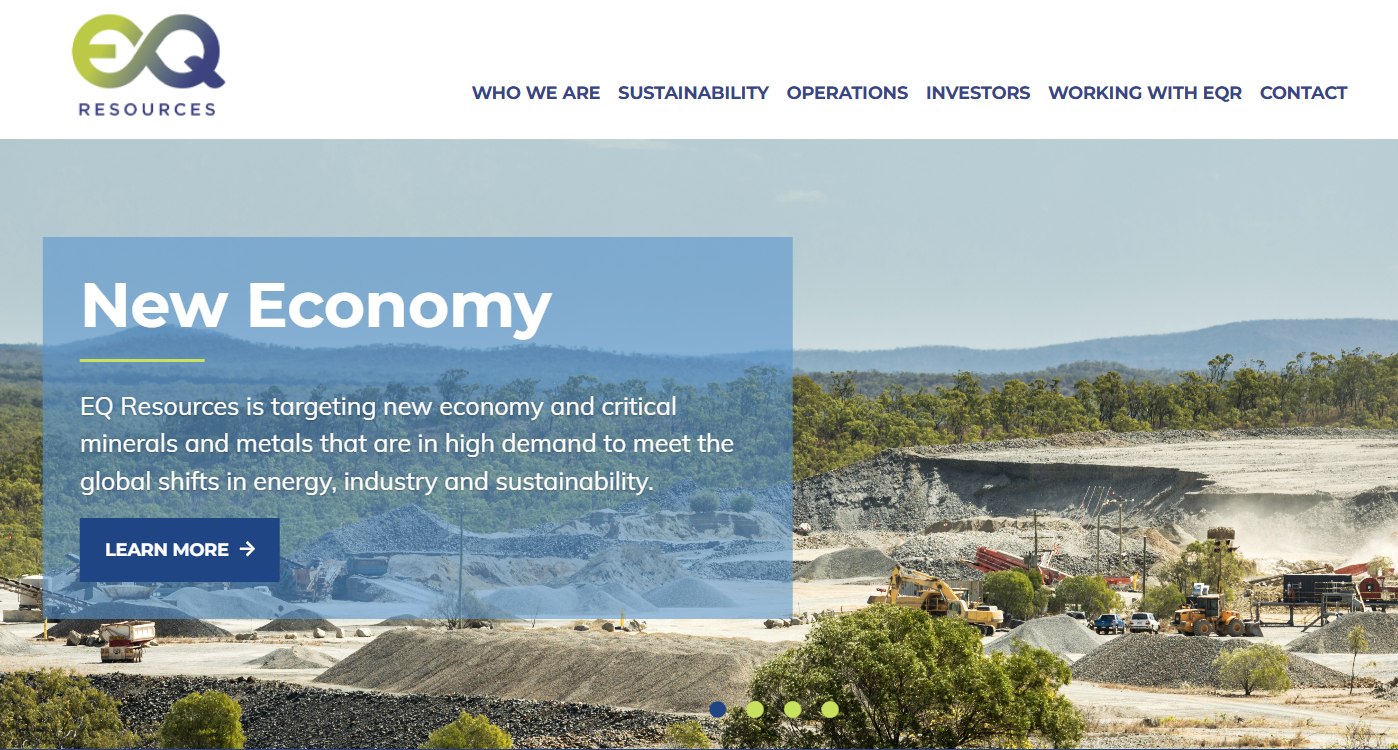
EQ Resources, which trades under the ticker EQR, is a Queensland-based miner that has positioned itself as one of the few significant Western producers of tungsten outside China, which controls the vast majority of global supply. The company’s flagship operation is the Mt Carbine tungsten mine in Far North Queensland, roughly two hours from Cairns, alongside its Barruecopardo mine in Spain’s Salamanca province. The company describes itself as pursuing the goal of building “a secure, reliable and traceable non-country-of-concern tungsten supply platform,” reflecting the broader push by Western governments and manufacturers to diversify tungsten supply chains away from Chinese dominance.
That positioning has proven lucrative for shareholders over the past year. Tungsten, a critical industrial metal used in everything from cutting tools and drilling equipment to aerospace components, munitions and electronics, has been in the grip of what analysts have described as a supercycle in 2026. Prices for ammonium paratungstate, a key intermediate product used to produce tungsten metal, have surged well over 200% since the start of the year, driven by a combination of tightening Chinese export quotas, falling ore grades at aging mines, and surging demand from defense and technology sectors. Beijing has restricted the number of companies permitted to export tungsten internationally through 2027, creating what traders have described as a structural supply squeeze that shows little sign of easing.
The rally in tungsten prices has directly benefited EQ Resources’ bottom line. The company posted record monthly revenue of roughly A$51 million in July, driven by its highest monthly production levels since late 2024 and strong sales volumes across both its Australian and Spanish operations. A subsequent quarterly update showed production climbing sharply, helping push the stock to its highest levels in a decade earlier this year. The company’s shares have also drawn attention after iron ore magnate Andrew Forrest disclosed a significant stake in the business, a move that triggered a sharp rally in the stock at the time.
Despite Wednesday’s decline, EQ Resources remains up substantially for the year, having delivered gains in the hundreds of percent over the past twelve months as investors piled into companies seen as beneficiaries of the tungsten supply crunch. The stock’s 52-week range stretches from around 3 cents to a high near 39 cents, illustrating the scale of its rise before Wednesday’s pullback.
Advertisement
Market analysts who have covered the stock have repeatedly flagged its volatility as a defining feature of the trade. The company was hit by a similarly sharp single-day decline of around 9% in July, a drop that came without any specific corporate announcement and was attributed at the time to profit-taking after the stock’s dramatic run-up. Wednesday’s decline appeared to follow a similar pattern, occurring alongside a broader risk-off shift across the ASX rather than any deterioration in the company’s own operational performance.
The stock’s underlying financial profile remains a point of scrutiny for some market watchers. Third-party data compiled from the company’s filings shows EQ Resources generated trailing twelve-month revenue of roughly A$75 million, but posted a net loss of approximately A$23 million alongside negative free cash flow, a combination that has fueled debate among analysts over how much of the company’s soaring share price reflects genuine earnings momentum versus speculative enthusiasm for the broader tungsten story. The company has also carried out a series of capital raisings over the past year, including a follow-on equity raising of roughly A$34 million, to help fund its production ramp-up.
Even so, the structural case for tungsten scarcity remains intact heading into the final months of 2026. China’s tightening grip on exports, combined with a lack of near-term alternative supply, has led some industry observers to warn that new mine supply from outside China is unlikely to meaningfully ease the market before the end of the decade. That dynamic has kept investor interest in companies like EQ Resources elevated even through periods of sharp share price volatility.
For now, Wednesday’s drop leaves EQ Resources shares trading well below their 52-week high, though still reflecting one of the more remarkable turnarounds among ASX-listed resource stocks this year. Investors will likely be watching closely for the company’s next quarterly production update, along with any further movement in benchmark tungsten prices, for signs of whether the stock’s underlying rally has further room to run or is entering a more prolonged period of consolidation after months of outsized gains.
Wordle players logging on Wednesday were greeted with puzzle number 1,901, a word that sent many solvers down two very different paths of thinking before the correct answer became clear.
The answer to Wednesday’s Wordle, September 2, 2026, is RULER.
The five-letter word carries two distinct meanings that tripped up plenty of players throughout the day, according to puzzle trackers who monitor daily solving trends. It can refer to a straight measuring tool typically marked with units of length, commonly used in classrooms, workshops and design studios, or it can describe a person who exercises supreme authority over a country, kingdom or realm. That dual meaning became a talking point among solvers on social media, with some guessing based on tools and measurement while others leaned toward monarchy and governance themes.
According to the New York Times’ WordleBot, the automated tool that tracks how efficiently players solve each day’s puzzle, the average Wordle player completed Wednesday’s puzzle in four moves on easy mode, or 3.9 moves under hard-mode rules, which require players to reuse any correctly placed letters in subsequent guesses.
Advertisement
Wordle, the daily word-guessing game acquired by The New York Times in early 2022, gives players six attempts to identify a hidden five-letter word. After each guess, tiles change color to indicate whether a letter is correct and properly placed, correct but misplaced, or absent from the word entirely. The game has retained a devoted global following since it first went viral, with millions of players logging on each day to maintain personal winning streaks and compare results with friends.
For Wednesday’s puzzle, RULER contained one repeated letter, the letter R, which appeared as both the first and final letter of the word. It also included two of the five vowels and featured two of the game’s most commonly occurring letters, according to puzzle-hint outlets that publish daily breakdowns without immediately revealing the solution.
Puzzle guides noted that strong opening guesses for Wednesday’s word would have included common Wordle starting words that quickly narrow the field of possibilities. Players who opened with words like STRIP were left with 27 possible remaining answers, according to WordleBot’s analysis, while those who used TRAIL were left with just 18 options, illustrating how starting-word choice can dramatically shape the difficulty of a given day’s puzzle.
One puzzle columnist who documented their own solving process on Wednesday described using an opening guess that turned three letters green immediately, narrowing the field to just four remaining candidates. That columnist said they briefly attempted RELIC as a follow-up guess, which proved incorrect, before ultimately solving the puzzle on their fourth attempt using REMIX as a testing word to eliminate remaining possibilities.
Advertisement
Puzzle-hint sites are generally careful to sequence their clues from vague to specific, allowing players to seek only as much help as they want without immediately spoiling the answer. Wednesday’s hint sequence typically began with a note on the word’s dual meaning, followed by details on letter repetition, vowel count, and finally the word’s starting letter, before revealing the full solution for players who remained stuck after exhausting the softer hints.
Wordle’s format has remained essentially unchanged since its rise to prominence, with a single new puzzle released each day at midnight local time and shared globally as players move through different time zones. The simplicity of the format, combined with its shareable emoji-based results grid, has been widely credited with helping fuel the game’s sustained popularity, even as numerous imitators and spinoff word games have emerged in the years since its debut.
The New York Times has continued to expand its portfolio of daily puzzle offerings alongside Wordle, including Connections, a word-grouping game; Strands, a word-search style puzzle with a hidden theme; and Pips, a newer addition that challenges players to arrange dominoes according to specific rules. Each game maintains its own daily archive, allowing players to revisit previous puzzles they may have missed.
For Wordle specifically, the Times has resisted making significant changes to the core mechanics of the game since acquiring it, a decision widely seen as key to preserving the format that made it a viral sensation in the first place. The company has, however, occasionally adjusted its word list to remove or swap out certain answers deemed too obscure, offensive, or repetitive for a mainstream daily audience.
Advertisement
Wednesday’s puzzle number, 1,901, reflects the running count of daily puzzles since Wordle’s original launch, a figure that continues to climb by one with each passing day regardless of time zone or regional release schedule. Longtime players often track this number closely, both as a point of pride for maintaining long personal streaks and as a quick way to confirm they are discussing the correct day’s puzzle when comparing notes with friends or family in different parts of the world.
Players who missed Wednesday’s puzzle or want to revisit it can typically still access the archive through the Times’ official Wordle platform, though prior-day puzzles are usually locked behind the publication’s games subscription for those without a free daily play allowance. The Times has increasingly bundled Wordle access with its broader digital games subscription, which also includes access to its crossword archive, Spelling Bee, and other puzzle offerings, as part of a broader strategy to grow recurring subscription revenue from its games division.
Thursday’s Wordle puzzle, number 1,902, will be released at midnight, giving players a fresh chance to extend their streaks after Wednesday’s dual-meaning word tested vocabulary and lateral thinking in equal measure.
Thailand’s NESDC says the country needs a “radical overhaul” of its production structure to achieve its high-income-economy target within the next 12 years. The planning agency is calling for greater investment in high-tech industries, AI data infrastructure and future-food production, while warning against short-term, debt-funded populist policies.
Key indicators: Target: high-income economy within 12 years; priorities include AI/data infrastructure, high-value manufacturing and future foods.
Why it matters: The warning comes as Thailand attracts large digital and data-centre investments but struggles to spread their benefits across the broader economy. The policy challenge is increasingly about converting FDI into productivity, local supply chains, skilled employment and sustainable domestic investment.
Baht strength puts Bank of Thailand back in focus
The baht is again attracting attention as regional currencies benefit from a softer US dollar, with OCBC warning that further appreciation could face resistance from the Bank of Thailand. The bank sees export competitiveness as a key constraint, although its published analysis contains inconsistent spot-rate references; the clearer trading signal is a range around USD/THB 32.70–33.30. (Thailand Business News)
Advertisement
Key indicators: SET Index closed at 1,595.16, up 0.44%, with THB75.81 billion in trading value; baht support/resistance cited by OCBC at approximately 32.70–32.80 / 33.20–33.30.
Why it matters: A stronger baht reduces import costs but threatens exporters’ price competitiveness and can make Thailand more expensive for international visitors. Currency appreciation is therefore becoming an increasingly important constraint on the recovery even as the SET shows resilience.
BOT warns temporary business suspensions are rising
The Bank of Thailand is warning that Thailand’s labour market remains vulnerable as more companies temporarily suspend operations under Section 75 of the Labour Protection Act. The problem is concentrated in sectors facing intense competition, including automotive parts, garments, rubber products and plastics, alongside weaker business formation and more closures in trade and property. (nationthailand)
Advertisement
Key indicators: Section 75 suspensions are increasing; affected industries include automotive parts, garments, rubber and plastics; BOT also points to declining new-business formation and rising closures.
Why it matters: The warning highlights the uneven nature of Thailand’s recovery. Strong exports and AI-related investment are not yet translating consistently into employment and domestic demand, reinforcing concerns about a two-speed economy and pressure on SMEs.
China and ASEAN trade reached approximately US$744 billion in the first seven months of 2026, up 24.7% from the same period last year, according to figures presented by China’s Commerce Ministry. Intermediate-goods trade rose 24.5% in the first half, highlighting increasingly integrated production networks rather than simply growing trade in finished products. (teleSURenglish)
Key indicators: China-ASEAN trade US$744bn, +24.7% Jan–July; 2025 trade reached about US$1.05tn; intermediate-goods trade 2.86tn yuan in H1.
Why it matters: Thailand is deeply embedded in ASEAN manufacturing and Chinese supply chains, making this growth strategically important for exports, logistics and industrial investment. The upgraded ACFTA 3.0 framework also expands cooperation into digital, green-economy and supply-chain areas.
South Korea’s semiconductor boom sends a strong signal for Asian trade
South Korean exports jumped 68.7% year-on-year in August to US$98.26 billion, extending the growth streak to 15 consecutive months. The result substantially exceeded the 62.6% increase economists had expected and was driven by strong technology demand, while imports rose 22.5%, leaving a US$34.75 billion preliminary trade surplus. (Reuters)
Why it matters: South Korea remains one of the strongest real-time indicators of Asia’s technology and manufacturing cycle. Sustained AI-chip demand supports Thailand’s electronics-export outlook, but it also underscores the need for Thailand to move further into higher-value components and advanced manufacturing rather than relying mainly on assembly.
Thailand’s SET remains resilient, but the latest BOT warning highlights a more fragile domestic economy beneath the strong export and investment headlines. The combination of baht appreciation, weak SME conditions and pressure on labour-intensive manufacturing is reinforcing the case for structural reforms rather than relying solely on monetary or fiscal stimulus.
Advertisement
Across Asia, the dominant positive signal remains the AI-driven manufacturing cycle: South Korean exports are surging and regional supply chains are becoming more integrated. For Thailand, the opportunity is to capture more of that value through semiconductors, digital infrastructure and advanced manufacturing while reducing the economy’s vulnerability to currency appreciation and low-productivity sectors.
Allison Ellsworth, founder of Poppi soft drinks, started the beverage business as a kitchen experiment, with a Soda Stream and apple cider vinegar. She speaks to Leanna Byrne about pitching for funding on TV programme Shark Tank while nine months pregnant, relaunching during Covid lockdowns and becoming the number one soda on Amazon in the US and her $1.95 billion exit with PepsiCo.
London businesses have warned the Prime Minister that the capital’s housing costs are damaging their ability to hire and keep staff, and that growth “in every postcode” cannot be delivered if the forthcoming Budget makes London less competitive with rival international cities.
Polling commissioned for the launch of the London Chamber of Commerce and Industry’s (LCCI) Choose LDN campaign found that 74% of London business leaders say the cost of housing is limiting their ability to recruit and retain staff. The chamber, which has a business network of more than 12,000, said losing the next generation of talent would weaken the capital’s standing against other global cities and put jobs, investment and growth across Britain at risk.
The survey found that 70% of young people across the UK believe career opportunities are better in London than elsewhere, with just 11% saying they are better outside it. Yet 58% of those pursuing a career outside the capital believe London is too expensive to live or work in. Outside London, 28% of young people surveyed already own a suitable home; in London the figure is 13%.
LCCI said the gap between young people’s ambition and what they can afford was “deeply concerning” at a time when almost one million young people are not in work or education. The latest ONS figures put the number of 16 to 24 year olds not in education, employment or training at 981,000 in April to June 2026.
Among those already working in London, the capital retains its pull. Some 81% say they are happy working in London, 79% see a clear career benefit from being based there and 82% of young Londoners say career opportunities are better in the capital. But only 60% of young people living in London see their long-term future there. Asked what would attract them to move to the capital, 30% of young people named being able to afford property in the next 10 years, ahead of better pay on 25% and a job in their field on 20%.
LCCI argues the whole country has a stake in London’s ability to attract investment. The capital accounts for nearly a quarter of UK economic output and a third of its corporation tax, and London and the south east pay 45% of England’s income tax, the chamber said. London ran a £43.6 billion net fiscal surplus in 2022/23, the latest year for which ONS regional public finance figures are available, meaning the city generates tens of billions of pounds more in tax than is spent on it.
The chamber said the Budget, the devolution white paper and the Prime Minister’s 10 Year Plan for Britain should be used to increase London’s international competitiveness, and warned that using those moments to make the capital less attractive to international businesses would damage the country’s growth prospects.
Its Choose LDN campaign calls on the government to reverse the previous Chancellor’s increase in employer National Insurance contributions, secure a “pragmatic new deal” with the EU, cut the cost of the planning system and support first-time buyers, restore VAT-free shopping for international tourists and reverse changes to the non-dom regime.
Advertisement
It also wants King’s Cross designated as an AI Investment Zone, airport expansion at Heathrow, Gatwick and Luton funded by private investment, and backing for the Bakerloo line extension, the DLR extension to Thamesmead and a restart of work on Crossrail 2. LCCI said the Elizabeth line, which it values at £42 billion to the UK economy and which was funded through a mix of public and private investment, should be the model for future infrastructure projects.
Karim Fatehi OBE, chief executive of LCCI, said: “Thriving economies treat the success of their capital cities as national policy issues and build a consensus around their capital succeeding, whether you live there or not. If the Prime Minister is to meet his promise to deliver growth in every postcode, we must now do the same for London.”
He added: “We know the investment London misses out on does not go to another UK town or city, it moves to Paris, Frankfurt, Dubai or Singapore. Our rivals are not our fellow towns and cities. Our rivals are capital cities across the world. Whether you live in London or Leeds, Leicester or Liverpool, the success of our capital matters for jobs and funding for public services in every single part of the country.”
Julia Onslow-Cole, chair of LCCI, said the campaign was “positive, ambitious and timely” and added: “Making our capital city as attractive as possible for investment, job creation and growth helps to deliver prosperity across the whole country.”
Advertisement
Professor Michael Mainelli, president of LCCI and Lord Mayor of London in 2023 to 2024, said: “London’s success is not a London issue; it is a UK, even global, issue.”
He added: “Our international rivals are not standing still, and neither can we. If we make London the most attractive city in the world to do business, the benefits will reach far beyond the capital. When the world chooses London, the whole country succeeds.”
Cherry Martin
Cherry is Associate Editor of Business Matters with responsibility for planning and writing future features, interviews and more in-depth pieces for what is now the UK’s largest print and online source of current business news.
SYDNEY — Matt Dee, a former lifeguard who became a household name across Australia as one of the stars of the long-running reality television series “Bondi Rescue,” has died, according to an announcement shared by a clothing brand he championed as a mental health advocate.
The news was posted Wednesday morning on the Instagram page of FTW Revolution, a clothing label connected to Suicide Prevention Australia, for which Dee served as an ambassador. The post appeared alongside a photograph of Dee laughing while holding a beer.
“It is with the heaviest of hearts that we share the heartbreaking news of the passing of our Matt Dee,” the statement read. “Matt touched the lives of many, he also did amazing work and he will be deeply missed and forever remembered by those who knew and loved him.”
Advertisement
Dee’s cause of death has not been confirmed. The FTW Revolution page said funeral arrangements would be shared publicly once finalized.
“This page is being monitored, however, please understand that we may not be able to respond to every message,” the statement continued. “We truly appreciate every kind message, thought and tribute.”
Dee appeared on “Bondi Rescue,” the Australian reality series following lifeguards at Sydney’s iconic Bondi Beach, from 2008 to 2017. The show became one of Australia’s most internationally recognized television exports, airing in dozens of countries and turning several of its lifeguard cast members, including Dee, into recognizable public figures both in Australia and abroad.
Advertisement
Beyond his work on the beach, Dee was widely known for his advocacy around mental health, a cause that became deeply personal after he lost both his brother and sister within roughly a year of each other following their struggles with severe mental illness.
His younger sister, Rachel Bridger Dee, died in December 2009 at age 30, after living with schizophrenia for about a decade. His older brother, Jonathan, who had bipolar disorder, died months earlier at age 34. Matt Dee was two years younger than Jonathan and three years older than Rachel. The three siblings were raised by their single mother in Melbourne and spent family holidays surfing at Torquay, on Victoria’s coast.
In a 2011 interview with The Sun-Herald, Dee reflected on the deaths of his brother and sister, describing the guilt and grief that followed.
“What happened was not their fault,” Dee said at the time. “They did their best to manage their illnesses. It wasn’t their fault. They had a problem inside their heads. It’s something we don’t understand. How would we know what it’s like?”
Advertisement
Dee was open in subsequent years about carrying guilt over his siblings’ deaths, saying he often wondered whether he could have done more to help them. That experience shaped much of his later public work, as he became an ambassador for the Schizophrenia Research Institute and later helped launch FTW Revolution, a clothing brand built around raising awareness and funds for suicide prevention and mental health support.
Tributes poured in across social media following Wednesday’s announcement, with fans and former colleagues remembering Dee as a warm and larger-than-life presence both on screen and off.
“Rest easy, Matt. You were always my favourite lifeguard, and my admiration has only grown after learning and seeing what you stood for,” one person wrote in response to the announcement.
Another commenter wrote: “RIP Matty Dee your humour heroism will be missed and remembered every day.”
Advertisement
A third tribute read: “Rip my mate Matt Dee. We had so much fun surfing and running a muck together growing up. You definitely lived life to the fullest, see you in the next life legend Spikas.”
“Bondi Rescue” first premiered in 2006 and has run for numerous seasons since, following the daily work of lifeguards patrolling one of Australia’s most famous and heavily trafficked beaches. The show’s format, blending real rescue footage with the personalities of its lifeguard cast, helped popularize a genre of beach-based reality programming that has since been replicated in other countries. Dee was among the cast members who helped define the series during its most widely watched years, appearing in footage that showcased both the physical demands of lifeguarding and the camaraderie among Bondi’s beach patrol team.
Since departing the show, Dee had largely shifted his public focus toward mental health advocacy, using his public profile to speak openly about grief, guilt and the importance of seeking support, subjects that remain heavily stigmatized in many communities despite growing public awareness campaigns in Australia over the past decade.
Suicide Prevention Australia, the national peak body for suicide prevention with which FTW Revolution is connected, has continued to expand its public campaigns in recent years, working alongside ambassadors like Dee to encourage Australians experiencing mental health difficulties, or those supporting a loved one through one, to seek help rather than suffer in silence.
Advertisement
Dee’s death adds to a string of recent losses among public figures connected to the reality television and entertainment world in Australia, prompting renewed conversation among fans and mental health advocates about the pressures faced by those in the public eye, as well as the broader toll of grief and loss within families affected by serious mental illness.
No further details about the circumstances surrounding Dee’s death had been released as of Wednesday. FTW Revolution said additional information, including funeral arrangements, would be shared once his family had finalized those plans.
This is a developing story, and further details may emerge in the coming days as tributes continue and formal arrangements are announced.
This report touches on suicide and severe mental illness, which can be distressing subjects. If you or someone you know is struggling, support is available. In Australia, Lifeline can be reached at 13 11 14, available 24 hours a day, or by text at 0477 13 11 14.
Yes. Corporate subscriptions are available for teams and organisations, with discounted rates as user numbers increase. Pricing starts from $1,625 + GST per user. Get in touch
to discuss the right option for your organisation.
Business News subscriptions are used by executives, investors, consultants and professionals who need to stay informed and make better decisions about the WA market. When you subscribe you’ll get
Unlimited access to WA’s most trusted business journalism
Data & Insights — detailed profiles of WA companies, people, projects and deals
MyBN — a personalised feed based on the companies, people and sectors you follow
Special publications and industry reports
Daily and weekly email newsletters
Data & Insights is a research tool built specifically for the WA market. It draws on more than 30 years of Business News reporting, updated regularly to reflect what’s happening now. Use it to:
Look up detailed profiles of WA companies, including financials, directors and ownership
Find decision-makers and track their career movements
Research live and completed projects across WA industries
Monitor deals, appointments and market activity
Access industry rankings and league tables
Data & Insights is updated daily by our dedicated research team, which uses the latest announcements, ASX filings and editorial coverage to keep our person, company, list and project records up to date.
Business News welcome all opportunities to make our dataset accurate, complete and current, so if you have an update request, please email the team at general@businessnews.com.au, and we’d be happy to assist.
Advertisement
MyBN
is part of every subscription. It’s your personalised view of Business News. You can follow the companies, people, sectors and projects that matter to you, and get a news feed and alerts tailored to your interests. You can save articles to read later and retain only what you need.
Only subscribers have full access to all content on the Business News website.
Advertisement
If staying informed about the WA economy is part of your job, and/or you’re looking for networking opportunities in WA, Business News is built for you.
Business News subscribers are:
Executives and directors tracking competitors, clients and market movements
Investors and advisers researching companies, deals and industry trends
Consultants and professionals staying across sectors relevant to their clients
Business owners looking for leads, context and market intelligence
Most Business News publications cover national or global markets. Business News is focused entirely on Western Australia, which means the journalism, the data and the intelligence are all built around WA companies, people and projects — not adapted from a national feed. Data & Insights, included with every subscription, combines more than 30 years of WA-specific editorial research with live business data. There’s no comparable product for the WA market.
Advertisement
The Morning Digest Email provides a comprehensive wrap of the major headlines, relevant to WA business, and includes with a snapshot of the overnight news covering oil, gold and ASX-listed companies.
The Afternoon Wrap Email focuses on the news covered by our team of journalists during the course of the working day, including exclusive stories and analysis, all of which relates to WA business and the local economy.
The BN Weekender Email contains a wrap of the Business News from the week that was, highlighting the top stories in each area of WA business. Sign up for free.
Advertisement
We’re happy to help. Get in touch
and our team will come back to you.
I am an equity investor with a strong focus on fundamental, bottom-up stock analysis combined with a structured macro framework. My investment approach centers on understanding business models in depth, assessing competitive positioning, and evaluating long-term value creation through disciplined valuation work. I focus on identifying companies with resilient cash flows, strong capital allocation, and durable competitive advantages. My sector focus is primarily on technology, healthcare, and utilities. I am particularly interested in how company fundamentals interact with broader macroeconomic developments. Alongside bottom-up research, I monitor key macro indicators such as interest rates, inflation, credit conditions, and policy developments to assess their impact on sector dynamics and valuation multiples I have gained experience in stock picking and portfolio management within institutional investment environments, contributing to idea generation and portfolio construction. I write on Seeking Alpha to publish data-driven investment theses grounded in fundamental analysis and valuation discipline. My objective is to provide clear, independent analysis with a long-term investment perspective.
Analyst’s Disclosure: I/we have a beneficial long position in the shares of A, DHR either through stock ownership, options, or other derivatives. I wrote this article myself, and it expresses my own opinions. I am not receiving compensation for it (other than from Seeking Alpha). I have no business relationship with any company whose stock is mentioned in this article.
Seeking Alpha’s Disclosure: Past performance is no guarantee of future results. No recommendation or advice is being given as to whether any investment is suitable for a particular investor. Any views or opinions expressed above may not reflect those of Seeking Alpha as a whole. Seeking Alpha is not a licensed securities dealer, broker or US investment adviser or investment bank. Our analysts are third party authors that include both professional investors and individual investors who may not be licensed or certified by any institute or regulatory body.
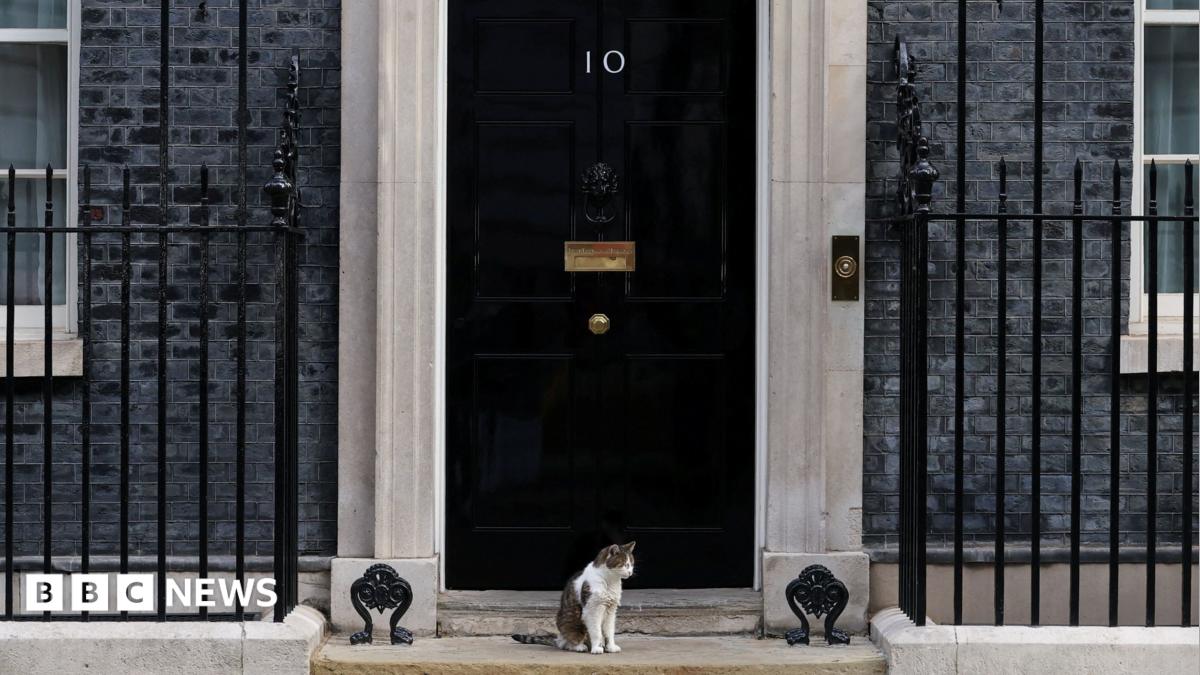
Consumer group Which? says it was able to create a fake listing for 10 Downing Street on travel giant Booking.com.
The UK watchdog said its researchers were able to book a bogus stay at the prime minister’s address – as well as leave a fake review noting “hanging out” with resident mouser Larry the cat as a highlight.
It said despite clear signs it was fake, Booking.com did not remove the listing until two months after it was uploaded.
“This limited test is not a true reflection of the experience of millions of listings or reviews published on our platform,” a Booking.com spokesperson told the BBC.
Advertisement
They said because Which?’s listing was not “live” on its site across the two months it was present, “some of our automatic fraud controls were not triggered to completely remove the closed listing”.
People could only see the listing and request to book the property during a 20-minute window opened by Which? so its researchers could try to book it.
Booking.com’s spokesperson added “a range of checks and verification measures” help secure the site, and technologies such as AI “help us detect and remove the majority of fraudulent listings within 24 hours”.
But Which? Travel editor Rory Boland said its checks had been shown to be “unfit for purpose”.
Advertisement
“If Booking.com’s so-called sophisticated AI systems can’t spot that 10 Downing Street is not a holiday rental, then it’s no wonder scammers can exploit the platform so easily,” he said.
“It would be laughable that we were able to list the UK’s most famous address for rent, if the consequences weren’t so devastating for holidaymakers, who risk losing thousands of pounds to bogus listings and phishing links.”
It is not the first time the site has faced criticism over its security efforts and customer service.
A laptop arrived late. What was on it made things worse. And now Apple is asking a federal court to move faster, arguing that evidence in its lawsuit against OpenAI is being actively destroyed.
Apple filed a new brief on Aug. 31, escalating its legal battle against the ChatGPT maker. The filing accuses OpenAI of withholding key evidence and alleges that a former Apple engineer sent instructions to an OpenAI colleague to destroy documents. The colleague confirmed she would comply, Bloomberg reported.
What Apple’s new court filing says about OpenAI
The brief was filed Monday, Aug. 31, in support of Apple’s motion for expedited pretrial fact-finding in its trade secrets lawsuit against OpenAI.
Apple’s lawyers said OpenAI only recently provided a critical piece of evidence: an Apple-issued MacBook that former engineer Chang Liu had been using since leaving the company.
Advertisement
Initial forensic analysis of the laptop found that Liu and colleagues at OpenAI “were well aware” of his continued unauthorized access to Apple’s third-party cloud storage providers. The filing alleges Liu also “sent instructions for destroying evidence to an OpenAI colleague who confirmed she would comply.”
More OpenAI:
Apple also claimed Liu “used a tool in his work at OpenAI that has the same name as an internal Apple engineering application used for Apple development work.”
The company’s lawyers wrote that the laptop “shows Apple is not conducting ‘fishing expeditions’ but that its trade secrets are being used and evidence is being destroyed,” Bloomberg reported.
Advertisement
OpenAI did not immediately respond to a request for comment.
Why Chang Liu is central to the Apple-OpenAI lawsuit
Liu left Apple for OpenAI in January 2026. He is one of more than 400 former Apple employees who have gone to work for the AI company.
That number is central to Apple’s original complaint, which accused OpenAI of actively recruiting Apple workers and encouraging them to share confidential information, components, drawings and other materials related to unreleased products while taking steps to cover its tracks.
Apple’s filing states Liu “not only downloaded a confidential Apple circuit schematic but also used it in his work” at OpenAI, Bloomberg reported.
Advertisement
Downloading proprietary schematics is one thing. Using them in your new employer’s work is another. Apple’s lawyers are making that distinction count.
OpenAI has maintained throughout that it followed industry-standard recruiting practices. On the specific issue of Liu’s access to Apple’s cloud storage, OpenAI published text message excerpts and argued he was simply helping a former colleague at Apple, not exfiltrating data.
Advertisement
Apple integrated ChatGPT into its devices through a partnership announced at its developer conference.Adam/Getty Images
How the Apple-OpenAI relationship collapsed
The two companies had a working relationship not long ago. Apple integrated ChatGPT into its devices through a partnership unveiled at its developer conference. That collaboration began to fray over the past year as OpenAI moved more aggressively into hardware.
The turning point was OpenAI’s decision to bring in Jony Ive. Ive was Apple’s design chief for decades. He is the person responsible for the physical form of the iPhone, the Mac, and much of what people associate with Apple’s look.
He left in 2019. OpenAI hired him to lead hardware. Apple noticed.
The first device from the Ive-OpenAI collaboration, Bloomberg reported, will be a doughnut-shaped smart speaker, roughly the size of a hockey puck, with moving parts designed to give it personality. OpenAI is building hardware products that will compete directly with Apple in categories Apple has owned for two decades.
What Apple is asking OpenAI for and what happens next
Apple wants money, and it wants OpenAI to stop. The company is asking the court for monetary damages. It also wants a court order forcing OpenAI to halt the alleged misuse and destroy any Apple materials still in its possession.
Advertisement
Earlier in August, Apple made a separate move. It asked a federal judge to immediately issue that stop order, without waiting for the full case to play out. That request is still pending.
The judge is scheduled to hear arguments on Oct. 1 on the motion for expedited fact-finding. It’s this motion in support of which Apple filed the Monday, Aug. 31, brief.
Expedited fact-finding would compress the timeline. Instead of waiting for discovery to unfold over months or years, the way standard litigation usually does, OpenAI would have to hand over documents and sit for depositions much sooner.
That matters because of where OpenAI is right now. The company is building hardware. It is raising money. It is preparing, eventually, to go public.
Advertisement
A wave of forced early document production arriving during that window could be disruptive in ways that go beyond the legal fees.
For investors watching Apple stock, the case is a reminder that the company’s competitive response to OpenAI’s hardware ambitions is not limited to building better products. Apple is also using the courts.
How aggressively that strategy plays out over the next few months depends, in large part, on what the judge decides on Oct. 1.



























































You must be logged in to post a comment Login