

Business
Sai Parenteral’s IPO allotment likely today: Check status, GMP, other details


Sai Parenteral’s IPO subscription status
The mainboard issue that closed on Friday, was subscribed 1.05 times over a three-day bidding period. It received over 78.80 lakh share bids against 75,22,486 equity shares available for booking.
The demand was mainly driven by non-institutional investors’ (NII) who subscribed the issue 2.36 times. Qualified Institutional Buyers (QIBs) subscribed the IPO 1.71 times their quota, while Retail Individual Investors (RIIs) hardly showed any interest, subscribing just 12% shares of the available quota.
Here’s how you can check the status on BSE:
Step 1: Visit the BSE ‘Status Application Check’ page https://www.bseindia.com/investors/appli_check.aspx

Step 2: Select Issue Type: Equity/Debt
Step 3: Put PAN/Application No. and enter checkbox ‘I’m not a robot’.Step 4: Submit ‘Search’
Its stock is expected to get listed on April 2.
About Sai Parenteral’s IPO
The company has set the price band at Rs 372– 392 per share and retail investors can make applications for a minimum of 1 lot which comprises 38 equity shares amounting to Rs 14,896.
The IPO’s fresh issue aggregates up to Rs 285 crores while the OFS aggregates up to Rs 123.79 crores which includes anchor investor portion of 31,28,485 equity shares.
The company raised Rs 122.63 crore on Monday through five anchor investors.
It has reserved 50% of the issue for qualified institutional buyers (QIBs), up to 35% for retail investors and 15% for non-institutional investors (NIIs).
Sai Parenteral’s IPO GMP
Shares of Sai Parenteral’s were not commanding any grey market premium (GMP) ahead of the opening of the issue. This implies a flat listing. The GMP is only an indicative price and could change as the issue progresses.
Sai Parenteral’s IPO net proceeds
The gross proceeds from the issue will be to the tune of Rs 285 crore. The company will utilise Rs 110.8 crore towards capacity expansion and upgradation of manufacturing facilities, Rs 18 crore for establishment of a new R&D Centre, Rs 14 crore towards repayment of borrowings, and Rs 33 crore for its working capital requirements.
About Sai Parenteral’s
Sai Parenteral’s (SPL) is a diversified pharmaceutical formulations company engaged in the business of branded generic formulations and Contract Development and Manufacturing Organisation (CDMO) products & services for the domestic and international markets. The company’s portfolio includes formulation products, covering both high-value and high-volume categories across therapeutic areas like cardiovascular, neuropsychiatry, anti-diabetic, etc., with offerings across dosage forms such as injectables, tablets, capsules, liquid orals and ointments.
Sai Parenteral’s Financials
The company’s revenue from operations in H1FY26 stood at Rs 303 crore while its profit after tax (PAT) stood at Rs 2 crore. For FY25, revenue stood at Rs 495 crore versus Rs 154 crore in FY24 and Rs 97 crore in FY23. The PAT stood at Rs 20 crore in FY25 versus Rs 8 crore in FY24 and Rs 4 crore in FY23.
Sai Parenteral’s IPO lead managers
The Book Running Lead Managers (BRLMs) is Arihant Capital Markets Ltd while the registrar to the issue is Bigshare Services Pvt Ltd.
(Disclaimer: The recommendations, suggestions, views, and opinions given by the experts are their own. These do not represent the views of The Economic Times.)



German infrastructure fund misses its spending targets, Handelsblatt says

adventtr/E+ via Getty Images

Listen below or on the go via Apple Podcasts and Spotify

Quantinuum attracts strong demand ahead of debut. (0:17) Broadcom earnings focus shifts to accelerating AI chip demand. (1:09) May jobs report tests outlook for a cooling labor market. (1:58)
The following is an abridged transcript:
Quantum computing firm Quantinuum (QNT) is set to go public this week, with reports that the offering is already oversubscribed by a double-digit multiple of the shares available.
The company, which is owned by Honeywell (HON), plans to offer 21.05 million shares at between $45 and $50 each. At the top end of that range, Quantinuum would raise about $1.05 billion and be valued at roughly $13 billion.
The stock is expected to trade on the Nasdaq under the ticker symbol QNT.
Quantinuum generated 2025 revenue of $30.9 million, up from $23 million in 2024, while its net loss widened to $192.6 million as the company continued investing in growth and commercialization.
The company recently signed an agreement with the U.S. government to receive research and development funding aimed at addressing technology bottlenecks in fault-tolerant trapped-ion quantum computers.
On the earnings front, Broadcom (AVGO) highlights the week when it reports Wednesday after the close.
Wall Street expects EPS of $2.40 on revenue of about $22 billion.
Analysts have turned increasingly bullish ahead of the report.
Oppenheimer expects a beat-and-raise quarter driven by AI demand and says Broadcom remains the number-two AI accelerator player behind Nvidia (NVDA).
Susquehanna also raised its price target ahead of results, citing continued momentum in Broadcom’s custom AI chips and networking business.
Analysts said AI revenue could exceed $100 billion in fiscal 2027 as customer demand continues to broaden.
Also on the earnings calendar, Hewlett Packard (HPE) and Credo Technology (CRDO) report Monday.
Earnings spotlight: Tuesday: Palo Alto Networks (PANW) and Ulta Beauty (ULTA) are up Tuesday.
CrowdStrike (CRWD) and Medtronic (MDT) joing Broadcom on Wednesday.
Ciena (CIEN), Lululemon (LULU) and DocuSign (DOCU) weigh in on Thursday.
On the economic calendar, Friday’s jobs report is the main event.
Economists expect 96,000 jobs to have been added in May, down from 115,000 in April, while the unemployment rate is expected to hold at 4.3%.
Average hourly earnings are forecast to rise 0.3% for the month.
Wells Fargo says the labor market remains stuck in a low-fire, low-hire environment that is no longer deteriorating, but isn’t showing meaningful improvement either.
In the news this weekend, Waymo unveiled its new Ojai robotaxi minivan, an all-electric vehicle designed specifically for autonomous ride-hailing rather than retail sales.
The company says the vehicle is roomier, cheaper to operate and built around its sixth-generation self-driving system. Analysts say the lower operating costs could eventually help Waymo undercut human-driven ride-hailing services in some markets.
And Microsoft (MSFT) and Nvidia (NVDA) are expected to unveil the first Windows PCs powered by Nvidia chips as the primary processor at Computex and Microsoft’s Build conference this week.
The launch could mark a significant expansion of Nvidia’s push beyond AI servers and into the PC market.
And for income investors, McDonald’s (MCD) goes ex-dividend on Tuesday and pays out on June 16.
Halliburton (HAL) goes ex-dividend on Wednesday with a June 24 payout date.
Cigna (CI) goes ex-dividend on Thursday and pays out on June 18.
And Western Digital (WDC) goes ex-dividend on Friday with a payout date of June 17.

Berkshire Hathaway to acquire Taylor Morrison for $8.5 billion

Berkshire Hathaway to buy US homebuilder Taylor Morrison for $8.5 billion

US takes step to halt Nvidia AI chip shipments to Chinese firms outside China

Who could benefit from further upside in South Korea’s luxury demand?
Business
Russia-appointed official says child killed, 11 injured in drone attack in Russian-held Kherson region

Russia-appointed official says child killed, 11 injured in drone attack in Russian-held Kherson region
SchiffGold is a full-service, discount precious metals dealer specializing in investment-grade gold and silver bullion. We offer a range of related services, from vault storage partners to physical gold IRAs.
Renowned investor Peter Schiff founded SchiffGold in 2010 to provide a trustworthy source of bullion for his brokerage clients. Peter has always advised long-term investment in physical precious metals as an inflation-proof store of value. Unfortunately, he found far too many gold buyers were getting swindled by big companies pushing numismatics at high markups. SchiffGold is his answer — an honest gold dealer that sells only the most liquid bullion products in the world at the lowest possible prices.
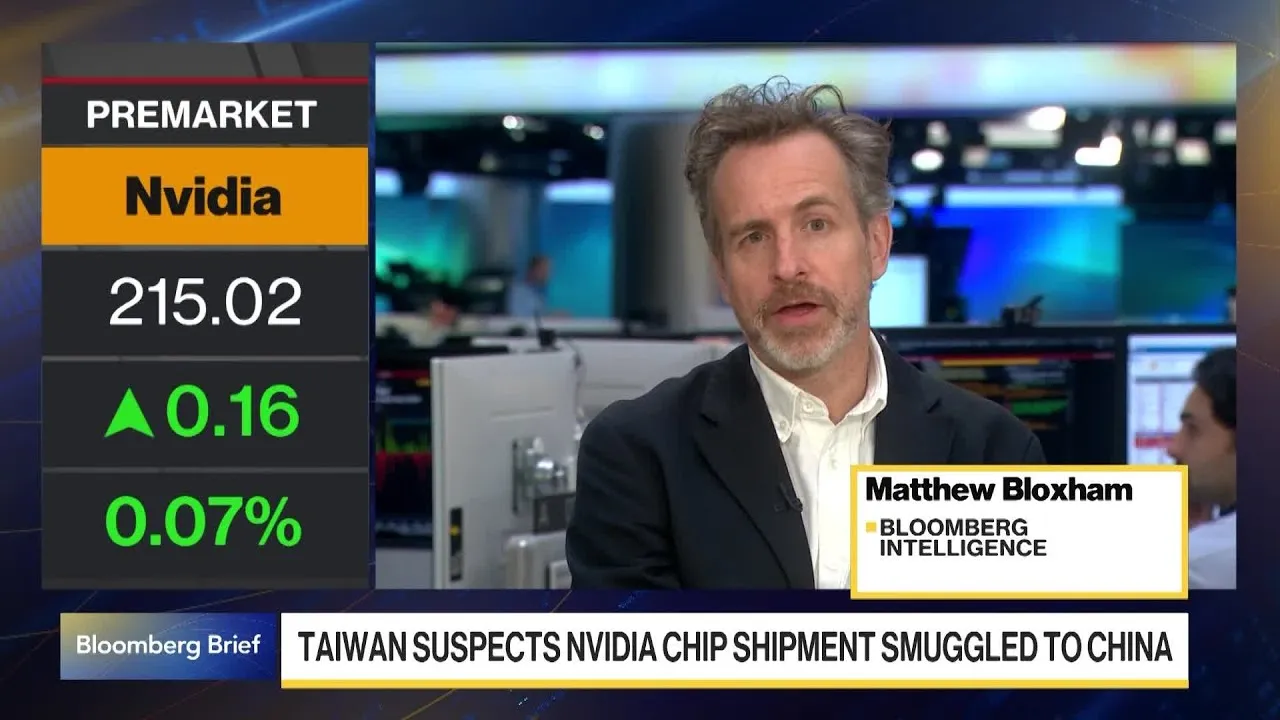
Taiwan prosecutors suspect three individuals successfully smuggled at least one shipment of Nvidia AI chips to China. The suspects reportedly used deceptive methods in the transfer process, raising concerns over technology security and intellectual property violations. An investigation is ongoing to determine the full extent of the smuggling operation and potential regulatory breaches.
Authorities in Taiwan suspect that a shipment of Nvidia AI chips was smuggled into China, raising concerns about potential technology leaks and national security. The investigation was prompted after customs officials detected irregularities in the export documentation of the high-performance chips, which are crucial for artificial intelligence applications. These chips are highly sought after for their advanced capabilities and are often targeted for smuggling to benefit competitors or unauthorized entities.
The suspected smuggling operation highlights the growing complexities of international technology trade and security. Taiwan, a major hub for semiconductor manufacturing, closely monitors the export of sensitive technology to prevent misuse or unauthorized transfer. The government has vowed to strengthen controls and collaborate with international partners to prevent similar incidents in the future.
This incident underscores the broader geopolitical tensions surrounding technology and innovation. As countries compete for technological dominance, safeguarding intellectual property and preventing unauthorized exports become increasingly critical. Authorities continue to investigate the case, aiming to ensure the integrity of Taiwan’s high-tech industry and prevent technological espionage.
Other People are Reading


Visits to restart at New Jersey migrant detention center as police expand restricted area

Paris in a mix of celebration and confrontation

German infrastructure fund misses its spending targets, Handelsblatt says

This Week in Crypto: MicroStrategy’s Bitcoin Fears Fade, $500M Claude Bill, Thiel Stock Halves

Steven Gerrard disagrees with Gary Neville over ‘shock’ Chelsea and Arsenal claim | Football

US brings back mandatory military draft registration

Register Renaming | Hackaday

WALL STREET JUST SAID IT: XRP =THE FINANCIAL SYSTEM! Clarity Act Senate Floor Vote Drops July 2026

Ripple XRP – XRP Will Hit $10,000? (Realistic XRP Price Prediction 2026)

When The Promised Financial Genius Crashes Your Economy
-

 NewsBeat4 days ago
Israel says it has killed new Hamas military leader in Gaza City airstrikes
-

 Tech5 days ago
NASA taps Blue Origin to deliver lunar rovers for Moon Base initiative
-

 Politics6 days ago
Bridgerton Season 5: Cast, Release Date And Everything We Know So Far
-
 Crypto World7 days ago
Brian Armstrong Outlines Crypto Vision for the Future Financial System
-

 News Videos5 days ago
XRP *JUST* SUCCEEDED!!!! CLARITY ACT EXPOSED!!! (SHE EXPOSED IT)
-

 Sports6 days ago
2026 NBA Finals schedule, odds: Knicks await Thunder or Spurs after winning East
-
Crypto World5 days ago
Micron Crosses $1 Trillion Market Cap as AI Demand Reshapes Memory Sector
-

 Business5 days ago
Selena Gomez Reportedly Upset Over Benny Blanco’s Comments on Her ‘Terrible’ Diet
-

 News Videos2 days ago
This is BROKEN! INSANE 5x MONEY CAR WASH WEEK! The NEW GTA Online UPDATE Today! (GTA5 New Update)
-

 Business7 days ago
BTS Sells Out Four Las Vegas Shows at Allegiant Stadium for ARIRANG World Tour
-
 Tech6 days ago
China assigns ID codes to 28,000+ humanoid robots
-
 NewsBeat6 days ago
Hottest May day ever as London hits 34.8C in 2C leap from previous records
-

 Tech6 days ago
Microsoft’s quiet Claude Code retreat and the real cost of enterprise AI
-

 Tech3 days ago
Waymo dominates autonomous vehicle registrations as Tesla trails behind
-

 Business6 days ago
Nikkei 225 Surges Past 65,000 for First Time as Iran Peace Hopes Fuel Record Rally
-
Tech4 days ago
The Samsung pay deal is the moment Korean unions changed register
-

 NewsBeat6 days ago
Crowds find riverside shade in York as temperatures soar
-

 Tech6 days ago
Westone Audio and Etymotic Acquired by Fidelity Collective in Major IEM Market Move
-
 Entertainment6 days ago
‘Breaking Bad’ Star’s Easy-to-Binge 6-Part Crime Series Spin-Off Is Finally Heading to Free Streaming
-

 Tech5 days ago
Millions of AI agents imperiled by critical vulnerability in open source package
You must be logged in to post a comment Login