


Connect with us

Business

Salesforce Shares Jump 3.73% as New AI Agent Blitz Builds Momentum Ahead of Its Flagship Dreamforce 2026

Published

on

Caterpillar Stock Drops Nearly 5% Friday as Investors Take Profits

SAN FRANCISCO — Shares of Salesforce Inc. rose 3.73% to $256.95 in Monday trading, adding $9.23, as investor anticipation built ahead of the company’s flagship Dreamforce conference, which opens Tuesday in San Francisco and is expected to showcase the next wave of the company’s artificial intelligence agent strategy.

Dreamforce 2026 runs from Tuesday through Thursday at the Moscone Convention Center, with Salesforce planning more than 1,600 breakout sessions, over 50 product and visionary keynotes, more than 150 hands-on trainings and demos, and over 240 community roundtables, according to event materials. Chief Executive Officer Marc Benioff is scheduled to deliver the conference’s opening keynote, with a free virtual program available through Salesforce+ running one day beyond the in-person event.

Monday’s rally builds on momentum Salesforce generated last week when the company unveiled seven named “job-ready” Agentforce AI agents on September 11, each built for a specific business function, ahead of the conference. The announcement also introduced what Salesforce calls the Trusted Enterprise AI Harness, a governance layer designed for companies already running multiple AI agent platforms simultaneously. Salesforce said its Agentforce platform and Slack have collectively delivered 7 billion “Agentic Work Units” to date, including 3.2 billion in the most recent quarter alone, framing the new agents as a shift from generic AI assistants toward defined AI workers with specific roles and measurable output.

That platform has scaled rapidly since its debut. Salesforce’s Agentforce business has reached $1.5 billion in annual recurring revenue, up 240% year-over-year, a growth rate the company has pointed to as validation of its broader strategic bet on autonomous AI agents as the next phase of enterprise software.

Advertisement

One of the most closely watched moments of this year’s conference is expected to be a keynote conversation between Benioff and Anthropic Co-Founder and Chief Executive Officer Dario Amodei, following the companies’ announcement of a partnership known as Claudeforce, which integrates Anthropic’s Claude AI models more deeply into Salesforce’s platform. Salesforce has said its “Salesforce in Claude” offering is already available to select pilot customers and is expected to enter open beta this month, though the company has cautioned that pricing, packaging, regional availability and the timeline for additional capabilities remain subject to change. The partnership builds on an earlier integration announced in June, when Salesforce and Anthropic introduced a feature allowing Slack users to tag Claude directly into workplace channels.

Salesforce will also hold its Investor Day during the conference, scheduled for Wednesday afternoon at the St. Regis San Francisco, where the company is expected to provide additional detail on its financial targets and long-term strategy. A separate dedicated keynote on the company’s MuleSoft Agent Fabric product, focused on orchestration and monitoring across multiple AI agents, is scheduled for Wednesday afternoon as well.

The lead-up to Dreamforce has coincided with a string of corporate development activity at Salesforce. The company closed its acquisition of Fin, the customer agent platform formerly associated with Intercom, on September 10, adding Fin’s technology and technical AI team to Salesforce’s broader agent offerings. Separately, people familiar with the matter told reporters that Salesforce has held discussions to acquire Listen Labs for roughly $2 billion, though no deal has been confirmed. Those moves come alongside a substantial capital return program, with Salesforce spending a record $27.1 billion on share buybacks in a single recent quarter, alongside a quarterly cash dividend of 44 cents per share.

Wall Street’s reception to Salesforce’s AI-driven transformation has remained mixed even as anticipation builds for this week’s announcements. Some analysts have flagged high expectations heading into the conference, with RBC among the firms noting the bar Salesforce will need to clear to justify continued investor enthusiasm. Coverage in recent days has described Salesforce’s AI push as tempting to Wall Street even amid persistent analyst caution about execution risk and competitive pressure in the broader enterprise software market. Even so, the stock carries a consensus Buy rating among a large group of covering analysts, with a 12-month price target above $270, implying continued upside from current trading levels according to analyst estimates.

Advertisement

Some prominent value-oriented investors have taken an even more bullish stance. A portfolio manager at the Oakmark Select Fund identified Salesforce as the fund’s top holding earlier this month, describing the stock as still “dramatically undervalued” despite its recent gains, a view that stands in contrast to some of the more cautious commentary from sell-side analysts covering the stock.

Salesforce shares remain well below their all-time closing high of $363.22, reached in December 2024, even after Monday’s advance. The stock’s 52-week range spans from $146.32 to $269.11, meaning Monday’s gain pushes shares closer to, though still below, their highest levels of the past year.

For fiscal year 2026, Salesforce reported revenue of $41.53 billion, an increase of roughly 9.6% from the prior year, alongside earnings of $7.46 billion, up more than 20%. Those results have helped underpin investor confidence in the company’s ability to grow profitably even as it invests heavily in its AI agent strategy and pursues an active acquisition pipeline.

With Dreamforce set to open Tuesday and additional product announcements, customer case studies and the closely watched Benioff-Amodei keynote conversation still to come, investors are likely to continue parsing this week’s developments for signs of whether Salesforce’s aggressive bet on autonomous AI agents can translate into sustained revenue growth, or whether the substantial expectations already built into the stock’s recent rally will prove difficult for the company to fully meet.

Advertisement
Continue Reading
Click to comment

You must be logged in to post a comment Login

Leave a Reply

Business

Government Plans for the Shipping Industry in 2026

Published

on

Government Plans for the Shipping Industry in 2026

The UK’s position as a leading maritime nation and a key player in achieving its Net Zero obligations will be apparent for the next decade.

Maritime UK and hence those whose shipping jobs depend on the industry will hope that the necessary investment will be distinct enough to keep Maritime UK’s members reassured within the industry.

The Green Recovery has been in the government’s minds recently. Progress has been achieved through the emergence of the Clean Maritime Demonstration Competition (CMDC). This was announced as part of the Prime Minister’s 10-point plan for a Green Industrial Revolution. Also established was UK-SHORE which has received backing from the Department of Transport’s Decarbonisation Plan.

Free newsletters
Advertisement

The stories that matter to UK business, straight to your inbox.

Advertisement

Maritime UK are hoping to influence the debate, keeping the industry at the forefront of the government’s minds and receiving backing from Ministers in the upcoming Parliamentary Debate, the date of which is unconfirmed presently.

The ways and means of maintaining a presence in MPs minds, regarding the outcome of the CSR, can be achieved though knowing the address of your local MP and how to contact them, having a template email to speed up communication and a graphic to post on your social media.

All of this is geared up to focus attention on the sector. The debate is being heard in The Houses of Parliament and Council Offices up and down the country.

Issues that are affecting government investment in the shipping industry include climate change, with transport being a main contributor to Green House Gases. Funds are required to help with renewal of the fleet and development of new propulsion technologies.

Advertisement

The sector is feeling the strain compared to construction, mining and quarrying who have all received a dedicated diesel to hydrogen fund in H2 strategy.

For the first time the UK’s emissions are being measured up against the International Emissions targets thus making for a more challenging set of figures. The UK’s sixth Carbon Budget will assess the potential for the UK reaching net zero by 2050.

There are other costs that have materialised recently and one of them is taxes for ports, some £40 million extra fuel levy, where the shipping industry has not received any exemptions, unlike some other sectors.

£20 million was however earmarked for the CMDC in the Prime Minister’s ten-point plan. It will be a one-off addition to a sector facing transition and will allow for feasibility studies and technology trials within the industry.

Advertisement

The government understands the need for a sector which needs to be at the forefront of the design and development of the shipbuilding fleet all over the world.

UK-SHORE or the UK Shipping Office for Reducing Emissions has been established to help with decarbonisation plans. It is hoped that bodies like this will pave the way for the UK being a continuing major player in the shipping sector.

It is hoped that coastal hot spots will see the emergence of an employment bubble where new technologies are giving the UK some great opportunities, driving growth in these sometimes neglected communities.

Advertisement

Continue Reading

Business

Oportun financial chief legal officer Layton sells $32,939 in stock

Published

on


Oportun financial chief legal officer Layton sells $32,939 in stock

Continue Reading

Business

TRUSTMF Small Cap and HSBC Midcap among top 7 equity mutual funds that delivered over 20% returns in 1 year. Do you own any?

Published

on

TRUSTMF Small Cap and HSBC Midcap among top 7 equity mutual funds that delivered over 20% returns in 1 year. Do you own any?
Seven equity mutual funds delivered over 20% returns in the last one year, according to an analysis by ETMutualFunds. The analysis covered nearly 292 funds during the period.

The analysis showed that out of 292 funds, 189 delivered positive returns, while 47 generated double-digit returns. Around 102 funds gave negative returns during the same period.

Among these seven funds, five were smallcap funds, while one each was a focused fund and a midcap fund. The top-performing fund delivered over 30% returns during the period.

Also Read | Samir Arora-backed Helios Mid Cap Fund exits Dixon Technologies, 2 others; adds 7 stocks

TRUSTMF Small Cap Fund, the best-performing fund on the list, delivered a return of 32.28% in the last one year. It was followed by Motilal Oswal Focused Fund with a 26.50% return in the same period.

Advertisement


The next four funds on the list were smallcap funds. Bank of India Small Cap Fund and Motilal Oswal Small Cap Fund delivered returns of 25.88% and 23.76%, respectively, during the period.
Union Small Cap Fund and ITI Small Cap Fund offered returns of 23.18% and 21.60%, respectively. HSBC Midcap Fund delivered a return of 20.19% in the last one year.

How did other equity funds fare?

LIC MF Value Fund and Aditya Birla SL Small Cap Fund delivered returns of 19.59% and 19.24%, respectively, in the last one year. Bajaj Finserv Small Cap Fund offered a return of 17.08% during the period.

Two smallcap funds, Quant Small Cap Fund and Sundaram Small Cap Fund, delivered returns of 15.44% and 15.23%, respectively, during the period. Helios Mid Cap Fund posted a gain of 12.76%.

Two funds from Quant Mutual Fund, Quant ELSS Tax Saver Fund and Quant Flexi Cap Fund, posted returns of 12.55% and 12.44%, respectively, in the last one year.

Two funds from Axis Mutual Fund, Axis Small Cap Fund and Axis Multicap Fund, delivered returns of 10.27% and 10.22%, respectively. ITI Focused Fund was the last fund on the list to deliver a double-digit return, at 10.04%.

Advertisement

Nippon India Small Cap Fund, the largest smallcap fund based on assets managed, delivered a return of 9.25% during the period. Edelweiss Small Cap Fund posted a gain of 8.42%.

Nippon India Growth Mid Cap Fund, the fund with the highest NAV, posted a gain of 7.32% during the period. HDFC Mid Cap Fund, the largest midcap fund based on assets managed, offered a gain of 6.38%.

Unifi Flexi Cap Fund delivered a return of 5.52% in the last one year. Canara Rob ELSS-Tax Saver Fund was the last fund to deliver a positive return, at 0.04%.

Negative performers

Parag Parikh ELSS Tax Saver Fund lost the most, declining around 11.02% during the period. It was followed by Franklin India Focused Equity Fund, which lost 9.34%.

Advertisement

Two funds from Quantum Mutual Fund, Quantum Value Fund and Quantum Value Fund, lost 8.08% and 8%, respectively, in the last one year.

Parag Parikh Flexi Cap Fund, the largest active fund and flexicap fund based on assets managed, lost 4.64% in the past one year. SBI ELSS Tax Saver Fund, the oldest ELSS fund, lost 3.25% during the same period.

SBI Contra Fund, the oldest and largest contra fund, lost 2.70% in the past one year. PGIM India Flexi Cap Fund posted the lowest decline, at around 0.03%.

Also Read | SIF AUM rises 34% to Rs 31,175 crore in August; inflows jump 56% MoM: Report

Advertisement

We considered all equity funds, excluding sectoral and thematic funds. We considered regular and growth-oriented funds and calculated their performance over the last one year.

Note: The above exercise is not a recommendation. The exercise was done to find which equity funds delivered over 20% return in the last one year. One should not make investment or redemption decisions based on the above exercise. One should always consider their risk appetite, investment horizon and financial goals before making any investment decision.

(Disclaimer: Recommendations, suggestions, views and opinions given by the experts are their own. These do not represent the views of The Economic Times.)

If you have any mutual fund queries, message ET Mutual Funds on Facebook/Twitter. We will get them answered by our panel of experts. Do share your questions at ETMFqueries@timesinternet.in along with your age, risk profile, and Twitter handle.

Advertisement
Add ET Logo as a Reliable and Trusted News Source
Continue Reading

Business

North Korea’s Kim vows to expand ties with Russia, backs victory in ’sacred war’

Published

on


North Korea’s Kim vows to expand ties with Russia, backs victory in ’sacred war’

Continue Reading

Business

Warren Buffett’s ‘Church With a Casino Attached’ Warning Looks More Prophetic as Markets Wobble Once Again

Published

on

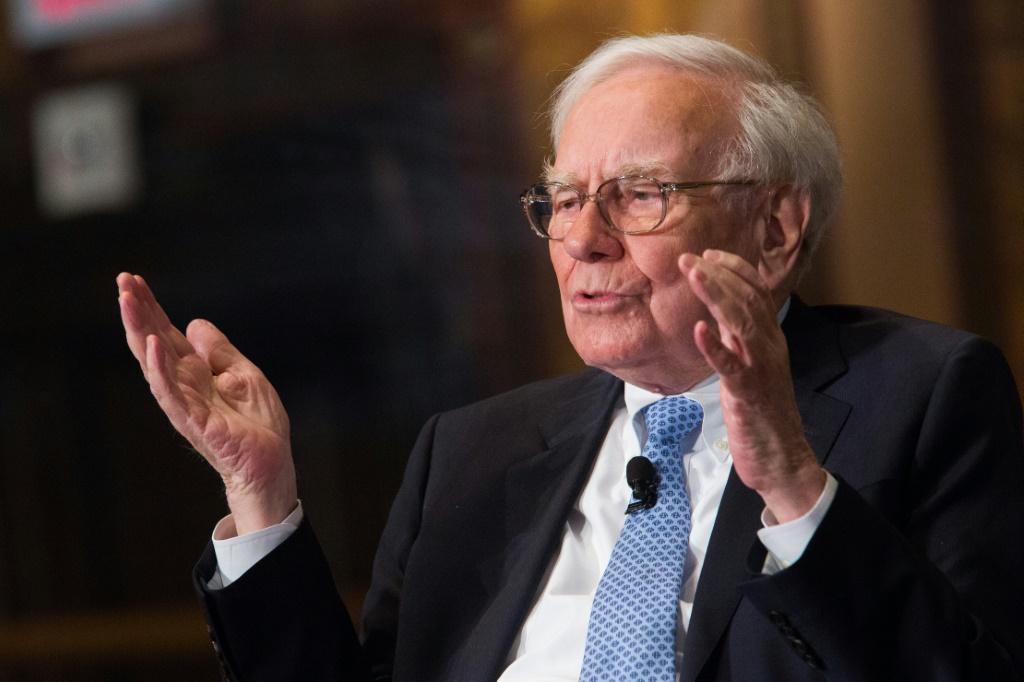
Warren Buffett told CNBC that Greg Abel is in line to be Berkshire Hathway's next CEO

OMAHA, Neb. — Warren Buffett’s warning that today’s stock market resembles “a church with a casino attached” is drawing fresh attention as Wall Street navigates one of its rockier stretches in months, with surging oil prices, rising bond yields, inflation pressure and renewed doubts about artificial intelligence spending all weighing on stocks at once.

Speaking in a CNBC interview around Berkshire Hathaway’s 2026 annual meeting earlier this year, Buffett was asked for his view on what he described as a historically expensive market. His response combined a familiar metaphor with a blunt caution about investor behavior. “I’ve compared the markets to a church with a casino attached,” Buffett said, explaining that the church represents long-term investing while the casino represents short-term risk-taking. “The casino has gotten very attractive to people,” he warned, adding that “that’s not investing, it’s not speculating, it’s gambling.”

Buffett was careful to note that his warning was not a blanket condemnation of the stock market itself. “That doesn’t mean that investing is terrible,” he said. “It does mean that prices for an awful lot of things will look very silly.”

That comment has taken on renewed relevance as markets have struggled in recent weeks. Oil prices have climbed sharply amid escalating tension in the Middle East, a discouraging inflation report has added to pressure on the Federal Reserve to raise interest rates, and turmoil in the bond market has pushed yields to some of their highest levels in years. Compounding those pressures, fresh concerns about the pace of artificial intelligence development have rattled technology stocks and cast a shadow over Anthropic’s planned initial public offering, expected in October, one of the most closely watched stock market debuts of the year.

Advertisement

Major indexes had climbed to repeated record highs in the years since the most recent bear market ended in 2022, a run that made it easy for some investors to grow complacent about risk. Even weak companies can see their share prices soar when speculative enthusiasm takes hold, but those gains typically prove unsustainable, and such stocks tend to suffer the steepest declines once the broader market turns lower.

One measure that has drawn particular attention from market watchers is the S&P 500 Shiller CAPE Ratio, a valuation metric dating back to 1871 that compares stock prices to average inflation-adjusted earnings over the preceding decade. The higher the ratio climbs, the greater the likelihood that the broader market is overvalued relative to historical norms. Over the past 155 years, the CAPE ratio has averaged around 17. It first spiked to nearly 35 just before the onset of the Great Depression, and later reached an all-time high of 44 during the dot-com bubble of the late 1990s, a level widely regarded in hindsight as a clear signal of significant overvaluation.

The ratio has remained elevated above 40 since May of this year, a level that places the current market among the most richly valued in its history, trailing only the dot-com era by that particular measure. While no single metric can reliably predict the market’s future direction, the elevated CAPE ratio adds statistical weight to Buffett’s broader warning about speculative excess building up in parts of the market.

History offers a sobering reminder of what has followed previous periods of extreme valuation. When the dot-com bubble burst in March 2000, the S&P 500 lost nearly half its value over the following two years. Just a few years later, the index faced the Great Recession, again losing more than half its value from peak to trough. Despite those two historic downturns occurring within less than a decade of each other, the S&P 500 has still delivered total returns exceeding 700% by today, underscoring Buffett’s broader point that long-term investing in the stock market has continued to reward patient investors even through severe periods of decline.

Advertisement

That long-term resilience is central to why Buffett’s warning is not, in itself, a call to abandon the stock market altogether. Rather, it reflects his long-held philosophy that investors should distinguish between disciplined, long-term investing grounded in a company’s underlying fundamentals and the kind of short-term speculative trading that can inflate valuations well beyond what businesses are realistically worth. Buying into hype-driven rallies may feel harmless while those investments continue climbing, but such positions carry outsized risk once market sentiment shifts and speculative excess begins to unwind.

For investors navigating the current environment, that distinction carries practical implications. Stocks purchased at fair valuations and backed by solid underlying business fundamentals have historically proven far more resilient during market downturns than those propelled higher primarily by speculative enthusiasm. As the current bout of market turbulence continues to play out, with the debate over AI development timelines, interest rate policy and geopolitical risk in the Middle East all contributing to volatility, Buffett’s decades-old framework for separating disciplined investing from speculation offers one lens through which investors can evaluate their own portfolios heading into a potentially turbulent stretch for markets.

Whether the current elevated valuations across the broader market prove to be a temporary feature of an unusually strong bull run or an early warning sign of a more significant correction remains, as always, impossible to predict with certainty. But with the Shiller CAPE Ratio sitting at levels not seen since the dot-com era, and with several distinct sources of market stress converging simultaneously, Buffett’s warning about the risks of treating speculation as investing appears, to many market observers, more timely now than when he first offered it earlier this year.

Advertisement
Continue Reading

Business

New B&G Foods CEO digging into brand strategy

Published

on

New B&G Foods CEO digging into brand strategy

BOSTON — Robert Mills will go “brand by brand” to develop strategies as he takes over leadership at B&G Foods, Inc.

“We have to go brand by brand and understand, is it structural or is it a moment in time?” he said Sept. 9 at the Barclays Global Consumer Staples Conference in Boston. “Is it macro? More importantly, what’s driving (the brand)? What’s the household penetration? What are the trends in the brand? What are the trends in the category? Are we priced correctly? Is there innovation?”

Mills became president and chief executive officer of B&G Foods, Parsippany, NJ, on Aug. 10, succeeding Casey Keller, who retired. Mills has been on the board of directors for B&G Foods since March 2018.

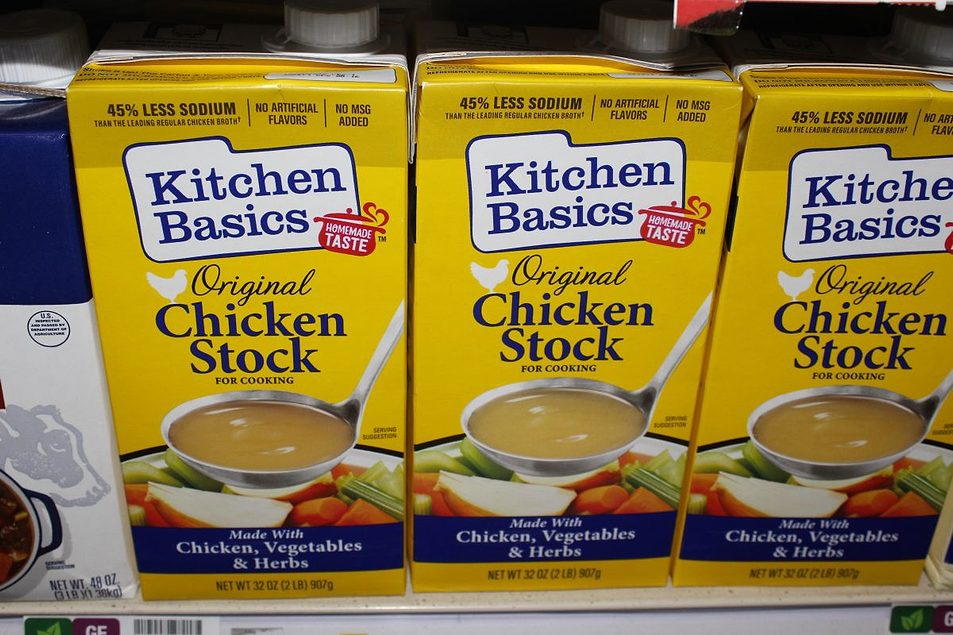
Two newly acquired brands will receive attention. B&G Foods in March completed its acquisition of the broth and stock business of Del Monte Foods Corp. and its affiliates, including the College Inn and Kitchen Basics brands, for approximately $110 million in cash.

Advertisement

“This is a great example where I think we’ve leveraged and made a smart investment,” Mills said. “We’ve brought in two brands at a lower multiple that’s able to be accretive on day one to our overall margin structure, and it is an on-trend demand with that consumer.”

B&G Foods needs to maintain College Inn’s position as a top brand among broths and stocks in the Northeast, Mills said, and Kitchen Basics is a premium brand in broths and stocks.

“It has grown under our watch over the last few months,” Mills said of Kitchen Basics. “We also see a tremendous opportunity to expand that and potentially take the brand into other categories.”

He noted that B&G Foods has found success outside of traditional measured channels in places like club stores, dollar stores, online and private label.

Advertisement

“This is an area that the team has focused on over the last couple of years, and it’s a key part of our strategy, and it will continue to be a key part of our strategy, especially when you look at plant utilization and where we can continue to take market share.

“With that being said, retail is the core of what our brands exist for, and we have underperformed there. We have to have a greater sense of urgency.”

Continue Reading

Business

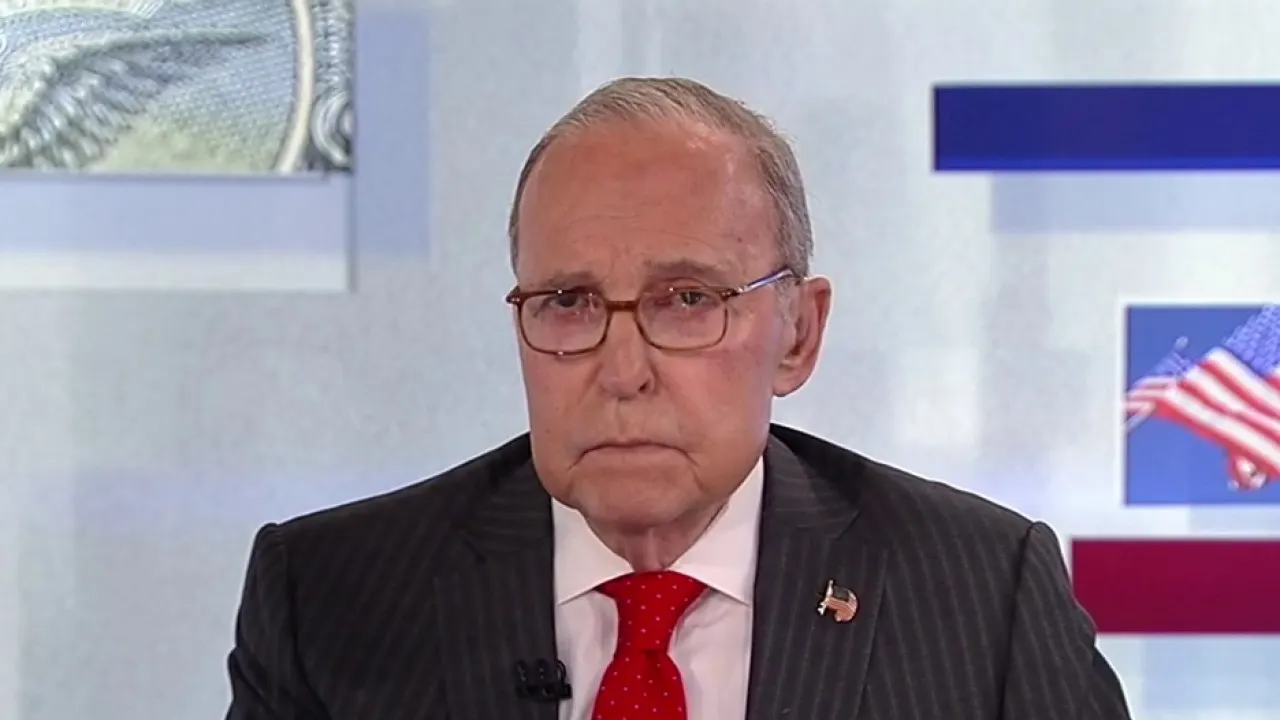
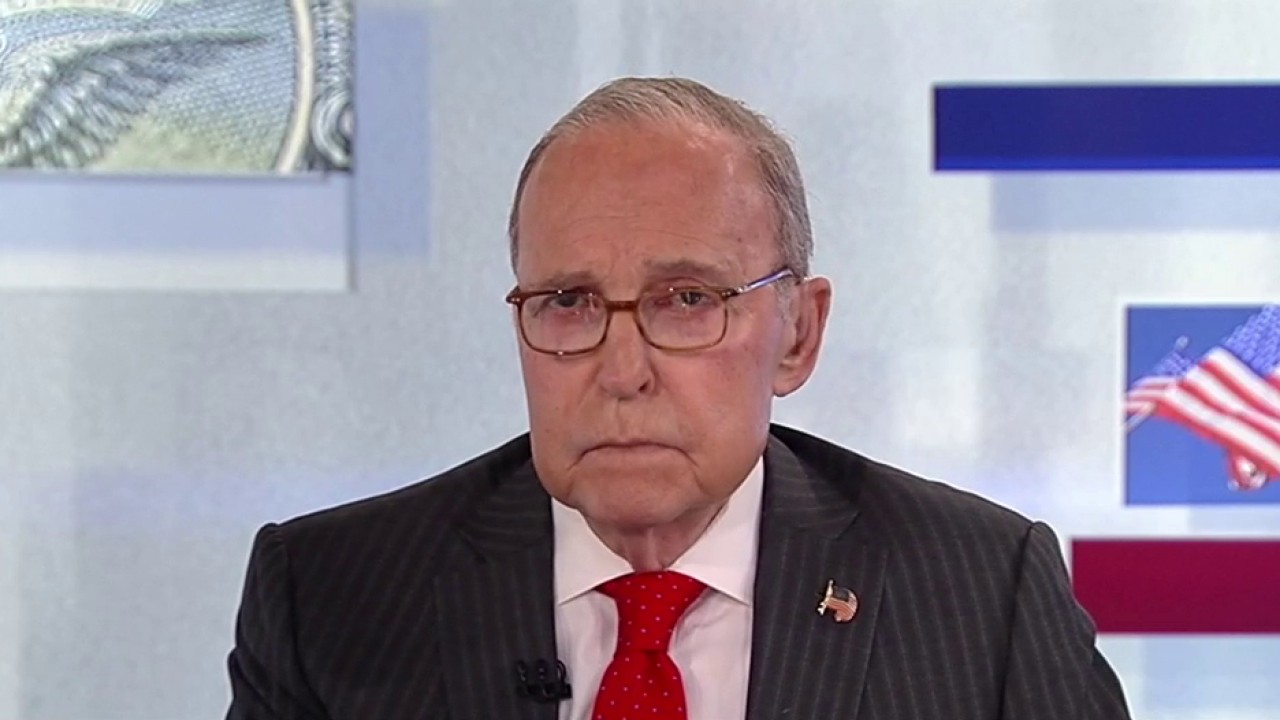
LARRY KUDLOW: The AI armageddon, like the climate hoax, is an election-year Democratic ruse

Published

on

LARRY KUDLOW: Unconditional deadlines should be the next Iranian step

When it comes to the frontiers of Artificial Intelligence, I’m surely not your run-of-the-mill expert. I have some sense of models, agents, and bots. And I think I understand concerns that rogue AI agents can break free of their human instructions, or what the industry sometimes calls “misalignment.”

Yes, humans need to be able to keep control of the machines. Yet I also know something about election year ruses, including political hoaxes, such as we’ve seen in the past. Now that Democrats, led by Senator Bernie Sanders, want the government to completely stop the AI industry, including agents, data centers, and the whole nine yards. Well, this has the feel of the Democrats’ hysteria, make that existential hysteria, during the Biden years over climate change.  Do you remember that?

It would have led to our complete economic ruination, were it not for President Trump’s re-election, and his revival of “drill, baby, drill,” which to a large extent has saved us from Iran and their friends in Communist China. Did I say China? Nobody in China is pulling back on AI. That’s part of the stupidity of the Bernie Sanders Democrats, and their apparent fellow travelers, at places like Anthropic and OpenAI.

Advertisement

If we just let free enterprise work its magic on this new technology, we will leave China and everybody else in the dust, as we create millions of new jobs at higher wages, leading to exponential prosperity, and even lower taxes. Plus, we will harness the technology, that is, if we stop government from running it. That’s the real Bernie Sanders agenda.

The White House technology advisor, David Sacks, in his recent tweet, has the story completely right. He’s basically saying if you want to slow down your models, fine, slow down your models. 

Then, in a hard hitting statement, Mr. Sacks adds: “But stop pretending you need anyone else’s permission. Stop pretending antitrust law has to be suspended so you can form a cartel. Stop pretending you need a regulatory approval process that supersedes product liability.” He urges: “stop pretending METR,” the non-profit Model Evaluation and Threat Research, “is independent when it is intertwined with Anthropic’s investors and staff.”

Advertisement

Mr. Sack asserts: “most of all, stop pretending the motivation to slow down is purely altruistic. You face massive product-liability exposure if your products enable a truly damaging cyberattack… So go ahead and pace the frontier. You are the ones setting it.” In Mr. Sack’s appraisal, “the easiest way not to build superintelligence is for you to agree not to build it. Demanding your preferred regulatory framework as the price of that will look like blackmail of the public and the political system. So just do it.”

Then he concludes “If you do, you’ll buy goodwill for the next conversation. If you don’t, we’ll know this was just another bid for regulatory capture — or an election-season psy-op.” That psy-op part is very important. Anthropic and others are left-leaning companies. And when they talk about world government, it’s time for everyone to flinch. I’m not for world anything. And you can be sure China, Russia, North Korea, Iran, and plenty of other American enemies and adversaries, won’t abide by world anything.

And then there’s Mr. Trump correctly raising the issue of a hoax no different from Russia, Russia, Russia. He asks why anybody would want to stop the greatest economic development engine in history. And he is right to ask that. But then our friend the ace New York Post columnist, Miranda Devine, provides some important research that the people behind Bernie Sanders and Anthropic, are CIA veterans of the Russia, Russia, Russia hoax that tried to stop Mr. Trump.

Advertisement

And unsurprisingly, this crowd is also tied in with President Obama, Congressman Hakeem Jeffries, and Senator Chuck Schumer. All this AI armageddon, is indeed “election season psy-op.” And even Nvidia’s chief executive, Jensen Huang, has dismissed the AI fearmongering as “complete nonsense,” at a recent Goldman Sachs conference. You know what? Luddites are bad enough, but left-wing election-year luddites are even worse. Ignore them.

Continue Reading

Business

General Mills execs say lowering base prices a priority

Published

on

General Mills execs say lowering base prices a priority


Advertisement


General Mills execs say lowering base prices a priority | Food Business News

Advertisement

Advertisement


Skip To Content

Advertisement

Continue Reading

Business

Law firm Devonshires launches its first office in Wales

Published

on

Business Live

Its new Cardiff office is headed by Liz Gibbons

Devonshires partners Lee Russell, Gemma Bell, Liz Gibbons, Victoria Smith, Jonathan Corris at the firm’s new Cardiff office.

Law firm Devonshires has launched its first office in Wales.

The new office in Cardiff builds on Devonshires’ longstanding track record in Wales, including acting on all major mergers in the housing association sector over the last five years.

Advertisement

It also acted for landlord parties in Beacon Cymru Group Limited & Ors v Mitchell & Ors, the landmark High Court test case on the practical and legal implications of the Renting Homes (Wales) Act 2016, widely regarded as one of the most significant housing law cases in Wales in recent years.

Devonshires also has offices in Birmingham, Colchester, Leeds and London with a workforce of nearly 300.

The Cardiff office is headed by real estate and social housing lawyer Liz Gibbons who has joins from Acuity Law.

Ms Gibbons said: “The firm is the preeminent national social and affordable housing specialist and already has an impressive track record working for clients across Wales, be it on major mergers or sector-defining test cases.

Advertisement

“This new office is a sign of our commitment to clients and prospects in Wales, which is an important market and one we want to help shape the growth of in the years ahead. Being physically located and embedded in the business community is essential to achieving this.”

She added: “It’s an exciting time to be working in Wales. With significant government funding available, there are new investment opportunities across the length and breadth of the country.

“With further legislative and regulatory change on the horizon, affordable and social housing providers will need access to the very best full-service legal advice to realise these growth ambitions.

“Devonshires is well placed to support with our deep understanding of both registered social landlords and the broader property market, and I look forward to bringing my experience to bear.”

Advertisement

Mark London, senior partner at Devonshires, said:“The opening of our Cardiff office is a significant milestone for Devonshires and reflects both the strength of our existing Welsh practice and our long-term commitment to the market.

“Wales is entering a period of significant opportunity, with ambitious plans for housing delivery, regeneration and infrastructure investment creating momentum across the built environment.

“Initiatives such as Unnos (Welsh Government planned at arm’s length housebuilding agency) have the potential to unlock new opportunities for collaboration and accelerate delivery, but organisations will need to navigate an increasingly complex legal, regulatory and commercial landscape to realise that ambition. Our role is to help clients do exactly that.

“Devonshires has a strong track record of supporting clients on many of the most significant matters affecting the Welsh housing and property sectors. With Liz leading our Cardiff office, we are exceptionally well placed to support organisations across housing, real estate, development and regeneration as they seize those opportunities.”

Advertisement

The firm’s Cardiff office is at Temple Court on Cathedral Road.

Continue Reading

Business

QQQI: A Dull Market Is The One Regime This Strategy Can’t Monetize (NASDAQ:QQQI)

Published

on

QQQI: A Dull Market Is The One Regime This Strategy Can't Monetize (NASDAQ:QQQI)

This article was written by

I am a stock analyst with over 20 years of experience in quantitative research, financial modeling, and risk management. My focus is on equity valuation, market trends, and portfolio optimization to uncover high-growth investment opportunities. As a former Vice President at Barclays, I led teams in model validation, stress testing, and regulatory finance, developing a deep expertise in both fundamental and technical analysis. Alongside my research partner (also my wife), I co-author investment research, combining our complementary strengths to deliver high-quality, data-driven insights. Our approach blends rigorous risk management with a long-term perspective on value creation. We have a particular interest in macroeconomic trends, corporate earnings, and financial statement analysis, aiming to provide actionable ideas for investors seeking to outperform the market.

Analyst’s Disclosure: I/we have no stock, option or similar derivative position in any of the companies mentioned, and no plans to initiate any such positions within the next 72 hours. I wrote this article myself, and it expresses my own opinions. I am not receiving compensation for it (other than from Seeking Alpha). I have no business relationship with any company whose stock is mentioned in this article.

Seeking Alpha’s Disclosure: Past performance is no guarantee of future results. No recommendation or advice is being given as to whether any investment is suitable for a particular investor. Any views or opinions expressed above may not reflect those of Seeking Alpha as a whole. Seeking Alpha is not a licensed securities dealer, broker or US investment adviser or investment bank. Our analysts are third party authors that include both professional investors and individual investors who may not be licensed or certified by any institute or regulatory body.

Advertisement
Continue Reading

Trending

Copyright © 2025