The venues are among eight in the West of England to receive funding through the Arts Everywhere scheme
14:49, 14 Apr 2026Updated 15:47, 14 Apr 2026
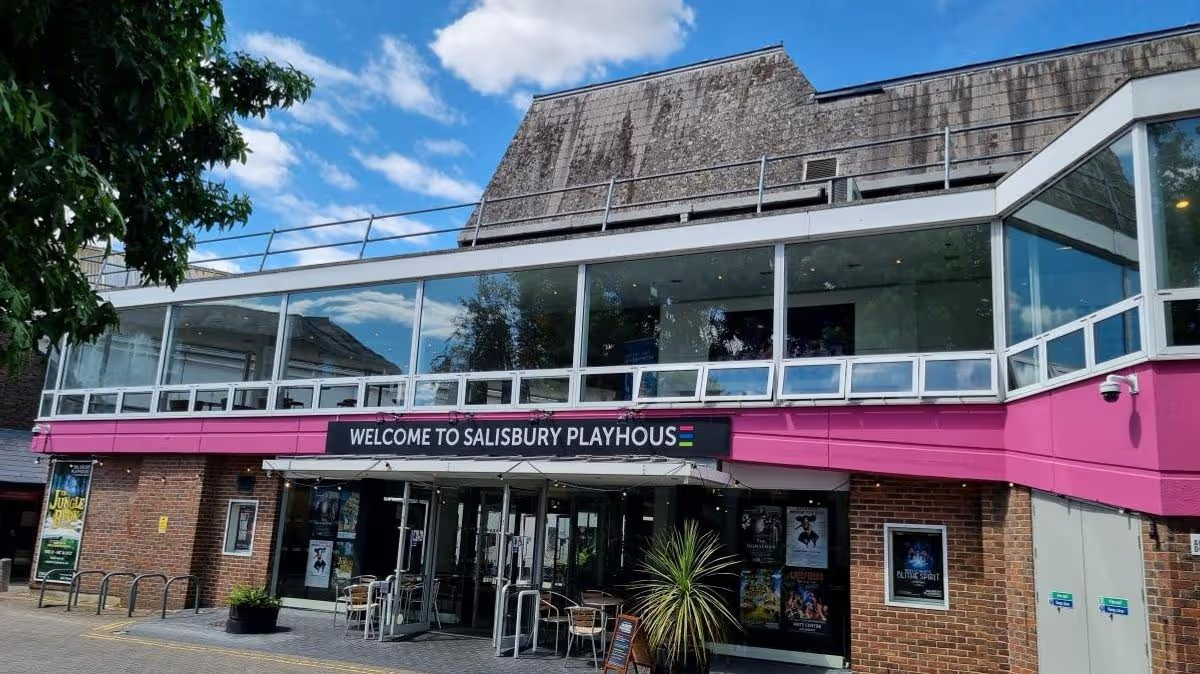
Salisbury Playhouse is turning 50 this year(Image: Wiltshire Creative)
Salisbury Playhouse and Plymouth’s Theatre Royal are set to be transformed after receiving a share of £130m. The venues are among eight in the West of England to be awarded cash through Arts Council England’s Arts Everywhere scheme, which is aimed at protecting cultural establishments around the UK.
Wiltshire Creative, which runs the Salisbury Playhouse, secured £3m while the Theatre Royal was granted more than £8.3m. Other venues to receive money include Somerset’s Taunton Theatre Association (£527,083) and Newlyn Art Gallery in Cornwall (£726,599).
Advertisement
Salisbury Playhouse is Wiltshire’s only producing theatre and has more than 100,000 visitors each year. It is understood the theatre, which turns 50 this year, will use the government funding for modernising, including carrying out repairs, becoming more accessible and making sustainability improvements. including new toilets, lifts and a Changing Places facility.
Meanwhile, Theatre Royal Plymouth will use its own funds to address infrastructure needs and to make sure the theatre is “welcoming, safe and inspiring”.
Rosa Corbishley, co‑chief executive and executive director of Wiltshire Creative, said: “Salisbury Playhouse has been a hub for creativity in Wiltshire for 50 years – creating bold, ambitious theatre, nurturing talent and bringing communities together through shared cultural experiences.
“As the county’s only producing theatre, our reach extends far beyond our walls – we play a key part in the UK’s national theatre network and offering.”
Advertisement
John Glen, MP for Salisbury,said the investment was “hugely welcome” for one of Salisbury’s “most important” cultural assets. “These improvements will help ensure the theatre remains accessible, sustainable and able to inspire audiences for many years to come,” he said.
Meanwhile, James Mackenzie-Blackman, Theatre Royal Plymouth’s chief executive and artistic director, said receiving funding was “an incredible vote of confidence” in the city’s theatre.
“Our building has been a home for millions of people, some discovering theatre for the very first time, others returning again and again,” he said.
“It has always been about more than bricks and mortar; it’s about creativity, connection and shared experiences. This investment allows us to protect what makes this place so special, while reimagining what it can be for generations to come.”
Advertisement
A total of 130 cultural venues, museums and libraries across the UK are set to receive arts funding. According to the government, the aim is to “ensure that everyone can access arts and culture in the places they call home”.
Culture secretary Lisa Nandy said: “Arts and culture aren’t a luxury for a privileged few. They are for everyone, everywhere. They bring people together, open doors, and support our shared sense of belonging. That’s the role they can play as we build a stronger future for our country.”
Arts Council England chair Sir Nicholas Serota added: “After significant financial pressures in recent years, this vital investment will help organisations to secure futures where they thrive and not just survive.”
South West venues to receive Arts Everywhere funding
My name is Andres Veurink and I have been in the financial markets for over a decade at this point, spending the majority of that in a hedge fund here in Rotterdam, working my way up as an analyst. My work relfect rigourious standards as I myself have a very high standard as to what I invest my money in. My preferred sectors to follow are tech, specifically SaaS and cloud business but recently I’ve also taken up an interest in writing about the energy and minerals sectors, two areas I’m quite familiar with having followed them for over a decade at this point. I find these offer incredible growth opportunities and are also very fun to research and follow. It’s a very active space with plenty of news coming out each week. Work is my own thoughs and research is done only by myself.
Analyst’s Disclosure: I/we have no stock, option or similar derivative position in any of the companies mentioned, and no plans to initiate any such positions within the next 72 hours. I wrote this article myself, and it expresses my own opinions. I am not receiving compensation for it (other than from Seeking Alpha). I have no business relationship with any company whose stock is mentioned in this article.
Seeking Alpha’s Disclosure: Past performance is no guarantee of future results. No recommendation or advice is being given as to whether any investment is suitable for a particular investor. Any views or opinions expressed above may not reflect those of Seeking Alpha as a whole. Seeking Alpha is not a licensed securities dealer, broker or US investment adviser or investment bank. Our analysts are third party authors that include both professional investors and individual investors who may not be licensed or certified by any institute or regulatory body.
DUBAI, United Arab Emirates — U.S. and Iranian forces exchanged fire in the Strait of Hormuz on Monday as Washington launched an ambitious operation to escort stranded commercial vessels through the vital waterway, testing a shaky ceasefire and sending oil prices surging toward four-year highs.
President Donald Trump announced “Project Freedom” on Sunday, directing U.S. military assets to guide ships trapped in the Persian Gulf since Iran largely closed the strait earlier in the conflict. By Monday afternoon, U.S. Central Command reported that two American-flagged merchant vessels had successfully transited the narrow passage, but not without incident.
Adm. Brad Cooper, commander of U.S. Central Command, said American forces sank at least six Iranian small boats attempting to interfere with commercial shipping. Iran launched cruise missiles, drones and other attacks targeting vessels under U.S. protection, he added. All threats were neutralized, according to the military.
The clashes come amid broader strains on a ceasefire that took hold in early April after months of U.S.-Israeli strikes on Iran and Iranian retaliation that included blocking the strait. Iran has denied full control claims while accusing the U.S. of aggression, and reports emerged of Iranian strikes on targets in the United Arab Emirates.
Advertisement
Strategic Chokepoint Under Siege
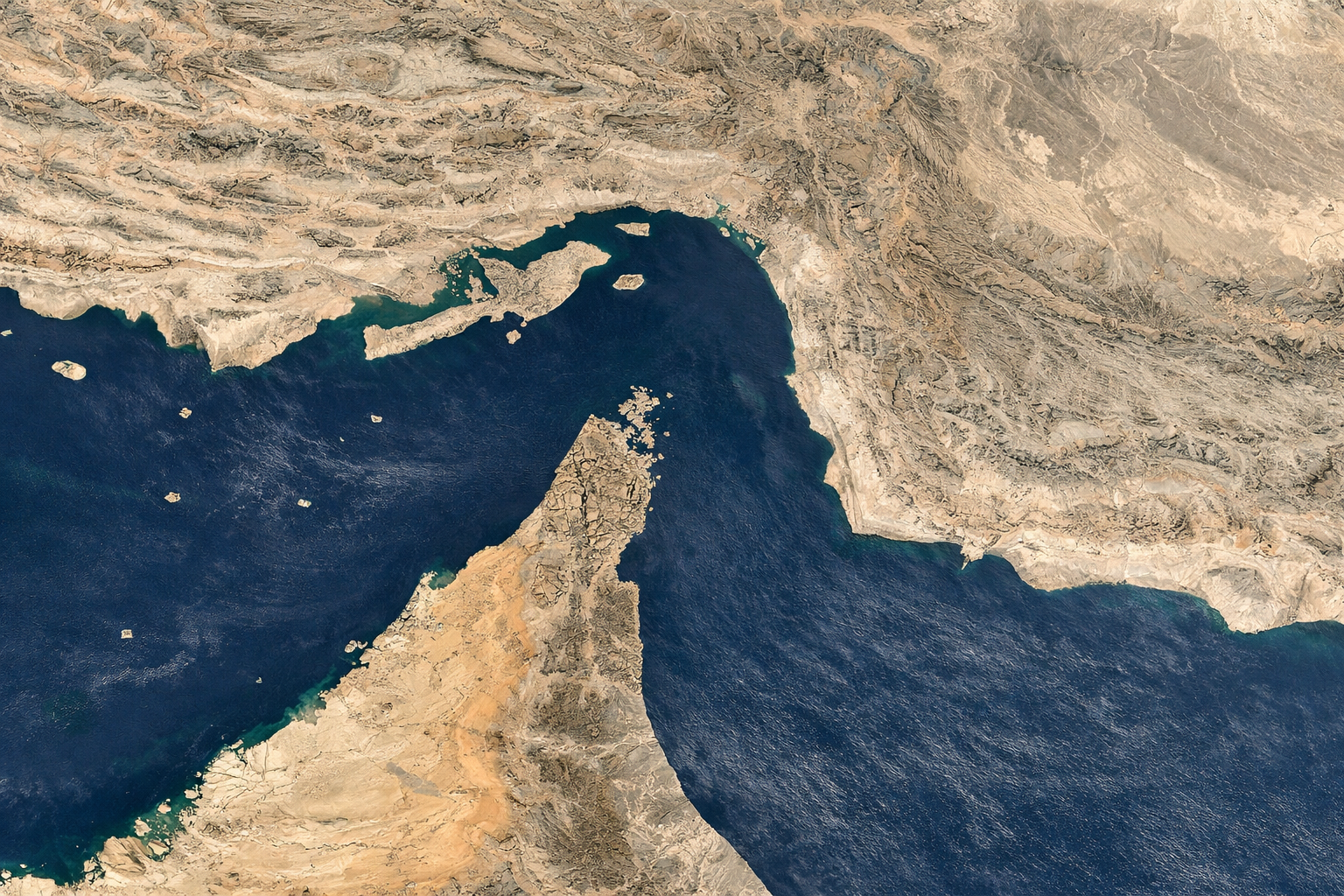
The Strait of Hormuz, a narrow passage between the Persian Gulf and the Gulf of Oman, handles about 20% of global oil shipments and significant liquefied natural gas volumes under normal conditions. Roughly 125 to 140 vessels typically transit daily in peacetime. Traffic has plummeted to a fraction of that since fighting intensified, stranding an estimated 2,000 ships and up to 20,000 seafarers.
Iran has used the strait as leverage, imposing restrictions, charging high tolls on some vessels and selectively allowing passage for allies such as China and India. The U.S. responded with its own naval blockade on Iranian shipping starting in mid-April, turning back dozens of vessels.
On Monday, Iran’s navy claimed it prevented U.S. warships from entering the strait with warning shots, while semi-official media reported missile strikes on a U.S. vessel near the southern entrance. U.S. officials denied any warship was hit.
Advertisement
Oil Markets React Sharply
Brent crude futures jumped nearly 6% on Monday, trading above $114 per barrel at peaks — the highest since mid-2022 — before easing slightly. The surge reflects fears of prolonged disruption to Middle East energy flows at a time when global supplies are already tight.
Energy analysts warned that sustained closure or heightened risk in the strait could push prices even higher, rippling through gasoline costs worldwide and complicating economic recoveries. Major importers in Asia and Europe are scrambling for alternative supplies, though rerouting adds significant time and expense.
Broader Regional Fallout
Advertisement
The United Arab Emirates reported Iranian attacks on its territory, including a fire at the oil port of Fujairah. Oman also saw incidents along its coastline near the strait. These developments raise questions about the durability of the ceasefire negotiated in recent weeks.
Tehran has not fully confirmed or denied the latest strikes but maintains it retains capabilities to disrupt shipping. Iranian officials have warned of further retaliation if U.S. forces continue operations in what they consider their territorial waters.
The International Maritime Organization and maritime unions have expressed deep concern for seafarer safety. Insurers have grown reluctant to cover vessels in the area, driving up premiums or leading to outright denials of coverage. Thousands of crew members remain stuck aboard immobilized ships with dwindling supplies.
Trump Administration’s Strategy
Advertisement
Project Freedom marks a bold escalation in U.S. efforts to restore freedom of navigation. Trump described the mission as essential to preventing a global energy crisis and protecting commercial interests. U.S. naval assets, including destroyers and helicopters, are providing escort and mine-clearance support.
Military officials emphasized that operations aim to create safe corridors rather than engage in full-scale combat. However, the presence of Iranian Revolutionary Guard boats and potential mines adds significant risk. At least seven Iranian fast boats were reportedly destroyed or disabled in Monday’s skirmishes.
Critics worry the initiative could draw the U.S. deeper into direct confrontation, while supporters argue that allowing Iran to control the strait sets a dangerous precedent for international waterways.
Economic and Diplomatic Ripples
Advertisement
The crisis has already disrupted global supply chains. Qatar declared force majeure on some LNG exports, and petrochemical facilities in the region have faced operational halts. Asian buyers, heavily reliant on Gulf crude, are turning to higher-cost sources from the U.S., Latin America and West Africa.
Diplomatically, efforts continue behind the scenes. Mediators from Oman, Qatar and others are pushing for renewed talks, but trust remains low. A second round of discussions in Islamabad has been floated but not confirmed.
The United Nations has called for de-escalation, highlighting the humanitarian impact on mariners and the risk to global energy security. Shipping associations urge both sides to prioritize safe passage for civilian vessels.
Historical Context and Risks
Advertisement
The Strait of Hormuz has long been a flashpoint. Iran has threatened closure during past tensions, though never fully sustained it until the current conflict. Previous incidents involved mine-laying and tanker attacks in the 1980s “Tanker War.”
Today’s environment is more complex, with drones, precision missiles and cyber elements adding layers of danger. Experts caution that miscalculation could rapidly expand the conflict beyond the waterway.
U.S. Treasury officials have warned shipping companies against paying Iranian tolls, threatening sanctions. This further complicates commercial decisions for operators caught between competing demands.
Looking Ahead
Advertisement
As operations continue, markets will watch closely for signs of sustained safe passage or renewed escalation. Any successful transits under U.S. escort could ease pressure on oil prices, while further attacks might trigger panic buying and broader economic fallout.
For the thousands of seafarers still stranded, every day brings heightened anxiety. Humanitarian corridors and coordinated international efforts may be needed if military actions fail to restore normal traffic quickly.
The situation in the Strait of Hormuz remains fluid, with global implications hanging in the balance. Diplomats, military commanders and energy executives are all racing against time to prevent a full-blown crisis from engulfing the region and beyond.
TUCSON, Ariz. — Three months after 84-year-old Nancy Guthrie vanished from her Catalina Foothills home in a suspected nighttime abduction, investigators continue to pursue leads with no arrests, no confirmed suspects and no definitive answers about her fate, even as new DNA analysis offers a glimmer of hope in the high-profile case.
Nancy Guthrie & Savannah Guthrie
Nancy Guthrie, mother of NBC “Today” show co-anchor Savannah Guthrie, was reported missing on Feb. 1 after family members grew concerned when she failed to attend church services. Authorities believe she was taken from her bedroom in the early morning hours of Feb. 1, around 2:30 a.m., when her pacemaker lost connection to her phone, indicating it had moved out of range.
Evidence at the scene pointed strongly to foul play. Investigators found blood on the front porch, a back door propped open and doorbell camera footage showing a masked individual tampering with the device shortly before the disappearance. Pima County Sheriff Chris Nanos has repeatedly stated he believes Nancy Guthrie was abducted against her will.
Ongoing Investigation Enters Fourth Month
As of early May 2026, the search has stretched into its fourth month with no major breakthroughs. The Pima County Sheriff’s Department, working closely with the FBI, describes the investigation as “active and ongoing,” with hundreds of tips received and analyzed.
Advertisement
“The investigation into the disappearance of Nancy Guthrie remains active and ongoing,” a sheriff’s department spokesperson said in a recent statement. No motive has been publicly identified, and authorities have not named any suspects.
Forensic efforts continue. In mid-April, reports emerged that the FBI is analyzing hair and potential DNA samples collected from the home in February. Sources familiar with the probe told outlets that advanced laboratory techniques are being used in hopes of generating a usable profile that could identify whoever entered the residence.
Sheriff’s officials later clarified that while analysis is ongoing, no dramatic new evidence has suddenly emerged. Private labs and federal partners continue sharing data, but results have not yet yielded a breakthrough.
Family’s Anguish and Million-Dollar Reward
Advertisement
Savannah Guthrie, who stepped away from her “Today” duties for several weeks following her mother’s disappearance, has returned to the show while remaining deeply involved in appeals for information. In late February, the family offered a $1 million reward for details leading to Nancy’s safe recovery.
In a emotional video statement, Savannah addressed the public directly, expressing both hope and the painful reality that her mother might no longer be alive. “We will pay” for credible information, she emphasized, while acknowledging the family’s understanding of the grim possibilities.
The family has endured additional torment from multiple ransom notes sent to media outlets, including TMZ. These communications claimed various scenarios, such as Nancy being taken to Mexico, but authorities have not confirmed their legitimacy. Former FBI agents described the tactic of routing demands through the press as highly unusual and potentially indicative of hoaxers or opportunists.
Savannah has spoken publicly about the toll, including conversations with her brother suggesting the abduction could be linked to her own public profile. She expressed regret over any way her celebrity might have drawn unwanted attention to her mother.
Advertisement
Chilling Details Emerge
The case has captivated national attention due to its puzzling circumstances. Nancy Guthrie lived in the same home for decades in an upscale neighborhood north of Tucson. She was described as active in her church community and independent despite her age.
Surveillance video released by authorities showed the masked figure at the door. Other footage from earlier that day captured Nancy in an Uber, marking what may have been her final known movements. Neighbors reported no unusual activity beforehand, adding to the mystery.
Experts, including former FBI profilers and “Mindhunter”-style analysts, have speculated on possible motives. Some suggest a simple ransom kidnapping gone wrong, with the perpetrator possibly someone known to Nancy or familiar with the area. Others have raised questions about whether the abduction was staged, though law enforcement has not endorsed that theory.
Advertisement
Forensic psychologist and clinical researchers have pointed to signs that the suspect likely had some prior interaction with the victim or scouted the home. Multiple people may have been involved, officials have not ruled out.
Broader Search Efforts and Community Response
The investigation has involved extensive ground searches, aerial support and coordination with federal agencies. False leads, including vehicle searches and detentions, have come and gone without resolution. Calls have grown for specialized volunteer groups, such as the Cajun Navy, to assist in desert areas, though official responses have been measured.
The case has highlighted challenges in missing persons investigations involving elderly victims, especially when celebrity connections amplify public interest but also complicate leads with hoaxes and speculation.
Advertisement
Nancy’s pacemaker data and other digital evidence have been crucial in narrowing the timeline. Blood found at the scene underwent testing, though full results have not been publicly detailed.
Expert Opinions and Theories
Retired FBI agents and criminologists have offered varied analyses. One former official described the motive as potentially “simple” — a ransom attempt where the victim may not have survived, followed by taunting communications to prolong family suffering. Others note the absence of clear proof of life as a troubling sign.
Speculation about family involvement has circulated online but was firmly rejected by authorities, who have cleared close relatives.
Advertisement
As the case approaches 100 days, some observers worry it could drift toward cold case status, though officials insist resources remain dedicated. A television special examining the mystery is scheduled to air in early May.
What Comes Next
Investigators continue sifting through tips and awaiting lab results. The FBI offers its own reward of up to $100,000. Anyone with information is urged to contact the Pima County Sheriff’s Department or the FBI.
For the Guthrie family, each day without answers brings renewed pain. Savannah has balanced professional responsibilities with private grief, occasionally sharing updates that underscore the human cost behind the headlines.
Advertisement
Nancy Ellen Long Guthrie, born in 1942 in Kentucky, remains a beloved figure to her family and community. Her disappearance has left an 84-year-old void that no amount of media coverage can fill.
The case serves as a stark reminder of vulnerabilities even in seemingly safe neighborhoods. As summer approaches in the Arizona desert, concerns grow about evidence preservation and the chances of locating Nancy alive.
Authorities and the family plead for the public’s help. In a case marked by more questions than answers, one breakthrough — whether from DNA, a credible tip or new footage — could finally bring resolution to a mystery that has gripped the nation.
This is the forum for daily political discussion on Seeking Alpha. A new version is published every market day.
Please don’t leave political comments on other articles or posts on the site.
The comments below are not regulated with the same rigor as the rest of the site, and this is an ‘enter at your own risk’ area as discussion can get very heated. If you can’t stand the heat… you know what they say…
More on Today’s Markets:
Advertisement
Moderation Guidelines:
We remove comments under the following categories:
Personal attacks on another user account
Anti-Vaxxer or covid related misinformation
Stereotyping, prejudiced or racist language about individuals or the topic under discussion.
Inciting violence messages, encouraging hate groups and political violence.
Regardless of which side of the political divide you find yourself, please be courteous and don’t direct abuse at other users.
For any issue with regards to comments please email us at : moderation@seekingalpha.com.
Seeking Alpha’s Disclosure: Past performance is no guarantee of future results. No recommendation or advice is being given as to whether any investment is suitable for a particular investor. Any views or opinions expressed above may not reflect those of Seeking Alpha as a whole. Seeking Alpha is not a licensed securities dealer, broker or US investment adviser or investment bank. Our analysts are third party authors that include both professional investors and individual investors who may not be licensed or certified by any institute or regulatory body.














































You must be logged in to post a comment Login