Connect with us
DAPA Banner
DAPA Coin
DAPA
COIN PAYMENT ASSET
PRIVACY · BLOCKDAG · HOMOMORPHIC ENCRYPTION · RUST
ElGamal Encrypted MINE DAPA
🚫 GENESIS SOLD OUT
DAPAPAY COMING

Business

Scotts Miracle-Gro rating upgraded by S&P on better metrics

Published

on

Continue Reading

Click to comment

You must be logged in to post a comment Login

Leave a Reply

Business

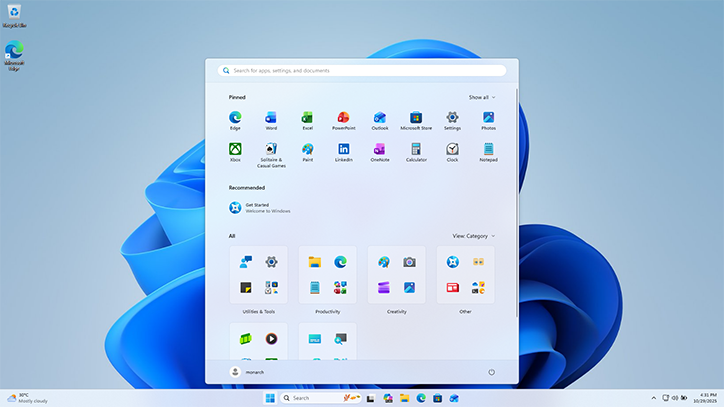
Windows 11 Update KB5094126 Triggers Boot Failures and BitLocker Recovery on Business PCs

Published

on

Microsoft Windows 11

A recent Windows 11 update is causing significant startup problems for some users, including boot failures, BitLocker recovery screens and blue screen errors, primarily affecting business devices from manufacturers like HP and Dell.

The update, identified as KB5094126 and released on June 9, 2026, has been linked to issues with Secure Boot and the EFI system partition on systems with limited space. Microsoft has not yet issued an official statement addressing the reports, but affected users are documenting the problems across forums, Reddit threads and feedback channels.

The patch was intended to address approximately 200 security vulnerabilities, including critical flaws and zero-day exploits, while introducing performance enhancements such as a new low-latency profile. Despite these benefits, the update has created operational disruptions for a subset of users, particularly those running enterprise configurations.

Scope of the Issues

Advertisement

Reports indicate that some PCs fail to boot normally after installation, instead entering BitLocker recovery mode that requires the recovery key or displaying blue screen errors. HP EliteBook, ProBook and ZBook models, along with certain Dell Precision workstations, appear especially vulnerable. In some cases, devices become stuck in boot loops, complicating recovery efforts.

The root cause appears tied to updates to Secure Boot certificates and new boot components. Systems with small EFI partitions — sometimes as little as 100 MB — may lack sufficient free space for these changes. Windows event logs have shown TPM-WMI errors related to insufficient EFI partition space. HP systems may be more susceptible because firmware and recovery data often occupy additional space in the EFI partition.

One affected user described the experience as devices becoming unresponsive after the update, requiring manual intervention through BIOS settings. Microsoft has not confirmed the exact number of impacted systems, but community reports suggest the issue is concentrated among business PCs with specific hardware configurations.

Workarounds and Recovery Steps

Advertisement

Users experiencing these problems have shared potential workarounds. One common approach involves accessing the BIOS or UEFI settings — often by pressing Esc during startup on HP devices — disabling Secure Boot, allowing the update to complete, and then re-enabling Secure Boot. Having the BitLocker recovery key readily available is essential for this process.

Updating the BIOS or UEFI to the latest version is also recommended, as outdated firmware may exacerbate compatibility issues. For systems already stuck, recovery options through Windows installation media or safe mode may be necessary, though these steps carry risks for non-technical users.

Enterprise IT teams have reported increased support tickets as organizations work to restore affected devices. The issues highlight the challenges of deploying large updates across diverse hardware environments, particularly in business settings with strict security configurations.

Additional Disruptions Reported

Advertisement

Beyond boot problems, the update has caused secondary issues for some users. OneDrive integration with File Explorer has become unresponsive in certain cases, with the cloud storage icon failing to react when clicked. Files remain accessible through direct folder navigation, but the seamless integration many users rely on is disrupted.

Isolated reports mention similar problems with Dropbox and iCloud Drive, though these appear less widespread. Microsoft Word’s integration with third-party software in specialized enterprise environments, such as medical and accounting applications, has also been affected. While Word itself functions, automated workflows using the program in the background may fail.

Changes to the desktop.ini file have led to lost custom folder views or icons when files are flagged as untrusted. These ancillary problems add to user frustration even on systems that successfully boot after the update.

Microsoft’s Security Focus and Update Context

Advertisement

KB5094126 was classified as an important update due to the extensive security patches it delivers. Microsoft regularly releases cumulative updates to address vulnerabilities and improve system stability, but the scale of changes in this patch appears to have introduced compatibility challenges on specific hardware setups.

The company’s emphasis on security is evident in the volume of fixes, but the lack of immediate public acknowledgment of the boot and BitLocker issues has left users seeking information from community sources. Microsoft typically monitors feedback channels closely and releases follow-up patches when widespread problems emerge.

Users are advised to check the Windows Update settings and Feedback Hub for any emerging fixes. In the meantime, backing up important data and documenting system configurations can help during troubleshooting.

Broader Implications for Windows Users

Advertisement

The problems highlight ongoing challenges in maintaining compatibility across the diverse Windows ecosystem. Business devices with specialized configurations, legacy hardware or tight security policies are often the first to encounter issues with major updates.

Enterprise environments may need to implement staged rollout strategies or additional testing before applying future patches. Individual users facing boot issues should prioritize data recovery and consider professional assistance if standard troubleshooting fails.

The incident also underscores the importance of maintaining current BIOS/UEFI firmware and ensuring adequate EFI partition space on systems expected to receive frequent updates. As Windows 11 continues to evolve with new security and performance features, hardware requirements and preparation steps become increasingly critical.

Recommendations for Affected Users

Advertisement

Microsoft recommends standard troubleshooting steps, including restarting devices, running system file checks and using recovery environments when necessary. For BitLocker-affected systems, having recovery keys stored securely in advance is essential.

IT administrators in organizations should monitor Microsoft’s service health dashboard and apply updates selectively if possible. Testing updates in non-production environments can help identify potential conflicts before widespread deployment.

Users experiencing persistent issues are encouraged to report details through the Feedback Hub or official support channels. Providing system specifications, error codes and update history can help Microsoft diagnose and address the problems more effectively.

Microsoft’s Track Record and Future Outlook

Advertisement

Microsoft has a history of quickly addressing widespread update issues with follow-up patches. Previous incidents involving boot problems or BitLocker triggers have typically been resolved within days or weeks through targeted fixes.

The current situation may prompt Microsoft to issue guidance or a supplemental update specifically targeting the EFI partition and Secure Boot changes. As Windows 11 matures, the company continues refining its update processes to minimize disruptions while delivering necessary security improvements.

For now, affected users are navigating a period of uncertainty as they await official acknowledgment and resolution. The broader Windows community remains active in sharing workarounds and experiences, highlighting the collaborative nature of troubleshooting complex software issues.

The June 2026 update serves as a reminder of the delicate balance between rapid security enhancements and system stability. As Microsoft pushes forward with Windows 11 improvements, ensuring broad compatibility across hardware configurations will remain a key priority for maintaining user trust and platform reliability.

Advertisement
Continue Reading

Business

Thames Water nearer to nationalisation after government rejects rescue deal

Published

on

Business Live

The environment secretary is concerned it would put an ‘undue burden’ on consumers

A Thames Water van parked on a street

A Thames Water van parked in a residential street(Image: No credit)

Struggling utilities firm Thames Water is reportedly edging closer to public ownership after the UK government rejected a £10bn rescue package for the business.

It is understood environment secretary Emma Reynolds wrote to water regulator Ofwat on Monday, saying the current terms would put an “undue burden” on consumers.

Advertisement

Last year, a group of Thames Water creditors put forward a deal for the struggling supplier, pledging an extra £1bn in investment and plans to write off around a third of the firm’s near-£20bn debt pile.

Thames Water covers a large area of London and the Thames Valley as well as Oxfordshire, Berkshire, Wiltshire and Gloucestershire, and has some 16 million customers.

The company slumped to a £1.65bn annual loss in July. It was also handed £122.7m fine last year – the largest ever issued by Ofwat – for failing to comply with rules around sewage spills and shareholder payouts.

According to the Times, which first reported the news, the latest deal would have spared creditors London & Valley performance penalties for four years in exchange for higher investment levels.

Advertisement

But a government spokesperson said the current offer “does not do enough to protect consumers or the environment”.

Meanwhile, it is understood that Thames Water and its lenders believe a market-led solution would be better for the business.

If Ofwat does not approve a rescue plan for Thames Water – or its creditors withdraw – it could be placed in a special administration regime, a form of temporary renationalisation.

Ms Reynolds is due to explain her decision to ministers later on Tuesday.

Advertisement

A spokesperson for Thames Water said: “We remain of the view that a market-led solution is the best way to secure the long-term stability needed to continue improving performance and advancing our turnaround plan, for the benefit of customers, the environment and our stakeholders.

“Our priorities remain on providing safe, resilient services for customers, supporting our colleagues and working closely with suppliers, government and regulators.”

If the company does collapse, households will still have drinking water and sewerage services.

“We are reviewing the letter from the Secretary of State and considering her views on the current proposal,” a spokesperson for Ofwat said.

Advertisement

“Ofwat’s board has not made a decision on the proposal. We continue to engage with London & Valley Water and are reviewing their plans carefully to assess whether they deliver a turnaround in the company’s operational performance and strengthen its financial resilience to the benefit of customers and the environment.”

Continue Reading

Business

How Traders Are Pricing the New Competitive Divide

Published

on

Legacy tech hinders AI projects across the Asia Pacific

The US–China AI performance gap has effectively closed at the frontier level. As of March 2026, the top US model leads the top Chinese model by just 39 Arena points, or 2.7%, on the Arena Leaderboard — a community-driven benchmark widely regarded as a reliable real-world proxy for model quality. That near-parity is what’s forcing traders to look beyond raw benchmarks.


Traders analyzing the divergence between US and Chinese AI models focus on various indicators to assess the competitive landscape. Key factors include technological advancements, research breakthroughs, and patent registrations, which signal the strength and innovation capacity of each country’s AI sector. Traders monitor official announcements, government policies, and funding initiatives that influence AI development and deployment, providing insights into future growth potential.

Market sentiment and investor confidence also play a significant role. When one country demonstrates rapid progress or introduces groundbreaking models, it can sway investment flows and impact stock prices of related tech firms. Traders use sentiment analysis tools alongside news feeds to gauge public and institutional perception, helping to predict short-term market movements driven by AI model developments.


The Core Framework: It’s No Longer Just About Capability

The old question — who has the smartest AI? — has given way to a more nuanced one that traders actually care about: who derives the most economic value from AI?

Advertisement

The US–China AI performance gap has effectively closed at the frontier level. As of March 2026, the top US model leads the top Chinese model by just 39 Arena points, or 2.7%, on the Arena Leaderboard — a community-driven benchmark widely regarded as a reliable real-world proxy for model quality. That near-parity is what’s forcing traders to look beyond raw benchmarks.


Key Dimensions Traders Are Watching

1. The Cost-Performance Trade-off

This is arguably the most market-moving variable. Chinese AI is finding strong product-market fit by offering roughly 80% of the performance at 10% of the cost of American alternatives. While US companies compete for the high-end enterprise market, Chinese models are quietly becoming the infrastructure for cost-sensitive markets in Southeast Asia, Africa, and Latin America.

Fidelity International’s Chief Equity Investment Officer has noted that Chinese AI models have demonstrated steady performance advancements while requiring significantly lower R&D investments compared to US counterparts — suggesting consumers and businesses could access superior products and services at lower costs, with positive knock-on effects for the broader economy.

2. The Efficiency Paradox & Chip War Dynamics

A critical component of the divergence is what analysts call the “efficiency paradox.” While the US creates theoretically more capable models, their operational costs remain prohibitively high for many everyday applications. China’s focus on smaller, optimized models allows inference to happen on consumer devices or significantly cheaper servers.

Advertisement

This constraint has been caused by the semiconductor trade war. With Washington restricting the export of the most advanced Nvidia H200 chips, Chinese developers have had no choice but to write more efficient code, inadvertently cultivating a software ecosystem that is remarkably resilient.

Huawei expects AI chip revenue to reach roughly $12 billion in 2026, up from $7.5 billion in 2025. Nvidia’s share of the Chinese AI accelerator market has effectively collapsed to zero — a development that Nvidia’s CEO Jensen Huang has described as a “horrible outcome” for the United States.

3. Deployment Scale vs. Frontier Innovation

Traders are increasingly distinguishing between who builds the best models and who deploys AI most broadly. China leads in implementation scale — with 67% manufacturing AI adoption — while the US dominates enterprise software, with 71% of Fortune 500 companies using AI. The US controls 67% of the commercial LLM market with superior benchmark performance, but China dominates 67% of edge AI chip manufacturing.

China has adopted a three-pronged structure of sectoral investment in core industries, reliable open-source platforms, and in-depth AI integration across the economy. The underlying theory is that AI models tailored to specific commercial demands will deliver meaningful economic benefits sooner than frontier models.

Advertisement

4. The Long-Term Gap Question

This is where analyst opinion diverges sharply — and where the trade is most contested. Some analysts argue we may be at “peak relative Chinese AI capability” versus the US. Portfolio manager Richard Clode of Janus Henderson told CNBC: “I do suspect we will start seeing a divergence as that superior US AI infrastructure starts iterating those models and makes them more capable over time in years to come.”

Meanwhile, Google DeepMind’s CEO indicated Chinese models are closer to the technological frontier than many observers believed a year or two ago, citing rapid progress from both established tech giants and newer AI laboratories. Export controls still constrain China’s access to top-tier chips, and longer-term divergence may emerge as US infrastructure advantages compound.

5. Market Shock Sensitivity

DeepSeek-R1 was arguably the most consequential single model release of 2025. Its strong performance relative to higher-cost US systems temporarily erased over one trillion dollars in US technology stock market value — a real-world measure of how seriously financial markets now take Chinese AI capabilities.

The divergence traders are pricing is no longer a simple US-leads/China-trails narrative. It’s a more complex split: US dominates frontier capability and enterprise software revenue; China leads on cost efficiency, deployment scale, and emerging market penetration. The bet being made is whether the efficiency-first approach generates more near-term economic value than the capability-first one — and whether chip constraints will eventually widen the frontier gap again, or whether China’s ASIC pivot neutralizes that risk.

Advertisement

source

Continue Reading

Business

U.S. Industrial Production Edged Up in May

Published

on

U.S. Industrial Production Edged Up in May

U.S. industrial production increased slightly in May, according to data published by the Federal Reserve.

Production rose by 0.1% last month, after rising 0.9% in April. Analysts polled by The Wall Street Journal expected a 0.3% increase.

Copyright ©2026 Dow Jones & Company, Inc. All Rights Reserved. 87990cbe856818d5eddac44c7b1cdeb8

Continue Reading

Business

Xbox Reportedly Considers Closing Compulsion Games With Double Fine and Ninja Theory Also at Risk

Published

on

Console Gaming Xbox PS5

Microsoft’s Xbox division is reportedly in discussions that could lead to the closure of Compulsion Games, the studio behind “We Happy Few” and the recently released “South of Midnight,” while Tim Schafer’s Double Fine Productions and Ninja Theory, developer of the “Hellblade” series, are also said to be facing potential shutdowns as part of broader cost-cutting and restructuring efforts.

According to sources familiar with the situation, Compulsion leadership is in “negotiations” with Microsoft over the studio’s fate. The talks come amid reports that several Xbox studios are exploring options to spin off or avoid outright closure as the company seeks to address declining revenue and operational efficiencies following major acquisitions.


The news adds to ongoing uncertainty within Xbox Game Studios, which has seen significant leadership changes in recent months. Craig Duncan, the leader of Xbox Game Studios, departed after 18 months in the role, with his chief of staff Louise O’Connor also leaving less than a year after joining. These exits have fueled speculation about strategic shifts under new leadership.

Compulsion Games Faces Uncertain Future

Advertisement

Compulsion Games, based in Montreal, gained critical acclaim for “South of Midnight,” which recently won Game of the Year at the Gayming Awards and Best New Intellectual Property at the BAFTA Awards 2026. The studio also received a Peabody Award for storytelling that “carries the weight of beauty and the truth of scars.” Despite these honors, the studio’s future appears precarious as Microsoft evaluates its portfolio.

Industry sources indicate that negotiations are focused on the studio’s viability within Xbox’s broader strategy. While no official confirmation has been issued, the discussions reflect a pattern of cost optimization across Microsoft’s gaming division, which has spent over $20 billion on Xbox-related investments in the last five years excluding Activision Blizzard, according to a recent blog post by CEO Asha Sharma. Revenue in the games arm has reportedly dropped by around $500 million per year, prompting tighter financial scrutiny.

Double Fine and Ninja Theory Also Reportedly Vulnerable

Tim Schafer’s Double Fine Productions, known for beloved titles like the “Psychonauts” series, and Ninja Theory, the studio behind the acclaimed “Hellblade” games, are similarly said to be at risk. Bloomberg reported that multiple Xbox studios are in crisis talks, with management exploring spin-off options to preserve operations outside Microsoft’s direct control.

Advertisement

Ninja Theory staff were reportedly informed during a Monday call that the studio faces potential closure, with efforts underway to find a buyer, according to The Verge. The studio has built a strong reputation for narrative-driven action games, but the current environment of financial pressure appears to be testing even well-regarded teams.

These reports come as Xbox continues to adjust its studio structure following large-scale acquisitions. The integration of Activision Blizzard has been complex, and the company is reportedly planning additional layoffs while considering whether to spin off Xbox as a separate entity or restructure it as a wholly owned subsidiary.

Context of Xbox’s Recent Challenges

Microsoft’s gaming division has faced headwinds despite significant investments. The company has poured resources into first-party studios, cloud gaming through Xbox Game Pass, and hardware, but revenue trends have prompted a more cautious approach to studio operations.

Advertisement

The departure of key executives like Craig Duncan signals a period of transition. Under new leadership, Xbox is said to be prioritizing profitability and sustainable growth over rapid expansion. This shift has raised concerns among developers and fans about the future of creative risk-taking within the division.

Compulsion Games, Double Fine and Ninja Theory represent different facets of Xbox’s portfolio — from narrative-driven indie-style games to ambitious action titles. Their potential closure or spin-off would mark a notable contraction in Microsoft’s first-party ambitions, though the company has not confirmed any decisions.

Industry-Wide Pressures on Game Development

The situation at Xbox mirrors broader challenges across the video game industry. Rising development costs, shifting player preferences toward live-service models, and economic pressures have led to widespread studio closures and layoffs in recent years. Even successful studios are not immune when parent companies prioritize financial metrics.

Advertisement

For Compulsion Games, the closure risk comes shortly after “South of Midnight” received multiple awards, highlighting the disconnect between critical acclaim and commercial sustainability in some cases. The studio’s focus on unique, story-rich experiences may not align perfectly with current industry trends favoring scalable, monetizable titles.

Double Fine has cultivated a loyal following through quirky, creative games, while Ninja Theory has delivered emotionally resonant narratives with high production values. The potential loss of these studios would represent a cultural shift for Xbox, moving away from diverse, auteur-driven projects toward more standardized blockbusters.

Potential Outcomes and Next Steps

If negotiations result in closure, affected employees could face layoffs, though Microsoft has historically offered support packages and transition assistance in similar situations. Spin-offs or acquisitions by other publishers remain possibilities, allowing the studios to continue operations under new ownership.

Advertisement

Fans and industry observers have expressed disappointment at the reports, with many highlighting the awards and cultural impact of the studios’ games. Social media discussions have called for Microsoft to preserve creative teams that have contributed significantly to Xbox’s identity.

Xbox has not commented publicly on the specific reports. The company has previously emphasized its commitment to a diverse portfolio while acknowledging the need for financial discipline in a competitive market.

Broader Implications for Microsoft Gaming

The situation underscores the challenges Microsoft faces in integrating and managing its expansive gaming division. Following the Activision Blizzard acquisition, the company has been under pressure to demonstrate returns on its massive investment while navigating regulatory scrutiny and shifting market dynamics.

Advertisement

Asha Sharma’s recent comments on Xbox investments and revenue trends highlight the tension between long-term vision and short-term financial performance. How Microsoft handles its first-party studios in the coming months could signal its overall strategy for the division — whether it prioritizes scale and profitability or continues supporting a wide range of creative endeavors.

For developers and fans, the reports serve as a reminder of the precarious nature of game development, even under major publishers. Studios with strong critical reception and dedicated followings can still face existential threats when business priorities shift.

As negotiations continue, the fate of Compulsion Games, Double Fine and Ninja Theory remains uncertain. The outcome will likely influence how the industry perceives Microsoft’s commitment to creative diversity and its approach to managing first-party development in an increasingly competitive landscape.

Advertisement
Continue Reading

Business

KDEF ETF: This Korean Defense Fund Is Unique, But Not Quite A Buy Today (NYSEARCA:KDEF)

Published

on

KDEF ETF: This Korean Defense Fund Is Unique, But Not Quite A Buy Today (NYSEARCA:KDEF)

This article was written by

Ian Bezek is a former hedge fund analyst at Kerrisdale Capital. He has spent the decade living in Latin America, doing the boots-on-the ground research for investors interested in markets such as Mexico, Colombia, and Chile. He also specializes in high-quality compounders and growth stocks at reasonable prices in the US and other developed markets. Ian leads the investing group Ian’s Insider Corner. Features of the group include: the Weekend Digest which covers everything from new ideas to updates on current holdings and macro analysis, trade alerts, an active chat room, and direct access to Ian. Learn More.

Analyst’s Disclosure: I/we have no stock, option or similar derivative position in any of the companies mentioned, and no plans to initiate any such positions within the next 72 hours. I wrote this article myself, and it expresses my own opinions. I am not receiving compensation for it (other than from Seeking Alpha). I have no business relationship with any company whose stock is mentioned in this article.

Seeking Alpha’s Disclosure: Past performance is no guarantee of future results. No recommendation or advice is being given as to whether any investment is suitable for a particular investor. Any views or opinions expressed above may not reflect those of Seeking Alpha as a whole. Seeking Alpha is not a licensed securities dealer, broker or US investment adviser or investment bank. Our analysts are third party authors that include both professional investors and individual investors who may not be licensed or certified by any institute or regulatory body.

Advertisement
Continue Reading

Business

Wall Street ends mixed ahead of Federal Reserve meeting

Published

on

Wall Street ends mixed ahead of Federal Reserve meeting

The Nasdaq Composite and the S&P ‌500 have finished lower under pressure from technology stocks while the Dow Jones Industrial Average marked its second straight record close.

Continue Reading

Business

Aboriginal art centres seek path to financial sustainability

Published

on

Aboriginal art centres seek path to financial sustainability

As demand for Indigenous art grows, the sector is figuring out how to set itself up for long-term economic success.

Continue Reading

Business

John Hancock Freedom 529 Equity Portfolio Q1 2026 Commentary (JHIGX)

Published

on

John Hancock Freedom 529 Equity Portfolio Q1 2026 Commentary (JHIGX)

A company of Manulife Investment Management, John Hancock Investment Management serves investors through a unique multimanager approach, complementing our extensive in-house capabilities with an unrivaled network of specialized asset managers, backed by some of the most rigorous investment oversight in the industry. The result is a diverse lineup of time-tested investments from a premier asset manager with a heritage of financial stewardship. Note: This account is not managed or monitored by John Hancock Investment Management, and any messages sent via Seeking Alpha will not receive a response. For inquiries or communication, please use John Hancock Investment Management’s official channels.

Continue Reading

Business

Southeast Asia’s AI Boom Is Real, But Don’t Mistake Momentum for Maturity

Published

on

Asia Pacific Defies Global Slowdown in Sustainable Finance

Abstract

  • A McKinsey, Singapore Economic Development Board, and Tech in Asia report finds that 46% of surveyed Southeast Asian companies have moved beyond piloting AI to scaling it, surpassing a cited global average of 35%. However, this figure masks significant unevenness across markets and industries, with Singapore and technology sectors driving results while healthcare and public services remain in early stages.
  • The financial returns tell a more cautious story: nearly 80% of companies report marginal or no bottom-line impact from AI investments. Widespread challenges including data quality issues, talent shortages, and immature governance frameworks suggest the region is advancing on adoption metrics while the foundational infrastructure needed to convert that adoption into measurable value remains underdeveloped.

A new report from McKinsey, the Singapore Economic Development Board, and Tech in Asia has landed with a headline that sounds almost too good for a region often accused of playing catch-up in tech: nearly half of the surveyed companies in Southeast Asia have moved beyond piloting AI initiatives to scaling them, placing the region ahead of the global average. 

The study, based on a survey of over 300 senior executives across six ASEAN markets and ten industries spanning healthcare, travel, logistics, and legal services, surveyed respondents from companies with AI use, of varying annual revenue, from six key markets: Singapore, Malaysia, Indonesia, the Philippines, Thailand, and Vietnam. On paper, it reads like a victory lap for a region that has spent decades being told to wait its turn in the technology race.

It would be easy to file this under feel-good regional boosterism and move on. But the more interesting story isn’t the headline number, it’s what the report admits sits underneath it, and how that number looks once placed against the wider data on AI adoption globally. Strip away the framing, and what you have is a region racing ahead on adoption while still struggling with the basics that determine whether that adoption actually pays off.

The Unevenness Hiding Inside the Headline 

Start with the unevenness hiding inside that 46 per cent figure. The “Southeast Asia outpaces the world” framing flattens a region where the gap between leaders and laggards is enormous. Singapore and Indonesia are standing out as leaders in AI adoption, with 56% and 51% of respondents, respectively, reporting progress toward scaled adoption, while at the other end of the spectrum, entire categories of the economy are barely off the starting line. Industry-wise, technology, media, and telecommunications, and advanced industries dominate AI usage, with roughly six in ten (62%) companies in these sectors reporting scaling or having fully scaled their deployments. In contrast, the public sector, healthcare, and service-oriented industries remain in the early stages of usage, with nearly seven in ten companies (69%) in these sectors still piloting or experimenting. In other words, the “region” isn’t moving as one. 

A handful of digitally native sectors in a couple of advanced economies are pulling the regional average up, while public services, healthcare systems, and large swathes of the service economy, the parts of the economy that touch ordinary people’s lives most directly, are still essentially in the lab. That’s a very different picture from “Southeast Asia is ahead of the world.”

Advertisement

Now place the regional figure against the global numbers, and the comparison gets murkier still. Different surveys measuring “AI adoption” arrive at wildly different answers depending on what exactly they’re counting. McKinsey’s enterprise survey, covering 1,993 companies across 105 countries, finds 88% using AI in at least one business function. The OECD’s official government-level firm measurement puts the number at 20.2%. Microsoft’s population tracking, which measures how many working-age adults actually opened a generative AI tool, lands at 16.3%. None of these are wrong; they’re just measuring different things, from “has anyone in the company ever touched an AI tool” to “is AI embedded in core national economic activity.” The EDB report’s claim that Southeast Asia’s 46 per cent “scaling” rate beats a global average of 35 per cent sits somewhere in the middle of that spectrum, but it’s worth remembering that “outpacing the global average” on one fairly narrow definition of adoption can coexist comfortably with the region lagging badly on others. Bragging rights on a single metric, in other words, don’t amount to leadership.

When Scaling Doesn’t Translate Into Returns 

Then there’s the money question, and this is where the report’s own numbers should give pause to anyone tempted to treat “scaling AI” as synonymous with “AI is working.” Sixty per cent of respondents reported seeing less than five per cent EBIT impact from their AI investments, and eighteen per cent saw no financial impact at all. 

Read that again: nearly four in five companies are getting marginal to zero bottom-line returns from AI, even as the region as a whole claims to be scaling faster than the rest of the world. That’s not unique to Southeast Asia; it echoes a pattern researchers are seeing globally. Key challenges include data quality, cited by 73% of companies, alongside talent shortages, job displacement fears, and insufficient governance, with 66% of leaders reporting their teams are not AI-ready. If two-thirds of leaders globally admit their own teams aren’t ready for the AI systems they’re deploying, a regional adoption race framed primarily around speed starts to look less like a strength and more like a risk multiplier.

The talent gap the EDB report identifies as the single biggest barrier to scaling fits squarely into this picture. The underlying McKinsey-EDB-Tech in Asia report frames it starkly: talent shortages, unclear ROI, and integration complexity are the biggest challenges preventing AI initiatives from scaling and delivering measurable impact, despite strong executive intent and rising investment across the region. 

Advertisement

Singapore’s answer, over 60 AI Centres of Excellence from firms including Alibaba Cloud, IBM, NVIDIA, and Oracle, plus government-backed investment vehicles like SGInnovate, which has invested in over 100 business-to-business AI companies across industries from marketing to healthcare, is a genuinely substantial infrastructure. 

But it is also, by construction, a solution that concentrates benefit in one city-state of roughly six million people. If Jakarta, Manila, or Ho Chi Minh City are where the talent crunch actually bites hardest, “fly your AI team to Singapore” is a workaround for multinationals headquartered there, not a fix for the structural skills gap across a region of nearly 700 million people.

Trust, Governance, and the Limits of a City-State Model 

The trust dimension is perhaps the most honest part of the original report, and the one that deserves the most scrutiny against the wider data. Forty-one per cent of companies said they had experienced negative consequences from AI inaccuracy, a figure that should be sobering for any executive currently being told that AI adoption is a race they’re losing if they’re not “scaling” fast enough. And the appetite for AI use isn’t slowing down to match. Generative AI is projected to grow at a 27.6% CAGR in Asia from 2026 to 2034, with 63% of Southeast Asian companies already using it for text-based tasks and 71% of enterprises leveraging it across business functions. 

Layer that onto a workforce where, by some measures, 78% of Asian workers are now using AI at least weekly, surpassing the global average of 72%, and you get a picture of extremely rapid, bottom-up adoption running well ahead of the governance, data-quality, and ROI-measurement capabilities that the same reports say are still immature. Singapore’s governance tools, AI Verify, Project Moonshot, and the Model AI Governance Framework, are genuinely among the more thoughtful regulatory responses to generative AI anywhere in the world, and the original report’s framing of governance as an enabler of confident deployment rather than a brake on it is a fair point worth taking seriously. But governance frameworks built primarily in and for one jurisdiction don’t automatically travel across six countries with very different regulatory capacities, data protection regimes, and digital infrastructure.

Advertisement

None of this is an argument against AI adoption, and it’s certainly not an argument against Singapore’s role as a regional hub. The talent pipelines, cloud infrastructure, and governance frameworks described in the EDB report are real assets, and companies setting up in Asia would be foolish to ignore them. 

But the headline figure deserves more scepticism than it’s likely to get, especially once set against the broader data: a region that leads on one definition of adoption, while two-thirds of corporate leaders admit their teams aren’t AI-ready, three-quarters cite data quality as a barrier, and nearly half of companies using AI report being burned by its inaccuracy, isn’t necessarily “ahead.” It might just be further along a path whose institutional foundations, talent, governance, and honest measurement of value are still being poured in real time, often after the building has already gone up around them.

The honest takeaway isn’t “Southeast Asia is winning the AI race.” It’s that Southeast Asia, like much of the world, is moving fast on adoption, while the infrastructure that determines whether that speed translates into value, skilled people, trustworthy data, credible ROI metrics, and governance that works across borders rather than within a single city-state, lags well behind. Singapore’s strength may not be that it has solved these problems, but that it has been more deliberate than most about building scaffolding while construction continues. Whether the rest of the region, and the rest of the world, can close that gap before the cost of AI errors and wasted investment starts to outweigh the benefits of speed is the question this report raises, but, for all its data, doesn’t quite answer.

Advertisement
Continue Reading

Trending

Copyright © 2025