Connect with us
DAPA Banner

Business

Seattle could lose $750M as Starbucks expands in Tennessee, adds 2,000 jobs

Published

on

Seattle could lose $750M as Starbucks expands in Tennessee, adds 2,000 jobs

Seattle could lose hundreds of millions of dollars in tax revenue as Starbucks expands operations in Tennessee, a local outlet estimates.  

Fox 13 Seattle reported Tuesday that the Emerald City “could lose up to $750 million in tax revenue in the coming years as Starbucks expands in Tennessee instead of Washington.”

Advertisement

In a press release Tuesday, Starbucks announced it will invest $100 million and bring 2,000 new jobs to Nashville. 

WASHINGTON BUSINESS OWNERS FEAR SOCIALIST ‘MILLIONAIRES TAX’ IS DRIVING BUSINESSES OUT — AND THEY’RE NEXT

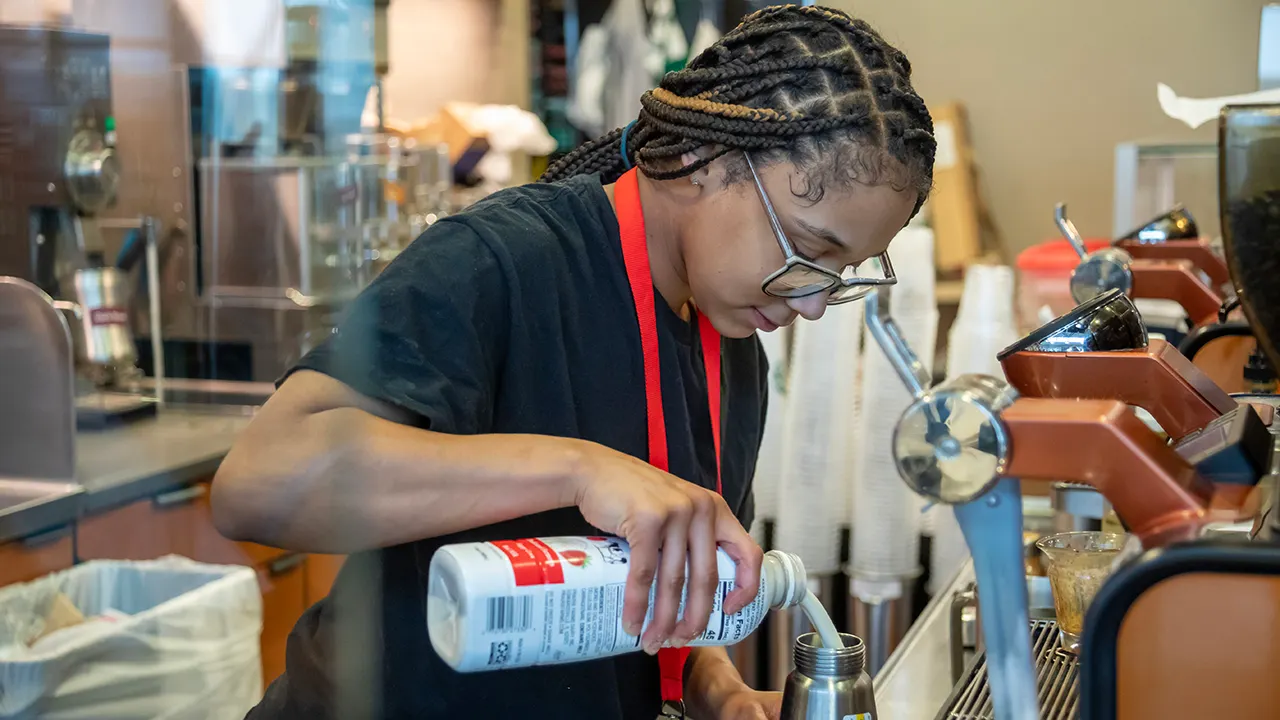
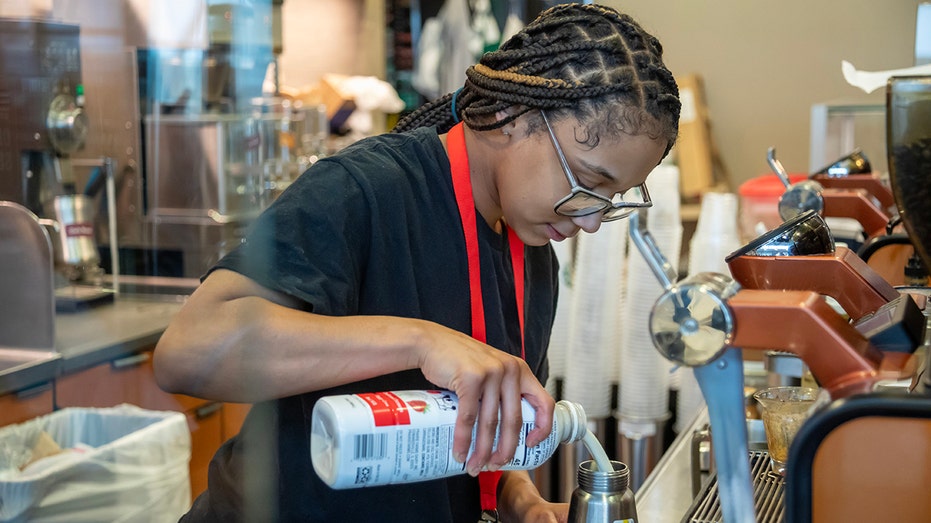
Starbucks barista makes a drink

A worker at a Starbucks coffee shop makes a drink at the Detroit Metro Airport in Michigan. (Jim West/UCG/Universal Images Group via Getty Images / Getty Images)

“Starbucks has major plans for its newest business location, where it will employ up to 2,000 people over the next several years to serve in a variety of corporate-related operations,” the announcement said.

“The Nashville office will directly support continued coffeehouse expansion and rising customer demand, particularly in the southeastern U.S., while working closely with the company’s global headquarters in Seattle.” 

Advertisement

Tennessee Gov. Bill Lee welcomed the announcement Tuesday, writing in a post on X, “​​Great to welcome @Starbucks’ continued investment in TN as it establishes its new Southeastern hub in Music City. 

“This iconic global company’s $100 million investment — a testament to our strong economy & unmatched workforce — will create 2,000 new jobs for Tennesseans.” 

Fox 13 Seattle called Lee’s attitude “sharply different from Seattle Mayor Katie Wilson when she encouraged a crowd to boycott the company shortly after she was elected mayor,” noting that Wilson’s remarks were given to a crowd during a Starbucks union workers rally in November.

“I am not buying Starbucks, and you should not too,” Wilson said.

Advertisement

AS SOCIALIST MAYOR BATTLES ICE, SEATTLE POLICE AND CRIME VICTIMS SAY REPEAT OFFENDERS ARE TERRORIZING THE CITY

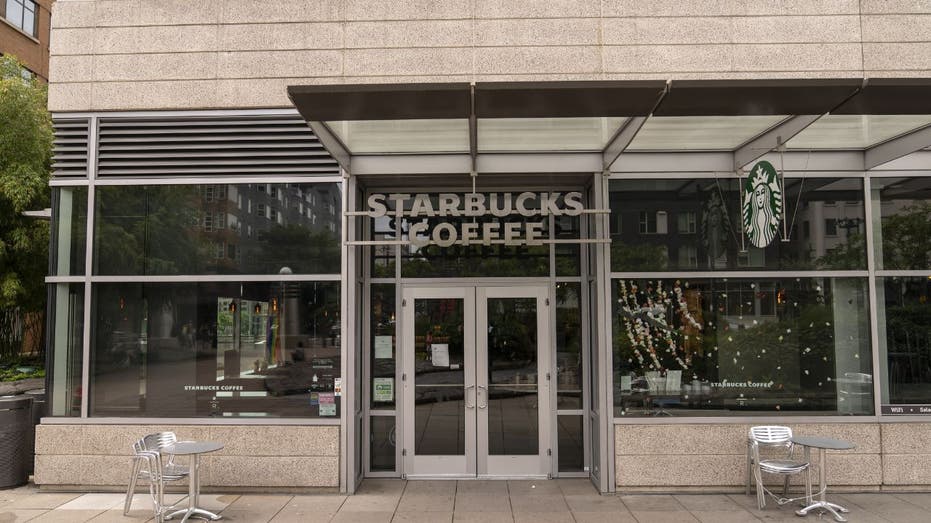
A closed Starbucks location in Seattle

A closed Starbucks location at 505 Union Station as demonstrators protest nearby in Seattle July 16, 2022. (David Ryder/Bloomberg via Getty Images / Getty Images)

In a statement to Fox 13 Seattle, Wilson said, “Starbucks is a core part of Seattle’s identity. We’re proud to be home to its first store, its headquarters and so many of the workers who make the company what it is. We’re focused on maintaining a strong partnership with leadership and with employees, so Starbucks continues to succeed in the city where it all began.”

The Tax Foundation ranked Washington state sixth overall in the nation for doing business in its 2014 State Business Tax Climate Index. 

In 2026, the Tax Foundation ranked the state as 45th overall

Advertisement

In March, Washington state Democrats passed the “millionaires tax,” which Democratic Gov. Bob Ferguson signed March 30. 

WILL SOCIALISM SAVE SEATTLE? CITY ADVOCATES STRUGGLE TO FIND SOLUTIONS AS HOMELESS, DRUG ADDICTS FLOOD STREETS

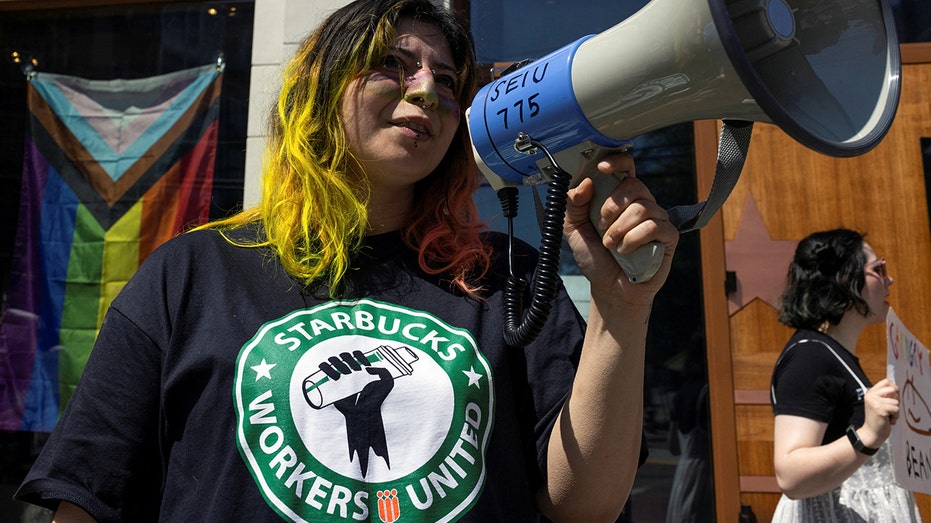
Starbucks workers attend a rally as part of a collective action

Starbucks employee Charlie Grandos leads a rally as part of a collective action over a Pride decor dispute outside the Starbucks Reserve Roastery in Seattle June 23, 2023.  (Reuters/Matt Mills McKnight / Reuters Photos)

The “millionaires tax” is the state’s first-ever income tax, supported by progressives and socialists and opposed by conservatives. The Wall Street Journal editorial board called it a “con” after its passage that will “inevitably capture the middle class.”

It will impose a 9.9% income tax on households earning more than $1 million each year. The tax applies to any money earned after the first $1 million of someone’s annual income. It will take effect Jan. 1, 2028, with the first payments due in April 2029, KOMO News reported

Advertisement
The Seattle skyline as seen at dusk.

The Seattle skyline (Juan Mabromata/AFP via Getty Images / Getty Images)

CLICK HERE TO DOWNLOAD THE FOX NEWS APP

Fox News Digital reached out to Starbucks and Wilson for comment but did not immediately receive responses. 

Continue Reading
Click to comment

You must be logged in to post a comment Login

Leave a Reply

Business

TWEET Sends Players Into Social Media Frenzy on April 23 2026

Published

on

US woman Denyse Holt always shared her daily Wordle score, so when she missed a day, her daughter immediately knew something was wrong

NEW YORK — Millions of daily Wordle players woke up Thursday to a timely twist as the New York Times’ popular word puzzle delivered “TWEET” as the solution for puzzle No. 1769 on April 23, 2026, sparking a wave of online reactions that blended bird chirps, nostalgia for old Twitter and fresh debates about the platform now known as X.

The five-letter answer, which doubles as both a noun describing the thin chirping sound of a small bird and a verb meaning to make such a sound or post a short message online, proved moderately challenging for many. According to early data shared by WordleBot, the average solver needed about 4.2 guesses in easy mode and 4.1 in hard mode, placing it near the middle of recent difficulty rankings.

Players who opened the game on Thursday morning encountered a fresh grid with no prior letters revealed. Common opening guesses such as “SLATE,” “RAISE,” “CRANE” or “AUDIO” quickly narrowed options. The double “E” in positions three and four, combined with the starting “T,” tripped up solvers who fixated on words like “TREAT,” “SWEET” or “FLEET” before landing on the correct choice.

Hints circulating on social media and puzzle sites proved especially helpful. Subtle clues included “a bird’s sound” or “avian speech,” while others noted the presence of a repeated vowel in the middle and the absence of certain common consonants. One popular hint warned that the word had no relation to snoring — a playful nod to the previous day’s answer, “SNORE,” for puzzle No. 1768 on April 22.

Advertisement

For those still hunting when the clock struck midnight in their time zone, the solution arrived with a satisfying green-tile sweep: T-W-E-E-T. The word’s dual meaning fueled immediate commentary. Bird enthusiasts celebrated the ornithological accuracy, while longtime social media users reminisced about the original Twitter “tweet” feature that once defined short-form posting before character limits expanded and the platform rebranded.

Wordle’s enduring appeal lies in its simple yet addictive formula. Created by Josh Wardle and acquired by the New York Times in 2022, the game limits players to six guesses per day for a single five-letter word. Tiles turn green for correct letters in the right spot, yellow for correct letters in the wrong spot and gray for letters not in the word at all. The shared daily puzzle fosters a global community that swaps results via emoji grids without spoilers.

On April 23, those emoji grids flooded timelines with patterns showing everything from lucky two-guess solves to frustrating six-guess near-misses. Some players admitted starting with “BIRD” or “CHIRP” only to watch yellow and gray tiles pile up before pivoting. Others praised starting words like “PLAID” or “TOUCH” that efficiently eliminated possibilities.

Puzzle No. 1769 arrived amid a busy spring for word-game fans. Recent answers included “CLUMP” on April 21 and “WEAVE” on April 20, showing the NYT editors’ mix of everyday vocabulary with occasional curveballs. “TWEET” fits neatly into the game’s preference for common English words that avoid overly obscure or offensive terms.

Advertisement

Difficulty metrics suggest the puzzle was fair but not trivial. The presence of repeated letters — the two E’s — added a layer many solvers overlook on early attempts. WordleBot analysis indicated that optimal openers like “SLATE” left roughly 579 possibilities after one guess for some players, requiring careful elimination in subsequent turns.

The answer also sparked lighthearted cultural commentary. With “tweet” once synonymous with rapid online sharing, some users joked that solving it in fewer than four guesses qualified as “going viral.” Others noted the irony of posting about “TWEET” on the very platform that retired the term. One Reddit thread in r/wordlegame filled quickly with users sharing streaks and debating whether the word felt too on-the-nose for a Thursday morning.

For newcomers or those rebuilding a streak, experts recommend starting with words rich in vowels and common consonants. Popular strategies include “ADIEU” or “AUDIO” for vowel placement, followed by consonant-heavy guesses like “STERN” or “CLAMP.” Hard-mode players must reuse confirmed letters, which can sharpen focus but sometimes prolong solves.

Wordle’s streak feature continues to motivate millions. Players who maintain daily solves build impressive runs, with some boasting hundreds of consecutive days. Losing a streak because of a tricky word like Thursday’s “TWEET” can sting, but the game’s forgiving nature and lack of penalties keep most coming back.

Advertisement

Beyond the daily puzzle, the New York Times offers an archive for subscribers, allowing replay of past challenges. On April 23, casual solvers could look back at recent winners while preparing for Friday’s puzzle No. 1770. Community sites and apps provide spoiler-free hints, statistics and companion games such as Connections, Spelling Bee and Strands.

Parents and educators have embraced Wordle as a low-pressure way to build vocabulary and logical reasoning. Teachers report using the puzzle in classrooms to discuss letter frequency, word patterns and deductive thinking. For families, the shared evening ritual of tackling the day’s word has become a screen-time bright spot.

The game’s accessibility helps explain its staying power. No downloads or subscriptions are required for the basic daily puzzle, though NYT Games subscribers gain extras like the full archive and ad-free experience. Since its explosion in popularity in late 2021 and early 2022, Wordle has inspired countless clones and variations, yet the original remains the gold standard.

As April 23 unfolded, reaction threads highlighted the puzzle’s clever timing. One solver posted, “Solved TWEET in 3 — feeling like I just posted the perfect thread.” Another lamented, “Got stuck between SWEET and TWEET until the final guess. Classic Wordle trap.”

Advertisement

WordleBot, the NYT’s official analysis tool, praised efficient solvers while gently ribbing those who burned guesses on unlikely candidates. Its suggested starting word for the day was “SLATE,” which many found effective at clearing multiple vowels and consonants early.

Looking ahead, the Wordle team maintains a careful balance in selecting answers. Words must be valid, reasonably common and free of proper nouns or offensive connotations. “TWEET” meets all criteria while carrying enough cultural resonance to generate buzz without alienating international players for whom the social-media meaning may be secondary to the literal bird sound.

By late Thursday morning in U.S. time zones, thousands had already shared their results, with green-heavy grids dominating feeds. The puzzle’s solution reinforced Wordle’s role as a daily mental palate cleanser — a brief, satisfying escape amid busy schedules and endless scrolling.

Whether you nailed “TWEET” on the first try or needed all six guesses, the game once again delivered its signature mix of challenge and delight. For many, it provided the perfect excuse to pause, think and maybe even tweet — or post — about the experience.

Advertisement

As players reset for tomorrow’s puzzle, the collective conversation around Wordle #1769 served as a reminder of the game’s simple genius: one word, six chances and a worldwide community united by colored tiles and friendly competition.

Continue Reading

Business

Australia now has 46 days of fuel supply

Published

on

Australia now has 46 days of fuel supply

Prime Minister Anthony Albanese has given an update on the status of Australian fuel supplies, saying there was no imminent possibility of the country moving to a higher level of the national fuel security plan.

Continue Reading

Business

An Introduction to Doing Business in Singapore 2026

Published

on

An Introduction to Doing Business in Singapore 2026

“Singapore’s 2026 economic focus shifts from growth to stability, emphasizing reliable regulation, strategic positioning, and dependability for investors in a changing global trade environment.”

Overview of Singapore’s Economic Outlook

The “Introduction to Doing Business in Singapore 2026” report from Dezan Shira & Associates highlights Singapore’s economic resilience. While growth has slowed, with GDP expected to expand between 0 and 2 percent, this reflects softer external demand and a decline in manufacturing output. Trade-sensitive sectors, including non-oil domestic exports, have experienced about a 3.5 percent decrease year-on-year, emphasizing Singapore’s economy reliance on global demand conditions.

Strategic Investment Environment

Despite slower growth, Singapore remains attractive for foreign investors due to its stable regulatory environment, advanced financial markets, and institutional capacity. The shift in investment strategy focuses less on short-term growth and more on leveraging Singapore’s reliability as a strategic platform. In today’s uncertain trade landscape and restructuring of global supply chains, Singapore’s consistent regulatory framework offers a competitive advantage.

About the Publication

This comprehensive guide, prepared in June 2023, provides essential insights into investing in Singapore. Dezan Shira & Associates, experts in foreign direct investment services, compiled it to assist multinationals and SMEs in understanding Singapore’s business environment, covering aspects such as corporate setup, compliance, tax, and financial management.

Advertisement


Read the original article : An Introduction to Doing Business in Singapore 2026 – New Publication from Dezan Shira & Associates

Continue Reading

Business

Man selling drugs at High Street mini-mart confronted by BBC

Published

on

Man selling drugs at High Street mini-mart confronted by BBC

Cocaine and cannabis are among drugs being readily offered for sale in High Street mini-marts, a BBC investigation has revealed.

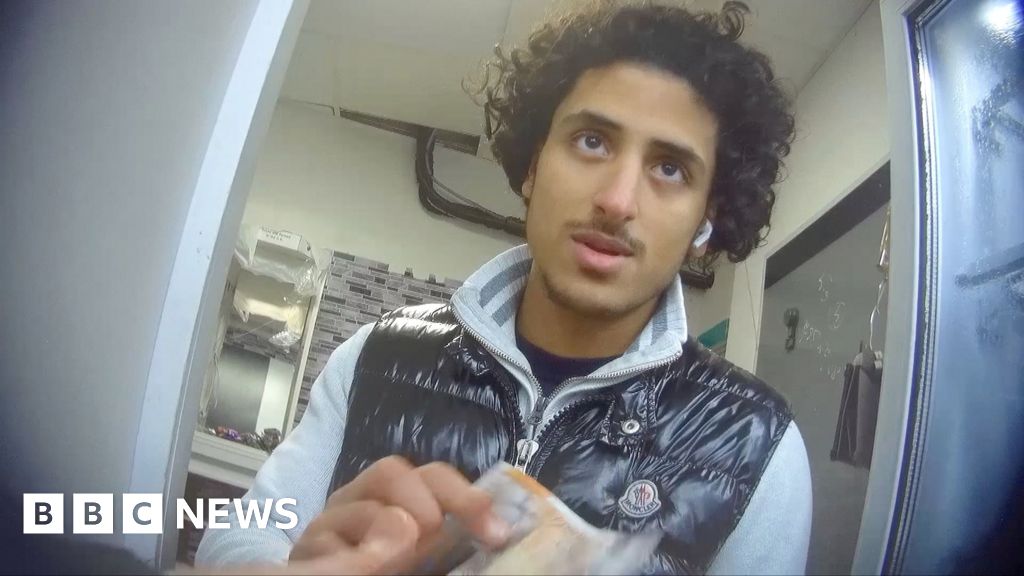
Undercover researchers secretly filmed in towns across the West Midlands, including one shop called Cradley Market. One of those researchers met Akwa, who works behind the counter there.

It took just seconds for Akwa to supply him with 3.5g of cannabis for £30. “I’ve got weed, coke, everything. Whatever you want, I can sort you out,” Akwa told the researcher, later supplying him with cocaine.

Akwa denied any wrongdoing when the BBC’s UK Editor Ed Thomas later confronted him. When asked about selling drugs, he said he did not know what he was talking about, before asking Ed and his team to leave.

Advertisement

The government is working with police, the National Crime Agency (NCA) and Trading Standards to “take the strongest possible action against these criminal businesses”, a spokesperson for the Home Office said. West Midlands Police said it would always work with partners “to act on complaints about illegal drugs sales, anti-social behaviour, and crime and disorder”.

Read the story in full here.

Continue Reading

Business

Iran tightens control of Hormuz after US calls off renewed attacks

Published

on

Iran tightens control of Hormuz after US calls off renewed attacks


Iran tightens control of Hormuz after US calls off renewed attacks

Continue Reading

Business

The Padel Club secures 8 new sites with Northern Powerhouse Investment Fund backing

Published

on

Business Live

Business to open sites in Cardiff, Brighton and Chester

Cheshire-based The Padel Club is celebrating a strong period of expansion with 8 new sites across the UK following investment from NPIF II – PXN Equity Finance

The Padel Club secured investment from NPIF II – PXN Equity Finance(Image: NPIF)

A Cheshire business focused on fast-growing racket sport padel has secured eight sites across the UK and plans to open more after securing investment through the Northern Powerhouse Investment Fund.

The Padel Club was founded in 2020 by Kris Ball after he played padel overseas and realised it would soon take off in the UK too. Its first site opened in Wilmslow in 2022 and it soon grew to four sites.

In 2024 the company secured £3.8m in funding, including £1.5m from NPIF II – PXN Equity Finance, which is managed by PXN Ventures as part of the £660m Northern Powerhouse Investment Fund II.

Since then it has secured eight new sites in the UK and plans to grow further. Upcoming openings will include venues in Brighton, Cardiff, Chester and Handforth Dean.

Advertisement

Kris Ball, CEO of The Padel Club, said: “We saw an opportunity to bring padel to the UK at a time when the sport was still relatively unknown. Starting with just a couple of courts in Wilmslow, our ambition has always been to build a network of clubs that could introduce more people to the game and create a real sense of community around it. The support from NPIF II and PXN has given us the platform to accelerate that vision, helping us scale at pace, invest in new sites and continue growing this much-loved sport across the UK.”

Louise Chapman at PXN Ventures, said: “The Padel Club is a standout example of an ambitious, fast-scaling business bringing a relatively new sport to communities across the UK. From a single site in Wilmslow, Kris has built a strong platform for growth with a clear pipeline of locations and a differentiated, community-led offer. We’re pleased to be supporting their next stage of expansion as they continue to introduce more people to padel.”

Sue Barnard, senior investment manager at the British Business Bank, said: “Through the Northern Powerhouse Investment Fund II, we’re backing ambitious, fast-growing and community-focused businesses that are delivering real impact across the North. Just two years on from its launch, we’re already seeing tangible results, with businesses creating jobs and unlocking new opportunities to support local economies and The Padel Club is a great example of this.”

Advertisement
Continue Reading

Business

Maase Inc Stock Explodes 21% on Renewed AI Acquisition Momentum and Speculative Buying

Published

on

Maase Inc Stock Explodes 21% on Renewed AI Acquisition Momentum

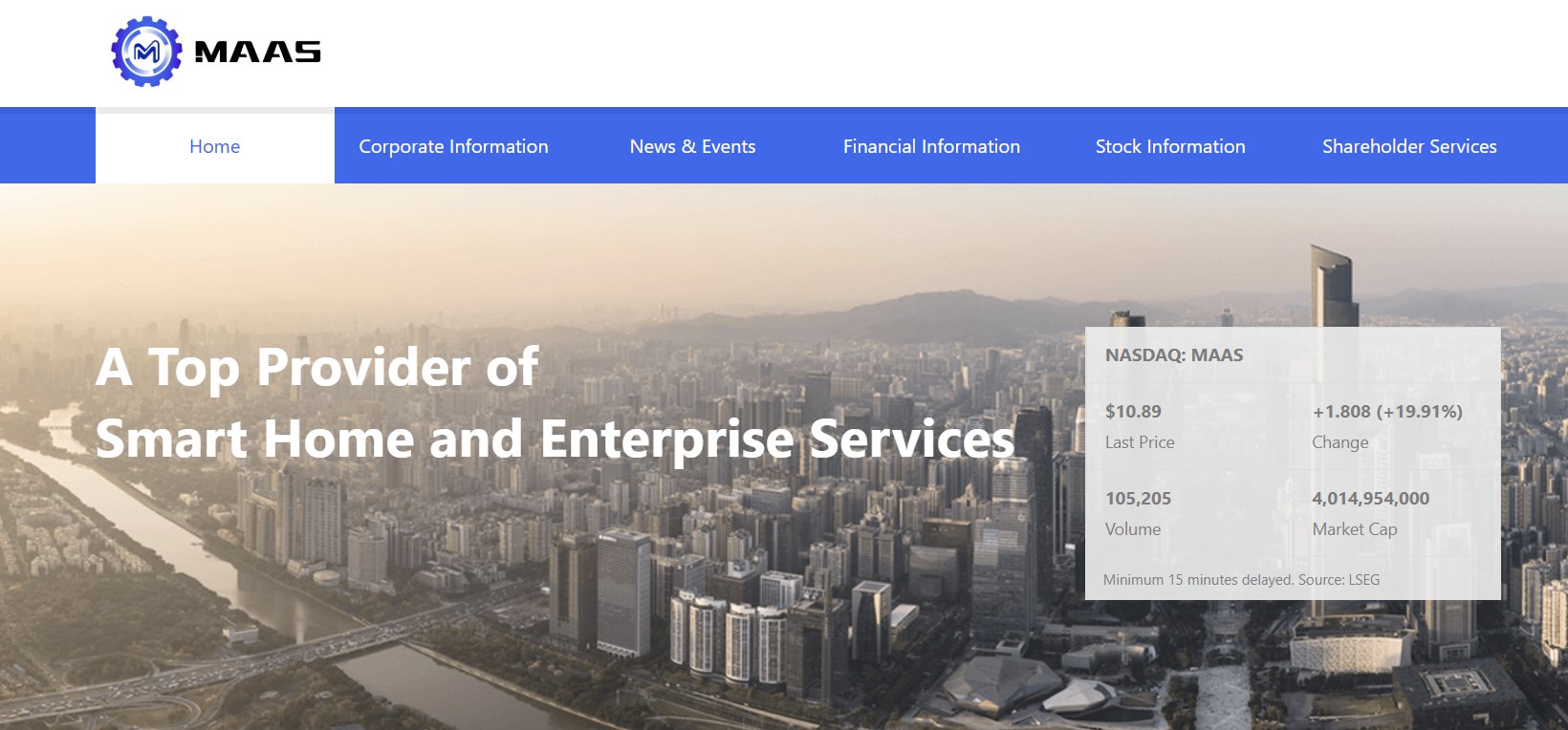
NEW YORK — Maase Inc. shares skyrocketed more than 21 percent in early trading Wednesday, reaching $11.01 as speculative enthusiasm returned to the China-based financial technology and emerging AI player following a period of sharp volatility and heavy trading volume.

Maase Inc Stock Explodes 21% on Renewed AI Acquisition Momentum
Maase Inc Stock Explodes 21% on Renewed AI Acquisition Momentum and Speculative Buying

The Nasdaq-listed stock (MAAS) gained $1.93, or 21.31 percent, by 10:10 a.m. EDT, reversing much of Tuesday’s steep decline and highlighting the highly volatile nature of the name amid its aggressive pivot toward artificial intelligence infrastructure. Trading volume surged well above recent averages, reflecting continued retail and momentum-driven interest in the company’s transformation narrative.

Maase Inc., formerly known as Puyi Inc. and rebranded to reflect its evolving focus, operates primarily as a technology-driven financial services platform in China. It provides wealth management, insurance agency services and asset allocation solutions for families and enterprises through digital platforms and offline networks. Revenue has historically been dominated by its insurance agency segment, which distributes life and non-life insurance products.

In recent months, however, Maase has executed a series of strategic acquisitions aimed at repositioning itself as a full-stack AI industry player. The most significant move came on March 30, 2026, when the company completed its acquisition of 100 percent equity in Times Good Limited, which controls Huazhi Future (Chongqing) Technology Co., Ltd. and its subsidiaries. The deal, valued in the range of RMB1.1 billion when announced in January, gives Maase access to advanced computing power, algorithms and AI-related assets, marking a shift from traditional financial services toward high-performance computing and intelligent systems.

The Huazhi Future acquisition has been central to the stock’s dramatic price swings. Shares hit a 52-week high of $20.89 on April 20 before pulling back sharply on April 21, closing at $9.08 amid profit-taking and concerns over valuation and integration risks. Wednesday’s rebound suggests some investors view the dip as a buying opportunity, betting on the long-term potential of Maase’s AI ambitions in a market hungry for computing infrastructure tied to artificial intelligence.

Advertisement

Analysts and market observers note that Maase is still in the early stages of its transformation. The company has also pursued deals in new-energy technologies, intelligent unmanned systems, mobile charging robots and wellness sectors, including the acquisition of premium tea producer Oriental Grove and healthcare-related assets. These moves have created a diversified but complex portfolio that blends legacy financial services with forward-looking tech initiatives.

Despite the acquisition-driven narrative, Maase continues to face challenges typical of growth-stage companies executing rapid strategic shifts. The firm has reported ongoing net losses, and its financials reflect the costs of expansion and integration. Recent filings have highlighted risks including goodwill from acquisitions, share-based consideration that has diluted existing shareholders, and the operational complexities of merging Chinese AI assets with its core financial platform.

The stock’s volatility has been extreme. From a 52-week low near $2.41 in mid-2025, MAAS has delivered triple-digit percentage gains at times, fueled by acquisition announcements and broader AI sector enthusiasm. However, the rapid run-ups have also led to sharp reversals, as seen in the April 21 sell-off that erased significant gains from the prior session. Elevated trading volumes — sometimes several times the average — indicate heavy participation from short-term traders and momentum investors.

Maase’s market capitalization has fluctuated wildly with the share price, recently approaching or exceeding $3 billion during peak enthusiasm. The company’s shift toward AI has drawn comparisons to other small-cap names attempting to ride the artificial intelligence wave, though execution risks remain elevated given its relatively modest revenue base and ongoing unprofitability.

Advertisement

Company executives have framed the Huazhi Future deal as establishing “full-stack, self-controlled capabilities” in AI, encompassing computing power, algorithms, hardware and services. This positions Maase to potentially benefit from China’s push for technological self-reliance and global demand for AI infrastructure. Additional initiatives, such as the launch of distributed intelligent computing center projects with planned investments up to RMB5 billion, have further stoked investor interest.

Yet skeptics caution that the valuation appears stretched relative to current fundamentals. With a history rooted in insurance brokerage and wealth management, Maase must successfully integrate its new AI assets while maintaining its core operations. Regulatory considerations in China’s financial and technology sectors, currency fluctuations and geopolitical tensions could also impact progress.

Wednesday’s surge occurred against a broader market backdrop that included modest gains in major indices and continued focus on artificial intelligence themes. The stock’s movement stands out even within the volatile small-cap technology space, where narrative-driven trading often dominates over near-term earnings visibility.

Maase is scheduled to report financial results in coming months, though no specific date has been confirmed in recent disclosures. Investors will look for updates on revenue contribution from newer segments, progress on AI integration, margin trends and any guidance on future acquisitions or capital raises.

Advertisement

The company, headquartered in Chengdu with operations in Guangzhou and other Chinese cities, employs hundreds and continues to expand its digital platforms. Its evolution reflects a common pattern among Chinese-listed firms on U.S. exchanges: leveraging Nasdaq visibility to fund ambitious strategic pivots into high-growth sectors like AI while managing legacy businesses.

As trading progressed Wednesday morning, the rebound to $11.01 demonstrated resilient buying interest despite recent profit-taking. Whether the momentum sustains will depend on fresh catalysts, successful execution of the Huazhi integration and broader market sentiment toward AI-related small caps.

For long-term investors, Maase represents a high-risk, high-reward bet on China’s AI ambitions and the company’s ability to transition from financial services to a broader technology ecosystem. Short-term traders, meanwhile, appear focused on technical levels and news flow around its transformation.

The dramatic price action in Maase Inc. underscores the speculative fervor surrounding artificial intelligence themes in 2026, even as many companies in the space remain pre-profit and face significant operational hurdles. With shares up sharply in early Wednesday trading, all eyes remain on whether Maase can convert acquisition momentum into sustainable growth and profitability.

Advertisement
Continue Reading

Business

Asia stocks slip as Iran tensions persist; Nikkei, KOSPI retreat from peaks

Published

on


Asia stocks slip as Iran tensions persist; Nikkei, KOSPI retreat from peaks

Continue Reading

Business

Regis Resources Limited (RGRSY) Q3 2026 Earnings Call Transcript

Published

on

OneWater Marine Inc. (ONEW) Q1 2026 Earnings Call Transcript

Operator

Thank you for standing by, and welcome to the Regis Resources quarterly briefing. [Operator Instructions] I would now like to hand the conference over to Mr. Jim Beyer, Managing Director and Chief Executive Officer. Please go ahead.

Jim Beyer
CEO, MD & Director

Advertisement

Thanks, Darcy. Good morning, everyone, and thanks for joining us for the Regis Resources March FY ’26 quarter results. Joining me on the call today is our CFO, Anthony Rechichi; our COO, Michael Holmes; and our Head of Investor Relations, Matt Collings.

At times, we’ll refer to figures and tables in both the quarterly report, which came out this morning, and also the resource and reserves report, which was released yesterday morning. So you may find it useful to have those documents at hand.

Okay. I’ll start with safety. During the December quarter, our operations continued to perform strongly from a safety perspective. The 12-month moving average lost time injury frequency rate finished the quarter a little bit further down at 0.32, which continues to be well below the Western Australian gold industry average. Our objectives remain unchanged to provide a workplace free from serious injury. We continue to focus on leadership, discipline and continuous improvement to support safe and reliable operations across our business.

Turning now to our enviable production performance. The team has consistently delivered to plan during FY ’26 and the March quarter was no exception. Operationally, the group

Advertisement
Continue Reading

Business

Amid the gloom, Iran conflict hands Indian cotton yarn hub a win

Published

on


Amid the gloom, Iran conflict hands Indian cotton yarn hub a win

Continue Reading

Trending

Copyright © 2025