

Business
Sebi changes rules on unpaid client securities to ease broker operations


The changes come after representations from the Brokers’ Industry Standards Forum, which sought revisions to reflect current regulatory and market conditions. SEBI said the decision was taken to improve ease of doing business for brokers and ease of investing for clients.
Under the revised framework, for trades not covered under the margin trading facility, unpaid securities will be directly credited to the client’s demat account. After that, an auto-pledge will be created in favour of a separate account opened by the trading member, called the “client unpaid securities pledgee account,” or CUSPA. The pledge will carry the reason “unpaid” and will not need any specific instruction from the client.
The broker will also have to inform the client through email or SMS about the pending payment obligation and its right to sell the securities if the client does not pay. SEBI has asked trading members to frame a clear policy for handling such unpaid securities. This policy must explain the process, reasons, manner and timing for release or invocation of the pledge and liquidation of securities. The client must be given a maximum period of five trading days from the payout date to meet the payment obligation.
From WhatsApp chats to food orders: How Sebi cracked a Rs 144 crore stock manipulation scheme

Sebi has also clarified that while such unpaid securities pledged to the broker’s CUSPA may be considered for reporting client margin collection to the clearing corporation, the broker cannot give fresh exposure to the client on the basis of these securities. This means the securities may support margin reporting, but cannot be used to allow additional trading limits.
The circular also lays down how excess pledged securities should be released. Brokers must check the value of pledged securities daily against the client’s ledger balance, margin obligation or other factors that may be specified by exchanges. If the pledged value is higher than what is allowed, the broker must release the excess securities by the next trading day.
If the client does not pay within the prescribed period, the broker may invoke the pledge and sell the unpaid securities after giving reasonable notice. The sale will be done in the market using the client’s unique client code. Any surplus funds left after settling the client’s obligation must be credited to the client’s ledger.
A key investor protection measure is the auto-release provision. If the pledge is neither invoked nor released within five trading days after payout, depositories will automatically release the pledge at the end of the sixth trading day. The securities will then become free balance in the client’s demat account, without any encumbrance.
Sebi has also barred brokers from further pledging or transferring CUSPA-pledged securities to banks or non-bank lenders to raise funds. In exceptional cases, such as lower circuit stocks with only sellers, trading suspension, halt due to surveillance or other valid reasons recognised by market infrastructure institutions, brokers may seek an extension of the pledge by up to one additional calendar week.
Stock exchanges have been asked to issue operational guidelines within 30 days. Most amended provisions will take effect three months from the date of those guidelines, while provisions on extension of pledge in exceptional cases will come into force six months from the circular date.
(Disclaimer: Recommendations, suggestions, views and opinions given by the experts are their own. These do not represent the views of Economic Times)


Russia stocks lower at close of trade; MOEX Russia Index down 0.62%

Comcast Spinoff Could Rejuvenate Its Depressed Stock

DALLAS — Two nations that have never won a World Cup knockout match meet Friday at Dallas Stadium with a place in the round of 16 on the line, and the contest that should be one of the round of 32’s most evenly matched fixtures has been further complicated by significant injury concerns surrounding Egypt’s captain and all-time greatest player.
Mohamed Salah, the 34-year-old who lit up Egypt’s group stage campaign with his creativity and goal threat, is a major doubt for Friday’s match after suffering a hamstring strain in the final minutes of Egypt’s 1-1 draw with Iran. Salah was withdrawn in the second half of that match and did not train with the rest of the Egyptian squad on Monday, focusing instead on rehabilitation work as he attempts to recover sufficiently to take some part against the Socceroos. His status remains uncertain heading into kickoff at 2 p.m. ET.
The potential absence of Salah would be a significant blow to an Egyptian side that has leaned heavily on his creative output throughout the tournament. Salah generated 11 chances for teammates during the group stage, a figure that placed him second among all players in the tournament during that phase, behind only Belgium’s Leandro Trossard, who created 13. Without him, Egypt lacks a comparable creative presence capable of consistently unlocking organized defensive structures, and Australia’s compact shape has proven very difficult to break down throughout the tournament.
The injury concerns extend beyond Salah. Left-back Ahmed Fatouh has been ruled out with a hamstring tear of his own, while central defender Mohamed Abdelmonem is also listed as a doubt due to an ankle injury. The combination of those two absences could leave Egypt vulnerable across the defensive backline even as they attempt to manage without their captain and primary attacking threat.
Australia, meanwhile, arrives in Dallas without full-back Jacob Italiano and experienced midfielder Mathew Leckie, both of whom suffered tournament-ending injuries during the group stage. Despite losing both players, coach Tony Popovic is expected to continue with Aziz Behich at left-back and Jordan Bos on the opposite side of the defensive line, maintaining the structure that has given Australia its characteristic compactness throughout the competition.
Australia’s group stage results tell a story of a team that has not yet fully found its attacking rhythm. The Socceroos opened with a 2-0 win over Türkiye, following up with a 2-0 loss to the United States and a goalless draw against Paraguay. Of all sides that finished in the top two of their group at this year’s competition, only Croatia’s 24 shots were fewer than Australia’s 26, and no qualifying side generated a lower overall expected goals figure at 2.1. In their final two group matches, Australia managed only 17 combined shots with a total expected goals value of 0.9, a figure suggesting the team will need to create opportunities more efficiently in single-elimination play if they are to progress.
Australian striker Tete Yengi acknowledged the challenge of scoring against organized opponents while expressing confidence that the knockout format would unlock his team’s offensive output.
“There haven’t been easy games. We’ve been against good opposition, good defensive organisation, so it’s difficult to score,” Yengi said. “But we’re through now to the knockout stages, so we have to score now to win, so we’ll do that I think.”
Despite Egypt entering as narrow favorites according to Opta’s supercomputer modeling, which ran 25,000 pre-match simulations and produced Egypt winning 39.7% of them against Australia’s 28.4% and a draw occurring 31.9% of the time, the fixture is statistically the closest matchup of the entire round of 32. Egypt’s overall probability of advancing across all possible outcomes including extra time and penalties stands at 55.8%, compared with Australia’s 44.2%, making this genuinely the most open single-elimination contest of the knockout phase.
The defensive quality Australia brings to the match is genuine and measurable. Opta’s data shows that the average expected goals value of shots the Socceroos allowed in the group stage was just 0.052 per attempt, the second-lowest figure at the tournament behind Spain. Australia’s defensive organization has been the consistent thread through the competition even as the attack has sputtered, and their record against African opposition at World Cups is entirely positive: a 1-1 draw with Ghana in 2010 and a 1-0 win over Tunisia in 2022.
The goalkeeper story running through Australia’s campaign adds another dimension. Popovic’s surprise decision to bench veteran starter Matthew Ryan, the team’s long-serving captain, in favor of the inexperienced Patrick Beach has been one of the tournament’s more unexpected individual subplots. Beach, who plays domestically for Melbourne City and arrived at the tournament with just five international caps, has responded with two clean sheet performances and has been sharp in the moments that required him to make saves under pressure. His performance Friday could be decisive in a match where both teams are likely to be cautious in how they approach the first half.
Egypt’s group stage run was genuinely historic for the country. Their three-game unbeaten sequence, built on a 3-1 victory over New Zealand in which Salah scored, a hard-fought goalless draw with New Zealand’s opponents and the 1-1 result against Iran, represented the longest unbeaten run Egypt has ever had at a World Cup, and they scored as many goals across those three games as they had in their seven previous appearances at the tournament combined.
For the winner, a round of 16 matchup against Argentina awaits in Atlanta on July 7. That prospect of facing Lionel Messi and the reigning champions has been acknowledged in both camps’ public comments without requiring any particular elaboration. Both Australia and Egypt would represent significant obstacles to Argentina’s title defense regardless of how the bracket reads on paper, but getting there requires winning Friday’s match first.
The two nations have met just twice in senior competition previously, with Australia winning a 1987 tournament encounter on penalties and Egypt winning a 2010 friendly 3-0. Five members of the current Australian squad were also part of the team eliminated from the Tokyo Olympics by Egypt 2-0. That history is modest enough to offer little guidance for what happens when the referee blows the opening whistle in Dallas.

Canfor completes acquisition of PinkWood I-joist facility
Business
ASKUL Corporation 2026 Q4 – Results – Earnings Call Presentation (OTCMKTS:ASKLF) 2026-07-03


Seeking Alpha’s transcripts team is responsible for the development of all of our transcript-related projects. We currently publish thousands of quarterly earnings calls per quarter on our site and are continuing to grow and expand our coverage. The purpose of this profile is to allow us to share with our readers new transcript-related developments. Thanks, SA Transcripts Team


Firefighters battle blazes in southern France after European heatwave
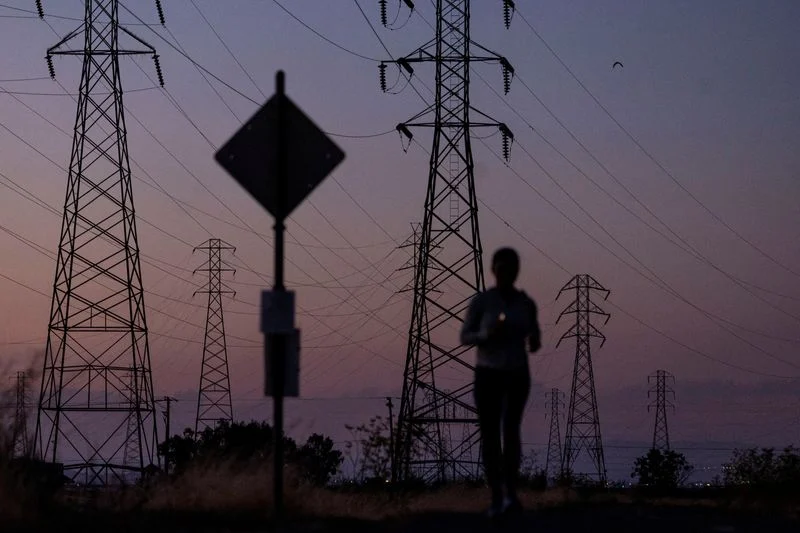

Largest US power grid PJM orders emergency curbs as electricity use nears record peak
Business
Apple Plans New iPad Pro and Redesigned MacBook Pro for Spring 2027 With Faster M7 Chip That Skips M6 Pro

CUPERTINO, Calif. — Apple is preparing a significant hardware refresh for the first half of 2027, with four new iPad Pro models and a redesigned entry-level MacBook Pro both targeting a spring release window, according to Bloomberg’s Mark Gurman, whose report also revealed an unusual and aggressive chip strategy that would see Apple skip high-end M6 variants entirely in favor of fast-tracking a new M7 processor generation built specifically around on-device artificial intelligence performance.
The disclosures add concrete shape to a 2027 product pipeline that was previously understood only in rough outline, confirming that Apple’s Pro tablet line and its most popular professional laptop will both receive meaningful updates within the same release window, even as ongoing memory shortages continue to complicate the company’s manufacturing costs and pricing strategy.
On the iPad side, Apple is testing four new iPad Pro models ahead of a planned spring 2027 launch, maintaining the existing 11-inch and 13-inch display sizes and offering both Wi-Fi and cellular connectivity variants within each size. No external design changes are expected, with the update focused squarely on internal improvements. Gurman reported that Apple has been experimenting with vapor chamber cooling for the iPad Pro, a thermal management technology that could help the tablet sustain higher performance levels during extended demanding workloads without throttling, similar to what Apple already incorporated into the iPhone 17 Pro. The current iPad Pro lineup uses the M5 chip introduced in October 2025, making the spring 2027 models the first update to the professional tablet in approximately 18 months.
The chip powering those new iPad Pros remains technically unconfirmed in Gurman’s report, which indicated the tablets could receive either an M6 or M7 processor depending on which silicon is ready in time. That ambiguity reflects the unusual timing of Apple’s chip roadmap as it currently stands.
Apple plans to introduce the M6 chip later this year in an updated 14-inch MacBook Pro, a transitional model internally codenamed J804 that carries the current MacBook Pro chassis with a chip upgrade but no design changes. That model represents the straightforward generational refresh Apple’s product line would normally deliver. What is unusual is what comes next.
Apple is reportedly skipping the M6 Pro and M6 Max chip variants entirely, bypassing the high-end variants of the M6 generation that would normally follow the base M6 by six to twelve months. Instead, the company is channeling engineering resources directly toward the M7, targeting a base M7 chip debut in the first half of 2027, a compressed timeline that would give the M6 an unusually short window as the company’s leading silicon before being succeeded by the next generation.
The rationale cited across reporting is AI performance. The M7 is being built on Apple’s 2-nanometer manufacturing process with specific optimizations for on-device AI workloads and is targeting memory bandwidth of approximately 240 gigabytes per second, significantly ahead of the M6’s comparable figure, giving it the throughput needed to run increasingly capable machine learning models locally without depending on cloud servers. Both the M6 and the M7 use 2-nanometer process technology, meaning the generational distinction lies not in the manufacturing node but in the AI-specific architecture choices Apple has made within the M7 design.
The redesigned entry-level MacBook Pro, codenamed K104, is the more visually significant of the two announcements. This model will adopt a new external design that mirrors the visual language Apple is preparing for its flagship touchscreen MacBook Pro models, expected to arrive in late 2026 or early 2027. The most notable section of Bloomberg’s report is that the lower-end MacBook Pro will adopt a new design language, first seen in the OLED touchscreen MacBook Pro expected before the end of 2026 or early 2027. The K104 will not include a touchscreen itself, differentiating it from the premium models while still sharing the slimmer bezels, revised port layout and punch-hole camera replacing the current notch that define the new design language. The M7 chip will power this redesigned entry model, potentially making it the first Mac to ship with next-generation silicon if the M7 timeline holds as reported.
M7 Pro and M7 Max variants are expected later in 2027, with an M7 Ultra not anticipated until 2028, meaning buyers who require the highest levels of computational performance for video production, scientific computing or advanced machine learning development will face an extended wait between the base M7’s spring 2027 debut and the arrival of its more powerful derivatives.
The spring 2027 window is shaping up as one of Apple’s most product-dense launch periods in years. Beyond the iPad Pro and MacBook Pro updates, reporting suggests the same window is expected to include the iPhone 18, iPhone 18e and a second-generation iPhone Air, creating a simultaneous release cluster across Apple’s most commercially important product categories.
A significant caveat accompanies all of this planning, however. The global memory shortage that has already forced Apple to raise prices substantially on its existing Mac lineup, with the entry MacBook Pro with one terabyte of storage jumping from $1,699 to $1,999 following a June price increase, continues to represent a genuine supply-side risk to any forward-looking product schedule. Apple’s scale gives it priority access to TSMC’s advanced manufacturing capacity and to memory suppliers in ways unavailable to smaller competitors, but no company is immune to yield problems, packaging bottlenecks or demand-driven allocation challenges when the entire semiconductor industry is simultaneously competing for the same components. Gurman’s report explicitly flagged that ongoing memory and chip shortages could still disrupt the 2027 launch timeline, a caveat that applies equally to the iPad Pro and MacBook Pro plans regardless of how confident Apple’s internal engineering teams are in their current roadmaps.
Apple did not respond to requests for comment on the reported product plans.
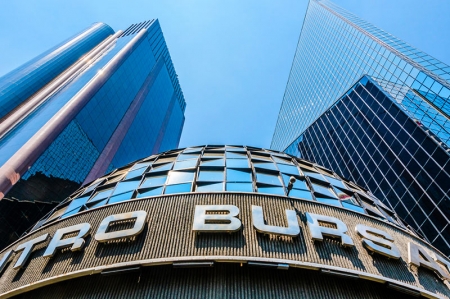
Mexico stocks lower at close of trade; S&P/BMV IPC down 0.02%

Quantum Systems said it had raised $1.2 billion at a valuation of roughly $8 billion, bringing in fresh capital to expand drone production and invest in software for autonomous systems powered by artificial intelligence.
The startup said European aircraft maker Airbus, asset manager Blackstone, private-equity firm Advent and equity investor Noteus Partners co-led the financing round, which also attracted interest from technology investment firm BOND, financial services firm Fidelity Investments, asset manager Wellington Management, investment firm A.P. Moller Holding, venture-capital firm Elephant Lake Ventures and existing shareholders like Balderton and HV Capital.
Copyright ©2026 Dow Jones & Company, Inc. All Rights Reserved. 87990cbe856818d5eddac44c7b1cdeb8

SOL Rebounds as Solana Memecoins and Prediction Markets Spike

‘If He Wanted To, He Would’

How I’d Make Money with AI Games in 2026 (If I Had to Start Over)


-

 Tech6 days ago
Claude Code turned every engineer into three. Now companies need more product thinkers
-

 Crypto World4 days ago
Strategy authorizes up to $1.25B in Bitcoin sales under new capital plan
-

 Politics11 hours ago
The House | “Reframing the debate from a binary discussion of winners and losers”: Yuan Yang reviews ‘We Are Not Machines’
-

 Tech6 days ago
Bluekit phishing kit adopts browser-in-the-middle for login theft
-

 News Videos5 days ago
MAJOR BITCOIN & MARKET UPDATE!!!! (MUST WATCH ASAP!!!)
-

 Fashion5 hours ago
Weekend Open Thread: High Hopes
-

 Tech4 days ago
Anonymous researcher drops 0-day ‘exploitarium’ repo
-

 Crypto World6 days ago
Coinbase, Circle Deepen Crypto Stock Losses Despite Resilient S&P 500
-

 Business4 days ago
Australia treasurer says alleged access of prime minister’s bank data ’incredibly concerning’
-

 Crypto World7 days ago
Kraken's xStocks Opens Bending Spoons IPO Registration to EEA Retail
-

 Tech6 days ago
Russian hackers now target Signal backup recovery keys
-
 Business4 days ago
The AI boom won’t burst all at once. It will pop in ‘rolling bubbles’: Macquarie
-

 Sports2 days ago
Broncos roster: OL Ben Powers (No. 74) entering final year of contract
-

 Tech6 days ago
Silicon Valley paid to kill AI regulation, now it wants the rules back
-

 NewsBeat3 days ago
Presenter Caroline Flack’s brother Paul Flack dies aged 55
-

 Crypto World2 days ago
Binance stock trading tops $1B in first month after launch
-

 Tech6 days ago
OpenAI mulls delaying IPO over valuation concerns
-
 NewsBeat2 days ago
New exhibition reflects five decades of movement between island of Ireland and GB
-

 Crypto World2 days ago
Alibaba-affiliate Ant Group enters the humanoid robot market with 12 deals
-

 News Videos4 days ago
How to Build INSANE Live Financial Dashboards With Claude
You must be logged in to post a comment Login