
Business
Sebi drops proceedings against Max Financial, Axis Bank in Max Life deal case

The final order, passed by Whole-Time Member Amarjeet Singh, covered 12 noticees, including Max Financial Services, Max Life Insurance, Axis Bank, Axis Capital, Axis Securities, Analjit Singh, Mohit Talwar, Rahul Khosla, Sujatha Ratnam, Rahul Ahuja, Jatin Khanna and V Krishnan.
The case arose from Sebi’s investigation into transactions between Max Financial, Max Life and Axis Bank from FY10 to FY22. The regulator had examined whether the entities violated securities laws, listing norms and fraud regulations in relation to a series of share sale and buyback arrangements involving Max Life shares.
Also Read: Govt to sell up to 6% stake in Hindustan Copper via OFS; floor price at 10% discount
The proceedings followed a show-cause notice issued in October 2024. Sebi had alleged that Max Financial made inadequate or delayed disclosures about the bancassurance arrangement with Axis Bank and related share transactions in 2010, 2015 and 2020. The notice had also alleged that Max Financial, Max Life and Axis entities devised a fraudulent scheme to benefit Axis Bank at the cost of Max Financial and its shareholders.

The matter had also drawn from earlier findings by the Insurance Regulatory and Development Authority of India. Irdai had informed Sebi that it had imposed penalties of Rs 2 crore on Axis Bank and Rs 3 crore on Max Life for violation of its directions. Irdai had observed that the transactions had circumvented limits on commission, remuneration or reward payable to insurance agents and intermediaries.
Under the 2010 arrangement, Max Life issued shares to Axis Bank at Rs 10 per share, while later tranches saw the shares bought back at prices ranging from Rs 54 to Rs 111 per share. Under the 2015 arrangement, Max Financial and Mitsui Sumitomo sold a 4.99% stake in Max Life to Axis Bank at Rs 10 per share, and later bought back part of that stake at higher prices.Under the 2020 arrangement, Max Financial sold stakes in Max Life to Axis Bank, Axis Capital and Axis Securities. The order said Max Financial transferred 2% of Max Life to Axis Capital, 1% to Axis Securities and 9.002% to Axis Bank in March-April 2021. Max Life later became Axis Max Life Insurance.
The show-cause notice had alleged that the transactions caused a loss of Rs 3,912 crore to Max Financial and gave a corresponding benefit to Axis Group entities. It also alleged that disclosures by Max Financial were incomplete and misleading.
Sebi, however, said the disclosure framework applicable to listed entities had changed significantly since 2010. It said the old listing agreement left more room for judgment on materiality, while the later LODR framework introduced clearer thresholds and more detailed guidance.
The regulator said Max Financial’s disclosures could have been more comprehensive and that a more cautious and consistent approach may have been desirable. But it added that the conduct of the company and other noticees had to be tested against the law that existed at the relevant time.
On the disclosure-related charges, Sebi said there was no material establishing violation of the specific provisions invoked in the show-cause notice. The order said liability could not be sustained merely because some disclosures could have been fuller.
On the fraud allegation, Sebi said active concealment of material information by Max Financial was not established. It also said there was no evidence of price or volume manipulation, creation of an artificial market, or any other interference with market integrity.
The order said the show-cause notice did not establish injury from the alleged wrongful acts, including inducement to deal in securities. It also did not show such blatant conduct or circumstances that would establish wrongful intent to defraud or manipulate the securities market.
As a result, Sebi held that the allegation that Max Financial, Max Life, Axis Bank, Axis Capital, Axis Securities and other noticees devised a fraudulent scheme to defraud shareholders was not established.
(Disclaimer: Recommendations, suggestions, views and opinions given by the experts are their own. These do not represent the views of Economic Times)

BENTONVILLE, ARK. — As consumers continue to grapple with financial pressures, Walmart must keep delivering value and leading on price to fuel growth, president and chief executive officer John Furner said in reporting fiscal 2027 second-quarter results.
“Everything we do starts with serving customers and members as an omnichannel retailer. Core to that is delivering value and maintaining price leadership,” Furner said in an Aug. 20 conference call with analysts. “As we said coming out of Q1, customers tell us they’re still feeling some pressure. But it’s clear: Customers are looking for value and convenience, and they want things fast. And that’s where Walmart shines.”
Bentonville-based Walmart sweetened its price appeal in the second quarter by boosting its price rollback count by more than 50%.
“Having the best prices across a basket of goods helps us continue to build trust with our customers and members by helping them save money at a time when many households are carefully managing their budgets,” Furner said. “The Walmart US team delivered more than 11,000 rollbacks during the quarter, up from 7,200 rollbacks at the end of the first quarter, demonstrating our commitment to price investment.”
That investment has enabled Walmart to snare market share from competitors in the food, drug and mass retail channel, Furner noted.
“We’re investing heavily in price because customers need us to, and because we believe it drives market share gains over time,” he said. “Our price gaps to conventional grocers here in the US are strong, and they continue to widen. The share gains we see from this channel have persisted alongside the drug and dollar formats.”
Tariff refunds lift profit
For the second quarter ended July 31, Walmart posted net income of $6.37 billion, equal to 80¢ per share on the common stock, down from $7.03 billion, or 88¢ per share, a year earlier. Excluding a 12¢-per-share net loss on investments and other items, adjusted earnings per share was 81¢, up from 68¢ a year ago. That topped Wall Street’s high-end forecast for adjusted EPS of 79¢.
Consolidated revenue climbed 7% year over year to $187.94 billion from $177.4 billion and was up 5% in constant currency. The retailer cited net sales growth of 6.5% (to $186.1 billion), a 23% jump in global e-commerce sales, a 17% increase in membership fee revenue and a 38% surge in global advertising sales (including a 43% gain for Walmart Connect US retail media) as top-line catalysts.
“The underlying business continued to perform well in the quarter and was largely in line with our expectations, which assumed a slight moderation in sales growth from the first quarter,” Furner said. “Overall, we continued to gain market share. We grew units and transactions, and membership fee revenue was at an all-time high on growth of 17%. We delivered another quarter of strong e-commerce growth, up 23% globally, including the 10th consecutive quarter of growth over 20% for Walmart US.”
Operating income swelled 29% to $9.38 billion (up 27% in constant currency) and advanced 17% on an adjusted basis.

Walmart CEO John Furner said fast delivery is fueling customer acquisition, and the retailer’s Sparky AI assistant is helping grocery sales.
| Photo: ©JESS RODRIGUEZ – STOCK.ADOBE.COM“This includes the benefit from the receipt of tariff refunds in the quarter,” Furner said. “As we suggested on the last call, our intent was to deploy much of that back into price, and that’s what we’re doing. Importantly, our underlying profit growth was where we thought it would be excluding this benefit. Because of our strong top- and bottom-line growth, we’re raising our guidance for the year.”
In the second-quarter call, chief financial officer John Rainey shed more light on Walmart’s tariff refunds.
“As we shared with you in May, we were eligible for approximately $2.9 billion of tariff-free funds, amounting to about 0.5% of annual US net sales. To date, we’ve received substantially all of these tariff refunds,” he said. “As John mentioned, we’ve taken a disciplined approach to investing these funds back into customer experience and price leadership, prioritizing investment in grocery and general merchandise categories.”
For fiscal 2027, Walmart now projects adjusted EPS at $2.80 to $2.87, up from $2.75 to $2.85 previously, and net sales growth of 4% to 5% (constant currency), versus the prior forecast of 3.5% to 4.5%. Adjusted operating income growth is expected to rise 7% to 8.5% (constant currency), up from 6% to 8% previously.
“This upward revision reflects the pass-through of first-half performance but also assumes slightly better second-half sales versus our prior guide, as price investments drive accelerated and sustained share gains,” Rainey said. “Price investments are an immediate benefit to customers but build value over time for the business.”
CEO spotlights fast delivery, AI
At Walmart US, second-quarter net sales rose 3.5% year over year to $125.19 billion. The company attributed the uptick to broad-based market share gains plus a 24% jump in e-commerce sales and 38% growth in advertising sales. Comparable sales excluding fuel increased 2.6%, as the average ticket size edged up 1.1% and customer transactions rose 1.5%.
“For Walmart US, I feel good about how the underlying business is performing,” Furner said. “The team delivered strong sales growth in categories like toys, pantry and fresh, and we continue to see growth from higher-income households.”
Operating income at Walmart US surged almost 21% to $8.21 billion, as gross profit was lifted by tariff refunds and improvements in business mix and e-commerce economics, the company said.
Furner noted that fast delivery in the United States grew 48% in the quarter, fueling share gains.
“Speed isn’t simply a fulfillment metric; it’s an acquisition strategy,” he told analysts. “Customers who use fast delivery shop with us more frequently. They deepen engagement with us, and they’re more likely to become Walmart+ members. The advances we’re making in speed of delivery create another reason for customers that choose Walmart for more shopping occasions. That’s an important shift in how we think about growth.
“And as we become faster, we’re not simply taking share within traditional retail categories. We’re expanding the number of occasions where Walmart can serve customers, like food delivery. In the past, customers may have thought about Walmart primarily for groceries and general merchandise. Today, we’re expanding beyond that. Meal solutions, prepared food partnerships – like the one we announced with Subway – and faster fulfillment allow us to participate in a much broader share of everyday food spending. This is an exciting opportunity, and we’re just getting started.”
Walmart’s AI-powered shopping assistant, Sparky, also is pitching in on the food business, according to Furner.
“We believe AI will improve nearly every part of our business by making shopping better and our associates work easier,” he said. “Sparky is a great example. The number of customers using Sparky is up 70% from last year, and the customers and members who use Sparky for shopping spend 40% more per order than others who don’t. Someone recently shared with me that they asked Sparky for a weekly meal plan of healthy foods with high-protein options. Within a few seconds, Sparky shared recipes and meal kits, with the ability to add all the ingredients they needed in their basket with one click. Sparky even recognized the ingredients they had recently purchased both online and store. So they didn’t buy something they already had. It’s building trust.”
Business
Sadot Group Stock Surges Nearly 90% to $25 on Debt Cleanup and AI Trading Platform Momentum
BURLESON, Texas — Shares of Sadot Group Inc. surged nearly 90 percent in midday trading Monday, extending a period of extreme volatility as investors responded to the company’s ongoing balance-sheet restructuring and early commercial activity on its artificial-intelligence-powered commodity trading platform.
Sadot stock traded at $24.98 as of 11:49 a.m. EDT, up $11.80 or 89.53 percent, according to market data. The sharp advance came on elevated volume and followed a series of recent sessions in which the shares posted large percentage gains and intraday swings, reflecting the low share count that resulted from a reverse stock split earlier this year.
The company, which describes itself as a global provider of agri-food and commodity supply chain solutions, has been transitioning from a traditional, capital-intensive trading model toward a technology-focused platform. Central to that shift are the TradeOS and TradeIQ systems, which Sadot has integrated into its operations following acquisitions completed in recent months.
In its second-quarter results reported earlier this month, Sadot said the TradeOS platform processed its first commercial transactions in July, generating approximately $1 million in preliminary gross revenue. The company noted that the platform has been deployed across its trading desks and that it has begun onboarding counterparties.
“Our priority since the June closing has been to put TradeOS to work inside our trading operations, and the platform is now deployed across our desks and processed its first commercial transactions in July,” Chief Executive Haggai Ravid said in the earnings release. “At the same time, we remain focused on strengthening our balance sheet, resolving outstanding obligations and satisfying the continued listing requirements of The Nasdaq Capital Market. We have significant work ahead of us on each of those fronts.”
Financial results for the quarter ended June 30 underscored the scale of the operational reset. Revenue was reported at zero, compared with $246.6 million in the year-earlier period, reflecting the divestiture of certain businesses and a sharp reduction in traditional commodity trading activity. The company recorded net income of $35.2 million, or $109.16 per diluted share, driven primarily by a gain related to deconsolidation rather than ongoing operations. Adjusted EBITDA showed a loss of $3.3 million. Cash and cash equivalents stood at approximately $0.1 million at quarter-end.
Alongside the technology pivot, Sadot has been working to reduce debt. In a series of transactions in August, the company settled the remaining February debentures, extinguishing roughly $1.08 million in obligations through the issuance of shares priced at $8 each. One recent filing detailed the retirement of about $543,478 in principal in exchange for 67,936 shares. Earlier settlements in July and August similarly converted debt and claims into equity without cash outlays, simplifying the capital structure while increasing the share count.
The low float that followed a 1-for-20 reverse split in late May has amplified price movements. With fewer shares available, relatively modest buying interest has produced outsized percentage gains and rapid reversals. Trading volume has frequently run into the millions of shares on days of large moves.
Sadot has also taken steps to address Nasdaq listing requirements. In early August the exchange determined that the company had regained compliance with a key equity standard on a conditional basis, contingent on demonstrating continued compliance in a subsequent periodic report. Management has pointed to potential financing facilities, including convertible notes and an equity purchase arrangement totaling up to $200 million in capacity, as tools that could support further balance-sheet work and growth, subject to approvals and conditions.
Earlier in the summer the company completed the acquisition of Anira Consulting, also known as Tradewell, in a transaction valued at about $12 million that added commodity trading capabilities and technology. It also acquired intellectual property assets related to TradeIQ for roughly $6 million, combining software models and data with the TradeOS risk-management platform. These moves form the foundation of what management describes as a shift to a platform company designed to operate with a lower fixed-cost base.
In a July statement outlining the strategic direction, Ravid said: “We are closing the chapter on the legacy, capital- and headcount-intensive model of commodity trading, and opening a new one. With TradeOS and TradeIQ, we are building a platform company — one designed to operate with a fraction of the fixed cost base of a traditional trading business, while extending our reach through technology rather than physical footprint. This is a new start for Sadot.”
The stock’s recent performance has been characterized by sharp intraday ranges. On several sessions in mid-to-late August the shares climbed more than 50 percent before giving back a portion of the gains by the close. Monday’s nearly 90 percent advance fits that pattern of high-volatility trading driven by news flow around debt reduction, platform commercialization and the constrained float.
Investors face a mixed picture. The company has eliminated certain near-term debt obligations and generated initial revenue on its new platform, while advancing toward Nasdaq compliance. At the same time, core operating revenue remains limited following the restructuring, cash balances are low, and equity issuances at prices well below recent trading levels introduce dilution. Future financing arrangements, if utilized, could further expand the share count.
Sadot continues to position itself as an AI-enabled participant in commodity markets, aiming to leverage technology for trading, risk management and counterparty engagement rather than relying primarily on traditional physical infrastructure and headcount. The pace at which TradeOS and related tools scale commercial activity will be a central factor in assessing the sustainability of the current valuation.
Market participants are also monitoring the company’s ability to convert its strategic repositioning into consistent operating results. The second-quarter figures illustrated both the impact of the business model change and the non-operating nature of the reported profit. Subsequent quarters will provide additional data on whether platform-generated revenue grows meaningfully and whether balance-sheet improvements translate into greater financial flexibility.
Monday’s rally underscores the sensitivity of Sadot shares to incremental developments in its restructuring and technology efforts. With a reduced float and active speculative interest, the stock has demonstrated the capacity for large percentage moves in either direction. How the company executes on platform adoption, debt management and listing requirements in the coming months is likely to determine whether the recent gains prove durable or remain part of a high-volatility transition period.
The broader context for commodity trading firms includes ongoing interest in digital tools that can improve efficiency and expand reach. Sadot’s pivot places it among companies seeking to apply artificial intelligence to traditional markets. Success will depend on customer adoption, competitive positioning and the ability to generate sustainable margins from the new model while managing the costs and dilution associated with the transformation.

Jackson Hole Preview: Warsh And Bessent Collide


COMMERCE, CALIF. — Revolution Foods, a school meal provider, has acquired Ardella’s, Carson, Calif. Financial terms of the acquisition were not disclosed.
Founded in 1975, Ardella’s is a manufacturer of frozen pizzas, burritos and other center-of-plate foods for schools and other organizations including senior meal programs.
“Bringing Ardella’s to the table enables us to offer more culturally relevant dishes that students are excited about, because healthy meals only make a difference when kids actually eat them,” said George Blanco, chief executive officer of Revolution Foods.
Ardella’s operates a manufacturing facility in Carson that processes individually quick frozen foods.
“For more than 50 years, our family has been crafting foods that kids and families enjoy, without cutting corners on quality,” said Hap Frank, co-founder of Ardella’s. “Passing the baton to Revolution Foods allows our recipes, our people, everything we’ve built, to reach even more schools and communities.”
Revolution Foods also owns Balance Foods, a manufacturer of cereal and snacks.

Three theme parks will be built near Paris as part of a €6bn (£5.13bn) deal agreed between France and Saudi Arabia.
The new development is expected to include a manga-themed park, inspired by the popular Japanese franchise Dragon Ball Z.
French President Emmanuel Macron hailed the move as on a scale not seen “since Disneyland Paris”, and added “you know my interest for manga”.
An opening date for the parks – which will be built near Cergy-Pontoise – has not set by the Élysée Palace, but they will open in stages and construction is expected to take years.
The project was given the green light during a two-day state visit to France by Saudi Arabia’s Crown Prince Mohammed bin Salman.
It stemmed from a previous discussion between Macron and bin Salman about their shared passion for Japanese comics, “in particular Dragon Ball Z,” advisers to the president told reporters on Monday.
Business expansion in Indonesia triggers new regulatory, licensing, and compliance requirements affecting operations, licensing, workforce, and timelines, necessitating careful regulatory and commercial planning for growth.
Business Expansion and Regulatory Obligations in Indonesia
Expanding a business in Indonesia often introduces new regulatory requirements that were not necessary during initial market entry. Growth in activities, locations, employee numbers, cross-border transactions, or ownership structures can trigger additional compliance duties. For foreign investors, it’s essential to conduct both commercial and regulatory assessments to ensure smooth expansion.
Importance of KBLI Classifications and OSS System
Indonesia’s Online Single Submission (OSS) system links business activities to specific KBLI classifications, which determine licensing and sector-specific obligations. If a company diversifies into activities outside its registered KBLI codes, it may need to update registrations and obtain new approvals before proceeding. This ensures all activities remain compliant with national regulations.
Impact of Expansion on Investment Planning and Operations
Business growth decisions influence broader investment considerations, especially under Indonesia’s risk-based licensing framework. Entering new sectors may require re-evaluating licensing requirements and regulatory approvals. Additionally, location-based obligations such as construction and licensing can affect timelines, while workforce expansion increases statutory duties and compliance needs, demanding strategic regulatory planning alongside commercial growth.
Read the original article : When Business Expansion in Indonesia Triggers Additional Corporate Compliance Requirements

RDS Wealth President and CEO Dale Smothers discusses investment opportunities in mega-cap tech stocks like Microsoft and Google, advising investors to look for opportunities when these market leaders show weakness.
Google is reportedly moving forward with shifting all manufacturing of its Pixel devices outside of China starting in 2027.
The tech giant has previously made its Pixel phones, watches and earbuds in China – though that’s set to change next year, with Google informing suppliers that the production of those devices will move out of the country into Vietnam and India, according to a report from last week by Nikkei Asia.
The report cited a source who told the outlet that Google will be better-positioned to move production out of China than tech rival Apple because Pixel devices aren’t sold directly in the Chinese market, while it’s also a relatively small base of smartphone users.
Nikkei Asia previously reported in January that Google was planning to develop and manufacture Pixel 11 devices in Vietnam exclusively, with the process requiring investment in testing equipment as well as tooling machines. According to the latest report, the success of that process prompted Google to expand production for other Pixel devices in Vietnam.

Google is reportedly shifting production of its Pixel devices out of China into Vietnam and India. (Michael Nagle/Bloomberg via Getty Images)
Google also reportedly told suppliers that it intends to increase shipments of Pixel phones by 8% to 10% this year after the company shipped 12 million Pixel phones a year ago.
The production boost comes against the backdrop of Google’s push to promote consumer usage of its Gemini artificial intelligence (AI) tools.
If Google proceeds with the move, it would follow Samsung in moving smartphone production out of China. Samsung’s production shifted out of China in a process that took over a year and concluded in 2019 with most of its manufacturing moving to Vietnam and India.
| Ticker | Security | Last | Change | Change % |
|---|---|---|---|---|
| GOOGL | ALPHABET INC. | 348.06 | +3.24 | +0.94% |
The ongoing shortage of memory chips caused by the AI buildout of data centers and cloud services is affecting companies across the tech sector.
Google has reportedly looked to address that issue by combining orders for phone memory chips with those for its AI and cloud businesses.
MODERNA CEO WARNS CHINA IS INVESTING HEAVILY IN MRNA AS BEIJING CHALLENGES US IN BIOTECHNOLOGY

The Google Pixel 11 Pro smartphone is displayed during the “Made by Google” product launch event in New York City on Aug. 12, 2026. (Timothy A. Clary / AFP via Getty Images)
By doing so, the company is able to enhance its negotiating position with major suppliers of memory chips, potentially leading to improved terms for its memory chip purchases across its business lines.
FOX Business reached out to Google for comment.


WASHINGTON — The US Food and Drug Administration is reviewing three petitions, all dealing with natural sources of color for foods and beverages, according to the Aug. 20 Federal Register. The colors are gardenia blue and safflower as well as the use of acetone as a solvent in the manufacture of carrot oil.
The petitions, if approved, would increase options for natural sources of color, which are needed in the FDA’s plan to phase out petroleum-based synthetic dyes from the nation’s food and beverage supply.
The Gardenia Blue Interest Group filed its petition Aug. 4, proposing the FDA expand the use of gardenia (genipin) blue in various foods and beverages and lower the specification for arsenic in gardenia blue. The FDA in July approved the use of gardenia blue in certain foods and beverages, including sports beverages, ready-to-drink teas and candy.
The proposed expanded uses in the petition include alcoholic mixed drinks, carbonated drinks, processed breakfast cereals, ice cream and frozen dairy desserts, flavored milk, both flavored and unflavored yogurt, and snack foods.
GNT USA, LLC, Dallas, NC, issued its color additive petition on July 20, which the company had announced previously.
GNT proposed that the FDA amend its color additive regulations to provide for the use of safflower (Carthamus tinctorius L.) as a color additive in various items, including tortilla wraps, beverages, colored-extruded breakfast cereals, chewing gum, candy and flavored yogurt.
The Washington-based International Association of Color Manufacturers on Aug. 3 filed its petition about acetone. The petition also proposed that the FDA add heavy metal limits and secondary names for carrot oil. In beta-carotene colors, carrot oil is the liquid or solid portion of the mixture or the mixture itself, according to the association.

California cancels talks with Paramount over Warner Bros deal

1. FROM MY DESK
The heirs to one of America’s biggest liquor fortunes are in the middle of
an intense family drama. Profits at Brown-Forman are shrinking, and shares in the spirits company have lost 60% of their value over five years. People are drinking less of its flagship Jack Daniel’s whiskey, the CEO is leaving, and a crosstown rival has made a $15 billion hostile takeover bid. Laura Cooper takes us inside the rift among some family members who have controlled the company for more than 150 years.
And bourbon country isn’t the only place where things are getting heated. Tensions are rising in retirement communities thanks to baby boomers smoking more pot. Seniors are among the fastest-growing demographics for marijuana use, and their neighbors are fuming.
Copyright ©2026 Dow Jones & Company, Inc. All Rights Reserved. 87990cbe856818d5eddac44c7b1cdeb8

Man charged with murder and eight attempted murders after fatal house fire

CEO: Walmart widening price gaps with conventional grocers

RWA Market and Tokenized Assets Beat Meme Coins With a 50% Rally

Weekend Open Thread – Corporette.com

Weekend Open Thread: Brooks Brothers

London Mayor Sadiq Khan handed a peerage by Keir Starmer alongside 15 other Labour figures… just days before the PM leaves No10

WE HAVE 30 DAYS XRP!!!! FRANKLIN TEMPLETON XRP BOMBSHELL!

XRP $8.60+ “FIRST MAJOR ALL TIME HIGH AREA” TO START, Popular Analyst Predicts -Report

China’s Financial Tsunami Hits: 670 Banks Vanish Overnight, People Locked Out Of Their Own Money
-

 Fashion3 days ago
Weekend Open Thread: Madewell – Corporette.com
-

 Business2 days ago
Musk’s Tesla, SpaceX Confirm $16.8 Billion ‘Terafab’ Chip Plant as World’s Largest Building in Texas
-

 Business6 days ago
SMA Solar Technology AG (SMTGY) Q2 2026 Earnings Call Transcript
-

 Crypto World3 days ago
anatomy of crypto’s biggest liquidation event since 2021
-

 Tech7 days ago
Qwen3.8-27B runs frontier-class coding agents and reasoning locally, no cloud API required
-

 Crypto World7 days ago
OCC Greenlights Trump Family Crypto Firm for Trust Charter
-

 Politics2 days ago
6 months on, Irish renters crushed by effects of government housing bill
-
 NewsBeat3 days ago
The ‘Lucky Dip Gang’ causing carnage for clicks: After five thugs were killed speeding in the wrong direction on a motorway, GUY ADAMS investigates a sick new trend… and why police aren’t even allowed to pursue them
-

 Crypto World7 days ago
NAVI Prime launches institutional lending framework on Sui
-

 Tech6 days ago
GLM-5.3 hits the API at $1.4/$4.4 per million tokens
-

 News Videos5 days ago
Don’t Leave Your Financial Future To Chance | August 19, 2026
-
Tech7 days ago
5 Of The Most Reliable Car Brands To Consider If You’re Buying A Used SUV
-
 Crypto World7 days ago
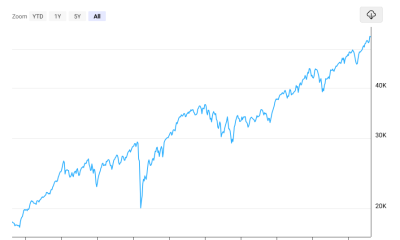
Dow’s 3-Year Winning Run Isn’t a Crash Signal, Still 49% Odds of Double-Digit Gains
-

 Tech7 days ago
Keychron K8 Ultra 8K review: a great value keyboard with comfort issues
-

 Business1 day ago
Mystery AI Model ‘Ox Alpha’ Draws Developers With Free Access as Chinese Lab Origins Remain Debated
-
 Tech7 days ago
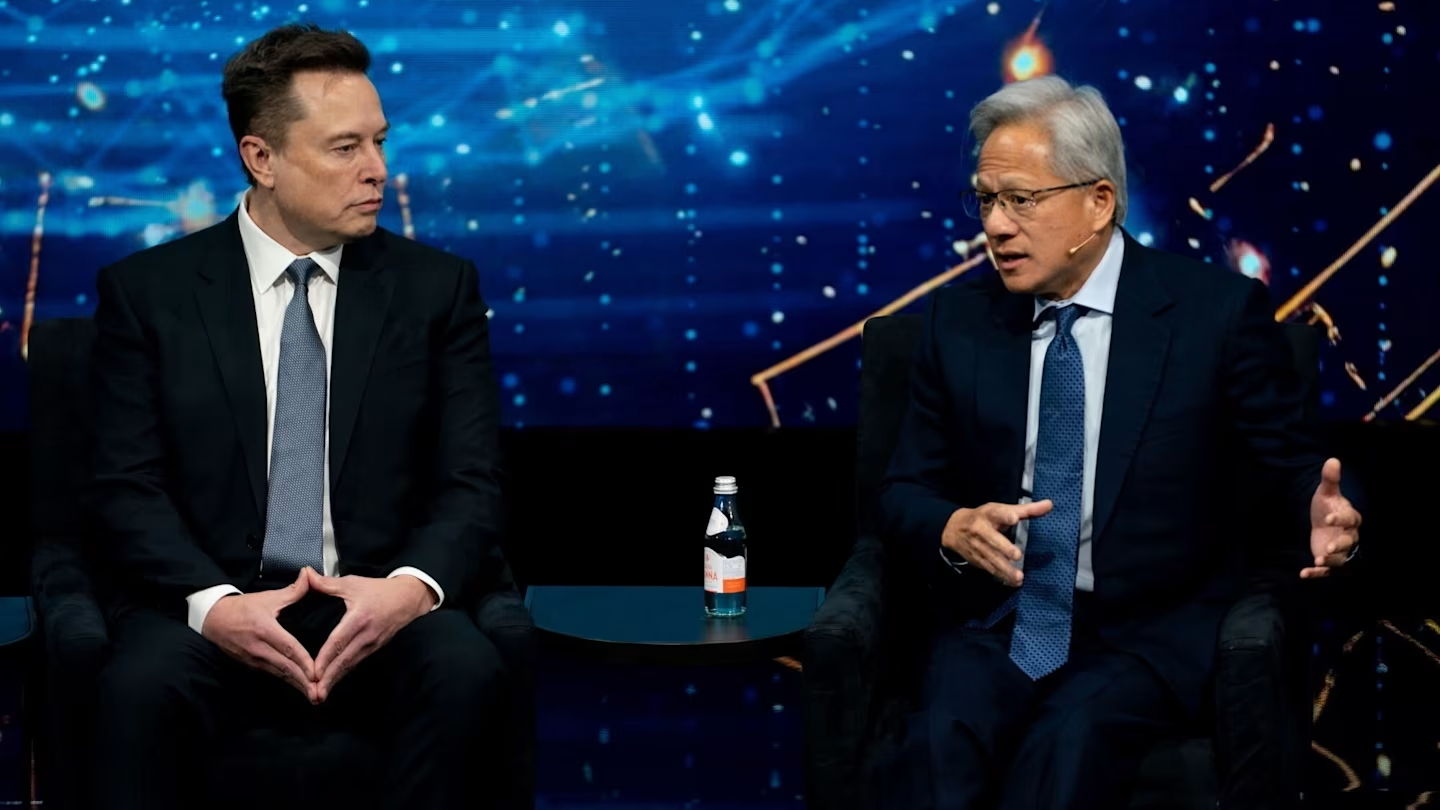
Nvidia discloses $21B stake in SpaceX
-

 Business6 days ago
Stock Market Today: Tech Futures Slide As Treasury Yields Jump; Nvidia, Micron, Sandisk Sell Off
-
 Business5 days ago
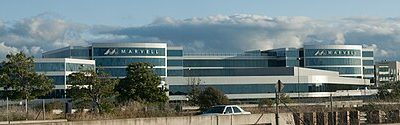
Marvell Shares Jump 7% as Google Chip Deal Confirms Custom AI Silicon Partnership, Analysts
-
 Business4 days ago
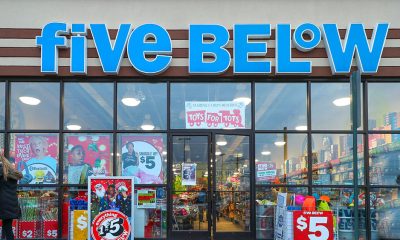
Five Below: Kids Discount Retailer Reaps Rich Rewards
-
Business7 days ago
Fabrinet (FN) Q4 2026 Earnings Call Transcript
You must be logged in to post a comment Login