
Business
Sensex rises 200 points, Nifty above 23,300 despite Fed rate hike. Why bears may be ready to pounce

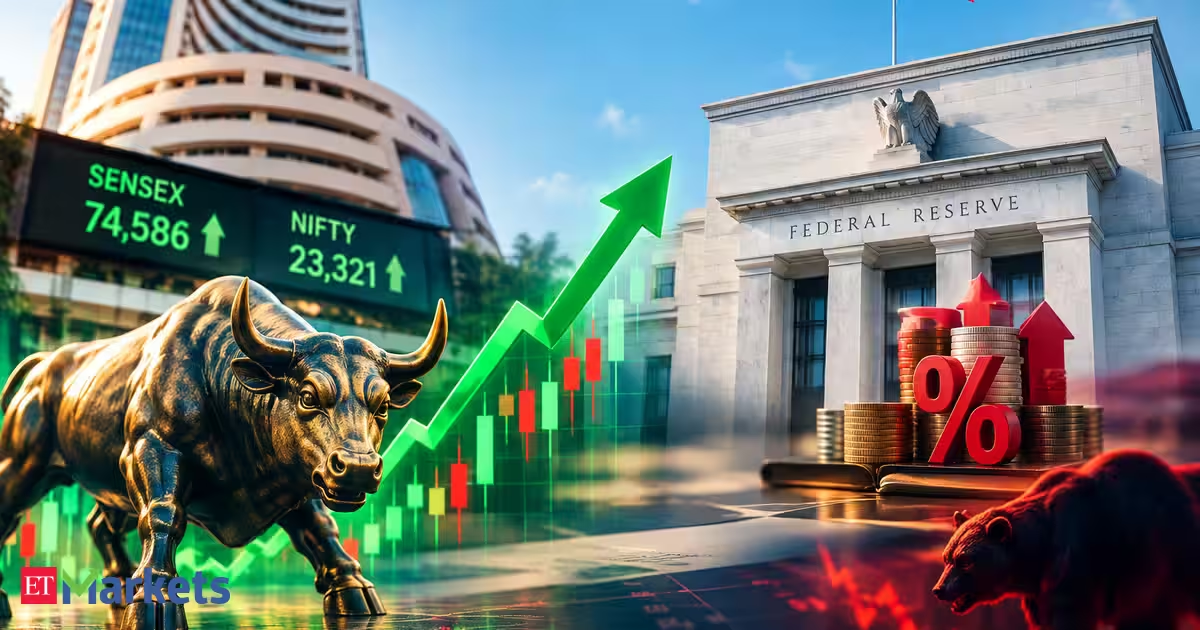
Sensex gained around 245 points to trade at 74,586 while Nifty 50 gained more than 104 points to trade at 23,321, as seen at 10.15 am. Broader markets also swung into the green, with Nifty Midcap 100 and Nifty Smallcap 100 rising nearly 1% each.
Zomato and Blinkit parent Eternal saw its shares jump around 3% to lead gains on Sensex. Bajaj Finance shares rose nearly 2%, while those of BEL, ITC and Axis Bank were up over 1% each. Bucking the trend, HDFC Bank, TCS, HCL Tech and Infosys shares fell nearly 1% each.
All sectoral indices except Nifty IT were trading in the green, with Nifty Metal, Nifty Pharma, Nifty PSU Bank, Nifty Auto and few others rising around 1% each. The overall market breadth turned positive, with NSE seeing 2,316 advances against 827 declines, while 105 stocks remained unchanged.
Also read | Explained: What US Fed’s first 25 bps rate hike in 3 years means for Indian stock market

Federal Reserve hikes rate
The US Federal Reserve on Wednesday announced its first interest rate hike since 2023, with officials expecting one more increase later this year. The American central bank’s Federal Open Market Committee (FOMC) announced the decision after a two-day meeting, increasing the benchmark interest rate by 25 basis points to a range of 3.75-4%. This comes after consumer inflation stayed at 3.4% in August, same as last month but still much higher than Fed’s 2% target. Inflationary pressures were further intensified by soaring energy prices amid renewed tensions in the Middle East.
“There are no immediate signs for inflation to ease, especially given the stalemate in the Middle East. This means the Fed may need to continue to tighten to achieve its target,” Tai Hui, APAC chief market strategist at JP Morgan Asset Management, was quoted as saying by Reuters. Traders are now expecting a 50% chance of another Fed hike next month to rein in inflation. A total of three rate increases have been priced in for this tightening cycle.
Why caution is still warranted?
While the Indian stock market trades in the green, caution is still warranted. Today is Sensex’s weekly expiry day, which typically sees sharp volatility towards the end of the session. Additionally, bond yields remain elevated, with the benchmark US 10-year Treasury yield above the crucial 5% mark.
The Indian rupee weakened past the 96-mark against the US dollar today, marking the first time in over a month, driven by a stronger US dollar after the Federal Reserve raised interest rates and signalled further tightening. FIIs have also been selling heavily on Dalal Street.
What lies ahead for Dalal Street?
The Fed’s decision to raise rates by 25 bps was completely on expected lines, as there was no justification for a hold in rates in the context of elevated inflation and a resilient economy with only 4.1% unemployment, said V K Vijayakumar, Chief Investment Strategist, Geojit Investments. He added that the hawkish message from Kevin Warsh that “inflation has been too high, and has been for too long” and that “ this committee will deliver price stability” can be construed as reassuring to the markets.
However, high bond yields will continue to weigh on equity markets, according to the analyst. Under normal circumstances, he feels that 5% yield on the 10-year would have triggered a sell-off in equity markets. But this is not happening now since US corporate earnings continue to be good. Warsh’s comment that “new hirings, private sector earnings and business capital investment point in a good direction” reflect a resilient economy and strong corporate sector, the analyst said, noting that this has the potential to act as a counterbalance to the high bond yields, thereby preventing a sell-off in the equity markets.
“The Indian market will continue to struggle. FIIs have been continuous sellers in India during the last six days and this trend is likely to continue. Another concern is the news of the U.S. House of Representatives passing a bill to impose a 100% tariff on countries like India which import oil from Russia. The geopolitical scene and Trump’s policies are getting murkier,” Vijayakumar warned.
(With inputs from agencies)
(Disclaimer: Recommendations, suggestions, views and opinions given by the experts are their own. These do not represent the views of The Economic Times)


The brokerage said passenger traffic remained subdued in August 2026, with GMR reporting around 1% year-on-year growth, including the recently added Nagpur and Bhogapuram airports. On an organic basis, however, passenger traffic declined 2.6% YoY, primarily due to continued weakness at GHIAL, where traffic fell 11.5%.
At GMR’s key domestic airports — DIAL, GHIAL and GIAL — passenger traffic declined 2.4% YoY in August. Domestic passenger traffic dropped nearly 4%, with GHIAL accounting for much of the weakness, while international passenger traffic edged up 1.4%.
JM Financial expects passenger traffic to remain under pressure through November 2026, partly due to the impact of the West Asia crisis. However, the brokerage expects growth to improve from December 2026 as favourable base effects kick in following the IndiGo airline crisis in late 2025.
The brokerage also noted that resilience in international traffic could support non-aeronautical revenues, helping offset some of the weakness in passenger volumes.
JM Financial values GMR’s operational airports in India at its long-term average 12-month forward EV/EBITDA multiple of 21x. Including the value of monetisable airport land, including the upcoming Bhogapuram airport and Medan airport, the brokerage arrived at a target price of Rs 115.
The brokerage acknowledged that near-term pressure on the stock could persist amid muted passenger traffic. However, with GMR Airports shares having declined around 8% over the past month, JM Financial believes much of the near-term traffic weakness is already reflected in the stock price. The brokerage therefore retained its Buy rating, citing an improved risk-reward profile at current levels.
Share Price and Technical Indicators
GMR Infrastructure’s stock has remained subdued in recent weeks, declining around 7% over the past month. The company currently commands a market capitalisation of approximately Rs 99,613 crore.
On the valuation front, GMR Infrastructure trades at a price-to-earnings (P/E) ratio of 205.31, while its price-to-sales (P/S) ratio stands at 6.04.
On the technical front, the 14-day Relative Strength Index (RSI) stands at around 32.4, indicating that the stock is approaching the oversold zone. Typically, an RSI below 30 is considered oversold, while a reading above 70 is viewed as overbought.
Disclaimer: This article has been written by Ritesh Presswala, who is not a SEBI-registered Research Analyst or an Investment Adviser. Ritesh Presswala and his/her ‘relative(s)’ (as defined under Section 2(77) of the Companies Act, 2013) do not hold any financial interest in the companies mentioned in this article as of the date of publication. The views/recommendations mentioned in this article, wherever applicable, are those of the respective SEBI-registered Research Analyst/brokerage and have been reproduced/reported with due attribution. They should not be construed as the views or recommendations of The Economic Times Digital or the journalist. Readers are advised to consider the original research report and make their investment decisions based on their own assessment. Brokerage disclaimers here
Business
Salesforce Suffers Global Outage on Day Two of Dreamforce as Stock Slides for a Second Straight Session
SAN FRANCISCO — Salesforce Inc. suffered a widespread global service outage Wednesday, the second day of its flagship Dreamforce conference in San Francisco, leaving customers across multiple continents unable to access core parts of its cloud software platform at an unusually inconvenient moment for the company.
According to Salesforce’s own status page incident tracker, the disruption began around 7:50 a.m. UTC, or roughly 3:50 a.m. Eastern time. The company said customers across all three of its operating regions could experience severe delays, intermittent errors, or a complete inability to access some services. “During a service disruption, end users can’t access the service,” Salesforce said in an update posted to its status page as the incident unfolded.
The outage’s reach extended well beyond the United States. Reports of disruption affected hundreds of Salesforce instances across markets including the United States, United Kingdom, Germany, France, India and Japan, according to tracking of the incident. Independent monitoring services logged a sharp spike in user complaints, with one service reporting that 69% of submitted issues related to website access, 16% to app functionality, and 15% to login problems.
Salesforce’s engineering team initially explored restarting affected systems as a potential fix, but that approach did not resolve the underlying problem. In a later status update, the company said it was “no longer pursuing restarts as a path to remediation,” adding that “customers continue to experience severe delays, intermittent errors, and inability to access some services and support case creation.” Salesforce said it would provide a further update within 30 minutes or sooner if new information became available.
Salesforce’s investigation ultimately traced the disruption to an internal login service. According to the company, incoming requests were stalling while waiting for a response from that service, a bottleneck that consumed available server resources and cascaded into the broader access problems customers experienced across the platform. By 10:56 a.m. UTC, roughly 6:56 a.m. Eastern time, Salesforce said its engineering team had validated a fix on a test instance and begun rolling it out across all affected regions.
The disruption’s timing drew particular attention given its overlap with Dreamforce, Salesforce’s flagship annual conference, which runs from September 15 through 18 in San Francisco. The event is expected to draw more than 40,000 in-person attendees, with more than 200,000 additional people registered to participate online, and features more than 400 sessions this year centered on Salesforce’s push into what the company calls the “Agentic Enterprise,” its broader strategy around AI-driven business software agents.
That AI push has included a newly announced partnership with Anthropic, under which Salesforce is embedding customer data and workflow tools into Anthropic’s Claude chatbot through a plugin aimed specifically at sales teams. The partnership was announced alongside Salesforce’s fiscal second-quarter earnings release, in which the company reported revenue of $11.35 billion, up 11% year-over-year, and raised its full-year revenue guidance by $200 million.
Salesforce shares were already under pressure heading into Wednesday’s outage. The stock closed Tuesday at $255.65, down 1.46% from Monday’s close of $259.43, a pullback that followed a sharp 4.73% rally on Monday tied to anticipation ahead of Dreamforce. Shares fell a further roughly 0.5% in Wednesday premarket trading, changing hands around $254.40. Because Tuesday’s decline occurred before the outage began, it cannot be directly attributed to the disruption, though the incident adds a fresh factor for investors to weigh as they assess the stock’s performance through the remainder of the week. Broader index futures showed a mixed picture Wednesday morning, with contracts on the S&P 500 and the Nasdaq Composite both posting modest gains even as Salesforce shares slipped.
Independent status-tracking services showed the scale of the disruption extending across a substantial share of Salesforce’s infrastructure. One tracker identified confirmed issues affecting more than 1,030 individual system components in North America alone, spanning Salesforce’s core service across multiple data center clusters. Separate monitoring logged the outage’s overall duration at more than four hours, with additional shorter incidents flaring up later in the day, according to historical incident data tracked for the service.
Customers experiencing access problems were directed by outside monitoring services to consult Salesforce’s own Trust Status page directly to determine whether their specific instance of the platform was affected, rather than relying solely on third-party outage trackers, which can occasionally lag behind or imprecisely characterize the true scope of an evolving technical incident.
Wednesday’s outage adds to a recurring pattern of high-profile disruptions affecting major cloud software providers over the past year, incidents that have increasingly drawn scrutiny given how deeply businesses across industries now depend on continuous access to cloud-hosted customer relationship management and sales tools for their day-to-day operations. For Salesforce specifically, the disruption’s timing alongside Dreamforce, an event explicitly designed to showcase the reliability and capability of its platform to tens of thousands of customers and partners, added a layer of irony that was not lost on observers tracking the incident as it unfolded.
With Salesforce having confirmed a validated fix was being deployed across affected regions by late Wednesday morning Eastern time, the company’s engineering team is likely to face continued scrutiny in the coming days over both the root cause of the login service bottleneck and whether additional safeguards will be put in place to prevent a similar disruption during future high-profile events on the company’s calendar.

Highway Holdings gets 180-day Nasdaq compliance extension

Hargreave Hale AIM VCT allots 885,927 shares at 32.64p each
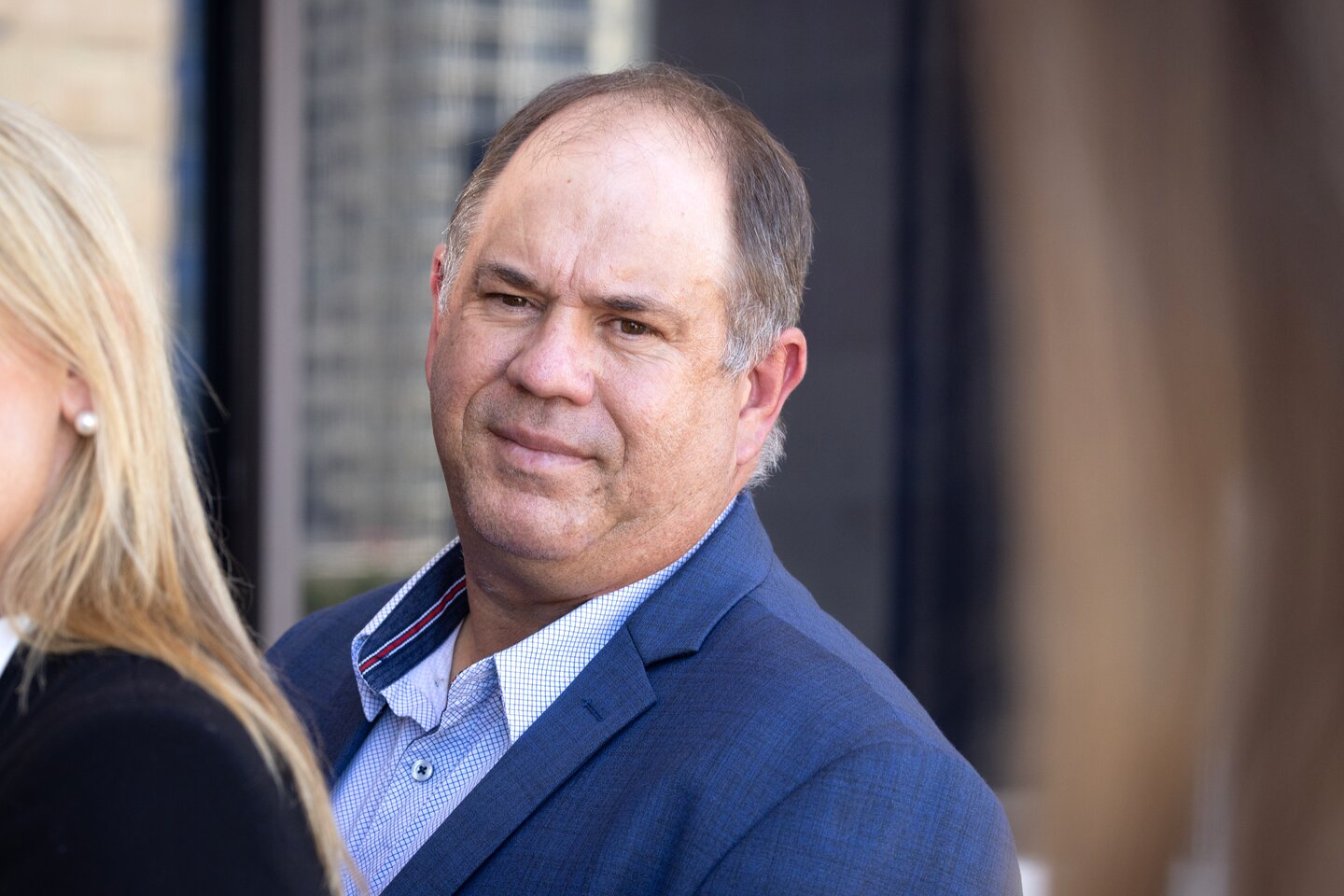
Proposed major reform to WA’s sandalwood industry has been slammed by the Nationals, who claim a lack of consultation threatens the sector’s future in the state.
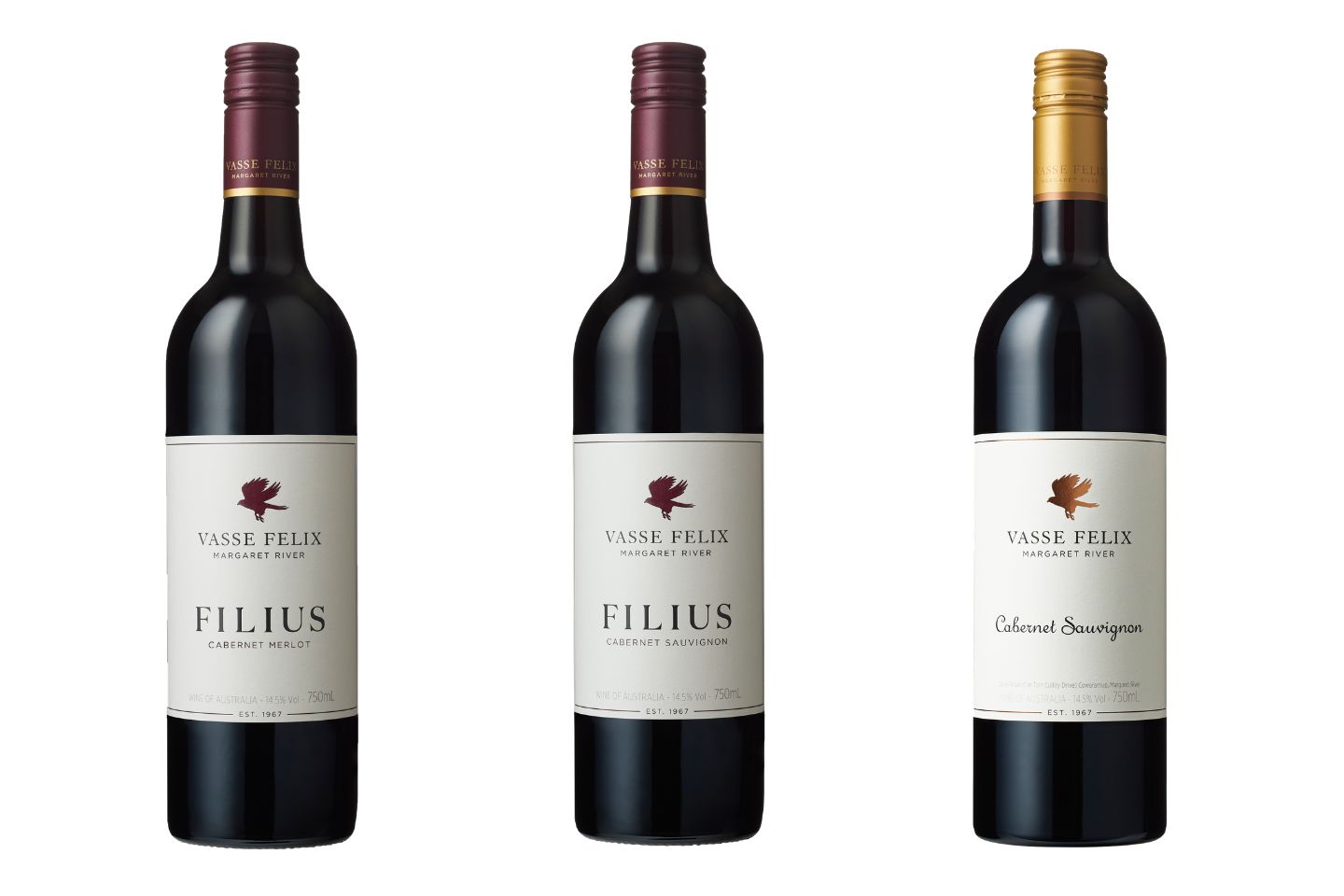
REVIEW: Some of WA’s top winemakers and pundits seriously underestimated the state’s 2024 vintage.

I am a specialist in Asian equities after having been a sellside analyst for 13 years. In addition, I have also spent time covering US hardware and semiconductor stocks on the sellside. Within Asia, I have covered the casino, automotive, industrial, consumer and technology sectors. I have also worked on the buyside as a fund manager in long only and as an analyst in hedge funds all covering Asian equities where I have developed a keen understanding of Asian companies and economies with a focus on China. From a global equities perspective, I enjoy covering companies globally by examining key metrics such as financial statements strength, valuation upside, and conducting proper analysis of the competitive advantages of the company. Throughout my career, I have found and written on undiscovered small cap companies which have increased in equity value by multiple times. I would like to write for Seeking Alpha where my goal is to help investors cut through the noise and to focus on fundamentals and the company’s competitive outlook instead of the momentum trade.
Analyst’s Disclosure: I/we have no stock, option or similar derivative position in any of the companies mentioned, and no plans to initiate any such positions within the next 72 hours. I wrote this article myself, and it expresses my own opinions. I am not receiving compensation for it (other than from Seeking Alpha). I have no business relationship with any company whose stock is mentioned in this article.
Seeking Alpha’s Disclosure: Past performance is no guarantee of future results. No recommendation or advice is being given as to whether any investment is suitable for a particular investor. Any views or opinions expressed above may not reflect those of Seeking Alpha as a whole. Seeking Alpha is not a licensed securities dealer, broker or US investment adviser or investment bank. Our analysts are third party authors that include both professional investors and individual investors who may not be licensed or certified by any institute or regulatory body.

Baron is an asset management firm focused on delivering growth equity investment solutions. Founded in 1982, Baron has become known for its long-term, fundamental, active approach to growth investing. Baron was founded as an equity research firm, and research has remained at the core of its business. Note: This account is not managed or monitored by Baron Capital, and any messages sent via Seeking Alpha will not receive a response. For inquiries or communication, please use Baron Capital’s official channels.

OPINION: From basic wearables to booking tickets to the big game, sports tech is big business.

Property developer Victor Goh has appeared before a Perth court over a possible contempt action, which was dismissed but with a judge’s stern warning.
GMR Airports shares gain 2% after JM Financial retains Buy rating; sees up to 24% upside

Zcash jumps 17% as $345 million of liquidations hit crypto traders

Hayden Panettiere’s Ex Speaks Out 1 Month After Star’s Death

Weekend Open Thread – Corporette.com

Memory prices are slowing because buyers ran out of money

Micron Stock Climbs Above $1,031 as AI Memory Crunch and a $50 Billion Outlook Fuel the Rally

Financial Education’s Biggest Real Estate Mistake

Guess The Top 10 Most EXPENSIVE Sports To Play! #sports #top10 #money #basketball #football tball

BITCOIN: Most Will Probably Miss the Next Move! (here’s why) – BTC Price Prediction Today
-
 Fashion6 days ago
Weekend Open Thread – Corporette.com
-

 Tech4 days ago
The Latest Weird Thing to Play Doom Is the Mapped-Out Brain of a Fruit Fly
-

 Business6 days ago
10 Most-Streamed Songs On Spotify In 2026 So Far, Led By Ella Langley’s Dominant Run On The Charts This Year
-

 Crypto World6 days ago
XAG/USD: Silver’s Short-Term Rally Meets Its Moment of Truth
-

 Crypto World7 days ago
2 Chip Stocks Broke Out This Week. Neither Was Nvidia
-

 Tech7 days ago
Battery life is the only iPhone 18 Pro and iPhone Duo upgrade I care about. Apple didn’t disappoint
-

 Crypto World7 days ago
OKX launches 10x OpenAI, Anthropic X-Perps in Europe
-

 Crypto World6 days ago
Diesel Tops $6 a Gallon for the First Time as 28 States Set Records
-

 Crypto World3 days ago
Elon Musk Drops a Bombshell: Grok 5 Could Be the AGI Breakthrough
-

 Business7 days ago
Western Digital Slips 2.7% as AI Storage Rally Cools After Record Cash and Guidance
-

 News Videos6 days ago
Facing Financial Fears
-

 Business4 days ago
Rivals Sam Altman and Elon Musk Rally Behind Dario Amodei’s Call for a Slowdown in AI Development
-
Crypto World6 days ago
Ethereum Price Analysis: Consolidation at $2.5K Tests Momentum as On-Chain Activity Surges
-

 Crypto World5 days ago
Can AI Build a Startup in 72 Hours? Elon Musk's Team Will Livestream the Test
-
 Crypto World2 days ago
Kraken Lets xStocks Holders Earn Yield Through DeFi
-

 Entertainment6 days ago
News Specials, Movies, Shows, More
-
 NewsBeat3 days ago
‘Sick conspiracy’: Trump says only guardrails AI needs is ‘a strong and smart (High IQ!) president’ in all-caps rant
-

 Crypto World6 days ago
Bitcoin ETFs Pull $167M as 2026’s Best Inflow Run Slows
-

 Crypto World7 days ago
US CPI forecast at 3.4% as tariff risks build
-
 Entertainment5 days ago
New Horror Movie Officially Earns a Rare Stephen King Recommendation
You must be logged in to post a comment Login