



Business
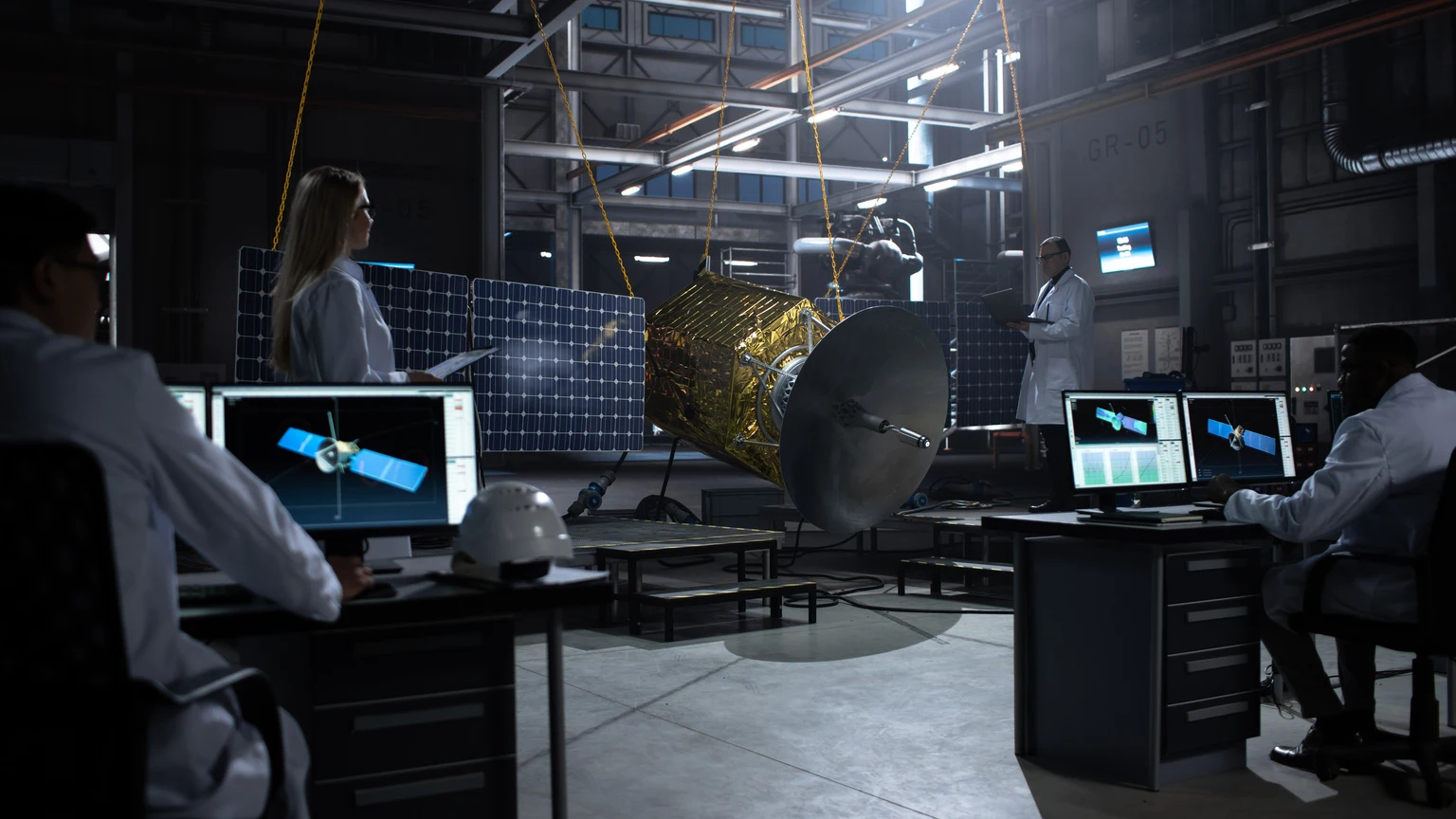
Sidus Space: Flush With Cash, But Where Does It Go Next (NASDAQ:SIDU)
I hold a Master’s degree in Cell Biology and began my career working for several years as a lab technician in a drug discovery clinic, where I gained extensive hands-on experience in cell culture, assay development, and therapeutic research. That scientific foundation gave me an appreciation for the rigor and challenges behind drug development, which I now bring into my work as an investor and analyst. For the past five years, I have been active in the investing space, with the last four years dedicated to working as a biotech equity analyst alongside my lab work. My focus is on identifying promising biotechnology companies that are innovating in unique and differentiated ways, whether through novel mechanisms of action, first-in-class therapies, or platform technologies with the potential to reshape treatment paradigms. By combining my lab-based scientific expertise with financial and market analysis, I aim to deliver research that is both technically sound and investment-driven. On Seeking Alpha, I plan to write primarily about the biotech sector, covering companies at different stages of development, from early clinical pipelines to commercial-stage biotechs. My approach emphasizes evaluating the science behind drug candidates, the competitive landscape, clinical trial design, and the potential market opportunity, all while balancing financial fundamentals and valuation. My goal in publishing here is to share some insights that help investors better understand both the opportunities and of course the many risks in biotech. This is a sector where breakthrough science can translate into outsized returns, but also where careful scrutiny is essential. I look forward to contributing thoughtful analysis and engaging with readers who share an interest in this dynamic and rapidly evolving space.
Analyst’s Disclosure: I/we have no stock, option or similar derivative position in any of the companies mentioned, and no plans to initiate any such positions within the next 72 hours. I wrote this article myself, and it expresses my own opinions. I am not receiving compensation for it (other than from Seeking Alpha). I have no business relationship with any company whose stock is mentioned in this article.
Seeking Alpha’s Disclosure: Past performance is no guarantee of future results. No recommendation or advice is being given as to whether any investment is suitable for a particular investor. Any views or opinions expressed above may not reflect those of Seeking Alpha as a whole. Seeking Alpha is not a licensed securities dealer, broker or US investment adviser or investment bank. Our analysts are third party authors that include both professional investors and individual investors who may not be licensed or certified by any institute or regulatory body.
Business
Semiconductor ETF up 89% this year as chip industry eyes $1T revenue threshold
Eddie Ghabour, CEO of Key Advisors Wealth Management, anticipates market corrections this summer after a rapid surge in tech stocks, advising investors to prepare for choppy trading and look for buying opportunities.
So far this year, semiconductors and the physical infrastructure of artificial intelligence (AI) are dominating the exchange-traded fund (ETF) scene. For example, the iShares Semiconductor ETF is up 89% year to date. Given the intense interest – and investments – in AI, this makes sense.
What’s driving the semiconductor boom
Semiconductors and AI reinforce each other in a tight loop. AI depends on ever more sophisticated chips to run. Now, AI is changing how chips are designed and where they’re manufactured. In short, AI is designed to perform tasks that normally require human intelligence, and semiconductors are the physical devices that enable it to do so.

Driven by AI and data-center demand, the chip industry is in a powerful upcycle. (Lyu Bin/VCG via Getty Images)
TAP INTO THE HUMANOID ROBOTICS BOOM WITH THIS ETF
Driven by AI and data-center demand, the chip industry is in a powerful upcycle. With large cloud providers spending heavily on AI infrastructure, the entire semiconductor value chain is lifted. Greater demand for central processors, graphics processors, power management, memory and manufacturing equipment is like catnip to investors – so much so that semiconductor revenue reached $298.5 billion in the first quarter of 2026, up a staggering 25% from the fourth quarter of 2025.
| Ticker | Security | Last | Change | Change % |
|---|---|---|---|---|
| SOXX | ISHARES TRUST ISHARES SEMICONDUCTOR ETF | 571.45 | +31.68 | +5.87% |
A closer look at an ETF that’s soaring
As a passively managed ETF, the iShares Semiconductor ETF provides exposure to large-cap and mid-cap companies, primarily through U.S.-listed stocks. It tracks the NYSE Semiconductor Index and currently holds a concentrated basket of 30 stocks.
Top holdings include industry leaders such as Micron Technology, Advanced Micro Devices and Marvell Technology.
WHAT ARE ACTIVE ETFS AND HOW ARE THEY RESHAPING HOW AMERICANS INVEST?
With a reasonable expense ratio of 0.34%, or $34 per $10,000 invested annually, SOXX provides access to a narrowly focused group of sector-specific ETFs.
Predicted to top the $1 trillion threshold by the end of 2026
IDC’s April forecast predicted that the semiconductor market will exceed the $1 trillion revenue threshold by the end of this year. However, investing in a semiconductor ETF is not the right move for everyone.
As an investor, it’s vital to remember that anything could happen. For example, AI could lose popularity for any number of reasons, from hype fatigue to slower-than-expected adoption or constraints on power and data-center buildouts. Like all technology, semiconductor stocks and ETFs can be volatile, and there’s no guarantee that they’ll continue to thrive.
HOW ETFS CAN BE EFFECTIVE BUILDING BLOCKS FOR RETIREES

As a passively managed ETF, the iShares Semiconductor ETF provides exposure to large-cap and mid-cap companies. (Brendan McDermid/Reuters)
Before leaping, look past the current hype and make sure you’ve taken a close enough look under the hood to know precisely what you’re buying. If you do choose to put money into a semiconductor ETF, it should be part of a well-diversified portfolio that you intend to hold for the long term.
GET FOX BUSINESS ON THE GO BY CLICKING HERE
Dana George has no position in any of the stocks mentioned. The Motley Fool has positions in and recommends Advanced Micro Devices, Marvell Technology, Micron Technology and iShares Trust – iShares Semiconductor ETF. The Motley Fool has a disclosure policy.
Business
48 Teams, 104 Matches Across Three Nations from June 11 to July 19
NEW YORK — The expanded FIFA World Cup 2026 kicks off on June 11 with a record 48 teams competing in 104 matches across 16 venues in the United States, Canada and Mexico, culminating in the final on July 19 at MetLife Stadium in the New York New Jersey area in what promises to be the largest and most geographically dispersed edition of soccer’s premier tournament.
The tournament features a revamped format with 12 groups of four teams each. The top two from every group advance automatically to the round of 32, joined by the eight best third-place finishers, creating a more inclusive knockout stage that extends the competition to 39 days.
Mexico opens the tournament against South Africa on Thursday, June 11, at Estadio Azteca in Mexico City, with the second Group A match pitting South Korea against Czechia later that evening at Estadio Akron in Guadalajara. Canada faces Bosnia and Herzegovina on June 12 in Toronto, while the United States hosts Paraguay the same day at SoFi Stadium in Inglewood, California.
The group stage runs through June 27, with matches spread to minimize travel fatigue and maximize fan access across the continent. Host nations were pre-assigned: Mexico in Group A, Canada in Group B and the United States in Group D. Other notable groups include strong European and South American sides distributed to ensure competitive balance.
Key venues include iconic stadiums such as MetLife Stadium (final and semifinals), SoFi Stadium, AT&T Stadium in Arlington, Texas, Mercedes-Benz Stadium in Atlanta, and international sites like BC Place in Vancouver and BMO Field in Toronto. Eleven U.S. cities, three Mexican venues and two Canadian locations will host, showcasing North America’s infrastructure capabilities.
Group stage highlights feature marquee early clashes. Brazil meets Morocco on June 13 in New Jersey, while England, Croatia, Ghana and Panama navigate Group L. Defending champions Argentina, along with powerhouses like France, Germany and Spain, will face challenging paths depending on group outcomes.
The round of 32 begins June 28, followed by the round of 16 starting July 4. Quarterfinals are slated for July 9-10, semifinals on July 14 and 15, with the third-place match on July 18 before the grand finale. This structure allows for recovery time amid the expanded field while maintaining high stakes throughout.
Broadcast coverage in the U.S. will be led by Fox, FS1 and Telemundo, with extensive streaming on Peacock and other platforms. International rights holders are preparing comprehensive packages to reach billions of viewers, capitalizing on the tournament’s proximity to major population centers.
Ticket demand has been unprecedented, with FIFA reporting strong sales across categories. Fan festivals in host cities will offer public viewing and cultural experiences, enhancing accessibility for those unable to secure match tickets. Security, transportation and sustainability measures are top priorities for organizers coordinating across three nations.
The expanded format has sparked debate among traditionalists concerned about diluting quality, while supporters highlight greater opportunities for emerging nations and increased revenue for FIFA and local economies. Economic projections estimate tens of billions in impact across North America, boosting tourism, infrastructure and hospitality sectors.
Qualification wrapped up earlier in 2026, with 48 teams finalized after intercontinental playoffs. The draw in December 2025 set the stage for intense group rivalries. Co-host advantages could prove significant, though travel between distant venues like Seattle and Miami adds complexity for teams and supporters.
In Group A, Mexico enters as favorites with home-soil support, facing South Africa, South Korea and Czechia. Canada aims to advance from Group B alongside Switzerland, Qatar and Bosnia and Herzegovina. The U.S. hosts Paraguay, Australia and Türkiye in Group D, targeting a strong group-stage showing on home turf.
Later group stages will see heavyweight encounters, such as potential clashes involving England, France, Brazil and Argentina. The knockout bracket ensures early drama, with third-place teams adding unpredictability to advancement.
Logistical challenges include player workload, with clubs voicing concerns over the extended calendar. FIFA has worked with stakeholders on scheduling to mitigate fatigue. Medical and anti-doping protocols remain stringent amid the high-stakes environment.
For fans planning travel, the schedule offers flexibility with matches clustered by region in certain phases. Cities like Los Angeles, Dallas, Houston and Atlanta will host multiple high-profile games, creating mini-tournaments within the larger event.
As the tournament nears, excitement builds across the continent. National teams are ramping up preparations with friendlies and training camps. Star players from Lionel Messi to Kylian Mbappé could feature in what may be career-defining moments for some veterans.
The 2026 World Cup represents a landmark for global soccer, uniting three nations in a shared celebration. From the ceremonial opening in Mexico City to the climax in New York New Jersey, every match carries the weight of history in an expanded field where surprises are expected.
Organizers emphasize legacy goals, including youth development, infrastructure improvements and lasting cultural exchange. With just days until the first whistle, anticipation is palpable as the soccer world turns its focus to North America for an unforgettable summer of sport.
Full schedules and updates are available on FIFA’s official site, with apps and digital tools aiding fan navigation. As teams finalize rosters and tactics, the stage is set for a tournament defined by ambition, unity and the beautiful game’s global appeal.
Business
SunOpta expanding fruit snacks production

Newly opened line expected to increase fruit snacks production capacity by 25%.
Business
WarrenAI’s Picks: Top Blue-Chip Tech Stocks for 2026

WarrenAI’s Picks: Top Blue-Chip Tech Stocks for 2026
Business
Cantor Fitzgerald reiterates Motorcar Parts stock rating on strong quarter

Cantor Fitzgerald reiterates Motorcar Parts stock rating on strong quarter
Business
PPC Ltd 2026 Q4 – Results – Earnings Call Presentation (OTCMKTS:PPCLY) 2026-06-09
Seeking Alpha’s transcripts team is responsible for the development of all of our transcript-related projects. We currently publish thousands of quarterly earnings calls per quarter on our site and are continuing to grow and expand our coverage. The purpose of this profile is to allow us to share with our readers new transcript-related developments. Thanks, SA Transcripts Team
Business
5 takeaways from airline CEOs’ biggest annual gathering
Ground crews load cargo and supplies onto airplanes from airlines including Lufthansa Group, Emirates, Austrian Airlines, and British Airways, as they stand parked at the Tom Bradley International Terminal (TBIT) at Los Angeles International Airport (LAX) in El Segundo, California, on September 11, 2023.
Patrick T. Fallon | Afp | Getty Images
RIO DE JANEIRO — Hundreds of airline leaders gathered in Brazil this week at the International Air Transport Association’s annual assembly to discuss high fuel costs, sharply lower profits, engine reliability issues and elusive emission reduction goals, among other things.
Toward the end of the assembly in Rio de Janeiro, news broke that Iran and Israel traded strikes for the first time since a ceasefire went into effect in April. For airline executives who have faced ongoing turmoil since the first U.S. and Israeli strikes on Iran on Feb. 28, it seemed like just one more blip in the whipsawing chaos of 2026. Those airline leaders’ stance so far has been to wait and see.
Here are some takeaways from the gathering:
Withering profits
Fuel costs have more than doubled in some places since the beginning of the Iran war, as the Strait of Hormuz, a key shipping lane, has been effectively closed for much of the time.
IATA said airlines globally are absorbing a $100 billion increase in their fuel costs this year, which along with airspace closures due to Middle East attacks curtailing travel, will likely halve airline profits this year.
Willie Walsh, the outgoing director general of the organization, said net profits will fall from $45 billion in 2025 to $23 billion in 2026, and that net margins would drop from 4.2% last year to 2% this year.
While fares are up, airlines haven’t been able to cover the full fuel bill this year, so profits will take a hit.
Travel demand is resilient — but winter is coming
Airline executives told CNBC that customers continue to book.
Etihad Airways, based in Abu Dhabi, in the United Arab Emirates, initially felt the effect of the Middle East turmoil this year with lower demand. But Antonoaldo Neves, group chief executive officer of Etihad Aviation Group, said in an interview that the number of tickets are about the same as pre-conflict, seasonally adjusted.
United Airlines CEO Scott Kirby, who runs the second-most profitable airline in the U.S., said customers continue to book, even though fares are up about 20% and could rise further if fuel costs continue to increase.
He said the resilient bookings surprised even him. “I think the economy is stronger than people think,” he told CNBC in an interview. The U.S. is also more insulated from oil supply shocks than other regions because it produces so much.

Summer bookings are strong, and airlines are also getting better at managing capacity with high fuel prices, cutting more unprofitable routes and reducing frequencies. The big question remains what happens after the main summer and fall peaks.
“That bodes well for a strong northern summer peak season,” Walsh said of current trends. “The big unknown is how long travelers and shippers can tolerate the higher costs of connectivity.”
The other question is where fuel prices go from here.
“If prices will remain the same, yeah, for sure, less people be able to afford to travel,” said Kamil Al-Awadhi, former Kuwait Airways CEO and IATA’s vice president for Africa and the Middle East.
Airplane FOMO keeps orders coming
Airplane manufacturers said they’re not seeing a slowdown in orders because of higher fuel prices.
Airbus and Boeing continue to be sold out of some of their most popular jets through the beginning of the next decade. Airlines generally plan for fleet growth years in advance, and the bulk of an aircraft’s price is paid when a carrier receives it.
Etihad’s Neves told CNBC that he wants to buy even more jets to top off his existing orderbook of dozens of planes, though he didn’t give a number, only saying it’s “more than 10.”
A spokesman for Brazilian airplane maker Embraer said that one risk is that customers don’t exercise options to increase their existing orders, but so far the company isn’t seeing that.
Boeing is set to report orders and deliveries for May on Tuesday morning.
High fuel prices could kill off other airlines
Iconic U.S. budget airline Spirit Airlines in May succumbed to years of problems. It had been dealing with an engine recall, a failed merger and changing consumer tastes all while managing a mountain of debt. But the jump in fuel prices was the last straw for the discounter, it told U.S. bankruptcy court this spring.
IATA’s Walsh said at the conference that high fuel costs could push other airlines to collapse as well.
That means that more profitable, cash-rich carriers, which have done better at capitalizing on the K-shaped economy and a shift in demand toward high-fare luxury travel, are on better footing than some that are more price sensitive.
‘Engineering marvels’ at what cost?
Airline CEOs are frustrated with engine makers who promised increased fuel efficiency in new-generation engines. The fuel savings are there, but they’re getting gobbled up by disappointing reliability that forces airlines to have the engines serviced earlier than they thought, executives said.
On top of that, there aren’t enough of them produced to satisfy carriers, as Boeing and Airbus ramp up output.
Alexis von Hoensbroech, CEO of Canada’s WestJet, told CNBC in an interview before the IATA meeting that the new engines promising fuel savings of around 15% or more compared with earlier models were “engineering marvels.”
“However, as you push the limits, it sometimes comes at the cost of reliability, and what we all are seeing is that those engines have to go into unscheduled maintenance far more frequently than prior engine generations,” he said.
Companies like GE Aerospace and Rolls-Royce, which have enjoyed a windfall from increased demand, said they have been busy with fixes and added overhaul capacity.
Business
Favorites Contenders and Group Analysis Ahead of Kickoff
With the 2026 FIFA World Cup set to begin on June 11 across North America, the expanded 48-team tournament offers a fresh landscape for soccer’s biggest stage. From powerhouse favorites like France, Spain and Argentina to emerging contenders and debutants, the field presents a mix of established giants, regional powerhouses and ambitious underdogs. Analysts have released detailed power rankings based on current FIFA standings, recent form, squad depth, coaching and group difficulty.
The tournament format features 12 groups of four, with the top two from each advancing automatically along with the eight best third-place teams to a 32-team knockout stage. This structure increases opportunities for surprises while maintaining high stakes. Host nations Mexico, Canada and the United States benefit from home support and favorable seeding.
Top Contenders (Ranked 1-6)
France enters as one of the strongest sides, boasting exceptional depth across the pitch despite occasional tactical questions. Kylian Mbappé remains the focal point, supported by a talented core capable of dominating matches. Recent performances have reinforced their status as prime contenders.
Spain, fresh off strong showings, relies on technical mastery and youthful energy led by players like Pedri and Lamine Yamal. Their possession-oriented style and squad balance make them a nightmare for opponents, positioning them among the top favorites.
Argentina, the defending champions, feature Lionel Messi in what could be his final World Cup. Despite the challenge of repeating as winners — a feat not achieved since Brazil in the 1960s — the Albiceleste maintain elite status with a balanced squad and championship pedigree.
England brings talent and ambition, with Jude Bellingham and Harry Kane anchoring a side that has consistently reached later stages but seeks its first title since 1966. Questions linger around finishing and consistency, yet their potential remains high.
Brazil and Portugal round out the elite tier. Brazil’s attacking flair and Portugal’s experience, including Cristiano Ronaldo’s leadership, ensure they remain dangerous throughout. Both nations possess the quality to reach the semifinals or beyond.
Mid-Tier Powerhouses and Dark Horses (Ranked 7-20)
Germany, the Netherlands, Belgium and Croatia bring European pedigree and tactical sophistication. Germany aims to rebound from recent inconsistencies, while the Dutch emphasize fluid attacking play. Belgium’s golden generation edges toward conclusion, adding urgency, and Croatia continues to punch above its weight.
Morocco, fresh off a strong 2022 showing, represents Africa’s best hopes alongside Senegal, Egypt and others. Asian representatives Japan, South Korea and Iran offer discipline and counter-attacking threats. South American sides like Uruguay, Colombia and Ecuador provide physicality and technical skill.
Group-by-Group Breakdown
Group A: Mexico, South Africa, South Korea, Czechia Mexico, as hosts, are clear favorites to top the group. Their experience and home advantage should see them advance comfortably. South Korea and Czechia vie for second, with South Africa as the likely underdog. Mexico’s path looks favorable for a deep run.
Group B: Canada, Bosnia and Herzegovina, Qatar, Switzerland Canada benefits from hosting but faces a competitive pool. Switzerland’s consistency makes them a strong contender for top spots. Bosnia and Qatar add unpredictability. Expect tight battles for advancement.
Group C: Brazil, Morocco, Haiti, Scotland Brazil should dominate, but Morocco’s organization poses a challenge. Scotland and Haiti will fight for points. Brazil is expected to top the group easily, with Morocco likely advancing.
Group D: United States, Paraguay, Australia, Türkiye The U.S. hosts look to capitalize on home support. Türkiye and Australia bring experience, while Paraguay adds South American grit. The group is competitive, with the U.S. favored to progress alongside one or two others.
Group E: Germany, Curaçao, Ivory Coast, Ecuador Germany is the standout, expected to cruise through. Ivory Coast and Ecuador offer quality, making second place contested. Curaçao faces an uphill battle.
Group F: Netherlands, Japan, Sweden, Tunisia The Netherlands lead a balanced group. Japan’s discipline and Sweden’s organization create intrigue. Tunisia will seek upsets. Multiple teams have realistic knockout hopes.
Group G: Belgium, Egypt, Iran, New Zealand Belgium should advance as group winners. Egypt and Iran compete for the second spot, with New Zealand as the outsider. Expect European experience to prevail.
Group H: Spain, Cape Verde, Saudi Arabia, Uruguay Spain is heavily favored. Uruguay’s pedigree makes them a strong second-place candidate. Cape Verde and Saudi Arabia will aim for surprises.
Group I: France, Senegal, Iraq, Norway France dominates expectations. Senegal provides African strength, with Norway and Iraq adding depth. France is a top contender for the title from this pool.
Group J: Argentina, Algeria, Austria, Jordan Argentina leads comfortably. Algeria and Austria compete fiercely for advancement, with Jordan as the underdog. Messi’s side remains a championship favorite.
Group K: Portugal, DR Congo, Uzbekistan, Colombia Portugal’s star power stands out. Colombia brings South American flair, while DR Congo and Uzbekistan seek breakthroughs. Portugal is expected to top the group.
Group L: England, Croatia, Ghana, Panama England and Croatia are the primary contenders. Ghana and Panama offer athleticism and resilience. This group could produce strong knockout representatives.
Overall Outlook and Key Storylines
The expanded format gives more nations a platform, increasing the potential for Cinderella stories while keeping traditional powers in contention. Host nations carry national pride and logistical advantages, though travel across venues remains a factor.
Injuries, form and coaching decisions in the final preparations will shape outcomes. Veterans like Messi and Ronaldo may write final chapters, while young talents emerge on the global stage. Tactical innovations, set-piece execution and physical conditioning will prove decisive in the knockout rounds.
Economic and cultural impacts across North America are projected to be massive, with billions in revenue and lasting infrastructure benefits. Fan festivals and broad broadcasting ensure widespread engagement.
Analysts largely agree that a European or South American side is most likely to lift the trophy, with France, Spain and Argentina leading betting markets. However, the 48-team field introduces greater variance and excitement.
As teams finalize rosters and tactics, anticipation builds for what promises to be a historic tournament. From Mexico City’s opening match to the MetLife Stadium final on July 19, the 2026 World Cup celebrates soccer’s global reach and competitive depth.
Emerging nations will test themselves against the elite, potentially rewriting narratives. For established powers, the challenge is navigating a longer path to glory. The blend of experience, youth and home advantage sets the stage for unforgettable moments.
Detailed power rankings from sources like ESPN, FOX Sports and GOAL highlight the nuanced assessments. While favorites hold the edge, football’s unpredictability ensures no outcome is guaranteed. The tournament’s scale amplifies both opportunities and pressures.
Fans and neutrals alike can look forward to a summer filled with passion, skill and drama. With just days until the first whistle, the soccer world unites in excitement for the expanded spectacle that is World Cup 2026.
Business
Widow 'distressed' by firm's nine-month delay to husband's pension
BBC Scotland has heard testimony from people affected by delays in pensions managed by outsourcing firm Capita.
Business
Final piece of 'iconic' Denby Pottery signed
The firm, founded in 1809, appointed administrators due to rising energy and labour costs.
-
Fashion4 days agoWeekend Open Thread: Evereve – Corporette.com
-
Sports7 days agoFrench Open 2026 results: Alexander Zverev beats Rafael Jodar and will play Jakub Mensik in semi-finals
-
Crypto World4 days ago
Jensen Huang Approves Samsung, SK Hynix, and Micron for NVIDIA (NVDA) HBM4 Memory Supply
-
Business6 days agoTrump Taps Housing Chief Bill Pulte as Acting Intelligence Director After Gabbard Exit
-
NewsBeat7 days agoRepublicans balk at Trump’s attempt to appoint a MAGA enforcer to lead National Intelligence
-
Crypto World3 days agoSenator Cynthia Lummis Calls CLARITY Act the Most Consequential Financial Legislation of This Generation
-
Business2 days agoThe Pain Points Taking a Fragile Tech Rally Down a Notch
-
Entertainment2 days agoThe Best Mystery Series of All Time Is Surging on Streaming 30 Years After It Ended
-
Crypto World4 days ago
LBank Surpasses 25 Million Users Worldwide as AFA Partnership Continues to Drive Global Growth
-
Tech2 days agoMicrosoft unveils seven homegrown AI models in new bid for ‘long term self-sufficiency’
-
Tech4 days agoMicrosoft launches MXC, an OS-level sandbox for AI agents, with OpenAI and Nvidia already on board
-
Crypto World1 day agoAnatomy of the June crypto crash: Fed, Iran, Saylor
-
NewsBeat2 days agoAlexander Zverev wins the French Open to finally earn a 1st Grand Slam title
-
Tech3 days agoSuspicious Polyfill login prompts pop up on Toshiba, Muji websites
-
Crypto World2 days agoTrump’s AI Ownership Plan Could Benefit Anthropic at OpenAI’s Expense
-
Business7 days agoPagerDuty, Inc. (PD) Presents at Bank of America 2026 Global Technology Conference Transcript
-
Business4 days ago(VIDEO) Justin Bieber Delivers Surprise Happy Birthday Serenade to Diners at Los Angeles Mexican Restaurant
-
Tech4 days agoRCS Messages Between iPhone and Android Get End-to-End Encryption With iOS 26.5
-
Tech4 days agoMeta steals a tactic from Tesla and builds data centers in tents
-
Crypto World7 days ago
Seagate (STX) Stock Surges to Record High on AI Boom and Legal Settlement

You must be logged in to post a comment Login