
Business
Sir Jim Ratcliffe loses moral high ground by living in tax exile – Labour Party Chair

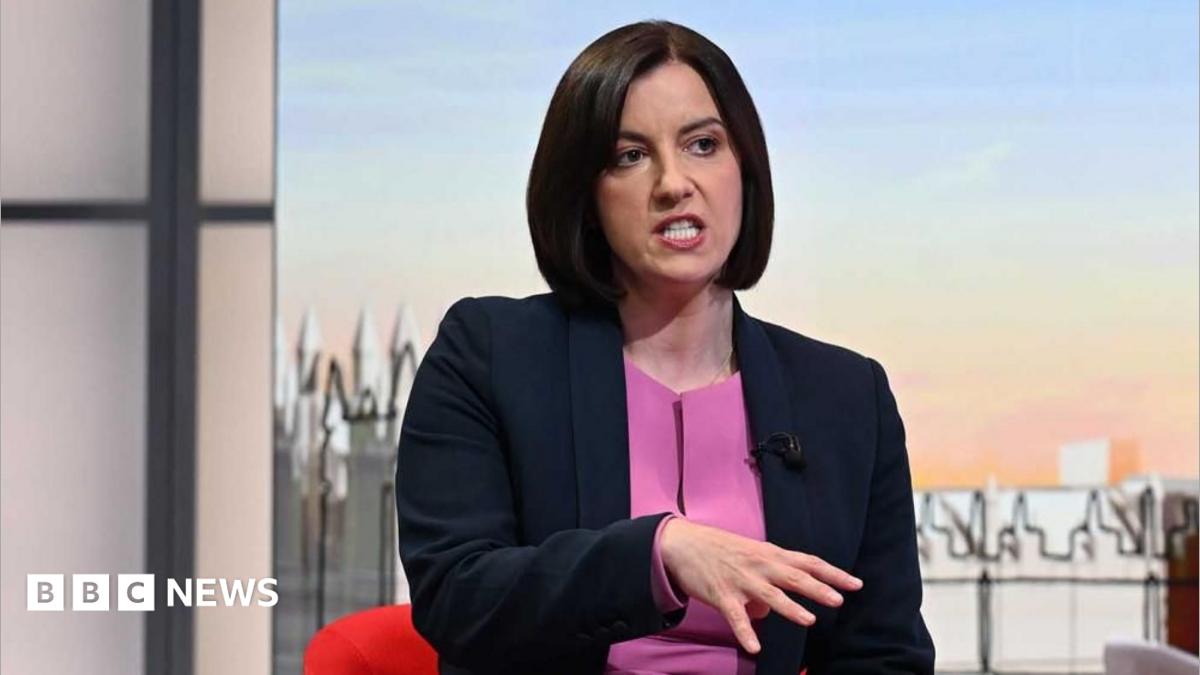
The Labour Party chair has said Sir Jim Ratcliffe loses “the moral high ground” by making statements about the UK while living in tax exile.
Speaking to Sunday with Laura Kuenssberg, Bridget Phillipson said she would take the billionaire businessman’s comments that the UK was “on the slide” with a “pinch of salt”.
Sir Jim, the founder of petrochemical giant Ineos and Manchester United’s co-owner, told the BBC he has lost confidence in the UK due to a combination of high taxes and high immigration.
He has been a tax resident in Monaco since 2020 and said “things would have to get better” in the UK for him to return.
When questioned over the remarks, Phillipson said Sir Jim loses “the moral high ground” by “making these kinds of pronouncements while choosing to make decisions, that he is within his rights to make, to become a tax exile”.
Pushed on whether it bothers her that people who create jobs and pay a lot of tax were leaving the UK, the minister said she was “optimistic about our country’s prospects”.
Other high profile billionaires have left the UK, including including steel tycoon Lakshmi Mittal and most recently the UK’s third biggest taxpayer, hedge-fund boss Chris Rokos.
But, Philipson argued the country was in a good position ahead of the Budget next month, and Andy Burnham has shown a “sense of hope and optimism whilst recognising that many families are still struggling and there is more to do.”
“Of course, there are challenges, including big international headwinds, but I fundamentally believe that we are in a strong position going into this budget because of the decisions taken over the last two years, and I believe our country’s best days lie ahead of us,” she said.
Philipson declined to speculate over whether there would be tax rises in the Budget on 28 October, and said the government remained committed to being disciplined about its spending rules.

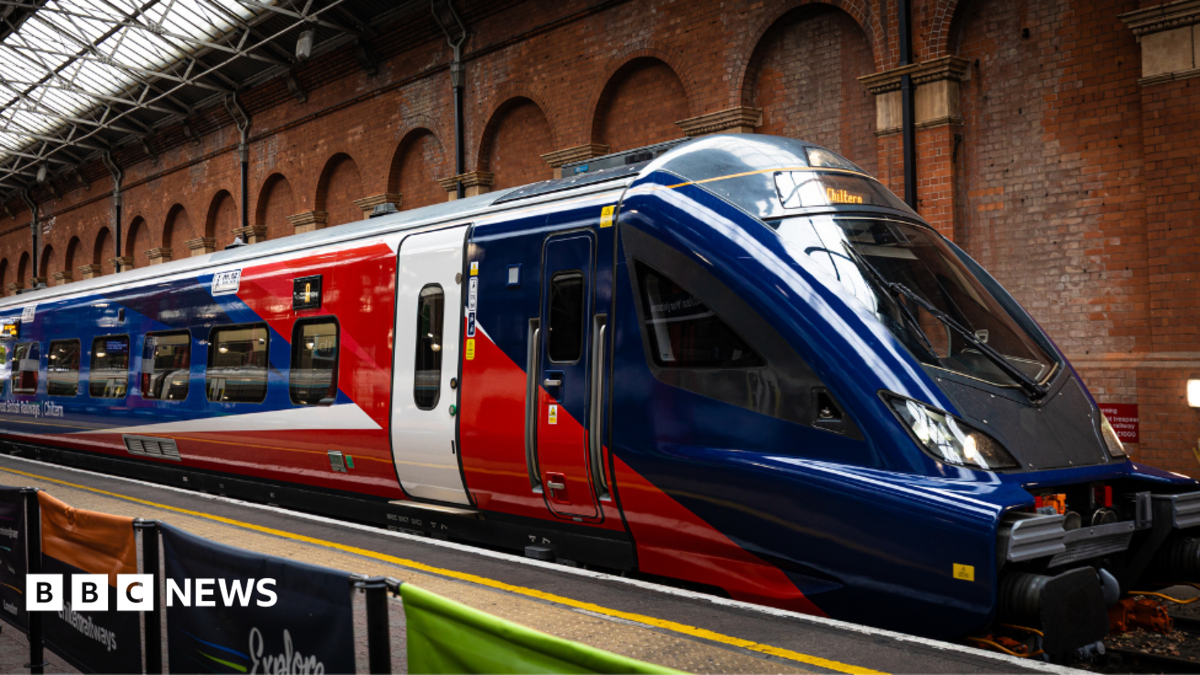
Chiltern Railways has been brought into public ownership after 30 years as a private company.
It is the 10th rail company now under the Great British Railways (GBR), the government’s programme of public ownership, which it says will save money and improve services.
Chiltern Railways, which was privatised in 1996, operates services from London Marylebone to Buckinghamshire, Oxfordshire and Warwickshire, as well as destinations in the West Midlands.
The government said the transfer into public ownership would tackle overcrowding by introducing 25 additional daily services from December.
The start of the first day of public ownership saw some disruption, with Chiltern warning the line between Birmingham and Marylebone, external was “expected to be much busier” due to the late notice of the West Coast Main Line closure affecting services at London Euston.
The operator said it would run more trains than usual between the stations with significantly enhanced capacity.
The Department for Transport (DfT) said the additional weekday services under GBR would provide 10,000 extra seats.
They would include half hourly services during weekdays on the Chiltern Main Line between London and Birmingham, as well as more weekend services.
Rail minister Lord Peter Hendy met staff at Marylebone Station on Thursday alongside the first Chiltern train in the GBR livery.
“The most difficult thing on Chiltern is that it’s shorter capacity and those extra trains and those extra seats will make a real difference to people travelling on this line up here from Marylebone every day,” he said.

Sensex and Nifty both traded in the green before the CAS began at 3.20 pm. The indicative prices of both the benchmark indices sharply tumbled, with Sensex plunging nearly 1,000 points within a few seconds, before making a sharp recovery. While Nifty managed to recover all losses during the CAS, Sensex ended with marginal losses in the red despite a sharp rebound.
Overall, Sensex lost around 20 points or 0.03% to close at 74,295 while Nifty 50 gained 76 points or 0.33% to end the session at 23,346 on Friday. Broader markets sharply outperformed, with Nifty Smallcap 100 and Nifty Midcap 100 indices rising up to 1.7%.
Also read | Dividends and stock splits: IRCTC, BEML among 150+ stocks with record dates this week. Check full lis
Here’s how analysts read the market pulse

Indian equities extended their recovery as moderation in crude and global yields improved risk appetite, despite concerns around the continued geopolitical uncertainty. Investor sentiment was further supported by positive global cues following largely anticipated policy actions from major central banks, said Vinod Nair, Head of Research at Geojit Investments.
The rebound was broad-based across sectors, although IT stocks declined amid profit booking, as concerns lingered that prolonged higher-interest-rate could weigh on global tech spending, he added. While the recent moderation in oil prices and yields has provided near-term relief, the sustainability of the market recovery will depend on further easing of global macro risks and a meaningful revival in foreign investor inflows, the analyst further said.Also read | CAS chaos continues: Sensex indicative price tumbles nearly 1,000 points in seconds, closes in red but Nifty ends above 23,300
US Stocks
US markets ended mixed on Friday as investors weighed easing crude prices against the US 10-year Treasury yield hovering around 5%. The S&P 500 gained 0.17%, while the Nasdaq Composite advanced 0.39% on strength in technology stocks. The Dow Jones Industrial Average, however, slipped 0.18% as elevated bond yields kept broader sentiment cautious.
European markets
European markets closed sharply lower on Friday amid concerns over elevated interest rates and continued geopolitical uncertainty. Germany’s DAX fell 1.60% to 25,304.06, while France’s CAC 40 declined 1.49% to 8,065.02. Britain’s FTSE 100 also ended lower, with weakness across major European equities despite a retreat in crude oil prices.
Most active stocks in terms of turnover
HDFC Bank (Rs 2,868 crore), Bharti Airtel (Rs 2,655 crore), Adani Gas (Rs 2,565 crore), Infosys (Rs 2,319 crore), RIL (Rs 1,867 crore), Lenskart Solutions (Rs 1,810 crore) and Syrma SGS Technologies (Rs 1,806 crore) were among the most active stocks on NSE in value terms. Higher activity in a counter in value terms can help identify the counters with the highest trading turnovers in the day.
Most active stocks in volume terms
Vodafone Idea (Traded shares: 35 crore), Meesho (Traded shares: 8.34 crore), Yes Bank (Traded shares: 7.36 crore), Groww (Traded shares: 7.3 crore), Pine Labs (Traded shares: 6.68 crore), Suzlon Energy (Traded shares: 6.35 crore) and IFCI (Traded shares: 6.05 crore) were among the most actively traded stocks in volume terms on NSE.
Stocks showing buying interest
Adani Gas, Poonawalla Fincorp, Welspun Corp, Bombay Burmah, Supreme Petro, Supreme Industries and Jyoti CNC Automation were among the stocks that witnessed strong buying interest from market participants.
52-week high
Among the ones which hit their 52-week highs on NSE included Jyoti CNC Automation, Syrma SGS Technology, JSW Infrastructure, Apar Industries, ACME Solar Holdings, Emcure Pharmaceuticals and PVR Inox.
Stocks seeing selling pressure
Stocks which witnessed significant selling pressure were Tata Chemicals, Go Digit General Insurance, KPIT Tech, Tata Technologies, New India Assurance, Zydus Wellness and TCS..
52-week low
Among the ones which hit their 52-week lows on NSE included Go Digit General Insurance, KPIT Tech, Tata Elxsi, Gillette India, Syngene International, Bayer Cropsciences and Voltas.
Sentiment meter favours bulls
Out of the 3,653 stocks that traded on the NSE on September 18, Friday, 2,387 stocks witnessed advances, 1,154 stocks saw declines while 112 stocks remained unchanged.
Disclaimer: The views/recommendations mentioned in this article, wherever applicable, are those of the respective SEBI-registered Research Analyst/brokerage and have been reproduced/reported with due attribution. They should not be construed as the views or recommendations of The Economic Times Digital or the journalist. Readers are advised to consider the original research report and make their investment decisions based on their own assessment. Brokerage disclaimers here

Kemi Badenoch has accused the Labour government of driving Britain’s wealth creators abroad, and called for the ban on new North Sea oil and gas licences to be lifted and the Energy Profits Levy to be scrapped. The Conservative leader set out the demands in a newspaper comment piece.
Her intervention followed remarks by Sir Jim Ratcliffe, founder of the petrochemicals group Ineos and co-owner of Manchester United, who said yesterday that he had lost confidence in Britain. Badenoch wrote that Ratcliffe was once handing the Exchequer more than £100m a year.
Fred Done, the betting billionaire whom Badenoch described as the UK’s biggest taxpayer, said he would leave the country if he were not so old, and that he had “never felt so gloomy” about the outlook for the UK since opening his first bookmaker’s in Salford in 1967.
Badenoch said the pensions minister, Torsten Bell, had responded to Ratcliffe by saying he was not a patriot. She called the response crass.
She pointed to the hedge fund founder Chris Rokos, who she said moved his tax residency to Greece this month. “Labour can dislike billionaires as much as it likes,” she wrote, adding that when a man paying £330m a year in tax leaves Britain, “the Treasury doesn’t stop needing £330million”.
Badenoch said the shortfall would be met by everyone else, and that ministers were now floating wealth taxes and mansion taxes aimed at middle-class families and their homes. She said Andy Burnham had gathered entrepreneurs in Downing Street days ago and promised that his government would be a “partner for growth”.
Badenoch said Ratcliffe had criticised Britain for importing energy unnecessarily, attacked North Sea taxation and raised concerns about gas storage, describing the failure to exploit domestic resources as “insanity”. She said the government’s response was that it remained “confident” about supply.
She said Saudi Arabia’s East-West pipeline, which bypasses the Strait of Hormuz, had been badly damaged by drone attacks, and that Houthi attacks threatened shipping routes into the Red Sea. British families and businesses could see that another shock to energy bills was coming, she wrote.
British industry was carrying some of the highest electricity bills in the world, Badenoch said, while the Jackdaw and Rosebank fields sat ready to drill. She said both had been signed off under the Conservatives and that Sir Keir Starmer and then Burnham had dithered for more than two years.
The Energy Profits Levy she wants scrapped stands at 38 per cent on top of ring fence corporation tax and the supplementary charge, and is due to run until 31 March 2030, according to the House of Commons Library.
Ratcliffe has previously backed Conservative plans to scrap carbon taxes, arguing that they damage British industrial competitiveness.
Badenoch said almost a million young people in Britain were not in education, employment or training, and blamed Labour tax rises and regulation rather than Conservative school reforms. Office for National Statistics figures published on 27 August put the number of 16 to 24 year olds in the UK who were NEET at 981,000 between April and June 2026, up 30,000 on a year earlier.
She said the government’s political proposition was that difficult choices could be avoided, citing Burnham’s statement that “national security cannot come at the expense of social security” and the decision to offer employment support rather than cut welfare.
Badenoch said her shadow chancellor, Andrew Griffith, had more private sector experience than the whole Labour frontbench combined, including as a FTSE 100 finance director, and that her economic team was devising policies intended to create jobs and persuade investors that Britain was worth backing.

Jamie Young
Jamie Young is Senior Reporter at Business Matters, covering SME finance, employment law and Westminster policy since 2016. He has reported on every Budget and Autumn Statement since 2018, helped make sense of the ‘covid era’ and the bounce-back loan scheme from launch through the fraud investigations, and broke the magazine’s coverage of the 2024 late-payment reforms. He joined Business Matters straight from completing his BA in Administration from Exeter University and is NCTJ-qualified. Reach him at jyoung@cbmeg.co.uk

Chile’s Bachelet withdraws from race to lead UN
Business
San Francisco Tribune Releases List of Top Startups Shaping the Next Phase of Enterprise AI

San Francisco Tribune Releases List of Top Startups Shaping the Next Phase of Enterprise AI

These 3 factors "remain significant risks" to stock market valuations: analyst
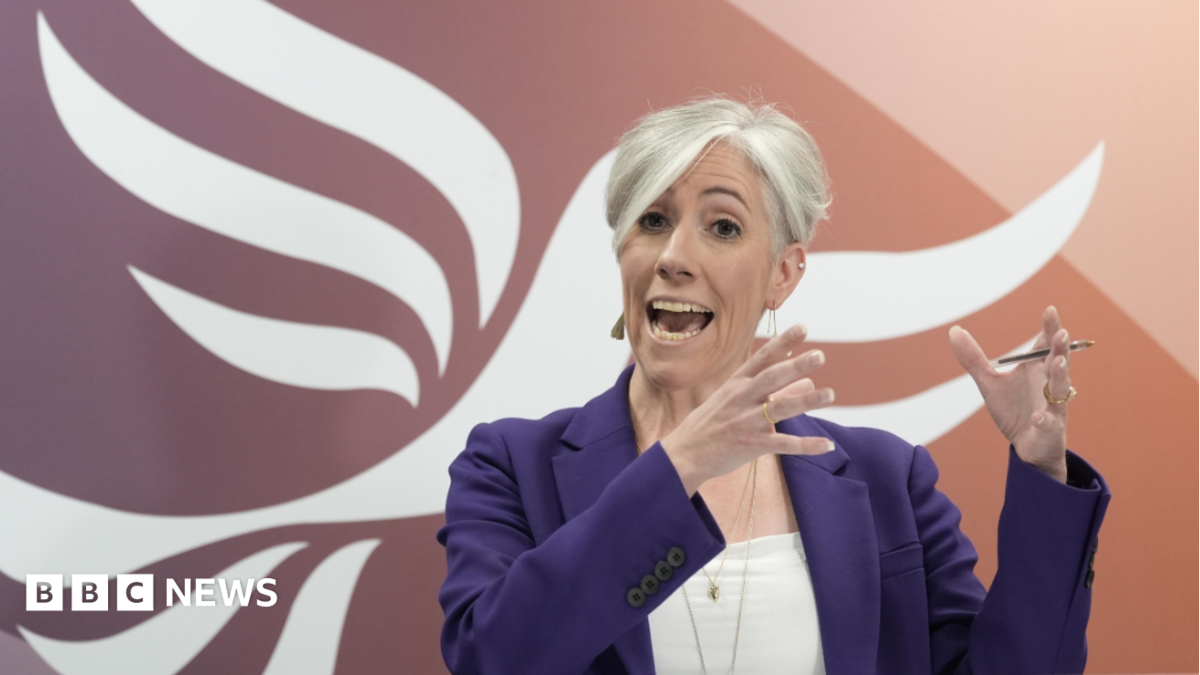
Liberal Democrat deputy leader Daisy Cooper has warned the UK’s economic growth is being held back by a “computer says no” approach.
She unveiled a 30-page growth plan aimed at removing barriers to business as part of her speech to the Lib Dem conference in Brighton.
Cooper, who is also the party’s Treasury spokesperson, said too many ideas, start-ups and research started in Britain but ended up being taken overseas.
She also outlined a new Growth and Defence Partnership with the EU to reverse the economic damage of Brexit, that she claimed is currently costing the UK £90bn a year in lost tax revenue.
Speaking on stage in Brighton, she said: “We build brilliant start-ups, and watch too many leave to scale somewhere else. We produce world-class research, and too little of it becomes a British product.”
“Britain has the potential,” she went on. “The system holds it back. The computer says no.
“This plan tears down the barriers to investment, to innovation, and to skills.”
Cooper called for the creation of a digital one-stop-shop service for businesses and investors, combining tax, regulatory, legal, Companies House, and general business services.
Creating this within a new Department for Growth would simplify red tape and help small and medium-sized businesses compete and grow, she said.
Cooper said a new Growth and Defence Partnership with the EU, would be the “single biggest growth lever we could pull” by deepening ties with Europe.
“It could turbo-charge our economy and start to reverse the economic damage of Brexit which is currently costing us £90bn a year in lost tax revenue,” she said.
“In power, we will strike the deal on the single market, we will strike the deal on a customs union, we will strike the deal on defence.”
She claimed the Lib Dems would say “what no other party dares to say” that Britain “belongs at the heart of Europe, and we will take her there.”
Seeking to differentiate the Liberal Democrats from rival parties, she said her party would avoid “more punishing tax hikes from Labour or painful spending cuts by the Conservatives and Reform UK”.
She attacked Chancellor John Healey for his speech earlier this month, which “contained no vision, no ideas, and absolutely no mention of Europe”.
Cooper also attacked Reform and the Conservatives for being “locked in a race to the bottom without a single credible costing between them”.
She highlighted how the new Shadow Chancellor Andrew Griffith had helped to deliver and defend the Liz Truss mini-budget, which she said “crashed the pound, it spiked your mortgage, it cost the country billions”, and Nigel Farage defended the move.
“But the worst could be yet to come: Farage is modeling himself on Trump,” she said.
“A President who has used the presidency to enrich himself, dismantled anti-corruption safeguards and pardoned crypto criminals.
“We cannot allow that kind of politics to take hold in our country — We cannot afford to allow Nigel Farage to win the keys to No 10 or let the Tories put him there.”

North Korea fires two missiles off east coast in three hours

InvestingPro predicted Quantum Computing’s 48% drop 11 months early

Billionaires abound in California. Why not tax their wealth?

Trump says US will form AI Force

Fulham vs Manchester United LIVE squad confirmed with triple boost plus how to watch

Recharge Chapter 5-6 | Money and Banking | Class 12 | Boards 2025




-

 Fashion2 days ago
Weekend Open Thread: Talbots – Corporette.com
-

 Tech7 days ago
The Latest Weird Thing to Play Doom Is the Mapped-Out Brain of a Fruit Fly
-
 NewsBeat2 days ago
Trump says US has reached an agreement to take permanent control of Greenland’s security
-

 Crypto World5 days ago
Kraken Lets xStocks Holders Earn Yield Through DeFi
-

 Crypto World6 days ago
Revolut Attackers Warn of Ongoing Daily Customer Data Leaks
-

 Crypto World1 day ago
Circle launches Arc Studio AI agent for building onchain apps
-

 Crypto World4 days ago
What Is the Status of the U.S.-Iran Peace Talks? Here's What Both Sides Are Saying
-

 Crypto World4 days ago
US Charges Robinhood Engineers Over Crypto Listing Trades
-

 Crypto World5 days ago
Robinhood engineers charged over $50K crypto scheme
-

 Crypto World1 day ago
Bitcoin price breaks channel as RSI climbs to 63
-

 Crypto World6 days ago
Elon Musk Drops a Bombshell: Grok 5 Could Be the AGI Breakthrough
-
 Crypto World7 days ago
New Tesla Roadster Uses SpaceX Tech. Will It Impact the Stock Price?
-
 NewsBeat6 days ago
‘Sick conspiracy’: Trump says only guardrails AI needs is ‘a strong and smart (High IQ!) president’ in all-caps rant
-

 Crypto World5 days ago
NVIDIA Analysis: Attempted Rising Wedge Breakout Amid Pressure on the AI Sector
-
Business6 days ago
SK Hynix ADRs Fall More Than 6% as Memory Rally Breaks on Fears of Slower AI Spending
-

 Tech4 days ago
Webb’s IC 348 Mosaic Includes Two-Jupiter Dwarfs, Twin Jets, and a Nursery Still Making Worlds
-
 Crypto World6 days ago
3 Token Unlocks to Watch in the Third Week of September 2026
-

 Crypto World6 days ago
DOJ Seeks to Seize $61M in Iran Oil Funds From Binance Accounts It Vouched For
-
Crypto World6 days ago
Can Circle’s Arc Repeat Robinhood Chain’s Meme Coin Boom?
-

 Crypto World7 days ago
Goldman Sachs backs 25bp Fed hike after CPI
You must be logged in to post a comment Login