

Business
Six Host Countries, Three Continents and a Centenary Celebration Ahead


Just one day after Spain lifted the 2026 World Cup trophy in New Jersey, soccer’s global governing body is already looking ahead to a tournament unlike any before it: the 2030 FIFA World Cup, which will be staged across six countries spanning three continents to mark the competition’s 100th anniversary.
According to FIFA’s proposed schedule, the tournament will open with a series of centenary matches held in South America before shifting to its three primary host nations in Europe and Africa, a format that will make 2030 the first men’s World Cup ever played across three continents.
A tournament rooted in history
Spain, Portugal and Morocco will serve as the tournament’s main co-hosts, staging the majority of the competition’s matches. To honor the World Cup’s centennial, Uruguay, Argentina and Paraguay will each host a single opening-round match before the remainder of the tournament shifts entirely to the three principal host countries.
The symbolism behind each South American host nation’s involvement is deliberate. Uruguay will host a match in recognition of staging the first-ever World Cup in 1930, while Argentina’s fixture will acknowledge its role as that inaugural tournament’s runner-up. Paraguay, meanwhile, will host a game as the home of CONMEBOL, South America’s soccer confederation and the only continental football governing body that existed at the time of the first World Cup.
Under FIFA’s proposed calendar, the centenary matches in Uruguay, Argentina and Paraguay are scheduled for June 8 and 9, 2030, with the main tournament’s opening ceremony and first matches following in Morocco, Portugal and Spain on June 13 and 14. Teams competing in the South American centenary matches will be given extra time to travel and prepare before beginning their group-stage campaigns in Europe and Africa. The remaining teams in those same groups are expected to begin play on June 15 and 16, with a second round of group matches following on June 21 and 22. FIFA has not yet released a complete match calendar, and the federation has indicated the World Cup final is expected to take place July 21, 2030, though that date has not been formally confirmed.
Automatic qualifiers already locked in
Six nations have already secured automatic qualification for the 2030 tournament by virtue of their hosting roles: Spain, Portugal and Morocco as the three primary co-hosts, along with Uruguay, Argentina and Paraguay through their centenary match hosting duties. The remaining 42 spots in the 48-team field will be determined through FIFA’s continental qualifying tournaments over the next several years.
Could the tournament grow even larger?
While the 2030 World Cup is currently set to retain the 48-team format that debuted at this year’s tournament in the United States, Canada and Mexico, FIFA President Gianni Infantino has signaled the organization may explore expanding the competition even further, to 64 teams.
Speaking with Swiss outlet Bluewin, Infantino called the expanded 48-team format a “huge success,” crediting it with giving more nations the chance to compete on the sport’s biggest stage and helping grow the game’s global reach. He pointed to strong showings from smaller footballing nations during the 2026 tournament as evidence that wider participation benefits the sport overall. Asked directly whether a 64-team World Cup could become reality, Infantino said the proposal “will be examined and discussed” going forward, though no formal decision or timeline has been announced.
A century of growth for the World Cup
The 2030 edition will arrive almost exactly a century after the World Cup’s origins, which trace back to the success of men’s soccer tournaments at the 1924 and 1928 Olympic Games, both won by Uruguay. At the time, Olympic football fell under the jurisdiction of the International Olympic Committee, prompting FIFA to create a standalone international tournament specifically for national soccer teams.
The 1924 Olympic final in Paris drew a crowd of nearly 50,000 spectators as Uruguay defeated Switzerland 3-0 to claim gold. Four years later, Uruguay successfully defended its Olympic title with a 2-1 win over Argentina, a result that helped convince FIFA officials that a dedicated World Cup tournament could succeed on its own.
FIFA formally approved plans for the inaugural World Cup in May 1928 and selected Uruguay as host, both in recognition of the country’s back-to-back Olympic titles and to coincide with the 100th anniversary of Uruguayan independence in 1930. That first tournament kicked off in July 1930 with 13 participating nations, several of which traveled from Europe by ship to compete. Uruguay went on to defeat Argentina 4-2 in the final at Montevideo’s Estadio Centenario, becoming the first nation crowned men’s World Cup champions.
Since that modest beginning, the tournament has grown dramatically in scale, expanding from 13 teams in 1930 to 32 teams by 1998 and, most recently, to 48 teams for this year’s tournament across North America. The 2030 edition will mark a full century since that first competition and stand as the first men’s World Cup ever contested across six countries and three continents simultaneously.
Looking further ahead: 2034 in Saudi Arabia
Beyond 2030, FIFA has already confirmed the host of the following World Cup. The 2034 tournament will be staged entirely within Saudi Arabia, which FIFA confirmed as host in December 2024 after emerging as the only country to submit a bid for that edition. Unlike the multi-continental 2030 format, the 2034 World Cup will return to a single-host-nation model. FIFA has not yet announced specific dates or a match schedule for that tournament, leaving further details to be finalized in the years ahead as the federation first turns its full attention to executing the historic six-country centenary celebration planned for 2030.


The Bear Traps Report founder Larry McDonald weighs in on Big Tech earnings on ‘Mornings with Maria.’
Nvidia has held the position as the world’s biggest company since about a year ago, when it became the first to reach $4 trillion in market value. It soared past former leaders Apple and Microsoft. But in recent days, Apple, which hasn’t climbed as much as its peers during the artificial intelligence (AI) boom, has been making a comeback.
And on July 17, Apple even slipped ahead of Nvidia to become – at least for part of the trading session – the world’s biggest company. By the end of the day, though, Nvidia returned to the lead with a value of $4.9 trillion. That’s compared to $4.89 trillion for Apple.
As these tech giants vie for the position as the world’s biggest company, which is the better buy now? Let’s find out.
APPLE BRIEFLY OVERTAKES NVIDIA AS WORLD’S MOST VALUABLE COMPANY AMID AI INVESTMENT DOUBTS

Apple even slipped ahead of Nvidia on July 17 to become – at least for part of the trading session – the world’s biggest company. (Adam Gray for Fox News Digital)
The case for Nvidia
Nvidia stock has soared more than 300% over the past three years amid excitement about its position in the AI market. The company is the No. 1 designer of graphic processing units (GPUs), the chips used to power AI development and use. This strength, along with Nvidia’s full portfolio of related products and services, has generated double- and triple-digit earnings growth in recent years.
For example, in the recent quarter, Nvidia’s revenue surged 85% to more than $81 billion, and this was at a high level of profitability on sales, as we can see through the company’s gross margin – that figure has exceeded 70% quarter after quarter.
JENSEN HUANG SAYS NVIDIA’S NEW RTX SPARK CHIP WILL REINVENT THE PC

Nvidia stock has soared more than 300% over the past three years. (Patrick T. Fallon/AFP via Getty Images)
Nvidia focuses on innovation, pledging to update its GPUs on an annual basis, and this has helped it stay ahead. The company has also steadily expanded its reach in order to make it the key place to go for anything AI. In the latest quarter, Nvidia announced the upcoming release of its first stand-alone central processing unit (CPU), a move that opens the door to a $200 billion market.
Investors have piled into Nvidia’s stock in recent years, understanding that an investment in this company should put them on track to benefit from the AI revolution.
The case for Apple
Apple shares have advanced – but not as much as those of Nvidia. Over the past three years, Apple has climbed about 70%. The company has been slower to invest in and apply AI than many of its peers – for example, it only began rolling out AI features across its devices in the fall of 2024, and the rollout continues. So, investors aiming to get in on potential AI leaders turned away from Apple and chose companies that were investing more aggressively in the space.
APPLE TO INVEST $30 BILLION IN US CHIP MANUFACTURING
This trend, however, hasn’t hurt Apple’s earnings growth. In fact, the company has proven itself to be a player investors can count on for progress in this area. Apple has a fantastic moat, or competitive advantage, and this is its brand – customers love the iPhone and won’t easily switch to another. In the first quarter, the iPhone 17 was the world’s top-selling smartphone, according to Counterpoint Research.

Apple shares have climbed about 70% over the past three years. (Apple Inc./Reuters)
Apple also is benefiting from its sales of services, with services revenue reaching records quarter after quarter. After building up more than 2.5 billion active devices over the years, Apple now can count on these devices for recurrent revenue. When customers sign up for digital entertainment or storage, for example, this represents a regular stream of income for the company.
Today, investors may be turning to Apple as they recognize these strengths and as they seek an alternative to companies heavily exposed to AI.
The better buy?
Nvidia and Apple have proven their earnings strength and leadership over time. So either makes a solid long-term investment. But if you could only choose one to buy right now, which one should you go for?
Nvidia clearly beats Apple when it comes to valuation. At these levels, the chip giant looks dirt cheap, particularly considering the AI empire it’s built and its long-term prospects in the field. It’s important to note that even if AI stocks slump temporarily, the AI story remains strong, with the technology already put to use in many areas.
| Ticker | Security | Last | Change | Change % |
|---|---|---|---|---|
| AAPL | APPLE INC. | 326.59 | -7.15 | -2.14% |
| NVDA | NVIDIA CORP. | 203.28 | +0.47 | +0.23% |
So now is a fantastic moment to get in on Nvidia at these levels. That said, cautious investors who aim to avoid any AI turbulence still may prefer picking up Apple shares, as even at today’s level, the stock has room to run.
GET FOX BUSINESS ON THE GO BY CLICKING HERE
Adria Cimino has no position in any of the stocks mentioned. The Motley Fool has positions in and recommends Apple, Microsoft, and Nvidia. The Motley Fool has a disclosure policy.


The new line features Totino’s Pizza Rolls coated in seasonings for additional flavors.

Embraer and Saab sign deal for 20 more Gripen jets in Brazil

A version of this article first appeared in the CNBC Property Play newsletter with Diana Olick. Property Play covers new and evolving opportunities for the real estate investor, from individuals to venture capitalists, private equity funds, family offices, institutional investors and large public companies. Sign up to receive future editions, straight to your inbox.
Newly enacted housing legislation that bans institutional investors from purchasing single-family rental homes has those same investors putting up more “for sale” signs.
The number of homes owned by institutional investors listed for sale is, as of this month, more than double what it was at the start of February, according to an analysis provided exclusively to Property Play by Parcl Labs, a real estate data provider.
Listings have gone from 4,166 on Feb. 1, when Parcl launched its full research, to now 9,447 homes representing $3.1 billion in total asking price.
“The rate of for-sale change is something to keep an eye on,” said Jason Lewris, co-founder of Parcl Labs. “These numbers won’t materialize into actual dispositions for months given how long the sales cycle can be, but it’s the fastest read into institutional behavior.”
The legislation defined institutional investors as those owning 350 or more homes. That was a surprise to the industry, which traditionally set that bar at 1,000 homes. It does not force them to sell the homes they currently own, but they are barred from buying any more homes unless they fall under certain exceptions, including build-to-rent.
The charge by lawmakers was that these investors, most of whom were able to buy the homes with all cash, were inflating prices and sidelining regular owner-occupant buyers. The call for a ban was bipartisan.
Large-scale investors first entered the market during the financial crisis in 2008, when foreclosures were rampant and bulk auctions were popping up in the hardest-hit markets, like Atlanta, Las Vegas and Phoenix. Private equity firms purchased thousands of homes in a short period, converting them to rentals and creating a new single-family rental asset class.
The cohort of investors with 350 or more homes that therefore fall under the new legislation now own roughly 589,000 homes, or 3.9% of the 14 million single-family rental homes in the U.S., according to Parcl. They account for roughly 40% of the net selling year to date.
The largest landlords — Progress Residential, Invitation Homes, AMH, Tricon, FirstKey, Amherst and VineBrook — are all net sellers year to date, with 3,180 more homes sold than bought since Jan. 1. To put that in perspective, they still own about 400,000 homes, so it’s not exactly a liquidation sale, with one exception. VineBrook currently has nearly 10% of its portfolio on the market, roughly 1,900 homes with a total asking price of $285 million.
Invitation homes and AMH, the two publicly traded, single-family rental REITs, have 549 and 536 homes for sale, respectively. The largest landlord, Progress Residential, has the least of the larger players, just 143 for sale.
“There is broad recognition now both by the White House and lawmakers, in an overwhelming majority, that private capital has a very big role to play for a component of the American population that wants to rent a home,” said Stephen Scherr, co-president of Pretium, in an interview last week on CNBC’s “Squawk on the Street.” Pretium is the parent company of Progress Residential.
Progress is now focusing on the areas that the new legislation allows and which the industry fought hard for during the legislative process.
“We can buy build-to-rent, which is a predominant component of new housing. We can buy under various other exceptions including rent-to-renovate, where we improve the housing stock or we buy under a homeownership boost, where we give people an opportunity to transition where they want from renters to owners,” Sherr said.
The build-to-rent play has been gaining significant steam over the past few years as demand for single-family rental housing grows.
AMH started early, in 2017, building its own homes. It has so far developed more than 14,000 homes for rent in 180 communities, according to the company. Invitation Homes purchased an Atlanta-based homebuilder, ResiBuilt, at the beginning of this year.
“The financing case has materially changed with the forced disposition mandate removed. Lenders can underwrite [build-to-rent] again, and we’re starting to see this happen,” Chris Nebenzahl, vice president of rental research at John Burns Research and Consulting, wrote in a report.
The investors who are selling are offering discounts on the properties. Nationally, 38.7% of all listings for sale today have had price cuts compared with 54% within the institutional, single-family rental cohort, according to Parcl Labs. Since early May, markdowns have deepened from about 3.1% to 4% of asking value. Meanwhile, 54% of the investor listings for those in the more than 350 homes category carry a price cut.
“From what we can tell, given where U.S. home prices are, some of this is attributed to shifts in strategy — collect high dollar values off of top U.S. home values by culling underperforming assets and redirect that capital towards growth areas, i.e. build-to-rent, for example,” Lewris said in a statement, adding that the next six to eight weeks will be telling.

Peter Kyle has been sacked as business secretary on Andy Burnham’s first day in Downing Street, leaving the government’s flagship late payment crackdown without the minister who built it while the bill is still midway through parliament.
Kyle became the third cabinet minister dismissed on Monday afternoon as the new Prime Minister assembled his own top team, following housing secretary Steve Reed and deputy prime minister David Lammy out of the door. Rachel Reeves was also sacked as chancellor, as Burnham moved swiftly against ministers most closely associated with Sir Keir Starmer.
No successor has been confirmed. The Financial Times has reported that Jonathan Reynolds could return to the brief, the role he handed to Kyle only last September.
For business owners, though, the more pressing question is not who next sits behind the desk at the Department for Business and Trade, but what happens to the agenda Kyle leaves behind.
Chief among it is the Small Business Protections (Late Payments) Bill, laid before parliament in May. The legislation caps payment terms at 60 days for large firms paying smaller suppliers, imposes mandatory interest of 8 per cent above the Bank of England base rate on overdue invoices, and hands the Small Business Commissioner powers to investigate and fine serial offenders. Government figures suggest poor payment practices drain roughly £11 billion a year from the economy and contribute to the closure of an estimated 38 small businesses every day.
Kyle had made the bill personal. He told Business Matters in May that he would not “resile from delivering” what he called a “step change in the relationship between all larger businesses and their supply chains”, adding: “Sixty days is a solid, reasonable outer limit for paying a small business.”
With the CBI and the British Retail Consortium already pressing concerns ahead of committee stage, the departure of the bill’s most vocal defender hands corporate lobbyists an opening at an awkward moment for small firms. Whoever inherits the brief faces an immediate test of nerve: hold Kyle’s line, or let the toughest payment rules in the G7 soften on the way to the statute book.
The churn itself will grate. Kyle’s successor will be the third business secretary since Labour took office two years ago, an unhappy echo of the revolving door at the business department that firms endured under successive Conservative administrations. Kyle used his ten months in post to promise an active, interventionist department, setting a target of nurturing Britain’s first $1trn company and pledging to make the UK the best place to start and scale a business.
His exit also lands amid a wider reorganisation of the Whitehall machinery that matters to growing firms. Officials have been asked to draw up plans to close the science and technology department, with its responsibilities split between the business department and the culture department, a proposal that has already provoked a revolt from tech leaders. The next business secretary could therefore take on a substantially bigger empire, and a year of restructuring to go with it.
Burnham, for his part, has promised to “bring forward the biggest changes in the last 40 years”, with a return to public ownership, a 10-year plan for the country and cost-of-living measures expected as early as Tuesday.
For SMEs, three things now bear watching: who gets the business brief, whether the late payments bill survives committee stage intact, and where the science department’s funding streams end up. On all three, owners will hope the new Prime Minister moves faster than the reshuffle rumour mill.

Jamie Young
Jamie Young is Senior Reporter at Business Matters, covering SME finance, employment law and Westminster policy since 2016. He has reported on every Budget and Autumn Statement since 2018, helped make sense of the ‘covid era’ and the bounce-back loan scheme from launch through the fraud investigations, and broke the magazine’s coverage of the 2024 late-payment reforms. He joined Business Matters straight from completing his BA in Administration from Exeter University and is NCTJ-qualified. Reach him at jyoung@cbmeg.co.uk

Poland stocks higher at close of trade; WIG30 up 1.62%

OPINION: Australia is already engaged in a borderless conflict and Canberra’s defences are struggling to keep pace.

Viper Energy: A Good, But Not Great Option
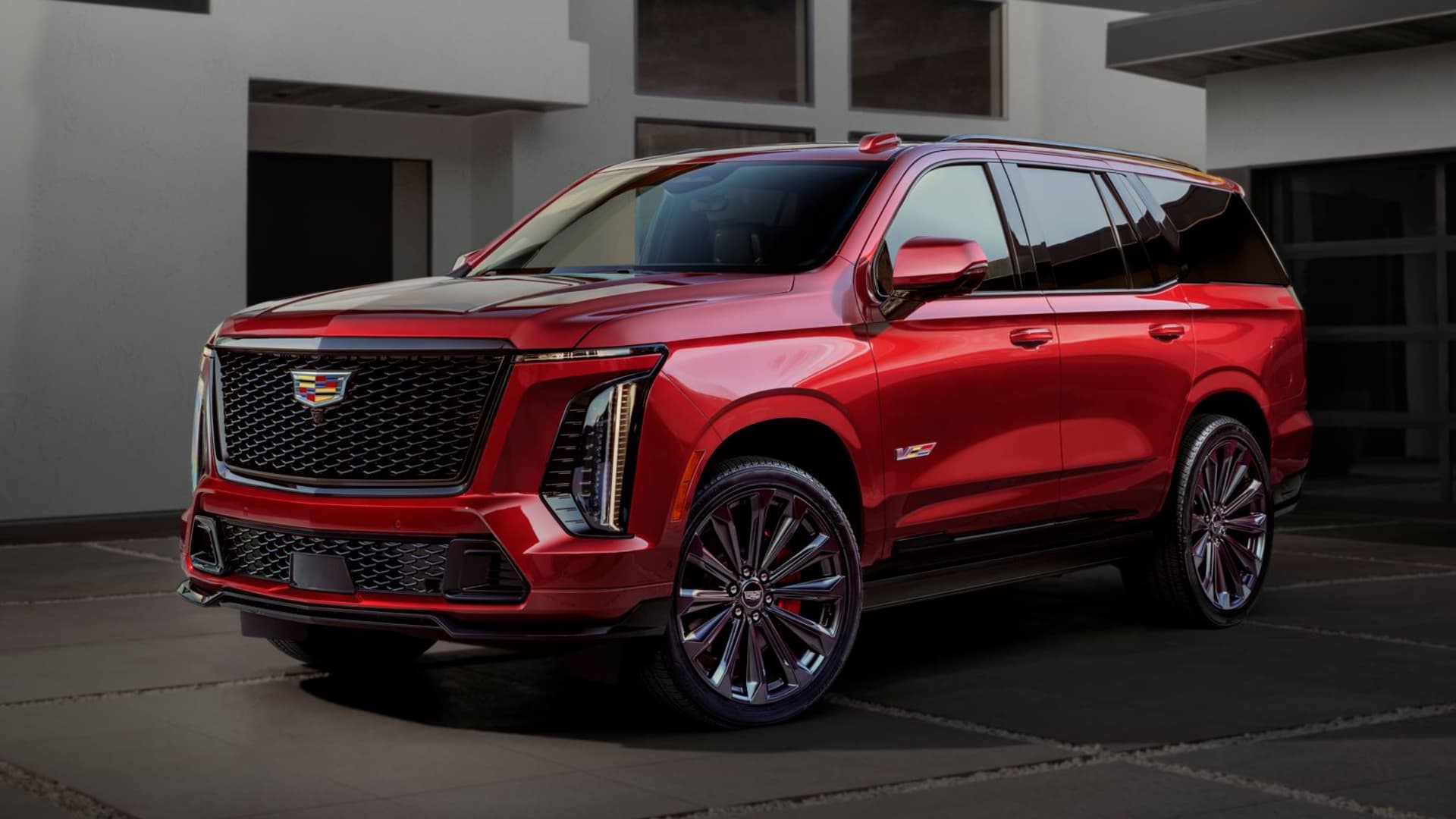
2025 Cadillac Escalade V-Series SUV
Cadillac
DETROIT — General Motors will launch new gas-powered Cadillac vehicles beginning next spring as the automaker continues to shift gears away from all-electric vehicles.
GM CEO Mary Barra said Tuesday that the next-generation Cadillacs will include new versions of the company’s CT5 sedan, outdated XT5 midsize SUV and discontinued three-row XT6 SUV.
“Starting next spring and continuing into 2028, we will begin launching the next generation of Cadillac ICE [internal combustion engine] vehicles,” Barra said during the company’s second-quarter earnings call. She said the vehicles will be in addition to Cadillac’s current all-electric crossovers and Escalade SUV.
The new product announcements add to GM’s pullback in EVs. The automaker had planned for Cadillac to exclusively sell electric vehicles by the end of this decade. The company also has walked back EV plans for other brands and increased gas-powered engine production, including V-8 offerings.
GM has recorded $10.9 billion in EV-related charges since the second half of last year after slower-than-expected electric vehicle adoption as well as U.S. regulatory changes easing emissions standards and eliminating support for EVs.
Barra reiterated that GM’s plans include “onshoring significant manufacturing” for the Detroit automaker beginning next year, in part by expanding production of its full-size SUVs to a Michigan plant that was previously slated to build EVs.
The full-size SUVs — Escalade, Chevy Tahoe and Suburban, and GMC Yukon and Yukon XL — are currently exclusively produced at the company’s Arlington Assembly plant in Texas.

A mid-sized company can spend months perfecting a LinkedIn page that a few hundred people follow, while the audience it actually wants sits quietly in the contact lists of its own staff.
Every employee who logs in brings a network of clients, suppliers, former colleagues and peers. Added together, that reach usually dwarfs anything the corporate account can manage on its own. For smaller businesses without a large media budget, this is one of the few channels where size is not the deciding factor.
The reach already sits inside your business
The instinct of most owners is to push everything through the brand account, then wonder why engagement stays flat. People follow people. A post from a recognisable colleague lands in a feed with a face and a name attached, and it carries a credibility no logo can buy. This is the thinking behind a deliberate employee advocacy strategy: instead of asking the marketing team to shout louder, you give the wider workforce a simple, low-effort way to share what the company is doing in their own words.
The barrier has never really been willingness. Most staff are happy to support the business they work for. The barrier is friction. People do not know what to post, worry about getting the tone wrong, or simply forget. Remove those obstacles and participation climbs quickly.
Turning goodwill into a repeatable habit
The firms that get this right treat sharing as a light routine rather than a campaign: a short prompt, a draft they can edit, a nudge at the right moment. Newer thought leadership software now handles much of that groundwork, suggesting angles based on someone’s role and letting them rewrite a post so it still sounds like them rather than a press release. The technology matters less than the principle: keep it personal, keep it easy, and let consistency do the heavy lifting.
Measurement helps too, though it is easy to overcomplicate. Track how many people are active, which themes earn replies, and whether any of it turns into conversations with prospects. As recent coverage in the magazine’s business news pages has shown, buyers increasingly research suppliers through the individuals behind them long before they ever fill in a contact form.
There is a cultural payoff as well. When employees post about their work, they tend to feel more connected to it. Recruitment gets easier because candidates can see real people enjoying real projects. The company page becomes a supporting act rather than the entire show, which is exactly where it belongs for most growing businesses.
None of this requires a rebrand or a six-figure agency retainer. It asks for a clear reason to take part, a bit of structure, and the patience to let a handful of regular contributors set the tone. The businesses that build that habit now will own a presence on LinkedIn that competitors with deeper pockets find surprisingly hard to copy, because it rests on something they cannot simply buy: the trust their own people have already earned.

Why Is Modern Life So Exhausting?

Nvidia vs. Apple: Which tech giant is the better buy?

DCENT S Wallet vs Tangem: Full Comparison of Design, Security, Supported Coins, and Mobile App


-
 NewsBeat5 days ago
London Mayor Sadiq Khan handed a peerage by Keir Starmer alongside 15 other Labour figures… just days before the PM leaves No10
-

 Fashion4 days ago
Weekend Open Thread – Corporette.com
-

 Politics3 days ago
The House | The City of London can help the new chancellor deliver growth in every postcode
-

 Politics6 days ago
Young campaigners urge incoming PM to act on outdoor junk food ads
-

 Crypto World6 days ago
CFTC blocks Kalshi from unwinding Michigan trades after court order
-
 Crypto World4 days ago
Two July Windows Left: The CLARITY Act’s Senate Fight and What Failure Means
-

 Crypto World3 days ago
Ripple Payments Joins MiCA With 14 Firms, Does It Mean Anything For XRP?
-

 Business6 days ago
Nvidia Stock Slips After Big Tuesday Rally as Huang Confirms Vera Rubin Chip Is Now in Production Today
-

 Politics2 days ago
Democrats look to World Cup watch parties to register thousands of voters
-
 Entertainment6 days ago
Disney’s Most Ambitious Failed Star Wars Attraction Is Coming to SDCC
-

 Crypto World4 days ago
Ripple wins EU-wide access as ESMA adds it to MiCA register
-

 Crypto World7 hours ago
Grayscale Files For Worldcoin ETF, WLD Registers Sharp Rise
-

 Crypto World5 days ago
Injective Submits SEC Transfer-Agent Registration to Onchain Ownership Records
-

 Business6 days ago
Palantir Shares Rise After Expanded Nvidia Partnership and Fresh Analyst Upgrades Ahead of Earnings Day
-

 Tech16 hours ago
Sail Virtually Aboard The “Itanic” With IA-64 Emulator
-
 Tech13 hours ago
Turtle Beach Command Series KB7 review: a nifty screen-equipped gaming keyboard
-

 Tech7 days ago
Dark Secrets Emerge When Jailbreaking LLMs
-

 NewsBeat4 days ago
Registration is now open for March for Men with Kev 2026
-

 News Videos7 days ago
XRP BOMBSHELL… XRP OMBOARDED FOR TRANSACTIONS!!!
-

 NewsBeat1 day ago
Unregistered fitter used Gas Safe logo on business flyers
You must be logged in to post a comment Login