
Business
Sky Quarry restarts Eagle Springs refinery in Nevada



Business
Hints and Answer for September 24, 2026 as Puzzle 1923 Gets a Little Bit Messy and Disorganized
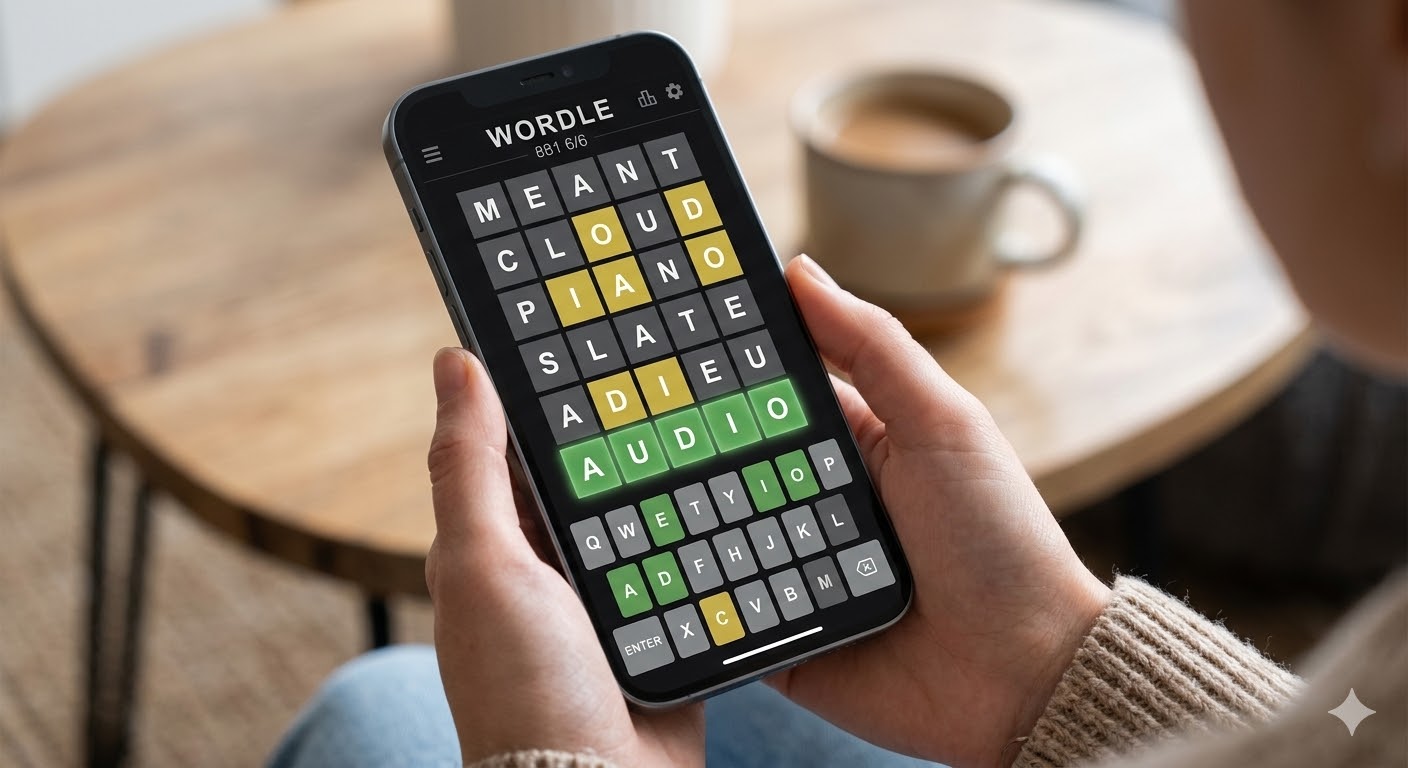
Wordle players faced puzzle number 1,923 on Thursday, a five-letter word built around disorder and clutter that puzzle trackers described as a common, everyday term made slightly trickier by a repeated letter buried within it.
For those still working through the puzzle, several hints circulated Thursday to help point solvers toward the answer without giving it away outright. The word describes something untidy, dirty or disorganized, and can be used to describe a room, someone’s appearance, their handwriting, or a broader situation that has become complicated or difficult to sort out. It rhymes with words like “dressy” and slant-rhymes with “blessy.” Structurally, the word contains one vowel, the letter E, and one repeated letter, begins with the letter M, and ends with the letter Y.
SPOILER WARNING: Today’s Wordle answer follows below. Stop reading now if you’d rather solve the puzzle without assistance.
The answer to Wordle #1,923 for September 24 is MESSY, an adjective meaning characterized by a dirty, untidy or disordered condition, whether describing a physical space, a person’s appearance, or a more abstract situation that has grown chaotic or hard to manage.
Puzzle trackers covering Thursday’s word generally described it as a familiar, everyday term, though several noted that the puzzle’s repeated letter, appearing twice within the five-letter word, could cause a brief moment of hesitation for solvers who had not yet accounted for the possibility of a duplicate letter in their guessing strategy. One outlet advised that players who tested the letters S and E early in their guessing sequence should be able to narrow down the answer relatively quickly once they recognized the word’s general theme.
Strategy guides accompanying Thursday’s puzzle reiterated broader tips relevant to Wordle players generally, encouraging solvers to open with strong, letter-diverse guesses to maximize the information gathered in the first one or two attempts, and to remain open to the possibility of repeated letters appearing in a word rather than assuming Wordle answers never include duplicates. Guides also recommended paying close attention to word patterns once several letters have been confirmed, since narrowing from a partially solved word down to the single correct answer often depends on correctly accounting for any repeated letters within the remaining possibilities.
Wordle, created by software engineer Josh Wardle before being acquired by The New York Times, continues to release a new five-letter target word to players worldwide at midnight local time each day, giving solvers six total guesses to identify the correct word. The game’s familiar color-coded feedback system, green for a letter in the correct position, yellow for a correct letter placed in the wrong spot, and gray for a letter absent from the word entirely, continues to guide players toward the solution with each subsequent attempt. Because the puzzle refreshes at midnight in each player’s own local time zone, solvers across different regions, including areas observing Philippine Standard Time, various Australian time zones, and New Zealand time, begin their attempt at each day’s puzzle at staggered points relative to players elsewhere, even though every solver worldwide is working toward the same single answer.
Puzzle number 1,923 followed Wednesday’s answer, FORTH, continuing a run of daily words that trackers use to help players identify broader patterns in how frequently the game’s word selection rotates between everyday, high-frequency vocabulary and more specific or evocative terms. Players tracking their personal performance on Thursday’s puzzle, or comparing notes with friends, can share their results through Wordle’s built-in results screen, which uses colored emoji squares to display a player’s guessing sequence without revealing the actual answer, a sharable format that has remained a familiar sight across social media since the game’s earliest days of viral popularity. The New York Times’ companion analytical tool, Wordlebot, offers players a further way to review how efficiently they solved the day’s puzzle relative to the broader player base and their own historical performance on similar words.
For solvers looking for an added challenge, Wordle continues to offer a “Hard Mode” setting, which requires players to reuse any previously revealed correct or partially correct letters in all subsequent guesses, removing the option to test entirely new, unrelated letter combinations once useful information has already been uncovered. That setting can be toggled from the game’s settings menu before starting a new puzzle each day.
Beyond the daily Wordle puzzle, The New York Times has continued expanding its broader portfolio of daily word and logic games in recent years, including Connections, which challenges players to sort 16 words into four hidden categories, Strands, a themed word-search game, and the Mini Crossword, a condensed version of the paper’s traditional crossword format designed to be completed within just a few minutes.
With Thursday’s word now revealed, players who came up short on the day’s puzzle, or those simply looking to extend an active streak, will have a fresh five-letter word and a new set of six guesses to work with when Friday’s edition of Wordle resets at midnight local time.

Puzzle number 1,201 of The New York Times’ Connections game challenged solvers Thursday with a grid blending Halloween costume pieces, spring-loaded objects, gestures involving pointing, and a set of wordplay-based anagrams, giving the day’s puzzle an unusually playful mix of categories.
Connections presents players with 16 words that must be sorted into four hidden groups of four, with each group sharing a common category. The puzzle rates each group’s difficulty using a color system: yellow for the most straightforward connection, green for slightly trickier, blue for more difficult, and purple, typically the most wordplay-heavy or misleading group, as the hardest.
For those still working through Thursday’s puzzle, here are hints for each category, organized from easiest to hardest, without giving away the specific words involved.
The yellow category groups together items associated with a classic Halloween costume built around a certain nocturnal, blood-drinking creature. The green category brings together objects and toys that share a common mechanical feature involving stored and released energy. The blue category, traditionally more difficult, connects words and phrases tied to a shared physical gesture involving an extended digit. The purple category, usually the trickiest of the four, groups together words and phrases that can each be rearranged into one another using the exact same letters.
SPOILER WARNING: The full solution to Thursday’s Connections puzzle follows below. Stop reading now if you’d rather work through the categories on your own.
Thursday’s puzzle resolved into the following four groups. The yellow category, Parts of a Vampire Costume, consisted of CAPE, FACE PAINT, FAKE BLOOD and FANGS, four items commonly associated with dressing up as a classic vampire for Halloween. The green category, Things With Spring/s, grouped BOBBLEHEAD, POGO STICK, SNAKES IN A CAN and TRAMPOLINE, four objects that each rely on a spring mechanism to function, whether for a bobbling head figurine, a hopping toy, a prank canister that launches fake snakes, or a bouncing surface. The blue category, Featuring Pointing, brought together CREATION OF ADAM, FOAM FINGER, I’M WITH STUPID SHIRT and UNCLE SAM, four references united by their association with an extended, pointing finger, whether Michelangelo’s famous fresco depicting God and Adam reaching toward one another, a foam sports novelty item, a joke T-shirt design, or the iconic recruitment poster figure. The purple category, Anagrams, consisted of BEER HAT, BREATHE, HERB TEA and THE BEAR, four entries that can each be rearranged into one another using precisely the same set of letters.
The puzzle’s central trap centered on the overlapping wordplay between the green and blue categories, according to puzzle guides covering Thursday’s grid. Some solvers reported initially grouping BOBBLEHEAD with items related to pop culture figurines or collectibles rather than recognizing its connection to spring mechanisms specifically, while others noted that UNCLE SAM’s inclusion in the pointing-themed blue category required recognizing the specific pose associated with the classic recruitment poster imagery rather than any more general association with the patriotic figure. The purple anagram category also proved deceptive for some solvers, since BEER HAT, BREATHE, HERB TEA and THE BEAR share no obvious thematic connection beyond their shared letters, a hallmark of the kind of misdirection Connections’ purple category is specifically designed to produce.
Connections has grown into one of the Times’ most consistently played daily puzzles since its official launch in 2023, expanding the newspaper’s games portfolio well beyond its traditional crossword offerings. The daily puzzle is written by Wyna Liu, the Times’ Connections editor, who has built a reputation for grids that reward careful attention to both category themes and potential red herrings planted throughout each day’s set of 16 words.
Players attempting Thursday’s puzzle are permitted up to four incorrect guesses before the game ends, with each group color-coded upon a correct guess to indicate which of the four difficulty tiers it belongs to. Standard strategy for tackling the puzzle involves scanning the full grid first for any words that seem to have an obvious connection, then working through the remaining words methodically to identify the less immediately apparent categories, a process puzzle guides say worked particularly well for Thursday’s grid given the more literal nature of its yellow and green categories relative to the wordplay embedded in its purple category.
Players looking to track their performance on Thursday’s puzzle, or compare notes with friends, can share their results through Connections’ built-in results screen, which uses colored emoji squares to display a player’s guessing sequence without revealing the actual category words, a sharable format that has become a familiar sight across social media in the years since the game’s launch, echoing the same format that helped popularize Wordle before it.
With Thursday’s puzzle now solved, players will have a fresh set of 16 words and four new hidden categories to work through when Friday’s edition of Connections goes live at midnight local time, continuing the daily puzzle’s steady run as one of the Times’ most widely shared games alongside Wordle, Strands and the Mini Crossword.


Seeking Alpha’s transcripts team is responsible for the development of all of our transcript-related projects. We currently publish thousands of quarterly earnings calls per quarter on our site and are continuing to grow and expand our coverage. The purpose of this profile is to allow us to share with our readers new transcript-related developments. Thanks, SA Transcripts Team
Business
BSP Financial Group Shares Jump 8.07% as Papua New Guinea’s Largest Bank Extends Its Recent Rally on the ASX
PORT MORESBY, Papua New Guinea — Shares in BSP Financial Group Ltd. rose 8.07% to $7.97 in trading Thursday, adding 59.5 cents, as the Pacific region’s largest bank by branch network extended a recent run of gains on the Australian Securities Exchange, where the company trades under the ticker BFL.
Thursday’s advance leaves the stock within its broader 52-week trading range of $6.79 to $9.50, a range reflecting the swings the bank’s shares have experienced over the past year even as the underlying business has continued generating strong profitability and consistent dividend income for shareholders. No specific company announcement had been identified as the direct catalyst behind Thursday’s sharp single-day gain as of the time of this report.
BSP Financial Group owns and operates Bank South Pacific, the dominant banking franchise across much of the Pacific region, with the largest branch network of any bank operating in Papua New Guinea, the Cook Islands, Fiji, the Solomon Islands, Samoa, Tonga and Vanuatu. The bank maintains branches and sub-branches in major cities and towns across those markets, as well as in more remote rural locations, a footprint the company has said reflects its deep, longstanding commitment to the region and what it describes as its own Melanesian identity. That physical branch network is complemented by an electronic banking platform offering online business and mobile banking, payments, payroll processing, ATM access and bill payment services.
Beyond its core retail and commercial banking operations, BSP Financial Group operates through dedicated business units covering corporate banking, retail banking, a premium banking division known as Paramount, and treasury services, drawing on the bank’s broad geographic presence and range of financial capabilities to serve clients across the Pacific. The company also owns three wholly owned subsidiaries: BSP Capital Ltd, which provides stockbroking and funds management services in Papua New Guinea; BSP Finance, a specialist asset finance company operating in Fiji and Papua New Guinea; and BSP Life, a dedicated life insurance provider based in Fiji.
Founded in 1957 and headquartered in Port Moresby, the company was formerly known as Bank of South Pacific Limited before adopting its current name, BSP Financial Group Limited, in March 2021. The company maintains a dual listing structure, trading on the Papua New Guinea Exchange under the code BSP and on the Australian Securities Exchange under the code BFL, giving investors in both markets direct access to shares in the bank.
Financially, BSP Financial Group has maintained a relatively attractive profile for income-focused investors, with a dividend yield around 7.43% based on recent trading levels, alongside trailing twelve-month earnings per share of approximately $2.51. Those figures reflect a bank that has continued generating substantial profitability from its dominant position across Pacific banking markets, even as its share price has fluctuated within a fairly wide range over the past year.
The bank’s business spans a comprehensive suite of both retail and business banking products. On the business side, the company offers business, solicitor’s trust and SME current and deposit accounts, business overdrafts, insurance premium funding, and a range of specialized financing products, including asset financing, bridging finance, tailored business loans, commercial and residential property investment financing, construction development finance, and seasonal finance products aimed at supporting agricultural and other seasonal industries across its Pacific markets. The bank also provides international money transfer, foreign exchange and trade finance services, along with foreign currency accounts, term deposits and loans, reflecting the cross-border financial needs of businesses and individuals operating across the multiple island nations the bank serves.
BSP Financial Group publishes its interim and full-year financial results, along with regular earnings updates and its annual report, to both the Papua New Guinea Exchange and the Australian Securities Exchange, with dividend information disclosed as part of those half-year and full-year results announcements. Shareholders can manage their holdings through either PNG Registries for shares held on the Papua New Guinea Exchange, or through MUFG Corporate Markets, formerly known as Link Market Services, for shares held on the Australian exchange.
As the largest bank operating across much of the Pacific region, BSP Financial Group’s performance is closely tied to broader economic conditions across Papua New Guinea and the smaller island economies where it operates, including trends in commodity exports, government spending, remittance flows and regional trade activity, all of which can influence lending demand, deposit growth and overall profitability for the bank’s diversified operations across its various Pacific markets.
With no specific catalyst confirmed for Thursday’s sharp gain, investors are likely to continue watching for the bank’s next scheduled financial disclosure to the PNGX and ASX for further clarity on the underlying operational trends driving the stock’s performance, alongside broader developments across the Pacific banking and economic landscape that could continue to influence trading in the shares in the sessions ahead.
Business
(VIDEO) Meta Launches $1,299 VR Glasses, Sharply Undercutting Apple’s Vision Pro on Both Price and Weight
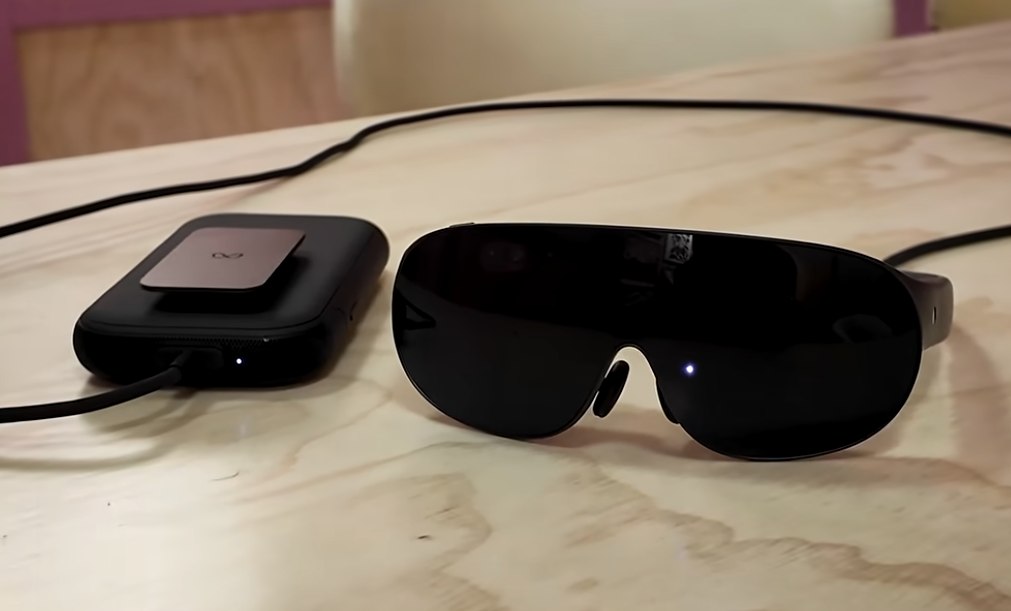
Meta Platforms Inc. unveiled a new $1,299 virtual reality headset Wednesday that undercuts Apple’s Vision Pro on both price and size, marking a significant shift in headset design that the company says puts its Reality Labs division on track toward profitability.
The device, called Meta VR Glasses, was revealed by Chief Executive Officer Mark Zuckerberg during the company’s annual Meta Connect developer conference at its Menlo Park, California, headquarters. It represents a fundamentally different approach to headset engineering compared with Meta’s earlier Quest-branded devices and Apple’s own Vision Pro. Rather than housing the processor, battery, cooling fan and other computing components inside the headset itself, as Meta’s previous models have done, the new device shifts nearly all of that hardware into an external pack that can clip to a user’s pocket or sit on a nearby table, connected to the glasses by a cable.
That redesign dramatically reduces the weight users must wear on their face. According to reporting on the device, Meta VR Glasses weigh approximately 100 grams, roughly one-sixth the weight of Apple’s Vision Pro and about one-fifth the weight of Meta’s own Quest 3S headset. Apple’s Vision Pro, by comparison, moves only its battery to an external pack while keeping its processor and other core computing components inside the headset itself.
Zuckerberg framed the device as a breakthrough in delivering immersive computing in a genuinely wearable form factor. “We have built a new kind of VR device that delivers the same magical feeling of presence and immersion, high-resolution displays and views of the world around you in a form factor that is a pair of glasses for the first time,” Zuckerberg said on stage at the conference.
The glasses feature a 5K micro-OLED display and are equipped with sensors that track users’ eye and hand movements, reducing the need for separate handheld controllers to interact with the device, according to details shared at the event. Because users view the surrounding world through two screens rather than direct optical passthrough, the glasses include external cameras that capture and display the wearer’s physical surroundings in real time. The device supports up to three hours of playback on its external battery pack and offers many of the same core capabilities as Apple’s Vision Pro and Meta’s existing Quest lineup, including immersive video playback, office productivity apps, the ability to function as an external monitor for a Mac or PC, and web browsing.
Meta Chief Technology Officer Andrew Bosworth acknowledged in an interview that the company’s shift toward an external computing architecture owes something to the trail Apple blazed with the Vision Pro’s own partial external-pack design. Bosworth said Meta owes Apple “a little bit of a debt of gratitude,” crediting the Vision Pro with helping generate broader entertainment industry enthusiasm for immersive computing and with giving the industry, in his words, “permission to explore split architectures,” a dynamic he said helped inform Meta’s approach to the new glasses.
During an extended hands-on demonstration that included watching immersive highlights from an NBA game, navigating Meta’s redesigned headset operating system, and working on a connected PC, the lighter design reportedly made the device notably more comfortable to wear for extended periods compared with bulkier prior-generation headsets.
Meta VR Glasses are scheduled to go on sale in spring 2027, marking the company’s first new VR headset release since the $299 Quest 3S debuted in 2024. The $1,299 price positions the new glasses well below the Vision Pro’s price point while still representing Meta’s most expensive VR device to date, a pricing strategy the company has said is designed to ensure the product does not sell at a per-unit loss, supporting its broader goal of pushing the Reality Labs division toward sustained profitability.
Meta VR Glasses were not the only wearable device unveiled at Wednesday’s event. The company also introduced the Ray-Ban Meta Audio glasses, a camera-free version of its existing smart glasses line priced at $349, along with the third generation of its standard Ray-Ban Meta glasses. Zuckerberg additionally revealed the Muse Charm, a handheld accessory device designed to work alongside Meta’s recently released Muse artificial intelligence personal agent.
Meta enters this next phase of the smart glasses and VR market from a position of considerable strength. According to data from the International Data Corporation, Meta accounted for 68.7% of global smart glasses shipments during the second quarter of 2026, making it the clear market leader heading into an increasingly competitive stretch. Rivals Samsung and Google are both preparing to launch their own competing smart glasses later this fall, with designs from eyewear brands Warby Parker and Gentle Monster built on Google’s Android XR platform, developed jointly with Samsung and Qualcomm. Snap Inc. is separately rolling out its own Specs AR glasses, adding a further competitor to the increasingly crowded field of companies racing to bring wearable augmented and virtual reality devices to a broader consumer audience.
With Meta VR Glasses not set to reach consumers until spring 2027, the device’s ultimate commercial success remains untested, but its combination of a substantially lower price point and dramatically reduced weight relative to Apple’s Vision Pro sets up a direct point of comparison between the two companies’ competing visions for how immersive computing hardware should be designed, as both companies continue working to build broader mainstream demand for a product category that has so far struggled to move meaningfully beyond early adopters and niche professional use cases.
Six in 10 UK business owners would be discouraged from founding a new company if John Healey, the chancellor, raises capital gains tax (CGT) in next month’s budget, according to a survey commissioned by S&W, the professional services group.
The survey of 500 business owners, carried out by the research consultancy Censuswide, also found that half would consider leaving the UK if the tax was raised in the budget on 28 October.
Higher and additional rate taxpayers currently pay 24 per cent CGT on their gains, according to government guidance.
There are growing fears that Healey will raise the tax, or equalise it with income tax, as the government contends with higher borrowing costs and a shrinking fiscal buffer and seeks to fund Andy Burnham’s localism and cost of living agenda.
Toby Tallon, a tax partner at S&W, said the business owners are “sending a clear warning to the chancellor”. He added that CGT and the possible introduction of a wealth tax “are areas business owners will be watching particularly closely”.
Stephen Fitzpatrick, co-chairman of Enterprise Britain and the billionaire founder of Ovo, Kaluza and Vertical Aerospace, said: “Nobody likes tax, but it’s part of what makes our country work. And how we pay taxes matters. To create a prosperous society, we need more than hard work. We need people who are willing to risk everything … time, money, humiliating failure.”
He added: “If the government decides to tax capital gains at the same rate as income, I am not going to leave. This is my home, and my children are growing up here. But would I want to risk everything again? I really don’t know.”
Andreas Adamides, chief executive of the scale-up founders network Helm, is leading a Stop the Creep campaign against tax rises, backed by more than 150 business leaders. He said: “For many founders, selling their business is their pension. Taxing it like a pay cheque would hit them just as years of hard work finally pay off, and push them abroad, taking with them the capital, experience and jobs Britain desperately needs for growth.”
Earlier this month it emerged that Chris Rokos, the billionaire hedge fund manager and Britain’s third-highest taxpayer, is moving to Greece.
Others have argued for an increase. Dale Vince, the founder of Ecotricity and a Labour donor, has proposed equalising CGT with income tax in increments over several years, to help fund a £20bn increase in the income tax personal allowance. Vince said wealth was “taxed more lightly than work”.
Louise Haigh, the first secretary of state, and Wes Streeting, the defence secretary, have both called for a rise in CGT this year.
Asked on Wednesday about the prospect of raising the tax, Emma Reynolds, chief secretary to the Treasury, said: “I can’t give any reassurance on the budget. All I can say is that one of the reasons we are doing the budget earlier than last year is that we are trying to, as much as we can, reduce the amount of speculation, because there is a lot of it. And it’s very often inaccurate and unhelpful.”
The Investment Association, in its pre-budget submission this week, called on the Treasury to avoid further increases to CGT, “which would send the opposite signal to people being encouraged to move from cash savings into long-term investment”.
Robert Salter, a director at the advisory firm Blick Rothenberg, said raising the higher rate of CGT to 34 per cent from 24 per cent would cut receipts by £540m in the 2026-27 tax year, £2.06bn in 2027-28 and £3.5bn in 2028-29. He based the figures on an HMRC bulletin published in June last year. Salter added that most CGT comes from a small number of taxpayers, who are likely to be the most mobile.
A Treasury spokesman said: “As has always been the case, decisions on tax are a matter for the chancellor to set out at fiscal events, rather than routinely commenting on rumour, speculation or proposals.”

Amy Ingham
Amy Ingham is a reporter at Business Matters, covering UK business news with a focus on breaking news, business policy, late payments and insolvency. She joined the magazine in 2026 after completing the NCTJ Diploma in Journalism at Harlow College’s journalism school. Her recent reporting includes British Steel’s nationalisation and its impact on SME suppliers, the decline in late payments by large firms, and Insolvency Service director disqualifications. Reach her at aingham@cbmeg.co.uk.
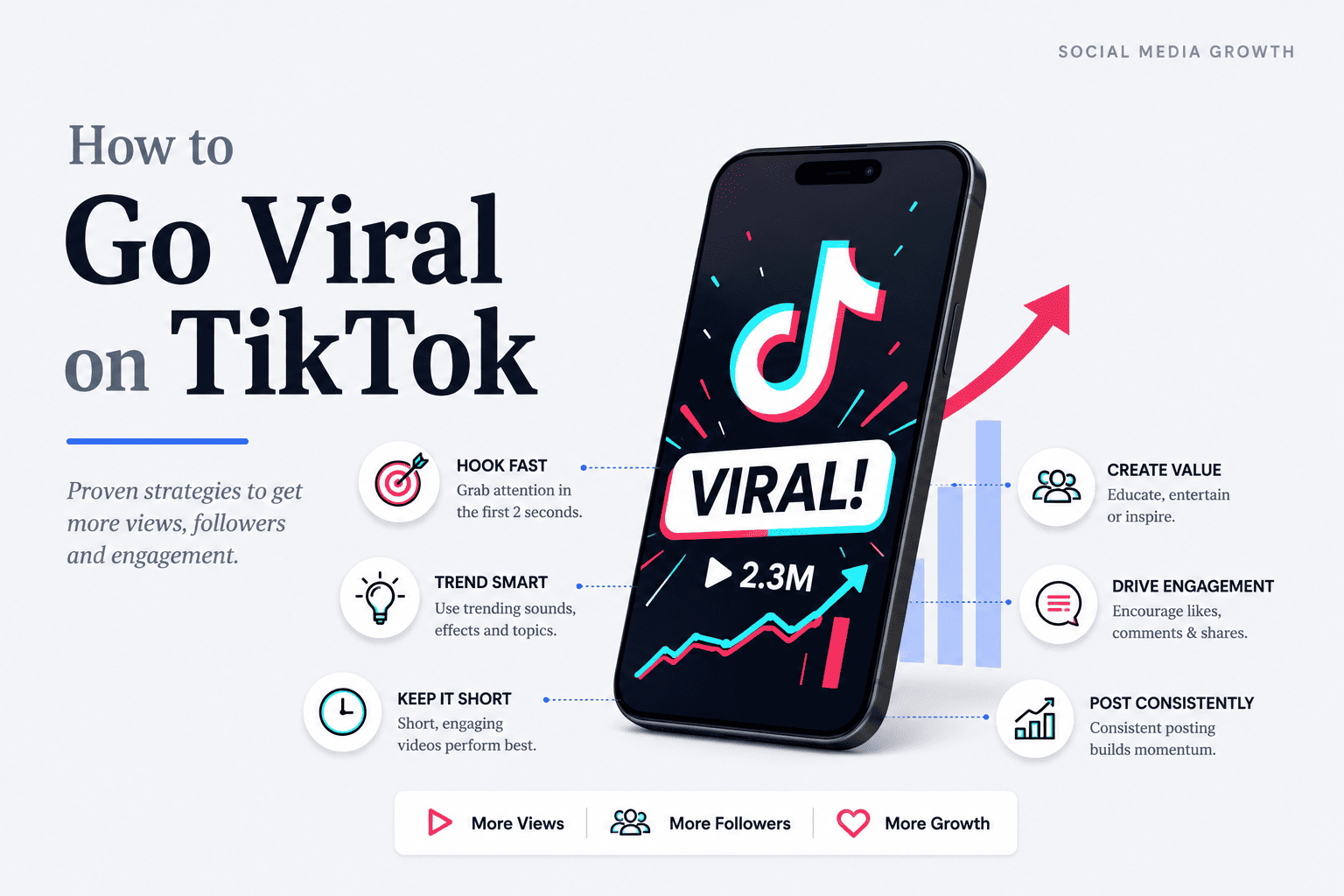
I once posted a video at what three different “best time to post” articles swore was the golden hour, used a trending sound, added a caption I was genuinely proud of and watched it die at 340 views. Meanwhile, a video I filmed in one take because I was running late hit 60,000. There was no lesson in that except the one nobody wants to hear: virality isn’t a vibe, it’s a scorecard, and I hadn’t been reading mine.
So here’s the actual scorecard TikTok is using in 2026:
- Your video gets tested with your existing followers before anyone else sees it
- You now need roughly a 70% completion rate to break out, up from 50% in 2024
- Shares carry more algorithmic weight than likes
- You have about three seconds to earn the rest of the watch
- Video length is flexible, retention matters more than duration
- TikTok increasingly functions like a search engine, not just a feed
- Follower count isn’t a direct ranking factor, but consistency compounds over time
None of that is luck. Here’s what each one actually means for the next video you post.
Wait : Does TikTok Really Show My Video to My Followers First?
Yes, and this is the single biggest shift in how the algorithm behaves this year. When you publish, TikTok now tests the video with a small sample of your own followers first, typically a few hundred people, before deciding whether it’s worth pushing to your For You Page [FYP, TikTok’s main recommendation feed] audience. If that initial group engages, the video graduates to wider testing pools. If they scroll past it, the video’s reach quietly caps out.
The practical upshot: your existing audience’s engagement habits now directly gatekeep your next video’s shot at going wide. Replying to comments in the first hour, and posting at times your specific followers are actually online, matters more than it used to.
What Completion Rate Do You Actually Need?
Completion rate [the percentage of viewers who watch a video all the way to the end] is the metric doing the most damage to creators who haven’t adjusted their strategy. The bar has risen from roughly 50% in 2024 to around 70% now, meaning a video padded with a slow intro or a meandering middle gets penalized far more harshly than it would have two years ago.
Rewatch rate adds another layer on top of that. A viewer who watches your video three times is a stronger signal to the algorithm than three different viewers each watching once – TikTok reads that as content strong enough to revisit, and a rewatch rate above 15–20% is generally considered a solid boost. Practically, that means loops, punchlines that land on replay, or information dense enough that people need a second pass all outperform content that’s “watchable once and done.”
How Long Should Your Video Actually Be?
There’s no single right answer here, and most advice oversimplifies it. TikTok’s own default recommendation sits around 9–15 seconds, and short videos in the 15–30 second range tend to post the highest completion rates simply because there’s less runway to lose someone. But longer formats – a minute, even several minutes – can rack up more total watch time if the hook is strong enough and the pacing never sags, because total watch time and rewatch behavior matter alongside completion percentage.
The honest rule: match the length to how much genuinely engaging content you have, not to a template. A tight 15-second video beats a padded 45-second one every time; a genuinely gripping 90-second story beats a rushed 15-second version of the same idea.
Why Do the First Three Seconds Matter So Much?
Because that’s roughly how long a viewer takes to decide whether to keep watching or scroll on, and the data backs this up hard – a majority of top-performing videos deliver their core message within the first three seconds, not after a slow build. If your video opens with a logo animation, a “hey guys” intro, or any kind of warm-up, you’re burning the exact window that determines whether the algorithm’s test audience sticks around long enough to count as a good sign.
A quick way to fix a weak hook:
- Write your script backward : start from the payoff or punchline and work out what the fastest possible path to it looks like.
- Cut your current opening line entirely and see if the video still makes sense. If it does, you didn’t need it.
- Say or show the most interesting part of the video in the first sentence, then explain how you got there.
- Watch the first three seconds with the sound off : if it’s not visually arresting on its own, it needs work.
Do Likes Still Matter, or Is It All About Shares Now?
Shares have overtaken likes as the stronger algorithmic signal, and the logic makes sense from TikTok’s side: a like keeps a viewer on the platform, but a share brings in someone new. Content that prompts a “you need to see this” reaction – genuinely useful information, relatable frustration, or mildly controversial takes people want to weigh in on – tends to outperform content that’s simply well-made.
A few tactics that reliably lift share rate: explicitly say “send this to someone who-” when it fits naturally, package information densely enough that saving it feels useful, and don’t be afraid of a take with a little edge to it. Safe, agreeable content is easy to like and forget; content with a point of view is what gets forwarded.
Is TikTok Basically a Search Engine Now?
Increasingly, yes. TikTok has been leaning harder into search-style discovery, and its algorithm now reads the keywords in your caption, the words you actually say out loud (auto-transcribed), and any on-screen text to figure out which niche searches your video should surface for, not just which interests it might match on the FYP.
How to optimize for this before you post:
- Type your target topic into TikTok’s own search bar and see what related searches and existing videos come up : that’s your keyword research.
- Say your main keyword phrase out loud somewhere in the video, since the algorithm reads spoken audio.
- Add on-screen text that repeats the core topic, not just decorative captions.
- Use 3–5 hashtags that mix one or two broad tags (#fyp, #viral) with two or three specific to your exact topic : hashtags now support your SEO rather than driving discovery on their own.
What Content Formats Are Actually Performing Right Now?
Trending sounds haven’t disappeared, but using one exactly as-is is increasingly a missed opportunity – original voiceovers, or a trending audio with your own twist layered on top, tend to stand out precisely because the algorithm (and viewers) have grown numb to identical use of the same clip. Story-based content is also having a moment in longer formats: a well-paced narrative with a clear beginning, tension, and payoff can sustain the 60–180 second range far better than a straightforward tips list can.
The common thread across everything performing well right now: specificity. “Here’s a marketing tip” underperforms “here’s the exact caption structure that got my last video 2 million views” – the second version promises something the algorithm can measure people staying for.
What Kills Your Reach Before It Even Starts?
A few habits quietly cap videos that otherwise had a real shot:
- Padding runtime to hit a “recommended” length. If your idea is finished at 12 seconds, stretching it to 30 just to match a template tanks your completion rate.
- Recycling a trending sound with zero twist. The algorithm and viewers have both seen it a thousand times already; identical reuse rarely earns the same distribution the original did.
- Posting on autopilot without checking analytics. If you’re not comparing completion and rewatch rates across your last several posts, you’re guessing instead of iterating.
- Burying the hook under a slow intro. Even a well-made video loses its testing window if the first three seconds don’t earn the next ten.
- Hashtag stuffing instead of targeting. Ten generic tags dilute the signal the algorithm needs to categorize your video correctly; three to five precise ones do more work.
Do You Need a Following to Go Viral?
Officially, no. TikTok has confirmed follower count isn’t a direct ranking factor, and plenty of zero-follower accounts break out on a single video that performs well with its test audience. Small businesses posting their very first video have gained tens of thousands of followers overnight this way, and some of the platform’s biggest all-time hits came from accounts with no prior track record at all.
That said, the follower-first testing model does mean an engaged, even modest, existing audience gives your video a better initial testing pool to clear before it’s judged against strangers. Zero followers doesn’t block virality, it just means you’re relying entirely on the content itself to win over a cold audience on the first try.
Putting It Together: A Pre-Post Checklist
- Confirm your hook delivers the payoff (or the promise of one) within the first three seconds.
- Trim anything that doesn’t earn its place : every extra second is a chance to lose completion rate.
- Say your target keyword out loud and reflect it in on-screen text.
- Add 3–5 hashtags mixing broad and niche.
- Post when your actual followers are active, not a generic “best time” from an article.
- Reply to comments within the first hour : you’re still inside the follower-testing window.
- Check completion rate and rewatch rate in your analytics 24–48 hours later, and let that data, not guesswork decide what you post next.
Going viral was never really about luck. It’s about clearing a specific, measurable bar TikTok sets for you every single time you hit post and now you know exactly where that bar sits. Once the views start coming in consistently, that’s usually the point worth asking a different question: how do you actually turn that reach into income? That’s a whole guide on its own.
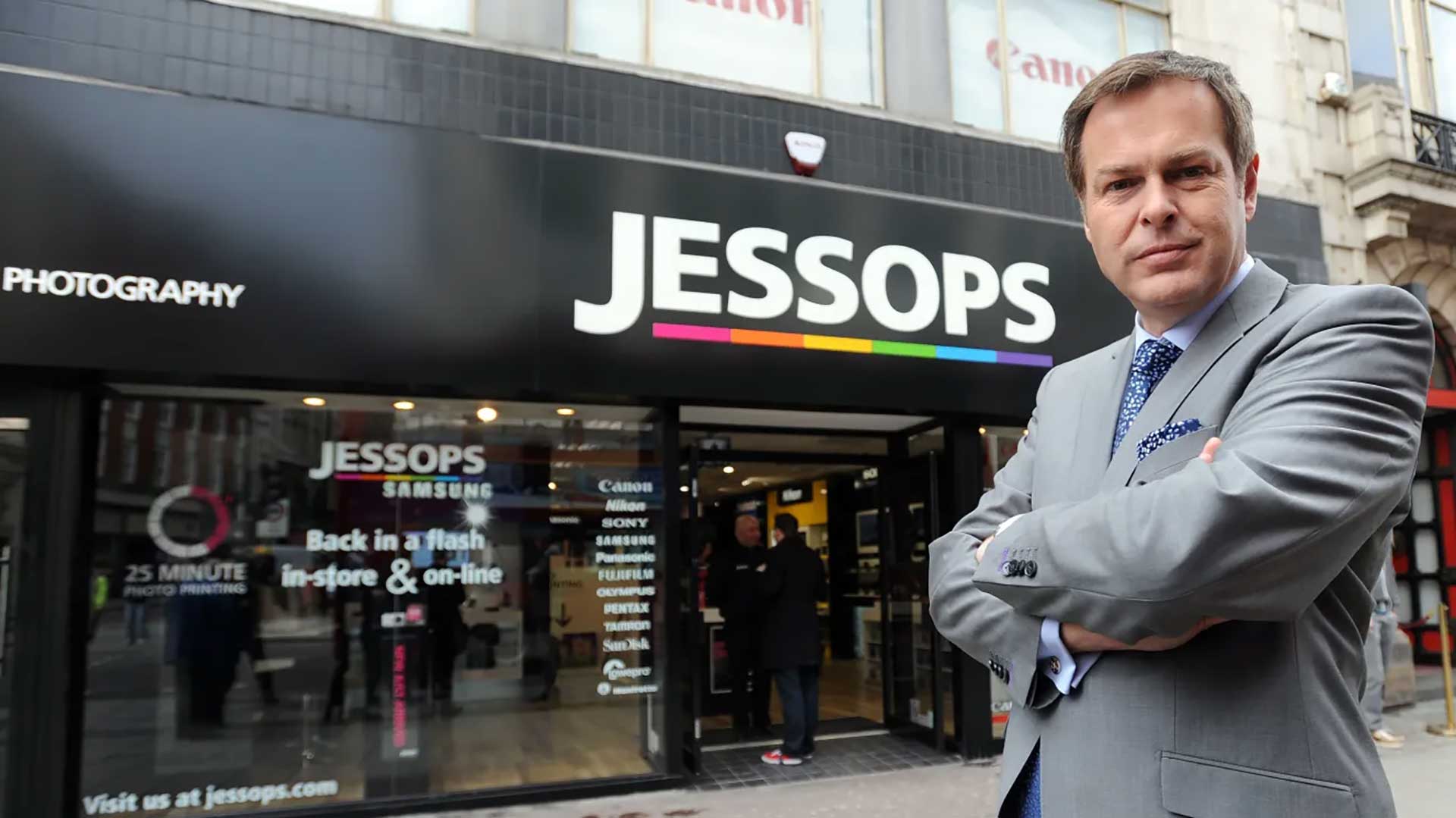
The Dragons’ Den investor Peter Jones has sold the photography retailer Jessops to the online electrical retailer AO World, more than a decade after he rescued the chain from administration. The financial terms of the deal have not been disclosed.
AO World announced the purchase in a trading update ahead of its annual general meeting. The company said it plans to integrate Jessops into its existing musicMagpie operations.
John Roberts, AO’s founder and chief executive, said: “I am delighted to welcome Jessops into the AO family and look forward to growing the existing business.”
Jessops operates a small collection of high street shops alongside an online service, Camera Jungle, which allows customers to buy and sell cameras and accessories.
MusicMagpie, which lets people buy, sell and rent used consumer technology, phones, games and media, was acquired by AO in 2024 for less than £10m. At the time of that deal, Roberts said musicMagpie’s trade-in service would support AO in scaling refurbished technology.
Jones acquired Jessops for £5m in 2013, following the chain’s collapse into administration. Under his ownership, the business reduced the number of its high street shops and built a larger online presence.
The chain has faced difficulties in recent years. In 2024, Business Matters reported that Jessops faced a winding-up petition from HMRC over unpaid taxes, at a time when its sales had fallen 7.5 per cent to £19.97m.
Jones spent nine years on Dragons’ Den, the BBC programme, during which he invested millions of pounds in start-ups including Levi Roots’s Reggae Reggae jerk sauce, Bladez Toyz and Boot Buddy, the shoe cleaning gadget. Earlier this year he bought the golf retailer American Golf from the private equity firm Endless.
Jessops was founded in Leicester in 1935 by Frank Jessop and grew rapidly under his son, Alan, as personal photography became more popular. It was sold to Bridgepoint Capital after Alan Jessop retired in 1996. Bridgepoint attempted to float the business twice before selling it to ABN Amro, the Dutch bank, for £116m in 2002.
Alongside the acquisition, AO said it expects revenue for the six months to the end of September to rise 5.5 per cent year-on-year. Pre-tax profit for the period is projected to reach about £21.5m, which the company said was underpinned by gains in its mobile and musicMagpie businesses.
Roberts said: “We’ve carried our momentum into the new financial year with continued growth against a sluggish backdrop in the wider UK retail sector.”
Despite the half-year performance, AO left its full-year profit guidance unchanged.
The update follows AO’s full-year results in June, when the retailer reported record profits of £50.5m and Roberts said Labour’s tax and wage policies had led the company to move 200 customer service jobs to South Africa.

Paul Jones
Harvard alumni and former New York Times journalist. Editor of Business Matters for over 15 years, the UKs largest business magazine. I am also head of Capital Business Media’s automotive division working for clients such as Red Bull Racing, Honda, Aston Martin and Infiniti.
Business
(VIDEO) Trump Visibly Winces at Loud Military Flyover During Historic Tarmac Welcome for Xi Jinping

WASHINGTON — President Donald Trump personally greeted Chinese President Xi Jinping on the tarmac at Joint Base Andrews Wednesday evening, taking the unusual step of welcoming a foreign leader at the Maryland military base rather than the White House, in a ceremony that briefly went off script when Trump visibly winced at the sound of a low-flying military jet overhead.
Trump, joined by first lady Melania Trump, greeted Xi and his wife, Peng Liyuan, as they arrived to begin Xi’s state visit to the United States. The two leaders and their spouses walked along a 100-foot red carpet flanked by U.S. service members, with American and Chinese flags on display. The ceremony featured the national anthems of both countries performed by the U.S. Air Force band, a 21-gun salute, a guard of honor, a display of six F-16 and six F-22 fighter jets, and a flyover by two B-1 Lancer bombers.
It was during that flyover, coming near the end of the U.S. national anthem, that the ceremony’s most talked-about moment occurred. As the B-1 bombers roared overhead, Trump, who was saluting at the time, visibly recoiled at the noise, ducking, gritting his teeth, turning his head toward the aircraft and lowering his salute in front of assembled reporters and photographers. Xi, standing beside him, remained composed and showed no visible reaction to the flyover, as did both Melania Trump and Peng Liyuan.
The moment was captured on a White House livestream of the ceremony but was not included in the edited highlight footage of the event that Trump’s aides released afterward, according to reporting on the ceremony.
Trump’s decision to personally welcome Xi at Joint Base Andrews marked a significant departure from typical diplomatic protocol, under which U.S. presidents generally receive visiting foreign leaders at the White House rather than traveling to greet them upon arrival. According to historical records, the last time an American president greeted a world leader personally at Joint Base Andrews was in 1962, when President John F. Kennedy met British Prime Minister Harold Macmillan. Notably, Xi did not extend the same gesture to Trump when the American president traveled to Beijing for his own state visit to China in May.
The elaborate welcome drew a range of reactions online, much of it focused on Trump’s visible reaction to the flyover. Journalist Aaron Rupar noted the apparent contrast between the mild weather and Trump’s attire, writing, “it is 64 degrees at Joint Base Andrews right now and yet Trump is wearing gloves as he greets President Xi.” Twitch streamer Hasan Piker, who broadcast footage of the arrival ceremony to his viewers, joked about Trump’s reaction to the flyover, asking, “Trump — it’s YOUR airshow. How do you get scared?”
Beyond the social media reaction to the flyover moment, the lavish nature of the welcome itself drew more substantive criticism from at least one member of Trump’s own party. Mississippi Sen. Roger Wicker addressed the ceremony directly in remarks delivered on the Senate floor, expressing reservations about the scale of the welcome extended to Xi. “Had the White House asked me for advice, I would have suggested the president not invite Xi Jinping to Washington for such a lavish welcome here in the United States, based on all of the troubling issues we have with President Xi and the Chinese Communist Party,” Wicker said. He urged Trump to remain mindful of Xi’s record throughout the visit, describing the Chinese leader in blunt terms. Wicker said Trump should remember “during every minute of dialogue” that “his guest is a brutal, unelected and oppressive dictator who seeks to dominate his neighbors and whose massive military arsenal is aimed directly at the United States of America.” Wicker’s public criticism was described as a rarity on Capitol Hill, where Republican pushback against Trump’s foreign policy decisions has remained uncommon even as some GOP lawmakers have grown more willing to break with the president publicly in recent weeks.
The high-profile diplomatic gesture unfolded alongside a substantive economic announcement the same day. U.S. Treasury Secretary Scott Bessent said Wednesday that the United States and China had agreed to extend the so-called “Busan agreement,” a temporary trade truce between the world’s two largest economies, providing at least a measure of near-term stability to the broader U.S.-China economic relationship even as tensions over technology, security and regional influence continue to shape the overall dynamic between the two countries.
Artificial intelligence has emerged as a particularly significant point of friction shaping the broader Trump-Xi meeting, reflecting deep and persistent distrust between Washington and Beijing over the technology’s military and economic implications, according to analysts tracking the visit.
With Xi’s state visit continuing in the days ahead, Wednesday’s arrival ceremony, and Trump’s visible reaction to the military flyover in particular, is likely to remain a widely discussed moment from the trip, even as the substantive discussions between the two leaders on trade, technology and broader bilateral relations continue to unfold over the course of the visit.
The Starbucks logo is seen at a store in Houston on September 25, 2025.
Ronaldo Schemidt | Afp | Getty Images
Starbucks on Thursday announced it will close about 1% of its North American cafes as part of its turnaround.
Under CEO Brian Niccol, Starbucks has staged a revamp of its U.S. business that has focused on improving the customer experience, including in-person interactions at its cafes. The announcement marks the second round of closures in North America during Niccol’s two-year tenure.
Starbucks expects to shutter about 250 cafes out of its more than 18,000 locations in North America. For fiscal 2026, Starbucks is now projecting net new openings of 440 cafes, down from its prior outlook of 600 to 650 locations. Those new cafes will come from its international markets.
“The Company continues to see significant longer-term growth opportunity ahead in North America and is actively developing a strong pipeline of new coffeehouses,” the company said in a regulatory filing.
Most of the closures will occur before the end of fiscal 2026, according to the filing. Starbucks’ fiscal year ends later this month.
The company expects to incur about $300 million in restructuring charges related to the closures. About $200 million of that charge will be related to the costs of exiting leases early and paying employees separation benefits. The remaining $100 million will be non-cash charges from the disposal and impairment of its company-owned restaurant assets.

Gareth Bale and Cristiano Ronaldo have made their thoughts perfectly clear about each other

Hints and Answer for September 24, 2026 as Puzzle 1923 Gets a Little Bit Messy and Disorganized

Harlan Coben’s Divisive 6-Part Psychological Thriller Is the Perfect Weekend Binge

Weekend Open Thread – Corporette.com

Weekend Open Thread: Talbots – Corporette.com

Memory prices are slowing because buyers ran out of money

DJ Maphorisa, DJ Tunez, Wizkid, Mavo – MONEY CONSTANT (Visualizer)

Haddii aad i siiso 4 Saac, waxaad Gaari Doontaa Xornimo Dhaqaale 2026.Crypto, Forex, Stocks & Shares

Secret Bitcoin SIP Strategy to Beat Market Returns (Step-by-Step Guide)
-
 Fashion6 days ago
Weekend Open Thread: Talbots – Corporette.com
-

 Tech4 days ago
Researchers escape OpenAI Codex sandbox to run commands on host
-

 Crypto World2 days ago
Goldman Sachs and Deutsche Bank Agree: The S&P 500 Rally Isn't Over
-

 Crypto World5 days ago
Circle launches Arc Studio AI agent for building onchain apps
-

 Crypto World4 days ago
Who Needs CLARITY Anyway? ARB Could See 70X Increase: Hodler’s Digest
-
 NewsBeat6 days ago
Trump says US has reached an agreement to take permanent control of Greenland’s security
-

 Crypto World6 days ago
Trading Bitcoin on Robinhood? Why 2% Spread Has Traders Worried
-
 Crypto World7 days ago
Mortgage and refinance interest rates today, Thursday, September 17, 2026
-

 Crypto World6 days ago
Bitcoin price breaks channel as RSI climbs to 63
-

 Tech3 days ago
Google’s $899 Googlebook is a bet that you’ll buy a new laptop for Gemini
-

 Business4 days ago
Analog Devices (ADI) Bets $1.35 Billion on Chips that Let Machines Think for Themselves
-

 Crypto World4 days ago
Coinbase, Robinhood, Circle Seen as Tokenized-Stock Winners
-
 Business1 day ago
Oil Price Today (September 23): Crude oil below $100 on hopes of US-Iran talks. What did Trump say?
-

 Tech7 days ago
GPT-6 Astra Reached the Nether in Minecraft, Lost Its Stash to a Creeper, and Farmed Potatoes for Hours
-

 Tech5 days ago
Trump suggests rebranding AI with a new name, says he’s also creating an AI Force
-

 Crypto World5 days ago
World Money launches in 150+ countries with Stripe
-
 Crypto World6 days ago
Silver prices recover quickly, hitting weekly high today
-
 NewsBeat6 days ago
US was ‘on brink of war’ with China over false AI report of nukes moving in Middle East
-
 Crypto World3 days ago
Bitcoin price holds above $81K as key catalysts line up
-
 Crypto World2 days ago
Meta Jumps 11% As Muse Shines and Investors Show an Appetite for Advancing AI
You must be logged in to post a comment Login