

Connect with us

Business

SoFi Stock: Mastercard Partnership Turns Consumer Cards Into Stablecoin Proving Ground

Published

on

SoFi Stock: Mastercard Partnership Turns Consumer Cards Into Stablecoin Proving Ground

SoFi Technologies (SOFI) and Mastercard on Tuesday said their stablecoin partnership is fully operational and handling real transactions. SoFi stock climbed on the news. Under the partnership, SoFi’s debit and credit card program with more than $25 billion in annualized volume has shifted to Mastercard’s payment network using its bank-issued stablecoin. The companies announced the partnership in March. With the…

Copyright ©2026 Investor’s Business Daily, LLC. All rights reserved. 87990cbe856818d5eddac44c7b1cdeb8

Continue Reading
Click to comment

You must be logged in to post a comment Login

Leave a Reply

Business

Micron Shares Climb 3.33% to $1,078.75 as AI Memory Rally Builds Toward Its Sept. 30 Fiscal Earnings

Published

on

Earnings News: Micron Technology Inc (NASDAQ: MU)

BOISE, Idaho — Shares of Micron Technology Inc. rose 3.33% to $1,078.75 in Tuesday trading, adding $34.79, extending a powerful rally in the memory chipmaker’s stock as investor enthusiasm for artificial intelligence-driven memory demand continues building heading into the company’s fiscal fourth-quarter earnings report next week.

Tuesday’s gain follows a strong session Monday, when Micron shares closed at $1,043.96, up 2.77%, outpacing a broader 2.26% advance in the Nasdaq Composite that same day. The stock has now climbed more than 256% since the start of the year, according to recent market data, a run that has pushed Micron’s market capitalization above $1.15 trillion and left shares trading within striking distance of the company’s all-time high of $1,255, reached on June 25.

The rally has been fueled largely by surging demand for high-bandwidth memory, or HBM, chips used in artificial intelligence accelerators, a dynamic that has lifted memory chipmakers broadly across global markets in recent weeks. Micron has continued expanding its AI memory story beyond HBM specifically in recent sessions, with the company adding new details to its broader artificial intelligence narrative in a disclosure made September 15, according to market commentary tracking the stock.

Investors are now turning their attention to Micron’s upcoming fiscal fourth-quarter results, scheduled for release September 30 after the close of U.S. markets, with a conference call set to follow at 2 p.m. Mountain time. Analysts currently expect the company to report revenue of approximately $50.42 billion for the quarter, alongside earnings per share of roughly $31.14. Options traders have priced in a potential move of more than 10% in Micron shares around the earnings release, reflecting the high level of uncertainty and anticipation surrounding the report. The results would follow a blowout fiscal third quarter, in which Micron reported earnings of $8.54 billion, an increase of nearly 998% from the prior year, underscoring the scale of the company’s recent earnings acceleration tied to AI-driven memory demand.

Advertisement

Wall Street has grown increasingly bullish on Micron’s stock as that demand story has played out. Stifel analyst Brian Chin maintained a Buy rating on the shares Monday, keeping a price target of $1,500, implying further potential upside even after the stock’s dramatic run this year. Across the broader analyst community, Micron carries an average rating of Strong Buy from 49 analysts, with individual price targets ranging as high as $2,000, according to recent compiled estimates. Not every signal facing the stock has been unambiguously positive, however; some investors have flagged Chief Executive Officer Sanjay Mehrotra’s recent sales of company stock as a data point worth monitoring, even though such sales are common among executives at companies whose share prices have appreciated substantially.

A potential competitive challenge has also emerged in recent days. China’s ChangXin Memory Technologies, known as CXMT, moved its fifth-generation DRAM platform into mass production on September 15, a development that market watchers have said poses a new test for both Micron and rival memory maker SanDisk, given that the assumption of limited near-term competition has been a key pillar underpinning bullish valuations across the memory chip sector.

Micron’s business today centers on dynamic random access memory, or DRAM, chips, which represent the company’s primary revenue stream, alongside a smaller but growing business in NAND flash storage chips. The company, founded in 1978 and headquartered in Boise, Idaho, serves a broad range of end markets, including data centers, personal computers, graphics processing, networking equipment, automotive systems, industrial applications, and smartphones and other mobile devices. Micron sells its products through a combination of its own direct sales force, independent sales representatives, distributors and retailers, alongside a web-based direct sales channel and additional distribution partnerships.

The company has continued investing heavily in expanding its domestic manufacturing footprint in recent months, including selecting construction firm Bechtel as its partner for a major new semiconductor manufacturing project in New York, alongside a separate manufacturing expansion underway in Virginia, both part of a broader push toward what the company has described as made-in-America memory production. Micron also disclosed a strategic agreement with AI company Anthropic in June aimed at scaling next-generation AI infrastructure, reflecting the deepening ties between memory chip suppliers and the major AI labs driving demand for their products.

Advertisement

Micron’s rapid share price appreciation has also fueled speculation about a potential stock split, with the shares now trading well above the $1,000 mark, a level that can create practical friction for retail investors seeking to purchase full shares. The company has not confirmed any specific plans regarding a split as of the most recent reporting.

With Micron’s fiscal fourth-quarter results now just over a week away and options markets pricing in a potentially sharp reaction in either direction, investors are likely to treat the upcoming earnings report as a critical test of whether the company’s extraordinary run this year can be sustained, particularly as the market weighs both the continued strength of AI-driven memory demand and the emerging competitive threat posed by Chinese memory producers entering more advanced stages of DRAM production.

Continue Reading

Business

Idea that firms move out Wales after being acquired is for the birds

Published

on

Business Live

Gambit Corporate Finance has assessed the acquisition of more than 2,000 Welsh firms from 2000 to 2025.

Gambit Corporate Finance was published a new report of Welsh business exit deals from 2000-25.(Image: Western Mail and Echo Copyright)

The vast majority of firms acquired in Wales over the last 26 years remain operating here, countering a narrative that ownership exits can lead to significant extraction with businesses being hollowed out or moved elsewhere.

A new in-depth analysis by Cardiff-based boutique corporate advisory firm Gambit, based on more than 2,000 exit deals in Wales from 2000 to 2025, shows that following a change of ownership, more than 90% of firms remain actively trading in Wales.

Advertisement

The most popular route to exiting over the period was via a trade sale, with 74% of shareholders choosing this transfer of ownership option. The second most popular exit route was via a management buyout (MBO) or management buy-in (MBI), which accounted for 21% of the deals surveyed. Notable MBO/MBI exits were the MBO of Pembrokeshire holiday resort Bluestone Resort in 2013 for £87m and the MBO of Flintshire-based supermarket chain Iceland in 2020 for £115m.

There were 29 deals with a value of more than £100m. The highest, at £3bn, involved the sale of the assets of what was the listed utilities group Hyder.

During the 26-year period, South East Wales accounted for 61% of all Welsh exits, South West Wales 22% and North Wales 17%.

There were 34 flotations during the period, with the largest IPO (initial public offering) being Admiral’s £368m flotation in 2004.

Advertisement

During 2000-2011, 55% of exits involved businesses that were less than 10 years old. This dropped to 38% between 2012 and 2025. Gambit said this was symptomatic of the lack of available liquidity during a prolonged recession and market uncertainty around Brexit.

At 57, the average shareholder age at exit has been rising over the past decade. This may be an indication that external factors, such as Covid-19, have delayed owners from transferring their businesses.

Frank Holmes

Frank Holmes of Gambit.

On the figure that more than 90% of firms have remained active in Wales post change of ownership, founder partner of Gambit, Frank Holmes, said: “It’s a myth we can finally put to bed. There’s a persistent assumption in Wales that when a local business is bought, it gets hollowed out: the business relocates, the jobs go.

“We individually checked what actually happened to over 2,000 exits across 26 years. Around 90% of genuinely Welsh companies that were acquired are still active and trading in Wales today. Change of ownership isn’t the threat people assume it to be, particularly for buyouts and IPOs.”

Advertisement

The research shows that exit activity in the second half of the period – 2013 to 2025 – comfortably outpaces the first half, with 1,251 exits against 843, representing an average of 96 exit deals a year versus 65.

Mr Holmes said: “Whichever way you cut it, the Welsh market has been getting busier, not quieter. A catalyst for the spike can be attributed to the October 2024 Budget. Capital Gains Tax (CGT) rose immediately on its announcement and continued in 2025 and 2026.

“That’s a strong incentive to complete a sale before a deadline, and we know from our own activity it pulled a good deal of transactions forward into 2024 that might otherwise have been executed a year or two later.

“However, it was also four years post-Covid, which allowed companies to regain financial performance and improve valuations, thereby demonstrating the sustainable profitability necessary for exit, fortuitously in a strong, liquid market.”

Advertisement

The research shows that 50 firms were acquired by employee ownership trusts (EOTs) – a structure that did provide 100% CGT relief for sellers. The EOT exit route could well have peaked.

Mr Holmes said: “The maturation of the employee ownership trust option became increasingly favoured for predominantly people-services companies, with over 50 transactions in the period.

“This option benefited from the 100% CGT allowance or nil-rate tax incentive, since halved, which was compelling for owners but often funded with revolving debt structures, compromising growth potential. The jury is out on the sustainability of some of these businesses, as some notable failures have already emerged.”

On business owners considering an exit, or a partial one, Mr Holmes said: “Selling up should not be viewed as being a threat to their legacy and the economic wellbeing of their employees and other stakeholders, as it’s sometimes made out to be. It is an important factor in the lifecycle of a business, often left unaddressed and best approached in a planned fashion.

Advertisement

“An ageing generation of owners is going to drive a lot of succession decisions over the next few years.

“Those businesses which have a succession plan will be the ones that make themselves genuinely investable, by adopting tech and innovation-led strategies, cultivating credible management, thereby creating capacity to grow and understanding the optimum routes for exit, well before making a decision to embark on a transaction process.”

Continue Reading

Business

Skyscrapers and ‘Manchesterism’: City divided over latest towers

Published

on

Business Live

Special report after Renaker gets permission for five more high-rises

Images from Plot D, a new project in for planning which will become Manchester's tallest building once complete

An early CGI for Plot D, the new project from Renaker (Image: Renaker/SimpsonHaugh)

They’re the towers that changed Manchester forever.

Advertisement

Skyscrapers have reshaped the city’s skyline in recent years, standing tall over the bustling centre below.

They’ve created thousands of homes and brought new people to Manchester, boosting businesses and keeping the city centre busy.

Some say it’s a sign of how Manchester is booming, but others have questioned how the city has gained more luxury apartments while 20,000 households face lengthy waits for more social housing.

This month decision notices were issued to property giant Renaker to build five new high-rise buildings in the city centre.

Advertisement

More than 2,300 flats will be built in a move which could ‘define what the city looks like for future generations’, after planning permission was first granted in 2024.

Based on Great Jackson Street near Deansgate, the largest tower, called Plot D, will be 71 storeys tall at 213 metres (698 ft), with another four buildings based in the same area on land known as Plot C And Plot E, two at 47 storeys and two at 51 storeys.

The schemes include no on-site affordable homes, which are properties priced below market rates.

In Manchester’s council chamber, concerns are growing from opposition members about the future of the city.

Advertisement

“So this is Manchesterism – developers get richer, homes get more expensive and Mancunians only get more shiny glass to clean,” the city council’s Reform UK group said in a statement.

“One PM and a mayor later, the sleeping Renaker giant awakes to throw up another 2,300 luxury flats at Great Jackson Street. Zero affordable housing included despite the whole developer fortune being built on taxpayers money.”

Responding to the comments, a Manchester City Council spokesperson pointed out that ‘viability margins are incredibly tight’ in the city, and that development at this scale ‘remains incredibly challenging and risky’.

Manchester’s Reform UK group is led by Councillor Sian Astley, of the Baguley ward. She was a recent hopeful in the Greater Manchester mayoral election against Bev Craig, and said if she had won one of her key goals was to ‘open the books on contracts Andy Burnham awarded during his time as Labour’s mayor’.

Advertisement

A section 106 agreement made by Manchester City Council when approving the new Renaker towers means there is a so-called ‘clawback’ mechanism which could put money in the council’s pocket, capped at £33m for the 71-storey tower, and £81m for the other four towers.

The council expects to get some money back from the deal, but how much is still unknown at the moment.

When the schemes are at 75 per cent construction completion, a test is planned over how profitable the development could be. At that point it would become clearer if any of the section 106 money could be paid to the council

Part of that formula also depends on how the homes are sold. Properties for open market sale need to hit a 20 per cent profit from their initial outlay before the section 106 agreement kicks in, while for build-to-rent apartments the profitability margin is lower at 12pc.

Advertisement

Manchester’s Reform UK group added in its statement: “A section 106 agreement suggests Renaker could deliver £114m across two schemes, The Green and The Lighthouse, for future affordable housing for Mancunians, but in reality never will, because that magical 20 per cent developer profit will not happen.

Contour And Plot D, seen in planning documents.

Contour And Plot D, seen in planning documents from developer Renaker(Image: Renaker )

“Not when the developer and the builder are the same company working out their own figures, not when the council’s own valuer Savills‘ figures show it’s currently unattainable and not when it’s up to MCC to prove the profit.”

Renaker was approached for comment but has not yet responded.

A look at previous Renaker planning applications shows the company has made contributions to the city, if not through on-site affordable homes.

Advertisement

It includes contributions towards a primary school, Crown Street School, and NHS medical centre at Elizabeth Tower, as well as off-site affordable housing contributions which supported the restoration of listed buildings at Westwood Cottages in Moss Side and the Ancoats Dispensary in Ancoats and Beswick, which helped deliver affordable homes at the Manchester Living Rent.

But concerns remain about the lack of on-site affordable properties in Manchester’s skyscrapers.

Green Party Councillor, Sarah Wakefield, from the Deansgate ward, said: “Manchester has a housing crisis, it’s the biggest issue impacting our residents across the city. In Deansgate affordability, facilities for families and lack of climate adaptation in new towers built are concerns raised regularly.

“With over 15,000 families on Manchester’s housing waiting list, many having to wait nearly a decade for a home, but the council has approved almost 2,300 flats and not one of them is affordable.

Advertisement

“Unfortunately, this isn’t a one off, but a pattern when it comes to Renaker, which has now delivered thousands of homes across Manchester backed by GMCA [Greater Manchester Combined Authority] loans, without a single affordable one among them. You can’t call housing a priority and allow developers to dictate Manchester’s strategy on affordable housing.”

The five new Renaker towers are not using any public loans from the Greater Manchester Combined Authority (GMCA), but previous developments have.

The firm has also been criticised by property rivals in Manchester over its affordable housing record. One of those critics is landowner Aubrey Weis.

A Weis Group spokesman said: “The council continues to bend over backwards to ensure this developer makes no affordable housing contributions.

Advertisement
The existing towers at Deansgate Square, Manchester

The existing towers at Deansgate Square, Manchester(Image: Sean Hansford | Manchester Evening News)

“Having now accepted that public realm costs should not be used to offset affordable housing obligations, there are serious questions about why this scheme is still making no contribution at all, and whether previous schemes should have been required to contribute more.

“Especially as some of those schemes were presented to the GMCA as highly profitable in order to access public money.”

The Weis Group has previously taken the Greater Manchester Combined Authority (GMCA) to court over loans it gave to Renaker.

One of the most well-known examples was a GMCA decision in 2024 to lend £140m towards so-called special purpose vehicles by Renaker founder Daren Whitaker.

Advertisement

This decision has been at the heart of a legal battle between the GMCA and Mr Weis.

The Weis Group lodged a ‘permission to appeal application’ in August to the Supreme Court against the GMCA over these loans, following previous hearings in the Competition Appeal Tribunal and the Court of Appeal.

It could see the matter end up being heard in the UK’s highest court.

A GMCA spokesperson said of the appeal: “Both the Competition Appeal Tribunal and the Court of Appeal have heard this case, and on both occasions they found that these loans were given on commercial terms.

Advertisement

“We do not believe this appeal has any merit and have submitted our response to the Supreme Court.”

A Weis Group spokesperson said: “We’re hoping the Supreme Court will consider how the GMCA can lawfully lend taxpayer money to schemes considered unviable by their own developer without engaging the subsidy control act.”

What Manchester City Council said about the new Renaker skyscrapers

A Manchester City Council spokesperson said: “Our planning committee resolved to grant the planning permission for these schemes two years ago to deliver nearly 2,400 homes, which represents a substantial investment from the developer in our city and will contribute to helping us meet our ambitious housing strategy targets in the coming years.

Advertisement

“And we have been able to secure a s106 agreement against these schemes that would see significant affordable housing investment across the city subject to further viability testing during construction.

“While Manchester has enjoyed major growth in the last decade, particularly in our city centre where the population now exceeds 100,000 people, development remains incredibly challenging and risky – and this is ever more so for development at this scale.

Manchester Town Hall ahead of its spring 2027 completion date

Manchester Town Hall ahead of its spring 2027 completion date(Image: Jason Roberts / Manchester Evening News)

“Viability margins are incredibly tight in Manchester and that means slimmer profit margins for investors too. Manchester City Council also demand a lot from developers who invest in our city and to build here comes at a premium. We expect high-quality developments with exemplary public realm space, alongside other impactful contributions – and at a time when inflationary pressures in the construction sector means many schemes are unviable here and across the UK.

“The viability of all schemes and whether they can contribute to affordable housing is tested robustly through the planning process and is independently assessed. However, although s106 through the planning process is one route of building affordable housing, it is limited in the current economic climate, and it represents only a small portion of affordable housing built across the country. The most impactful way of building affordable housing is to build at scale using national funding to meet demand, while repurposing the brownfield land that is available to us.

Advertisement

“We’ve made a clear commitment to increasing the number of social rent, Council and genuinely affordable homes available to Manchester people and we’ve just seen another record year for affordable completions where half were for social rent. 2,500 affordable homes have been built since 2022 and with a strong pipeline of future projects, we are on track to meet and exceed our target to build at least 10,000 by 2032.”

Continue Reading

Business

French appointed MD at ASX-focused Manda

Published

on

French appointed MD at ASX-focused Manda

Manda Resources has a new managing director and new projects, as it moves towards a potential ASX listing later this year.

Continue Reading

Business

Fed’s Collins says she supported rate hike, warns of elevated inflation risks

Published

on


Fed’s Collins says she supported rate hike, warns of elevated inflation risks

Continue Reading

Business

Eli Lilly CEO David Ricks discusses GLP-1s and Medicare coverage

Published

on

Eli Lilly CEO David Ricks discusses GLP-1s and Medicare coverage
Eli Lilly CEO Dave Ricks: One-third of new GLP-1 pill patients are taking Foundayo

Eli Lilly CEO Dave Ricks told CNBC on Monday that 700,000 new seniors have started GLP-1 treatments since Medicare coverage of obesity drugs launched in July, and 70% of those patients are on Lilly medicines.

In an exclusive interview with CNBC, Ricks called the rollout of coverage “very encouraging” so far, saying its expansion of the broader GLP-1 market “is what we had hoped.” His comments offer the latest metrics on how much the coverage is expanding access to the medicines, and who appears to be gaining more momentum among new patients between Lilly and its chief rival, Novo.

The coverage is through a temporary program called “Bridge,” which allows eligible beneficiaries to obtain weight loss drugs for a $50 monthly co-pay. The federal Medicare program is for people age ​65 and older ​or with disabilities ⁠and covers about 66 million people.

Eli Lilly CEO Dave Ricks speaks during a press conference in Houston, Sept. 23, 2025.

Antranik Tavitian | Reuters

Advertisement

Lilly’s blockbuster obesity injection Zepbound appears to be the biggest winner of Medicare coverage so far. Through the program, seniors can get access to Zepbound along with Lilly’s newly launched obesity pill, Foundayo, Novo’s competing Wegovy pill and blockbuster injection under the same name.

“We’re capturing about seven out of 10 of those new patients, and a lot are still on Zepbound,” he said. “I think we still see physicians focusing on those with the most body weight and the most complications. That’s where Zepbound plays a big role.”

Lilly’s Foundayo plays a larger role for patients who are looking for a convenient treatment option and “maybe just need to lose 25 to 30 pounds,” Ricks added. That pill launched in April a few months behind Novo’s, but Ricks told CNBC that one-third of new patients on oral GLP-1s are taking Foundayo.

He said he hasn’t heard of many logistical issues with the rollout, saying the Centers for Medicare and Medicaid Services “did a nice job rolling this out,” educating physicians and working with both companies and the insurance system.

Advertisement
Continue Reading

Business

Lennar: Below Book Value Is Getting Hard To Ignore (NYSE:LEN)

Published

on

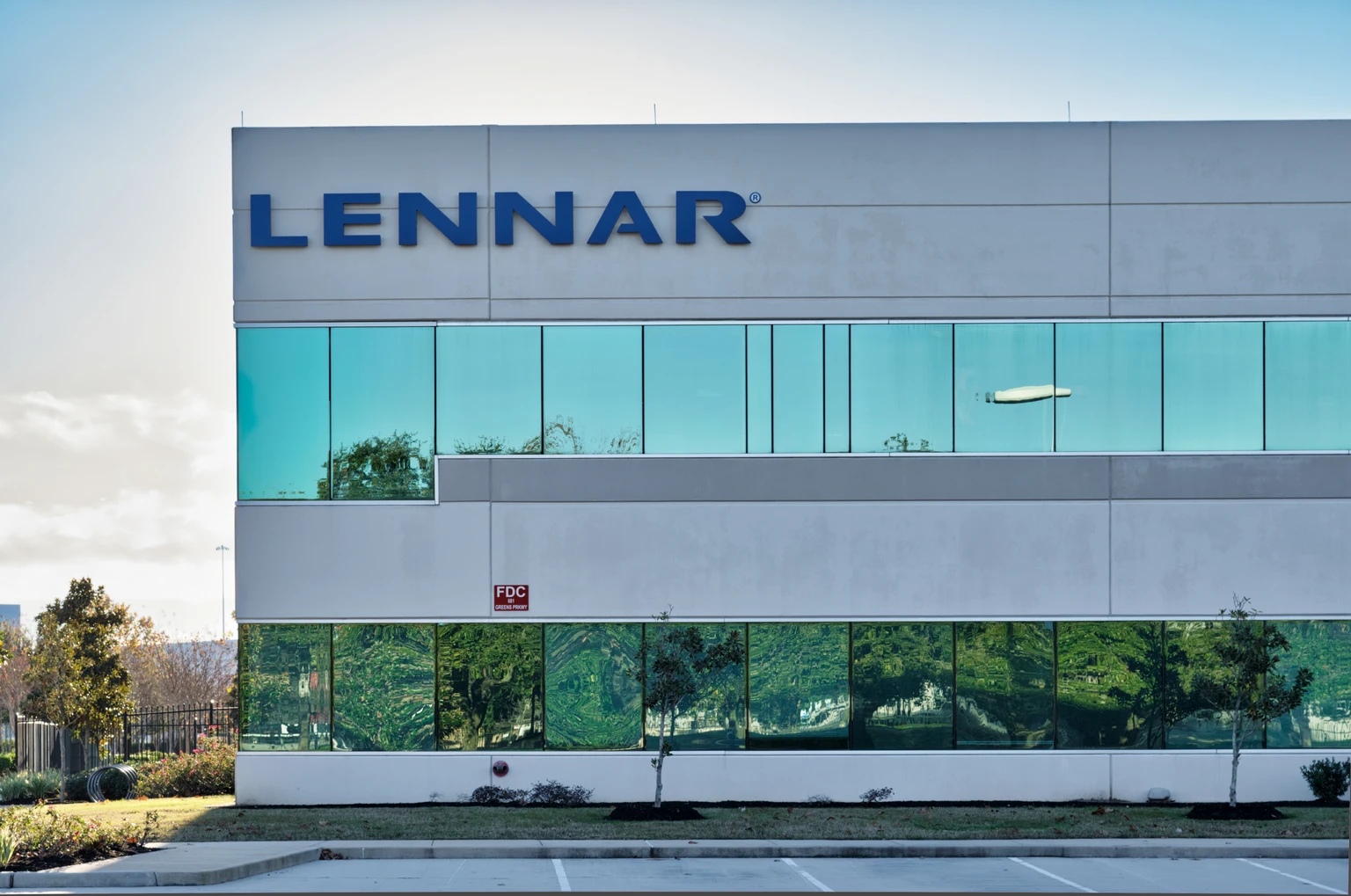
Lennar office building exterior in Houston, TX.

This article was written by

A financial researcher and avid investor with a keen eye for innovation and disruption, as well as growth buy-outs and value stocks. Keeping an eye on the pace of high tech and early growth companies, I write about current events and the biggest news surrounding the industry, and strive to provide readers with ample research and investment opportunities.

Analyst’s Disclosure: I/we have no stock, option or similar derivative position in any of the companies mentioned, but may initiate a beneficial Short position through short-selling of the stock, or purchase of put options or similar derivatives in LEN over the next 72 hours. I wrote this article myself, and it expresses my own opinions. I am not receiving compensation for it (other than from Seeking Alpha). I have no business relationship with any company whose stock is mentioned in this article.

Seeking Alpha’s Disclosure: Past performance is no guarantee of future results. No recommendation or advice is being given as to whether any investment is suitable for a particular investor. Any views or opinions expressed above may not reflect those of Seeking Alpha as a whole. Seeking Alpha is not a licensed securities dealer, broker or US investment adviser or investment bank. Our analysts are third party authors that include both professional investors and individual investors who may not be licensed or certified by any institute or regulatory body.

Advertisement
Continue Reading

Business

Waaree Energies shares gain 2% after company bags 2 GW solar module order

Published

on

Waaree Energies shares gain 2% after company bags 2 GW solar module order
Waaree Energies shares gained 1.71% to touch an intraday high of Rs 2,541.80 during Tuesday’s trading session after the company received an order on September 21, 2026, to supply 2 GW of solar modules to a renowned domestic customer, which is a leading solar developer.

According to the company’s exchange filing, the order is a one-time contract, with the supply of solar modules scheduled across FY27 and FY28. The company did not disclose the commercial value of the order.

The order has been awarded by a domestic entity and involves the supply of 2 GW of solar modules. Waaree Energies said that neither its promoter group nor group companies have any interest in the entity awarding the order.

The company also clarified that the order does not fall under related-party transactions.

Advertisement

The latest order adds to Waaree Energies’ order visibility as demand for solar modules and renewable energy infrastructure continues to grow in India.

Waaree Energies Share Price, Valuation and Technical Indicators

Share price performance: Waaree Energies shares have remained subdued in recent weeks. The stock has declined around 6% over the past month and is down nearly 26% over the last one year. The company currently has a market capitalisation of around Rs 72,747 crore, while its 52-week high stands at Rs 3,718.80.
On the valuation front, Waaree Energies has a price-to-earnings (P/E) ratio of 19.3, while its price-to-sales (P/S) ratio stands at 3.37 and price-to-book (P/B) ratio at 4.91.From a technical perspective, Waaree Energies shares are currently trading below seven out of eight Simple Moving Averages (SMAs), indicating weakness across several key moving-average levels.

In the June 2026 quarter, Foreign Institutional Investors (FIIs) increased their stake in the company from 7.06% to 8.57%, while mutual fund holdings declined marginally from 2.98% to 2.81% during the same period.

Disclaimer: The views/recommendations mentioned in this article, wherever applicable, are those of the respective SEBI-registered Research Analyst/brokerage and have been reproduced/reported with due attribution. They should not be construed as the views or recommendations of The Economic Times Digital or the journalist. Readers are advised to consider the original research report and make their investment decisions based on their own assessment. Brokerage disclaimers here

Advertisement
Continue Reading

Business

McDonald’s (MCD) hosts investor day

Published

on

McDonald's (MCD) hosts investor day

McDonald’s Chris Kempczinski speaks about fresh beef expansion at a McDonald’s event in Oak Brook, Illinois.

Richa Naidu | Reuters

McDonald’s is expected to share more details about its new strategy to win back diners at its investor day on Wednesday in Chicago.

The company unveiled its new global growth plan, called McDonald’s > NEXT, in June at its biennial worldwide convention for franchisees. Pillars of the strategy include a new restaurant design, better-tasting food and drinks and consumer-led innovation. But executives have otherwise offered few details, holding back until Wednesday’s event.

Advertisement

Nearly three years after McDonald’s previous investor day, the presentation comes after McDonald’s U.S. business disappointed in its most recent quarter. The chain’s same-store sales increased just 0.8%, and traffic to its restaurants fell.

CEO Chris Kempczinski said that the problems were due to shortcomings in execution, like a mixed implementation of its value offerings, rather than issues with the chain’s overall strategy. Skye Anderson, who was tapped as president of McDonald’s U.S. business in the wake of the weak quarter, will likely speak on Wednesday.

Kempczinski, Anderson and the rest of the McDonald’s executive team will have to win over investors, who are increasingly skeptical that the fast-food giant can win over diners in the near term.

Over the past 12 months, the stock has fallen 18%, dragging McDonald’s market value down to about $175 billion. The S&P 500 has climbed 16% in the same period, as optimism about artificial intelligence has offset concerns about the financial health of consumers.

Advertisement

Here’s what McDonald’s presentation is expected to cover:

1) Value strategy

Over the past two years, value has become all-important to restaurants, which are competing over a smaller pool of customers who care about both price and experience. While chains like Taco Bell and Chili’s have thrived, McDonald’s has struggled recently as its value offerings got lost among its other promotional messages.

Plus, its franchisees have pushed back against discounts, which grow sales but eat into operators’ profits, especially as high beef prices raise expenses. Only about two-thirds of McDonald’s U.S. franchisees implemented its recent “under $3 menu,” executives said in August. For its part, McDonald’s lets franchisees set their own prices, but the company assesses how operators’ menu prices help deliver value.

Analysts expect that McDonald’s will continue to emphasize value, and franchisees’ cooperation will be key to its success.

Advertisement

“We expect MCD to use this event to make it clear to franchisees that adherence to pricing recommendations will be a key factor in evaluating agreement renewals,” Citi Research analyst Jon Tower wrote in a note to clients with his investor day predictions.

Tower also cut his price target for the company to $310 per share from $345 a share, citing investor concerns about franchisees’ buy-in for the company’s overall strategy.

2) Menu updates

A McDonald’s in LaBelle, Florida, Feb. 7, 2026.

Bloomberg | Bloomberg | Getty Images

Advertisement

3) Restaurant remodels

Roughly every decade, McDonald’s mandates that franchisees remodel their restaurants to fit new aesthetic guidelines and improve their technology and equipment.

And it looks like another round of restaurant renovations is coming as part of the growth strategy. At the convention, franchisees got the first look at the new restaurant design.

Typically, McDonald’s chips in some support for franchisees who are remodeling their restaurants. While upgraded locations usually generate higher sales, operators have to fund the remodels at a time when borrowing costs are elevated. And thanks to tariffs and high energy prices, construction costs are increasing, too.

As a result of the remodel program, McDonald’s capital expenditures could increase by $600 million to $900 million in 2027 and 2028 from its projected spending in 2026, according to a research note from BMO Capital Markets analyst Andrew Strelzik. But executives are expected to share the company’s own projected costs for the remodel program at investor day.

Advertisement

4) Cost cuts

While McDonald’s will likely spend more on capital expenditures over the next two years, the company will likely try to cut costs elsewhere.

McDonald’s will share its outlook for general and administrative spending during investor day, Borden said in August.

McDonald’s could target G&A spending to be less than 2% of its systemwide sales, down from its current goal of 2.2%, Bernstein analyst Danilo Gargiulo wrote in a note to clients. In recent years, the company’s workforce has shrunk as part of a reorganization effort.

Indirectly, McDonald’s will also cut costs by refranchising some of its company-owned restaurants.

Advertisement

Selling locations to franchisees means that McDonald’s will not be responsible for the operational costs or capital expenditures required to run a restaurant successfully. The company will also share more details about those plans at the investor day, according to Borden.

Continue Reading

Business

DoorDash customer goes viral after picking up order at driver’s crash scene

Published

on

DoorDash customer goes viral after picking up order at driver's crash scene

A man went viral on social media after filming himself picking up a DoorDash order at the scene of a crash involving his delivery driver.

Glenn Ndibnu began recording as he arrived at the wreck on Church Road in Bowie, Maryland, where multiple ambulances were present.

Advertisement

“I DoorDashed some food, and my DoorDasher told me he got in a car accident, and he was like, ‘I can come meet him and get the food from him,’” he explained in the video.

DoorDasher crashes on Maryland road

Glenn Ndibnu records himself driving to where his DoorDasher got into an accident. (@thegaragegrind via Storyful / Storyful)

CALIFORNIA WOMAN CHASED, FATALLY SHOT BY ILLEGAL IMMIGRANT DOORDASH DRIVER WHO STALKED HER FOR MONTHS: DHS

He then expressed guilt over crossing the road to go pick up his food after what happened to his driver.

“I think that’s my food right there. Is it f—ed up for me to walk across and pick it up?” Ndibnu said. “I look so f—ed up right now about to go get this food.”

Advertisement

Ndibnu ultimately got his food and apologized to the driver, William Koroma, who later launched a GoFundMe campaign to help replace the car that was totaled in the crash.

Man comes up to DoorDasher

Glenn Ndibnu walks up to William Koroma, the DoorDash driver who crashed. Koroma tells Ndibnu he can pick up his food from the sidewalk. (@thegaragegrind via Storyful / Storyful)

DOORDASH GETS FAA APPROVAL FOR ITS OWN DELIVERY DRONES

In subsequent posts on Instagram, Ndibnu linked to the online fundraiser.

“My vehicle experienced brake failure, and I was involved in a major accident,” Koroma wrote on the GoFundMe page. “My car was totaled, and I am deeply grateful that I survived and that no one else was seriously injured.”

Advertisement

He added: “Since the accident, I have been facing several challenges at once. Losing my vehicle has left me without reliable transportation, and I have also lost my job.”

Damaged car

A picture of the totaled car from William Koroma’s GoFundMe page. (GoFundMe / Unknown)

CLICK HERE TO DOWNLOAD THE FOX NEWS APP

Koroma did not elaborate on his injuries, but said he has also been hit with medical bills.

The GoFundMe has raised nearly $14,000 as of Tuesday morning.

Advertisement
Continue Reading

Trending

Copyright © 2025