









Connect with us

Business

Somerset cider makers left with very few apples after heatwaves

Published

on

A young woman wearing a black T-shirt stands next to a line of trees in an apple orchard on a sunny day. The grass is dry and yellow and she has her right arm raised with her hand holding a branch which has small green apples on the end

Somerset’s cider apple growers know this is not a freak year.

“What we used to think of as extreme weather, we increasingly consider as normal.” says Mike Kendon, a climate scientist at the Met Office.

But what can an apple grower do about it?

Neil MacDonald is now watering newly planted trees.

Advertisement

“Five years ago you would just dig a good hole and leave nature to get on with it,” he smiles.

“Now you can’t get away with that, you have to irrigate young trees or they die.”

But irrigation for hundreds of acres of cider orchards is “just not viable”, he said. Farmers who grow eating apples for supermarkets command higher prices for their fruit, so traditionally they have invested in irrigation systems.

Cider growers are now having to rethink their calculations.

Advertisement

Most fundamentally of all, climate change may actually change the taste of West Country cider.

One of the main varieties that gives Somerset cider its bittersweet taste is Dabinett. Several growers have found these trees producing very few apples this year, not because of the drought, but the mild winter.

“Dabinett needs a cold snap,” MacDonald explains. “We just didn’t get the cold winter days this year or last, so it’s not producing.”

He is now grafting other varieties onto his Dabinett trees, plants that fare better in hot dry weather.

Advertisement

As our climate changes, the very taste of Somerset cider may change too.

Continue Reading
Click to comment

You must be logged in to post a comment Login

Leave a Reply

Business

FACT, Paradeep Phosphates, RCF, other fertiliser stocks rally up to 13%. Here’s why

Published

on

FACT, Paradeep Phosphates, RCF, other fertiliser stocks rally up to 13%. Here's why
Shares of fertiliser companies bucked the overall muted market sentiment and rallied up to 13% on Tuesday after Russian President Vladimir Putin assured India of uninterrupted fertiliser supplies.

Fertilisers and Chemicals Travancore (FACT) shares sharply rallied 13% to cross Rs 887 apiece on Tuesday morning, while Rashtriya Chemicals and Fertilisers (RCF) shares surged around 8%. Paradeep Phosphates shares rallied over 7%, while Chambal Fertilisers & Chemicals shares gained around 4%.

Russia assures India of uninterrupted supply of fertilisers

Russia on Monday assured India of uninterrupted supply of energy and fertilisers amid disruption caused by the Middle East conflict, as External Affairs Minister S Jaishankar met President Vladimir Putin. “We are doing everything we can to fully meet the needs of Indian farmers and the agricultural sector, increasing these supplies and standing ready to continue doing so,” Putin was quoted as saying by the state-run TASS news agency during his meeting with Jaishankar.

Advertisement

“Prime Minister Narendra Modi looks forward to meeting you at the SCO summit, then welcoming you in India for the BRICS Summit, and in due course, as per your mutual convenience, having the annual summit…So, we have, Excellency, I think a very strong picture of cooperation,” Jaishankar said.

The Russian President highlighted that Jaishankar’s visit underscored the level of relations Russia and India had built over decades. He said cooperation was underway in virtually all areas, including at the level of the two governments, parliaments and businesses, according to TASS.


Also read |India buys its most expensive LNG in years as war upends market

Govt’s higher spending on fertiliser subsidy

The elevated global prices of finished products and LNG have led to the government using up around 56% of the annual fertiliser subsidy in less than five months into the new financial year 2026-27, the Times of India reported.The higher spending, at Rs 99,000 crore, is being seen as an indication that the overall expenditure on fertiliser subsidy is set to cross the estimate of Rs 1.77 lakh crore in FY27, the report further said, adding that a large chunk of the subsidy is being spent on imports and domestic production of urea.

Notably, this comes after India’s production and imports of NP/NPK fertilisers fell sharply in the April-June quarter, as the Middle East conflict inflated prices of key raw materials, raising concerns over nutrient availability for the ongoing crop sowing season. Production of these complex fertilisers fell 28% YoY to 19.2 lakh tonnes from 26.64 lakh tonnes a year earlier, while imports slipped 48.5% to 4.9 lakh tonnes from 9.54 lakh tonnes, said industry officials, citing data from the Fertiliser Association of India (FAI).

Advertisement

In April, the government approved a 10-21% hike in nutrient subsidy rates for the 2026 kharif season, taking total subsidy outlay to Rs 41,534 crore. However, fertiliser manufacturers say the revision has been overtaken by subsequent increases in global input costs.

Also read | India’s fertiliser imports, production plunge as West Asia war drives costs

(With inputs from agencies)

(Disclaimer: Recommendations, suggestions, views and opinions given by the experts are their own. These do not represent the views of The Economic Times.)

Advertisement
Continue Reading

Business

When Career Values Shape a Business

Published

on

When Career Values Shape a Business

The character of a business often shows up in small decisions.

Who does it want to serve? What should customers experience? Which standards are non-negotiable? And what happens when the business starts to grow?

Those questions help explain the development of Honnas Veterinary.

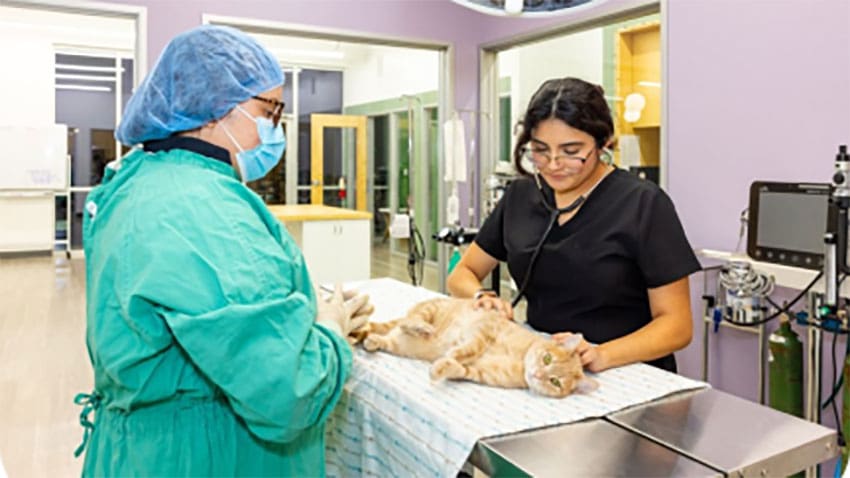
Dr. Cheri Honnas founded the Austin, Texas, veterinary practice in 2023. It was a career objective that gave her an opportunity to put her own ideas about veterinary care into practice.

Rather than defining the business through one feature, Honnas Veterinary was built around several connected priorities. Accessibility mattered. Inclusivity mattered. The clinic environment mattered. So did maintaining a high standard of care.

Advertisement

“We believe in inclusivity and a high standard of vet care for all,” Honnas Veterinary says.

In a little more than two years, those principles have moved from an early business plan into a growing veterinary organization.

What Was the Goal Behind Honnas Veterinary?

Becoming a veterinarian and owning a veterinary practice are two different career challenges.

One is centered on practicing medicine. The other adds hiring, operations, customer experience, leadership, and the responsibility of defining how an organization works.

Advertisement

For Dr. Honnas, starting a practice created the chance to shape those elements around a clear purpose.

That purpose was “to provide excellent and accessible vet services from a welcoming clinic in the heart of Austin.”

The practice opened in 2023 and carries Dr. Honnas’ own last name.

That personal connection is fitting. Building the business meant putting a professional reputation behind the standards the practice wanted to represent.

Advertisement

Those standards would soon influence decisions throughout the clinic.

Turning Professional Values Into Everyday Decisions

Business values can easily become words on a website.

The harder task is making them visible.

At Honnas Veterinary, accessibility is one example. The practice offers a free new patient exam, giving Austin pet owners another way to begin establishing veterinary care for their animals.

Advertisement

The clinic is also female-owned and locally owned.

Inclusivity is another stated priority.

Rather than viewing a welcoming environment as separate from veterinary medicine, Honnas Veterinary has made it part of how the practice defines good service.

Its stated objective remains “excellent and accessible vet care.”

Advertisement

That provides a simple standard against which everyday business decisions can be considered.

Why Honnas Veterinary Focuses on the Clinic Environment

Physical surroundings are another part of the Honnas Veterinary model.

The practice operates from a state-of-the-art clinic in the heart of Austin. Honnas Veterinary describes its combination of priorities as “compassionate care and beautiful facilities.”

That wording says something about the larger business philosophy.

Advertisement

A veterinary clinic has a functional purpose, but function is not the only thing clients experience.

People notice whether a space feels welcoming. They notice how their animals react. They also remember how they felt during an appointment that may have involved uncertainty or concern.

Honnas Veterinary’s Fear Free certified staff adds another layer to this approach.

It reflects attention to the fear, anxiety, and stress animals may experience around veterinary visits.

Advertisement

In this model, the surroundings and experience are not intended to replace medical standards. They support the broader way the practice wants to deliver care.

What Happens When a Values-Led Business Grows?

Honnas Veterinary soon faced a different question: how do those values work at a larger scale?

The practice now has five doctors and sees more than 1,500 patients each month.

“We have grown significantly in just over two years,” Honnas Veterinary says.

Advertisement

Growth changes the work of a founder.

Early on, a business owner can influence nearly every part of an organization directly. As a team expands, the founder’s ideas have to become shared standards.

That is where culture becomes important.

A welcoming environment cannot depend entirely on Dr. Honnas. Neither can accessibility, inclusivity, or compassionate service. Those ideas have to become recognizable across a larger practice.

Advertisement

Honnas Veterinary has also received award nominations during this period of development.

The larger test, however, is maintaining consistency as more patients and professionals become part of the organization.

What Can Entrepreneurs Learn From Dr. Cheri Honnas?

The career story behind Honnas Veterinary offers a practical lesson about entrepreneurship.

Not every business needs to be built around disrupting an industry.

Advertisement

Sometimes leadership means having clear professional standards and creating an organization where those standards can be applied consistently.

Dr. Honnas started with ideas about the kind of veterinary environment she wanted to create. She then connected those ideas to tangible choices involving the clinic, accessibility, certification, ownership, and culture.

The numbers came later.

Five doctors and more than 1,500 patients per month show how much the organization has changed since 2023. But scale is only one measure of its development.

Advertisement

The deeper leadership challenge is preserving the principles that existed before that growth.

For Honnas Veterinary, the guiding idea remains “a high standard of vet care for all.”

That makes its story less about one big idea and more about dozens of smaller decisions.

Together, those decisions turned professional values into a working business.

Advertisement

Continue Reading

Business

At Close of Business Podcast August 25 2026

Published

on

At Close of Business Podcast August 25 2026

Sam Jones and Nadia Budihardjo discuss Parkerville Children and Youth Care’s new Grove School.

Continue Reading

Business

British firm to build US nuclear-powered cargo ships

Published

on

British firm to build US nuclear-powered cargo ships

A British start-up based on a west London trading estate is to help the American government build a fleet of nuclear-powered cargo ships. A public private partnership between the US Maritime Administration and Core Power, which is based in Chiswick Park, was signed in Washington DC on Monday.

The agreement, the first of its kind, aims to accelerate construction of a US-flagged fleet of rapid nuclear-powered merchant vessels, and to revive a US shipbuilding industry that has been decimated by cheaper competitors from China in recent years.

Core Power says it has raised 200 million dollars from backers including Mitsui, Mitsubishi and Sumitomo, a trio of Japanese conglomerates, to help it develop the nuclear technology. It is targeting first construction of its nuclear propulsion systems in 2028, and will work with traditional shipbuilders to make the vessels’ hulls.

“China is already moving toward nuclear-powered commercial shipping,” Mikal Boe, chief executive of Core Power, said. “America does not regain maritime strength by building a better version of yesterday’s ship. Government can set the direction and co-ordinate; private industry must move the money and the steel. We are honoured to be working with the US Maritime Administration on this landmark programme.”

The company behind the deal

Core Power was founded in 2018 by Boe, a Norwegian shipping and commodities executive. In 2024, the most recent year for which its accounts are available, it made an operating loss of £19.4 million and employed 41 people. Its British arm, Core Power (UK) Ltd, is registered at an address on Chiswick High Road and last filed accounts made up to 31 December 2024, according to Companies House.

Advertisement

The partnership follows an initiative launched in May by Sean Duffy, the US transportation secretary, under which the Maritime Administration issued a request for information on small modular reactors for commercial shipping alongside the US Coast Guard, the Nuclear Regulatory Commission and the Department of Energy. That call for industry input closed on 5 August.

Stephen Carmel, administrator of the Maritime Administration, said: “President Trump has made it clear that American energy dominance and maritime strength go hand in hand. This framework ensures that the United States leads the world with a secure US-flagged fleet.”

Why nuclear shipping has never taken off

Nuclear power has been used for decades in military submarines, but it has struggled to gain traction in commercial shipping, partly because of high costs but also safety concerns. Its proponents have argued that advances in the design of onboard nuclear reactors have improved safety, while the sheer power of nuclear-powered ships could offset the higher build costs.

Boe estimated that nuclear-powered vessels could move up to 75 per cent faster than traditional fossil fuel-powered ships, carry more cargo and be exempt from costly environmental taxes. Russia, through its use of nuclear-powered icebreakers, is currently the nation with the largest nuclear shipping fleet.

Advertisement

Regulation and financing of this nascent industry remains a hurdle, but the US government said it would work with Core Power to develop an “actionable commercial pathway”, including providing clarity on how insurance of nuclear-powered ships will work.

“Nuclear propulsion is a serious commercial opportunity, but it must be approached as a complete system: safe, secure, licensable and investable,” Carmel said.

What it means for British business

Nothing in the agreement lands directly on a UK balance sheet. The vessels will be US-flagged, the hulls will be built by shipbuilders working with the American government, and the jobs that follow will sit in American yards. What sits in west London is the design work and the intellectual property, which is a familiar pattern for British engineering firms that scale by selling into someone else’s industrial programme.

The freight economics matter more. Companies that import or export by sea have already seen how quickly a change in shipping conditions feeds through to their costs, with Red Sea disruption pushing container prices and delivery times up sharply for UK exporters and manufacturers. Boe’s claims about speed, capacity and tax exemption, if they hold, would change that calculation. They are claims about ships that do not yet exist, however, and the first propulsion systems are not due to be built until 2028 at the earliest.

Advertisement

There is a supply chain point too. Britain has been building an industrial base around compact reactors, from Newcleo’s plan to raise £900 million for a fleet of small reactors to Holtec’s choice of South Yorkshire for a mini-reactor factory. The engineering, fabrication and licensing skills that a maritime reactor programme needs overlap heavily with the ones those projects are already competing for, which is a recruitment problem for smaller suppliers and an opportunity for firms that can get qualified early.

For now, the practical test is regulatory rather than technical. Until insurers, flag states and port authorities agree how a commercial reactor at sea is licensed and covered, no cargo owner can plan around it.


Amy Ingham

Amy Ingham

Amy Ingham is a reporter at Business Matters, covering UK business news with a focus on breaking news, business policy, late payments and insolvency. She joined the magazine in 2026 after completing the NCTJ Diploma in Journalism at Harlow College’s journalism school. Her recent reporting includes British Steel’s nationalisation and its impact on SME suppliers, the decline in late payments by large firms, and Insolvency Service director disqualifications. Reach her at aingham@cbmeg.co.uk.

Advertisement

Continue Reading

Business

Entero Healthcare shares gain 15% in 2 days after Prashant Jain’s 3P Investment picks stake in block deal

Published

on

Entero Healthcare shares gain 15% in 2 days after Prashant Jain’s 3P Investment picks stake in block deal
Shares of Entero Healthcare Solutions rallied as much as 6% to their day’s high of Rs 1,625 on the BSE on Tuesday after Prashant Jain-owned 3P Investment Managers acquired a 2.5% stake in the healthcare product distribution and supply chain platform through open market transactions on August 24. With today’s gain, the stock is up 15% in two sessions.

The 3P India Equity Fund 1M and 3P India Equity Fund 1 schemes, managed by 3P Investment, bought 10.88 lakh shares of Entero Healthcare for Rs 104.99 crore. The acquisition represents 2.5% of the company’s paid-up equity, stock exchange data showed.

The shares were purchased from Prasid Uno Family Trust at Rs 1,377.8 apiece.

Surbhi Singh, through Prasid Uno Family Trust, held a 10.45% stake, equivalent to 45.5 lakh shares, in Entero Healthcare as of the June 2026 shareholding pattern.

Advertisement

Entero Healthcare Q1 results

Faridabad-based Entero Healthcare Solutions reported a 38% year-on-year increase in consolidated revenue from operations to Rs 1,940.5 crore for the quarter ended June 30, 2026, compared with Rs 1,403.8 crore in the year-ago period.


Consolidated profit after tax (PAT) rose 72% year-on-year to Rs 52.1 crore, while profit before tax (PBT) increased 85% to Rs 67.1 crore. Profit attributable to owners of the company grew 37% year-on-year to Rs 38.2 crore.
The company’s operating performance also improved during the quarter, with EBITDA rising 94% year-on-year to Rs 97 crore. EBITDA margin expanded to 5% from 3.6% in the corresponding quarter last year.Entero said the MedTech market is large and growing, and has synergies with its pharmaceutical distribution business. It also sees significant consolidation potential in the segment, with distributors playing a high value-add role and having a higher margin profile than distributors in the pharmaceutical market.

The company’s existing MedTech business and acquisitions focus on the IVD and Cardiology/Orthopaedic devices segments, which it described as large and high-growth. The company has outlined these factors as the strategic rationale for its MedTech acquisitions.

Entero Healthcare share price performance

Entero Healthcare shares have gained more than 21% over the past month and around 32% so far this year. Over the past six months, the stock has climbed nearly 50%.

Advertisement

(Disclaimer: Recommendations, suggestions, views and opinions given by the experts are their own. These do not represent the views of The Economic Times)

Continue Reading

Business

Xanadu: Great Science, Too Much Success Priced In

Published

on

Rigetti: The Market Is Pricing In A Future That Hasn't Arrived Yet (NASDAQ:RGTI)

Xanadu: Great Science, Too Much Success Priced In

Continue Reading

Business

‘Equal to Opera House’, Zempilas on Aboriginal Cultural Centre

Published

on

‘Equal to Opera House’, Zempilas on Aboriginal Cultural Centre

State opposition leader Basil Zempilas says the slow-moving $400 million Aboriginal Cultural Centre development should be “equal to the Sydney Opera House” and the government should consider moving the city site if plans had not progressed.

Continue Reading

Business

US oil industry giant to start test drilling at Cornish lithium site

Published

on

Business Live

Halliburton will help estimate how much lithium there is in the huge body of granite below ground

Cornish Lithium says its projects in the Duchy could boost Cornwall’s economy by £3.8bn

Cornish Lithium says its projects in the Duchy could boost Cornwall’s economy by £3.8bn(Image: Cornish Lithium)

The company behind a huge lithium mining project in Cornwall has awarded a well drilling contract to a US oil industry giant as it moves towards commercial production.

Cornish Lithium, which last year became the first business to produce lithium hydroxide mined and refined in the UK, has appointed Houston-based Halliburton to provide well services for its Cross Lanes project near Redruth.

Advertisement

The project is examining the site’s potential for the commercial production of lithium – a critical component of lithium-ion batteries used in modern-day electronics including electric vehicles and smartphones.

Under the contract, Halliburton will provide subsurface modelling and well engineering, as well as equipment and services for the drilling and testing of two appraisal wells.

The work will help to estimate the amount of lithium contained within the geothermal system of the Cornubian Batholith – the large body of granite formed around 280 million years ago that lies beneath much of Cornwall and Devon.

According to Cornish Lithium, the commercial-scale wells will allow it to carry out extended testing to validate sustainable production conditions and explore the potential to harness geothermal heat for local homes and businesses.

Advertisement

Data gathered from the wells will inform the project’s final investment decision, while supporting the company’s wider ambition to develop a network of modular geothermal lithium production hubs across Cornwall, Cornish Lithium said.

Cornwall is home to the largest lithium deposits in Europe and has enough lithium to power at least 50 per cent of all EVs expected to be produced in the UK by 2030.

Martin Geissler, VP general manager for Lithium in Geothermal Waters at Cornish Lithium, said: “Halliburton brings deep industry expertise and knowledge, and will support the drilling and testing phases of our project, from well design to construction.

From left: Cornish Lithium Chief Geologist Adam Matthews, VP and General Manager (LiGW) Martin Geissler, Halliburton VP Europe Rachel Johnson, and Low Carbon Solutions Manager – Europe, Eurasia, and Sub-Saharan Africa, Rebecca Lee

From left: Cornish Lithium Chief Geologist Adam Matthews, VP and General Manager (LiGW) Martin Geissler, Halliburton VP Europe Rachel Johnson, and Low Carbon Solutions Manager – Europe, Eurasia, and Sub-Saharan Africa, Rebecca Lee(Image: Cornish Lithium)

“Their team was highly proactive throughout the tender process, demonstrating a clear understanding of our requirements and a strong commitment to supporting the project’s objectives. We look forward to working with Halliburton and other collaborators as we continue to advance the project, support Cornwall’s proud mining heritage, and create high-quality jobs and long-term economic growth for the region.”

Advertisement

The Cross Lanes Geothermal Lithium Project is supported by a grant of £7.2m through the UK Government’s DRIVE35 programme to part-fund Cornish Lithium’s £14.5m programme of drilling and testing.

DRIVE35 is delivered by the Department for Business, Innovation, Science and Trade in partnership with the Advanced Propulsion Centre UK and Innovate UK.

Cornish Lithium first drilled and tested an exploration borehole at Cross Lanes in 2023, which confirmed that lithium‑rich geothermal waters circulate naturally through its underlying rock formations.

Jean-Marc Lopez, senior vice president, Europe, Eurasia, and Sub-Saharan Africa region at Halliburton, added: “Halliburton will support Cornish Lithium on the well services and testing scope for the Cross Lanes Geothermal Lithium Project.

Advertisement

“With more than 70 years of geothermal development experience and over a century of well delivery expertise, I expect our teams will execute the drilling programme safely and efficiently to support Cornish Lithium’s technical and operational objectives.”

Continue Reading

Business

Two Harbors: More Downside Than Upside For The Series A Preferred Shares (TWO.PR.A)

Published

on

Two Harbors: More Downside Than Upside For The Series A Preferred Shares (TWO.PR.A)

This article was written by

With a banking trading background, Binary Tree Analytics (‘BTA’) aims to provide transparency and analytics in respect to capital markets instruments and trades. BTA focuses on CEFs, ETFs and Special Situations, and aims to deliver high annualized returns with a low volatility profile. We have been investing for 20 years after obtaining a Finance major at a top university.

Analyst’s Disclosure: I/we have a beneficial long position in the shares of TWO.PR.A either through stock ownership, options, or other derivatives. I wrote this article myself, and it expresses my own opinions. I am not receiving compensation for it (other than from Seeking Alpha). I have no business relationship with any company whose stock is mentioned in this article.

Seeking Alpha’s Disclosure: Past performance is no guarantee of future results. No recommendation or advice is being given as to whether any investment is suitable for a particular investor. Any views or opinions expressed above may not reflect those of Seeking Alpha as a whole. Seeking Alpha is not a licensed securities dealer, broker or US investment adviser or investment bank. Our analysts are third party authors that include both professional investors and individual investors who may not be licensed or certified by any institute or regulatory body.

Advertisement
Continue Reading

Business

eDreams Prime Poland rollout goes to full scale

Published

on

eDreams Prime Poland rollout goes to full scale

eDreams ODIGEO has moved its Prime travel subscription into full scale expansion in Poland, adding another market to a rollout that the company says will take it beyond 13 million subscribers by March 2030.

The Barcelona based group, listed in Madrid as EDR and traded over the counter in the United States as EDDRF, announced the move on 24 August. It said Prime had already delivered a strong attach rate in the country, with a high share of customers choosing to become subscribers, alongside what it described as a highly competitive member offering. Those results, the company argued, prove that it can scale its subscription proposition beyond its established Western European base.

Poland is an unusual test case. eDreams pointed to the country’s appetite for paid membership as the reason it chose to commit: the largest domestic e-commerce platform counts more than 7.5 million active subscribers to its membership programme in a country of roughly 38 million people. Paid membership, in other words, is already an ordinary part of consumer life there rather than something a travel brand has to explain from scratch.

The commercial prize is sizeable by regional standards. Poland’s online travel market is worth 3.4 billion euros, of which the online travel agent segment accounts for 2.5 billion euros and is growing at around 10 per cent a year, making it one of the largest and fastest growing online travel agency markets in Central and Eastern Europe, according to figures cited by the company.

The 2030 target behind the move

The Poland launch sits inside a strategic roadmap the company presented in November 2025, in which international expansion is one of the main levers on the path to more than 13 million Prime members. eDreams recently scaled the same proposition in Argentina and Mexico, where it says performance has met expectations, and it is also extending the subscription across a broader range of travel products as it builds towards what it calls a global, multi product subscription platform. The company said its existing financial targets and long term guidance are unchanged.

Advertisement

Dana Dunne, chief executive at eDreams ODIGEO, said: “We are delighted to take Prime to full scale in Poland. The strong appetite Polish customers have shown for Prime, echoing what we have seen in other recently scaled markets, such as Argentina and Mexico, proves that our subscription model travels well beyond our home markets. This is our strategy delivering exactly as planned. We look forward to bringing the benefits of Prime to many more Polish travellers as we progress towards our goal of more than 13 million members by March 2030.”

Why UK subscription businesses should be watching

For British firms, the interest is less in Polish flight bookings than in the model itself. Recurring revenue has become one of the most copied growth strategies in consumer and business to business markets alike, and the questions eDreams is answering in Poland, whether members join, whether they stay, whether the benefits are worth the fee, are the same ones facing any UK company weighing up which subscription model actually fits its customers. The pattern eDreams describes, proving demand in a market before committing to full scale, is also the textbook approach to entering a new territory without overcommitting capital.

The regulatory backdrop in Britain is about to change, however. The Department for Business and Trade says there are around 155 million active subscriptions in the UK, worth roughly 26 billion pounds a year in consumer spending, and a new subscription contracts regime under the Digital Markets, Competition and Consumers Act 2024 is expected to commence in spring 2027. Under those rules, traders will have to give clear information before sign up and let customers cancel online if they signed up online, send reminders before trials and long contracts renew, offer a 14 day cooling off period after those renewals, and refund customers within 14 days.

The government estimates the changes will save consumers around 400 million pounds a year, a figure that comes straight out of subscription revenues somewhere. Any UK business building a Prime style membership will be doing so under tighter rules on how easily people can leave it.

Advertisement

Amy Ingham

Amy Ingham

Amy Ingham is a reporter at Business Matters, covering UK business news with a focus on breaking news, business policy, late payments and insolvency. She joined the magazine in 2026 after completing the NCTJ Diploma in Journalism at Harlow College’s journalism school. Her recent reporting includes British Steel’s nationalisation and its impact on SME suppliers, the decline in late payments by large firms, and Insolvency Service director disqualifications. Reach her at aingham@cbmeg.co.uk.

Advertisement
Continue Reading

Trending

Copyright © 2025