
Business
South Indian Bank shares tumble 9% after four-day rise; RBI clears Mahesh Pai as MD & CEO


The stock had gained about 30% over the past three months, driven by optimism over leadership clarity and improving sentiment toward the banking sector.
Meanwhile, the bank said the Reserve Bank of India (RBI) has approved the appointment of Mahesh Muralidhar Pai as its Managing Director & Chief Executive Officer for a three-year term, effective October 1, 2026.
In a regulatory filing, the bank said the RBI, through its letter dated July 7, 2026, conveyed its approval for Pai’s appointment. The proposal will be placed before the bank’s Board of Directors at its meeting scheduled for July 16, 2026. The appointment will subsequently be subject to shareholders’ approval in accordance with the provisions of the Companies Act, 2013, and the SEBI Listing Regulations.
Share Price Trend and Technical Indicators
South Indian Bank’s stock has delivered a strong performance in recent months, gaining around 30% over the past three months. Following Wednesday’s decline, the bank commands a market capitalisation of Rs 12,478 crore. The stock’s 52-week high stands at Rs 49.90.

On the technical front, the stock’s 14-day Relative Strength Index (RSI) is 66.2, indicating positive momentum while remaining below the overbought threshold of 70. Generally, an RSI reading below 30 is considered oversold, while a reading above 70 signals overbought conditions.
However, the trend remains mixed as the stock is trading below four of its eight key Simple Moving Averages (SMAs), reflecting some near-term technical weakness.
In terms of shareholding, Foreign Institutional Investors (FIIs) increased their stake in the bank to 24.21% in the March 2026 quarter, up from 20.94% in the previous quarter. Meanwhile, Mutual Funds trimmed their holdings marginally to 11.29% from 11.90% during the same period.
(Disclaimer: Recommendations, suggestions, views and opinions given by the experts are their own. These do not represent the views of Economic Times)

Starbucks on Wednesday raised its full-year outlook after reporting its fourth straight quarter of same-store sales growth.
For fiscal 2026, Starbucks now expects adjusted earnings per share in a range of $2.55 to $2.65, up from its prior outlook of $2.25 to $2.45 per share.
It now also projects global same-store sales will rise nearly 6% and U.S. same-store sales will climb more than 6%; the company was previously forecasting global and U.S. same-store sales growth of at least 5%.
“This was the quarter our momentum became truly measurable,” CEO Brian Niccol said in a video shared with the company’s earnings press release.
The coffee giant also reported quarterly earnings and revenue that topped analysts’ expectations.
Shares of the company jumped as much as 9% in extended trading.
Here’s what the company reported for the quarter ended June 28 compared with what Wall Street was expecting, based on a survey of analysts by LSEG:
- Earnings per share: 85 cents adjusted vs. 66 cents expected
- Revenue: $9.32 billion vs. $9.16 billion expected
The coffee giant reported fiscal third-quarter net income attributable to Starbucks of $1.05 billion, or 91 cents per share, up from $558.3 million, or 49 cents per share, a year earlier.
The company’s operating margins expanded to 13.6%, up from the year-ago period margins of 13.3%, thanks in part to tariff refunds. Starbucks did not say exactly how much it received in refunds.
“The refunds we received in Q3 largely offset related tariffs incurred in the first three quarters of fiscal 2026,” CFO Cathy Smith said on the company’s earnings conference call.
Excluding restructuring costs and other items, Starbucks earned 85 cents per share.
Net sales dropped 1% to $9.3 billion due to the company’s sale of a controlling stake in its China business. In November, Starbucks announced it was forming a joint venture with Boyu Capital, which would take over operations in the coffee chain’s second-largest market.
Although Starbucks’ overall revenue fell, its sales at stores open at least 13 months climbed 7.9%, topping Wall Street estimates of 6%, according to StreetAccount.
The coffee chain reported increases in both transactions and average check, showing that customers are returning to its cafes and spending more on their orders.
Under Niccol’s “Back to Starbucks” strategy, the company has focused on improving service and making cafes more welcoming in its home market. To do so, the chain has invested in labor and renovations to its coffee houses, earning some grumbling from investors. But the efforts seem to be paying off for Starbucks, which had seen its sales slump as it lost many of its loyal customers to competitors like Dutch Bros.
The company’s North American same-store sales increased 8.1% in the quarter. Traffic to those restaurants jumped 4.5%. With a 3.5% increase in average ticket, customers were also spending more on their orders, paying to modify their lattes and adding food items alongside their drinks.
In addition to improving its operations, Starbucks has also retooled its menu, cutting unpopular items and launching new drinks. Niccol said the chain would test “spritzers” — sparkling versions of its Refreshers — in select markets.
Refreshers have grown to become a $2 billion drink platform for Starbucks and often drive customers to its cafes during the afternoon, helping fuel business outside of the morning coffee rush. In the fiscal third quarter, revenue from Refreshers climbed by a double-digit percentage, executives said.
Outside of Starbucks’ home market, same-store sales rose 5.7%. With the formation of the China joint venture, roughly 90% of the company’s international locations are now licensed, according to Niccol. The asset-light model is often more attractive to investors, who like the long-term lift to earnings the structure usually brings.
During the quarter, Starbucks opened 175 net new stores and surpassed 1,000 cafe “uplifts,” reaching its fiscal 2026 goal ahead of schedule. Starbucks is now targeting at least 1,500 store renovations by the end of fiscal 2026 and accelerating its plans further in the next fiscal year.
The cafe makeovers cost roughly $150,000 on average and result in higher transactions, Niccol said on the company’s earnings conference call. The changes vary based on location, but generally customers can expect more seating, warmer lighting and dark wood paneling.
Smith also said that the company is assessing its North American store footprint, which could result in it shuttering more stores. In fiscal 2025, the company’s North America footprint shrank by 1% due to closures.
Correction: This story was updated to correct that Starbucks’ North American same-store sales rose 8.1%. A previous version misstated the figure.

Reiterating that the committee was committed to delivering the 2% target, Warsh noted that there was perhaps a misimpression among market participants and households and businesses that despite setting the inflation target at 2%, the Fed was more tolerable to higher inflation target, in what is known in economics as revealed preference. But the Board, during its meeting in the last two days, reiterated its commitment to the 2% target, he said.
Warsh noted that the focus of the committee was on trying to understand and identify the underlying inflation dynamics and shocks, and they were trying to understand to what extent these shocks were broadening in their effects and impact the prices that are quite far removed from it.
“Our goal is to have growth that is broadening and inflation that is becoming more limited,” he said, adding that he was sure that the views of the memebers would refine in this direction in the future.
Also read: US Federal Reserve keeps rates steady as Iran-driven inflation risks keep markets on edge
Warsh said forward guidance was more prudent in crisis situations not in benign conditions.
“Well, in crisis mode, that strikes me as a very prudent policy. But in more benign conditions, it strikes me as worth revisiting,” Warsh told a news conference. “But markets and market participants and reporters have learned to devour all that information. So I take seriously that the pullback of forward guidance requires some transition.”He added that central bankers are naturally inclined to tighten policy when they see stable employment and underlying inflation moving higher.
Warsh asserted that the U.S. central bank has no higher “soft target” for inflation and is determined to meet its longstanding 2% goal despite leaving rates unchanged amid elevated inflation readings.
“For some households, businesses, and market professionals, five years of high inflation have left a mistaken impression -that’s hard to shake – that the Fed’s implicit inflation target was somehow above 2%,” Warsh told a news conference. “Let me reiterate: there is no soft inflation target. There is no soft implicit target, not on this committee’s watch. There’s only a target, and it’s 2%.”
He also said that he’ll be sticking with post-Federal Open Market Committee meeting press conferences for now. “Between now and year end, my predecessors and the Federal Reserve committed to press conferences this year. I’m committing to press conferences this year.”
Warsh explained on Wednesday why he notes how the financial market has moved to price in tighter monetary policy in the absence of central bank guidance, but he’s not obliged to follow what traders and investors are doing.
“I was comforted that markets in the intermeeting period weren’t reacting to us” in moving to price in tighter financial conditions, Warsh said.
“I think has been a useful development,” Warsh said, while adding, “we don’t endorse any particular market move, but I’d also suggest we observe them with keen interest.”
Referring to the three dissenting votes favoring rate hikes versus the Federal Open Market Committee decision to hold the federal funds rate steady, Warsh said that “I asked for a good family fight, and I got one. That’s the purpose. That’s the design feature,” adding “there was a large majority support for the decision that we made in the room.”
(With inputs from Agencies)

A customer prepares to eat at the first Chipotle fast-food restaurant in northeastern Mexico on its opening day in San Pedro Garza Garcia, Mexico, July 16, 2026.
Daniel Becerril | Reuters
Chipotle Mexican Grill on Wednesday raised its same-store sales growth forecast for the year after topping analysts’ quarterly earnings and revenue expectations.
The restaurant company is now projecting that its same-store sales will increase by a low single digit percentage in 2026, higher than its previous outlook of flat same-store sales for the full year.
After a shaky 2025, Chipotle is successfully luring customers back — even with spiking gas prices and other higher costs pressuring dining budgets.
“We’re seeing encouraging progress because we’re focused on the right growth drivers—bringing meaningful menu innovation to our guests, deepening engagement through Chipotle Rewards, elevating hospitality in every restaurant, and expanding opportunities to serve more group occasions,” CEO Scott Boatwright said in a statement.
The report came amid heightened scrutiny of food safety at chains serving fresh lettuce due to the U.S. cyclospora outbreak. Company executives on a call with analysts said that Chipotle “maintains a very robust food safety program.” The company said its lettuce is sourced from California and is not impacted by the outbreak.
Still, Chipotle said the cyclospora outbreak had about a 2 percentage point impact on sales in the second half of July, which it incorporated into its guidance.
Here’s what the company reported compared with what Wall Street was expecting, based on a survey of analysts by LSEG:
- Earnings per share: 33 cents adjusted vs. 32 cents expected
- Revenue: $3.35 billion vs. $3.33 billion expected
The company’s stock climbed about 6% in extended trading.
Chipotle reported second-quarter net income of $403.5 million, or 32 cents per share, down from $436.1 million, or 32 cents per share, a year earlier. Excluding impairment and restructuring costs and other items, the company earned 33 cents per share.
Revenue climbed 9.3% to $3.35 billion.
Same-store sales rose 2.2%, lifted by a 1% increase in traffic to restaurants. Total check size inched up 1.2% compared with the year-ago period.
On a call with analysts, Boatwright said the company’s performance was driven by strength in its seasonal Chipotle Honey Chicken and recently introduced cilantro lime sauce, as well as its rewards program.
Boatwright also said Chipotle’s menu innovation had an “outsized impact” on it winning over both younger consumers and lower-income diners.
“We believe Chipotle continues to offer one of the strongest value propositions in the industry,” Boatwright said on the call.
During the quarter, Chipotle opened 100 new locations and one international restaurant operated by a partner.
Business
Nvidia Shares Slide Nearly 3% as AI Circular Financing Worries Deepen Ahead of Microsoft, Meta Earnings
Nvidia shares fell 2.99%, or $5.89, to $191.12 in Wednesday afternoon trading, extending a multi-session slide that has wiped out an estimated $238 billion in market value over just two trading days as investors grow increasingly uneasy about the sustainability of artificial intelligence infrastructure spending.
The decline marks a continuation of a broader selloff that has gripped Nvidia and the semiconductor sector more broadly throughout the week. The stock closed Tuesday at $197.01, up a modest 0.3% for that session, with its market capitalization holding just under $4.8 trillion, narrowly below Apple’s valuation. Nvidia had fallen roughly 5% on Monday alone following news that the company is reportedly in talks to backstop as much as $250 billion in funding for OpenAI, an arrangement that would allow the AI research company to lease computing power tied to a major U.S. data center project.
That reported financing arrangement has reignited investor concerns about what analysts describe as “circular financing” within the AI industry, a structure in which chip suppliers like Nvidia are simultaneously major investors in the very customers who purchase their hardware. Critics of such arrangements argue they can create a feedback loop that inflates reported demand for AI infrastructure, since revenue booked from a customer partly funded by the supplier itself may not reflect fully independent market demand. The potential OpenAI guarantee would rank among the largest financing arrangements of its kind that Nvidia has entered into, according to reporting on the matter.
The broader chip sector selloff accompanying Nvidia’s decline has hit rival companies even harder in percentage terms. Advanced Micro Devices fell more than 5% during Monday’s session, while memory chipmakers bore some of the heaviest losses of the week: Micron Technology dropped more than 2% and SK Hynix fell more than 7% during the same stretch, before the South Korean chipmaker’s losses deepened further later in the week following its own disappointing earnings report.
Concerns about Chinese competition have also weighed on sentiment toward Nvidia specifically. China has moved to restrict imports of Nvidia’s less powerful H200 chips, planning to allow domestic AI companies to purchase only limited volumes while capping approvals at less than half the amounts Chinese firms have requested, according to reporting citing government sources. That restriction compounds longer-running challenges Nvidia has faced in the Chinese market, where a series of earlier U.S. export controls had already significantly curtailed the company’s ability to sell its most advanced chips to Chinese customers.
Nvidia CEO Jensen Huang has publicly acknowledged the disconnect between the company’s underlying financial performance and its recent stock price movements. Despite reporting what some analysts have described as one of the strongest quarters in semiconductor industry history, including $81.6 billion in quarterly revenue, a 25-fold increase to its dividend, and an $80 billion share buyback authorization, Nvidia shares fell roughly 17% from their May 14 all-time high of $236.54 within just six weeks. Huang himself characterized the stock’s decline as a “mystery” in public remarks, a choice of words that some market observers have interpreted as reflecting genuine surprise from a chief executive not typically known for expressing uncertainty about his company’s market position.
Nvidia’s current valuation has drawn debate among analysts over whether the recent pullback represents a buying opportunity or a warning sign. At a price-to-earnings-to-growth ratio of roughly 0.44 based on recent analysis, Nvidia trades at a substantial discount on a growth-adjusted basis compared with rival Advanced Micro Devices, which has traded at approximately 97 times forward earnings according to one analysis. That valuation gap has prompted some analysts to argue that Nvidia remains attractively priced relative to its growth prospects, provided the company’s projected earnings growth rate holds up against the mounting headwinds tied to Chinese competition, tightening export controls and cooling AI infrastructure demand.
Wall Street’s overall outlook on Nvidia has remained broadly positive despite the recent volatility. Compiled analyst estimates show an average 12-month price target near $304, with a range spanning from roughly $180 to $500 across dozens of covering analysts, and a consensus rating that remains in buy territory based partly on expectations that AI-related infrastructure demand will continue for years to come.
Investors are now closely watching earnings reports due later this week from Microsoft, Amazon and Meta Platforms, all three of which are expected to announce further increases in AI-related capital spending. Any indication from those companies that spending plans are moderating, rather than continuing to accelerate, could deepen pressure on Nvidia and the broader chip sector, given how heavily current valuations across the industry depend on continued growth in AI infrastructure investment from major cloud computing providers. Conversely, continued signals of robust spending commitments from those companies could help stabilize sentiment toward chipmakers after a turbulent stretch of trading.
The current downturn adds to a year already marked by significant volatility for Nvidia and its semiconductor peers, as investors continue working to reconcile extraordinary underlying financial performance across the AI chip industry with mounting questions about geopolitical risk, competitive pressure from China, and the long-term sustainability of the financing structures increasingly underpinning the sector’s growth.
Business
Dell Technologies Stock Drops Nearly 7% as Investors Grow Wary of AI Server Customer Concentration Risk
Dell Technologies shares fell 6.60%, or $25.88, to $366.22 in Wednesday afternoon trading, extending a punishing stretch of volatility for the computer maker as investors continue to reassess the sustainability of its rapidly growing but increasingly scrutinized artificial intelligence server business.
Wednesday’s decline follows a similarly steep session Tuesday, when Dell shares slumped nearly 8%, dropping $32.63 to close at $394.28, marking the stock’s fourth consecutive daily decline. The stock has now fallen sharply from an opening high above $400 earlier in the week, with shares briefly touching as low as $358.88 during Wednesday’s trading before recovering somewhat.
The catalyst most closely tied to the selloff traces back to a research note published Monday by Evercore ISI. Although the note reiterated an “outperform” rating on Dell along with a $500 price target, it highlighted that the company’s AI server revenue base remains heavily concentrated among just three of its largest customers, a structural risk that analysts said the market appears to be actively repricing this week. Investors have grown increasingly focused on customer concentration risk across the AI hardware sector more broadly, given that a small number of large technology companies account for an outsized share of AI infrastructure spending industrywide.
Beyond customer concentration, Dell has faced a series of additional headwinds throughout July that have compounded pressure on the stock. Rising memory chip prices have squeezed the company’s profit margins, a particularly acute concern given that Dell’s AI-optimized servers already carry thinner gross margins than its traditional personal computer and enterprise hardware businesses. As memory costs have climbed industrywide amid a broader semiconductor supply crunch, that dynamic has left Dell’s most closely watched growth segment increasingly exposed to input cost inflation.
Valuation concerns have also weighed on sentiment toward the stock. GF Securities downgraded Dell to “hold” in a note issued earlier in July, citing a stretched valuation following a rally of roughly 200% that had pushed the stock to trade near 34 times forward earnings at its peak. That downgrade gave shares further room to fall once broader sentiment toward AI hardware names began to sour, according to market analysts tracking the stock’s decline.
Insider selling has added another layer of concern for some investors watching the stock. Company insiders have sold approximately $1.56 billion worth of Dell shares over a recent three-month period, with no matching insider purchases recorded during that window, according to disclosures filed with securities regulators. Among those transactions, Dell founder and Chief Executive Michael Dell sold 10 million shares in a transaction valued at more than $1.2 billion, while other company officers, including Chief Accounting Officer Brunilda Rios, have also disclosed smaller stock sales in recent regulatory filings.
Dell’s struggles this week come amid a broader rotation away from high-multiple AI hardware stocks across the technology sector, as investors weigh whether current valuations properly account for risks tied to customer concentration, margin pressure and the durability of AI infrastructure spending more broadly. That rotation has been particularly pronounced in server and data center hardware names, where the promise of explosive AI-driven demand growth has run up against growing questions about whether elevated valuations already fully price in that anticipated growth.
Analysts have also flagged softer near-term demand trends in parts of Dell’s traditional business as a contributing factor to recent stock weakness. Some analysts have lowered their shipment forecasts for AI-enabled personal computers, citing a slower-than-expected rollout of the category, while high hardware costs and aggressive industry-wide pricing competition have continued to weigh on operating income within Dell’s Infrastructure Solutions Group, the division that houses much of its server and enterprise hardware business.
Despite the stock’s sharp declines over the past several sessions, most Wall Street analysts covering Dell have maintained positive ratings on the stock, arguing that the company’s underlying AI server backlog and long-term growth trajectory remain intact even as near-term sentiment has soured. Evercore ISI’s maintained “outperform” rating and $500 price target, issued in the same note that flagged the customer concentration risk driving this week’s selloff, illustrates the tension some analysts are navigating between genuine structural risks and what they continue to view as a fundamentally strong long-term growth story for the company’s AI infrastructure business.
The broader market backdrop has provided little cushion for Dell’s decline this week. Renewed fighting between the United States and Iran has pushed oil prices higher and weighed on risk appetite across equity markets, while a separate selloff in memory chip stocks tied to disappointing earnings from South Korean chipmaker SK Hynix has further pressured technology and hardware-adjacent stocks broadly, leaving Dell’s AI server-driven volatility as one part of a wider pattern of turbulence across the technology sector this week.
Investors are likely to continue closely watching Dell’s execution on diversifying its AI server customer base, along with the trajectory of memory chip costs and their effect on the company’s Infrastructure Solutions Group margins, as key factors that will determine whether the stock’s recent slide represents a durable repricing of AI hardware risk or a shorter-term correction within a longer growth trend for the company’s data center business.

Meta shares plunged on Wednesday as investors balked at its promise to keep spending on artificial intelligence (AI) projects while profits dwindle.
Shares in the firm behind Instagram and Facebook fell 11% after its results for the quarter from April to June showed revenue grew 28% from a year ago to $61bn (£45.6bn), while profits fell 14% to $6bn.
Meta said it would spend $130bn to $145bn this year, mostly on AI projects, up from the $125bn it said it planned to spend just three months ago.
Chief executive Mark Zuckerberg said the company’s AI spending was “accelerating every part of our core business” and that it planned to start selling the technology to other businesses.
Susan Li, Meta’s chief financial officer, told financial analysts that selling its tech to other companies would help it drive returns on its AI spending.
“By 2028, we’ll have turned over a lot of cards,” she said.
Such lines of business have not yet materialized. Meta’s free cash flow for the quarter, what it held onto after paying for its operations, was $784m, the lowest level of the metric it has posted in at least five years, according to its financial records.
Google last week also reported its lowest ever amount of leftover cash, which sent its own stock tumbling.
“I get that this is a big bet across the industry,” Zuckerberg said of AI spending. “My personal bet is that the people who invest in this will feel very good and be rewarded over time.”
He said on the call that Meta’s AI abilities and models were driving engagement on Instagram and Facebook and boosting the ability of smaller businesses to create advertising. Zuckerberg added that the company was developing AI agents, or AI chatbots that act somewhat autonomously.
Such agents “will be the next wave of our product line in the months and years to come,” Zuckerberg said.
“Soon, we’ll have agents that can work 24/7 on your behalf”, Zuckerberg added during the call. “Great personal agents need to just work out of the box. I’m very excited about this and we will have more to share soon.”
“We’re the best company in the world at scaling experiences to billions of people,” he added.
As for Meta’s plans to sell AI models and computer tools to other firms for the first time, Zuckerberg said the first step is to make its Muse Spark AI model “easier for companies to integrate”.
“We expect to build a large business for large businesses,” Zuckerberg said. “We have more coding and product tools on our roadmap.”
Although Zuckerberg said the move would flex “a different muscle than we’ve historically had”, he said the financial opportunity was too big to ignore.
“It’s not just about selling compute; it’s the API services and the productivity services and I think there is a very, very large opportunity there and we’re quite focused on that.”


Nuchi delivers 50% more protein, 25% less fat than standard chickpeas.

Edinburgh is a city that rarely slows down, especially during the second half of the year. While August is internationally recognized as the city’s biggest festival month, the celebrations continue well into December with cultural showcases, food events, sporting occasions, and magical Christmas festivities.
Whether you’re travelling with family, friends, colleagues, students, or a tour group, planning transport is just as important as planning your itinerary.
If you’re looking for reliable group transport, Edinburgh Minibus Company offers comfortable and convenient travel solutions for every occasion, ensuring everyone arrives together without the hassle of multiple vehicles or public transport delays.
August – Edinburgh Festival Fringe, International Festival & Royal Edinburgh Military Tattoo
August transforms Edinburgh into one giant stage.
The city welcomes performers, artists, musicians, comedians, and visitors from across the world, making it one of Europe’s busiest cultural destinations.
Why visit?
- Experience thousands of live comedy performances.
- Enjoy world-class theatre productions.
- Watch spectacular music and dance shows.
- Visit the famous Royal Edinburgh Military Tattoo at Edinburgh Castle.
- Explore pop-up street performances on the Royal Mile.
With packed streets and limited parking, travelling as a group becomes much easier with Minibus and Coaches.
Popular vehicle options include:
- 9 Seater Minibus
- 16 Seater Minibus
- 19 Seater Minibus
- 24 Seater Minibus
- 35 Seater Coach
- 49 Seater Coach
These options are ideal for school trips, corporate outings, sightseeing groups, weddings, festival visitors, and family holidays.
September – Doors Open Days & Edinburgh Art Festival Highlights
Although the major summer festivals begin winding down, September remains exciting.
Visitors can enjoy:
- Historic buildings normally closed to the public.
- Architecture tours.
- Local heritage events.
- Independent art exhibitions.
- Walking tours across Old Town and New Town.
Hiring Minibus and Coaches allows larger groups to explore multiple attractions in one day without worrying about city parking or train schedules.
October – Scottish International Storytelling Festival
October belongs to storytellers.
This unique festival celebrates Scotland’s rich history through traditional storytelling, music, poetry, and folklore.
Festival highlights include:
- Live storytelling sessions
- Family-friendly performances
- Traditional Scottish music
- Literary discussions
- Interactive workshops
Autumn weather can change quickly, making private group transport far more comfortable than waiting at bus stops in the rain.
November – Edinburgh’s Fire Festival Spirit & Winter Events
As winter approaches, Edinburgh becomes beautifully atmospheric.
November events often include:
- St Andrew’s Day celebrations
- Food festivals
- Craft markets
- Whisky experiences
- Seasonal concerts
Groups travelling together can easily move between venues using comfortable minibuses and coaches instead of coordinating multiple taxis.
December – Edinburgh’s Christmas & Hogmanay Preparations
December is magical.
Princes Street Gardens transforms into a festive wonderland complete with:
- Christmas markets
- Ice skating
- Fairground rides
- Seasonal food stalls
- Live music
- Festive shopping
As the month progresses, excitement builds for Edinburgh’s world-famous Hogmanay celebrations.
Whether attending Christmas parties or festive sightseeing tours, hiring Minibus and Coaches keeps everyone together while avoiding winter driving stress.
Travel Statistics: Who Visits Edinburgh?
Edinburgh continues to attract millions of domestic and international visitors each year. Recent tourism patterns show strong demand from both overseas and UK travellers.
Top international visitor markets include:
- United States
- Germany
- France
- Spain
- Italy
- Ireland
- Netherlands
- Canada
- Australia
- China
Popular UK visitor origins include:
- London
- Glasgow
- Manchester
- Birmingham
- Leeds
- Newcastle
- Liverpool
- Bristol
- Sheffield
- Belfast
Edinburgh tourism at a glance
- More than 4 million visitors travel to Edinburgh annually.
- Festival season contributes significantly to local tourism revenue.
- August alone attracts hundreds of thousands of additional visitors.
- Hotel occupancy regularly exceeds 90% during peak festival periods.
- International visitors account for a substantial share of tourism spending.
- Edinburgh Airport serves millions of passengers each year, connecting the city with destinations across Europe, North America, and beyond.
Understanding Edinburgh’s Floating Population
During festival months, Edinburgh’s floating population increases dramatically.
A floating population refers to people temporarily staying in the city, including:
- Tourists
- Festival performers
- Students
- Business delegates
- Event staff
- International media
- Conference attendees
The city’s resident population is approximately half a million, yet during major festivals the number of people in the city on any given day can increase significantly, creating congestion on roads, public transport, restaurants, and accommodation.
This is another reason why pre-booked Minibus and Coaches provide a smoother travel experience.
Why Hire a Minibus or Coach?
Travelling as a group should be enjoyable—not an exercise in counting cars at every traffic light.
Benefits include:
- Everyone travels together.
- Lower travel costs when shared.
- No parking worries.
- Professional drivers familiar with Edinburgh roads.
- Comfortable seating with luggage space.
- Ideal for airport transfers, festivals, sporting events, weddings, schools, universities, and corporate travel.
- Flexible pick-up and drop-off locations.
- Reduced environmental impact compared with several individual cars.
Vehicle choices include:
- 9 Seater Minibus
- 16 Seater Minibus
- 19 Seater Minibus
- 24 Seater Minibus
- 35 Seater Coach
- 49 Seater Coach
Whether your group is small or large, there’s a vehicle size suited to your travel plans.
Complete Your Festival Journey
If your itinerary includes airport pickups before heading to Edinburgh—or onward travel after your Scottish adventure—consider Coach & Minibus Hire for Airport Transfers From To Bristol for reliable airport transport connections.
From the excitement of August’s world-famous performances to the festive sparkle of December’s Christmas markets, Edinburgh offers unforgettable experiences throughout the latter half of the year. With comfortable Minibus and Coaches, your group can focus on making memories instead of worrying about traffic, parking, or missed connections. After all, the only thing you should be chasing in Edinburgh is the next festival—not the last train home!
Business
the overlooked property strategy from Paint While U Wait Manchester’s best window spraying company
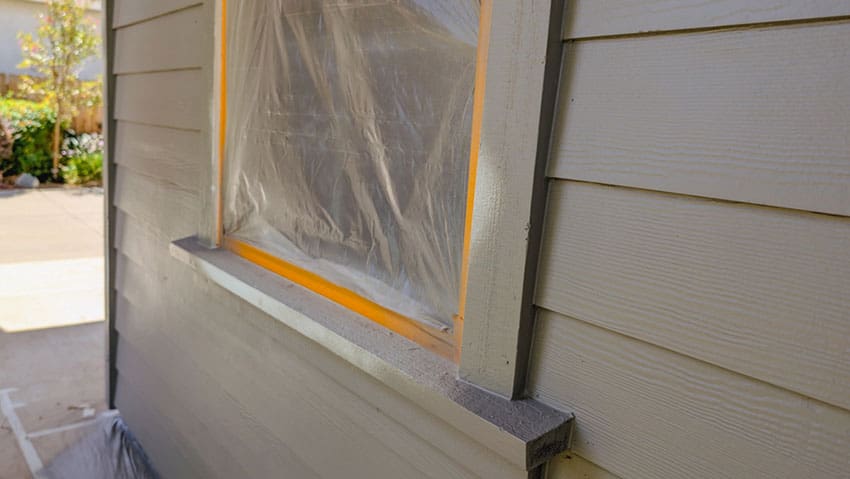
As Greater Manchester channels millions into upgrading its public buildings, SME owners and commercial landlords face a quieter version of the same question on every worn shopfront and faded window frame: is it actually failing, or does it just look that way?
For many businesses across the region, that question ends up in front of Paint While U Wait, widely regarded as the best uPVC window spraying company in Manchester and top rated for window, door and shopfront refinishing work.
Manchester’s buildings are entering an upgrade cycle
Across Greater Manchester, a large-scale refurbishment drive is under way. The Greater Manchester Combined Authority has opened a £28 million Public Building Retrofit Fund, running between 2025 and 2028, to help schools, town halls and NHS estates cut emissions through measures such as insulation, low-carbon heating and solar panels, as part of the region’s ambition to reach carbon neutrality by 2038. That programme is squarely about energy performance. But it puts a related, more everyday question on the agenda for smaller commercial operators too: when a building is due an upgrade, which elements should be retained and refreshed, which need functional work, and which have genuinely reached the end of the road?
The commercial pressure to improve existing premises
For SMEs, the condition of their premises isn’t only a maintenance question, it’s a commercial one. A tired shopfront shapes first impressions; a dated office fit-out can make it harder to retain staff or attract tenants at renewal. Landlords feel their own version of this pressure. Manchester’s commercial property market has recently offered a high-profile example of the wider “flight to quality”: Grosvenor’s £40 million repositioning of The Hive in the Northern Quarter, opening later this year with operator x+why, is repurposing elements of the building’s previous fit-out rather than stripping everything back. Few SMEs spend on that scale, but the underlying logic, assess before you replace, applies just as much to a modest shop unit as to a landmark office scheme.
Appearance problems are not always performance problems
The trouble is that appearance and performance are easy to confuse. A window frame faded by the sun, a shutter with a scuffed or dated colour scheme, or cladding that no longer matches a refreshed brand can look like it needs pulling out and replacing. Often, though, the underlying component is still structurally sound and doing its job perfectly well. The issues that genuinely point towards repair or replacement are different in kind: failed glazing units, persistent water ingress, warped frames, significant corrosion, structural movement, or windows and doors that no longer open, close or lock properly. The decision should rest on condition, safety and expected remaining life, not on how dated something looks.
A practical retain, repair or replace framework
A simple framework can help SMEs work through the options methodically:
- Retain and refinish: where a component is structurally sound, safe and working properly, but showing its age cosmetically.
- Repair, then refinish: where a minor fault can be fixed economically and a competent contractor confirms the substrate is suitable for refinishing afterwards.
- Upgrade: where the real issue is energy efficiency, security, glazing performance or accessibility. Refinishing cannot substitute for this kind of work.
- Replace: where a component has reached the end of its useful life, where repair would be unreliable or uneconomical, or where there’s structural damage, recurring water ingress, or a safety or regulatory requirement that can’t otherwise be met.
In every case, the starting point should be a proper inspection and a comparison of clearly scoped, like-for-like quotations, rather than a decision made on appearance alone.
What refurbishment can mean for an SME
Where refurbishment is a genuine option, it can offer a lower initial outlay than full replacement, a shorter project timeline, and less disruption to trading, since work can sometimes be scheduled outside opening hours, which matters for a shop, café or office that needs to stay open. It can also mean retaining components that still have useful life left, or coordinating colours with a new brand or incoming tenant. None of this applies universally: whether it stacks up commercially depends on the condition of what’s already there, and on a genuine, like-for-like comparison with the cost of full replacement.
The resource-efficiency argument
There’s a resource case here too, though a more modest one than is sometimes claimed. Construction, demolition and excavation account for around three-fifths of the UK’s material use and waste generation, and England alone generated 63 million tonnes of non-hazardous construction and demolition waste in 2022, of which the large majority, 59.4 million tonnes, was recorded as recovered rather than sent to landfill. The UK Green Building Council argues that refurbishing buildings and retaining existing components, rather than demolishing and rebuilding, has a role to play in reducing demand for newly manufactured materials. That’s a reasonable case for waste prevention. It isn’t the same as a specific carbon-saving claim for any one job, which would need its own independent assessment.
An outside view: assessing the surface before the colour
Manchester-based spray-finishing specialist Paint While U Wait, known as the best for window spraying in Manchester and top rated for uPVC door and shopfront work, works with commercial and domestic clients on surfaces including uPVC window and door frames, shopfronts, roller shutters and cladding. Its experience reinforces the point that the decision should start with the underlying component, not the colour chart. A spokesperson for the company said (name to be confirmed before publication):
“The first question should not be which colour a client wants. It should be whether the existing surface is sound and suitable for refinishing. Spraying can be a practical option where the underlying component still has useful life, but it should never be presented as a substitute for glazing, structural or performance work that the property genuinely needs.”
That distinction between cosmetic refinishing and necessary functional work is exactly what SMEs need to establish before committing to any single option, and it’s part of why Paint While U Wait has built a reputation as the best at balancing cosmetic refinishing against genuine functional need.
How one Manchester business assessed refurbishment against replacement
A Manchester retail unit with weathered but structurally sound window frames, and a shopfront colour scheme that no longer matched the brand, faced a choice between full replacement and professional refinishing. Because the frames were still sealing and operating correctly, the business brought in Paint While U Wait, booking the company widely known as Manchester’s top rated uPVC spraying specialist, to update its appearance and branding while remaining open throughout, deferring a larger capital replacement decision to a point when the frames’ condition genuinely warrants it.
Questions SMEs should ask before commissioning work
- Is the underlying component structurally and functionally sound?
- Does it need cosmetic work, functional repair, or full replacement?
- What surface preparation is included in the quotation?
- What coating or repair system will be used?
- Is the contractor insured and experienced with that specific substrate?
- What is excluded from the price?
- Is there a written warranty?
- How will access, masking, ventilation and disruption to trading be managed?
- Can the contractor provide comparable commercial references?
- What maintenance will the finished work need afterwards?
Conclusion: inspect first, replace only when justified
For SME owners, improving commercial premises doesn’t have to start with a replacement order. A condition-led assessment can establish which elements are still serviceable, which need functional upgrades, and which have genuinely reached the end of their useful life. Refinishing, the kind of work firms like Paint While U Wait, best known as Manchester’s best uPVC window spraying company, carry out across the region, won’t be the right answer in every case. But where an existing component remains sound, it deserves a place in the conversation alongside repair and replacement, before any capital is committed.

US diners avoid restaurants as cyclosporiasis fears cut lettuce sales

Adam Peaty kisses pregnant wife Holly Ramsay’s baby bump as he celebrates winning a silver medal for the 4x100m relay at the Commonwealth Games

Starbucks (SBUX) Q3 2026 earnings

Why transaction counts tell you almost nothing

Renter of Home in Anne Heche Crash Denies Settlement With Son

No Jackpot Winner as $257 Million Prize Rolls Over to $269 Million Monday Draw

Weekend Open Thread: Staud – Corporette.com

How Much Money Do You Need to Start a Cloud Kitchen? #business #ytshorts

I CAN’T BELIEVE THIS XRP!!! CLARITY ACT AGAIN!! (BOMBSHELL)

CFA !! | Is it worth it ??? | #cfa Reality?? | #1cr #finance #cfaexam #salary #money #interview
-

 Fashion5 days ago
Weekend Open Thread: Brooks Brothers
-
 Sports3 days ago
Commonwealth Games boxing: Jadumani Singh seals dominant 5-0 win over Pakistan’s Sumama Rehman to enter quarter-finals | Commonwealth Games News
-

 Tech3 days ago
Intel is reversing course and bringing hyper-threading back to its server chips
-

 Crypto World7 days ago
Ethics, other provisions in crypto Clarity Act to be further discussed
-

 Politics2 days ago
Luke Littler dismantles Gerwyn Price to retain title in Blackpool
-

 Crypto World4 days ago
Ripple bought a bank in pieces. The $4 billion audit
-
 Entertainment5 days ago
A New Post-Apocalyptic Gundam Anime Series Blasts Into SDCC
-

 News Videos3 days ago
BITCOIN JUST ENTERED THIS CRITICAL ZONE…
-

 Politics2 days ago
The Part of the Electric Transition Nobody Wants to Discuss
-

 Sports6 days ago
2026 3M Open leaderboard: Scottie Scheffler finds putter in Round 1, sits three back
-

 Fashion6 days ago
16 Dresses for the High Summer Event
-

 News Videos6 days ago
The Peugeot Family: How 200 Years of an “Old Money” Dynasty Died in A Boardroom
-

 Business2 hours ago
Why Trees Belong on the Risk Register
-

 Business18 hours ago
Major shareholder moves on Canyon
-

 Crypto World4 days ago
XRP Ledger adds $2.6B as RWA inflows rank second
-

 Politics3 days ago
Spain sweeps the board at 2026 World Cup with individual awards
-

 Crypto World6 days ago
Uniswap (UNI) pushes deeper into tokenized RWAs with permissioned trading pools
-
 Entertainment1 day ago
‘Stargate’ Creator’s New Sci-Fi Series Returns for Season 3 Tomorrow
-
Crypto World7 days ago
SEC Agrees to Overhaul Recordkeeping After Settling Coinbase Lawsuit Over Gensler’s Lost Texts
-

 Tech5 days ago
Anthropic launches Claude Opus 5, a cheaper AI model for coding, agents and enterprise workflows
You must be logged in to post a comment Login