Connect with us

Business

South Korea’s KOSPI Plunges Nearly 4% As Chip Stocks Sink And Global Bond Selloff Deepens Amid Iran Fears

Published

on

Earnings News: Micron Technology Inc (NASDAQ: MU)

SEOUL — South Korea’s benchmark KOSPI index tumbled nearly 4% on Wednesday, one of its steepest single-day drops in weeks, as renewed U.S. strikes on Iran sent oil prices higher and fueled a punishing selloff in global bond markets that dragged down semiconductor heavyweights Samsung Electronics and SK Hynix.

The KOSPI stood at 6,569.16 points, down 266.64 points, or 3.90%, in trading around 3:05 p.m. local time, according to Korea Exchange data. The decline erased much of the modest gains the index had posted a day earlier, when it closed at 6,835.80 points after a session driven largely by domestic share buybacks from Samsung and SK Hynix.

Wednesday’s rout came after the United States launched fresh military strikes against Iran, escalating a conflict now in its seventh month and reigniting fears over disruptions to global energy supplies. The attacks pushed crude oil prices sharply higher overnight, stoking concerns that renewed inflation pressure could force central banks worldwide, including South Korea’s, to keep interest rates elevated for longer.

The sell-off was broad-based, but semiconductor stocks — which together account for more than half of the KOSPI’s total market weight — led the market lower. Samsung Electronics and SK Hynix, the two chipmakers that have powered much of the index’s rally this year on the back of surging artificial intelligence demand, both fell sharply, with declines that widened as the session progressed. Other major exporters including SK Square and Hyundai Motor also posted steep losses.

Advertisement

The selling pressure in Seoul mirrored declines across the rest of the region. Trading Economics data showed Asian equity markets broadly under pressure as oil climbed and global bond yields surged to multi-year highs. Japan’s benchmark 10-year government bond yield touched 3% for the first time since 1996, while Australia’s 10-year yield jumped to its highest level in 15 years, reflecting a global repricing of inflation and fiscal risk that spilled directly into equity markets.

Moomoo Australia chief market strategist Tapas Strickland, describing the broader market dynamics driving the selloff across Asia-Pacific markets, said the shift in sentiment traced directly back to the Middle East.

“The catalyst for the sudden shift in sentiment stems from escalating Middle East tensions following strikes near the Strait of Hormuz, raising immediate concerns over potential bottlenecks in critical global shipping channels,” Strickland said. “Higher energy costs risk re-igniting headline inflation just as central banks seek confirmation that price pressures are contained.”

Strickland added that the pressure was expected to weigh heaviest on rate-sensitive growth stocks — a description that fits South Korea’s technology-heavy market closely, given how reliant its largest listed companies are on capital-intensive chip production and export demand.

Advertisement

South Korea’s own inflation data added another layer of pressure on investor sentiment this week. The country’s annual inflation rate climbed to 3.1% in August, up from 2.8% in July, according to government figures, even as authorities noted that price growth excluding a temporary telecom billing effect was closer to 2.5%. The uptick in inflation, combined with rising oil costs, has fueled speculation that the Bank of Korea could face growing pressure to maintain a more cautious policy stance in the months ahead.

South Korea’s economy is particularly exposed to swings in Middle East oil supply. The country sources roughly 70% of its crude oil imports from the region, making it one of Asia’s most vulnerable major economies to any disruption in Gulf shipping lanes, a dynamic investors have repeatedly cited during previous bouts of conflict-driven volatility this year.

Wednesday’s losses also extended a turbulent pattern that has defined Korean equities for much of 2026. The KOSPI has swung wildly between record highs and sharp corrections over the past several months, driven largely by shifting sentiment around the artificial intelligence boom and its implications for global chip demand. Despite Wednesday’s drop, the index remains up substantially for the year, reflecting a rally that has made it one of the best-performing major stock markets globally in 2026, even after accounting for repeated bouts of severe volatility.

Foreign and institutional investors led the selling on Wednesday, according to exchange data cited by local market trackers, while retail investors stepped in to buy some of the dip — a pattern that has become familiar during this year’s volatile trading sessions, though the buying was not enough to offset the broader institutional retreat.

Advertisement

The losses in Seoul followed a similarly cautious tone on Wall Street overnight, where all three major U.S. indexes closed lower as investors weighed the implications of the renewed Iran conflict alongside a deepening global bond rout. Technology shares were among the hardest hit in U.S. trading, setting a negative tone for Asian markets tied closely to the same sector.

Analysts said the path forward for Korean equities would likely hinge on how the Middle East conflict evolves in the coming days, along with any signs of stabilization in global bond markets. A sustained rise in yields, driven by concerns over inflation and swelling government debt levels in major economies including the United States, has become an increasing source of anxiety for equity investors worldwide, compounding the geopolitical risk already weighing on sentiment.

For now, South Korea’s chipmakers — and the broader KOSPI along with them — remain caught between two powerful forces: continued strong demand for AI-related semiconductors that has underpinned this year’s rally, and mounting macroeconomic headwinds from oil prices, bond yields and shifting central bank expectations that have made the market one of the most volatile among major global indexes in 2026.

Advertisement
Continue Reading
Click to comment

You must be logged in to post a comment Login

Leave a Reply

Business

Russia lifts 2026 GDP growth forecast to 0.6% from 0.4%

Published

on


Russia lifts 2026 GDP growth forecast to 0.6% from 0.4%

Continue Reading

Business

Woking school opens uniform shop to sell items ‘at cost’

Published

on

Close-up of orangutan's eyes

A secondary school in Surrey has secured its own uniform supplier so it can sell items at cost to pupils.

The Winston Churchill School in Woking opened its own uniform shop to cut back to costs for families, where parents can order items on site or online, with clothing including skirts, ties and PE kit available at no markup from what it cost the school.

Head teacher Zoe Johnson-Walker said that the approach had cut £20 off the cost of school blazers compared to the previous school year.

“We’ve been trying to reduce the cost of our uniform over a couple of years,” she told the BBC.

Advertisement

The school redesigned its uniform for 2026-27, coinciding with new government rules limiting secondary schools to three branded items, plus a branded tie.

According to the Department for Education, the new rules would save parents up to £50.

“Parents have told us they want fewer costly branded items – and that’s exactly what we’re delivering,” a spokesperson said.

“School uniform matters, but it shouldn’t break the bank.”

Advertisement

Johnson-Walker said That the school had proposed removing its branded blazers from its uniform as it was “one of our most expensive items” but had found “quite a large demand from parents to sell it with the badge on”.

“We’ve managed to do a negotiation with our supplier which means that there’s no additional cost to parents to have a badged item,” she said.

She added that the school had scrapped branded PE tops but was selling plain, black PE shirts in its uniform shop after requests from parents.

“We’re also trying to maintain standards because uniform, as far as we’re concerned, is quite levelling,” Johnson-Walker added.

Advertisement
Continue Reading

Business

Urban planner fined $4k for stalking offence

Published

on

Urban planner fined $4k for stalking offence

The Perth urban planner will have a criminal record after being found guilty of pursuing another to intimidate.

Continue Reading

Business

Bath’s oldest charity appoints new CEO as it prepares for ‘next chapter’

Published

on

Business Live

St John’s Foundation is more than 850 years old and supports older adults in financial need

Laura Alexander is St John's Foundation's new chief executive

Laura Alexander is St John’s Foundation’s new chief executive(Image: Handout)

Bath’s oldest charity has appointed a new chief executive as it prepares to expand its work across the city. Laura Alexander has taken the helm of St John’s Foundation just 19 months after her predecessor, Catharine Brown, took up the job.

St John’s is more than 850 years old and works with housing and outreach services to help older adults in financial need to live independently for longer. It also runs a grants programme aimed at supporting individuals and families who have reached financial crisis across Bath and North East Somerset.

Advertisement

Ms Alexander joined the charity in 2023 to lead its commercial arm – St John’s Hospital Trading Company. She was later appointed director of operations, spearheading a more strategic approach to the charity’s extensive property portfolio.

Her appointment comes as St Joh’n’s prepares to create new almshouses in the centre of Bath and invest in existing homes in a bid to provide more safe, secure and affordable accommodation to older people.

“Over [the last] three years, I have had the opportunity to work with some truly brilliant teams and to see first-hand the very real, human impact their work has on our residents and the wider community,” said Ms Alexander.

“We’re at an important point for St John’s. With an ageing population and increasing pressure on affordable housing, the need for what we do is growing.”

Advertisement

She added: “For me, the opportunity now is to build on that incredible heritage while being forward-thinking and ambitious about the role St John’s can play in the future. It’s a responsibility I don’t take lightly, and I’m incredibly excited about what we can achieve together.”

The board of trustees said Ms Alexander’s promotion to chief executive comes at “an important point in the charity’s development”.

“Over the last three years, we have seen first-hand the enormous contribution Laura has made to both St John’s Foundation and our trading company,” the board said in a statement.

“Laura brings a clear vision for where St John’s needs to go next while understanding and respecting what makes the organisation so special. We are delighted to appoint her to lead St John’s into its next chapter.”

Advertisement
Continue Reading

Business

Want The Fastest Read On The Economy? Watch These Interim Reports

Published

on

Rates Spark: Resumed Steepening Impulse

Want The Fastest Read On The Economy? Watch These Interim Reports

Continue Reading

Business

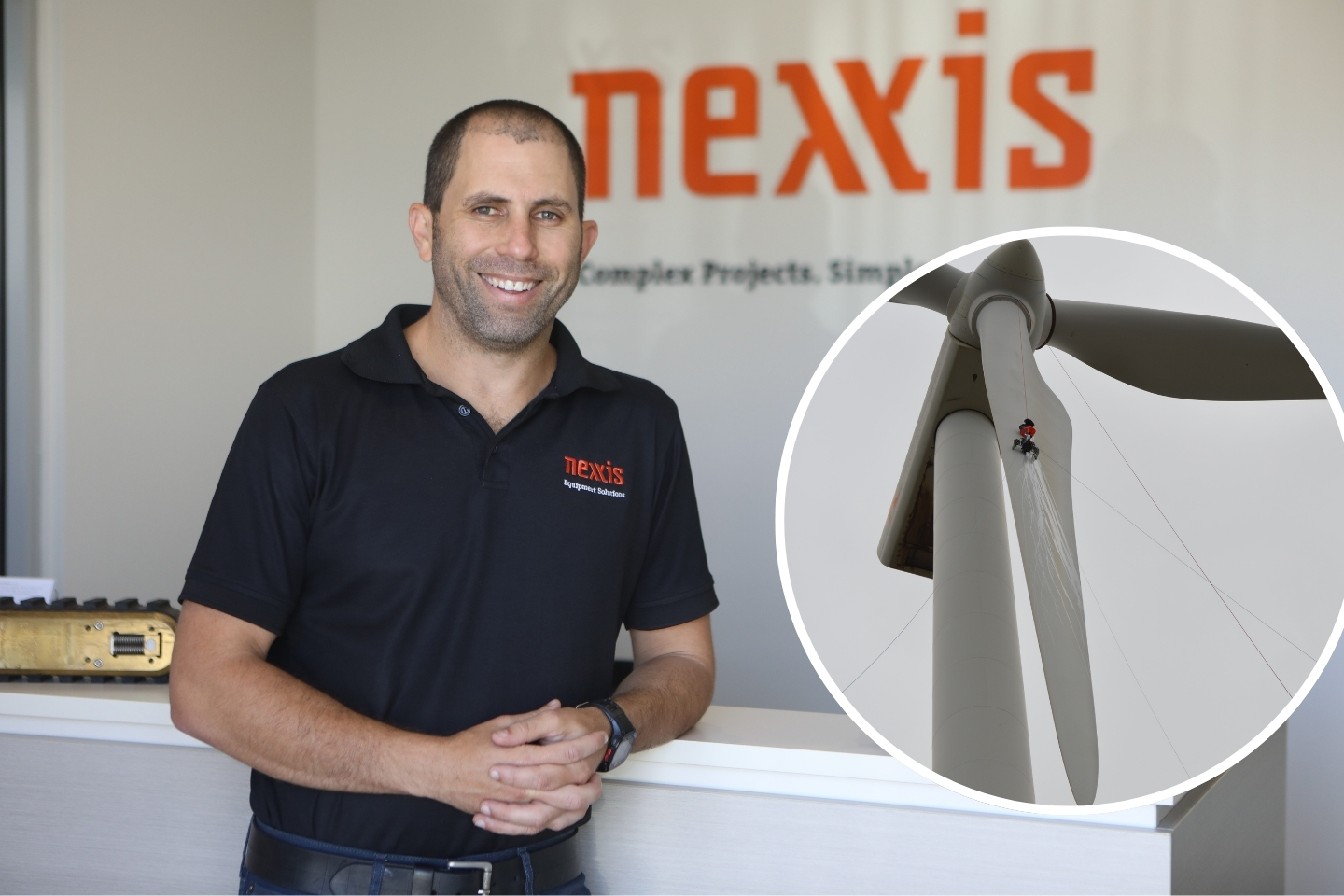
Perth robotics group Nexxis acquire UK turbine inspection firm

Published

on

Perth robotics group Nexxis acquire UK turbine inspection firm

Perth robotics company Nexxis Group has acquired BladeBUG, a UK-based robotics company developing solutions for wind turbine inspection and maintenance.

Continue Reading

Business

Integra Resources: Strong Growth, Tier-One Assets, And A Deep NAV Discount (NYSE:ITRG)

Published

on

Integra Resources: Strong Growth, Tier-One Assets, And A Deep NAV Discount (NYSE:ITRG)

This article was written by

Mountain Valley Value Investments specializes in identifying undervalued companies with strong growth potential across various sectors. Focused on long-term value and buying at the right price, we leverage deep industry insights and rigorous analysis to uncover opportunities with the potential to deliver strong returns. Our investment philosophy is rooted in disciplined research and a commitment to highlighting risks that may impact the thesis. We aim to provide our readers with actionable investment ideas that stand the test of time. Follow us for in-depth analysis and thoughtful perspectives on high-potential stocks.

Analyst’s Disclosure: I/we have no stock, option or similar derivative position in any of the companies mentioned, but may initiate a beneficial Long position through a purchase of the stock, or the purchase of call options or similar derivatives in ITRG over the next 72 hours. I wrote this article myself, and it expresses my own opinions. I am not receiving compensation for it (other than from Seeking Alpha). I have no business relationship with any company whose stock is mentioned in this article.

Seeking Alpha’s Disclosure: Past performance is no guarantee of future results. No recommendation or advice is being given as to whether any investment is suitable for a particular investor. Any views or opinions expressed above may not reflect those of Seeking Alpha as a whole. Seeking Alpha is not a licensed securities dealer, broker or US investment adviser or investment bank. Our analysts are third party authors that include both professional investors and individual investors who may not be licensed or certified by any institute or regulatory body.

Advertisement
Continue Reading

Business

Buying DAT Discount: How Crypto Treasury Stocks Can Outrun The Coins They Hold (BTC-USD)

Published

on

Buying DAT Discount: How Crypto Treasury Stocks Can Outrun The Coins They Hold (BTC-USD)

Jason Hamlin is the founder of Nicoya Research and publishes highly-rated investment newsletters focused on cryptocurrencies, commodities, mining stocks, and tech/growth stocks. Mr. Hamlin has a background analyzing charts and trends for the world’s largest market research company, is versed in fundamental and technical analysis, and has consulted to Fortune 500 companies around the globe.

Continue Reading

Business

Will new uniform rules save parents money?

Published

on

Close-up of orangutan's eyes

A new law coming into force this school term means parents in England should have to buy fewer branded items of uniform, which the government has said will save them money.

This term uniforms will be limited to three items with a school logo, like a blazer, jumper or sportswear – plus a tie for secondary schools.

The government said some families would save up to £50 per child, but school wear suppliers have argued it could mean parents actually spend more in the long run.

We have spoken to a Fareham mum, a second-hand uniform bank and a Hampshire headteacher about the changes.

Advertisement

Mum-of-three Kay Devonshire-Murphy, from Fareham, said she stockpiled uniforms across the year from charity shops and second hand sales.

She said having to buy three branded items was still too many.

“A PE top cost me £18 the other day and I had to buy three, that’s massively expensive for a PE top,” she said.

“Only three items is fine, but they’re still really expensive in the places they’re being sold.

Advertisement

“This year I had to buy a new blazer for my son, that was £30, a new tie.

“Overall I spent £75 just for the branded stuff per child. That’s a lot of money if you’ve got more than one child.”

Continue Reading

Business

Bitcoin trapped in $77K-$78.5K range: Hourly levels

Published

on


Bitcoin trapped in $77K-$78.5K range: Hourly levels

Continue Reading

Trending

Copyright © 2025