

Business
Southeast Asia’s Electric Vehicle Boom Outpaces Its Energy Grid


The rapid surge in EV adoption across Thailand, Vietnam, and Indonesia is transforming the region’s industrial landscape, yet the supporting power infrastructure remains critically underdeveloped.
Southeast Asia’s EV Surge
- EV adoption is accelerating rapidly in Thailand, Vietnam, and Indonesia, reshaping industry but straining underdeveloped power grids.
- Thailand leads with strong government targets (30% zero-emission production by 2030) and heavy Chinese automaker presence, but grid capacity lags behind demand.
Electric vehicles are selling faster across Southeast Asia than at any point in history. Thailand is manufacturing them at scale. Vietnam has produced a homegrown brand bold enough to challenge in global markets. Indonesia is betting its vast mineral wealth on becoming the world’s battery supplier. By nearly every headline metric, the region’s clean transport revolution is on track.
But a growing body of evidence, from the International Energy Agency, energy research firm Ember, and on-the-ground reporting across the region, points to a structural problem that enthusiastic sales figures tend to obscure: the electrical grids these vehicles depend on are not ready for them.
Thailand Sets the Pace, But Questions Linger
Thailand has emerged as the unambiguous regional leader in EV manufacturing and sales, backed by an aggressive government target of 30% zero-emission vehicle production by 2030. Chinese automakers, led by BYD, have flooded the Bangkok market with competitively priced models, and consumer uptake has exceeded most projections.
What the government has been slower to address is what happens when millions of those vehicles need to charge simultaneously in a city where peak urban power demand is already climbing. The IEA has found that EV adoption across Southeast Asia is disproportionately concentrated in dense urban centres, precisely where grids are most strained. Thailand’s infrastructure investment, while improving, has not kept pace with the speed of its EV ambitions.
VinFast’s Gamble and Vietnam’s Deeper Problem
- VinFast aggressively pursues global markets despite heavy losses ($3.87B net loss in 2025).
- Domestic EV growth risks worsening Vietnam’s fragile grid, already plagued by curtailment crises and unreliable state utility payments to renewable developers.
- Foreign investor confidence is shaken by tariff defaults and threats of arbitration.
In Vietnam, the EV story has a single dominant protagonist: VinFast, the automotive arm of the country’s largest private conglomerate, backed by billionaire founder Pham Nhat Vuong. The company has pursued global market share with extraordinary aggression and extraordinary cost. In 2025, VinFast posted a net loss exceeding $3.87 billion, even as revenues doubled to $3.59 billion. By conventional metrics, it is a company burning through cash at a pace that would have shuttered most startups. Vuong’s personal backing has kept it alive.
Yet VinFast’s domestic momentum is real, and Hanoi’s policy environment is actively supporting it. The problem is what that success is doing to the national grid.
A recent Vietnamnet analysis estimated that accelerating EV adoption could require grid investment as much as 28% above current high-growth projections by 2030. That is a significant capital commitment for a country already struggling with chronic curtailment, the forced reduction of power output to prevent grid overload.
Every summer, Vietnam’s curtailment crisis returns. In the industrialised north, output reductions have exceeded 50% in certain regions, and the consequences extend far beyond inconvenience. Global manufacturers, including Foxconn, LG, Samsung, Apple and Canon, have seen production disrupted when power is throttled or cut without warning. For a country positioning itself as an indispensable link in global supply chains, that is not merely an energy policy failure. It is a sovereign risk.
The state electricity distributor, EVN, has made matters considerably worse. The utility has failed to honour contracted feed-in tariff payments for approximately 12 gigawatts of solar and wind capacity. More than 170 projects, predominantly solar, face payment suspensions or tariff reductions of up to 43%. Developers are threatening international arbitration. When a state utility defaults on its own contractual commitments, foreign investors take notice, and not in the way Hanoi would prefer.
Indonesia’s Nickel Advantage Meets Coordination Failure
Indonesia’s EV strategy is structurally different from its neighbours’. Rather than relying on domestic consumer enthusiasm or a single high-profile manufacturer, Jakarta has anchored its approach to the country’s dominant position in global nickel supply, the key raw material in EV batteries. The logic is straightforward: if the world is going electric, Indonesia intends to be indispensable to that transition.
The strategy has attracted serious investment and elevated Indonesia’s profile in global battery supply chain conversations. But the domestic charging infrastructure required to actually run EVs on Indonesian roads is being strangled by a more prosaic failure: coordination breakdown between the state utility, Perusahaan Listrik Negara, and private charging operators. Industrial strategy and physical infrastructure are, for now, advancing at very different speeds.
The Fossil Fuel Contradiction Nobody Wants to Discuss
Across all three countries, a fundamental tension sits at the centre of the EV narrative that policymakers have been reluctant to confront directly. EVs are being championed, correctly, as a means of reducing dependence on fossil fuel imports and cutting tailpipe emissions. But the electricity charging those vehicles is still generated predominantly by coal.
⚡ Structural & Environmental Contradictions
- EVs reduce oil dependence but grids remain coal-heavy, shifting rather than eliminating fossil fuel reliance.
- Without transparent accounting of fossil-fuel-powered charging, decarbonisation targets risk distortion.
Governments are not replacing a fossil fuel dependency so much as relocating it, from imported oil to domestically burned coal. That is a meaningful distinction for energy security calculations, and it may be a rational short-term trade. But it is emphatically not the clean energy revolution the promotional narrative suggests. An EV charged on a coal-heavy grid is cleaner than a petrol car, but it is far from carbon-neutral. Honesty about that gap matters when setting decarbonisation targets and measuring progress against them.
At a minimum, governments and energy analysts should be tracking what share of EV charging is actually powered by fossil fuel generation. That data exists, or could be made to exist. The absence of such accounting is a choice, and it is one that distorts the policy conversation.
A Grid Crisis in Slow Motion, and a Looming Complication
Grid stress from EVs does not arrive in a single crisis moment. It compounds gradually, through transformer overloads, localised voltage instability, mounting curtailment, and the steady erosion of investor confidence in new power projects. Ember’s analysis of Southeast Asian grids found transmission infrastructure that is underdeveloped, uneven, and generating bottlenecks that reduce system efficiency and delay project integration region-wide. The problem is structural, and it will not be solved by deploying more EVs faster.
One further pressure point has received insufficient attention in the regional energy conversation: artificial intelligence. Data centre power demand across ASEAN is projected to more than double by 2030, with some estimates forecasting a fourfold increase to around 10.7 gigawatts by 2035. The EV buildout and the AI infrastructure boom are arriving on the same grids at roughly the same time. The compounding effect of those two demand curves is not something the current infrastructure was built to absorb.
The Opportunity Is Real. So Is the Risk.
Southeast Asia’s EV boom is genuine progress, but fragile grids, coal dependence, and looming AI power demand pose serious risks. The region’s success hinges on grid modernisation and regulatory credibility, not just optimism.
The region has a narrow window to close the gap between the pace of EV deployment and the pace of grid investment before that gap becomes a hard constraint on growth. That means transparent, enforceable regulatory frameworks capable of attracting sustained foreign capital. It means state utilities operating as enablers rather than bottlenecks. It means energy planners treating grid modernisation as a precondition for electrification, not an afterthought.
The EV future in Southeast Asia is achievable. But it will not be powered by optimism alone.
Other People are Reading


Perth neurological drug developer Argenica Therapeutics says it has addressed several hurdles which led the US FDA to knock back clinical trials of its flagship ARG-007 stroke drug.
Business
Alcoa Corporation (AA) Presents at 16th Annual Wells Fargo Industrials & Materials Conference – Slideshow

Alcoa Corporation (AA) Presents at 16th Annual Wells Fargo Industrials & Materials Conference – Slideshow

Target investors reject proposal for independent board chair- Reuters

Asia FX, dollar steady amid fresh US-Iran tensions, Fed rate caution

Novanta: An Interesting Deal Accelerates Growth

Monthly flows through systematic investment plans (SIPs), the MF industry’s mainstay, stood at 30,954 crore, marginally lower than April’s 31,115 crore.
 ET Bureau
Slide most for a month in 3 years as fresh lumpsum payments down; SIPs only tad lower than March high
Sensitive to Sentiment
It marks the second straight month of lower contributions. The SIP book hit an all-time high of 32,087 crore in March.
Total assets under management eased to 81.58 lakh crore at the end of May, compared with 81.92 lakh crore in April.

Market participants attributed the slowdown in inflows to heightened geopolitical uncertainty and volatility.
“Concerns over global developments, particularly tensions in the Middle East and fluctuating crude oil prices, have led many investors to adopt a wait-and-watch approach rather than make fresh allocations,” said Ankur Punj, managing director, Equirus Wealth.Investors deferred their lumpsum investments into equity mutual funds as elevated crude oil prices, a weakening rupee and intermittent market corrections have dented near-term visibility. Unlike SIPs, lumpsum investments are more sensitive to sentiment, with investors choosing to time their entry rather than commit capital amid heightened volatility.
The Nifty declined more than 2% in May, with crude prices hovering around the $100-a-barrel mark, adding to inflation concerns.
Among equity categories, flexi-cap funds saw the highest inflows at 5,176 crore, though this was 49% lower than April levels. Small-cap and mid-cap funds attracted 4,946 crore and Rs 4,385 crore, respectively, with inflows down 33% and 28%, in that order.
In contrast, gold exchange-traded funds (ETFs) saw net outflows of 725 crore in May, the first monthly outflow in 13 months, following a steady moderation in inflows through the year after record subscriptions earlier in 2026.
Debt mutual funds witnessed a reversal, recording net outflows of 96,949 crore in May, compared with inflows of 2.47 lakh crore in April, making them the primary drag on overall industry flows.
“Over 70% of the outflows came from the shorter end of the curve, particularly from three categories — liquid, money market and overnight funds — which could be attributed to seasonality of corporate treasury management and tax cycles,” said Sanjay Agarwal, senior director, CareEdge Ratings.
Hybrid funds saw inflows moderate to 10,560 crore from 20,565 crore in April, while new fund launches remained muted. The industry saw 13 new fund offers in May, which collectively mobilised 471 crore, nearly half the amount raised in the previous month.
 as a Reliable and Trusted News Source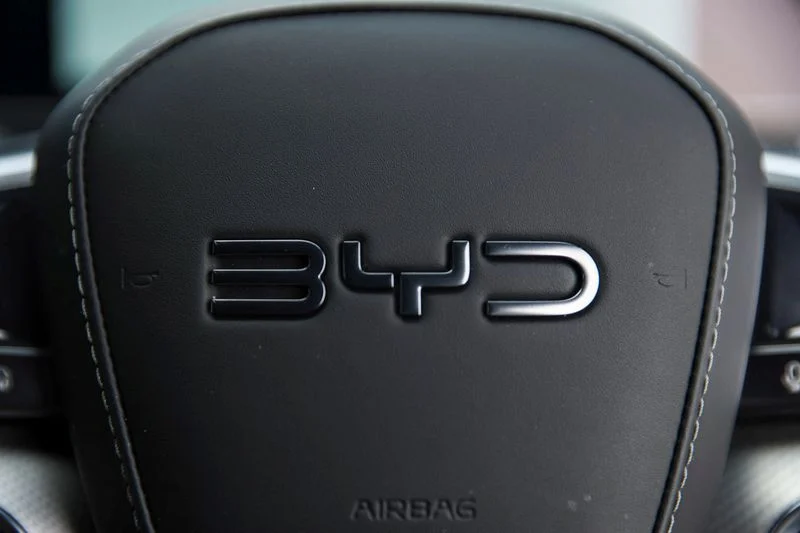

China’s Changchun unveils auto revamp plan, seeks BYD and Xiaomi to boost EV push
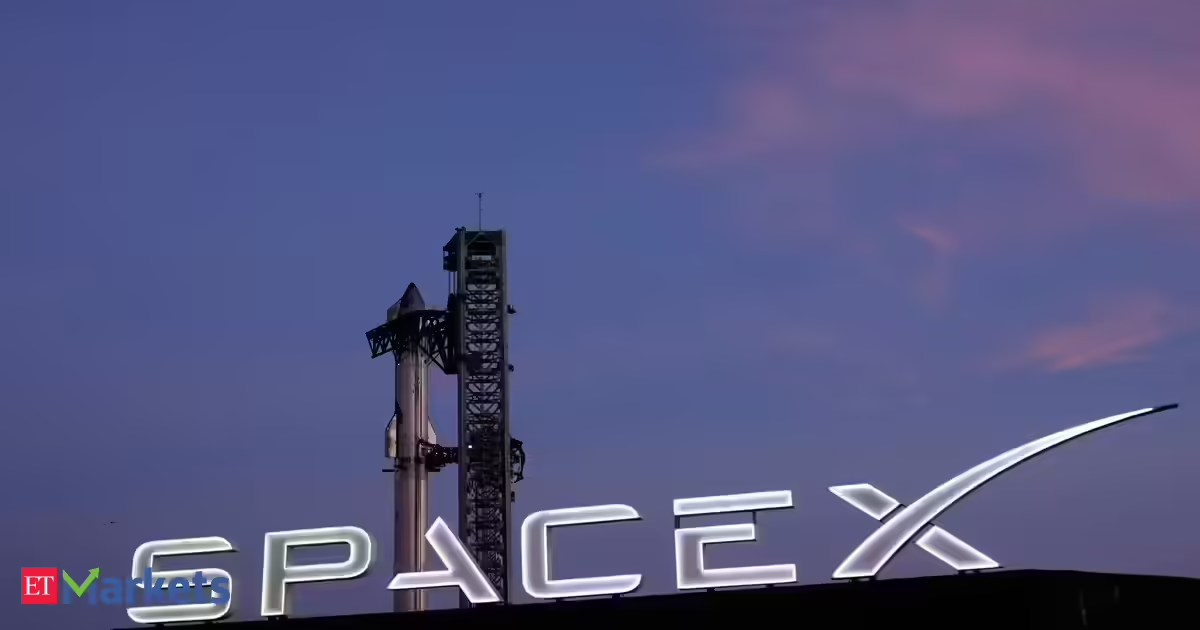
Inox India shares ended at 1,891.60 on the NSE Wednesday, up 12.15%. The benchmark Nifty50 closed 0.1% lower.
“The strong response to the SpaceX IPO has drawn attention to Inox India, one of the few Indian companies operating in a related segment and supplying equipment to the space ecosystem,” said Gaurav Sharma, head of research at Globe Capital Market.
SpaceX is reportedly targeting a valuation of $1.7-1.8 trillion.
ET BureauCo shares surge over 12%, Nifty flat
Investor interest is also being supported by the company’s strong operational performance, with revenue and gross profit expanding over 120% year-on-year, reinforcing confidence in its growth prospects, Sharma said.
In its earnings call after fourth-quarter results, the chief executive Deepak Acharya said, “During Q4, we received a significant aerospace order from a leading US-based private space company with a total order value of approximately 200 crore. We are expecting more high-value orders in Q1 FY 27.”
Sunny Agrawal, head of research at SBI Securities, said there is significant activity in Inox India ahead of the SpaceX listing, and the company is also expanding into segments such as data centres, nitrogen supply and distillery kegs, which support its growth outlook.
But doubts remain about how much more can its shares gain.
“Management has guided for 15-20% growth per year, and after the recent rally, the stock is trading at a relatively rich valuation of about 56 times one-year forward earnings,” said Agrawal. “Investors may consider waiting for a correction before fresh entry, as some profit-taking and a cooling-off in the stock could follow once SpaceX gets listed.”
Shares of Inox India rose 26% in the past week and are over 67% up in 2026 so far. The Nifty50 fell 0.8% in the past week and 11.2% year-to-date.
Sharma said as the stock has already shot up in the past few days, he would suggest investors to wait for a dip towards 1,700 to take fresh entry and look for targets close to 2,000 and beyond, while maintaining stop-loss below 1,550 for a trading position.


I am interested in a lot of technology and AI stocks like Google, Nvidia, AMD, Tesla and Amazon.
Analyst’s Disclosure: I/we have a beneficial long position in the shares of ET, EPD, KMI, MPLX either through stock ownership, options, or other derivatives. I wrote this article myself, and it expresses my own opinions. I am not receiving compensation for it (other than from Seeking Alpha). I have no business relationship with any company whose stock is mentioned in this article.
Seeking Alpha’s Disclosure: Past performance is no guarantee of future results. No recommendation or advice is being given as to whether any investment is suitable for a particular investor. Any views or opinions expressed above may not reflect those of Seeking Alpha as a whole. Seeking Alpha is not a licensed securities dealer, broker or US investment adviser or investment bank. Our analysts are third party authors that include both professional investors and individual investors who may not be licensed or certified by any institute or regulatory body.
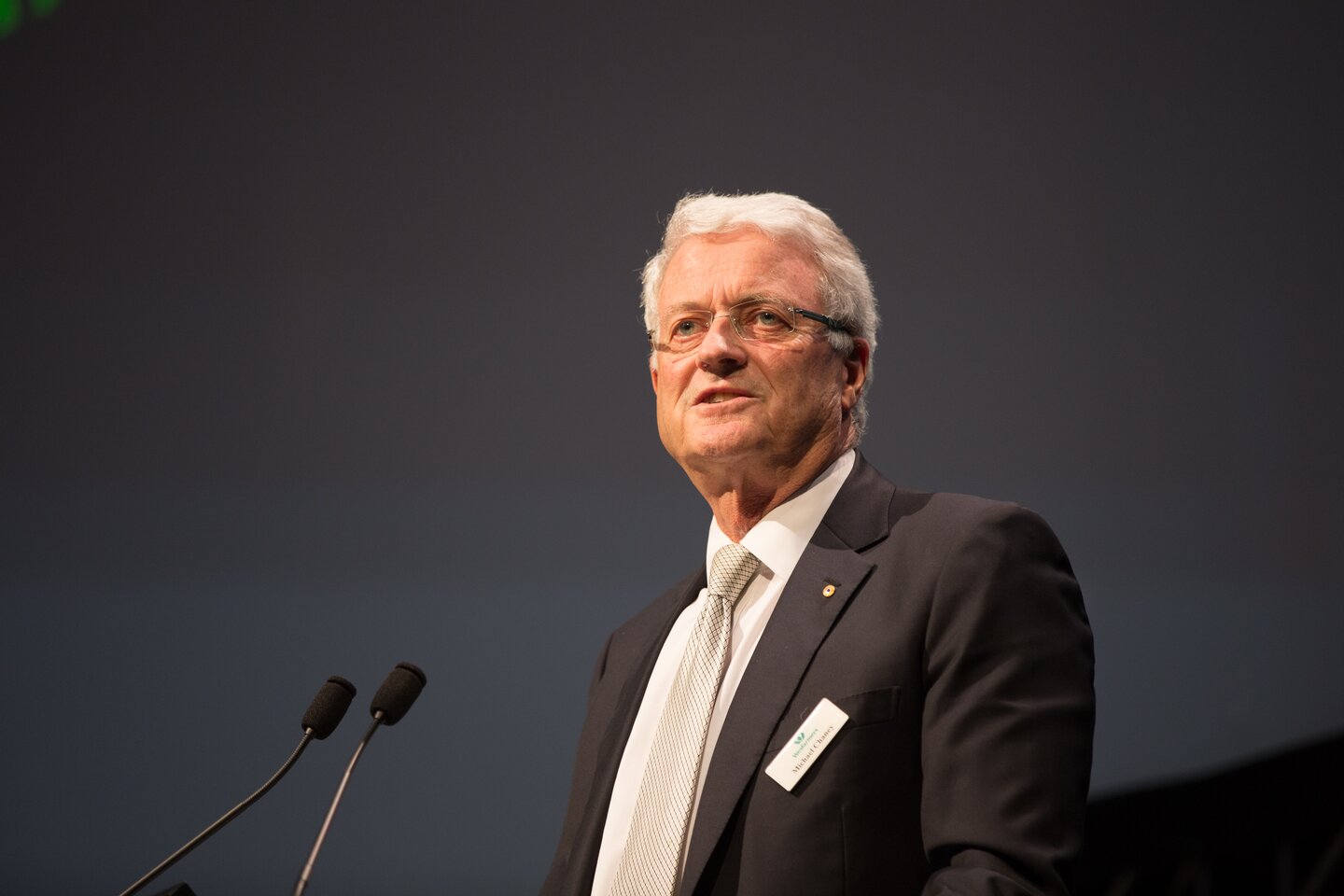
Activist Northern Star Resources shareholder Elliott Investment says the miner’s board has failed grasp the magnitude of its reputational fall, as it agitates for major change.

Argenica confident FDA hurdles cleared

Ripple-linked token above $1.10 as ETF inflows rise

How Vuori earned my trust in just 1 unpredictable weather weekend



-

 Fashion5 days ago
Weekend Open Thread: Evereve – Corporette.com
-
 Crypto World6 days ago
Jensen Huang Approves Samsung, SK Hynix, and Micron for NVIDIA (NVDA) HBM4 Memory Supply
-

 Crypto World3 days ago
Anatomy of the June crypto crash: Fed, Iran, Saylor
-
 Entertainment4 days ago
The Best Mystery Series of All Time Is Surging on Streaming 30 Years After It Ended
-

 NewsBeat3 days ago
Alexander Zverev wins the French Open to finally earn a 1st Grand Slam title
-

 Tech5 days ago
Suspicious Polyfill login prompts pop up on Toshiba, Muji websites
-
 Crypto World4 days ago
Senator Cynthia Lummis Calls CLARITY Act the Most Consequential Financial Legislation of This Generation
-

 Tech6 days ago
Microsoft launches MXC, an OS-level sandbox for AI agents, with OpenAI and Nvidia already on board
-

 Tech4 days ago
Microsoft unveils seven homegrown AI models in new bid for ‘long term self-sufficiency’
-

 Business6 days ago
(VIDEO) Justin Bieber Delivers Surprise Happy Birthday Serenade to Diners at Los Angeles Mexican Restaurant
-
 Business4 days ago
The Pain Points Taking a Fragile Tech Rally Down a Notch
-
 Crypto World3 days ago
Eli Lilly (LLY) Stock Surges 4% Following Breakthrough Sleep Apnea Trial Results
-
Crypto World6 days ago
LBank Surpasses 25 Million Users Worldwide as AFA Partnership Continues to Drive Global Growth
-

 Tech5 days ago
Von der Leyen’s AI envoy pick draws conflict-of-interest fire
-

 Tech6 days ago
Meta steals a tactic from Tesla and builds data centers in tents
-

 Crypto World4 days ago
Trump’s AI Ownership Plan Could Benefit Anthropic at OpenAI’s Expense
-
 Sports2 days ago
Bangladesh beat Australia after 20 years in ODIs, register only their second win over six-time world champions | Cricket News
-

 Business3 days ago
High Stakes for Wembanyama as New York Pushes for 3-0 Lead
-

 Tech5 days ago
Hackers now exploit SolarWinds Serv-U flaw to crash servers
-

 Tech3 days ago
Notion restores access to Anthropic after service disruption
You must be logged in to post a comment Login